He Accused Me of Stealing at the Coat Drive—Then His Buyer Spoke Up
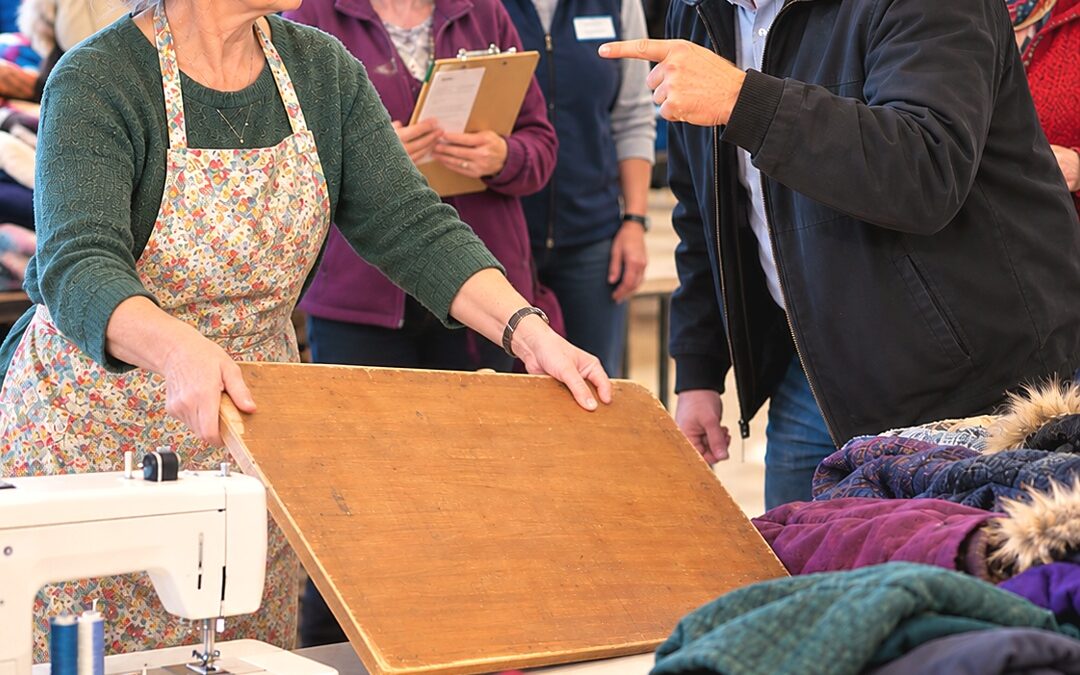
Part 1 — THE MENDING CHAIR
Carson Bellamy covered my FREE MENDING sign with a paper marked COMPANY PROPERTY while people were still bringing coats through the roller rink doors.
Carson told the volunteers, “She's been helping herself to our stock.”
Then he ordered Robin Saye to remove my Monday, Wednesday and Friday shifts from next week's laundry schedule.
Robin drew the first line. I was still asking what he meant.
I was sixty-two, with nineteen years in that laundry, and I'd counted on those hours to help pay the electricity bill and replace the tire that kept losing air.
A woman carrying three little winter jackets stopped beside my table.
One jacket hung from each arm, and the third was hooked over her shopping bag.
“Should I come back?” she asked me.
“You can leave them with the coat drive,” Carson said.
She hadn't been asking him.
“You can leave them with Doreen,” I told her. “And I want my shifts left alone until somebody tells me what I took.”
Robin's pen stayed over the sheet, but Carson told her to finish, and she crossed out the other two days while Pat Leese watched from the donation bins.
It was nine-thirty on Saturday, October seventeenth, in a Fort Wayne roller-skating rink that had closed for the winter and opened its doors for a coat fair.
The lights over the skating floor worked in patches.
Somebody had rolled the rubber mats against the far wall. The concession counter still advertised pretzels nobody was going to sell.
My sewing machine sat on the folding table Pat had assigned me near the entrance.
I'd brought it from home, along with my thread and the extension cord Otto had marked with yellow tape after finding a nick in the insulation.
My husband could spot a damaged cord across the kitchen but never his glasses on the table in front of him.
Pat held a clipboard against her coat, Doreen Torr had stopped tying donation bags, and Lou Keats stood beside the rack he'd been pushing toward the back of the rink.
Robin kept the laundry roster. She was volunteering at check-in that morning.
The woman with the jackets went toward Doreen. Robin kept the marked schedule in her hand, and I turned back to Carson before he could leave.
Carson had called my cell at eight that morning to ask whether I'd brought company materials to the rink.
I had said no.
He hadn't asked what was in my workbox. He hadn't asked whether Pat authorized the repairs either.
He showed up in his company jacket half an hour after the doors opened.
“Mr. Bellamy,” Pat said, coming around the bin, “this table is part of my fair.”
“She's a company employee.”
“On her own Saturday.”
“Using company stock.”
“Which stock?” I asked.
He pulled the paper down harder, flattening a corner against the wooden frame.
He started toward the machine.
I moved the foot pedal off the floor before his shoe reached it.
“Please don't touch that,” I said.
The woman with the jackets edged toward Doreen.
Doreen took the bag. She directed the woman toward sorting, where coats went by size instead of how good they looked.
I wanted to go after her. Those little jackets were fine to donate.
I stayed where I was.
My sign stood in a cheap wooden frame Otto had made before his hands got too stiff for the smaller jobs.
FREE MENDING was painted across the single front in green block letters.
He'd signed Otto in small letters at the bottom, because I told him no one needed to know who'd made a sign for a folding table.
He'd signed it while I was washing the brush.
Carson's new paper hid the green lettering.
The little signature still showed below the paper, all four letters, with the last one crooked the way Otto always wrote it.
I picked up the frame and turned that whole front facedown on the table, keeping his name away from the people passing with coats.
Carson pointed to it and said I'd admitted the sign shouldn't have been displayed.
“I turned it over because you put that paper on it,” I said.
“If there's a problem with company stock, call Alma Reed.”
Alma owned the laundry and had known my work since before Carson became manager.
“I want her to hear what you're accusing me of and what I brought here. Both sides. Leave this table open until she gets here.”
I had expected my voice to shake.
It came out flat, the voice I use when a new hire tells me there's nothing wrong with a washer that's leaking onto an electrical outlet.
Pat shifted her clipboard.
“I want her to stay too,” she said.
Carson turned to her.
“You can't override my staffing decisions.”
“But this is my mending table.”
Pat had reserved the spot for me six weeks earlier, on the same sheet where she listed the volunteers sorting coats and the people helping unload donations.
She'd asked whether I wanted a notice saying the repairs and supplies were mine personally.
I'd told her people would understand when they saw my machine, and I should have known better after nineteen years of seeing what people assume about anything with a laundry employee standing beside it.
I turned to Pat while Carson could still hear.
“Can you tell people the equipment and supplies are mine?”
“Yes. And I should have posted that.”
For nineteen years I'd gone to that laundry on days when the sidewalk had ice over the salt and the first dryer belt broke before seven.
I knew what three crossed-out shifts meant.
It meant the next paycheck would come up short, and the insurance deduction would still come out of whatever remained.
Otto had been gone since 2018.
There wasn't another paycheck on the kitchen counter, and I wasn't going to stand at a public coat drive pretending that cutting my workdays was a little inconvenience.
I pulled out the chair and sat.
“Pat gave me this spot,” I said.
“I'll keep taking authorized repairs until Alma comes.”
Carson stared at the chair. The donation line was forming behind Lou.
“Don't bring laundry people into a public dispute,” he told Robin.
Robin folded the schedule with my missing hours inside.
She stayed near the coat rack, holding the folded paper.
Carson walked toward the rink office with the same brisk steps he used when a delivery driver wanted to know why a bill had changed.
He expected people to follow him into rooms where he could close a door.
I didn't follow.
By ten, the side entrance was stuck open with a wooden wedge and cold air kept pushing under the tablecloth.
The cloth kept slipping. I pinned it with one knee while I moved the machine.
Pat brought over a heavier chair from the check-in station.
The first was an old rink chair. Its loose seat had left chewing gum across my palm when I lifted it.
“Take this one,” she said.
She set the better chair down without asking whether I was all right, which spared both of us a useless conversation.
A man in a brown coat brought his mother's winter coat for donation. Its lining was torn beside the pocket.
He asked if the fair would still take it with the tear.
“Your mother's giving it to the drive?” I asked.
“Yes. She told me to bring it.”
“If she authorized the donation and you're handling it for her, I can mend the lining before it goes on the rack. Is that all right?”
He said yes. He held the coat open so I could find the split seam.
The first inch had come loose where somebody's hand would catch it reaching into the pocket, and whoever took that coat home ought to be able to use it without tearing the lining farther.
I stitched the split seam. The thread came from my own workbox.
The man stayed close to watch. I didn't ask what he believed about Carson's accusation.
My glasses slid toward the end of my nose, and I pushed them back with the side of my wrist.
When I handed the coat back, he tested the pocket, thanked me and carried it to Lou's donation rack, where it went in with coats ready for someone else to wear.
Carson came back carrying an empty plastic storage tub.
— continue reading from here —
“Put your things in here,” he said.
He set the tub by my chair. He had already decided I was leaving.
“I'll pack my own things when I decide to go,” I said. “What exactly went missing?”
“Commercial towels.”
“What does that have to do with me sewing a lining?”
“You had access to stock.”
“So did plenty of people, and I didn't take towels.”
He nudged the tub closer with his shoe.
I lifted it onto the unused end of Pat's check-in table, where nobody carrying donations would stumble over it.
Doreen came from the sorting racks with a folded blue coat over her arm.
“The zipper's caught in the lining,” she told Pat. “Can Nell do it?”
Carson reached toward the coat.
“No more repairs.”
Pat held out her hand.
“That's my decision for the fair.”
I asked Doreen to get permission from the person donating the coat before I freed the zipper, and she went straight back to the sorting area.
I'd have found it easier to let Pat finish arguing, but the person donating that coat needed a clear answer from the person doing the repair.
My right ankle had started to swell after standing for the argument, the same ankle I'd hurt slipping with a wet bundle at work, and I pulled the better chair close enough that I could reach the machine without getting up again.
Carson called Robin from the check-in area.
She came with a roll of size labels tucked under one arm.
“Call Alma for me,” I said. “Tell her he accused me of taking stock in front of Pat, Doreen and Lou, and that I want her to hear my answer.”
Robin glanced at Carson, then found her phone.
“I can call.”
Doreen came back with the blue coat and the donor's permission to free the trapped zipper.
I took the coat. Robin went toward the office to call Alma.
Carson followed Robin partway. Lou came through with another load of children's jackets, and Carson had to get out of the doorway.
I used a blunt seam tool to ease the lining free, taking care not to cut the fabric that was caught between two teeth of the zipper.
The zipper ran. Doreen took the coat to the donation rack.
Carson stood by the office door, his company jacket folded over an arm. He wore the pale-collared shirt he saved for days when somebody else had to move the heavy sacks.
My uniform was a dark polo with the laundry's name over the pocket.
I wished I'd changed into the old red sweater in my trunk, because people had every reason to think a woman in a company shirt was there for her employer rather than on her own Saturday.
Pat was trying to find room for a carton of mittens, so I helped shift the nearest bin before asking her to tell Alma what she'd heard at nine-thirty.
“I don't expect you to argue over laundry hours,” I told her. “I need the owner to know I wasn't stealing while you ran your fair.”
Pat put her clipboard down beside the donation bins.
“I will.”
She didn't promise I'd get my shifts back, and I was glad she didn't try.
My electricity payment was due the following week, and the right front tire was losing enough air that I'd arranged a Friday appointment to have it replaced before the first hard freeze, provided I could still afford the work.
I'd set aside the tire money on the assumption I'd work all three shifts, and without them I could pay the electric bill or keep the tire appointment, but I couldn't do both from the money still in my checking account.
I knew exactly what a missed Monday meant, because I had spent nineteen years getting that first load of towels moving before the delivery drivers began asking for it.
At home I still made a grocery list on the back of an envelope every Sunday, crossing things off if the totals came out too high, the same way I'd done when Otto was alive.
He used to say a household could stand two repairs at once, provided the furnace and refrigerator didn't hear him say it.
I'd brought my sandwich for lunch and hadn't touched it yet.
Robin returned from the office at ten-sixteen.
She had a few loose size labels clinging to her sleeve.
“Alma's coming at ten-thirty,” Robin said.
“Did you tell her about the towels?” Carson asked.
“She asked what stock you meant,” Robin said.
“I told her you removed Nell's shifts,” Robin said.
“And that you said commercial towels.”
“You should've let me make that call.”
“You told me not to,” Robin said.
Pat came over from the bins as Carson walked away from the office.
“Alma has a place to park by the side entrance,” Pat said.
“I'll meet her.”
He put his jacket back on and walked toward the front doors, where the reflection in the glass let him check the parking lot.
I could have packed up then.
My machine would fit in the trunk. I could speak to Alma somewhere nobody from the fair could hear about the towels.
I pictured Monday morning at the laundry, with the people I'd worked beside for nineteen years clocking in as usual while my name sat crossed out on a schedule somebody would have to explain to whichever worker took my station.
I moved my machine toward the front of the table. Otto's sign stayed facedown.
Doreen brought over a coat with a torn hanger loop and told me its donor had already given permission for a repair.
I took the coat, then asked her to tell Alma the words she'd heard Carson use about the stock rather than what she thought had happened to the towels.
Lou said he could tell her too, once he'd finished getting the full rack clear of the entrance.
Neither claimed to know where the commercial towels had gone.
I didn't want two volunteers guessing about missing stock when they had come here to sort coats, and I told them to repeat the words they'd heard at nine-thirty, including Carson ordering Robin to strike out my shifts before anybody had shown me what he thought I took.
At ten-twenty-six Carson came back from checking the parking lot.
There was no sign of Alma yet, and he crossed the rink without going near Pat.
“You can explain yourself in the back office,” he said.
“I'll speak to Alma here first.”
He kept his voice low enough that the coat racks screened him from the donors, although Doreen could still hear him.
Doreen was close enough to hear me.
“You said I was helping myself to company stock in front of Pat and the coat donors.”
“Tell Alma which stock I took.”
“I'm not discussing our inventory in front of strangers,” Carson said.
“You discussed me in front of them.”
Pat came over from the entrance with her clipboard.
“The owner is due in four minutes,” Pat said. “Nell's table stays until then.”
Carson lifted the folded schedule Robin had left on a bin and held it toward me.
“Your next week is gone, Nell. Make a reasonable decision.”
All three lines were dark with ink.
I had been called unreasonable at the laundry before, usually when I wouldn't send a stained hospital sheet back as clean just because somebody needed the cart moved.
I moved my coat off the chair back so I could sit down and work again.
The first truck would be backing up to the laundry by seven Monday morning, and the old washer on my station would still need its knob turned back by hand when the rinse cycle finished.
I had shown two substitutes how to do it, but I'd never expected to be keeping my own place on a roster by asking witnesses what they'd heard at a coat drive.
I drew the authorized coat closer to the machine while Carson stood with the schedule.
“Tell Alma,” I said. “I'll be right here.”
Carson glanced from my machine to the crossed-out shifts. He tucked the schedule under his arm.
I put the coat with the loose hanger loop under the needle while Pat went toward the entrance to meet Alma.
“When Alma gets here,” I told Carson, “she's going to hear what stock you mean.”
Part 2 — THE OWNER'S QUESTION
Alma Reed came through the side door at ten-thirty with her car keys still in her hand and a grocery-store receipt stuck to the heel of her shoe.
Pat met her beside the coat bins.
Carson had already started across the rink, but Alma stopped when an older woman stepped between them carrying a brown winter coat.
“Is Nell Fenwick still fixing buttons?” the woman asked.
I told her I was still taking repairs.
Vera Rader was seventy-nine and had been coming to our coat drives since Otto was alive, usually with something she meant to keep wearing rather than give away.
She had the coat folded over her arm, its collar tucked inside, and one dark button dangling from a strand at the front.
“I was told you might be leaving,” Vera said.
I hadn't packed up, and I told her so.
Carson came close enough to hear and said my staying hadn't been settled.
Vera drew the coat back against herself.
Vera offered to take the coat home, saying she'd come for a free repair and found me losing paid work in front of everybody.
She kept the loose button tucked under her thumb.
“I won't have you working for nothing because somebody expects it,” she said.
I'd brought the machine for Saturday, and I told her that much, but she still had the coat against her chest, ready to take it home if I started making promises I couldn't keep.
“It's your coat, and you want this button back in its place?” I asked.
“Yes. I wear it every day.”
She passed it over and stayed standing beside the chair.
Her fingers stayed near the cuff until I drew the coat flat, and when a cold gust came through the entrance she tucked one hand under the opposite arm rather than asking me to hurry.
The buttonhole opposite the loose button had stretched from years of fastening it in the same place, and there was enough of the original thread left to show me where to put my stitches.
I threaded my own needle.
“I've got another coat at home,” Vera said. “The pocket's nearly off.”
“Bring that one another Saturday if I'm here, and ask first. I can't take repairs home all week.”
She shifted the handbag higher on her arm.
“Fair enough.”
When Pat first invited me to volunteer, I'd offered free mending without thinking how many people might arrive before lunch, but Vera was giving me room to set a limit without making either of us beg for it.
I took a few stitches while she watched.
Alma stood near the end of the table, listening without stepping into the space I needed to move the needle.
Alma was sixty, and she'd owned the laundry through years of breakdowns and late deliveries, including the summer our biggest dryer stayed out of service.
Alma said to finish the repair first, and she would hear what had happened.
Carson wanted to take her into the rink office, where we'd be out of hearing of the volunteers.
Alma stayed by Pat and told him the public accusation made the fair part of the discussion.
“You made it a coat-fair matter,” she said.
I secured the button and clipped the thread close.
Vera tested it once, pulling gently enough not to tear the wool.
She said the button was holding.
She buttoned her coat, then noticed my sign facedown beside the workbox.
“Wasn't that Otto's sign?” she asked.
I said it was and left the whole front facedown, with Carson's paper still covering the lettering.
Vera left it alone and went to help Doreen with a pile of scarves near the wall.
A donor went past with a full shopping bag. Alma asked Carson what he'd said at nine-thirty.
He began talking about missing commercial towels.
Lou's bad-wheeled rack squealed behind Carson.
“What did you say about Nell?” Alma asked.
Carson called it a concern about stock.
Pat set her clipboard down beside the donor labels and stayed within hearing while people passed behind her carrying coats their children had just taken off.
Alma didn't follow Carson toward the office.
I repeated his words to Alma: “She's been helping herself to our stock.”
Carson admitted saying it, then described taking away my Monday, Wednesday and Friday shifts as a schedule adjustment, while the woman at the donation entrance kept trying to steer her bags around the end of the coat rack.
Alma called Robin over from check-in.
“Carson told me to cross out all three shifts,” Robin said.
Alma asked whether he'd shown Robin anything establishing that I'd taken towels.
“No,” Robin said, holding the roll of size labels against her stomach. “He told me to change the roster.”
My name was still crossed out.
Robin had written those lines in ink while I stood beside the machine, and now, with Alma asking what she'd actually seen, she couldn't do what she usually did at the roster desk and fix things by writing somebody else's name into the slot.
“The machine is mine,” I said. “So are the thread and patches. I ask people before working on their clothes.”
Carson pointed toward my workbox and said that didn't settle his stock concern.
“Nothing from this fair went through the laundry's washers,” I said. “If you're talking about commercial towels, show Alma what you believe I took.”
Alma asked Carson what he personally knew about towels missing because of me.
He said he needed to finish checking the stock at the office.
“How many are missing, and since when?” Alma asked.
He couldn't give her a final count or a date, though he'd been certain enough at nine-thirty to have Robin strike three days off my schedule in front of the coat donors.
I kept the machine cover over the needle while Alma turned toward Pat.
Pat told her the fair hadn't received laundry towels and that she'd arranged my volunteer table with my own machine and materials.
Carson started another explanation about protecting company property. Alma stopped him.
“You spoke as though she'd stolen something,” Alma said. “You haven't established that. Nell and her own equipment stay at Pat's table while I check.”
She turned to Robin.
“Hold all three shifts. Don't assign them to anyone else, and don't mark Nell absent or disciplined. I'll decide the work question before this fair closes today.”
The crossed-out days stayed on Robin's sheet.
“Who tells Robin when to put my name back?” I asked. “I need to know about Monday.”
“I will tell her my decision here today,” Alma said. “I haven't cleared the stock issue or decided the shifts yet.”
Carson went toward the office.
I asked Alma to speak where the volunteers could hear, since they'd heard Carson accuse me.
“Please tell them you haven't found that I took anything.”
Alma faced Pat, Doreen and Lou near the racks.
“We have not established that Nell took stock,” she said. “The claim is being checked. She may keep doing repairs here.”
The woman with the three little jackets was already gone, and I had no way to explain Alma's answer to her, though I could still answer the next person who stopped at my table and wanted to know whether I belonged there.
I sat down in the chair Pat had brought me, easing my sore ankle under the table.
Robin came over with an empty donation bag and asked whether I could leave the argument alone now for the sake of the fair.
She was forty-eight and could usually straighten out a tangled vacation roster before anybody missed a shift, but this time she'd crossed out three of mine without asking Carson why.
“They already heard him,” I told her. “I won't stop people coming for coats. If they ask whether I'm allowed to mend, I'll tell them what Alma said.”
Robin put the empty bag beside the bin.
I wanted the next donor to know I'd brought my own machine.
“Can Pat put up a card saying the supplies are mine?” I asked.
Robin said Pat already had blank cards and went to ask her.
I hadn't forgiven Robin for those marks, and she hadn't apologized.
At eleven-fifteen Pat put a handwritten card on the table identifying the repairs as volunteer work done with my own supplies.
A man who'd watched Alma speak brought over a wool coat he was wearing, with one cuff ripped where he'd kept turning the sleeve under, and he said his daughter had been telling him for two winters that folding it looked better than leaving it ragged.
“Put it on properly and show me where the cuff should end,” I told him.
He unrolled the sleeve until the frayed part hung over his wrist.
He took the coat off and laid it across the table with the damaged cuff turned out, so I wouldn't have to search for the split while he stood there and the next person approached with a repair.
“Can you do it now?”
I'd have said yes last year and eaten lunch late, even if I went home with my neck hurting, because it used to seem easier to finish the work than to tell a person when I couldn't manage it.
“Give me twenty minutes. You can come back after you've seen the donation racks.”
He agreed to come back after looking through the coats.
I set his coat beside the machine.
The wool caught at my fingertip while I kept sewing.
Alma passed the table.
“Will I know about Monday before Pat closes?” I asked.
“Yes. Robin will hear my decision here today. Those hours remain unassigned until then.”
I got back to the cuff with the needle I had already threaded.
At eleven-forty-five, Vera returned from helping sort scarves and told me she would bring the other coat another Saturday, provided I still wanted her to.
I told Vera to ask when she arrived, since the table might already be full.
She said she could manage that.
Pat was checking the delivery schedule beside us, counting the space Lou had made along the wall for another load of coats.
“Vera, your son is still bringing that shop donation at one-thirty, isn't he?” she asked.
Vera said Hank had promised to bring it himself after finishing work at his secondhand shop.
Pat marked Hank Rader's one-thirty delivery on her schedule and sent Lou to clear the side doorway so the coats could come straight into the rink.
Vera tugged the repaired button through its hole as she went back to sorting, and I bent over the man's cuff while Lou moved the last rack out of the way for her son's delivery.
Part 3 — THE REAR ENTRANCE
At noon Vera Rader came back to my chair carrying her coat over one arm and her phone in the other.
She had been helping Doreen with scarves, but her own coat was buttoned all the way up, including the button I'd sewn on that morning.
Vera said Hank wanted to know whether the coats should come through the side door.
I told her Lou had cleared a place for the delivery.
Hank had loaded the van already, so Vera offered to call him.
Vera tapped the screen with one finger, then held the phone away until a man's voice came out loud enough for me to hear over the old rink's heater.
I was standing beside my machine, taking the last pin out of a man's repaired cuff, when she told her son I was right there.
“There's been trouble at Nell's table,” she said. “The laundry manager says she's taking stock.”
I hadn't asked her to put it that way, but it was exactly what Carson had said in front of the coat racks.
Hank asked for me.
I took the phone and said, “I'm still mending. Alma's here checking it.”
“Does this have something to do with commercial towels?” he asked.
My thumb slipped against Vera's smooth phone case.
I asked how he knew towels were involved.
“I bought a batch from Carson,” Hank said. “Cheap enough for my shop. He told me he could let them go, and I didn't ask if he had permission.”
I moved away from the machine so the man waiting for his cuff wouldn't have to hear every word.
I asked when the purchase happened.
“Before the coat drive. I paid Carson directly. He handed over fewer towels than he'd promised, and I was going to take that up with him.”
I asked whether he had told Alma.
“No. I should've asked who owned what before I paid him. I wanted the bargain, Nell.”
He sounded like somebody who had found an expensive mistake under a pile of merchandise he had already priced for sale.
He said he still had the delivered towels at his secondhand shop and hadn't made up his mind what to do with them until he talked to Carson.
I told him I didn't want commercial towels brought to my table, where people were putting their winter coats down for repairs.
He hadn't been planning to.
I asked him to tell Alma what he had told me when he delivered the coats.
“I can ask Carson to explain the sale in front of her. I owe her that much, and I owe myself an answer about the ones I never got.”
Hank would bring donated coats at one-thirty, as he'd promised Pat before the accusation.
The commercial towels were staying at his shop. He hadn't sold the ones Carson delivered, and he wasn't bringing them with the coats.
I gave Vera back her phone.
“Is he all right?” she asked.
“He's coming. There's something he needs to explain to Alma.”
Vera put the phone in her handbag and went to help Pat, who was showing a family the children's racks.
I finished the man's cuff before lunch, as I'd promised.
I turned the frayed wool under and stitched it flat.
He returned for the coat, bent his elbow to test the cuff, and wore it out of the rink.
I could only pass along what Hank said. I'd seen no sale.
I asked Pat to pass on the message.
“Hank says he bought commercial towels directly from Carson. He paid Carson and received fewer than he was promised.”
“Is he here?” Pat asked.
“He's coming with the donated coats at one-thirty. All the towels he got are at his shop. He'll explain the purchase himself.”
Pat went into the rink office, where Alma and Carson had been speaking, and I put my needle away before the next coat came across the table.
By twelve-twenty Carson came out alone.
He stopped beside the sign I'd left facedown since morning, its single painted front still hidden under his COMPANY PROPERTY sheet.
“Alma says you've heard from somebody,” he said.
“Hank Rader told me he bought towels from you.”
“There's more to running a laundry than feeding things into a machine.”
I said I knew my own job, although I didn't bother telling him again how long I'd done it.
“Then you ought to know when a problem can be settled without involving a room full of people.”
I was not going to argue about his job description while the owner was asking him to explain a missing batch.
Carson took the folded schedule from his jacket pocket and opened it on the empty end of my table.
My Monday, Wednesday and Friday lines were still struck through.
“I can put these back,” he said.
I kept my seat, because the ankle I'd hurt at work was giving me trouble and I wasn't going to stand up every time he came over to make himself taller.
I asked whether Alma had told him the accusation was false.
“We can make this easy. Pack up the free-mending setup, stop bringing Alma into every conversation, and I'll tell Robin you can work next week.”
He laid a finger across Monday's crossed-out line.
Monday's pay was supposed to cover electricity. If Carson returned my hours, I could keep the Friday tire appointment.
I did the arithmetic anyway. If Friday's tire money went to the electricity bill, I could put more air into the tire and keep driving to work, provided there was still work to drive to and the tire held together that long.
I nearly asked him to put my hours back first.
It would have been easier to carry the machine out than to come to work Monday knowing he could make the next schedule just as uncertain, and I was sixty-two with nineteen years in the same laundry and very little interest in looking for another one.
I could already see the three lines Robin had drawn, dark enough to show through the folded sheet, and I knew Carson could make a promise at this table without ever letting the owner hear it.
But Alma had told Robin not to fill the shifts while she checked.
“Did Alma authorize you to put those days back?” I asked.
“I manage the roster.”
“Then tell her what you're offering. She said the table can stay while she checks, and I'm finishing the repairs people gave me permission to do.”
Carson lifted his finger from Monday.
He said the offer wouldn't stay open.
“I'm still working here,” I said. “The table stays.”
He folded the schedule and headed back toward the office. No hours had been restored.
I pulled the machine cover over the needle and took my sandwich from the paper bag under the chair.
The ham was the last in the fridge, and mustard had worked onto the waxed paper because I'd made the sandwich before seven, thinking more about the laundry than the bread.
I ate half sitting down.
I knew better than to mend other people's clothes on an empty stomach, even while I was worried about the hours I'd just refused to bargain over.
Otto would have taken the crooked half with more ham in it, but he'd been gone since 2018, so I folded that one for later.
I uncovered the machine.
Robin came by with the size labels she'd been using all morning.
She'd heard Carson offer the hours she'd crossed out, but she kept her roster put away while donations came past the table.
“Did he put Monday back?” she asked.
“He offered to, if I packed up.”
“Alma said not to give those hours away. Two people have asked for Monday, and I told them I can't assign it.”
I asked Robin to keep following Alma's order until the stock question was checked.
Robin knew who depended on each shift, including me, and ordinarily asked before she changed one. She hadn't asked at nine-thirty.
I needed her to stand behind what she'd done before her afternoon shift started.
“I crossed your shifts out because Carson told me to,” Robin said. “I didn't ask what he'd found.”
“When they ask where I am Monday, tell them that. I don't need anybody guessing that I just stayed home.”
Robin took the labels back to Pat's check-in table.
Robin could have called it a laundry matter and gone back to her labels, since Doreen had no reason to know our schedule, but Doreen had heard Carson accuse me and Robin answered her there beside the rack where we'd all been standing that morning.
Doreen asked her whether I'd been fired.
“Alma hasn't dismissed Nell,” Robin said, loud enough to reach my table. “Carson had me cross out her shifts before anything was checked. Those hours haven't been assigned to anyone.”
Doreen went back to the coat rack, and Robin helped Pat make room for the coming delivery while I picked up the pocket repair a donor had authorized before the coat went onto the donation rack.
The lining had slipped out at the pocket's side seam, and since the donor had asked me to fix it before the coat went onto the rack, I turned out only the few inches of cloth I needed and left the rest alone.
At twelve-fifty Alma came out of the office and said Carson hadn't answered every question, so my shifts would stay unassigned until she spoke with the people involved.
“Pat says Hank is bringing coats,” she said.
“He arranged that delivery before Carson accused me. I want him to tell you about the purchase where Carson accused me.”
Alma agreed to hear Hank at my table once the coats were unloaded, and she didn't ask me to follow her into the office with Carson while Pat was trying to keep the donation entrance clear for the van.
Pat called Lou over to clear the side doorway, and Alma helped them shift a donation box out of the path.
Lou had been keeping that entrance usable since nine, and I had no intention of asking him to move a loaded rack again because Carson would rather explain the towels to one man behind the laundry than to the people he'd accused me in front of.
Carson came out with his phone against his jacket.
“Where's Hank bringing the towels?” he asked.
“The towels are still at his shop. He's bringing donated coats.”
Carson said that was best, then told me Hank could return the towels through the laundry's rear receiving entrance if he wanted the transaction settled.
“He hasn't arranged a return,” I said. “He's coming here to explain what he bought from you.”
“He can explain it at the laundry. No need to bring that business through a charity fair.”
“Alma agreed to hear him here,” I said. “That's where you accused me.”
Carson stepped around my chair toward Vera, who was fastening a donated scarf onto a hanger beside Doreen.
“Mrs. Rader, call your son,” he said. “Tell him to take any towels he's returning to the rear of the laundry. I don't want him bringing them to this rink.”
Part 4 — THE COAT DELIVERY
Vera kept the child's red scarf stretched between her fingers.
“Ask Hank yourself,” she told Carson. “He isn't bringing towels.”
Carson started in about a possible return. Vera went back to the scarf.
She folded the scarf onto Doreen's pile. The fringe stayed outside the fold.
Carson looked toward me, though I hadn't asked Vera to answer for either of us.
“He bought them from you,” I said. “Talk to him when he gets here.”
“That's exactly what I'm trying to do.”
“Then leave Vera out of it. She came to sort coats.”
Carson went toward the side door where Lou had cleared space for Hank's delivery.
Vera came over after he was gone and opened her handbag on the chair beside mine.
“I didn't mean to have him bother you,” she said.
I told her she hadn't.
She brought out a small paper packet. Something round pressed against the fold.
There was a brown button inside, darker than the one I'd sewn onto her coat that morning.
“I've saved this since I bought the coat,” she said. “They put an extra one in the pocket, and I figured I'd need it eventually.”
“Keep it,” I told her. “That new stitching won't make the others any younger.”
“I had it with me when you did the repair. I was going to ask you to use it, then I saw how much the old one meant to match.”
The button I'd fastened back on had a worn rim, rubbed smooth where she'd gripped it thousands of times.
The wool at her cuffs had the shine that comes from brushing a coat and wearing it anyway, and I could see why she'd saved the spare button rather than risk losing one she couldn't match again.
Vera put the spare into its paper packet again.
She kept one finger across the fold.
“My fingers won't hold a needle now,” she said. “I sat at my kitchen table last night with that coat open across my knees. I got the thread through once, and then I couldn't make the button stay where I needed it.”
Twice that week she'd worn a coat that rubbed her neck, because the button on this one wouldn't hold the front closed when she got out of her car.
She said she'd nearly taken the coat home after what Carson did at my table, and then she'd seen me stay in the chair and finish the repair.
I pushed my glasses up to see the small packet she'd folded so squarely.
“Thank you for sewing it where I can reach it,” she said. “You asked me to button it myself before you cut the thread. That was the useful part.”
I tried to tell her I'd seen how her fingers struggled with the button, but I got as far as “Well, I—” and had to clear my throat.
Thread had caught under the spool. I eased it free.
Vera tucked the packet into the zipped compartment of her handbag.
“I'll bring the other coat next Saturday if you've got room,” she said.
“Ask when you come. I might have the table full.”
She agreed, then went back to Doreen's scarf pile without leaving me another job to finish that day.
A boy in a green sweatshirt approached with his grandmother's coat, asking if I could do something about a sleeve caught in the zipper, and Vera moved away to give him room.
I asked the grandmother to come over. She showed me where the sleeve should sit.
I freed the fabric without taking a stitch.
The boy thanked me and carried the coat back to her while Vera returned to the scarves.
It was nearly one-twenty by the clock above the dead concession counter.
My lunch bag had gone soft where my drink bottle had sweated against it, and I folded it small enough to fit inside my workbox.
The wooden sign still lay facedown beside the machine, its single painted front pressed against the tabletop with Carson's COMPANY PROPERTY sheet attached to that same front.
The words FREE MENDING and Otto's small signature were underneath, where no one passing could see them.
It was where I'd put the sign after Carson covered it in front of the donors. The accusation had been paused, but the paper was still stuck to the wood, and I wasn't going to peel it off while Alma was still checking what he'd said.
I asked Pat whether she still needed me to finish any repair before the coat delivery.
“Just the one you've promised,” she said. “Then I'll keep the aisle clear.”
“I want to stay for what Hank tells Alma after he unloads.”
Pat moved a box from the narrow path between my chair and the side door.
I left my last repair on the machine.
“You can stay. I'll handle the line.”
At one-thirty Hank Rader backed his white delivery van up to the side entrance, stopping short of the wedge Lou had put down to hold the door open.
Its right rear door had a dent that made the latch stick, and Hank had to pull it twice before the door opened.
Hank was fifty-four and ran the secondhand shop where Vera once bought a toaster that quit after a month, a purchase she still mentioned whenever he boasted about finding a bargain.
He had arranged the coat donation with Pat before any of this trouble, and he'd come with the coats he'd collected through his shop.
“Children's sizes to Doreen,” Pat told him as Lou rolled the rack into position.
Hank carried the smaller coats inside, while Lou moved the remaining bundles off the van and onto the rack.
Hank finished unloading before Carson came across from the rink office.
The side door was wedged open. I could hear Carson from my chair.
“Hank,” Carson said by the van. “Come over by the car. We can settle this without the coat donors.”
“I spoke to Nell at noon. I know what you're saying about her.”
“Then you know this should be between us.”
“I need you to explain the towels you sold me, including the ones you didn't deliver. Alma needs to hear that too.”
Carson said he could make the purchase right if Hank would talk privately.
Hank closed the van door until its damaged latch caught, then headed through the side entrance toward the table where Alma had agreed to hear him.
I finished the repair I'd accepted before the van arrived and handed the coat back to its owner, who tried the zipper twice and said it worked better than it had that morning.
I set the sewing machine's cover over the needle, leaving my chair and table in place.
Robin had watched Carson intercept Hank beside the van.
She came over as Hank came through the entrance.
“Do you want me to get Alma?” she asked.
“Tell her Hank has come to explain what Carson sold him. I'd like her here at this table.”
Robin went to Alma without checking with Carson first, and Alma came over from Pat's check-in station.
Robin had crossed out my shifts in front of these same people that morning. I couldn't take that back, but she could at least bring the owner over without putting Carson between us again.
Carson reached us as Hank stopped beside the table, and I stayed in Pat's chair while Alma moved close enough to hear him over the donations coming through the side door.
Pat shifted a donation box aside to keep the entrance clear, while Doreen sorted children's coats, Lou parked the emptied rack against the wall, and Robin set her size labels down at check-in.
Hank thanked Pat for taking the donation.
Pat promised to sort the coats before closing. Then she gave Hank room to speak.
Hank pulled off his work gloves and tucked them into the back pocket of his trousers.
“I bought those towels from Carson,” he said. “I paid him for a batch because he said he could sell it, and I didn't ask enough questions.”
Alma asked him to tell her what he knew himself.
Hank told Alma the towels were still at his shop. No return had been arranged.
A donor passed close to the table. I moved the facedown sign out of reach.
Hank glanced at it, then looked straight at Carson.
“Where's the rest of the towel batch you promised me, Carson, and who gave you permission to sell it?”
Part 5 — WHAT HE SOLD
At two o'clock, the side door opened for another family carrying jackets, and Hank Rader turned back to Carson Bellamy to finish the question he'd asked.
The coats Hank had donated were already moving toward the far racks, and Lou was steering the empty coat rack around people coming through the entrance.
Carson glanced at the people around us.
“There's no reason to do this here,” he said.
Alma Reed moved a carton out of Lou's path and came back to the table.
“Hank came here on business with Pat,” she said. “You can answer him while I'm here.”
Pat stayed near the check-in station so the people bringing donations wouldn't have to walk around us.
I was still sitting in the better chair she'd found for me that morning, with my sewing machine closed and a scrap of protective cloth folded beside it.
If I stood up, my bad ankle would make me put my weight against the table, and I didn't intend to give Carson a reason to tell everyone I needed to go home.
Hank took his work gloves out of his back pocket and put them on the chair Lou had left vacant.
“I paid you myself,” he told Carson. “At the shop, when you brought the batch over.”
Carson said he'd been handling a business arrangement.
Hank shook his head.
“You said you had towels you could let go cheap. I thought I could sell them in my shop, and I paid what you asked.”
He turned toward Alma before she had to ask.
“I should've checked whether he was allowed to sell them. I didn't. I liked the price.”
I knew that part of Hank's business.
He'd sold Vera a used kitchen chair once, then taken it back when she found one leg had been glued instead of repaired properly, and he'd complained about losing the sale while he carried a different chair into her house.
He wasn't a man who enjoyed being caught out by his own bargain.
“After I got the towels inside,” Hank continued, “I saw he'd delivered less than he promised.”
Carson said the balance could be handled separately.
“That's why I'm asking where it is.”
Alma asked Carson whether he had taken Hank's payment.
Carson said he had received money in connection with the transaction.
“From me,” Hank said. “I gave it to you, Carson. You didn't send me to the laundry counter.”
Alma asked why the payment hadn't gone through the company.
Carson pointed toward the rink office.
“This is why we should sit down inside.”
Robin stood by Pat's check-in table with the roster tucked away instead of held out for Carson to change again.
“You accused me out here,” I said.
Carson turned toward my chair.
“You're not part of the sale.”
“Then why did you take my shifts over the missing towels?”
Robin stayed beside Pat rather than bringing Carson the schedule.
I could have let Hank and Alma finish between themselves, but Monday's shift was still crossed out, and the next paycheck was going to be short enough that I couldn't pay the electricity bill and keep the tire appointment without moving money I didn't have.
Hank said I hadn't been at his shop when Carson delivered the towels.
“I took what he brought me,” he said. “Then I found out the amount was short. That's the part I can tell you firsthand.”
Alma asked Carson whether he had ever given Hank authority to take stock from the laundry, or asked her to approve the sale.
Carson said he had understood the towels could be disposed of as surplus.
“You understood that yourself?” Alma asked.
He started describing how the laundry handled worn inventory, and Alma stopped him before he could turn Hank's purchase into a discussion of old towels that had nothing to do with the ones he'd actually sold.
Hank said the delivered batch was at his shop and had stayed there, unsold, since he learned there was a problem.
He'd come with coats for the fair, as promised, and wouldn't pretend bringing donations made his cheap purchase any wiser.
Alma asked Carson again whether the money he'd accepted had gone into the laundry's cash or bank account.
“Not yet,” Carson said.
Pat was guiding another family around the end of my table, while Doreen was sorting children's coats and Lou had parked the rack beside the wall to clear the aisle.
Those three had been at the same places when Carson accused me at nine-thirty, with Robin crossing out the hours I counted on to pay my bills, and now they could hear him admit that the towel money had never reached the laundry.
Carson faced Hank and said, “I can refund you. Don't make this her business.”
I said, “You put it on my table, Carson. It is my business.”
Carson picked up the plastic water bottle beside the check-in supplies and squeezed its middle while trying to turn the cap.
The cap wouldn't open.
He set the bottle down.
Alma asked him whether he had evidence I'd taken any of the commercial towels, sold them, or arranged for Hank to receive them.
He said he still needed to finish checking stock.
“I'm asking about Nell,” Alma said.
Carson held the folded edge of his jacket against his side.
“No. I don't have evidence Nell stole the towels.”
I kept my feet under the chair and smoothed the turned corner of the protective cloth beside my machine, the one I'd brought to keep rough table edges from catching people's coat sleeves.
Alma faced Pat and the volunteers rather than calling me into the office with her.
“Carson accused Nell Fenwick of helping herself to company stock this morning,” she said. “That theft accusation was unsupported. I'm withdrawing it on behalf of the laundry.”
She told Robin not to repeat the accusation as fact, and Robin said she would correct anyone at work who'd already heard it.
The woman with three little jackets had left hours earlier, and I couldn't bring her back to hear Alma, but Pat had stopped checking labels long enough to listen, and Doreen and Lou were still there with the coats they were working on.
Pat tucked the next donor's bag under the check-in table, away from my machine.
“Doreen and Lou heard you,” she told Alma. “So did I.”
Alma asked Robin to bring over the schedule she'd marked that morning.
“The work question is settled today,” Alma said. “Nell gets Monday, Wednesday and Friday back. All three shifts, at the regular hours. No absence or disciplinary mark against her.”
Robin opened the roster on the same table where she'd crossed out my name at nine-thirty, while Pat kept the donation line moving and Lou steered a loaded coat rack around us to reach the far wall.
She wrote RESTORED next to each dark line, then copied the three shifts onto a clean section of the schedule while I checked the dates over her shoulder.
“Monday the nineteenth, seven to three-thirty,” Robin said. “Wednesday the twenty-first, seven to three-thirty. Friday the twenty-third, seven to three-thirty.”
Monday was the one I'd counted on for the electricity payment, and I touched the date with one finger because I wanted to see my name there rather than guess what Robin meant by restored.
“That's my station Monday at seven?” I asked Alma.
“Yes. You're working. Thursday's stock review won't hold up those shifts.”
Robin showed me the corrected entries, with the old marks still visible beneath them, and said she'd post a clean roster before Monday's shift.
I asked her to make sure the correction went where the others had seen my name crossed out.
She said she would.
Alma asked Carson to give her the stockroom and cash-drawer keys.
“You're treating an unfinished reconciliation like a final decision,” Carson said.
“It isn't final. Until I've reviewed the return and the payment, you won't release stock or handle company money. I'll handle those duties myself.”
He worked the two keys off his ring and put them into Alma's hand, one catching on the split metal loop before it came free.
She kept the keys and told Carson to attend the reconciliation meeting at the laundry on Thursday, October twenty-second, when she would decide what authority he could keep.
Carson asked whether he should leave the fair.
“Go to the rink office and put together what you know about the sale,” Alma said. “You're not directing any stock or cash transactions while I review it.”
He went toward the rink office with his jacket over one arm, leaving the laundry stockroom and cash-drawer keys with Alma.
Hank stayed near my table while Pat took the next donation through check-in.
Alma asked what he intended to do with the towels already delivered.
“They're all at my shop,” he said. “I haven't sold any. I'll keep them off the shelves until you tell me how you want the return handled.”
He canceled the undelivered remainder of the order, and Alma agreed to inspect the full delivered batch on Thursday before any refund was settled.
Hank would bring back every towel he'd received, not merely the portion Carson had failed to supply, and he understood the return couldn't be fixed by handing a few towels through the rear entrance that afternoon.
“I wanted the bargain,” Hank said. “I should've asked you before I paid him.”
He looked toward me.
I told him I'd needed somebody who was there when Carson took the payment to say what happened, because I hadn't been at his shop and wasn't going to invent the rest.
Hank went to help Lou roll an emptied coat rack away from the entrance, leaving the donated coats with Pat's volunteers and the commercial towels at his own shop.
Robin came back with the clean copy of my corrected roster.
The three restored shifts were written plainly, and the old marks were still on the sheet she'd shown Alma at the table.
“I'll post this at the laundry before Monday,” she said.
“Put it where everyone saw the other one. People heard him call me a thief.”
Robin said she'd replace the posted roster herself and tell the staff the accusation had been withdrawn.
I folded my copy into my workbox so the paper wouldn't blow across the table when the side door opened.
My tire still needed replacing Friday, but now I had Monday's shift to drive to, and I wouldn't be walking into the laundry wondering if Robin had given my station to somebody else.
A woman with a winter coat over her arm came to the table and asked if I was still accepting repairs.
“I can take one small job before we close,” I said. “If it's more than I can finish today, you'll need to bring it next Saturday.”
She said she could come back, then showed me the loose hanger loop inside the collar, and I told her I could finish that one before the coat went onto the donation rack.
I opened the machine cover and worked while Pat carried on checking donations.
The wooden sign stayed facedown at the far end of the table.
At half past three Alma came past and said Pat, Robin and Hank had agreed to attend the Thursday meeting at the laundry.
She wanted me there too.
I told her I'd come. My shifts were back, and I wanted to hear Carson account for the sale he'd used to accuse me.
At four, Pat closed the donation line and Lou rolled the last loaded rack away from the entrance.
I packed the machine into its case and took my workbox from under the chair, then slid the framed sign facedown into my canvas bag with Carson's paper still attached to its front.
Alma stopped me before I lifted the machine into my car.
“Thursday,” she said. “I want a full account of the towels that left the laundry, the money Carson took and the authority he's supposed to have after that.”
I set the case beside the trunk so I could hear her over Lou moving the final rack across the rink floor.
“I’ll be there,” I said.
I lifted the case into the trunk and left enough space beside it for the workbox I'd need again if the fair still wanted me the following Saturday.
Part 6 — THE SIGN
On Thursday, October twenty-second, I walked into the laundry through the employee entrance at nine and found my time card still in its slot.
I'd already worked Monday and Wednesday at my regular station. Robin had posted Saturday's corrected roster before I clocked in at seven Monday, though I still wanted Carson to account for the towels he'd used to accuse me.
I'd paid the electric bill Tuesday and left the tire money in its envelope at home, because the right front tire kept losing air and the shop couldn't take me until Friday.
Our oldest washer was thumping through a spin cycle. I'd known that noise for nineteen years.
Pat was in the receiving room with Robin, who had brought both Saturday's marked roster and the corrected copy, and Alma had cleared a table for Hank's returned towels.
Carson stood near the table in his company jacket.
Hank backed his dented white van to the dock at nine-ten and carried in every commercial towel Carson had delivered, setting the bundles on Alma's cleared table while I stood beside Pat and watched him unload.
Alma opened the bundles and counted the towels while Robin recorded the total, and when Alma had checked the last stack herself she accepted the entire delivered batch back into the laundry's stock.
“That's everything I received,” Hank said. “I haven't sold any of it.”
Alma told him she'd accepted the full return.
Hank had canceled the undelivered remainder on Saturday.
I had handled commercial towels for nineteen years, but this count belonged to the people who'd sold, bought and received them, so I stayed beside Pat instead of offering to certify anything.
Alma turned toward Carson.
“The company never received Hank's payment,” she said. “You did.”
Carson took an envelope from the inside pocket of his jacket.
He said he'd withdrawn the full amount from his personal account that morning and put the envelope on the table for Hank.
Only then did Hank take the envelope.
Hank counted the bills carefully, flattening a folded corner with his thumb, then closed the envelope.
“It's all of it,” he told Alma. “Everything I paid Carson.”
He put the refunded money away. The laundry hadn't paid a cent of it.
Carson asked whether that settled the matter.
Alma pulled a chair from the cart's path.
“It settles the return and Hank's money. It doesn't settle your authority here.”
Alma faced Carson.
“After reviewing the sale, I’m removing your stock and cash authority permanently,” she said. “We can discuss other duties if you remain employed, but I’m not deciding that today.”
Carson asked whether she'd made up her mind about keeping him.
“Not today,” Alma said. “We'll speak separately.”
He asked for a copy of the return count, and Robin said she'd give him one.
I had no wish to watch him empty an office, and nobody asked me to.
What I needed was still folded inside Robin's folder.
Alma turned toward her.
“Show Nell what happened to her schedule.”
Robin laid Saturday's marked roster beside the corrected copy, with three dark lines through my shifts on the old sheet and RESTORED written beside each one.
The clean copy was the one she'd posted before my Monday shift. I'd worked Monday and Wednesday, and both days appeared as regular hours on the attendance record she brought with her.
“I crossed out your shifts because Carson told me to,” Robin said. “I never asked what he'd found. I'm sorry, Nell.”
She said that in front of Alma, Carson, Hank and Pat, the same people who had come to hear how the sale was settled.
“I want the people who saw those marks to know what happened,” I said. “And I don't want a disciplinary note waiting in my file after I've worked the week.”
“There's no absence or disciplinary mark against you,” Robin said. “I checked before Monday, and the corrected roster was up before you clocked in. The office has the clean copy too.”
I checked Friday's line. Seven to three-thirty, my normal hours, with no special arrangement attached.
Robin returned the original and the corrected roster to her folder, keeping both available if anyone questioned why she'd changed it.
Pat had come because she'd stood beside me when Carson made the accusation at her coat fair, and Alma wanted somebody from that same Saturday to hear what happened to the towels and the shifts, even though Pat herself hadn't handled either one.
She said there was room for me at the next coat drive Saturday, if I still wanted the mending table.
“I'll bring the machine,” I said. “But let me stop taking new repairs early enough to pack up.”
“That's what Vera told you last week,” Pat said.
“Vera was right.”
Alma asked whether I needed anything else settled before Friday.
I asked her to correct the accusation for the laundry staff who'd heard it, since Pat, Doreen and Lou had heard the withdrawal at the rink but the people I worked beside hadn't all been there.
“Tell them there was no evidence I took towels,” I said. “Robin fixed the schedule, but I want them to hear why.”
Alma said she'd do it at the staff meeting, without making Hank explain his shop business to my coworkers.
I went out through the employee door and checked the tire before getting in my car.
Friday was another seven-to-three-thirty shift at my regular station.
After work I kept the tire appointment, with the corrected schedule still folded in my purse.
On Saturday, October twenty-fourth, the roller rink smelled of damp coats again, with the old concession sign promising pretzels nobody intended to heat and the sound of hangers knocking together under the patchy lights while people came through the side door carrying winter things.
Pat had moved my table out of the side-door draft and set the better chair beside it, where I wouldn't have to reach over a donation bin with my ankle turned under the seat the way I had the week before.
I sat to check that it didn't wobble.
Lou was pushing racks into place, and Doreen had begun helping people find the right bins.
I'd worked Friday at the laundry, so my hands were sore from the ordinary business of it when I carried my own machine through the rink entrance and set it on Pat's table.
Vera came in wearing the brown coat with the button I'd repaired the previous Saturday.
She carried the other coat across her arm, the one with the pocket nearly torn off, and asked whether I had room to take it before laying it on my table.
“Let me see what needs doing,” I said. “I can fix a seam before noon, but I can't rebuild the whole lining today.”
She pulled out the pocket to show me where her folded gloves kept catching.
The lining had come loose along one edge. The outer wool was sound.
I held my sturdy cotton against the inside of Vera's pocket so she could feel how much room her gloves would have after the repair, since she'd be reaching in every morning with fingers that no longer managed a needle.
“You'll feel it inside,” I said. “Is that all right?”
Vera tried the pocket with her gloves.
“I’d rather feel the patch than lose my gloves through that hole,” she said.
I put the coat beside my machine so she could get back to sorting, and Pat wrote noon on the mending table's cutoff card before the queue reached the chair.
A woman behind Vera held out a coat with both cuffs turned up.
“Could you shorten these today?” she asked.
“Not before noon. Bring it another Saturday and I'll measure them properly,” I said.
She took the coat back without an argument.
Last year I'd have said yes and spent supper pulling thread from my shirt, with my own laundry still waiting at home.
Hank came in carrying a chair Pat had borrowed from his shop for a woman sorting children's coats, held it while she sat, then moved one leg off the worn dip in the rink floor so it wouldn't rock beneath her.
He went to help Lou with the next rack.
Vera went back to the scarves.
The woman in the chair began sorting little coats while I cleared the end of my table for the sign.
I opened my canvas bag for the wooden sign I'd brought home the previous Saturday, with its one painted front still facedown and Carson's COMPANY PROPERTY sheet attached over the lettering.
I laid it on the table the way I'd carried it, because the edge of the paper had caught against the frame and I didn't want to drag it over Otto's green paint.
The paper came loose slowly when I lifted a corner, leaving FREE MENDING clear across the same front he'd painted and his small crooked signature at the bottom, where it had been since before he died in 2018.
I folded Carson's paper into my bag.
Then I stood the sign upright facing the entrance.
Pat moved the donation basket aside so people could read it, and Vera came back to stand beside my table while the other woman used the chair Hank had steadied.
I picked up her coat and turned the pocket lining out between us.
“Here where your gloves catch?” I asked.
“A little lower,” Vera said, and showed me with one finger.
I moved the patch down, put the coat under my machine's needle, and sewed the first line while Doreen brought the next person over to the table.



