My Son-in-Law Told Me to Wait in the Truck While the Adults Signed — Then I Kept the $96,000 He Needed to Close
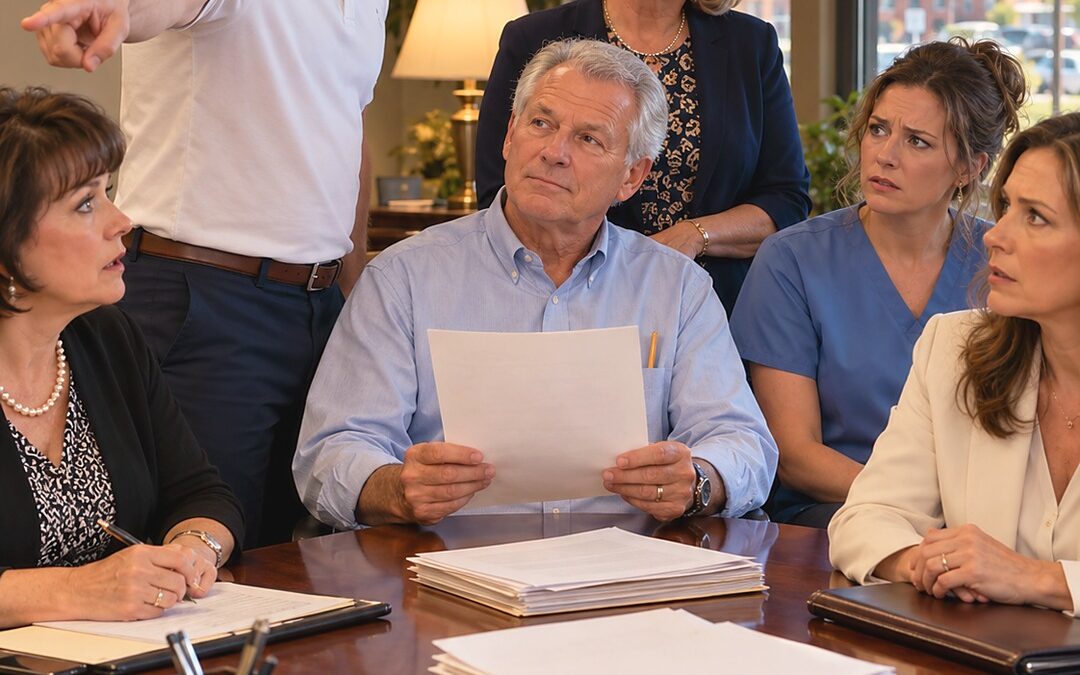
Part 1 — THE ADULTS ARE SIGNING
PART 1 — THE ADULTS ARE SIGNING
At ten Wednesday morning, October 7, my son-in-law shoved a Donor Statement toward me and said, “Ray held the account. That's the whole job. Go wait in the truck, the adults are signing.”
Ninety-six thousand dollars of my wife's inheritance sat in escrow, and the paper he wanted me to sign said it was Colt's own savings.
He tapped a yellow flag beside my name.
“Sign where it's flagged.”
“And Jolene, honey, take the boy for a snack. This is a grown-ups' table.”
That was Colt's mother, Darlene. She was sixty-two, had been in the room maybe fifteen minutes, and already seemed to know where everybody belonged.
Our grandson Eli closed his shark book.
He was nine. School was out for a teacher in-service day, so Jolene had brought him along rather than leave him with a neighbor.
Jolene stayed seated.
“Eli's fine.”
“Oh, honey, I'm just trying to make things easier.”
Darlene pointed toward the hallway, where a vending machine had been making a grinding noise since we arrived.
Eli opened his book again.
Across from me, Patsy Odom held out a pen.
“Mr. Dollarhide, you can review it first.”
“Thank you, Patsy.”
I pulled the paper closer. Colt still had one finger on the corner, so he had to move it.
“Ray, seriously?”
“I'm reading it.”
“It's three paragraphs.”
“Good. I won't miss lunch.”
Colt sat back. The table shifted, and Peggy Tuttle caught her water glass before it went over.
I hadn't come to Greeneville Title & Escrow expecting a pleasant morning, but I did expect to be allowed to read the document carrying my name.
I'd spent thirty years buying property for the Tennessee Department of Transportation. Retired two years now. A man could hand me six pages about a drainage easement and I'd read every one, including the page where somebody had tried to hide an extra driveway.
Colt knew that about me.
He also knew I'd made exceptions for him.
My daughter Merry sat two chairs away, still wearing the same tired expression she'd had when she came off her hospital shift that morning.
She was thirty-four, worked nights as a nurse, and had changed out of her scrubs at a gas station before meeting us.
“Daddy, can we please get through this?”
“I'm working on it.”
Colt leaned toward her.
“Mer, it's routine.”
“Then let him read,” Jolene said.
Patsy moved the remaining closing papers away from my elbow.
She was fifty-eight, worked for Greeneville Title & Escrow, and had the sort of office manner I appreciated. If she needed a signature, she showed you the line. If something was missing, she said what was missing. No sales pitch attached.
Dana Whitlock, Colt's real estate agent, was considerably more enthusiastic.
She wore a cream blazer that looked expensive enough to require special handling at the dry cleaner. Her leather folder matched her shoes, and she'd placed yellow signature flags on the documents before we arrived.
“Everybody's excited,” she said. “Colt has worked incredibly hard for this.”
Darlene sat up.
“My boy bought this house.”
Peggy Tuttle, the seller, moved her water glass farther from the edge.
“Well, we're hoping to sell it today.”
Dana smiled at Colt.
“He really is self-made.”
Colt gave a little shrug.
“Long hours. That's all.”
That part was true. He managed sales at Tri-County Ford, and I'd seen him leave family dinners because somebody wanted to discuss trading a Silverado at eight on a Sunday night.
He'd worked hard for years.
I couldn't recall him ever working hard enough to earn the money Jolene and I had wired on Monday, though.
Bryce Hollander sat beside Dana with a thin black folder.
Thirty-six years old, new to his position at Smoky Mountain Federal Credit Union. He'd told us earlier that this was his first stated-assets closing, and he'd been checking his paperwork against a printed list.
Colt had invited him.
“Good to have the bank right here,” Colt had told me when Bryce came in. “Nobody has to make a big production out of anything.”
That was a curious reason to invite a loan officer to watch a family sign papers. I hadn't planned to make a production. I had planned to read.
Bryce gave me a polite nod.
“Take your time, sir.”
Colt checked his watch.
I turned over the first page.
The heading said Donor Statement.
Paragraph one identified Raymond and Jolene Dollarhide as the holders of the account from which the transfer had been made.
Correct.
Paragraph two confirmed that the money had been transferred to Greeneville Title & Escrow.
Also correct.
The wire had gone through Monday morning, October 5, because Patsy required the money two business days before the scheduled closing.
Jolene had watched me enter the routing information at our kitchen table. She knew the account number better than I did, which was no surprise after twenty-eight years handling school-system accounts.
The money belonged to us.
More precisely, it came from her father.
Harold Keene had died two years earlier at ninety-one. He'd worked as a carpenter most of his life and left Jolene a piece of land near Douglas Lake, which she eventually sold for three hundred eighty-five thousand dollars.
When Merry asked if we could help with the down payment, Jolene was the one who answered.
We'd gone over the amount before telling the kids. Colt had wanted a good house in Greeneville, close enough for Merry to get to work without spending half her life driving.
The property at 3187 Cedar Ridge Court was priced at three hundred eighty-nine thousand dollars.
It had a decent yard for Eli, and Gil Tuttle had maintained the place well.
At the walkthrough, Colt had admired the Tuttles' yard sign and asked if he could keep it afterward.
“Take it, son,” Gil said.
Peggy immediately added, “After closing.”
Colt had laughed and promised a picture.
That was about all the house discussion I needed in my head that morning. The money had been transferred, the papers were on the table, and I was supposed to be signing.
Then I reached paragraph three.
"The funds are the Borrower's own savings, moved through the donors' account for convenience."
I kept my finger under the sentence and went back to its beginning.
Borrower's own savings.
Colt was the borrower.
Our account.
His savings.
I checked the printed names below the paragraph.
Raymond Dollarhide.
Jolene Dollarhide.
Two signature lines, both blank.
Colt noticed I'd stopped.
“That's just how they word it.”
“Who does?”
“The credit union.”
“Who told them the money was yours?”
He glanced at Dana.
“Ray, it's a tax thing.”
“What tax thing?”
“Can we get through the paperwork first?”
Dana opened her leather folder.
“The statement reflects the information supplied for financing.”
“Supplied by whom?”
“By the client.”
“Colt?”
“Yes.”
I turned back to my son-in-law.
“Did you tell Dana the money belonged to you?”
“It's family money.”
“That wasn't what I asked.”
He tipped his head toward Bryce.
“It's how the financing works.”
Bryce stopped writing.
“Excuse me. Is there a question about the statement?”
Colt answered before I could.
“He's old-school, wants his own wording. We're fine, Bryce.”
Bryce held his pen above the checklist.
“Well, sir, the information does have to match.”
“It does.”
I slid the document toward the young man.
“Could you tell me why this sentence is here?”
Bryce read it.
His pen came down onto the paper beside his checklist.
— continue reading from here —
Colt leaned across Merry's chair.
“It's tax wording, Mer.”
She pressed the heels of her hands against the table, trying to stay upright.
“Daddy, didn't you give us that money?”
“Your mother and I agreed to give it.”
“Then what's wrong?”
“This says Colt saved it.”
Merry read the sentence.
Her night shift had included an emergency admission, she'd told Jolene earlier, and she was supposed to sleep that afternoon before going back Thursday. She'd come here because Colt said the closing would be quick.
“Colt said they had to describe the transfer a certain way.”
“Did you read this before today?”
“No. He handles the financing.”
The loan was in Colt's name alone. His income qualified, and Merry was there to sign the property documents. She hadn't seen the asset statement.
“It's complicated,” Colt said.
“Try me.”
He gave a short laugh.
“Ray, you've signed bank papers before.”
“I have.”
“Then you know they use their own language.”
“I know they expect people to mean what they sign.”
Darlene shifted toward Merry.
“Honey, your husband's spent months getting this together. We don't want to lose the house over some little misunderstanding.”
Jolene moved her coat off the back of her chair.
“Darlene, that money came from my father.”
“Well, of course, hon. Everybody knows that.”
“Then why doesn't the paper say it?”
Darlene had no answer ready.
She turned to Peggy instead.
“Have you seen the kitchen? Colt's having the cabinets redone.”
Peggy gave her a brief nod and went back to the documents.
Eli pulled his shark book against his stomach.
“Grandpa?”
“Yeah, buddy?”
“Are we leaving?”
“Not yet.”
“Can I read?”
“Sure.”
He opened to a picture of a hammerhead and began sounding out the caption under it.
Patsy gave him a small smile, then returned her attention to me.
“Mr. Dollarhide, would you like me to explain what we were asked to obtain?”
“I would.”
She brought the Donor Statement around to her side.
“The wire came from an account in your names. The credit union requested an explanation from the account holders.”
“Because Colt told them the money was his?”
She checked the form.
“That's what this statement says.”
Bryce straightened a page in his folder.
“If I may, sir, this loan uses our stated-assets program.”
Colt interrupted.
“Bryce, we've covered that.”
The young man stopped.
I asked, “Does the program allow gifted down-payment funds?”
“Not as qualifying borrower assets, no.”
“And this statement says they're his.”
“Yes, sir.”
Bryce glanced toward Colt.
“I'll need to verify that.”
Dana gave a practiced smile.
“The funding is already in place. I'm sure we can straighten out the terminology.”
I didn't particularly care for the word terminology when somebody was asking me to claim ownership of money that had come from my wife's inheritance.
“Can you straighten it out before I sign?”
“Let me speak with the parties involved,” Dana said.
“I'm one of them.”
“Of course, Mr. Dollarhide.”
Colt pushed his chair back.
“Unbelievable.”
Merry turned toward him.
“Can they fix it?”
“There's nothing to fix.”
“Then why is Daddy saying it's wrong?”
“Because he doesn't understand the structure.”
I pushed the page back to Colt.
“Explain it.”
He gave the document a quick glance.
“It's money going toward our house. I arranged the financing. The lender needs to see it in the right account category.”
“Whose savings?”
“Ray.”
“Whose?”
He stopped.
Dana slid her folder closer to the statement, but Patsy kept the page beside her.
“Mr. Faircloth,” she said, “were these funds yours before the transfer?”
“Ray held them.”
“That's where they were kept. Were they yours?”
He picked up his phone and set it facedown.
“Look, the money's there.”
Patsy checked the paragraph again.
“Mr. Dollarhide, was this intended as a gift?”
“Yes.”
“To Meredith and Colt Faircloth?”
“Yes.”
Merry leaned forward.
“So can we just say that?”
“That's what I want,” I told her.
Patsy made a note.
“We'll need a different document.”
Colt stood.
“For crying out loud.”
The table was narrow enough that his movement bumped Dana's folder. A packet of disclosure forms slid toward Peggy, who stopped them against her elbow.
Colt had always been good at making a simple favor sound urgent.
Back in 2019, he came to our house after supper with paperwork for an F-150 lease. His credit wasn't quite strong enough, he said, and he'd negotiated a good payment through the dealership.
I asked whether he could afford it.
He told me yes.
I signed as co-signer without reading the agreement, something Jolene asked about before the ink had dried.
Colt made every payment. I won't take that away from him.
But he also learned that when he put a signature page in front of me and told me everything was handled, there was a fair chance I'd believe him.
That morning, he seemed to be counting on the same thing.
I picked up Patsy's pen.
Colt stopped pacing beside his chair.
“Thank you.”
I set it down.
Then I reached into my shirt pocket.
Harold Keene's carpenter pencil was there, worn down to two knuckles. He'd given it to me while repairing our back steps years ago, and one side was smooth where his thumb had held it.
I turned it twice.
The wood gave a little under my fingers. I nearly snapped it near the sharpened end before easing my grip.
Jolene was watching from the other side of the table.
I put the pencil back.
“Patsy, who prepared this Donor Statement?”
Dana answered.
“I did. From the information Colt provided.”
“Did you ask us whether it was accurate?”
“I understood the account arrangement had already been discussed.”
“With Colt.”
“With my client, yes.”
“I'm standing right here, Dana.”
She glanced at Patsy.
“Perhaps we should prepare a revised version.”
Colt returned to his seat.
“Now we're talking.”
Patsy kept the original in front of her.
“First we need to establish the source.”
“Jolene's inheritance,” I said.
“Thank you.”
Colt spread his hands.
“It's still going to us. We're the buyers.”
“I'm aware of that,” Patsy said.
“Then what's the issue?”
She turned the statement toward him.
“This sentence says you own the money.”
“It's the account explanation.”
“Is it accurate?”
Colt took his phone from the table.
He didn't answer her.
Patsy marked the page and reached for the closing checklist.
“A false lender statement can be a federal matter.”
Bryce placed his pen across his folder.
Dana straightened the stack of papers in front of her.
Patsy continued, “I won't ask anyone to sign disputed language.”
“Fine,” Colt said. “Change it.”
“We'll review what the lender requires.”
“How long?”
“I can't tell you yet.”
He checked the wall clock.
The dealership was expecting him back. He'd mentioned a Silverado trade three times since arriving, though I doubted the man shopping for that truck would have cared what we were doing in Greeneville.
Peggy finally spoke.
“Are we still closing today?”
Patsy checked the documents.
“Not with this statement unresolved.”
Gil Tuttle pulled his chair toward the table.
“We were told the financing was ready.”
“It was,” Dana said. “We've got an approved file and a complete closing package, subject to the remaining verification.”
Bryce looked up.
“Subject to verification, yes.”
Gil was seventy-one and had spent most of the morning being patient with people who were supposed to be buying his house.
He wasn't a man who wasted many words.
“What's that mean for us?”
Dana turned her tablet toward him.
“It means we need corrected paperwork.”
“Today?”
“I'm working on it.”
Gil put on his glasses and checked the agreement Peggy had taken from her handbag.
“Dana, didn't you say the financing condition was waived?”
“Yes. Colt waived that contingency when he made the offer.”
Colt pointed at the document.
“And that's how we got the house.”
Peggy reached over and held the agreement flat for her husband.
Gil read the marked provision.
“Then if the financing doesn't go through, what happens to the deposit?”
Dana took a breath before answering.
“The sellers retain the rights set out in the agreement.”
“Which means?”
“The earnest money is at risk.”
Colt had put down twelve thousand dollars of his own money.
That was real money, too. I had no intention of pretending otherwise.
Merry leaned toward me.
“Daddy, please. Eli's already picked his room.”
“I helped him measure it.”
“He wants his desk under the window.”
“I remember.”
“We can't keep living in that rental forever.”
I glanced at her husband.
He'd told Merry their current place was too small, and he was right about that. Eli's bedroom barely held his bed and school desk, and Colt's work clothes were spread into a second closet because theirs was full.
They needed more space.
Merry rubbed the mark left by her hospital badge at the base of her neck, then stopped when she noticed me watching.
“Can't you just sign?”
“No, sweetheart.”
She pulled her chair back into place.
Colt stepped toward her.
“Mer, he's making this harder than it needs to be.”
“I'm trying to get the right document,” I said.
“The funds are there.”
“They are.”
“Everybody knows where they came from.”
“Then putting that on paper shouldn't be difficult.”
Darlene gave a tired sigh.
“Honey, why don't we all take a little break?”
Patsy reached for her appointment calendar.
“That may be necessary.”
Bryce turned a page on his checklist.
“May I ask one more question before we stop?”
Colt pulled out his chair.
“Go ahead.”
“The money you listed for this loan. You said you had it in Mr. Dollarhide's account?”
“That's what I've been saying.”
“And the Donor Statement was meant to confirm that?”
“Yes.”
Bryce wrote something.
“Okay.”
Colt nodded, apparently satisfied.
The young man didn't look satisfied, but he was new to this work, and he wasn't going to argue with a room full of people until he'd checked his file.
I could respect that.
Patsy asked me whether I'd consider signing a corrected letter at the rescheduled closing.
“Yes.”
“Friday morning?”
“That works.”
Colt leaned against the window ledge.
“Now we have to come back?”
“You'll need the correct paperwork,” Patsy said.
Merry looked at him.
“Colt, we've got Friday.”
“I've got customers waiting at work.”
“You can take Friday morning.”
“You know how my schedule is.”
“Mine's not exactly empty.”
That brought him around.
“I'm trying to do this for us, Mer.”
She started to answer, then stopped.
He'd been working long hours, and nobody could say otherwise. But Merry had just finished twelve hours on her feet at the hospital, and her shift hadn't ended with somebody handing her a cream-colored folder and praising her for being self-made.
Darlene leaned toward my wife.
“Jolene, hon, I know your heart's in the right place.”
Jolene pulled her coat onto her lap.
“Darlene, don't.”
“I'm just saying, families sometimes have to give a little.”
“We've given ninety-six thousand dollars.”
“Yes, honey, and that's wonderful.”
“Then let Ray read what he's signing.”
Darlene turned toward Dana.
“I suppose we'll be here Friday.”
Dana gave her a professional smile.
“We'll work toward that.”
Gil checked with Peggy, who had a doctor's appointment that afternoon and was already gathering her belongings.
“We can return Friday,” he told Patsy. “But I'd appreciate knowing before we drive over whether the papers are ready.”
“I'll contact you,” Patsy said.
Colt went back to the table.
“Ray, I'm asking you to help us out. You know what I mean.”
“I know what you're asking me to sign.”
He rested his fingertips beside the yellow flag.
“It's the same money either way.”
“Then you won't mind the correction.”
He gave Merry a quick glance.
She didn't answer for him.
I put the pen beside Patsy's file.
“I'll sign Friday, and only a true letter.”
Patsy entered the appointment into her calendar.
“Ten o'clock. I'll confirm with everyone.”
Dana began arranging the revised paperwork with her.
Colt stood near the window.
“You're really making the whole room come back over that sentence?”
“Yes.”
“You know how that makes me look?”
I didn't answer. Patsy had brought out another sheet, and I wanted to see what she was writing.
“Mr. Dollarhide,” she said, “I'll retain the unsigned Donor Statement in our file.”
“Please do.”
She removed Dana's yellow flag from the signature line and attached the document behind the transfer record.
I asked for a blank sheet.
Patsy handed one across.
“I want the escrow instructions recorded.”
Colt turned around.
“Now what?”
“Patsy, will you note that the funds aren't to be disbursed without the donor's authorization?”
“I can note the restriction.”
She wrote on the transfer record while I watched.
“And they're still in escrow?”
“Yes. Undisbursed.”
Jolene had been studying the transaction sheet.
“Patsy, if this doesn't close, can we get the money returned?”
“Yes, Mrs. Dollarhide.”
“Would Colt have to approve it?”
“No.”
Patsy indicated the transfer record.
“The donor may withdraw in writing before closing. We'd need the signed instruction.”
I asked her to put that in the file.
She did.
Colt came back to the table.
“Are you talking about taking our down payment away?”
“I'm asking where it is.”
“You know where it is.”
“Then you don't need to worry about Patsy confirming it.”
He pulled his phone from his pocket.
“Ray, you've turned a routine closing into a circus.”
Nobody had raised a voice. The papers were still on the table, and Peggy was standing by the door trying to remember whether she'd left her reading glasses beside her water.
I would have liked to tell Colt that if this was a circus, the ticket prices were too high.
Instead I asked Patsy to confirm one last thing.
“The donor signs last, doesn't he?”
“For the release of these funds, yes.”
“Then I'll sign last.”
She made a mark beside my name.
Merry came over while Patsy finished copying the instruction.
“Daddy?”
“Yeah, sweetheart?”
“Colt thinks you're trying to embarrass him.”
“He told me.”
“He's been working on this for months.”
“I know.”
“And Mom gave us the money because she wanted us to have this house.”
“That's still what she wants.”
Merry kept her arms close to her sides.
“So what are we doing?”
“Getting the paperwork straight.”
“Can't you trust him to fix it?”
I glanced at the original Donor Statement in Patsy's file.
“Dana's preparing another document. We'll read that one too.”
She nodded, though she plainly wanted a different answer.
Colt had stepped into the hallway to take a call. His voice carried through the doorway, quick and cheerful, suddenly back to talking about vehicles.
Darlene was telling Peggy she'd send flowers when the Tuttles moved.
Gil found Peggy's glasses beneath her copy of the agreement.
Jolene helped Eli with his jacket, and he came over carrying his shark book.
“Grandpa, are we getting lunch?”
“Probably.”
“Pal's?”
“Ask Grandma.”
He went straight to Jolene.
She told him we'd see.
Patsy finished writing the note and dated it.
I read it before taking my copy.
The money remained in the trust account, with no disbursement authorized on the disputed paperwork. Withdrawal before closing required written instructions from the donor.
I put the copy into my folder.
Dana gathered her tablet. Bryce had tucked his checklist into the black folder and was talking quietly with Colt, who'd come back from the hallway.
Patsy asked if I needed anything else.
I told her there was one thing.
She opened her transaction ledger.
“Go ahead, Mr. Dollarhide.”
“I want to be clear about the wire.”
She checked the entry, then turned the ledger so I could see it.
“Mr. Dollarhide, the wire is already in my trust account.”
“Then it stays there until I say.”
Part 2 — THE PRICE OF A SIGNATURE
PART 2 — THE PRICE OF A SIGNATURE
By two Wednesday afternoon, Colt Faircloth had called Merry six times, and now he was sitting across from me at her kitchen table, demanding the signature I hadn't given him that morning.
He was still wearing his white dealership shirt. His tie lay on the counter beside a bag of Kroger rolls nobody had opened.
“Daddy, just sign it,” Merry said.
“The Donor Statement?”
“Yes.”
“Did Colt show you paragraph three?”
She turned toward her husband.
“He said it was tax wording.”
Colt pushed his chair back from the table.
“I lost half a day's work over this.”
“Colt, please,” Merry said.
“No, Mer. He needs to understand. We had the sellers there, the bank there, everybody ready.”
“I was there too,” I said.
“You know what I mean.”
Jolene sat beside me, still wearing her coat. She'd offered to make coffee when we arrived, but Merry had insisted, then forgotten to turn on the machine until Colt reminded her.
Our daughter hadn't slept since her night shift.
The mark from her hospital mask was still visible across one cheek, and when she reached for the coffee pot, she poured into Colt's cup until it nearly overflowed.
“Sweetheart,” Jolene said. “Sit down.”
“I've been sitting all morning.”
“Then let me finish.”
Merry handed her the pot.
Colt had been telling the same story since leaving Greeneville Title & Escrow. According to him, the lender was satisfied, Dana had everything ready, and I had chosen the worst possible time to argue about language nobody cared about.
I could name at least two people who cared. One was sitting beside me, and the other had spent thirty years reading state property contracts for a living.
“Did Dana correct the statement?” I asked.
“She's working on it.”
“Good.”
“That's all you've got?”
“What else do you need?”
Colt held up his phone.
“I need to know you'll sign Friday.”
“I told Patsy what I'd sign.”
He put the phone down.
“See? This. Every answer has a condition.”
Merry sat between us with her coffee.
“Daddy, why can't you trust him?”
Colt leaned back.
That question suited him well enough. He'd already asked her to get me here, and now she'd put the argument into words he didn't have to say himself.
“I trust you to tell me the truth,” I said.
“Then trust Colt.”
“I asked him whether the money was his.”
She turned toward him.
“Colt?”
“Babe, we've been through this. It's how the transfer was structured.”
“Then tell her who owned the money,” Jolene said.
“Jolene, I respect you. But you're making a bank transaction sound personal.”
“It came from my father's property.”
“I know that.”
“Then we're finished discussing who owned it.”
Colt picked up his cup but didn't drink.
Merry looked from her mother to her husband.
“Can somebody explain why the money can't just be a gift?”
Colt answered quickly.
“Because that's not how this particular loan works.”
“What does that mean?”
“Bryce got us approved. Dana knows the paperwork. We're this close, Mer.”
He held his thumb and forefinger apart.
Merry had spent the last month looking at pictures of the house on her phone. She'd measured curtains, worked out where the dining table would go, and promised Eli that the small room overlooking the backyard would be his.
Now she was trying to understand why the money her grandparents had left behind might cost her that house.
“Does Bryce know it's a gift?” she asked.
Colt reached for his phone.
“Bryce knows what he needs to know.”
That answer bothered Jolene enough that she put down her coffee.
“What did you tell him?”
“The funds are available.”
“Colt.”
“Mom, come on.”
Jolene had never liked being called Mom by a man who usually remembered she was his mother-in-law only when he needed something.
She let it pass.
“What did you tell the lender?”
“Dana prepared the statement. Ray wouldn't sign. Now we fix it.”
He got up and walked to the refrigerator.
There were two covered casserole dishes on the middle shelf. He opened one, decided against it, and shut the door.
Merry watched him.
“Did the bank say something was wrong?”
“No. I've already talked to Bryce.”
“And?”
“He needs the supporting records. That's normal.”
“What records?” I asked.
“Account information.”
“From whose account?”
“Ray, you've got to stop turning everything into an interrogation.”
“It's our account.”
He moved toward the counter.
“I'm aware.”
Merry's coffee had gone cold.
“Could we just send them the account information?”
Jolene turned to her.
“Sweetheart, your father and I can show where the money came from. We can't show that Colt saved it.”
Colt set his cup beside the sink.
“That's exactly the sort of comment that's going to kill this deal.”
Merry rubbed beneath one eye.
“Please. Both of you.”
I pulled my chair closer to the table.
“Colt, why was Bryce at the closing?”
“I invited him.”
“I know. Why?”
“Because it's his first file under that program, and he wanted to see it through.”
“Anything else?”
Colt took his keys from the counter.
“I thought having a loan officer in the room would keep everybody focused on the paperwork. Somebody could answer questions right there instead of stopping the closing.”
“Well, he was there.”
“And you still stopped it.”
I left that alone.
Merry turned to Colt again.
“Did you know Daddy would have a problem with the statement?”
“Your dad's been signing things for us for years.”
“Colt,” she said.
“What? He helped with my truck.”
He was right about that.
In 2019, I'd co-signed the lease on his F-150 without reading beyond the payment terms and signature page. Jolene had asked whether I knew what I'd agreed to. I told her Colt had explained it.
He'd made the payments.
Still had the truck.
I could hardly complain that he expected another favor after I'd spent years making them easy.
But this was Jolene's inheritance, and he wanted us to sign our names beneath a statement that wasn't true.
“I'm not co-signing another lease,” I said. “This paper says you saved ninety-six thousand dollars.”
“It's going into our house.”
“That's a different sentence.”
Merry leaned across the table.
“Daddy, nobody's trying to take your money.”
“I didn't say they were.”
“Then why are we arguing?”
Colt answered.
“Because he thinks I shouldn't get credit for buying the place.”
She stared at him.
“Credit?”
He rubbed a thumb across the seam of his jeans.
“Mom's told everybody. Dana's been talking about how hard I've worked. We're finally getting a place worth having.”
“You have worked hard,” Merry said.
“Exactly.”
“But Mom and Dad are helping us.”
“Everybody gets help somewhere.”
He said it quickly, already moving toward the door.
Jolene stopped him with a question.
“Did Darlene tell Aunt Pam you bought it yourself?”
Colt kept his keys in his hand.
“She told a few people. What's the problem?”
“Does she know about the gift?”
“She knows you helped.”
Merry looked down at her cup.
Colt worked twelve-hour days often enough, and I wasn't going to pretend otherwise. He was good at selling cars and better at remembering which customers wanted a call when a certain truck came in. But he'd begun treating the house as another sale he needed to close before anybody examined the numbers.
“Dana got us the winning offer,” he said. “The credit union approved me. I'm not walking all that back.”
“You may need to talk to Bryce,” I said.
“I already have.”
“Then let him straighten out the application.”
Colt reached the kitchen doorway.
“You know what, Ray? Merry signed our last rental lease without turning the pages over. Took her about thirty seconds. She trusted me because I'd handled it.”
Merry lifted her head.
“That was a rental agreement, Colt.”
“My point is, nobody had to make a federal case out of it.”
Jolene put her cup down.
“She's allowed to read what she signs.”
“Of course she is.”
“Then so is Ray.”
Colt's keys scraped the doorframe as he turned toward us.
“Friday. Ten o'clock. We need to finish.”
He went outside before Merry could answer.
Through the kitchen window, I saw him climb into the F-150. He sat behind the wheel talking into his phone before he started the engine.
Merry stayed at the table.
His coffee remained untouched.
“Daddy, he really does work hard.”
“I know.”
“He's been saving for years.”
“For this house?”
She studied the cup in front of her.
“That's what he told me.”
“How much has he saved?”
“I don't know exactly.”
Jolene got up and brought over the coffee pot, though neither of us wanted more.
Merry reached for a paper napkin.
“Mom, you promised us the down payment.”
“We did.”
“Are you taking it back?”
“Not today, sweetheart.”
Merry pressed the napkin to her cheek.
“I told Eli he'd have a backyard.”
His bedroom door stood partly open down the hallway. One sneaker lay outside it, and I could hear him working through a multiplication worksheet.
“He still might,” I said.
Merry shook her head.
“You don't understand. We've been looking for so long.”
She started crying.
Jolene pulled a chair beside her, and Merry leaned against her mother's shoulder.
I stayed where I was.
There wasn't much I could say about the house that wouldn't sound as though I was bargaining with my daughter over her husband's paperwork.
Eli came out carrying his worksheet.
“Mom, can you check number six?”
Merry straightened.
“Bring it here, baby.”
He laid the paper beside Colt's untouched coffee, and she took the pencil he offered.
At three fifteen, Jolene and I left in the Ranger.
Traffic was backed up near the Food City on West Andrew Johnson Highway. A school bus blocked the right lane while the driver tried to make a turn, and the traffic light changed twice before we moved.
Jolene watched the bus go.
“She's exhausted.”
“I know.”
“She'd sign anything just to get this finished.”
“Probably.”
My wife sat quietly until we reached the highway.
Then she said, “I don't want Merry choosing between us and Colt.”
“I'm not asking her to.”
“She'll think we're holding the house over her head.”
“I heard what she said.”
“Ray, I'm asking you not to accuse him tonight.”
I glanced at her.
“You think he lied to Bryce.”
“I think you do.”
She was right about that.
I hadn't seen Colt's loan application. I knew what the Donor Statement said, and I knew where the money came from. That was enough to refuse my signature, but Jolene wanted me to have the actual documents before asking our daughter to believe something about her husband.
At the next light, she said, “Remember that commissioner in ninety-six?”
“Leland Mercer?”
She nodded.
Mercer had wanted TDOT to pay for a storage building that wasn't on the property. No foundation, no tax record. He'd called my supervisor and then our house, trying to get me to approve the adjustment.
I refused.
Jolene had taken the last call while I was mowing.
“Back then you had a department behind you,” she said.
I turned onto our street.
“This time it's Merry.”
The garage door was open when we got home. I'd left a rake leaning against the wall, right where Jolene had told me not to leave it.
I parked but kept the engine running.
“Don't tell her what you suspect until Friday,” she said.
“All right.”
“Let Patsy show you what she has.”
“I'll go tomorrow.”
Jolene opened her door.
Then she stopped.
“I'm not asking you to sign his statement.”
“I know.”
She went inside.
I put the rake away before following her.
Merry came over around five with Eli.
She'd slept perhaps an hour, she said, and Colt had gone back to the dealership. Eli went into the living room to watch television while Jolene heated vegetable soup.
Merry stayed in the kitchen.
“Daddy, I found out something.”
I pulled out a chair.
“Sit down.”
She sat across from me, then brought her phone out of her pocket.
“Colt applied at another bank last year. They turned him down.”
“Why?”
“He said their requirements were too strict.”
“What changed?”
“He made more money this year. And Bryce's credit union approved him.”
She opened a message from Colt.
“He says they need the account records by tomorrow at five.”
“Thursday?”
“Yes.”
“From our account?”
“That's what he said.”
I took the grocery receipt beside the salt shaker and wrote down the deadline.
Merry watched me.
“Is that going to be a problem?”
“I need to see what they're asking for.”
She leaned forward.
“Daddy, if you give them the bank statements, will that fix everything?”
“Depends on what they're trying to prove.”
“Colt says it's just verification.”
“Then Bryce can tell me.”
Merry slid her phone toward herself.
“He says you're making this hard.”
“I'm asking for accurate paperwork.”
She gave a tired little nod.
“He's handled everything because the loan's in his name. I never saw the asset forms. I thought he had all the money stuff straight.”
Jolene brought her a bowl of soup.
Merry took two spoonfuls before asking whether we'd still be at the title office Friday.
“We're going,” I said.
She ate a little more.
Eli came into the kitchen and asked for crackers.
Jolene opened the cupboard.
Merry watched her son carry the packet back to the television, then pushed her soup aside.
“Daddy, I just want us to move.”
“I know, sweetheart.”
She got up to help Jolene with the dishes.
After they left, I put the receipt near the kitchen phone.
Jolene picked it up.
“Five o'clock?”
“That's what Merry said.”
“Will you send the statements?”
“I'll talk to Patsy first.”
She pinned the receipt beneath the refrigerator magnet.
We ate the leftover soup after Eli and Merry had gone home. Jolene asked whether I thought Colt would change the paperwork, and I told her I didn't know.
At nine thirteen, Merry texted to say Colt was still talking to Dana.
I answered that I'd be at the closing.
At ten forty-seven, my phone lit up again.
“Colt says if you don't sign Friday he'll cancel and we lose the $12,000. Please.”
Part 3 — THE FIVE O'CLOCK DEADLINE
PART 3 — THE FIVE O'CLOCK DEADLINE
At seven twelve Thursday morning, October 8, Merry's text was still on my phone, and Colt's twelve-thousand-dollar deposit was still riding on a house we were supposed to have closed on yesterday.
I hadn't answered her last message.
Jolene found me at the kitchen table with a piece of toast I'd forgotten to eat.
“Did Merry call?”
“No.”
“Are you going to answer her?”
“After I see Patsy.”
“Ray, don't leave her wondering all morning.”
I wrote Merry a short message.
I'm going to the title office. Love you.
Her answer came while Jolene was pouring coffee.
Please don't make it worse.
I put the phone beside my plate.
Jolene read the message over my shoulder.
“She's got another shift tonight.”
“I know.”
“She needs some sleep.”
“So do I.”
Jolene took the untouched toast and put it in the trash.
“Then go find out what Patsy has.”
I had Wednesday's Donor Statement in my folder, along with the note Patsy had written about our money staying in escrow.
What I wanted was a corrected letter.
What I needed was to find out why Colt had insisted that ninety-six thousand dollars from Jolene's inheritance be described as his own savings.
At nine eighteen, Patsy Odom showed me into the same closing room.
The table had been wiped down. Somebody had replaced the empty water pitcher, and the thermostat was still set low enough that I regretted leaving my jacket in the Ranger.
Patsy brought in a clean folder.
“Morning, Mr. Dollarhide.”
“Morning.”
“I have a corrected document for you.”
She opened it between us.
The heading read GIFT LETTER.
Jolene and I were named as donors. Meredith Faircloth and Colt Faircloth were the recipients.
The amount was ninety-six thousand dollars.
The letter said the money was a gift, with no repayment expected.
I went straight to paragraph three.
"The funds are a gift from the donors' own savings."
“That's right.”
Patsy placed a copy beside my folder.
“It's what you told us yesterday.”
“Who prepared this one?”
“Our office.”
“Has Colt seen it?”
“Not from me.”
I read the remaining page, including both blank signature lines. Patsy had printed a copy for Jolene, too.
There were no yellow flags.
I appreciated that.
“Can I take these home?”
“Certainly.”
I placed the Gift Letter inside my folder, then took out the Donor Statement from Wednesday.
Patsy recognized it.
“That's the disputed version.”
I opened it to paragraph three.
"The funds are the Borrower's own savings, moved through the donors' account for convenience."
I set it beside the Gift Letter.
“Patsy, does this match what Colt put on his application?”
She brought her own file closer.
“I can't discuss another party's application with you.”
“I understand.”
“I can confirm the statement was submitted to explain the source of the wire.”
“Dana drafted it?”
“Yes.”
“And somebody told the credit union the money was Colt's.”
Patsy didn't answer immediately.
She checked a page in the file, then closed it.
“Mr. Faircloth signed his application Friday the second.”
October 2. Five days before Wednesday's closing.
“Did the application describe the money as savings?”
“Paragraph three matches the source description in the file.”
“His own savings?”
“That's the description.”
I moved the papers side by side.
Patsy didn't try to take either one away.
“Can a gift qualify under this loan?” I asked.
“Bryce explained that program yesterday.”
“He said the borrower's own funds.”
“That's correct.”
“And a gift doesn't qualify.”
“Not under that requirement.”
Patsy spoke in the same tone she'd used to tell Gil Tuttle where his signature belonged. I preferred it to Dana's cheerful assurances, though it wasn't making the morning any more pleasant.
“Would signing this Gift Letter correct Colt's application?”
“That's for the lender.”
“But it won't change what he signed last Friday.”
“No, sir.”
I closed the Donor Statement.
“Does Bryce know you've prepared the correction?”
“He knows we're reviewing the documentation.”
“Has he approved it?”
“Not yet.”
Patsy moved the Gift Letter toward me.
“Would you like to sign today?”
“Friday. With everyone there.”
She made a note.
Then she showed me the escrow record from Wednesday.
Our wire was still in the company's trust account. No money had been disbursed, and the restriction she'd written at my request remained in the file.
“If you decide to withdraw it before closing,” she said, “we'll need your written instruction.”
“I understand.”
I put my copy away.
Patsy walked me to the front desk, where the receptionist was trying to get a shipping label to feed through the printer.
“Friday at ten?” Patsy asked.
“I'll be here.”
Outside, a delivery truck was blocking the end of the parking lot. The driver had stacked cartons on the pavement and was sorting them with a hand truck.
I had to walk around the building to reach my Ranger.
The driver's door stuck on the first pull.
It usually did.
I climbed in and set the folder on the passenger seat.
The two documents lay together inside it. One said Jolene and I were giving the money away. The other said Colt had saved it and merely kept it in our account.
I checked the names again before starting the engine.
At ten thirty-six, my phone rang.
Smoky Mountain Federal Credit Union.
“Mr. Dollarhide? Bryce Hollander.”
“Morning, Bryce.”
“Is this a convenient time, sir?”
“I'm sitting in my truck.”
“Oh. All right. I need to ask about the account.”
“Go ahead.”
He was calling from his office. I could hear somebody nearby asking for a copier code.
“Colt said his savings statements would come through you, I need them by five.”
“Today?”
“Yes, sir. Thursday.”
“Bryce, the account is in my name and Jolene's.”
“I understand.”
“Then what savings are you asking me to prove?”
He paused long enough for the copier to start running in the background.
“Mr. Faircloth reported funds held in your account.”
“As his savings.”
“Yes, sir. That's what's in his file.”
“Did he give you any statements from his own accounts?”
“I can't discuss all of his records.”
“Fair enough.”
Bryce cleared a paper from his desk.
“May I ask whether you'll be providing the supporting statements?”
“I can show where the wire came from.”
“Would those be your records?”
“Yes.”
“Mr. Faircloth represented the arrangement differently.”
“I know.”
Another pause.
“Sir, I can't change the asset category over the phone.”
“I'm not asking you to.”
“And I need to stay within what I'm allowed to discuss.”
“Understood.”
I could hear him turning pages.
Bryce was new enough to be careful with every answer. That was probably a useful habit at a credit union, particularly when your borrower had described someone else's inheritance as money he'd saved.
“Did Patsy tell you she's prepared a Gift Letter?” I asked.
“She mentioned corrected documentation.”
“Have you seen it?”
“Not yet.”
“Then you ought to.”
He made a small sound of agreement.
“Mr. Dollarhide, the file still says savings. The supporting statements were requested from that source.”
“Then I can't give you what Colt described.”
“I understand what you're saying.”
“Do you?”
“Yes, sir.”
He took down something I said about the wire coming from our account.
Then he returned to the deadline.
“I do need the records by five. Otherwise the file goes back for review.”
“I'll bring what's true on Friday.”
“I'll note that. But I can't promise the closing will proceed.”
“Neither can I.”
Before ending the call, Bryce told me Colt had asked him to attend Friday's signing.
“He wants me there again,” Bryce said. “Since it's my first stated-assets closing.”
“Bring your original file.”
“I will, sir.”
I ended the call and stayed in the parked Ranger long enough to put the phone back into its holder.
The delivery driver had finished unloading.
His truck pulled away, leaving a flattened cardboard box beside the curb.
At noon, I found Jolene heating vegetable soup.
She'd bought it at Food City because neither of us felt much inclined to cook.
“Well?” she asked.
“Patsy made the right letter.”
I set it on the counter.
Jolene read it standing beside the stove. She reached paragraph three, then turned the page to check the names.
“This says what we agreed.”
“Yes.”
“Did Colt agree?”
“He hasn't seen it from Patsy.”
She turned off the burner.
“That doesn't sound good.”
“Bryce called too.”
“About the statements?”
“Due at five.”
“Does he want our bank records?”
“He wants proof of Colt's savings.”
Jolene put the letter flat on the table.
“Well, he won't find that in our account.”
“No.”
She brought two bowls from the cupboard.
“Did you tell Bryce?”
“I told him the account was ours.”
“And?”
“He said that's not how Colt described it.”
She filled the bowls.
The soup had too many potatoes in it, and Jolene picked around hers while I told her what Patsy had confirmed.
When I reached the part about Colt signing the application the previous Friday, she stopped eating.
“He knew before we wired the money?”
“He signed the application before Monday's wire.”
“And Merry?”
“She hasn't seen it.”
Jolene pushed her bowl away.
“Please don't tell her over the phone.”
“I wasn't planning to.”
She took the Gift Letter and read the names again.
“Are you bringing this Friday?”
“Yes.”
“And the bank records?”
“I have something better that shows where the money started.”
She gave me a questioning look.
I hadn't pulled Harold's property file yet. That could wait until I knew exactly what Bryce needed.
“For now, keep the letter,” I said.
Jolene placed it on the counter, away from the soup.
We went back to eating.
At five forty-eight, Colt's F-150 pulled into our driveway.
I'd been putting a new screw into the loose latch on the garden gate. From the side yard, I heard his engine, followed by the driver's door closing.
Jolene was in the kitchen.
She called through the window.
“Colt's here.”
“I can hear him.”
I put my screwdriver on the workbench and went around front.
Colt came up the walk wearing his Tri-County Ford polo, with his name embroidered over the pocket. A stain ran along the edge of his collar.
He carried a folded sheet of printer paper.
“Ray, got a minute?”
“Come in.”
“I won't stay. I've got to be back at work.”
He stepped into the living room anyway.
Jolene remained near the kitchen doorway.
Colt unfolded the page.
“Friday's arrangements.”
Across the top, in large black letters, was one word.
ADULTS.
Below it were the names of the people scheduled to attend.
Mine had been added at the bottom in pen.
Jolene wasn't listed.
I held the paper far enough away to read the smaller print.
“What's this supposed to be?”
“Everybody's role. Keeps things moving.”
“Why isn't Jolene on it?”
“She doesn't need to come.”
“She's a donor.”
“You can handle the signatures.”
I looked at the handwritten addition.
“And why am I down here?”
“Ray, come on.”
“I'm asking.”
He pressed the page flat against his leg.
“The main parties finish first. Then you come in and do your part.”
“Is that what Patsy told you?”
“It's what we're arranging.”
“Did Bryce get those statements?”
Colt stopped smoothing the paper.
“What statements?”
“The ones due at five.”
He glanced toward the kitchen.
“That's between me and the credit union.”
“Bryce called me.”
His grip tightened on the page.
“What did you tell him?”
“That the account belongs to Jolene and me.”
“Why would you get into that with him?”
“He asked.”
“I told him you'd help.”
“You should've talked to me first.”
Colt unfolded the list again, though it was already open.
“Dana says you're bringing another letter.”
“Patsy prepared it.”
“Can you stop changing things?”
“The money hasn't changed.”
“Neither has the deal.”
“Did you send Bryce his records?”
Colt moved toward the door.
“It's being handled.”
“That's what you said yesterday.”
He turned back.
“Ray, I've been at work since seven. I've spent every break trying to keep this closing together. Dana's called me four times, Bryce needs another form, and now you're getting involved in the loan.”
“It's our account.”
“It's our house.”
“Not yet.”
He stopped near the door.
Jolene came out of the kitchen carrying a dish towel.
“Colt, you can have the correct letter Friday. Ray told Patsy that.”
“I know what he told Patsy.”
“Then what's the trouble?”
“Mom's told everybody the house is ours. Dana's bringing her original paperwork, Bryce will be there, and the Tuttles are making another trip. I need everybody to follow the plan.”
Jolene hung the towel over the oven handle.
“Have you explained the plan to Merry?”
“She knows we're closing.”
“Does she know what the Donor Statement says?”
“It's tax wording. We've talked about it.”
He looked toward me.
“Besides, Merry signs what I put in front of her. She's never been interested in bank forms.”
I remembered what he'd said about their rental lease.
“Maybe she'd be interested in this one.”
Colt folded the paper sharply.
“I'm not having that argument tonight.”
He opened the front door.
“Friday is the last chance. Everybody's coming.”
I stood beside him.
“All right.”
“You need to follow the schedule.”
“What schedule?”
He opened the page and pointed to my name.
“I don't want you stopping the whole room again. Let the others finish before you come in.”
He held the list between us.
“Wait in the truck till Patsy texts you. Then come in and sign.”
I handed him the paper, and he folded it into his pocket.
Part 4 — A SEAT AT THE TABLE
PART 4 — A SEAT AT THE TABLE
At seven eighteen Thursday night, my nine-year-old grandson pulled a green plastic chair away from his little table and told me I could sit with him.
Ninety minutes earlier, his father had handed me a list marked ADULTS, with my name written at the bottom.
Now Eli Faircloth stood beside a chair designed for somebody considerably smaller than me.
“Come on, Grandpa.”
“Buddy, I weigh a hundred eighty pounds.”
“So?”
“That chair's going to have opinions.”
He pushed it out another inch.
“I sat on it with my backpack. It didn't break.”
His backpack was on the couch. I suspected it weighed almost as much as he did, judging by the junk he'd pulled out of it at our house the previous Sunday.
I lowered myself carefully.
My knees ended up somewhere near my ears, and the chair made a noise I didn't care for.
Eli crouched to inspect one leg.
“It's okay.”
“I'll take your word.”
He sat opposite me.
The tabletop had a white scratch across one corner. Eli had moved the whole arrangement from the spare bedroom into the living room, where a lamp beside the window gave him enough light to draw.
He had two markers beside him.
One worked. The other had dried out, but he'd kept it because he liked the color.
Jolene stood near the couch holding the casserole we'd brought for supper.
Merry had another night shift at the hospital. She'd asked us to come by before she left, partly to see Eli and partly because she knew her mother would bring food.
Colt wasn't home.
His truck had been gone when we arrived, and Merry said he'd returned to the dealership after supper.
She was in the kitchen filling her travel mug.
“Eli, don't make Grandpa sit down there.”
“He fits,” Eli said.
“That's a generous description,” I told her.
Merry came into the doorway.
She still looked tired from Wednesday, though she'd slept during the day. Her hair was tied back for work, and she'd missed one of the snaps on the pocket of her navy scrubs.
“You look ridiculous, Daddy.”
“I've looked worse.”
That got a smile out of her.
It was the first one I'd seen since the closing stopped.
Eli reached underneath his table.
“I made something.”
He brought out a folded piece of notebook paper, torn along one side where the spiral had been. Little scraps still stuck to the edge.
“That's yours.”
I opened it.
The writing ran downhill.
"You can sit at my table."
Beneath the words he'd drawn two chairs, one much larger than the other.
The big one had four legs.
The small one had five.
I studied the drawing while Eli leaned across the tabletop.
“That's your chair.”
“I figured.”
“The big one.”
“Good choice.”
He touched the smaller chair.
“That's mine.”
I ran my thumb beside the words. He'd pressed so hard that I could feel the letters on the back of the paper.
“Thank you, buddy.”
“It's because Dad said you couldn't sit yesterday.”
Merry stopped beside the couch.
I kept the note open.
“Your dad was trying to finish his paperwork.”
“He said grown-ups were signing.”
“That's what he said.”
Eli leaned closer.
“But you're a grown-up.”
“Been one for a good many years.”
“Then why did he tell you to leave?”
Merry set her travel mug on the end table.
“Eli, honey, Dad was upset.”
“He told Grandma to leave too.”
“He shouldn't have said it that way.”
Eli considered that.
Then he pointed at the note.
“You can come to my table whenever you want.”
I put the paper flat between us.
“That's mighty nice of you.”
He picked up the working marker.
“Do you want to draw the new house?”
Merry moved toward the kitchen.
“Maybe later, baby.”
Eli looked at her.
“Are we still getting it?”
She stopped beside the doorway.
“We're trying.”
“Dad said Friday.”
“I know.”
He put the cap back on his marker.
“Can Grandpa come Friday?”
Merry answered before I could.
“Grandpa's coming.”
“Will he have to sit outside?”
She glanced at me.
I wasn't about to explain his father's seating arrangements to a nine-year-old over a plastic table.
“I'm supposed to be there at ten,” I said.
Eli pushed my note toward me.
“Take this with you.”
I picked it up carefully.
“Think I should?”
“Yeah. So they know.”
Merry turned toward the kitchen.
I slid the paper inside my shirt pocket.
For years I'd carried permits and survey notes in there, usually folded badly and sometimes washed by accident. This one needed better treatment.
Eli had already opened his marker again.
He began drawing a roof with a chimney, although the house on Cedar Ridge Court didn't have one.
I stayed in the little chair until he finished.
Then I tried standing.
My right knee made a popping noise that caused Eli to check the chair again.
“Grandpa, did it break?”
“That was me.”
He laughed and crawled underneath the table to inspect the legs.
All five of his little drawn chair legs might have been necessary if I'd stayed much longer.
I went toward the front door.
Merry called from the kitchen.
“Daddy, where are you going?”
“Porch.”
“It's cold.”
“I've got my coat.”
Outside, the porch light buzzed above the door.
Merry's rental was on a narrow street behind a Methodist church. A basketball hoop stood over the neighbor's garage, and somebody had left two garbage cans beside the curb even though pickup wasn't until Saturday.
I stood by the railing.
Through the living room window, Eli was showing Jolene his drawing.
She'd put the casserole in the oven and was sitting on the couch. Eli held up the page and pointed at the chimney.
The door opened behind me.
Jolene stepped out, pulling her coat around her.
“He's making you a whole neighborhood now.”
“Better give him enough paper.”
She stood beside me.
“I saw the note.”
“He worked on it.”
“He asked me this afternoon how to spell table.”
I took the paper from my pocket and showed it to her.
She traced the words with her eyes.
“He heard everything Wednesday,” she said.
“Most of it.”
“Darlene telling him to go get a snack. Colt telling you to sit in the truck.”
“He heard.”
Jolene gave the paper back.
I folded it along the original crease.
For nearly forty years, Jolene had been the one who knew when I was about to say something better left until morning. She'd seen me argue with landowners, supervisors, and one county commissioner who thought a nonexistent storage shed ought to be worth public money.
This time she hadn't told me to back down.
She'd asked me to give our daughter a little room.
“Ray, we need to talk about Friday.”
“Colt gave me instructions.”
“I heard.”
“Did you see his list?”
“He showed it to me before supper.”
“Your name wasn't on it.”
“I noticed.”
She rested her elbows on the railing.
“Are you really going to wait in the Ranger?”
“That's what he asked.”
“Why agree to it?”
“Patsy will have the paperwork. I'll be there when she needs me.”
Jolene studied the church parking lot across the street.
A pickup had stopped beside the entrance. The driver was unloading folding chairs from the bed, setting them against the brick wall two at a time.
“Don't turn this into a contest with Colt,” she said.
“I'm sixty-three, Jolene. I don't need a trophy for sitting in a parking lot.”
“I know.”
She pulled a loose thread from her coat cuff.
“I'm worried about Merry.”
“So am I.”
“Do you remember Harold's memorial supper?”
“Of course.”
“Colt said he'd come.”
“He was working.”
“That's what Merry told us.”
Jolene wound the loose thread around one finger.
“She called before supper and said he'd be there. Then she called again after we'd put the food out.”
I remembered the extra plate she'd prepared for him.
She'd wrapped it in foil and set it near the stove.
“He came later,” I said.
“After everybody left. Merry warmed his supper, and then apologized because the potatoes had dried out.”
Inside the house, a drawer scraped against its runner.
Merry was searching for something.
Jolene watched the porch door.
“She does that with him, Ray. Starts apologizing before she knows what happened.”
I put Eli's note back into my pocket.
“Did you think she'd defend him Wednesday?”
“Yes.”
“Even over your father's money?”
Jolene didn't answer immediately.
The porch door opened.
“Mom? Where's the lid for the soup container?”
“Bottom drawer, behind the muffin pan.”
“I already checked.”
“Behind it, Merry.”
Our daughter went back inside.
Another drawer opened.
“Found it!”
Jolene turned toward me.
“That's why I asked you not to tell her everything yesterday. If she has to choose sides before she's ready, I'm afraid of what she'll do.”
“She'll have to see the documents eventually.”
“I know.”
“Colt won't explain them.”
“I know that too.”
The porch boards creaked under Jolene's shoes when she moved toward the door.
I asked her one question.
“Do you want me to sign the Donor Statement?”
She stopped.
“No.”
“Even if Merry asks?”
“No, Ray.”
I nodded.
Jolene opened the door, then looked back.
“Just don't make Merry the one who pays for his lie.”
She went inside.
I stayed another minute, with Eli's note tucked in my pocket and the church pickup still parked across the street.
At eight ten, Merry left for the hospital.
She carried a dented travel mug and a lunch bag Jolene had packed. Eli stood on the front step while she checked whether she'd locked her car.
“Call when you get there, Mom.”
“I will.”
“Don't forget.”
“I won't, baby.”
She drove away.
Eli went inside and returned to his drawing.
Jolene settled on the couch with him. Colt still hadn't come home, and Merry had asked her to stay until he did.
I stood near the kitchen counter.
“I'm going home to get Friday's papers ready.”
Jolene turned.
“What are you taking?”
“The Gift Letter. Harold's settlement statement.”
She nodded.
“Show me before you leave tomorrow.”
“I will.”
Eli came into the kitchen.
“Grandpa, are you leaving?”
“For a bit.”
“Did you keep my note?”
I showed him the edge sticking out of my pocket.
“Right here.”
“Don't bend it.”
“I'll find an envelope.”
He nodded, satisfied, and went back to the living room.
I drove home.
The house was quiet without Jolene. Her reading lamp was still on beside the couch, and she'd left a load of towels in the dryer.
I went upstairs to the spare bedroom, where we kept the old printer and her filing cabinet.
The printer made its usual grinding noise when I turned it on.
I opened the Gift Letter Patsy had sent and printed two copies.
Then I pulled Jolene's file marked LAKE DOUGLAS LOT from the cabinet.
Her father's settlement statement was inside. The property had sold for three hundred eighty-five thousand dollars, and the proceeds had gone to Jolene.
I placed the statement behind the Gift Letter.
When Jolene came home at nine forty-eight, I was still at the desk.
“Colt finally got back?” I asked.
“About twenty minutes ago.”
“How was he?”
“Tired.”
“Did he ask about me?”
“He asked whether you'd be there.”
“What'd you tell him?”
“That you said yes.”
She noticed the folder.
“Is that everything?”
I opened it.
Jolene read the Gift Letter first.
"The funds are a gift from the donors' own savings."
She set it beside her father's settlement statement.
For a few seconds she kept one finger on the old document, near the line showing the sale amount.
“Dad signed his last property papers here in Greeneville,” she said.
“I remember.”
“He hated paperwork.”
“He hated recording fees more.”
She gave a small smile.
Then she checked the Gift Letter again.
“Why take his settlement statement?”
“It shows where the money came from.”
“Patsy already knows.”
“Bryce may need to see it.”
She closed the folder.
“Are you planning to put everything on the table?”
“If Colt insists the money was his, yes.”
Jolene pulled out the desk chair.
“Ray, promise me something.”
“What?”
“Don't humiliate Merry.”
“I won't.”
“Even if Colt starts up again.”
“I heard you.”
She leaned forward.
“I'm serious.”
“So am I.”
Jolene stood and went downstairs.
I found a plain envelope for Eli's note and put it inside my jacket pocket, away from the closing documents.
Then I went down to the kitchen.
Jolene was heating water for tea. She'd put the casserole dish in the sink and left the kitchen light over the stove on.
“Want some?” she asked.
“No, thanks.”
She poured her tea.
At ten thirty-two, the house phone rang.
Jolene answered it.
Our daughter had reached the hospital and was getting ready to take over from another nurse.
She asked whether Eli had eaten.
Jolene told her he'd finished the casserole.
Then Merry asked for me.
I took the phone.
“Hello, sweetheart.”
“Daddy, are you still coming tomorrow?”
“Yes.”
“Colt said you might not.”
“I told him I'd come.”
“He's really stressed.”
“I know.”
There was a cart rolling somewhere behind her.
A woman called Merry's name.
“Coming,” she called back.
Then she returned to me.
“Did you change the letter?”
“Patsy prepared the correct one.”
“What does it say?”
“It names you and Colt.”
“As the people getting the money?”
“Yes.”
“Did you put something else in it?”
“It's a gift, Merry.”
“Colt says the wording could cause trouble with his financing.”
“He needs to talk to Bryce about that.”
She stopped speaking.
I heard a door open at the hospital, followed by a short announcement over the speaker.
“Daddy?”
“I'm here.”
“What did you put in the letter?”
“Your name's on it, Merry. So is the truth.”
I set the phone back in its cradle.
Part 5 — THE DONOR SIGNS LAST
PART 5 — THE DONOR SIGNS LAST
At 9:40 Friday morning, October 9, I parked my blue Ford Ranger outside Greeneville Title & Escrow and prepared to spend part of the morning sitting in a truck while other people signed papers involving ninety-six thousand dollars of our money.
Colt had given me instructions Thursday.
So I followed them.
The engine was off. My folder sat on the passenger seat, and a crack in the windshield ran from the lower corner toward the inspection sticker. I'd been meaning to have that fixed since August.
Jolene had stayed home.
She'd checked the Gift Letter before I left, then asked whether I'd remembered Harold's settlement statement.
Both were in the folder.
I'd also brought the envelope containing Eli's note, though I couldn't see much use for it at a real estate closing.
At 9:47, Colt arrived in his F-150.
He wore a navy sport coat over his dealership shirt. He parked near the entrance, got out, and spotted my Ranger.
He gave me a short wave.
I returned it.
Then he went inside.
Colt had spent most of Thursday trying to keep the closing on schedule. He worked hard, and I knew he'd lost hours at the dealership arguing with lenders and his agent.
He wanted the house.
He also wanted the people in that room to believe he'd bought it himself. Dana had been calling him self-made since the offer was accepted, and Darlene had already told half her church congregation about her son's new place.
I understood wanting your mother to be proud of you.
I hadn't understood putting her pride on a financial statement.
At 9:53, Bryce Hollander arrived with his thin black folder.
He stopped near the steps when Colt came out to meet him.
They spoke for a minute.
Bryce looked toward my Ranger and lifted his hand. I returned the greeting through the windshield.
Colt said something to him, then held the door while they went inside.
The young loan officer had been careful with me Thursday. He'd said the application still listed Colt's own savings and that the supporting statements had to be received by five.
I hadn't sent him any statements showing Colt owned the money.
There weren't any.
By ten, Gil and Peggy Tuttle had arrived, followed by Dana Whitlock and Darlene Faircloth.
Merry came in her own car.
She'd worked overnight and was wearing a sweatshirt over her hospital clothes.
She started toward my truck, but Colt appeared at the entrance and called to her.
I couldn't hear what he said.
She changed direction and followed him inside.
I looked at the clock.
Ten minutes after ten, Colt came outside carrying the Tuttles' yard sign.
He'd pulled it from their lawn that morning.
I'd seen him admire it during the walkthrough, when Gil joked that he could have it after closing. Peggy had been quite clear about waiting until the sale was finished.
Colt carried it across the lot and stopped beside his F-150.
He took a black marker from his pocket.
From my parking space, I watched him lean over the sign and write across the front.
"SOLD — Built This Myself"
He stepped back to inspect it.
Then he carried the sign toward the building, careful not to get marker on his jacket.
I checked the time again.
Ten twelve.
A woman from the insurance office next door came outside to smoke. She stood beside a planter near the steps, finished half her cigarette, and went back in.
I took the Gift Letter from my folder.
Jolene and I were named as donors. Merry and Colt were the recipients, and the money was identified as a gift requiring no repayment.
Paragraph three was unchanged.
"The funds are a gift from the donors' own savings."
I put it behind Harold's settlement statement.
The sale of his Douglas Lake property was recorded there, three hundred eighty-five thousand dollars paid to Jolene after the land was sold.
Harold had worked most of his life with lumber and tools. He'd left his daughter land, and she'd sold it. The bank records showed the money moving from our account to the title company's trust account Monday.
I closed the folder.
At 10:20, Patsy texted.
Everyone is in the room. You can come up now.
Forty minutes in the Ranger.
I'd spent longer than that sitting in traffic outside Knoxville, so the waiting itself hadn't hurt me.
I got out, pulled the driver's door shut twice before it latched, and walked toward the entrance.
The receptionist recognized me.
“Morning, Mr. Dollarhide.”
“Morning.”
“They're upstairs.”
“Thank you.”
I took the stairs.
Halfway along the hall, I could hear Colt speaking through the open closing-room door.
“The backyard's perfect for Eli. We're putting his swing near the fence.”
Then I stepped inside.
Patsy sat at the head of the table.
Bryce was beside her. Dana occupied the chair near the window, with her leather folder and tablet arranged neatly in front of her.
Gil and Peggy sat together.
Darlene was beside Merry, and Colt had taken the chair opposite Patsy.
The remaining seat was at the far end.
Patsy pulled it out for me.
“Good morning, Mr. Dollarhide.”
“Morning, Patsy.”
Colt leaned back.
“Finally.”
The yard sign stood against his chair.
Up close, the marker strokes were thick and uneven. He'd written over part of the Tuttles' original lettering.
Peggy was studying it.
Colt noticed me reading.
“Like it?”
“That's Gil and Peggy's sign.”
“Gil said I could have it.”
Gil moved his coffee out of the way.
“After closing,” Peggy said.
Colt gave her a quick smile.
“Of course.”
I sat down.
Merry was watching me from across the table. She still had her hospital identification badge clipped to the sweatshirt, and the lanyard had twisted around itself.
“Hi, Daddy.”
“Morning, sweetheart.”
“You got the letter?”
“Yes.”
Patsy opened her file.
“Shall we review it?”
I took out the Gift Letter and placed it in front of her.
Then I laid Harold's settlement statement beside it.
Colt leaned forward.
“What's that second one?”
“The property sale record.”
“Why'd you bring it?”
“Shows where the funds came from.”
“We know where they came from.”
“Good.”
Bryce asked permission to examine the documents.
Patsy passed them over.
He compared the Gift Letter with the settlement statement, then opened his black folder.
“Mr. Dollarhide, this property belonged to Mrs. Dollarhide's father?”
“Yes.”
“And the proceeds went to her?”
“They did.”
He checked the transfer information.
Colt interrupted.
“Bryce, we already talked about the account.”
“I understand, Mr. Faircloth. May I finish?”
Colt sat back.
Bryce continued reading.
Dana brought her chair nearer the table.
“The funds are available, and we're here to complete a closing. I think everyone would agree that's our priority.”
Patsy kept her eyes on the Gift Letter.
“Accuracy comes first.”
“Certainly,” Dana said.
Merry studied the papers.
“Daddy, what's the settlement statement for?”
“Your grandfather's lake property.”
“I know that. Why'd you bring it?”
“Bryce asked where the money came from.”
She glanced at Colt.
“He told me all that was settled.”
“It should have been,” Colt said.
Bryce opened his original loan file.
“Mr. Faircloth, I'm reviewing the supporting records.”
Colt spread his hands.
“Fine. Review them. It's the same money.”
I left the documents with Bryce.
Colt's impatience was familiar. He wanted a problem solved before anybody took enough time to describe it, especially when that problem stood between him and something he wanted.
Merry sat forward.
“Colt, you said the statement was harmless.”
“It is.”
“Then let me see it.”
He reached toward Dana's folder.
“Mer, we've already talked about this.”
“You said it was harmless.”
Dana had brought another copy of Wednesday's Donor Statement. The yellow flag still marked the place where Jolene and I were expected to sign.
Colt pulled it out.
“Here. Read it. There's nothing wrong with it.”
Before he could slide it to her, Merry reached across the table and took it from his hand.
Colt stopped.
“Merry, come on.”
She spread the paper in front of her.
“I want to read it.”
I'd seen Merry sign plenty of things quickly. Colt had reminded me Thursday that she'd signed their rental lease without turning it over, trusting him to have checked it.
She hadn't done that today.
She read the first paragraph, then the second.
Colt leaned toward her.
“It's standard stuff.”
“Let me finish.”
She reached paragraph three.
Her finger traveled beneath the words as she read aloud.
"The funds are the Borrower's own savings, moved through the donors' account for convenience."
Her finger stopped.
She looked at Colt.
“Borrower's own savings?”
“It's tax wording.”
“You said that Wednesday.”
“Because that's what it is.”
Merry turned the document toward him.
“Colt, you told them this was your money.”
“It's our house.”
“That isn't what I asked.”
He reached for the page, but she kept it.
“Mer, the money was coming to us. I handled the loan.”
“Mom and Dad gave it to us.”
“I know that.”
“Then why does this say you saved it?”
He turned toward Bryce.
“Can we explain the account arrangement?”
Bryce had taken another document from his folder.
“Mr. Faircloth, I need to show you something.”
He placed the signed application beside the Gift Letter.
The date at the top was October 2.
“Your application,” Bryce said. “The one you signed last Friday.”
Colt glanced at it.
“I know what I signed.”
Bryce pointed to the asset section.
“Source of down payment: Borrower savings, $96,000.”
Merry read the line.
Then she looked at her husband again.
“You put that on the application?”
Colt adjusted his jacket.
“It got us approved.”
Merry kept the Donor Statement open.
“You told me the credit union knew it was a gift.”
“I said the funds were approved.”
“Colt.”
“Look, I've been working on this for months.”
“I know.”
“I got the financing. I got the offer accepted.”
“With Grandpa Harold's money.”
Colt turned toward Darlene.
“Mom, can you please help me here?”
Darlene had been following the exchange, though she'd said very little since I entered.
“Honey, you told me you'd saved that money.”
Colt shifted in his seat.
“I told you I had the down payment.”
“No, you said you'd put it aside.”
Merry turned toward her.
“He told you that?”
Darlene looked at Colt.
“You did, hon.”
Colt reached for his phone, then left it on the table.
“Can we stop picking apart every conversation I've had?”
Bryce returned to the application.
“Mr. Faircloth, your supporting bank statements were due yesterday.”
“I told you I'd get them.”
“They never arrived.”
“I've been busy.”
Bryce placed the Gift Letter next to the application.
Merry stared at the two documents.
“So they approved you because they thought it was your savings?”
Colt answered before Bryce could.
“Because I qualify for the payments.”
Bryce kept the papers aligned.
“The program requires qualifying assets as well, sir.”
“I had the funds.”
“Not as your own savings.”
Colt turned toward Dana.
“You drafted the statement. Tell him.”
Dana closed her leather folder.
“I prepared the document from the information you supplied.”
“Dana, you said it would work.”
“I relied on the account arrangement you described.”
Bryce checked the signed application once more.
Then he put one finger between it and the Gift Letter.
“One of these two documents is false.”
Merry moved her chair away from Colt.
The air conditioner started overhead, making a vent rattle above Peggy's seat.
Colt looked at Patsy.
“Can we take a break?”
“Not until I've documented the discrepancy.”
“Bryce and I can sort this out privately.”
Bryce shook his head.
“I have to record what we've found.”
He wrote on his report, then turned to Dana.
“Ms. Whitlock, your name will be included as the drafter. I'll send my notes to your broker, too.”
Dana stopped fastening her folder.
“I drafted what the client told me.”
Bryce wrote that down.
Gil leaned toward the documents.
“We're the sellers. What's happening to our closing?”
Patsy opened the purchase agreement.
“We cannot complete it with the current financing documents.”
Peggy drew her handbag onto her lap.
“Again?”
Colt faced Gil.
“Mr. Tuttle, I can straighten this out.”
Gil pulled the agreement toward himself.
“We came back because you told us it was ready.”
“I know.”
“Peggy canceled her appointment.”
“I understand.”
Gil kept the agreement open.
“Then explain how this gets finished.”
Colt took a breath.
He turned toward Merry.
She was holding Wednesday's Donor Statement.
“Mer, tell your dad we need the money.”
Merry looked at him.
“You told me it was tax wording.”
“I was trying to get us a house.”
“You could have told me.”
“Would that have changed anything?”
She put the statement down.
“I would have read it.”
He had no quick answer for that.
Patsy placed the corrected Gift Letter before me.
The pen lay beside it.
Colt saw it.
“Ray, just sign. We can still fix this.”
I picked up the pen.
He leaned forward.
“Everybody's waiting.”
“The old statement is still in the file,” I said.
“Then sign the new one.”
Bryce kept Colt's application open.
“I can't approve the funding on this record, sir.”
Colt looked from the application to the Gift Letter.
“Ray, please. Don't do this here.”
“I asked you Wednesday.”
“You embarrassed me in front of the sellers.”
Gil pulled his chair away from the table.
“We're still sitting here, Colt.”
I set the pen beside my folder.
“I did wait in the truck, son. And the donor signs last.”
Colt turned toward the window overlooking the parking lot. He found my blue Ranger below, then brought his attention back to the word ADULTS on the schedule sticking out of his folder.
He reached for the yard sign.
As he lifted it onto the table, the Donor Statement slid off the edge.
Gil bent down and picked it up.
He held the paper toward Colt.
Colt didn't take it.
Peggy set her handbag on the floor, pulled the sign toward herself, and examined the black marker across its face.
“Mr. Faircloth, that sign is ours.”
Part 6 — THE LAST SIGNATURE
PART 6 — THE LAST SIGNATURE
At 11:14 Friday morning, Peggy Tuttle took her yard sign off the closing table, and Colt Faircloth lost the house he'd spent months telling people he'd bought himself.
She held it upright against her chair.
Black marker covered the original printing.
"SOLD — Built This Myself"
“Gil, he's ruined the front.”
Her husband examined it.
“We can replace it.”
“We shouldn't have to.”
Colt reached toward the sign.
“Mrs. Tuttle, Gil said I could keep it.”
“After closing, Mr. Faircloth.”
He withdrew his hand.
Patsy Odom pulled the unsigned documents together. Bryce Hollander kept Colt's loan application open, and Dana Whitlock was struggling to fasten the clasp on her leather folder.
Merry sat beside Colt with Wednesday's Donor Statement in front of her.
“Patsy,” Colt said. “Give me until this afternoon.”
“We can't proceed with these documents.”
“I can get Bryce whatever he needs.”
Bryce spoke carefully.
“Mr. Faircloth, the asset declaration is incorrect.”
“The money was available.”
“It was a gift.”
“Same amount.”
“Different source, sir.”
Colt had sold cars for years. He understood financing well enough to explain monthly payments to a customer who'd come in wanting a truck he couldn't afford.
Now he was arguing that the source of ninety-six thousand dollars didn't matter.
Merry turned toward him.
“You knew it was Grandpa Harold's money.”
“Mer, I knew we had the down payment.”
“Then why did you say you saved it?”
He didn't answer her.
Bryce placed a referral form beside the application.
“I have to send this to compliance.”
Colt pulled his chair away from the table.
“Bryce. Come on.”
“I'm sorry.”
“What happens now?”
“The application is suspended. Compliance will review it.”
“For how long?”
Bryce checked his notes.
“The likely restriction is twelve months. They'll issue the decision.”
Colt caught the back of his chair.
“A whole year?”
“I can't change that here.”
Darlene had been holding her purse against her stomach. She set it on the table.
“Honey, can't he apply somewhere else?”
Bryce closed the application.
“That's a question for another lender.”
Patsy wrote the cancellation in her ledger.
“The closing is canceled.”
Peggy stood.
“Then I'd like to know about our deposit.”
Colt turned toward Dana.
“We can still fix this. Call another bank.”
Dana opened her folder without looking at him.
“I can't produce another approval today.”
“You told me this was ready.”
“Based on the information you supplied.”
Gil laid the purchase agreement on the table.
“Patsy, what happens to our twelve thousand?”
“The financing contingency was waived,” she said. “Under this agreement, the earnest money goes to the sellers.”
Colt caught the edge of the table.
“That's my deposit.”
Gil held the contract open.
“We took the house off the market. Peggy canceled the movers twice.”
“I understand.”
“Then you understand why we're keeping it.”
Peggy stayed beside her husband while Patsy prepared the release.
Colt read it. His name went crooked across the signature line when he signed.
Gil signed next.
Peggy signed beside him.
Merry watched the paper pass from one person to the next.
Bryce turned to Dana.
“I'll include who prepared the Donor Statement. My notes go to compliance and your broker.”
Dana held her folder shut.
“I drafted what the client told me.”
Bryce wrote that down.
Patsy brought me the withdrawal authorization.
The ninety-six thousand dollars was still in the title company's trust account, undisbursed.
I checked the account information, signed the instruction, and watched Patsy enter the return wire.
She printed the confirmation.
Colt stayed beside his chair.
“Ray, don't send it back yet.”
I put the confirmation in my folder.
“It's going home.”
Merry reached for the Gift Letter and held it beside Colt's application.
The two documents were still on the table when Darlene spoke.
“Ray.”
I turned toward her.
She'd been quiet since Bryce explained the loan problem.
“The boy's snack,” she said.
I waited for her to finish.
“Wednesday. I told Jolene to take him out. I shouldn't have.”
She adjusted the clasp on her purse.
“Well. It got said.”
“Yes, it did.”
“I'm sorry, Ray.”
“Thank you, Darlene.”
She looked toward Merry.
“I believed what Colt told me. About saving the money.”
Merry pushed the Donor Statement toward her.
“Mom gave it to us.”
Darlene left the paper where it was.
“I'll apologize to Jolene myself.”
Colt was still standing when Gil came over.
“Ray, I'm sorry it ended this way.”
“Me too.”
He checked the cancellation papers in his hand.
“Peggy and I were ready to move.”
“I know.”
“We'll put the house back on the market.”
He offered his hand, and I shook it.
Peggy carried the damaged sign through the doorway. Gil followed with their copy of the agreement.
Merry stayed at the table while Patsy finished filing the paperwork.
Colt picked up his phone.
“Mer, we need to talk about what happens next.”
She put the Gift Letter into her purse.
“Not here.”
He started toward the door, then stopped when he realized she wasn't following.
She took her car keys out.
“I'll drive myself.”
He stepped aside.
At eight twenty-six that night, Merry came to our kitchen wearing yesterday's sweatshirt.
Jolene had made chicken soup.
Our daughter hadn't eaten supper. She sat in the chair where she'd done most of her homework growing up, with the sleeve of her sweatshirt pulled over one hand.
I set a glass of water beside her.
Jolene brought soup from the stove.
“Eat something, sweetheart.”
Merry picked up the spoon.
Then she put it down.
“Mom. Daddy. I'm sorry.”
Jolene took the chair beside her.
Merry pulled a folded tissue from her pocket, but she didn't use it.
“I asked you to sign that thing.”
“Yes,” I said.
“I didn't even read it.”
She looked at the table.
“Colt told me it was taxes. I kept telling you that.”
Jolene reached for her water glass.
“You didn't see his application.”
“I should have asked.”
Merry moved the soup bowl closer.
“Why didn't you tell me what you suspected?”
“Your mother wanted us to have the papers first.”
Jolene didn't argue with that.
Merry broke off a piece of bread.
“Would you have signed if Colt hadn't told you to wait outside?”
“No.”
She dipped the bread into the soup.
I sat across from her.
“I co-signed his F-150 lease in 2019 without reading it.”
I let her finish chewing.
“That was my fault too.”
Merry set the bread down.
“He kept saying you always trusted him.”
“I did.”
“Until Wednesday?”
“Until I read paragraph three.”
She took several spoonfuls of soup.
The old refrigerator came on with a rattle. It had been doing that since spring, and Jolene had been asking me to look at it.
Merry noticed the sound.
“Still haven't fixed that?”
“It's on my list.”
“Must be a long list.”
“Getting longer.”
She almost smiled.
Then she asked, “What happens to Colt?”
“I don't know yet.”
“Bryce said the credit union would send a decision.”
“That's what he told us.”
Merry pushed the empty bread plate aside.
“He's at his mother's. He wants me to come talk.”
“Are you going?”
“Tomorrow.”
Jolene refilled her water.
“What about tonight?”
“I told him I needed to be alone.”
At nine twelve, someone knocked at the kitchen door.
Jolene opened it.
Darlene stood on the step, holding her purse against her coat. Colt was behind her near the driveway, beside his F-150.
“Could I come in?” Darlene asked.
Jolene moved aside.
Darlene entered, but Colt stayed outside.
I pulled out a chair.
She sat without taking off her coat.
“Jolene, I owe you an apology.”
Jolene sat opposite her.
“All right.”
Darlene touched the edge of the table.
“Wednesday. I told you to take Eli for a snack.”
“You did.”
“I thought Colt had everything arranged.”
Jolene said nothing.
Darlene tried again.
“I shouldn't have told you where to sit. Or what to do with your own grandson.”
“No, you shouldn't.”
“And your father's money. I kept saying my boy bought that house.”
Jolene looked toward the stove.
“Dad worked nearly his whole life for what he left us.”
“I know.”
“He wanted us to have something.”
Darlene took a tissue from her purse.
“I'm sorry, Jolene.”
“Thank you.”
Merry went toward the open door.
Colt was waiting on the porch.
“Are you coming in?” she asked.
“I'm just waiting for Mom.”
“There's soup.”
“I'm fine.”
Merry stepped onto the threshold.
“Colt, you need to stay at your mother's tonight.”
He looked past her into the kitchen.
“Mer, we've got things to work out.”
“We do.”
“Then come home.”
“I'm going home after this. You aren't coming with me.”
He pulled his truck keys from his pocket.
“For how long?”
“I haven't decided.”
Darlene came to the doorway.
“You can stay with me, honey.”
Colt put the keys away.
“All right.”
He walked down the steps.
Darlene followed him, pausing long enough to thank Jolene for letting her in.
Merry closed the door.
She returned to the table and picked up her soup.
Jolene brought the pot over and gave her another serving.
Three months later, on a January morning, we were back at Greeneville Title & Escrow.
This time Merry was buying a house on Birch Hollow Road for a hundred ninety-eight thousand dollars.
It had older kitchen cabinets and a narrow creek behind the yard. One bedroom window overlooked the water, and Eli had already decided that room was his.
The mortgage was in Merry's name alone.
Her income qualified after the lender verified her records. Colt wasn't on the deed or the loan, and he was still living with Darlene.
He'd received the credit union's twelve-month restriction.
Merry had found the smaller house herself.
When she showed us the listing, she pointed out the kitchen drawer that stuck halfway open.
“Dad, you think you can fix that?”
“Probably needs a new slide.”
“Good. That's cheaper than new cabinets.”
She'd laughed at that.
Now we were sitting in Patsy Odom's closing room.
Eli was with us because Merry had arranged to bring him before school.
He'd grown nearly an inch since October, according to Jolene, who measured him every time he came over.
Patsy had the new Gift Letter ready.
This one was for thirty thousand dollars, given to Merry alone.
No one had described the funds as somebody else's savings.
Merry read the documents carefully.
At one point, she stopped over an amount on the settlement sheet.
“Patsy, can you explain this?”
Patsy moved the page closer.
“That's the adjustment for the prepaid taxes.”
Merry checked the calculation.
“Okay. Thank you.”
She signed.
Jolene signed her portion next.
Eli was sitting beside the wall with a small wooden box he'd brought from home. He'd decided it belonged in the new kitchen and wanted to make sure nobody left it behind.
Patsy turned the final Gift Letter toward me.
“Mr. Dollarhide, you're the last signer.”
I opened my jacket pocket.
Eli's folded note was still there, inside its envelope.
I took it out.
The edge had worn soft, but his handwriting was plain.
"You can sit at my table."
Eli came over.
“You kept it?”
“Sure did.”
He touched the drawing of the two chairs.
“That's the big chair. Remember?”
“I remember.”
Jolene reached into my shirt pocket and took out Harold Keene's short carpenter pencil.
She tucked it into Eli's pocket.
“Your great-grandpa Harold used that.”
Eli examined the worn end.
“Can I keep it?”
“Take good care of it.”
He nodded.
Then he went back to his wooden box.
Patsy placed the pen beside my signature line.
Through the window, I could see the parking lot where the Ranger was parked.
Eli came around the table again.
“Grandpa, we're going to the new house after this, right?”
“That's the plan.”
He went to the door and pulled it open.
I signed the Gift Letter, returned the pen to Patsy, and folded Eli's note into my shirt pocket.



