My Parents Banned Me From My Sister’s Wedding In My Own Home — Then I Read Their Agreement

Chapter 1: The Space Beside the Counter
My parents told me in my lakeside villa’s kitchen that my sister would marry there, but I was not welcome at the ceremony.
They said my Navy friends made her feel inferior.
Then I picked up the agreement they had submitted, because owning the place meant I could refuse the whole arrangement.
But before I touched that paper, I stood there trying to understand why my mother was explaining where I would not be allowed to go.
Marlene stood beside the kitchen counter.
My father, Victor, faced me from across it.
Jenna had taken the place beside the windows, with the lake behind her. She watched Mom point toward the hallway as though they had already walked through the house and assigned every room.
“The upstairs bedroom makes the most sense,” Mom said.
“For what?”
“For Jenna getting ready.”
I set my drinking glass beside the sink.
Nobody had asked whether that room was available.
“You can arrange to be somewhere else,” Mom added.
I looked at Jenna.
She looked outside.
“Somewhere else?”
Dad nodded.
“Just until everything is finished.”
The wedding was six weeks away. I had expected a discussion about what help Jenna wanted, not instructions about vacating my own home.
“Are you saying I’m not invited?”
Mom glanced toward my sister.
Dad answered instead.
“Your sister deserves a wedding without your Navy crowd.”
My friends hadn’t been invited anywhere.
Neither had I, apparently.
“What crowd?”
“You know what he means,” Mom said.
I didn’t.
So I waited.
Jenna rubbed her thumb along the window trim before turning toward me.
“It always becomes about what you do.”
“When?”
“When people ask about your work.”
I was 35, an active-duty Navy officer, and apparently answering an ordinary question about my job had become something my family discussed when I wasn’t present.
“I answer them,” I said.
“That’s what I mean.”
“What should I say instead?”
Jenna looked back toward the lake.
Mom stepped into the space she left.
“This isn’t a debate about your career.”
“You brought it up.”
“We’re trying to make your sister comfortable.”
Jenna was 30. She could tell me herself what she wanted, but she stayed beside the windows while our parents explained why I needed to disappear.
“Then don’t invite my friends,” I said.
Mom shook her head.
“That won’t solve the tension.”
There it was.
They weren’t discussing a guest list.
They wanted my house and not me.
Dad moved closer to the counter.
“It’s two days, Tess.”
“Two days in my house.”
“For your sister.”
I pressed my fingertips against the edge of the counter. There was a small nick in the finish beside my hand, something I had meant to fix.
I kept looking at it while Mom described people arriving.
“Stop,” I said.
She stopped speaking, but her hand remained pointed toward the hallway.
“Who said you could hold a wedding here?”
“We’re discussing it now.”
“No. You’re telling me where to go.”
Three weeks earlier, Mom had called while I was putting away groceries. She asked whether we could talk about possibilities for Jenna’s wedding.
I had said yes to a conversation.
That was all.
I hadn’t offered the villa. I hadn’t approved guests, deliveries, equipment, or anyone taking over the rooms where I lived.
“Talk about it,” I said. “That’s what you asked.”
“And now we’re talking,” Mom answered.
“You already told me to leave.”
Dad exhaled through his nose.
“We thought you would want to help.”
“I haven’t been asked for help.”
“You’re being asked now.”
Not really.
They had arrived with a plan and were waiting for me to accept my assignment.
I bought the villa six years ago with my savings and a mortgage I still paid myself. Being in the Navy meant work sometimes took me away, and I liked coming home to a place that stayed mine. For two years, I had let my parents and sister stay free whenever we agreed on a visit. I charged them $0. Somewhere along the way, my family began treating those invitations as permission that never expired, even when I was living there myself.
I had let that get comfortable.
I could admit that without agreeing to this.
Jenna had slept upstairs during visits. Mom knew where I kept the extra towels. Dad no longer asked which cabinet held the coffee.
That familiarity wasn’t ownership.
“A family stay isn’t a wedding,” I said.
Mom’s mouth tightened.
“We know the difference.”
“Then why are you talking like I approved both?”
She straightened the edge of the papers she had brought, keeping them close to her side of the counter.
Until then, I had barely noticed them.
I thought they might be ideas she wanted to show me.
“Where did you expect me to go?” I asked.
“You travel all the time.”
“For work.”
“You can manage.”
She said it easily.
I looked around my kitchen, at my mail beside the fruit bowl and the dish towel hanging from the oven handle.
I hadn’t packed.
I hadn’t offered to pack.
“Why would I leave my own home?”
Dad looked at Mom.
Jenna turned away from the window just enough to watch them.
“We don’t need to make this difficult,” Dad said.
“Then don’t.”
Mom picked up the papers.
I could see a printed heading, but not the wording underneath it.
“Your sister needs certainty,” she said.
“So do I.”
“We can work out the personal part later.”
“This is the personal part.”
Jenna folded her arms.
“You’re acting like we’re strangers asking to use it.”
“No. I’m asking why my family thinks I don’t get a choice.”
Nobody answered that.
Mom looked down at the paper, then back at me. At 62, she still used the same expression she had used when I was younger and she considered a discussion finished.
Dad, 64, waited beside her.
They expected the familiar look to settle it.
I stayed where I was.
Marlene put the agreement down and said, “It’s already arranged.”
Chapter 2: The Name Beneath the Address
“What have you arranged?” I asked.
Mom slid the paper across the clear space between us.
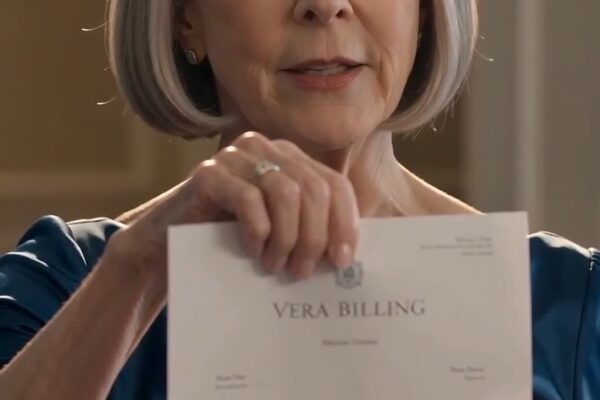
The heading said “EVENT AGREEMENT.”
I left it flat.
There was my address, printed beneath the location information. Not a general description of a possible lakeside setting.
My home.
The place where I kept my clothes, paid the mortgage, and expected to sleep.
I read the opening section slowly because Mom was already talking again.
“The coordinator needed something definite.”
“What did you give her?”
“Enough to get things moving.”
“That isn’t an answer.”
Dad placed his hand near the paper, without taking it.
“We didn’t want to lose the arrangements.”
I followed the location section down to a statement confirming that the property owner had approved the event.
I read it again.
Then I found Dad’s signature.
His own name.
Not mine.
“Who told them I agreed?”
Nobody answered immediately.
Jenna looked at Mom.
Dad drew his hand back.
“We knew you wouldn’t object to helping your sister.”
“You didn’t ask.”
“We’re asking now.”
“No. You’re telling me to leave.”
Mom folded her arms.
“That’s not how we mean it.”
“That’s what you said.”
I kept my finger beside the owner-approval statement. I wanted them looking at the actual words, not discussing whether my tone had made the room unpleasant.
“Did either of you tell the coordinator I own this house?”
Dad looked at the page.
“She knows it belongs to the family.”
“It belongs to me.”
“You know what I mean.”
“I need to know what you told her.”
He didn’t answer that.
Jenna moved away from the window, stopping where she could see the agreement without standing beside me.
“Losing my location would be crueler than leaving you out,” she said.
I looked directly at her.
She kept going.
“You already have the house. This is my wedding.”
I moved my glass farther from the paper.
It gave me something to do before I answered.
“Do you hear yourself?”
Her face tightened.
“Don’t make me sound awful.”
“I didn’t add anything.”
“You’re making it sound like I don’t care about you.”
“You’re asking me to leave my house so you can celebrate in it without me.”
Mom cut in.
“We can discuss our feelings later.”
Dad nodded toward the agreement.
“The coordinator needs certainty.”
He was still talking as though certainty was something I owed the arrangements he had made.
I hadn’t read the rest.
I didn’t need every term to understand the immediate problem.
Someone had been told that I approved my address for a wedding, and the person who signed that statement was standing across my kitchen counter.
“You signed this,” I told Dad.
“Yes.”
“In your name.”
“Of course.”
“You told someone the owner agreed.”
“We thought you understood.”
“Understood what?”
“That family helps family.”
I lifted the document from the counter.
Not to sign.
To hold it where they could see what they had submitted.
“I never approved this.”
Mom’s eyes dropped toward the page.
“We can still settle it here.”
“You can’t book my home for me.”
Jenna shifted closer to our parents.
That small movement answered something I had still been hoping she might correct.
She wasn’t waiting for them to stop.
She wanted me to give in.
Mom pointed toward me, then toward the hallway.
“Your sister deserves a wedding without your Navy crowd.”
“Without my crowd?”
“She deserves a wedding without your Navy crowd.”
I took a breath.
“You never asked my permission.”
“We asked to discuss it.”
“And I agreed to talk.”
Dad started to speak, but I straightened and held the agreement at chest height toward them.
“I own this villa, not you.”
Mom’s expression changed.
“You’re refusing your own sister?”
“I’m refusing this arrangement.”
“You know what this will do to her.”
Jenna watched me over Mom’s shoulder.
I turned enough that I faced them squarely, instead of leaning across the counter as though I was still waiting for an explanation.
The paper stayed between us.
I hadn’t planned a confrontation when I let them in.
There were no notes waiting beside my phone. No prepared speech. Until I read my address beneath that heading, I hadn’t known there was anything outside this room to correct.
Now I knew.
“Give us a little room to fix the personal issue,” Dad said.
“What personal issue?”
“The invitation.”
“You haven’t offered to change that.”
Mom gave him a quick look.
He noticed.
So did I.
They wanted me to agree to the location before discussing anything that might make their plan less comfortable.
“I’m not negotiating for permission to attend something in my own house,” I said.
Jenna looked down.
Dad’s face had lost the patient expression he wore when he expected me to come around.
“What are you proposing?”
“I’m going to contact the coordinator.”
Mom’s arms dropped.
“There’s no need to involve her in a family disagreement.”
“She’s already involved.”
“We can explain it to her.”
“I’ll explain my own permission.”
I lowered the paper just enough to look at the contact information at the top, then raised it again.
“And the vendors,” I added. “They need to know you had no permission to offer my home.”
Mom’s mouth opened.
Nothing came out immediately.
For the first time, she wasn’t telling me where people would dress or where I should spend the weekend.
Dad looked from the document to my face.
The question of whether I would cooperate had finally become a question of what I could do without their agreement.
He understood that much.
I could see it.
I hadn’t threatened to cancel Jenna’s wedding.
I hadn’t offered to negotiate the rooms.
I was going to correct a claim about my own property, directly, with the people who had been given it.
Dad kept his eyes on the paper I was holding.
“What exactly are you going to tell them?”
Chapter 3: The Paragraph Below His Signature
“The truth,” I said.
Dad reached toward the agreement, and I lowered it onto my side of the counter.
“I own the house. I never approved a wedding here. You couldn’t promise it to anybody.”
Mom looked at him.
Then she looked back at me.
“You don’t have to make it sound deliberate.”
“How should I describe your telling me to leave?”
“We thought this would be easier.”
“For whom?”
Jenna turned toward the windows again, but she didn’t return to her earlier spot. She stayed close enough to hear every word.
Dad tapped the counter.
“Read the whole thing before you start calling people.”
I looked at him.
“That’s what I’m doing.”
He seemed to expect the rest of the agreement to make me cooperate. Maybe he thought seeing formal arrangements would make refusing feel impossible.
I set the paper flat and continued from where I had stopped.
Nobody spoke while I read.
The agreement described the coordinator’s reserved work and the arrangements she was handling. It named Dad as the customer responsible for the commitments he had made.
I followed the wording carefully.
There was a section about the promised location becoming unavailable.
I went back to the start of that section.
Then I read it again.
The agreement made the signer personally responsible for the stated cancellation charges when the location he promised could not be used.
Dad had signed in his own name.
He had also certified that the owner approved the address.
Those were separate statements on the same agreement.
I put my finger beside the cancellation wording.
“Dad.”
“What?”
“This says you’re responsible if the location isn’t available.”
He leaned forward.
“For cancellation.”
“For the charges stated here.”
“Those are standard terms.”
“Then you knew they were there.”
“I knew we weren’t going to cancel.”
I looked up.
“You knew I hadn’t said yes.”
Mom pulled out a stool but didn’t sit.
“We’re getting ahead of ourselves.”
“No. I’m reading what he signed.”
Jenna came closer.
“What charges?”
Dad answered before I could.
“Nothing we need to worry about if everyone behaves reasonably.”
I turned the page toward her without handing it over.
She read the section.
Her lips parted, then pressed together.
“This doesn’t mean the whole wedding,” I said.
I wanted that clear.
The agreement didn’t make Dad responsible for every expense anyone might imagine. It described applicable charges for work reserved under the coordinator’s agreement.
That was enough.
No added punishment was necessary.
Dad had made a promise involving property he didn’t control, and the agreement explained his responsibility if he couldn’t provide it.
Mom sat down at last.
“You could have just said you needed more consideration.”
“I wasn’t offered any.”
“We can say thank you.”
“That doesn’t give you permission.”
Jenna looked at Dad.
“Why didn’t you ask her before signing?”
He looked irritated, not ashamed.
“Because we were trying to get your arrangements settled.”
“You could have called.”
“We thought your sister wanted to help.”
He was still directing that answer toward Jenna rather than me.
I slid the paper back to my side.
“You thought I would agree after you had already committed.”
Dad didn’t deny it.
Instead, he changed the subject.
“The sensible thing now is to avoid unnecessary losses.”
That was a different argument.
He was no longer saying the house belonged to the family or that my consent could be assumed. He was saying his financial commitment should determine what I allowed.
“Not by making my home available,” I said.
“You wouldn’t be paying anything.”
“I’d be leaving.”
“For two days.”
I pointed toward the owner-approval sentence.
“This wasn’t true when you signed it.”
Mom leaned forward.
“Couldn’t we correct the wording?”
“How?”
“Say there was a misunderstanding.”
“There was no agreement to misunderstand.”
Jenna pulled the stool beside Mom’s away from the counter, then pushed it back without sitting. The scrape sounded loud in the kitchen.
She looked at the paper again.
I could see her trying to work out whether the location could still be kept without changing anything she wanted.
“Can’t you just let the wedding happen and deal with us afterward?”
“No.”
“You’d really do this now?”
“I learned about it now.”
That stopped her.
Only briefly.
Then she folded her arms again.
Dad moved around the end of the counter. I stayed where I was, with the agreement flat beneath my hand.
He didn’t crowd me.
He lowered his voice.
“Think about what you’re starting.”
“I’m correcting what you submitted.”
“You have every right to be upset.”
“This isn’t about whether I’m upset.”
“It doesn’t have to become expensive.”
I looked at the line carrying his signature.
He hadn’t forged mine. He hadn’t tried to make the agreement look like I signed it.
He had signed his own name and relied on my being unwilling to say no once the arrangements existed.
I understood that now.
Mom stood again.
“We should all take some time.”
“You can take time,” I said. “I’m still notifying the coordinator.”
Jenna reached for her things.
Dad stayed beside the counter.
He watched me gather the agreement so its pages remained in order.
“Leave it,” I said when Mom reached toward the top sheet.
“We brought that.”
“It contains the claim about my home.”
Dad looked at the cancellation section once more, this time without telling me the language was standard.
“You’re not really going to make me pay that.”
Chapter 4: The Message From My Kitchen
“I’m not charging you,” I said.
“You signed an agreement with the coordinator.”
Dad kept looking at the paper.
Mom picked up her things from the counter, leaving the agreement where I had placed it.
“We need to go before this gets worse.”
Jenna didn’t say goodbye.
She followed Mom out of the kitchen while Dad remained long enough to try a different approach.
“Don’t send anything while you’re angry.”
“I’ll send something accurate.”
“You could speak to us first.”
“I just did.”
He looked toward the hallway.
Mom called for him.
After the door closed, I stayed at the counter.
My glass was still beside the sink. The water had gone warm, and I emptied it before doing anything else.
Then I brought over my phone.
I photographed the agreement where it lay, making sure the heading, address, signature, and full text were readable.
I checked each image.
The first attempt left glare across part of the location section. I moved the paper away from the overhead light and took it again.
I wasn’t going to rely on remembering what it said.
I saved the images with my house records, then placed the printed pages in order beside my computer.
The kitchen looked ordinary again.
That bothered me more than I expected.
Mom had stood beside that same counter and calmly explained where other people would get ready while I stayed away.
I pulled out the chair and sat.
The agreement listed the coordinator’s contact information.
I started an email, deleted the opening, and started again.
I didn’t need to describe my sister’s resentment or repeat what Dad had said about my Navy friends.
The coordinator needed facts she could act on.
I identified myself as Tess, the owner and occupant of the lakeside villa outside Traverse City, Michigan.
I identified the event and the address listed in the agreement.
Then I wrote the part I wanted impossible to misunderstand.
I had not authorized the wedding.
I had not authorized anyone to offer the property for setup, the ceremony, related activities, or cleanup.
The location was unavailable.
I read those sentences aloud.
They sounded firm without being insulting.
That was what I wanted.
I added that Victor had no authority to give consent on my behalf and that no family member could substitute their approval for mine.
Then I attached ownership information sufficient to connect my name to the property, leaving unrelated financial details out.
My mortgage payment wasn’t the coordinator’s business.
Who owned the home was.
I also attached the relevant agreement pages, so she could identify the exact claim I was correcting.
I didn’t call Dad a criminal.
I didn’t demand that someone punish him.
I asked the coordinator to remove my address from the event arrangements and confirm that no access to my property would be expected.
Then I requested the vendor contact list.
I wanted to notify anyone already relying on that address directly.
Before sending, I checked the recipient and reread every attachment.
The agreement remained beside my elbow.
I could hear Dad saying that I would be making him pay.
I looked at his signature again.
He had put his name there before I even knew the coordinator existed.
I sent the email.
Then I stood up and carried my glass back to the cupboard.
I didn’t feel ready to make dinner.
I opened the refrigerator anyway.
That was when my phone lit up with a message from Mom asking me to wait.
I read it without answering immediately.
She wanted time to discuss things with Dad.
There was no mention of changing the exclusion.
No acknowledgment that I had agreed only to talk.
I set the phone on the counter and finished taking food out.
When I answered, I kept it short.
“I’ve sent my refusal. Don’t tell anyone the house is available.”
Mom began typing.
Then the indicator disappeared.
Nothing arrived.
I returned to the computer and made a separate folder for the correspondence.
I saved the sent email there with the photographs, not because I expected a lawsuit, but because I wanted the correction kept with the claim.
The coordinator hadn’t heard from me before.
That was becoming important.
My parents had been discussing my home with her while I knew nothing about the arrangement. She might have believed I was fully informed and simply preferred not to handle details.
I made a note to ask how my consent had been described.
Not an accusation.
A question.
I checked the agreement again for anything saying communications should go through Dad alone.
The wording about the property owner was still there, plain enough.
I hadn’t missed a place where I had authorized him.
There wasn’t one.
Later, I returned to the kitchen to put away the dishes.
The printed agreement was still occupying the spot where I usually sorted household mail.
I moved the mail instead.
Until the address was removed, I wanted that paper where I could reach it.
My phone sounded while I was wiping the counter.
It was the coordinator.
Her reply was brief. She had received my message and would review the agreement and event communications before confirming the changes the next morning.
Then she explained why she had never contacted me.
I read that portion standing beside the sink.
It wasn’t something she had assumed.
There had been an instruction.
I set the dishcloth down and opened the reply fully.
The coordinator wrote that Marlene had specifically told her not to contact me.
Chapter 5: The Instruction in Writing
I opened the coordinator’s forwarded email the next morning.
My mother’s message was there beneath her explanation, with the original wording intact.
Marlene had told her not to contact Tess.
She said I wanted no involvement in planning and that the family would handle communication.
I read it without scrolling.
Then I went back to the beginning.
My mother hadn’t merely forgotten to give someone my number.
She had supplied a reason I should be left out.
A reason that sounded helpful.
I wanted no planning involvement.
That would explain why a property owner hadn’t attended a call, answered questions, or approved details herself.
It gave the coordinator something ordinary to believe.
The coordinator’s accompanying message said she had relied on the information submitted by my parents. Now that she had my direct refusal and ownership information, the villa had been removed as the site.
That was the confirmation I needed.
I saved it.
Then I saved the forwarded instruction separately.
I hadn’t known about that email when I first held the agreement in front of my parents.
Dad hadn’t seen what I would discover when I contacted the coordinator.
Mom’s instruction had been sitting in an existing email trail, outside our family’s ability to explain it away.
I put the kettle on and returned to the table.
The coordinator had included the vendor contacts I requested, along with enough information to identify the arrangements attached to my address.
I didn’t need to discuss my family with them.
I copied my refusal into a clean message.
I was the owner and occupant.
I had not approved use of the property.
No deliveries, setup, equipment, services, or guests associated with the wedding were authorized at my address.
I asked that their records be updated and that they confirm receipt.
I checked the list against the coordinator’s message.
Then I sent the notices.
Not a warning posted somewhere my parents could claim they never saw.
Direct messages to the people who might otherwise arrive expecting access.
I copied the coordinator so there would be no separate version of what I said.
Afterward, I poured my tea.
It had steeped longer than I intended.
I drank it anyway.
My phone rang while I was reviewing a vendor acknowledgment.
Mom.
I let it ring while I closed the forwarded email, then answered.
“What did you send them?” she asked.
“My refusal.”
“You’ve made this sound much worse than it was.”
“I said I didn’t authorize the property.”
“You attached ownership information.”
“Yes.”
“Why would you do that?”
“So they knew I was the person who could answer.”
She went quiet.
Then her tone changed.
“The coordinator called your father.”
“I expected her to.”
“She’s taking the house off everything.”
“She confirmed that.”
“You already heard?”
“Yes.”
Mom breathed into the phone.
I could hear her moving, then stopping.
I stayed seated.
“I asked you to let us talk first,” she said.
“We talked in my kitchen.”
“Not properly.”
“You told me to leave.”
“We were trying to prevent arguments at the wedding.”
“By excluding me.”
“You’re doing it again.”
“Doing what?”
“Turning every detail into an accusation.”
I opened her forwarded email.
“Did you tell the coordinator not to contact me?”
The line went quiet.
This time I waited.
“She didn’t need to bother you with planning.”
“Did I ask you to say that?”
“You have a demanding job.”
“That wasn’t my question.”
“I was trying to make it easier.”
“For me?”
“For everyone.”
I looked at the sentence again.
Mom had specifically claimed I wanted no involvement.
Not that I was difficult to reach.
Not that Dad was collecting details for a conversation.
She had represented a preference I had never expressed.
“I’ve read your email,” I said.
“What email?”
“The one the coordinator forwarded.”
Mom didn’t answer immediately.
I heard Dad’s voice in the background, but I couldn’t make out the words.
I didn’t ask where they were.
There was nothing about their location that changed mine.
“You shouldn’t be going through private planning correspondence,” Mom finally said.
“It describes my supposed permission.”
“It describes handling the wedding.”
“At my address.”
She stopped trying to deny the wording.
Instead, she began describing the difficulty of finding another place with the wedding approaching.
I listened without interrupting.
When she finished, I said, “You’ll need a location you’re authorized to reserve.”
“She’s your sister.”
“I know.”
“This is humiliating for her.”
“I didn’t submit the agreement.”
Mom said my name the way she used to when she wanted a conversation to end before I answered back.
I kept the email open.
The coordinator had believed my parents.
That didn’t make her part of their decision.
Once she received the facts, she removed the house and gave me the records explaining what happened.
I wasn’t going to direct my anger at the person who corrected her records.
Mom asked whether I had told the vendors about the family argument.
“No.”
“Then what exactly did you say?”
“That the owner never authorized the event.”
“That makes us look dishonest.”
I looked toward the printed agreement on the counter.
I had expected her to ask me to let the wedding proceed.
Instead, she wanted something smaller and more useful to them: a changed explanation that might soften what their coordinator now knew.
Her voice dropped.
“Tell them you changed your mind, not that we lied.”
Chapter 6: The Explanation They Wanted
“I didn’t change my mind,” I said.
“I never said yes.”
Mom made a small, impatient sound.
“You could use kinder wording.”
“I used accurate wording.”
“There are ways to protect your family.”
“Not by saying I approved something I didn’t.”
I remained at the table with the forwarded email open.
If I agreed to her version, the written record would say I had withdrawn permission from a wedding they reasonably planned.
That wasn’t what happened.
It would also make the coordinator’s earlier reliance seem justified by something I had actually done.
Mom understood the difference.
That was why she wanted me to change it.
“You’re making your father look irresponsible.”
“He signed for a location he couldn’t promise.”
“He was helping Jenna.”
“He could have asked me.”
“You would have made it complicated.”
I stopped moving my spoon around the cup.
There it was, said plainly at last.
Asking me had carried the risk of an answer they didn’t like.
“So you decided not to ask.”
“That isn’t what I said.”
“It’s what you did.”
She asked to speak again after everyone had calmed down.
I told her she could call, but my notice would remain unchanged.
Then I ended the conversation.
I put the cup in the sink.
The kitchen needed no special cleaning, but I wiped the place where the agreement had first landed.
When Dad called later, I was standing there with the cloth in my hand.
I set it down before answering.
“Your mother tells me you won’t soften the explanation.”
“I won’t change the facts.”
“Nobody is asking you to surrender the house.”
“You were.”
“We’re past that.”
I appreciated hearing that much.
Then he continued.
“What we need now is cooperation.”
“With what?”
“Keeping this from becoming a family disaster.”
He didn’t claim he could still authorize the villa.
He had moved on.
Now he wanted my refusal treated as a harmful choice I had made rather than the result of a commitment he should never have given.
“Tell me what you’re asking for,” I said.
“For you to think beyond yourself.”
“That isn’t a request.”
“For you to help your sister recover from this.”
I leaned against the counter.
“You mean reverse the decision?”
“If there’s a way.”
“No.”
“You haven’t even heard a proposal.”
“Does it involve the wedding at my house?”
He paused.
“Yes.”
“Then no.”
Dad began talking about family occasions and how rarely everyone had a chance to celebrate together.
I let him finish.
I didn’t bring up old disagreements or collect examples from childhood.
The current agreement was enough.
“I let you stay here free for two years,” I said. “That didn’t include permission to reserve my home.”
“No one is denying what you’ve done.”
“You’re asking me to keep doing it after telling me to stay away.”
“We can discuss that part.”
“Jenna can call me herself.”
“She’s upset.”
“So am I.”
I heard him exhale.
He wasn’t used to my saying that without immediately explaining how I would make everybody comfortable anyway.
He ended the call politely.
That was harder, in a way, than if he had shouted.
It left the same request sitting there, dressed as reasonableness.
Jenna called while I was putting the agreement and correspondence together.
I answered at the kitchen table.
“Dad said you wanted me to call.”
“I said you could speak for yourself.”
“Fine. I want you to let us use the house.”
I waited.
She waited too.
That seemed to be the whole request.
“What would be different?” I asked.
“We wouldn’t bother you with planning.”
“That was already your plan.”
“We’d keep things contained.”
“I live here.”
“You could stay somewhere nearby.”
I closed the folder.
“Are you inviting me?”
“Tess.”
“It’s a straightforward question.”
“I don’t want to spend my wedding managing this.”
“Then why would you hold it in my home?”
“Because we planned it there.”
“Without asking me.”
She went quiet.
I could hear her swallowing before she spoke again.
“I don’t want everything to be about the Navy.”
“It wouldn’t have to be.”
“You don’t understand how it feels.”
“I understand that you don’t want me there.”
“I don’t want the attention going somewhere else.”
I looked down at my plain kitchen chair.
She wanted the house in the background of her wedding and me somewhere outside it.
Even now, when the location was gone, she wasn’t offering to include me.
“I’m not hosting it,” I said.
“You keep saying hosting like you’d have to do anything.”
“I’d have to leave.”
“It’s my wedding.”
“I know whose wedding it is.”
Her voice rose, then stopped.
For a moment, all I heard was movement near her phone.
I thought she might end the call.
Instead, she returned with another solution.
“If you won’t let us use it, pay for somewhere else.”
Chapter 7: The Customer on the Agreement
“No,” I said.
“I’m not paying for a replacement.”
Jenna didn’t respond right away.
I could picture her holding the phone away from her face, checking whether she had heard correctly.
“You know we counted on the villa.”
“You counted on something I hadn’t offered.”
“You have a mortgage and a career. You can help.”
“I already pay for my home.”
“That isn’t the same.”
“No, it isn’t.”
I wasn’t going to compare my finances with hers.
She didn’t know every expense attached to the house, and she didn’t need to.
Having a paycheck didn’t make me responsible for replacing a venue she had reserved without permission.
“You’re leaving Mom and Dad to deal with everything,” she said.
“They made the arrangement.”
“For me.”
“Yes.”
I let that answer remain as it was.
Jenna ended the call without agreeing with me.
I didn’t expect agreement anymore.
I put my phone down and opened the folder again.
There was the owner-approval claim.
There was Dad’s signature.
There was Mom’s instruction not to contact me.
And there was my refusal, followed by the coordinator’s confirmation.
I checked that the vendor replies were saved with it.
I wasn’t collecting material to send around the family.
I was making sure that if someone claimed I had changed my mind, the original sequence was still clear.
The coordinator contacted me as part of updating the arrangements.
She had sent Dad the applicable cancellation accounting under the agreement he signed.
Her message distinguished those charges from other wedding expenses.
They covered the reserved work addressed by his contract.
They were not an open-ended bill for everything that might change because the villa was unavailable.
I read that carefully.
I didn’t want to claim Dad owed more than he did.
I also didn’t want his responsibility presented as mine.
The coordinator confirmed I was not the contracting customer.
I had not hired her.
I had not accepted the agreement.
Her administrative work to remove my address didn’t turn me into the person responsible for the event.
I thanked her for clarifying.
Then I asked that any payment discussion remain with the person who signed.
She agreed.
That should have been simple.
Inside the family, it wasn’t.
Dad called after receiving the accounting.
His voice was controlled.
“I’ve got the figures now.”
“The coordinator told me she sent the applicable charges.”
“She told you?”
“She confirmed I’m not her customer.”
He was silent briefly.
Then he said, “I’m aware whose name is on it.”
That was a change.
In my kitchen, he had used the existing arrangements as a reason I should comply.
Now he knew exactly which obligations belonged to him.
“I’m not disputing that I signed,” he continued.
“Okay.”
“But the charge exists because you refused the property.”
“The property wasn’t yours to promise.”
“We’ve covered that.”
“Yes.”
“I’m trying to discuss how to handle it.”
I pulled out a chair and sat.
“Are you disputing the accounting with her?”
“That’s between us.”
“It is.”
He paused again.
I could hear him considering what would work now.
He couldn’t tell the coordinator I had signed.
He couldn’t show permission I never gave.
He could still ask me to absorb the cost privately.
“You could help keep this manageable,” he said.
“I’m not paying it.”
“I haven’t finished.”
“I want to be clear before you do.”
He asked whether I understood that he and Mom were also finding another location.
I said I did.
He said the replacement would have to be smaller than what Jenna imagined at the villa.
I didn’t argue.
A private home on a lake had looked free because I was already paying for it.
Once they had to reserve somewhere they actually had authority to use, there were limits they couldn’t assign to me.
Dad asked whether I was pleased.
“No.”
“You sound very certain.”
“I am certain about my house.”
“That’s not the same as being reasonable about family.”
I picked up the printed agreement and turned it so I could see his signature.
I remembered how confident he had looked when I first asked who approved the location.
He had expected the answer to be obvious.
Of course I would help.
Of course I would leave.
Of course I would protect him from the terms he signed.
“I’m not discussing whether I care about Jenna,” I said.
“Then what are we discussing?”
“What you’re asking me to pay.”
He went quiet.
I waited without supplying a softer subject.
Eventually, he said they couldn’t undo the coordinator’s reserved work.
“I understand.”
“And she’s entitled to the applicable charges.”
“If that’s what your agreement provides.”
He didn’t challenge that.
He had reached the practical part now, where someone had to use their own money rather than my house.
I set the document back down.
There was no satisfaction in knowing my parents had to reconsider the wedding they promised.
I would have preferred a call asking whether the villa was available.
I would have preferred my sister wanting me beside her.
Neither preference changed the agreement.
Dad cleared his throat.
“If I pay the coordinator now, will you reimburse me?”
Chapter 8: The Smaller Place
“No,” I told him.
“I won’t reimburse you.”
Dad said nothing for a moment.
I could hear him moving papers.
“I’m offering to handle it first,” he said.
“That still makes me the person paying.”
“You wouldn’t have to deal with the coordinator.”
“I don’t owe the coordinator.”
He stopped moving the papers.
That distinction wasn’t something he could talk around anymore.
He had signed.
The location statement had been his.
The accounting had gone to him.
“If you want to discuss the charges, discuss them with her,” I said.
“And you’re contributing nothing?”
“I’m not contributing to this wedding.”
I didn’t say it loudly.
I didn’t list what I had already given them again.
Dad knew about the free stays. He knew whose mortgage payment kept the villa available for those visits.
Repeating it wouldn’t make him accept the answer.
He ended the call.
I sat for a moment with the phone still against my ear, then put it beside the agreement.
The house was quiet.
Not unusually quiet.
Just mine.
I stood and opened the dishwasher.
There were ordinary things to do, and I wanted to finish something that didn’t require explaining my right to do it.
During the following week, my parents secured a smaller replacement wedding elsewhere.
Mom told me in a message.
She didn’t include me in a planning discussion.
She informed me that the location was settled and that she and Dad were paying for it.
I read the message at my kitchen table.
There was no invitation attached.
I didn’t ask for one.
I replied that I was glad they had an authorized location.
Mom answered that Jenna had needed to compromise.
I left that unanswered.
The villa had offered space, a lake view, and no rental bill because I would still be carrying the costs of my own home.
The replacement required actual choices.
My parents made them.
That was different from being unable to have a wedding.
Jenna could still get married.
She simply wouldn’t be doing it in my occupied house.
The coordinator later confirmed that Dad had paid the applicable cancellation charges from his own funds.
She didn’t send me his account details.
I didn’t ask for them.
Her message was enough to close the question of whether someone would keep trying to attach his contractual responsibility to me.
I saved the confirmation.
Then I checked the folder for vendor acknowledgments that had arrived since my first notices.
The address changes were moving through their records.
Where a reply was unclear, I asked a plain follow-up.
Was my home removed as a service location?
Not “we understand the situation.”
Not “we’ll speak with the family.”
Removed.
I didn’t want a delivery arriving because someone assumed another person would update the address.
The coordinator helped keep those corrections consistent.
She knew only what my parents had submitted before I contacted her.
Now she knew whose approval actually mattered.
I appreciated that she didn’t try to make me resolve the family argument for her.
She handled the event records.
I handled access to my home.
Mom called after the replacement was arranged.
I answered while folding a clean dish towel.
“We have a place,” she said.
“You told me.”
“It’s smaller.”
“I understand.”
“Jenna’s trying to be gracious about it.”
I laid the towel on the counter.
“What do you need, Mom?”
She sounded offended by the question.
“Can’t I call my daughter?”
“Yes.”
“Then why are you making everything transactional?”
“I’m asking what you called about.”
She began describing the inconvenience of the new arrangements.
Different space.
Less room to spread out.
More need to be organized about getting ready and leaving.
I listened.
She was building toward something.
I recognized the pauses now, the way she left room for me to offer the solution before she had to request it.
I didn’t offer.
At last she said, “We’re trying to keep the rest of the weekend simple.”
“Okay.”
“It would help if there were something familiar.”
I glanced down the hallway toward the bedroom Jenna used during visits.
I knew where this was going.
Mom hadn’t accepted that the free stays were separate permissions. She had lost the event location and was checking whether the old arrangement still existed around it.
“We don’t have to discuss the wedding while we’re there,” she added.
“There?”
“At the house.”
“My house?”
“Tess.”
I picked up the towel and hung it from the oven handle.
She waited for me to make the conversation easier.
For two years, I often had.
I would have begun checking sheets or asking when they planned to arrive before thinking about whether I wanted company.
Now I asked, “Are you requesting a visit?”
Mom gave a short sigh.
“We’ve always stayed with you.”
“When we agreed.”
“Do we really need to make this formal?”
“We need to ask.”
“I’m asking.”
I waited for the actual question.
She had wanted the house without me for the ceremony.
Now she wanted the familiar rooms without discussing what happened there.
I stayed beside the counter.
Mom’s voice softened.
“Can we at least stay at your house that weekend?”
Chapter 9: The Bedroom Stays Empty
“No,” I said.
“The house isn’t available for a stay that weekend.”
Mom answered immediately.
“You’ll be there.”
“Yes.”
“So it’s available.”
“Not for guests.”
She made an impatient sound.
“We aren’t strangers.”
“I know who you are.”
“Then why are you treating us like this?”
“I’m not hosting you.”
There was no way to soften that sentence without making it sound temporary or negotiable.
I didn’t want another conversation about whether I had meant it.
Mom asked if I intended to keep them away forever.
“No.”
“Then when can we come?”
“When you ask directly and I agree to a visit.”
“That’s what we’ve always done.”
“No. You’ve started treating it as automatic.”
She disagreed.
I didn’t argue over each past stay.
The kitchen conversation had been clear enough: they believed they could assign my rooms and tell me to leave.
That was the practical problem I was correcting.
“There aren’t standing invitations anymore,” I said.
“You need my permission before making plans to stay here.”
“What about Jenna?”
“The same applies.”
“What about a short visit?”
“Ask first.”
She said I sounded like someone speaking to a stranger.
I looked at the hallway.
My bedroom door was open. My laundry basket sat beside it.
I wasn’t managing a public facility.
I was deciding who stayed in the home where I lived.
“This is what I need,” I said.
Mom ended the call shortly afterward.
I sent a written message to my parents and Jenna so the rule didn’t depend on Mom repeating it.
No open-ended access.
No assumptions about rooms being available.
Future visits needed a direct request and a clear yes from me before anyone made plans.
The wedding weekend was not available.
I read the message before sending it.
It didn’t mention punishment.
It didn’t demand an apology in exchange for a bed.
I wasn’t offering a bargain.
I was telling them how visits would work.
Dad replied that he understood.
Jenna didn’t answer.
Mom wrote that she hoped I would reconsider when things settled down.
I replied that the weekend decision was final.
Then I put my phone away and went upstairs.
The guest bedroom looked as it usually did between visits.
Made bed.
Empty dresser.
Curtains open toward the lake.
I checked that the room was clean, then left it alone.
There were no bags to make space for.
No towels to stack for people who had told me to be elsewhere.
I closed the closet door and went back downstairs.
Over the weeks that followed, I kept ordinary household plans instead of leaving the weekend undecided in case someone persuaded me to go.
When Mom mentioned wedding arrangements, I didn’t offer my kitchen for preparations or my driveway for storage.
When Jenna remained quiet, I didn’t contact her to ask whether I had been invited after all.
I already had her answer.
She had asked me to reverse the location refusal.
She had asked me to pay for a replacement.
She hadn’t asked me to stand beside her when she married.
That was painful in a plain, inconvenient way.
I would reach for my phone while making coffee, thinking of something I normally might tell her, then put it down.
I didn’t need to turn every ordinary thought into another opening for the wedding discussion.
Six weeks after the kitchen confrontation, Jenna’s wedding took place at the replacement location.
I stayed home.
There was no confusion about where I would be.
My parents knew I wasn’t hosting them.
The coordinator knew the villa wasn’t the site.
The vendors had received my written refusal.
On the wedding weekend, I opened my own curtains and went downstairs in the clothes I slept in.
I made coffee.
Nobody was waiting in the kitchen to tell me when I needed to leave.
I carried my mug toward the windows where Jenna had stood during the confrontation.
The view hadn’t changed.
My plans had.
I didn’t need to avoid a room while someone got ready.
I didn’t need to check whether a delivery would block my car.
I could use the kitchen without asking what the wedding schedule allowed.
My phone stayed on the counter.
There was no last-minute invitation.
I hadn’t arranged my day around one.
Before settling fully into the weekend, I opened the correspondence folder.
Most records had already been corrected, and the coordinator had removed the villa as the site.
But I wanted the final address check completed.
That wasn’t about stopping the ceremony somewhere else.
It was about preventing a leftover instruction from sending someone to my door.
I read through the vendor acknowledgments and the coordinator’s earlier confirmations.
Then I wrote a final request.
I kept it short.
The event had a replacement location.
My home had never been authorized.
I wanted confirmation that no remaining vendor record still directed services, equipment, or people to my property.
The printed agreement lay beside the computer while I wrote.
It had started as the reason Mom thought I had to cooperate.
Now it stayed out only because I was finishing the correction.
I sent the message and left the computer open.
I asked the coordinator to confirm that every remaining vendor record had removed my home’s address.
Chapter 10: The Paper Leaves the Counter
The coordinator’s confirmation arrived while I was rinsing my coffee mug.
I dried my hands before opening it.
She had completed the address check.
Every remaining vendor record connected with her arrangements had been updated to remove my home.
No services were scheduled there.
No equipment was expected.
The villa was no longer attached to the event.
I read the message all the way through, then saved it with the rest.
That was what I had asked for.
Not an apology written by someone who hadn’t caused the problem.
Not a report about whether my family was happy.
A clear confirmation that nobody involved in the arrangements should come to my address expecting access.
I printed it and placed it behind the agreement.
Then I went back to the sink.
My mug needed another rinse.
There was still coffee along the bottom.
I finished washing it and set it on the rack.
Outside, the property looked exactly as it should have on an ordinary weekend.
No wedding equipment.
No arriving relatives.
No overnight bags waiting beside the door.
I stepped outside without checking whether I would interrupt photographs or preparations.
My sister was getting married elsewhere.
My parents had paid the coordinator’s applicable charges and paid for the smaller replacement wedding.
Dad’s contract had remained his responsibility.
They hadn’t lost the ability to hold a wedding.
They had lost the use of my home.
I stayed outside for a while, then came back to make lunch.
There was food I had bought for myself, in the refrigerator I had been expected to leave behind for their event.
I took out what I wanted.
I used the counter.
That sounds small.
It didn’t feel small after standing in that room while my family told me I should find somewhere else to be.
I didn’t prepare a meal for guests.
I didn’t put aside the things I liked because Jenna needed the space.
I ate at my table and washed my plate when I finished.
My phone remained quiet.
I wasn’t waiting for news from the ceremony.
I knew enough.
It was happening where the people paying for it had permission to hold it.
Later, I checked my household payments.
The mortgage was mine, as it had been since I bought the villa six years ago.
The ordinary expenses were mine too.
I paid what belonged to my home.
There was no reimbursement to Dad.
No contribution toward the replacement location.
No unexplained wedding charge I had agreed to absorb to make the family conversation easier.
I closed the account screen and returned to the correspondence folder.
Before filing the paper, I read the original agreement once more.
Not every word.
The sections that mattered.
My address under the event heading.
The statement claiming the owner had approved.
Dad’s name beneath it.
The terms making him personally responsible for the applicable cancellation charges.
I placed the coordinator’s payment confirmation behind those pages, followed by Mom’s forwarded instruction and my refusal.
The sequence was complete.
I didn’t need to keep it spread across the kitchen anymore.
For a moment, I held the agreement at chest height, checking that the pages were aligned.
I remembered doing that in front of my parents.
Mom had asked whether I was refusing my own sister.
Dad had asked exactly what I would tell the coordinator.
They had both stopped looking confident when they understood I would speak for myself.
Jenna had watched.
She had chosen their side.
Nothing in the folder changed that part.
I set the pages down and pressed the corners flat.
I still wished she had wanted me at her wedding.
I could say that without offering the house.
I could miss the relationship I thought we had without pretending her request had been reasonable.
There was no speech I needed to send her that afternoon.
She knew where I stood.
So did my parents.
Future visits would require a direct request and my agreement.
The guest room could stay empty until I wanted someone in it.
I took the folder to the place where I kept my household records.
Then I stopped and checked the kitchen again.
My mail could go back where it belonged.
I gathered the envelopes I had moved aside and sorted them at the counter.
A dish towel needed changing.
The trash needed taking out.
There were clothes upstairs to put away before I returned to work.
I did those things.
I didn’t spend the weekend repairing the atmosphere for people who weren’t there.
I didn’t drive away so the empty house could look available.
I slept in my own bed.
The next morning, I opened the kitchen windows and made breakfast.
No one was checking out of the guest room.
No equipment needed collecting.
No relative asked where I kept cleaning supplies after an event I hadn’t attended.
I ate, washed up, and put my things ready for my ordinary routine.
Before closing the household drawer, I checked that the coordinator’s final confirmation was included.
It was.
My address had been removed.
The charges had been paid by the person who signed.
The wedding was over, elsewhere.
I slid the folder into its place in my home and closed the drawer on the printed event agreement.
You Might Also Enjoy


My Daughter-In-Law Pushed Me From The Microphone In My Own House — Until I Held Something Up