My Daughter-In-Law Locked Me Outside At 74 With My Medicine Inside — Then My Granddaughter Stepped In
Chapter 1: The Door Behind Me
My daughter-in-law bolted my front door while the baptism guests watched through the window.
“My sister needs those rooms.”
I was 74, alone, with my medication inside and $72 in my checking account.
I had spent my savings building their upstairs rooms.
My son asked me to stop knocking.
My granddaughter opened my lawyer’s engagement letter on the porch table.
Before she opened it, I tried the handle twice.
The second time, Paula watched my hand through the glass.
“Open the door,” I said.
“We need to settle this first.”
“My medicine is beside my coffee.”
“You can collect what you need.”
“I need to come inside.”
Behind her, someone stood holding a plate of food.
Another guest moved closer to the window.
Nobody could mistake what I was asking.
I still had my church shoes on.
My good blouse was caught beneath my cardigan.
I pulled it straight while Paula looked over her shoulder.
It was October 19, 2025, in York, Pennsylvania.
We had come home from Wesley’s baptism that morning.
My great-grandson was 4 months old.
His mother, Erin, had carried him through the service.
I kept watching one little sock slip down.
Afterward, we gathered at Calvin and Paula’s house.
My son was 53, and Paula was 51.
They owned the house.
I lived in separate downstairs rooms under a written agreement.
The front entrance and foyer were shared.
That entrance was the only practical way into my rooms.
Paula knew I could not simply walk around back.
She knew my bedroom windows stayed locked.
She also knew why I had stepped outside.
Before lunch, Doreen had asked where her things should go.
Not her covered dish.
Her things.
Paula had answered, “We’ll sort that after we eat.”
I was standing at my kitchenette counter.
My blue ceramic mug was beside my medication.
I put down the spoon I was holding.
“Sort what?” I asked.
Paula had lowered her voice.
“Ruth, please. Not during the baptism lunch.”
Doreen looked between us.
She was Paula’s sister, 49, and she needed housing.
I already knew Paula wanted her in my four downstairs rooms.
I also knew our September settlement had not been performed.
I did not want to argue beside the serving dishes.
So I stepped onto the porch to collect myself.
My coffee stayed unfinished.
I had been outside only a short while.
Then I heard the bolt slide behind me.
Now Paula was telling me to wait.
I knocked with the side of my hand.
“Where is Calvin?”
“He’s busy.”
“He can open a door.”
She turned away, then turned back.
Her face looked the way it did over a disputed bill.
Not surprised.
Not sorry.
Just determined that I would accept her answer.
I could see my sitting-room chair through the doorway.
It had been pushed away from its lamp.
That bothered me almost as much as the bolt.
Someone had already started rearranging my room.
“Why has my chair been moved?”
“We needed space for lunch.”
“Then put it back when I come in.”
“You keep acting like this is only about you.”
A guest lowered her plate.
Doreen stood near the hall table with her covered dish.
I could not tell what Paula had told her.
I only knew she looked confused.
Then Calvin appeared behind his wife.
He was holding folded napkins.
I nearly smiled when I saw him.
“Calvin, open the door.”
He came close enough that his cuff brushed the bolt.
“Mom, stop knocking.”
“Then let me inside.”
“Please don’t embarrass us in front of everybody.”
I stared at his hand.
He could have opened the door without moving his feet.
Instead, he looked toward the guests.
“My medication is inside,” I said.
“I know. Give us a minute.”
“For what?”
Paula stepped partly between us.
“We’ve talked about you moving.”
“We signed an agreement about it.”
“Exactly.”
“No. Not exactly.”
I pressed my cardigan pocket flat.
There was nothing in it except a tissue.
My telephone was inside with my mug and medicine.
My money was almost gone until my next Social Security deposit.
That did not mean my rooms were already theirs to empty.
Erin came toward me from the porch steps.
She was 29 and carrying Wesley against her shoulder.
She had taken him outside to settle him.
“Grandma, what happened?”
“Your mother locked the door.”
Erin looked through the glass.
“Mom, open it.”
“Stay out of this.”
“You have her standing outside.”
“We’re handling something.”
“Then handle it with the door open.”
Wesley rubbed his face against Erin’s shoulder.
A guest who had stepped onto the porch offered to hold him.
Erin checked his blanket before passing him over.
Then she brought her tote to the porch table.
Her large document portfolio was tucked beneath it.
I recognized the dark cover.
She had brought my duplicate papers because the housing pressure was worsening.
I had given her permission to keep and show them.
I had also let her read my family notebook.
The notebook was separate, inside her tote.
Paula leaned toward the glass.
“We’ve housed you all these years.”
Erin stopped beside the table.
“Don’t say that.”
“It’s true.”
Calvin looked down at the napkins.
I waited for him to mention the construction money.
He said nothing.
Erin rested her hand on the portfolio.
“Grandma,” she said, “may I?”
I nodded.
She moved the tote aside without opening it.
Then she put the portfolio flat on the table.
“I brought your copy,” she said.
Chapter 2: The Page She Had Marked
Calvin raised his head when Erin began speaking.
“Erin, this isn’t the time.”
She kept her hand on the closed portfolio.
“You let Mom say Grandma was just housed here.”
“We didn’t say she never helped.”
Paula said that quickly, before Erin could answer.
I stood beside the porch table.
The guest holding Wesley shifted him gently against her shoulder.
Through the window, I could see people watching.
I wished they had been eating lunch instead.
But I was not the person keeping the door locked.
Erin had marked an entry about her knee surgery.
It happened in 2010, when she was still a girl.
I had written the memory down years later.
She wanted family stories for Wesley.
Until that afternoon, I had thought mostly about the happy ones.
There were birthday dinners and school plays in the notebook.
There were also ordinary days when somebody needed help.
Erin left the notebook in her tote.
She described the folded towel from memory.
Then she looked up at her parents.
“I remember this,” she said.
So did I.
After the surgery, her leg needed careful support.
The pillow kept slipping when she tried to settle.
She wanted to manage it herself.
By evening, she would be exhausted from trying.
“I can do it, Grandma.”
“I know. Let me hold your heel.”
“Don’t move yet.”
“All right. You tell me when.”
I would kneel beside her bed.
My knees were better then, though not wonderful.
I supported her leg while she adjusted the pillow.
Then I folded a towel under her ankle.
She would grip my sleeve and watch my face.
“Slowly.”
“I’m going slowly.”
“Stay until it settles.”
“I’ll stay.”
Sometimes I sat on the floor beside her.
She worried that leaning against the mattress would move her leg.
So I kept my shoulder away from the bed.
I could hear dishes being put away downstairs.
My supper would be cold by the time I ate.
That was not something I resented.
It was simply what happened when someone needed care.
In the notebook, I had written about washing the towel.
Erin remembered the part before that.
“She stayed until I could sleep,” she said.
Paula glanced toward the guests.
“Nobody is taking that away from her.”
“You just talked like she has been living here for nothing.”
“This isn’t about what happened years ago.”
“It is when you describe her that way.”
I touched Erin’s sleeve.
“That’s enough now, honey.”
Erin nodded and moved closer to the table.
It was not a record of every sacrifice I had made.
It was a family notebook.
I did not want my granddaughter reciting page after page.
She had said enough.
Paula tried again.
“Ruth contributed to a family project.”
I looked through the glass at her.
“I paid $148,000.”
Calvin shut his eyes briefly.
That figure had not changed since 2019.
It was my remaining savings.
I was a retired school cafeteria cook, not a wealthy investor.
I had worked through long lunch periods and early mornings.
I had put money aside while I could.
After I was widowed, I watched every account carefully.
I did not hand over that money without an agreement.
Erin opened the large portfolio.
She placed the papers flat against the porch table.
Then she turned the cover page toward the window.
The words across it were easy to read.
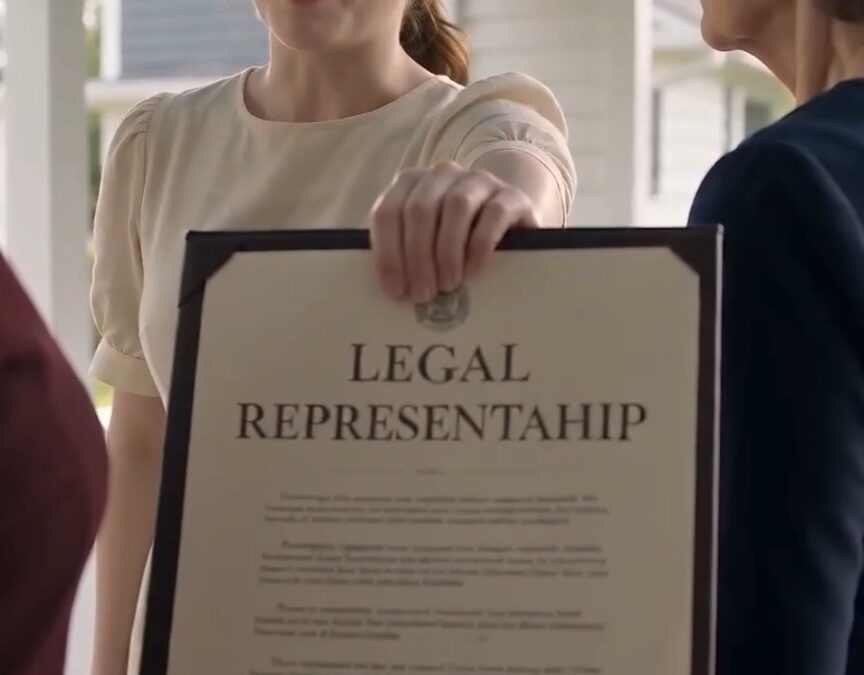
LEGAL REPRESENTATION.
Paula came nearer the glass.
Erin lifted the cover and exposed the signed engagement letter beneath.
It was dated October 15, 2025.
My lawyer and I had signed it for limited enforcement work.
Paula had never seen that letter.
She had not known I could afford to retain counsel again.
Paula pulled back.
“Ruth, you can’t just—”
Her mouth closed before she finished.
She could see that the lawyer was already retained.
I watched her eyes move toward Calvin.
He was looking at the document too.
“This is private,” Paula said.
“So are my bedroom and bathroom,” I answered.
Erin kept her palms on the pages.
She did not wave them or threaten anyone.
She placed the engagement letter aside and opened the settlement.
“Payment before voluntary surrender,” she said.
The settlement was signed September 12, 2025.
It provided a $72,000 relocation buyout.
The money had to clear before I gave up possession.
It was not payable whenever they felt ready afterward.
My original occupancy continued until the agreement was performed.
There was no mandatory date requiring me to leave unpaid.
Paula knew that.
She had received legal advice before signing.
Calvin had too.
What she had not expected was paid legal help enforcing it.
Erin looked at her father.
“Has Grandma been paid?”
“We’re arranging it.”
“That isn’t the same thing.”
I moved my hand from the table.
The rough edge had left a mark on my palm.
“Open the door, Calvin.”
He looked toward Paula.
“We can discuss the timing.”
“With the door open.”
Doreen set her covered dish on the hall table.
“What money?” she asked.
Paula turned away from us.
“Not now.”
Calvin was still watching me.
His expression had changed.
He no longer looked as though he expected me to go quietly.
“Did you contact your lawyer again?”
“Yes.”
“When?”
“October 15, 2025.”
He lowered the napkins to his side.
“Why did you call a lawyer without telling us?”
Chapter 3: What We Had Signed
“Because you kept sending boxes into my rooms.”
Calvin looked toward my bedroom doorway.
Some of the boxes were still stacked there.
Paula had brought them downstairs with packing paper inside.
She said she was trying to make things easier.
I told her I had not agreed to a date.
She answered that dates could be worked out later.
That was before the baptism lunch.
It was also before I called my lawyer again.
I had not secretly invented a claim against their house.
Calvin and Paula had held title since 2013.
My name was not on their deed.
I knew the difference between ownership and the right to live there.
We had discussed that difference before construction began.
In 2019, they wanted an upstairs addition.
I wanted secure downstairs living near my family.
We talked over the rooms and the money.
I asked what would happen if circumstances changed.
Calvin said we should put everything in writing.
For once, we all agreed quickly.
The occupancy agreement was signed May 6, 2019.
My contribution was $148,000 for the upstairs construction.
In return, the agreement reserved my downstairs bedroom, sitting room, bathroom, and kitchenette.
Those four rooms were for my exclusive use.
The front entrance and foyer remained shared.
I could close my sitting-room door.
I could make breakfast without entering their kitchen.
I could help the family without sleeping in a spare bedroom.
That arrangement mattered because I could not replace my savings.
I was already retired from the school cafeteria.
There would not be another working lifetime to rebuild them.
Calvin had understood that when we signed.
He sat beside me during those discussions.
He watched the construction proceed.
He and Paula chose things for the upstairs rooms.
Nobody treated my money as imaginary then.
For several years, the arrangement mostly worked.
I cooked when someone was ill.
I helped with errands and family meals.
Sometimes I ate with Calvin and Paula.
Sometimes I carried a bowl downstairs and enjoyed quiet.
Then Paula started talking about Doreen needing a place.
At first, she discussed visits.
Later, she discussed furniture.
Eventually, she asked which of my rooms I used least.
I said they were my living rooms, not empty storage.
That answer started an argument.
More arguments followed.
By September, lawyers were helping us settle the housing dispute.
I agreed to accept less than my construction contribution.
The buyout was $72,000.
In exchange, I would voluntarily give up my occupancy.
But the sequence was written clearly.
Cleared payment came before surrender.
Doreen moving in was not a condition.
Doreen changing her mind would not cancel their obligation.
There was no agreement that I would leave for free.
On the porch, I kept my explanation brief.
“The settlement did not make those rooms vacant.”
Paula pointed toward the document.
“We know what it says.”
“Then follow it.”
Calvin rubbed the back of his neck.
“We didn’t know you were going back to the lawyer.”
“I needed advice.”
“You could have asked us.”
“I did ask you to stop bringing boxes.”
He looked away.
On October 15, 2025, I had sat at my kitchenette table.
My blue mug was beside the settlement.
I called the lawyer who had already represented me.
I asked whether payment was still required before I left.
She said yes.
She asked whether I had received any money.
I said no.
She asked whether I had given up possession.
Again, no.
Then we discussed what limited enforcement work would cost.
That was the part Paula had not expected.
She knew I was short of money.
She had heard me plan groceries around my deposit.
She assumed legal advice was beyond my reach.
I had been embarrassed to ask about an affordable arrangement.
I asked anyway.
My existing lawyer agreed to a limited enforcement matter.
She would send a written demand if the pressure continued.
I understood the fee before authorizing the work.
We signed the limited-scope engagement letter that day.
There was no hidden source of money.
There was an ordinary conversation about work I could afford.
I also gave Erin complete duplicates of the settlement and engagement letter.
She checked the page order and put them in her portfolio.
I authorized her to show them if needed.
I gave her permission to read my family notebook.
She had asked to share a memory at the lunch.
Neither thing required Paula’s permission.
I had not told Paula about retaining counsel again.
She had never signed or seen that engagement letter.
On the porch, Calvin looked at Erin’s tote.
“You planned all this?”
Erin shook her head.
“I planned to have Grandma’s papers if she needed them.”
“You brought them to a baptism.”
“Mom brought moving plans to a baptism.”
Paula’s cheeks reddened.
“We thought Ruth could stay with you temporarily.”
Erin stared at her.
“You never asked me.”
“It was one possibility.”
“It wasn’t an agreement.”
I did not want to move the argument onto Erin’s doorstep.
“I am not going to her house while you take my rooms.”
Doreen came closer to the glass.
She looked at the settlement, then at her sister.
“You told me Ruth had agreed to leave.”
“She has,” Paula answered.
“That’s not all you told me.”
Calvin turned toward his sister-in-law.
Doreen kept looking at Paula.
“What happened to the relocation money you said she already received?”
Chapter 4: The Story Her Sister Heard
Paula looked toward the guests.
“Doreen, please lower your voice.”
Doreen had not been shouting.
She kept her hands at her sides.
“You said the money was already paid.”
“I said we had settled things.”
“You said Ruth was staying with Erin while she moved.”
I answered through the glass.
“I do not have an apartment yet.”
Doreen’s face changed.
She looked toward the stairs, then back at Paula.
“I thought this was arranged.”
“It was being arranged,” Paula said.
“That isn’t what you told me.”
I watched Calvin’s face.
He did not seem surprised about Doreen wanting the rooms.
He did seem surprised by what Paula had told her.
That distinction did not excuse him.
He was still standing beside a locked door.
Erin put her hand on the settlement.
“Grandma hasn’t received anything.”
Paula glanced down at the pages.
“We can explain the financial part later.”
“Not after she’s outside,” Doreen said.
Nobody answered that.
Wesley made a small unhappy noise behind us.
Erin turned toward him, then looked at me.
I nodded that she should take him.
The guest passed him back carefully.
Erin settled him against her chest with one arm.
Her other hand stayed near the portfolio.
Calvin finally slid the bolt.
He opened the door and stepped aside.
I went in without thanking him.
My shoes made familiar sounds on the foyer floor.
I walked straight to my kitchenette.
The blue mug was still on the counter.
A used spoon had been set beside it.
I moved the spoon onto the coffee tray.
Then I took my scheduled medication with water.
I was not having a medical emergency.
I had not needed anyone to decide whether I looked ill enough.
I had needed access to my own medicine.
I put the glass down and stood there briefly.
The counter felt cool beneath my fingers.
I heard Paula speaking quietly in the foyer.
Doreen answered in a voice I could still hear.
“I’m not moving into rooms she hasn’t agreed to give up.”
“She did agree.”
“Not like you told me.”
When I came back, Paula faced me.
Her voice had become more reasonable.
“Can we at least make a transition plan?”
“Yes.”
“Doreen could start with the sitting room.”
“No.”
“You don’t use it all the time.”
“It is part of my home.”
“We’re trying to accommodate everybody.”
“Then begin with the agreement we signed.”
Calvin folded the napkins again.
He had carried them through the whole argument.
“We could make something temporary work.”
“Not by giving away one of my rooms.”
Paula looked toward Erin.
“Then Ruth could stay with you while we arrange payment.”
Erin adjusted Wesley’s blanket.
“Stop offering my house.”
“I’m trying to find options.”
“Grandma has an option. You follow the settlement.”
I knew why leaving first was a problem.
My lawyer had explained it without frightening me.
If I surrendered possession, the practical situation would change.
Furniture could move.
Doors could be reassigned.
Getting back into rooms already occupied by somebody else would be harder.
The agreement avoided that problem by requiring cleared payment first.
I was not going to reverse the order for Paula’s convenience.
“I will leave after the money clears,” I said.
Paula stared at me.
“You sound like you’ve been rehearsing.”
“I asked what my agreement meant.”
Doreen picked up her coat.
Paula moved toward her.
“Don’t leave because of this.”
“I’m not taking those rooms.”
“We can still discuss it.”
“No. You need to settle with Ruth.”
Doreen looked at me.
“I didn’t know.”
“I understand.”
I believed her.
She had arrived carrying food, not a demand for my keys.
She had also asked questions instead of pretending not to hear.
That mattered.
She left her covered dish for the lunch.
Then she went out through the door Calvin had finally opened.
The lunch did not resume as though nothing had happened.
People ate a little and spoke quietly.
A guest offered to make me a plate.
I said I would eat in my sitting room.
Erin brought the plate and sat nearby with Wesley.
She had put the legal papers back in the portfolio.
My notebook remained in her tote.
I could hear guests saying goodbye in the foyer.
No one suggested a family photograph.
I took a bite of food because it was there.
Then I set the fork down.
Erin looked at my plate.
“Do you want something else?”
“No. This is fine.”
She did not tell me I needed to calm down.
She sat with me until Wesley fell asleep.
After most people had gone, Calvin came to my doorway.
He knocked on the frame.
“Come in,” I said.
He stayed standing.
“I’m sorry about the door.”
“What part?”
“The way it happened.”
“Are you sorry it was locked?”
“Yes.”
“And that you told me not to embarrass you?”
He looked toward my kitchenette.
“Yes.”
I waited.
He did not say more.
Then he noticed the portfolio on my table.
“Please don’t have your lawyer send anything yet.”
I folded the napkin beside my plate.
“The letter is the next step.”
Chapter 5: The Letter On My Table
That evening, I cleared my kitchenette table.
I washed my plate and the cup Erin had used.
Then I stopped washing dishes.
Some of Paula’s serving pieces were still downstairs.
She could collect them herself.
I needed the table for my papers.
Erin helped me check the duplicate settlement.
Every page was there.
We put the signatures and cover page back in order.
Then I opened a clean page in my notebook.
I wrote the date at the top.
Below it, I described the lockout in plain language.
I wrote where my medication had been.
I wrote what Paula said about Doreen needing the rooms.
I wrote Calvin’s request as closely as I remembered it.
I did not add anything about what people secretly intended.
I could describe what I saw and heard.
That was enough to begin.
Erin wrote her own account separately.
I did not tell her which sentences to use.
She recorded where she had been standing.
She included the guests near the entrance.
She also described Paula seeing the signed engagement letter.
We saved the earlier messages about packing and moving.
My lawyer had told me to preserve those.
There was no need to invent a secret recording.
The agreements existed.
The messages existed.
People had watched the door remain locked.
I put the papers in a folder that closed.
Then I moved my medication into my private kitchenette cabinet.
It had been left near the coffee because I was helping serve.
I wanted it away from the lunch things now.
Erin watched me wipe a ring from the counter.
“Do you want me to stay longer?”
“You need to get Wesley home.”
“I can come tomorrow.”
“Call first. We’ll make a plan.”
She smiled a little.
“All right.”
After she left, Calvin came downstairs.
He saw the folder on my table.
“Are you sending all of that?”
“Yes.”
“I already apologized.”
“I heard you.”
He pulled out a chair.
For a moment, he seemed unsure whether he could sit.
I nodded toward it.
He sat.
“This could hurt us financially.”
“Following the settlement costs what you agreed.”
“We need time.”
“You can ask for time without keeping me outside.”
He rubbed one thumb against the other.
I remembered those hands carrying building samples in 2019.
He had been excited about the upstairs space.
I had been excited about having a secure downstairs home.
Neither of us spoke for a while.
Finally, he stood.
“I wish you had told me about the lawyer.”
“I wish you had opened the door.”
He left the chair tucked out from the table.
I pushed it back after he went upstairs.
On October 20, 2025, my lawyer sent the written demand.
I reviewed the wording before it went out.
I corrected one description of the entrance.
It was shared, not exclusively mine.
The distinction mattered.
The letter preserved my occupancy position.
It demanded that interference with my access stop.
It required lawful performance before any voluntary surrender.
It also documented what had happened during the baptism lunch.
It did not claim I owned Calvin and Paula’s property.
It did not announce a court order that did not exist.
No hearing had happened.
No judge had ruled from a courthouse overnight.
It was a lawyer asking people to honor signed documents.
Paula brought her copy downstairs.
She put it on my table.
“Now we have more legal fees.”
“We already had a settlement.”
“We were trying to work this out as a family.”
“We used lawyers to work it out in September.”
She looked at the letter.
“People are talking about Sunday.”
“They were there.”
“You could tell them it was a misunderstanding.”
“Was the bolt a misunderstanding?”
She picked up the letter again.
“That’s not fair.”
I did not answer.
I had already described the event accurately.
There was no useful argument about making it sound nicer.
On October 23, 2025, their lawyer responded in writing.
My lawyer forwarded the response and explained it.
Calvin and Paula’s own lawyer confirmed the payment condition.
The $72,000 had to clear before my voluntary surrender.
There was no requirement that I move out unpaid.
My occupancy continued in the meantime.
I printed the response and filed it behind the settlement.
Then I called Erin.
“What happened?” she asked.
“Their lawyer read it the same way.”
“Does Mom understand now?”
“I cannot tell you what she understands.”
I could tell her what the written response said.
That was the part I needed to rely on.
Calvin and Paula asked to talk after that.
We met at my table.
Paula brought a pad, and Calvin brought the settlement.
They had begun discussing a home-equity loan.
I knew financing could take time.
I did not demand that money appear that afternoon.
I asked for documented payment arrangements through counsel.
I also said I needed to choose suitable housing.
Paula tapped her pen against the pad.
“You’ll need to give us a move date.”
“I can coordinate a date when funding is clear.”
“The lender needs information.”
“Give the lender the settlement.”
Calvin nodded.
“We can do that.”
Paula stopped tapping.
Then she asked where I thought I would go.
I pulled my apartment notes from beneath the folder.
“That is what I’m choosing next.”
Chapter 6: Rooms I Could Choose
Erin drove me to look at apartments.
Wesley came with us, bundled against the cooler weather.
I carried a folder with application information and questions.
I did not bring the entire housing dispute.
An apartment manager needed financial information and references.
She did not need to hear about the baptism lunch.
At the first place, I checked the bathroom doorway.
Then I looked at the shower.
I was 74, and I wanted an accessible home.
I did not want to move again because of a step.
Erin stood back while I measured the space with my eyes.
“Would your chair go there?” she asked.
“Maybe. Let’s see the kitchen first.”
I reached toward an upper cupboard.
The shelf I would use most was too high.
The hallway also smelled damp.
I asked for written information anyway.
I wanted to compare places without relying on memory.
Outside, Erin settled Wesley in the car.
Then she asked what I thought.
“The bathroom was better than the kitchen.”
“I wondered about the cupboard.”
“I don’t want to keep a stool beside the stove.”
She nodded.
Nobody accused me of being ungrateful.
That made the visit easier than I expected.
For months, housing conversations had begun with somebody else’s needs.
Here, I could dislike a cupboard.
I could ask where my lamp would fit.
Those were ordinary questions about a place I would pay for.
I kept using my income for ordinary expenses.
I did not make deposits I could not afford to lose.
The settlement money would support the move when it cleared.
My lawyer helped keep the timing practical.
I asked apartment managers about application requirements and availability.
I asked what could be arranged without pretending payment had already arrived.
There were forms to read.
There were papers to gather.
I had managed school meal counts and household bills for years.
I could manage a folder.
Back at the house, Paula offered another option.
She said I might stay temporarily in family space.
“It would save money,” she said.
“Whose space?”
“Something could be worked out.”
“Would I have a lease?”
She paused.
“It would be family.”
“I am looking for my own apartment.”
“You wouldn’t have to manage everything alone.”
“I have managed my own rooms here.”
“We help you.”
“Sometimes. That does not make this the right option.”
Calvin was near the staircase.
He listened without interrupting.
Paula tried again.
“It could keep everyone close.”
“I want a place I choose.”
I did not want another arrangement controlled through family conversations.
I wanted written responsibilities and a direct way to request repairs.
I wanted to know who could enter and when.
I asked those questions at every apartment visit.
Some places were unsuitable before I reached the bedroom.
Others looked possible until I considered the entrance.
I was not shopping for a showplace.
I wanted to get through the day comfortably.
The apartment I selected had an accessible entrance.
The bathroom worked for me.
The kitchen shelves I needed were within reach.
There was room for my chair beside a window.
I stood there longer than I intended.
Erin came beside me with Wesley.
“Can you picture it?”
“Yes.”
“Where would the lamp go?”
“Beside the chair. Like it belongs.”
She smiled.
I asked for the lease and application information.
Then I took the papers home to read.
I would not sign because someone said the place was perfect.
I wanted to understand it myself.
Meanwhile, Calvin and Paula pursued the home-equity financing.
The lender wanted documents and verification.
Calvin complained about how much paperwork there was.
I listened without offering to take over.
This was their loan on their house.
My part was providing information properly requested through the lawyers.
When they needed the settlement confirmed, my lawyer responded.
When they wanted handover details, we discussed them.
When Paula asked me to pack before financing was certain, I declined.
I did begin sorting.
That was different from surrendering rooms.
I emptied a drawer full of old instructions.
I separated family photographs from receipts.
I found sewing supplies in three different places.
Those went together in one basket.
Erin came over while I sorted kitchen things.
I offered her a serving dish she had always admired.
“Only if you really don’t want it,” she said.
“I don’t use it.”
“I don’t want you giving everything away.”
“I’m taking my chair, lamp, shelf, and plenty of dishes.”
She looked at the growing keep pile.
“Clearly.”
We laughed, and Wesley startled at the sound.
Erin patted his back until he settled.
I put my blue mug back in the cupboard.
It was not ready to be packed.
I still lived there.
Doreen called while I was folding kitchen towels.
“I need to say this without Paula here,” she said.
“All right.”
“I didn’t know she was trying to move you before paying.”
“I believe you.”
“I’m not taking the rooms.”
“I understand.”
She did not ask me to make things easier for Paula.
She did not ask me to withdraw the lawyer’s letter.
I was grateful for that.
After the call, Calvin brought another financing update.
Things were progressing, but closing was not complete.
He noticed the apartment papers.
“You found somewhere.”
“Yes.”
“Does it fit your chair?”
“It does.”
He looked down at the floor plan.
Then he asked whether I could leave when they expected funding.
I put the plan back in its folder.
“When the funds clear, we can finish the date.”
Chapter 7: The Date On The Calendar
By late November, my apartment choice was settled.
The remaining arrangements depended on payment being completed properly.
I coordinated dates through the lawyers and the apartment office.
I did not rely on an estimate from upstairs.
Calvin would say the lender expected something soon.
Paula would say I should begin clearing the rooms.
I kept asking for confirmation in writing.
That made me tiresome to them.
It also kept us discussing the same facts.
One afternoon, Paula came down while I was sorting photographs.
She pointed toward the boxes beside my bedroom.
“Can those at least be filled?”
“Some are already filled.”
“The rooms still look occupied.”
“They are occupied.”
She stood in the doorway for a moment.
Then she walked away without answering.
I put a photograph of Erin back into its envelope.
It showed her long before she had Wesley.
I had kept so many pictures of that girl.
I was not going to rush through them because Paula disliked my lamp still being plugged in.
Erin helped with practical details when she could.
She made lists while I decided what belonged on them.
We planned which things would travel with me.
Medication, documents, and the notebook would stay in my personal bag.
The blue mug would be wrapped separately.
My bedding needed to be easy to find.
I wanted my chair set up before the boxes crowded it.
These were small instructions.
They were also instructions about my own move.
Calvin came downstairs one evening and watched me label a box.
“Kitchen,” he read.
“Yes.”
“You could just write dishes.”
“There are towels in it too.”
He nodded as though the distinction mattered greatly.
Then he asked whether I needed help.
“Hold the flaps while I tape this.”
He did.
For a minute, we worked together without discussing lawyers.
I remembered him as a boy asking to lick a mixing spoon.
Then he let go of the box too early.
“Not yet,” I said.
“Oh. Sorry.”
He held it again.
The box closed properly.
I thanked him for the help, not for anything else.
He stayed near the table afterward.
“Mom, I didn’t think Sunday would happen like that.”
“Did you know Paula wanted me outside?”
“No.”
“Did you know she wanted Doreen in my rooms before payment?”
He looked toward the foyer.
“I knew she wanted it settled.”
“That isn’t what I asked.”
He rubbed his forehead.
“I thought we would work it out.”
“We had worked it out in writing.”
“I know.”
I believed he wished the afternoon had gone differently.
I did not know whether he had fully considered his own part.
He had stood beside the bolt.
That was not something he could place entirely on Paula.
“I asked you to open the door,” I said.
He nodded without looking up.
“Yes.”
I put the tape beside the box.
“I need you to remember that.”
He stayed a few minutes longer.
Then he took an empty carton upstairs at my request.
There was no sudden repair between us.
There was a carton carried where I asked.
I accepted that for what it was.
As December approached, the lawyers exchanged payment arrangements.
The funds would move through the closing lawyer’s trust account.
My lawyer would confirm when the payment had cleared.
I asked whether I needed to do anything else beforehand.
She told me which documents were required.
She also reminded me not to give possession early.
I wrote that beside the proposed moving date.
Paula saw the calendar on my table.
“December 8, 2025?” she asked.
“That is the planned date if payment is complete.”
“Can we finally treat that as definite?”
“When the funds clear.”
“You keep saying that.”
“Because that is the condition.”
She looked at the calendar again.
Then she went upstairs.
I checked the apartment paperwork once more.
There was no benefit in becoming careless at the end.
I wanted the lease dates, moving arrangements, and surrender record to agree.
I wanted no question about when my belongings left.
I also wanted no claim that I had left earlier.
The rooms remained mine to use until handover.
I slept in my bed.
I made coffee in my kitchenette.
I kept my chair beside the lamp.
Those things continued until the payment was complete.
On December 5, 2025, my lawyer called.
I sat before answering her questions.
The home-equity loan had closed.
The full $72,000 had cleared through the closing lawyer’s trust account.
I asked her to repeat the cleared part.
She did.
“Nothing still pending?” I asked.
“Nothing still pending on that payment.”
I looked at the calendar.
December 8, 2025, was close enough to touch with my finger.
Then I wrote the confirmation beside December 5, 2025.
I asked for the paperwork for my file.
After we ended the call, I checked my records.
The amount was the full amount.
Not a portion.
Not a promise attached to a later payment.
I sat at the table with my water glass.
For several minutes, I did nothing else.
Then I called Erin.
“It cleared.”
“All of it?”
“All of it.”
She let out a long breath.
“What do you need now?”
“Help with the last kitchen boxes.”
“I can come.”
I looked toward the doorway.
Calvin was standing there with a paper in his hand.
It was not the payment confirmation.
“Paula wants this signed before you go,” he said.
Chapter 8: What I Would Actually Sign
I held out my hand for the paper.
Calvin gave it to me.
The wording went beyond payment and possession.
It referred broadly to the family dispute being resolved.
I read it twice.
Then I put it beside the settlement.
“I need my lawyer to review this.”
“It’s just to finish everything.”
“Then it should say exactly what is finished.”
He looked tired.
“The money is paid.”
“Yes.”
“You’re moving.”
“Yes.”
“So what is the problem?”
“I am not signing words I have not agreed to.”
He pulled out a chair but did not sit.
I called my lawyer about the proposed document.
She reviewed it before anything was signed.
The proper handover paper could acknowledge payment and surrender.
It did not need to release unrelated claims broadly.
It did not need to describe the lockout as a misunderstanding.
It did not need to say every family disagreement had disappeared.
The lawyers worked on accurate wording.
Paula objected to narrowing it.
I heard that through the proper channel.
I did not go upstairs to argue over phrases.
Eventually, a limited possession acknowledgment came back.
It stated what had actually happened.
Payment had been completed.
Possession would be surrendered on the agreed handover date.
I would sign it after my belongings were out.
I read that version slowly.
Then I approved it.
When Calvin came down again, I showed him the page.
“This is the one.”
He read it and nodded.
“I understand.”
I hoped he did.
Either way, the paper now matched the transaction.
After the payment cleared, Calvin told me about the loan.
He and Paula would be making payments against the house.
They would have to change some spending.
I listened while folding dish towels.
I did not tell him borrowing was painless.
I also did not offer to return money I had accepted under the settlement.
“You agreed to this amount in September,” I said.
“I know.”
“You had the construction money in 2019.”
“I know that too.”
He sat very still.
Then he looked toward the upstairs ceiling.
“Paula thought you would take less after finding a place.”
I set down the towel.
“Did you?”
He took time to answer.
“I thought maybe we could work something out.”
“We did work something out.”
He nodded.
I picked up the towel and folded it again.
The corners had slipped out of line.
There was no reason to keep debating the amount.
They had paid it.
I was moving.
Now I needed to get my belongings safely into the apartment.
Erin came to help with the kitchen.
She put Wesley where she could watch him.
Then she held up two mixing bowls.
“Both?”
“The smaller one. You can have the other.”
“You’re sure?”
“Yes.”
She put the smaller bowl into my box.
The larger one went into her tote.
We worked through the cupboard that way.
I kept enough without keeping every duplicate.
I did not need serving pieces for a crowded baptism lunch.
I needed what I used every week.
The blue mug went into neither pile.
Erin set it carefully beside my personal bag.
“This one comes with you.”
“Yes. Near the top.”
She wrapped it so the handle was protected.
Then she tucked it where I could find it.
The family notebook went into the bag too.
My medication stayed within reach.
The settlement and payment confirmation went into a document sleeve.
I checked the sleeve before closing the bag.
Paula came downstairs while we were packing the sitting room.
She pointed at my freestanding shelf.
“Are you taking that?”
“Yes.”
“I thought it stayed.”
“It is mine.”
She looked toward Calvin, who was near the foyer.
He answered before she repeated herself.
“It goes with Mom.”
Paula looked back at the shelf.
Then she stepped away from it.
I did not thank Calvin for deciding who owned my furniture.
I was glad he had answered accurately.
That was enough.
The last evening in the house was quiet downstairs.
My chair had not been packed yet.
Neither had the lamp.
I sat there after checking the bedroom drawers.
The rooms looked partly emptied, partly familiar.
I could still see where photographs had stood.
I opened the notebook once, then closed it.
There was no entry I needed to write that night.
Upstairs, a chair scraped across the floor.
I listened without getting up.
My moving clothes were ready.
My medicine was where I could reach it.
The apartment papers were in my bag.
I checked the front door before going to bed.
The bolt worked normally.
In the morning, I made the last coffee I would make there.
I washed the mug and dried it.
Then I wrapped it again.
On December 8, 2025, Erin arrived before the movers.
She knocked instead of walking in.
I opened the door myself.
“Ready?” she asked.
“Almost.”
She carried my personal bag toward her car.
I took one more look at the kitchenette counter.
There was no mug beside the sink now.
Calvin stood near the entrance.
He looked into the sitting room, where my chair waited.
Then the moving truck pulled up outside.
Chapter 9: The Window I Had Chosen
The movers asked which pieces were going.
I showed them the chair, lamp, shelf, and bed.
The packed boxes were grouped nearby.
Calvin stayed clear of the doorway.
Paula stood beside the stairs with her arms folded.
She did not stop anything from leaving.
We had already identified my belongings.
The settlement bought out my occupancy.
It did not purchase my photographs or furniture.
Erin checked the rooms after the larger pieces went out.
Then I checked them myself.
I opened the bedroom closet.
A little dust marked where my shoe rack had stood.
I wiped it with a cloth.
Then I stopped.
The room was clean.
I did not need to spend moving morning scrubbing an empty closet.
In the kitchenette, I opened every cabinet once.
In the bathroom, I checked behind the door.
I looked beneath the sitting-room shelf’s old place.
There was nothing left that I meant to take.
My lawyer had arranged the possession paperwork.
The payment had cleared on December 5, 2025.
Today was December 8, 2025.
The handover would reflect those dates correctly.
I signed the limited acknowledgment after my belongings were removed.
Calvin signed where he was supposed to sign.
Paula read the page longer than necessary.
Then she signed too.
I kept my copy.
The keys I was surrendering went with the completed handover.
There was no court officer at the door.
No one had been evicted.
I was leaving voluntarily after the settlement had been performed.
That was what the documents said.
That was also what happened.
Erin carried the last small box outside.
I walked through the foyer behind her.
Calvin followed me onto the porch.
“Can I come see your apartment?”
“Yes. Call first.”
“I could help put things away.”
“Erin and I have today arranged.”
“Another day, then.”
“We’ll choose one.”
He nodded.
I was not saying he could never visit.
I was saying he needed to arrange it with me.
Paula stayed inside until I reached the steps.
Then she opened the door wider.
“I hope it works out for you.”
“It is the apartment I chose.”
She looked at me for a moment.
Then she nodded and went back inside.
I did not wait for another sentence.
I got into Erin’s car with my personal bag.
The blue mug was wrapped near the top.
The drive was ordinary.
There were traffic lights and cars turning into stores.
Wesley slept for part of it.
Erin asked whether I wanted the heat adjusted.
I said it was fine.
At the apartment, the movers asked where the chair belonged.
“Near that window.”
They set it down where I pointed.
The lamp went beside it.
Erin checked the space between the chair and kitchen.
I walked through it myself.
Then I asked her to move the little table closer.
She moved it and waited.
“That works,” I said.
The bed fit where I had planned.
The shelf fit too.
I could reach the kitchen cupboards without a stool.
The bathroom was the one I had inspected.
There were no last-minute compromises waiting behind a closed door.
I put the medication where I wanted it.
Then I opened the document sleeve.
The settlement went into a proper file.
The payment confirmation went behind it.
The possession acknowledgment followed.
My lease had a separate place where I could reach it.
After checking everything, I put the files away.
They did not need to sit on my table for visitors.
The apartment was not grand.
It was accessible, clean, and within my plan.
I had selected it and read its lease.
Maintenance requests went to the office.
Visitors came because I invited them.
I unpacked my dishes into the cupboard nearest the counter.
Erin folded the wrapping paper.
When Wesley woke, she brought him over.
He gripped the front of my blouse.
I held him while she made something for us to eat.
There was no crowd waiting in another room.
We ate when the food was ready.
Later, Erin took Wesley home.
I walked through the apartment by myself.
I checked the entrance lock and learned how it felt.
I tested the bathroom light.
I moved a towel within easier reach.
Then I sat in my chair.
There were no family footsteps overhead for me to identify.
Doreen did not move into my old rooms.
She had withdrawn when she learned the truth.
Paula could use the downstairs space now.
She could not give her sister the arrangement she had promised.
Calvin and Paula also had the home-equity loan to repay.
The full $72,000 was no longer a subject for bargaining.
It had been paid before I gave up possession.
I kept the funds in my own account.
I planned my spending around my income and housing expenses.
I did not offer another construction contribution.
Calvin called when he wanted to visit.
We chose a time, and he came then.
He brought food and asked where to put it.
I pointed to the counter.
He did not move anything without asking.
We talked about Wesley and the colder weather.
Eventually, he glanced toward my file cabinet.
“Are we finished with the papers?”
“The settlement is complete.”
He nodded.
I did not promise that every conversation between us would be easy.
For that visit, he had called first.
He had arrived when we agreed.
We ate the food he brought.
After he left, I washed the dishes.
Then I took my blue ceramic mug from the cupboard.
It had survived the move without a chip.
I made coffee and carried it to the little table.
Outside, someone was walking a dog along the path.
I watched until they turned out of sight.
Then I set my blue mug beside the window.








