My Husband Shoved Me After Mom’s Funeral—Then the Estate Lawyer Returned My House Keys
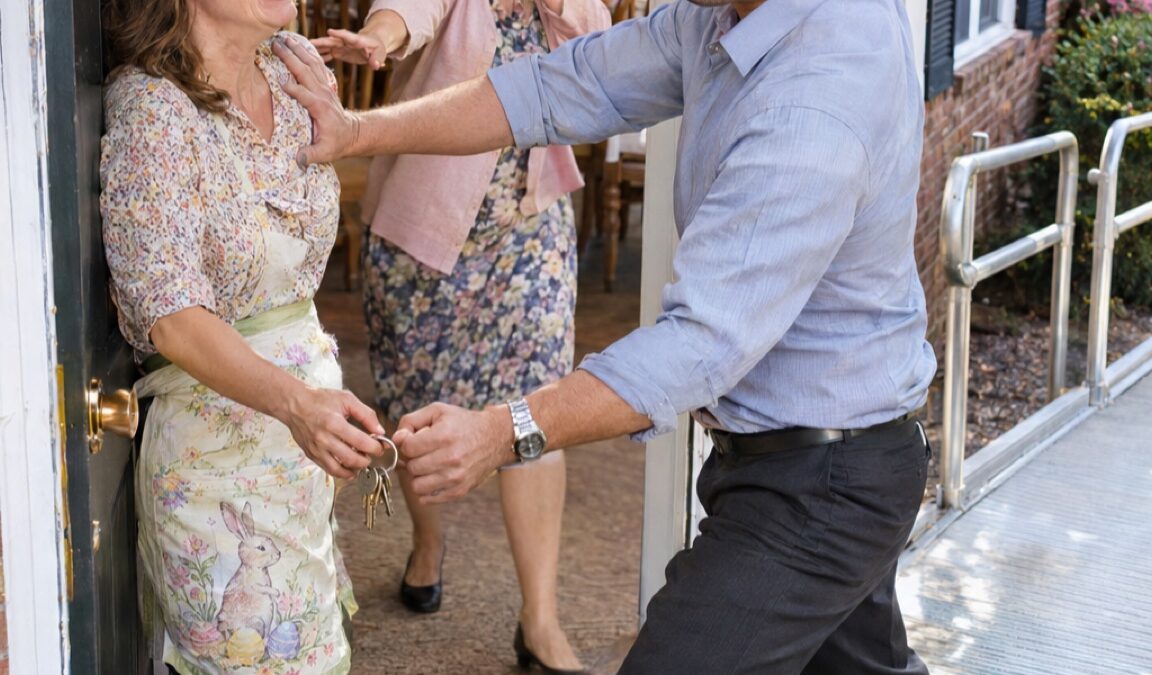
Part 3: What Mother Asked For
“Yes,” I said. “Read it.”
Malcolm read the provision without raising his voice.
During administration, I had exclusive residential occupancy of the house. Ruth could enter for trust business and necessary work. I could invite someone to live with me, but nobody gained an independent right through me.
Then Malcolm told us why it was there.
My mother had called him after hearing Grant threaten to sell the house.
She signed the amendment on January 17, 2025.
“She wanted you to have somewhere secure while you grieved,” Malcolm said. “She specifically did not want you pressured into leaving.”
I looked toward the hallway containing her closed bedroom.
She had heard him.
“Did she tell you what he said?” I asked.
“She said he threatened to sell the house.”
Grant pulled a chair away from the table.
“She couldn’t give Nora my place to live.”
“The trust owns this property,” Malcolm said. “Neither of you owns it.”
Grant stayed standing behind the chair.
He looked at Ruth, waiting for her to disagree.
My aunt moved her plate away from Malcolm’s folder.
“Explain the deed,” she said.
Mom had signed it on June 14, 2021.
It was recorded on June 16, 2021.
The house had belonged to her revocable trust since then.
She had kept control of the trust while alive.
When she died on April 2, Ruth became successor trustee.
“She didn’t need Grant’s signature for that amendment,” Malcolm said.
Grant tapped the chair back with two fingers.
“I didn’t even know there was an amendment.”
“You weren’t given the private document.”
“But you expected me to know what it said?”
“No. I’m explaining it now.”
Malcolm was 61, with reading glasses on a cord.
He slipped them off and looked directly at Grant.
“I represent Ruth in her capacity as trustee.”
Grant glanced toward the kitchen.
“Then Ruth could have told me before today.”
Ruth picked up her water glass.
“I said I would review your proposal,” she told him.
“You said we could discuss moving forward.”
“Reviewing it was not approval.”
I rubbed the edge of my key against my thumb.
Malcolm had placed the ring in my open hand.
There was a red mark where Grant had gripped me.
“Does the amendment mean he has to leave?” I asked.
“It means he has no independent occupancy right under the trust.”
Malcolm pulled a chair closer, leaving space between us.
“It doesn’t authorize anyone here to remove him physically.”
Grant immediately straightened.
“Exactly. We moved in together. I get mail here.”
“We still use the proper legal process,” Malcolm answered.
He did not promise an instant eviction.
He did not tell me to throw Grant’s bag outside.
I needed somebody to say what could actually happen.
Ruth looked at me.
“Your mother intended you to receive the house ultimately.”
“Then why is it still in the trust?”
“Because administration isn’t finished,” Malcolm said.
There were legitimate obligations to identify and address.
There were records Ruth still needed to review.
The trust provision did not erase those responsibilities.
If obligations required different action, Ruth would need legal advice.
“But there is no approved sale,” he said.
Grant made a small, impatient noise.
“And no permission to hand you possession today.”
I put the keys in my apron pocket.
The ring caught on a loose thread.
I worked it free instead of pulling.
“Can I have a copy of the amendment?”
“Yes,” Malcolm said.
He separated a copy from the papers in his case.
I took it and checked the signed page.
“Did she think I couldn’t manage?” I asked.
Malcolm let me finish straightening the pocket.
“She thought you had already been managing too much.”
I laid the copy across my knees.
“Do I need to sign anything now?”
“No. This was your mother’s instruction, not a new agreement.”
Ruth reached across and touched my wrist.
“I’ll make sure you have the administration updates too.”
Grant pushed the chair farther from the table.
“This doesn’t pay the expenses.”
Ruth withdrew her hand and faced him.
“I’m reviewing the actual expenses.”
“This house will use up everything she leaves.”
“You don’t have the records to say that.”
“I lived here.”
“So did Nora.”
He looked at me then.
I kept my hand inside the apron pocket.
“I don’t consent to you staying with me,” I said.
“You’re embarrassed. We can discuss this privately.”
“You shoved me.”
“You’re making it sound worse than it was.”
“My back hit the door.”
Malcolm asked whether I needed medical attention.
My shoulder hurt where Grant’s palm had landed.
Twisting made my back hurt more.
“I want to sit for now.”
Ruth brought water and moved the chair for me.
Across the room, Erin smoothed my coat sleeve.
My sister was 38, old enough to know what she had asked.
She had told me to surrender my keys.
Everyone’s dinner was getting cold.
Now she kept looking at the food instead of me.
Paige stood beside the coat bench with her purse.
At 35, she looked no more comfortable than I felt.
“I was told you knew I was coming,” she said.
“I knew about you. I didn’t invite you.”
She looked at Grant.
He ignored her and leaned toward Ruth.
“There’s another property involved. We have timing to consider.”
Ruth pulled his proposal closer.
“I saw that.”
“I was trying to get this arranged before it disappeared.”
“What property?” I asked.
Grant rubbed his forehead.
“The condo. We discussed a smaller place.”
“You mentioned moving. You didn’t show me a condo.”
“I sent everything to Ruth.”
Malcolm turned one page.
Grant reached toward it, then stopped.
“You can’t reject the whole thing without considering the advance.”
I looked from his hand to Ruth.
“What advance?”
Grant stared at my aunt.
“The condo request should already have been approved.”
Part 4: The Proposal He Brought
Ruth kept her hand on the proposal.
“Do you want this discussed here?” Malcolm asked her.
“Yes. Grant chose to bring it into dinner.”
Grant glanced toward the kitchen.
Several guests had moved there with their untouched plates.
Nobody was pretending to eat anymore.
“We could wait until everyone goes,” he said.
“You didn’t want to wait earlier,” Ruth answered.
“I thought we could get something accomplished.”
“Then listen while Malcolm explains what you submitted.”
Malcolm laid the pages flat between the dishes.
Grant had proposed marketing the house for $410,000.
That was his number, not an accepted offer.
There was no buyer waiting outside.
There was no listing agreement or signed purchase contract.
Ruth had authorized no conveyance.
“And the advance?” I asked.
Grant stepped closer to the table.
“It’s not as strange as they’re making it sound.”
Malcolm looked at Ruth before continuing.
The proposal requested an advance against my expected inheritance.
The money would go toward a $175,000 condo.
A listing printout sat behind Grant’s written request.
I could see a kitchen with light-colored cabinets.
“Who was going to live there?”
Grant looked toward Paige.
“We’ve discussed our plans.”
“You and Paige?”
“Yes.”
He said it as if I had interrupted something routine.
I took off my apron.
First, I removed the keys from its pocket.
I folded the apron across my knees.
“You asked for my inheritance to buy you a condo?”
“I asked if an advance was possible.”
“For you and her.”
“We still have finances to settle.”
Paige lowered herself onto the edge of a chair.
“I thought this was already being arranged.”
“It was being discussed,” Grant said.
“With Nora?”
He looked annoyed.
“With the people who handle the estate.”
Malcolm moved the printout away from a water ring.
“An expected inheritance doesn’t authorize someone else to direct distributions.”
“I never claimed it did.”
“Then Nora has not authorized this request.”
Grant kept both hands on the chair back.
He had no signed instruction from me.
He had a conversation from the week after Mom died.
I had been standing beside a basket of laundry.
I had said the house felt too big without her.
He had asked whether I wanted something smaller.
“I can’t think about moving,” I had told him.
Apparently, he had kept only the first part.
“I said I couldn’t think about it,” I told him.
“You said you didn’t know how you’d stay here.”
“Those aren’t the same thing.”
“You’re splitting hairs.”
“I was talking about Mom.”
Ruth lifted the listing printout and examined the back.
There was nothing else attached.
“No purchase contract?” she asked.
“Not yet. That’s why I needed an answer.”
“From Nora?”
“From you.”
“You needed both. You have neither.”
Paige stood again.
Her purse strap slipped off her shoulder.
She put it back without looking at Grant.
“I’m not funding that condo,” I said.
Grant pulled out the chair beside mine.
Malcolm asked him to leave that space open.
Grant stopped with his hand on the seat.
“You don’t have to decide while you’re upset.”
“I’m not agreeing later either.”
“What about what I’ve put into this household?”
“My attorney can address any legitimate claim you make,” Ruth said.
Malcolm corrected her gently.
“Nora’s own attorney should handle marital questions.”
Ruth nodded.
“Then through Nora’s attorney.”
He kept the subjects separate.
The house belonged to the trust.
My marriage involved other legal questions.
Grant could get his own advice about those.
None of that authorized him to take my keys.
Grant’s voice became quieter.
“What if we agree on a reasonable amount?”
“I’m not negotiating that here,” I said.
“What if you keep the house and help me move?”
“No.”
He stared at me, then at Ruth.
She placed the proposal squarely in front of Malcolm.
“As trustee, I reject the sale proposal and requested advance.”
Grant opened his mouth.
She continued before he could speak.
“No sale has been approved. No advance has been authorized.”
Malcolm made a note.
He said he would confirm her decision in writing.
He did not produce a dramatic document for everyone to sign.
He wrote down her instruction and the date.
April 20, 2025.
I watched him underline the date once.
Ruth turned to me.
“Let’s save the camera recording properly.”
I set my phone flat on the table.
My finger kept slipping when I held it.
The camera was mounted on the porch post.
It faced the entrance and the ramp.
The front door opened outward onto the covered porch.
That angle had captured the doorway without needing anything moved.
Mom had wanted visitors visible before they started up the ramp.
The account belonged to me.
Grant did not have the password.
I found the clip and started the download.
“Keep the original file,” Malcolm said.
“Should I send it to you?”
“Save it first. Make a separate copy for sharing.”
I checked that the saved recording played.
Then I stored another copy outside the camera account.
I changed my password and checked the access settings.
Grant watched the screen.
“You’re locking me out now?”
“You never had access to this account.”
“You know what I mean.”
“I’m saving what happened.”
Ruth asked for paper and wrote down her account.
She included where she stood and what she heard.
She stopped twice to think before adding another sentence.
“I saw his palm strike your shoulder,” she said.
Grant leaned forward.
“You’re writing it like I attacked her.”
“I’m writing what I saw.”
“Put down that we were arguing.”
“I have.”
Erin came closer, holding my coat.
“Should we be doing all this right now?”
“Please put that back on the hook,” I said.
She did.
Ruth finished her account and dated it.
Malcolm suggested she keep the original without revising it later.
Anything remembered afterward could be recorded separately.
I put my phone beside the water glass.
Then I stood, slowly enough to avoid twisting.
“I want you to leave,” I told Grant.
He looked toward the stairs.
“My things are here.”
“I haven’t touched them.”
“I live here.”
“Then we’ll get advice about the proper process.”
Paige had moved onto the porch.
Grant called for her to wait.
He pulled out a chair and sat down.
His hands were flat on his thighs.
“I’m not leaving voluntarily.”
Part 5: The Door Stayed Open
I picked up my phone.
Grant watched me unlock it.
“Nora. Think about what you’re doing.”
“I’m asking for help.”
“You’re going to bring police into your mother’s house?”
I gave the dispatcher our Richmond address.
I said my husband had shoved me against the door.
He was still in the house.
Other people remained, and I had a recording.
The dispatcher asked whether he could hear me.
“Yes.”
She asked whether I needed an ambulance.
I described my shoulder and back.
I could breathe normally and move without assistance.
I did not want an ambulance.
I agreed to seek care if the pain worsened.
Grant stood while I answered.
Ruth moved beside my chair.
She did not put herself against him or grab him.
Malcolm asked Grant to stay across the table.
“Give her room to finish the call.”
“I’m not doing anything.”
“Then stay there.”
Grant sat down again.
I answered the remaining questions.
When I ended the call, my screen showed the time.
I wrote it on the back of an envelope.
I was afraid I would forget ordinary details.
Paige remained outside beneath the covered porch.
She held her purse with both hands.
The front door was still open.
I did not want to move near Grant to close it.
Someone in the kitchen asked whether everyone should leave.
Malcolm asked witnesses to remain available for the officers.
He did not gather us to agree on a story.
Ruth gave me fresh water.
I realized I had not drunk the first glass.
Erin sat on the hallway bench beneath my coat.
I stayed at the table with Ruth.
Grant began talking about the proposed sale again.
Malcolm stopped him.
“That discussion is finished for today.”
“You can’t tell me what I can discuss.”
“I can tell you Ruth has rejected the proposal.”
Grant looked at the pages.
“Then give those back.”
Malcolm asked Ruth whether she had her own copy.
She did.
Grant gathered his papers and folded them badly.
The condo photograph stuck out at an angle.
I looked away from it.
While we waited, Malcolm explained his role again.
He represented Ruth as trustee, not me personally.
He could preserve his own observations.
He could explain what had happened with the trust proposal.
A protective order or divorce required my own lawyer.
“Can you help me find one?” I asked.
“Yes.”
That was enough for the moment.
I did not need every step explained before the officers arrived.
When they came through the porch entrance, Grant stood.
He began describing an estate disagreement.
The officers separated us before taking detailed accounts.
I spoke near the kitchen.
Grant stayed in the front room.
Ruth waited until she was asked for her statement.
I started with the demand for my keys.
I explained that I had refused to leave.
Then I described the shove and where I landed.
The officer asked whether Grant had blocked me.
I showed where I had been standing.
I pointed out the outward-opening door and its stop.
“Did you fall?”
“No. I caught myself against the door.”
“Did he strike you anywhere else?”
“No.”
I did not start with Paige or the condo.
Those explained the argument, but not the movement of his hand.
When asked about the recording, I opened the saved original.
The officer watched while I held the phone.
I looked away when Grant’s arm moved.
The sound bothered me more than I expected.
The door hit its stop.
Someone drew in a breath.
I had not remembered that sound.
The officer asked me to preserve the original file.
I said I had saved another copy too.
Ruth gave her account separately.
Malcolm gave his contact information and described his own observations.
He did not ask the police to enforce the trust amendment.
Erin answered questions near the hallway bench.
I could not hear all her answers.
I did hear her say she had seen Grant take the keys.
Grant’s explanation grew quieter as the officers worked.
He called the contact accidental.
He said we were discussing where to live.
An officer told him housing disagreements did not excuse physical contact.
I stared at the tile beneath my chair.
There was a small piece of carrot by my shoe.
I picked it up with a napkin and held it.
One officer asked whether I had somewhere safe to stay.
“I want to stay here.”
Ruth said she would stay with me.
Grant then announced he could go elsewhere.
He said it as though nobody had asked him before.
The officers did not evict him.
They asked whether he wanted essentials before leaving voluntarily.
He went upstairs under observation.
I remained downstairs with Ruth.
He returned carrying a bag and his work shoes.
Paige stepped inside long enough to ask if he was ready.
He looked at me.
“We’ll deal with the rest through lawyers.”
“Yes,” I said.
He waited a moment.
Then they left together.
The officers explained that their attendance was not an exclusion order.
They gave me information about seeking a protective order.
I wrote down what they told me.
I also kept the incident information they provided.
Afterward, the remaining guests began clearing dishes.
I asked them to leave the doorway alone briefly.
Ruth photographed the small mark on the door.
With my permission, she photographed my shoulder too.
I saved the pictures beside the recording.
Then I took off my shoes.
There was gravy along the edge of one.
At the sink, I cleaned it with a damp cloth.
Erin came to stand beside me.
“I didn’t know he would do that.”
“I know.”
“I thought giving him the keys might calm things down.”
“I would still have been leaving.”
She looked toward the coat hook.
I rinsed the cloth and hung it over the faucet.
Ruth asked everyone to go once the food was put away.
Malcolm left his contact information beside my phone.
He would confirm Ruth’s rejection of the proposal.
Then my aunt and I checked the downstairs windows.
I did not change the locks that night.
Grant had been living there.
I wanted legal advice before changing his access.
Ruth stayed in the guest room.
I put the returned keys beside my phone charger.
Later, Grant sent a message about collecting his belongings.
Then he sent another.
He said he still lived there and could return whenever he wanted.
I saved both without answering.
Then I carried my phone to Ruth’s room.
“He says he can come back.”
Part 6: A Place To Sleep
Ruth put on her glasses.
She read both messages without touching the screen.
“We’ll show the lawyer.”
“Should I tell him not to come?”
“Let’s get advice before replying.”
I left the phone charging outside my bedroom.
Every time it lit up, I had been reaching for it.
I slept with clothes folded on a chair.
In the morning, my shoulder looked darker.
I photographed it in the same bathroom light.
Then I wrote down where my back hurt.
I described which movements bothered it.
I did not guess at an injury I could not name.
On April 21, 2025, I met with a family-law attorney.
Ruth drove because I kept missing familiar turns.
I carried a folder and my phone.
Inside were photographs, police information, messages, and trust documents.
The original recording remained saved separately.
My attorney began by separating the legal questions.
The trust explained who owned the property.
The protective-order petition concerned Grant’s conduct and my safety.
Divorce would involve the marriage and legitimate financial claims.
One proceeding would not decide everything.
She asked me to describe the incident.
I started with Mom’s death.
Then I stopped.
“Where should I start?”
“At the doorway. We can add the background afterward.”
That helped.
I described Grant demanding my keys.
I repeated what he had said about the sale.
She asked which hand he used.
I thought before answering.
She asked where Ruth stood.
I pointed it out on a quick sketch of the entrance.
When I apologized for not remembering an exact distance, she stopped me.
“Don’t fill in anything you don’t remember.”
We watched the recording together.
It showed Grant stepping into my space.
It showed his hand, my movement, and the door.
It did not show the earlier conversation at the table.
I said so before she asked.
“That’s fine. The recording doesn’t have to show everything.”
She asked about previous threats to sell the house.
I explained what Malcolm had revealed.
Then she returned to what I had personally heard.
We kept those things distinct.
Ruth could testify about the shove she witnessed.
The trust papers supplied context, not an automatic exclusion.
My attorney helped prepare the petition.
I read it twice before signing.
She asked whether I wanted the residence addressed.
“Yes. I don’t want him coming into my bedroom.”
I had not said that aloud before.
We filed the petition on April 21.
The preliminary protective order was granted April 22.
It excluded Grant from the residence pending the hearing.
He was served that day.
My attorney confirmed service before I changed access.
Ruth authorized the lock work as trustee.
She did not treat it as a shortcut around the court.
I stood beside the locksmith while the old lock came apart.
The returned keys stayed on my ring.
The replacement key went beside them.
I tried it twice before the locksmith left.
Then Ruth tried it.
“Again?” she asked.
“One more time.”
She waited while I locked and unlocked the door.
Grant’s belongings remained upstairs.
My attorney told me not to dispose of them.
I was not to use them to bargain either.
I photographed the room before moving anything for my own use.
I placed his unopened mail in a separate stack.
His shirts remained folded in the drawer.
I did not want a missing sock becoming another argument.
I made a folder for legal messages.
I turned off message previews on my phone.
I gave my attorney the information needed for a lawful collection.
These were small tasks, but they took all morning.
After lunch, I called the library.
My supervisor knew about Mom.
She did not know what had happened on Easter.
“I need time for a court matter,” I said.
She asked what schedule I could manage.
I looked at the calendar over Mom’s kitchen desk.
I was a part-time library assistant.
During Mom’s last winter, I had cut those hours further.
The lost wages totaled $3,200.
Now I needed to take available hours again.
“I’d like to build back toward my regular schedule.”
We worked through the days I could manage.
I wrote them in pencil.
There would still be court appointments.
There would still be days when grief made ordinary tasks slow.
I did not explain all of that over the phone.
Afterward, I packed lunch for my first shift back.
I used the container Mom kept for cut fruit.
Then I took the sandwich out and washed it again.
The plastic smelled faintly of her dish soap.
Ruth found me holding the lid at the sink.
She took a towel and dried it.
I wrapped the sandwich while she finished.
“Do you want to eat here tonight?” she asked.
“Yes.”
“Soup?”
“That would be good.”
People had started asking about Grant before asking about Mom.
I understood the reason.
I still wanted someone to remember her radio.
Ruth asked where it was.
We found it beside Mom’s bedroom chair, unplugged.
I carried it to the kitchen.
The first time I switched it on, I immediately switched it off.
I could not follow another voice that day.
Grant’s lawyer contacted mine.
He intended to contest the protective order.
He claimed I had exaggerated an estate disagreement.
My attorney said I would need to testify.
The hearing was set for May 5, 2025.
Ruth agreed to attend.
We preserved her dated account and the original footage.
I practiced opening the file without scrolling through other photographs.
I also made sure the original remained unchanged.
Erin called while I was organizing copies.
“Is court really necessary?”
“There’s already a preliminary order. The hearing decides what follows.”
“He says you’re using Mom’s house against him.”
“Please don’t bring me his messages.”
“I thought you should know.”
“My attorney handles what I need to know.”
She went quiet.
I did not apologize for stopping her.
The evening before court, I laid out plain clothes.
I chose flat shoes and a blouse that did not pull my shoulder.
My identification went beside the keys.
My attorney called to review what to expect.
Then she explained Grant’s latest claim.
He was saying I had staged the confrontation for the camera.
Part 7: What The Camera Saw
I sat before asking her to repeat it.
“He thinks I planned being pushed?”
“He may claim you provoked an incident to exclude him.”
“What am I supposed to say to that?”
“Answer the questions truthfully. Don’t argue with the claim.”
I looked toward the porch.
That camera had recorded grocery bags and visiting nurses.
It had recorded Ruth struggling with the latch.
Grant knew where it was.
He had walked past it all winter.
I checked the saved file once more.
Then I put the phone down.
On May 5, 2025, Ruth drove with me to court.
I kept my keys zipped inside my purse.
At every stoplight, I touched the compartment.
Ruth noticed but said nothing.
Inside, Grant waited with his lawyer.
He was 44 and wearing the jacket he used for important appointments.
Paige was not beside him.
I looked away before wondering where she was.
My attorney reviewed the process with me.
I might hear questions I disliked.
I could ask for something to be repeated.
I should answer only what I knew.
“Do I have to look at him?”
“Look at the person asking you questions.”
I could do that.
When I testified, I described the demand for my keys.
I repeated Grant’s exact words.
“Get your coat. You’re holding up the sale.”
I explained that I had refused to leave.
Then I described his hand striking my shoulder.
I said my back hit the open door.
I explained that he took the keys from my hand.
His attorney asked about the house.
I said it belonged to my mother’s trust.
“Do you expect to receive that house?”
“Yes, subject to administration.”
“Did your husband live there with you?”
“Yes.”
“Did he receive mail there?”
“Yes.”
“Were you having disagreements about moving?”
“Yes.”
I did not try to make those answers smaller.
We had moved into Mom’s house together for her last winter.
Neither of us owned an interest.
Grant had no lease.
That did not mean he had never lived there.
His attorney asked whether I knew about the camera.
“Yes.”
“Did you know it faced that entrance?”
“Yes.”
“And you chose to have this disagreement there?”
“He asked me to step outside.”
“Did you refuse?”
“I refused to leave the house.”
He asked whether I wanted Grant removed before Easter.
I said we had unresolved marital problems.
I had not arranged a confrontation during dinner.
I had invited relatives and Malcolm.
Grant had brought Paige without my permission.
My attorney objected when the questioning wandered into unrelated accusations.
The judge brought it back to the incident.
I kept my hands folded in my lap.
I wanted to keep adjusting my sleeve.
Instead, I looked at the person asking questions.
Grant testified that he had reached for the keys.
He described the contact as incidental.
He said I had been blocking his path.
He said I had become upset over the proposed sale.
Some of that was true.
I had been upset.
I had not pushed his hand against my shoulder.
My attorney had arranged for the footage to be presented.
I explained the camera account and how I saved the file.
The court received the original saved recording, not an edited excerpt.
It showed the space around us.
It showed where Grant could have stepped.
It showed his arm extend.
It showed me hit the door.
The sound played through the courtroom.
I looked at the table until it finished.
When I looked up, Grant was staring ahead.
His attorney asked whether the recording showed earlier conversations.
“No.”
“Does it show everything said at dinner?”
“No.”
I was not going to claim it did.
Ruth testified next.
At 67, she still stood straight when she answered.
She explained where she had been.
She heard me refuse to leave.
She saw Grant push me and take the keys.
She described what she saw without guessing what he intended.
His attorney asked about her role as trustee.
“Yes,” she said. “I’m the successor trustee.”
“Were you opposed to his proposal?”
“I had not approved it.”
“Did you reject it that day?”
“Yes.”
“Were you unhappy with him?”
“I was unhappy with what he did.”
“Did that affect your account?”
“It did not affect what I saw his hand do.”
I pressed my thumbnail against my purse seam.
She had not tried to protect me by adding anything.
She had simply stayed with what happened.
The trust documents supplied context about the disputed sale.
They did not turn the hearing into an ownership trial.
My attorney made that distinction.
The judge asked about Grant’s access to the residence.
There were also questions about retrieving his property.
Our lawyers addressed arrangements that would avoid direct contact.
Nobody said his belongings had become mine.
Nobody said I needed to meet him alone.
After testimony and the recording, the court granted the order.
It would remain in effect through May 5, 2026.
It excluded Grant from my residence.
Contact was prohibited except through counsel as permitted.
My attorney reviewed the terms again outside the courtroom.
She explained what the order did not decide.
It did not transfer the house to me.
It did not settle every financial issue between us.
It did not finalize a divorce.
I read the part excluding him twice.
That was the part I needed before going home.
Ruth and I waited before leaving the building.
My attorney checked that we could avoid passing close to Grant.
Outside, I realized my purse was on the sore shoulder.
Ruth offered to carry it.
I let her.
At home, I warmed soup and put bread in a bowl.
We ate without discussing the hearing for several minutes.
Then Ruth asked whether I wanted her to stay.
“Until after supper.”
“Of course.”
I washed the bowls while she dried them.
Later, my attorney called.
Grant wanted to discuss financial arrangements.
I said I would hear any supported claim through her.
Then she explained what he was requesting.
He wanted compensation connected with moving out.
He still hoped I would contribute toward his next home.
I looked down the hallway toward Mom’s closed door.
“What does he say I owe him?”
Part 8: What I Would Not Sign
My attorney told me a request was not a debt.
She would review any records supporting a legitimate claim.
I did not have to sign something to stop him asking.
“Is he still talking about the condo?”
“Yes. He’s asking whether you’ll make a voluntary contribution.”
“No.”
She waited while I gathered the rest of my answer.
“I’m not contributing to a condo for him and Paige.”
“I’ll communicate that.”
“Do I need to explain why?”
“No.”
I sat at the kitchen desk after the call.
The calendar still showed my court date circled in pencil.
I erased the circle, leaving the date visible.
Then I called her back about divorce.
We had discussed it during the first consultation.
I had been too occupied with keeping Grant out to act.
Now I asked what filing would require.
She explained service, financial disclosures, and the steps ahead.
There would be no immediate final divorce.
There would be no instant decision about every disputed item.
I told her to proceed.
I signed the papers in her office after the hearing.
I read them before signing.
Then I went to my scheduled library shift.
A patron wanted an old local history book.
I knew which shelf held it.
I walked there, found it, and checked the condition.
For several minutes, nobody needed to discuss my marriage.
Someone had asked a question I could answer completely.
I put the returned books on a cart.
I checked the dates on the holds.
When my shift ended, I wrote down my next hours.
At home, Grant’s things still filled part of the upstairs room.
His attorney requested a collection arrangement.
Mine worked out the details.
Ruth approved limited access for the collection as trustee.
The arrangement had to comply with the protective order.
I did not invite Grant over informally.
I did not leave a key beneath a flowerpot.
Counsel confirmed how the collection would happen without direct contact.
I photographed what was set aside.
His clothes, shoes, tools, and personal documents were included.
I checked the bathroom drawer for the things he used.
I put his unopened mail with his papers.
I did not hide anything to make him ask again.
When the belongings were collected, I was not required to meet him.
Ruth and I checked the rooms afterward.
There were clean rectangles on the dusty dresser.
I wiped the whole top, not just those spaces.
Then I put my hairbrush where I could reach it.
That evening, Erin asked whether she could visit.
She called first.
I said she could come after supper.
She brought a serving dish from Easter.
In the kitchen, she put it on the table.
Her hands stayed on both sides of it.
“I owe you an apology.”
I waited.
“I keep thinking about what I said.”
“About dinner getting cold?”
“Yes.”
She looked down at the dish.
“I wanted the argument to stop.”
“You told me to give him my keys.”
“I know.”
“He was telling me to get my coat.”
“I heard him.”
I took the keys from the counter.
I put them beside the serving dish.
“He wanted me out of the house.”
“I thought if you gave them to him, he’d calm down.”
“And then what would I have done?”
She shook her head.
“I didn’t think that far.”
I sat across from her.
She stayed standing until I pointed to the chair.
“I should have told him to stop,” she said.
“Yes.”
She began crying quietly.
I passed her a paper towel because it was closest.
I did not immediately hug her.
She did not reach for me either.
That made it easier to keep talking.
“I won’t talk to him about your case,” she said.
“I need you not to carry messages.”
“I won’t.”
“And don’t tell me what he thinks I owe him.”
She nodded.
“If you hear something concerning the order, tell my attorney.”
“All right.”
I told her visits needed to be arranged for now.
She accepted that without asking when things would be normal.
I could not have given her a date.
When she left, I washed the serving dish.
I dried it and returned it to Mom’s cabinet.
Ruth continued the trust administration.
She sent updates with records instead of reassuring guesses.
There were accounts to review and legitimate obligations to address.
Some work could not be finished just because I wanted it done.
The house remained in the trust.
Its eventual distribution to me had not occurred.
Ruth had rejected Grant’s proposal in writing.
She did not ask whether I wanted to reconsider.
I asked her about the expenses currently identified.
She explained what had been paid.
She also explained what remained under review.
I wrote down the questions I still had.
Malcolm answered those through Ruth.
He continued representing her, not Grant or me.
He did not become my divorce lawyer.
My own attorney handled the marital issues.
Keeping the files separate helped me understand the mail.
I bought no special folders for a fresh start.
I used the ones already in Mom’s desk.
I labeled them plainly so I could find things.
Most evenings became uneventful.
I watered the porch plants and brought in the mail.
I cooked enough for leftovers without filling every burner.
Sometimes I took out two plates before remembering.
I put one back.
Mom’s bedroom stayed closed.
I had cleaned the hallway around it.
I had sorted towels and changed the guest-room sheets.
I still had not opened her bedside drawer.
Ruth asked whether I wanted her there when I did.
“Yes.”
We chose a quiet afternoon when I had no shift.
I carried an empty basket upstairs.
At the bedroom door, I stopped.
My keys were in my pocket.
I held them through the fabric for a moment.
Then I let go and reached for Mom’s doorknob.
Part 9: The Keys I Kept
The room smelled faintly of clean cotton.
I had washed the bedding after Mom died.
The pillowcase still had a crease from being folded.
Ruth stayed near the doorway while I opened the curtains.
Dust lined the windowsill.
I wiped it with the cloth I had brought.
That was easier than opening the drawer.
Mom’s slippers sat beneath her chair.
One had tipped against the chair leg.
I moved them together so they pointed the same way.
Then I sat on the bed.
“I thought I’d have longer before everyone wanted decisions.”
Ruth brought the chair closer.
“Some things can wait.”
“I don’t know which things.”
“We can ask.”
Mom had been 74 when she died.
I kept saying that age in my head.
It sounded older when I applied it to strangers.
In this room, I remembered her asking for warmer socks.
I opened the bedside drawer.
There were tissues, hand cream, and a small reading light.
Her notebook lay beneath a folded appointment card.
I put it on my knee.
There was no hidden letter explaining everything.
There were ordinary reminders in her familiar handwriting.
A soup she wanted me to make.
An appointment date.
Something about the porch latch sticking again.
I turned the pages slowly.
There were things she had expected to do.
I had wanted another conversation.
Instead, I read about calling someone over the latch.
Ruth waited without asking what I found.
Finally, I closed the notebook.
“I’m leaving this here.”
“That’s fine.”
I put it beside the lamp.
Then we sorted the toiletries.
I kept the hand cream.
Unused care supplies went into the basket for later questions.
I did not want to throw away something useful.
I did not want to spend the afternoon making calls either.
Ruth wrote down what we would ask.
We left Mom’s closet alone.
I changed the bed instead.
For months, I had worked carefully around her aching body.
I remembered easing her shoulder forward.
I remembered lifting one cold foot, then the other.
Now I could pull the sheet straight without disturbing anyone.
I tucked it beneath the mattress.
Then I sat beside the pillow.
Ruth handed me a tissue and looked toward the window.
I used it.
“Will you stay for supper?”
“Yes.”
“I haven’t planned anything.”
“We’ll look in the refrigerator.”
That was all we needed to decide.
Over the following weeks, I stopped avoiding that hallway.
I opened Mom’s bedroom door in the mornings.
Sunlight reached the landing again.
Some days I went inside.
Other days I only checked the window and kept walking.
I returned to more library hours as they became available.
I ate breakfast before leaving for work.
I stopped carrying the same untouched snack home each evening.
At the library, I could concentrate for longer stretches.
I still wrote down tasks instead of trusting my memory.
I liked returning books to places I knew.
At home, I checked the camera less often.
At first, every notification made me stop what I was doing.
Later, I could finish rinsing a plate before looking.
The protective order remained in force.
Grant’s communications went through counsel.
He had no access to my residence.
The divorce remained pending.
I did not tell relatives that court had given me the house.
It had not.
The trust still owned it.
Mom had provided for my occupancy during administration.
Ruth was carrying out the trust responsibilities.
The protective order addressed Grant’s conduct and excluded him.
When people mixed those things together, I corrected them briefly.
Then I changed the subject.
If someone asked what Paige was doing, I said I did not know.
I no longer asked anyone else to find out.
No trust advance had gone toward the condo.
I had made no contribution.
Grant’s sale proposal had been rejected.
His belongings had been collected through arrangements between counsel.
Those were the facts I needed for ordinary days.
Erin visited again after calling first.
She did not arrive with news about Grant.
She helped carry unused medical supplies to Ruth’s car.
When she offered to take the heavier side, I let her.
We were not back to how we had been before Easter.
I did not pretend otherwise.
But she had stopped asking me to make things easier for him.
We arranged another visit.
Ruth continued sending administration updates.
I read them at the kitchen desk.
When something was unclear, I marked it and asked.
She did not rush a distribution because I disliked the paperwork.
I kept copies of what I signed.
Malcolm still represented Ruth.
Once, while she was visiting about necessary household work, he called.
I heard her tell him the porch latch had finally been adjusted.
I went outside afterward and tried it.
It caught properly the first time.
Mom would have wanted to know that.
I stood there a moment with my hand on it.
Then I went back inside to finish lunch.
By June 30, 2025, the house was still unsold.
The administration continued.
The protective order remained in place through May 5, 2026.
My marriage had not been legally dissolved yet.
I still received envelopes that needed careful attention.
I opened them at the desk instead of leaving them beneath advertisements.
There was no condo contribution waiting for my signature.
There was no approved sale date to prepare for.
That evening, I came home from the library carrying my lunch container.
I put it in the sink.
I opened the windows long enough to cool the kitchen.
Then I watered the plants on the porch.
The camera gave its small notification when I crossed its view.
I checked the picture.
It showed me with the watering can.
Behind me, the front door stood open.
I finished the last pot and carried the can inside.
My coat hung on its own hook.
Nobody had moved it.
I took the keys from my pocket.
The old keys and the replacement key rested together on the ring.
I closed the front door, turned the new key in its lock, and held the ring in my hand.








