My nephew’s wife trashed Mom’s pie before 18 relatives—Then a notary opened her book at their housewarming and refused to stamp the deed giving them Mom’s house.
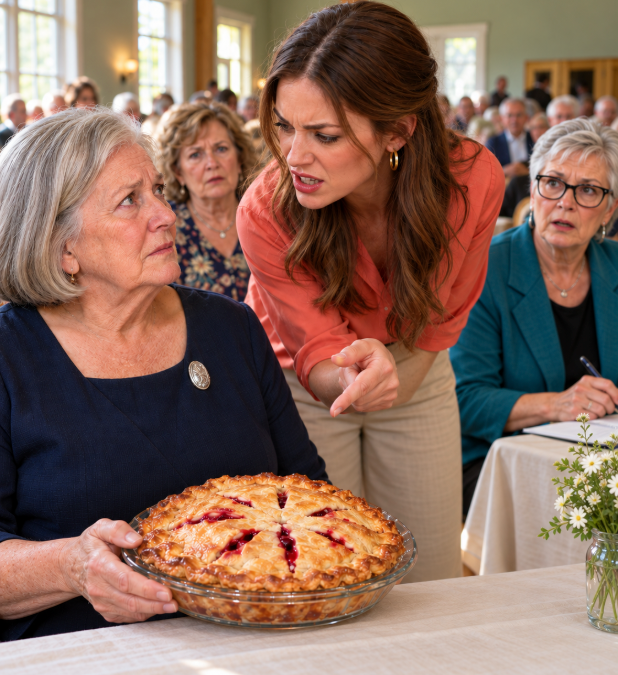
Complete story · 7 parts · about 30 minutes · ending included
Part 1 · Part 2 · Part 3 · Part 4 · Part 5 · Part 6 · Part 7
Part 1 of 7
At 7:30 Wednesday morning, the page jammed in Mom’s red-blinking printer was a deed giving her house away.
I had stopped at 418 Spruce Street before my 8:30 shift to return the washed containers from last night’s dinner. I left them on the kitchen counter, saw the warning light through the open doorway, and walked in.
Her sewing machine stood beside the printer. Both had been moved here after my nephew, Hunter, took over her old sewing room, the one with the harbor window.
The sheet came free with a dry scrape.
Across the top, bold letters said:
BARGAIN AND SALE DEED.
I flattened the paper against the sewing machine cabinet.
The address was Mom’s.
418 Spruce Street.
The grantor line named “Doreen M. Thorsen,” acting through Hunter, “her attorney-in-fact.”
The grantee was Hunter himself and “Kelsi A. Thorsen.”
Lower down, another sentence stopped me.
“The true consideration for this conveyance is none; this is a gift.”
The deed was unsigned.
Hunter had printed it on Mom’s printer late last night, only hours before he and Kelsi left for their 5:50 flight out of Portland. The jam had kept the sheet sitting there until I came through the kitchen with those containers.
I held the deed by one corner.
Last night, nobody had been talking about gifts.
Tuesday at six, eighteen of us had filled Mom’s dining room for Hunter and Kelsi’s send-off dinner.
That afternoon, Mom had taken her raspberry pie recipe card from the old tin on top of the refrigerator and baked the pie herself. All evening, the tin waited by the sink.
My son, Wyatt, sat next to me.
Across from me, Hunter’s mother, Wendy, stayed quiet over her plate.
Hunter leaned back in his chair like the trip had already started. Kelsi looked around the table whenever somebody laughed, as if checking who had noticed her.
We were clearing plates when Kelsi nodded toward the recipe tin.
“Toss that rusty tin while you’re at it, Doreen.”
Mom went on with the dishes without looking up.
Nobody answered.
Dessert came later.
The raspberry pie went on the table.
Kelsi stood, lifted Mom’s pie, carried it to the trash can just inside the kitchen doorway where the whole table could see, and tipped it in.
All of it slid off the plate at once.
Kelsi grinned.
“Store-bought’s better, Doreen. Your hands shake now.”
“Logged,” I said.
At the dock, I wrote that word beside a time in the delivery log whenever something needed to stay on record.
Wyatt had seen Kelsi’s hand tip the plate.
He pushed himself upright in his chair.
“She threw Grandma’s pie away. On purpose.”
Kelsi looked at him.
“Kids.”
Hunter laughed, raised his glass, and said, “To Maui!”
Wendy lowered her eyes to her plate.
Nobody stood up.
Mom crossed to the counter and picked up the recipe card.
The card slid back into the tin.
Then she reached up and put the tin back where it lived.
“Nobody touches my tin.”
I packed the leftovers into Mom’s containers and left without saying goodbye to Hunter.
This morning, the kitchen was quiet enough that I could hear the refrigerator motor.
I stood in the small room with the deed still in my hand.
At 7:40, my phone lit up.
The family group chat showed a message Kelsi had sent at 7:15 from the flight’s wifi.
“Housewarming Sat 10/24, 3pm, Cape Lantern Grange! Come celebrate OUR new home. Grandma’s so happy to pass it on. 60 coming!”
I looked from my phone to the printed sheet in my other hand.
OUR new home.
Mom had owned the house since 1991, the year I turned nine.
Hunter had moved into the sewing room in October 2023. Kelsi joined him after they married in June 2025. Their clothes filled the closet now. The bed faced a window overlooking the harbor. Both machines had ended up here, in a room barely wide enough for a chair between them.
I reread the names on the deed.
Doreen M. Thorsen.
Hunter.
Kelsi A. Thorsen.
Gift.
At the bottom, one signature line waited.
Hunter’s.
I carried the paper into the kitchen.
By 7:55, Mom sat at the table with her coffee mug between her palms. The wall calendar hung behind her chair.
I laid the deed beside her mug.
“What’s this, honey?”
“Read the top.”
Mom picked up the paper.
Her eyes moved down the page.
Hunter’s name.
Kelsi’s name.
The address.
The gift language.
Mom lowered the sheet enough to look at me.
“I never signed anything like this.”
“You don’t have to.”
The mug stayed where it was.
I pointed at the signature line.
“There’s only a line for Hunter.”
Mom looked down again.
After her hip surgery in March 2024, she had signed papers so Hunter could pay her bills while she recovered; I had sat beside her and never read them.
She pushed the mug farther away from the deed.
“He can sign my house away?”
“I don’t know.”
That was the truth, so I left it there.
She held the sheet closer to the window.
Her thumb moved down the grantor section.
Then she stopped.
I followed the spot with my eyes.
In smaller print below Hunter’s name was a line I had skipped by the printer.
“under power of attorney recorded October 9, 2026, Instrument No. 2026-008417, Lincoln County Records”
She turned toward the calendar.
“October ninth. He drove me to the eye doctor in Newport.”
Friday’s square held one line in Mom’s handwriting: eye appt, Newport, 1:30.
Part 2 of 7
At 8:05 Wednesday morning, Mom’s printer was blinking red, and part of Hunter’s plan was trapped inside it.
A torn strip of the deed still caught under one roller.
I pinched the edge and pulled until the scrap came free.
The red light went out.
Then the rollers began to turn.
I stood there with the torn piece in my hand as another sheet fed through.
Hunter had sent two pages to Mom’s printer last night. The deed had jammed first. This one had been waiting behind it.
I picked up the new sheet.
The top line read:
“Fwd: from Kelsi Thorsen to Hunter Thorsen”
Below it was an email from Paula Yost.
“Confirmed: Sat. Oct. 24, 3:30 p.m., Cape Lantern Grange Hall. Signer: Hunter Thorsen, as agent for Doreen Thorsen. Deposit $75 received.”
Under that, Paula had quoted the note Kelsi sent with the booking.
“Principal will not be attending. My husband signs as her agent. No need to involve her — she gets confused.”
I kept my thumb off the print.
At the co-op, a delivery slip without a time on it was an invitation for three people to remember three different mornings.
I took my pencil from the clipboard and wrote 8:05 in the corner of the email.
Then I clipped both pages together on the board.
In the kitchen, Mom was still at the table.
At 8:10, I took the printout and laid it beside Mom’s coffee mug.
“Read this one.”
She picked up the page.
Her eyes moved past the date, the Grange Hall, and Hunter’s name.
They stopped near the bottom.
Her lips shaped the last line: “She gets confused.”
She pressed the page flat with her fingertips.
The refrigerator motor clicked off behind me.
She folded the email in half.
Then she creased it once more.
“He’s Steve’s boy. He wouldn’t. He helps out.”
Steve was Mom’s son and my brother, a fisherman who died in 2019, and Hunter was what Mom had left of him.
I nodded.
Hunter had his own version, and he had repeated it at every family get-together since he moved into 418 Spruce.
“I give Grandma five hundred a month and cover the utilities.”
I believed him.
For three years, Mom had said he helped out, and I had never once asked to see the money.
She pushed the little square across the table to me.
“Don’t you call him. Not while he’s on that trip.”
I picked it up.
Both her palms closed around the coffee mug.
I clipped it back with the deed.
At 12:10 Thursday afternoon, I stood on the co-op dock during my lunch break and called Alan Haugen’s office in Newport.
A forklift beeped near the loading doors.
I turned toward the water so I could hear the receptionist.
Alan had drafted Mom’s power of attorney in March 2024. When he came to the rehab center for her signature, I sat beside her.
I had watched her sign.
I had never read the document.
The receptionist told me Alan was in court.
I left my name, my number, and the reason for the call.
At 12:40, my phone rang.
“Becky Lund.”
“Alan Haugen. I’ve got about four minutes between hearings.”
I stepped away from the dock door.
“My mother’s power of attorney was recorded Friday.”
“Hunter must have filed it,” Alan said. “I didn’t.”
“I found an unsigned deed that names Hunter as her attorney-in-fact and gives her house to him and his wife.”
Alan paused.
“Does your mother want the power revoked?”
“She doesn’t know I’m calling.”
“She can revoke it any day she’s of sound mind. It was recorded, so the revocation has to be filed in the same place. But your mother has to want it. Not you.”
I looked at the arrival board mounted beside the office door.
“When can you see her?”
“Monday. Nine.”
“I’ll tell her.”
“I’ll hold it.”
The call ended before the next forklift came through.
Thursday evening, I sat across from Mom at her kitchen table.
The clipboard rested beside my chair.
Her coffee mug was gone. A folded dish towel lay near her elbow.
“Alan called me back.”
Mom looked at me.
“He said you can take it back any day you’re clear-headed, at the same county office where Hunter recorded it.”
Her finger traced the hem of the dish towel.
“He can see you Monday at nine.”
She folded the towel once.
“I’m not going.”
At 5:30 Friday evening, Wendy Thorsen, Hunter’s mother, drove over from Newport carrying a pot of stew.
I met her on the front porch of 418 Spruce before she reached the screen door.
“Mom’s inside.”
Wendy glanced over my shoulder.
Mom stood in the dim hallway. Her shape showed through the mesh, but she did not open the door.
Wendy shifted the pot against her hip.
“You said it was important.”
I opened the clipboard.
The deed lay on top of the stack.
I held the board where Wendy could read the grantor line.
She leaned closer.
Her gaze dropped to Hunter’s name, then Kelsi’s.
Wendy set the pot on the porch step.
She read the gift sentence.
Then she reached the signature line.
The porch boards creaked under Wendy’s weight.
I said nothing.
Neither did Mom.
Wendy looked past me at the door once.
Mom stayed where she was.
Wendy turned back to me.
“He tells everyone he gives her five hundred a month and the utilities. He’s never paid her a dime, Becky. She pays his phone bill. The day he moved in, he posted ‘zero rent, ocean view.’ Two Thanksgivings ago he laughed about it in my kitchen. Don’t ask me to say it in front of the family.”
Part 3 of 7
At 6:30 Saturday morning, Mom stopped in front of stall 14 and reached for the sign hanging where her pie board belonged.
“RESERVED — KELSI’S COASTAL BITES — SPRING 2027.”
The old net shed smelled of coffee, wet rope, and diesel from the harbor.
Mom lowered her hand.
Ruth Iversen, the market manager, came down the aisle carrying a sheet of paper.
“Put it up last night so nobody else claimed it.”
Mom looked from the sign to Ruth.
Ruth held the page out to me.
“He emailed me yesterday. Sent a picture of the signed papers with it.”
I took the stall email.
The message had come from Hunter in Maui.
“As Doreen’s attorney-in-fact, I’m giving notice she is retiring. Please reassign stall 14 to Kelsi’s Coastal Bites, her food truck, starting spring.”
I passed it to Mom.
Ruth rubbed one thumb along the edge of her market badge.
“He had the paper, Doreen. I thought you knew.”
Without a word, Mom kept reading.
Forty-two years of Saturdays had put her behind that counter. I had seen her there before sunrise in rain that came sideways through the open dock doors, with pie boxes lined up and fishermen waiting for change.
That morning she never opened a box.
Mom carried the first pie to my pickup.
I stayed beside the tailgate as she brought the rest over one at a time until fourteen pie boxes covered the ribbed metal.
A fisherman in orange bibs came past with a thermos.
Mom lifted a raspberry pie and held it toward him.
“Take this, honey.”
He stopped.
“What do I owe you?”
“Nothing.”
He accepted it.
Another fisherman walked up ten minutes later.
She gave him an apple pie.
By eight, gaps showed between the boxes.
Nobody at the docks heard about Hunter’s email. The men took what Mom offered, thanked her, and kept walking toward their boats.
When only two boxes remained, Mom sat on the tailgate.
Her hands rested flat on her knees.
At dinner Tuesday, Kelsi had grinned after throwing Mom’s pie away and told her that her hands shook now.
Her eyes dropped to them.
“Maybe she’s right about my hands.”
I did not answer.
A deckhand from one of the crab boats crossed the lot.
She reached back, took the next pie, and gave it to him.
The last box left in another fisherman’s arms at 9:40.
She unfolded Ruth’s page.
After one more look at Hunter’s sentence, she folded it and held it out to me.
“Call that lawyer back. Monday.”
I clipped it to my clipboard.
At 9:00 Monday morning, Mom sat beside me at Alan Haugen’s desk in Newport and read the revocation from the first line to the signature block.
The file copy from his office lay near his right hand.
She turned the page over, checked the back, then returned to the bottom.
“Where?”
Alan pointed.
She signed her name.
Alan notarized the revocation.
Then he placed another document in front of her.
“This is a thirty-day written notice for Hunter and Kelsi. You can sign it whenever you choose.”
She read the heading.
Folded once, it went into her purse unsigned.
“Don’t warn Hunter until this revocation is recorded. Oregon allows a notary to handle a signing online. If he signs that deed from Maui first and gets it into the county records before you do, we have a different problem.”
His finger moved to the words “to pay my bills,” and Mom watched it.
“Bills, that’s all it covers. Whether he can give himself your house with it is a question for a judge, and I’d rather never ask one. This is paperwork, not a police matter yet.”
“What if Kelsi gets another notary?” I asked.
“If the new one hasn’t been warned and the deed reaches the county first, we have to undo it.”
Alan looked at Mom.
“Then we’re in court for a year.”
Hunter had filed the power of attorney with Lincoln County, so Mom’s signed page had to go to the same desk. Once the clerk stamped it, anyone searching the county index would see that his authority was over.
At 10:05 Monday morning, Mom and I stood at the Lincoln County Clerk’s counter two blocks from Alan’s office.
She handed the revocation to the clerk.
The clerk processed it and returned two recorded copies.
Across the top was the number:
Instrument No. 2026-008822.
One copy went into Mom’s purse beside the unsigned notice.
I kept the other on my clipboard.
Alan’s office would send Hunter a copy the same day by regular mail to 418 Spruce.
At 2:10 Monday afternoon, I used the number on the confirmation email to call Paula Yost, the notary Kelsi had booked.
Traffic passed behind Paula while we spoke.
“I’m doing mobile signings in Lincoln City today and tomorrow,” Paula said. “Wednesday at eleven fifteen is my first opening.”
“I’ll take it.”
“You can email the document now.”
“I want the recorded copy in your hand.”
Paula paused.
“All right.”
“And I’m bringing a receipt.”
“All right, Becky.”
On Wednesday at 11:15, Paula Yost sat behind the desk in her Cape Lantern home office with her computer open and her appointment book beside it.
We took the two chairs facing her; I’d taken all Wednesday off from the dock to bring Mom.
Mom lifted our copy off the clipboard and handed it to Paula.
Paula read the recording stamp and the instrument number.
I placed the receipt I had written the night before on Paula’s desk.
It said:
“Received copy of recorded revocation, Instrument No. 2026-008822. 10/21/2026, 11:15 a.m. — Paula Yost.”
Paula signed it.
“Not with my stamp,” she said.
I photographed the receipt with my phone.
Both pages went into the book.
At 11:40, Paula opened Kelsi’s booking email on her computer, typed two lines calling off Saturday’s signing, and sent it.
The auto-reply came back within seconds, and she read it aloud.
“Off the grid in Maui till Sat 10/24 — will reply then!”
Kelsi’s booking had given Paula only Kelsi’s email address and phone number.
Paula called Kelsi once from her desk phone.
The voicemail box was full.
Paula wrote a cancellation letter by hand and addressed it to 418 Spruce. Then she printed her email with Kelsi’s auto-reply and clipped that page in with the others.
That afternoon, a white envelope from Haugen Law came to 418 Spruce.
Hunter’s name was on the front.
From the edge of the mail table, Mom slid it to the center and laid it flat.
“Let him read his own mail.”
At 4:05 Wednesday, Mom’s hallway landline rang; I answered.
A man from Coastline Appraisal asked for Kelsi Thorsen. Her cell’s voicemail was full, he said; she’d given this number for letting him in.
“She’s in Maui until Saturday. It’s my mother’s house.”
“Seastack Community Credit Union ordered an appraisal of 418 Spruce. You’re booked for Monday the twenty-sixth, ten a.m. Kelsi Thorsen set it up. Can someone let me in?”
“Monday, ten? Who’s listed as owner?”
“I can’t discuss the loan, ma’am. I just need the door open.”
Mom stood in the kitchen doorway, hearing only my side.
I promised nothing, hung up, opened my clipboard, and put my finger on “Hunter S. Thorsen and Kelsi A. Thorsen” on the draft deed.
“They’re borrowing against your house, Mom. For her food truck. They sign the deed Saturday, and the appraiser walks in Monday.”
Calling Seastack would get me nowhere. The man on the phone wouldn’t even discuss the file, and Mom’s revocation had been in the county records since Monday.
Right under the two names, I wrote in pencil:
Sat 3:30 notary — deed to Hunter & Kelsi. Mon 10:00 appraiser — Seastack. Collateral: Mom’s house.
Part 4 of 7
At 10:15 a.m. Saturday, Oct. 24, Kelsi started taking “after” photos of my mother’s house.
I stood in the kitchen doorway with my work clipboard against my ribs.
Mom had baked before daylight, following the card in the recipe tin. Her fresh raspberry pie cooled on the counter, with red juice dried along the slits in the crust.
Kelsi went through every room in the sandals she had worn home from Maui. She straightened a cushion before photographing the sofa. Kelsi turned a framed family picture toward the wall.
“That looks better,” Kelsi said.
Mom stood near the sink. I kept my shoulder against the doorjamb when Kelsi came past me.
The tin was back on top of the refrigerator.
With her free hand, Kelsi took it down. Her phone stayed upright, with the camera aimed above the cabinets.
A donation box sat in the hallway. She dropped the tin into it.
“Clutter. The appraiser’s Monday.”
Mom turned from the sink toward the sound.
Hunter pulled his suitcase through the front door.
“Anything new from the notary? We’re still three-thirty?”
The phone in Kelsi’s hand clicked once more. She faced me, her mouth twisted to one side.
“I haven’t opened my inbox in ten days. He said he’d handle the boring stuff.”
He gave his suitcase another tug.
“Then it’s three-thirty.”
Mom crossed to the box in the hallway.
I let her go.
She lifted the tin out. Both arms pressed it to her chest.
Kelsi checked the shot on her phone.
“Doreen, I already cleared that spot.”
Carrying the tin, Mom walked past me. She returned it to the top of the fridge.
Kelsi’s phone went back up to the cabinets.
Hunter waited by the mail table, one hand on his suitcase handle and his phone pinned between his ear and shoulder.
The paper recycling bag was open at his feet. I watched from the doorway.
Hunter glanced at the stack of mail.
It included the Haugen Law envelope and Paula Yost’s handwritten cancellation letter, which had arrived Friday, Oct. 23.
The return addresses faced up, close enough for me to recognize Paula’s handwriting.
Hunter swept the whole unopened stack into the bag with his free hand.
“Lawyer ads.”
The top corner of the law firm’s envelope caught against the brown paper. He pressed down until it sank below the rim.
My watch read 10:20. I said nothing.
Mom set her raspberry pie at the end of the long table in Cape Lantern Grange Hall at 3:00 p.m.
A banner reading “WELCOME HOME, HUNTER & KELSI” hung over the supermarket sheet cake farther along.
Sixty guests filled the hall, including the 18 relatives from the farewell dinner and our neighbors. Ruth Iversen, the market manager, sat at the front table.
My son, Wyatt, stood beside Mom’s pie.
“I’ve got this end,” Wyatt said.
Hunter greeted people beneath the banner. He pointed out the front seats to relatives arriving from the coat hooks.
I sat in the relatives’ row with my clipboard on my lap.
Wendy took the seat next to Mom. A folded paper napkin stuck to the damp stem of Wendy’s glass.
Mom kept her purse on her lap. She faced the front of the hall.
Kelsi took the microphone at 3:20 p.m. She raised her glass toward our row.
“To our new home — and sixty witnesses that Grandma’s thrilled!”
Her husband applauded. Guests turned in their seats to look at Mom.
From the microphone, Kelsi held an arm out to us.
“Let’s get Grandma in the picture,” Kelsi said.
Near the front, people raised their phones. Hunter stepped clear of the aisle between us and the camera lenses.
Mom looked directly at Kelsi.
With her glass, Kelsi pointed at Mom’s pie.
“Grandma brought a pie. Don’t worry, I’ll cut it. Her hands shake.”
A few guests laughed.
“Logged,” I said.
Wendy looked down into her glass.
Wyatt moved half a step closer to Mom’s pie. He planted his feet wide apart.
The people closest to him moved their plates toward the cake. Wyatt blocked the aisle at his end.
Kelsi lifted the microphone to her mouth.
“We’ll do the paperwork before dessert,” Kelsi said.
Across the aisle, Mom watched Hunter. He smiled at our row.
I kept my eyes on him.
Beside the cake, Kelsi set down the microphone and her glass.
“Doreen, you don’t need to get up for any of this,” Kelsi said.
I glanced at my watch.
Ruth turned her chair toward the signing table. A white cloth covered it end to end.
Hunter checked the door. Kelsi smoothed a crease out of the fabric.
Mom rested her forearms across her purse. Wendy rubbed the wet paper off the stem of her glass.
Paula Yost came through the hall doors at 3:30 p.m. with her appointment book under her arm.
Kelsi spread the clean deed across the white cloth. The signature line was blank.
Paula stopped at the near corner.
With one finger, Kelsi showed her the empty seat.
“Right here.”
The guests nearest the aisle drew their feet under their chairs. Paula kept the book pressed to her side.
Hunter uncapped his pen. He placed it beside the deed.
Then Kelsi stepped back.
He pulled out a chair for Paula.
At 3:33 p.m., I rose with my clipboard and went to stand next to Paula. Hunter stood beside the empty seat, one hand on its back, still smiling at our row.
Part 5 of 7
Paula ignored the chair Hunter had pulled out for her and opened her appointment book on the signing table.
I stood at her elbow with my clipboard closed against my side. Hunter’s pen lay beside the clean deed, pointing toward the blank signature line.
Kelsi stood one step back. Her microphone and her glass rested next to the sheet cake on the long table, beneath the welcome banner.
Paula took out the recorded copy of the revocation and the receipt she had signed on Wednesday. The county stamp read Instrument No. 2026-008822. I recognized my block printing above Paula’s signature, with the date and time in the spaces I had ruled by hand.
She supported the loose documents against the inside cover. Then she turned the writing toward Hunter across the white cloth.
Paula spoke loudly enough for the people seated by the doors to hear. “Mr. Thorsen, I can’t notarize this. Your grandmother revoked your power of attorney, and the revocation was recorded Monday in Newport. I received my copy Wednesday at eleven-fifteen.”
Hunter took his hand off the back of the chair.
Paula looked at Kelsi. “I emailed you Wednesday at eleven-forty. Your auto-reply said Saturday.”
Hunter’s eyes went to the receipt’s date. Paula shut the book on both documents.
Kelsi said, “That’s fake. Hunter has her power of attorney. It’s all legal.”
Mom sat in the relatives’ row with her purse on her lap, its strap laid across the clasp. Wendy occupied the next seat with her phone in one hand and her glass in the other.
Paula reopened the book to a printout of her cancellation email. Beneath her reply, the quoted header named Kelsi as the sender of the booking note.
I could see the request from my place at the corner, down to the words after the dash. Paula read aloud.
“’Principal will not be attending. My husband signs as her agent. No need to involve her — she gets confused.’ You wrote that, Mrs. Thorsen.”
Kelsi turned to face the family seats. The banner hung above the place where she had toasted sixty witnesses that Grandma was thrilled.
Paula set the refund envelope at the upper edge of the deed. Kelsi’s $75 deposit was inside. The open appointment book rested in the crook of Paula’s arm, with the exchange visible beneath her thumb.
I said to Hunter, “Your copy is in the recycling bag in Mom’s front hallway, Hunter. You tossed it at ten-twenty.”
The deed listed Hunter and Kelsi as the people receiving the house on Spruce. From my side of the table, I could read the words about the gift. The space for the agent’s signature was empty.
Hunter addressed the relatives.
“Grandma’s confused. Becky put her up to this. Her hands shake — she can’t even sign anymore.”
Nobody laughed this time.
Mom rose, her purse over her forearm. She walked up the aisle to the front, past Ruth’s turned chair.
Hunter stood beside the empty seat. Kelsi remained one step back, close enough to read anything held toward her.
The clasp on Mom’s purse clicked open. She took out a second recorded copy, her own. It bore the same stamp and instrument number as Paula’s.
Mom held up the signature page toward Hunter and Kelsi. “I signed this Monday in front of Alan Haugen.”
I knew that capital D from my school permission slips. Mom’s full name ran across the line above Alan’s acknowledgment. The guests in the first rows could see the whole page.
Mom took out the 30-day notice with her free hand. She handed it to Hunter. “And I signed this one this morning.”
Hunter took it, and the paper trembled in his fingers.
Kelsi leaned in to read it over Hunter’s arm. Mom kept her copy raised beside her purse.
Ruth sat at the front table with her chair turned toward Hunter.
“You told me she’d retired, Hunter. I gave your wife her stall.”
The pen hadn’t moved. Paula held the book against her forearm, the booking request still in view. The two documents remained tucked inside.
Wendy set her glass on the empty chair beside her. She stood up and held out her phone, open to Hunter’s Facebook post from Oct. 1, 2023.
Turning the screen toward us, she read aloud from it.
“’Moved in at Grandma’s. Zero rent, ocean view, homemade pie. Winning.’ That was five months before her hip, son. I sat at that dinner and watched your wife throw out her pie. I kept eating. I’m done keeping quiet.”
A guest near the aisle set a glass on the table hard enough for me to hear it from the front.
Wendy’s phone remained at chest height. Hunter held the notice with its lower edge against his pants.
Mom walked down to the far end of the table, where my son, Wyatt, stood beside her fresh raspberry pie.
The pie knife lay across the pie plate, its handle extending past the crust. Her purse hung from her forearm, leaving a hand free to support the base.
She carried the pie back, her copy still held up. Wyatt followed her up the aisle.
She set the pie down in the middle of the deed. The envelope with the deposit rested at the top, clear of the plate. Hunter’s pen sat past the rim, unused.
The clock above the serving hatch showed 3:55 p.m.
Standing over the pie, Mom faced Kelsi.
“’Store-bought’s better, Doreen. Your hands shake now.’”
The hall stayed quiet.
Then she gave the knife to Wyatt. She looked at Kelsi and said, “My hands are fine, Kelsi. So is my signature.”
Part 6 of 7
Ruth set the stall sign on Mom’s kitchen table Monday, Oct. 26, after handing her the letter.
I pushed my coffee aside for a clear look at the heading: Cape Lantern Harbor Saturday Market, Notice of Cancellation.
Ruth’s paperwork withdrew the confirmation issued to Kelsi’s Coastal Bites. Mom read down to the paragraph that returned stall 14 to her, under her own name. Below that, the notice barred Kelsi from registering to sell at the market for the 2027 season.
The reason appeared in plain print: the space was obtained with false information. Hunter had claimed Mom was retiring; the document cited his statement.
Ruth stood at the end of the table in her coat.
“I took it down myself,” she said.
The sign lay with its printing toward us: RESERVED — KELSI’S COASTAL BITES — SPRING 2027. Empty staple holes punctured the corners. Mom kept reading through the signature at the bottom before laying Ruth’s letter beside it.
I had the entire cancellation in view from my seat. The business name matched the one on the reservation, right down to the apostrophe.
Mom said, “I’ll be using my space.”
After Ruth left, her letter stayed on the table beside the sign, clear of the coffee.
Hunter and Kelsi had driven to Newport and hadn’t returned. The appraiser knocked on the front door at 10:00 a.m. Mom remained seated across from me.
Nobody opened it.
I remembered the call I’d answered myself on Wednesday. I checked my clipboard and reread my note: “Sat 3:30 notary — deed to Hunter & Kelsi. Mon 10:00 appraiser — Seastack. Collateral: Mom’s house.”
Mom’s phone lit at 11:30 a.m. She held it above the edge of the table to read Kelsi’s text.
“You cost me my truck. $72,000. Hope your pie was worth it.”
No deed was recorded that morning. Anyone searching the county records could see the revocation, No. 2026-008822.
Mom did not reply. She removed the October page from the wall calendar behind her chair, leaving November exposed.
My pencil lay by my coffee. Mom used it to circle Monday, Nov. 23.
Wendy’s text reached my phone in the family group Sunday, Nov. 1.
“They’re not moving in with me. Doreen’s door was open for three years.”
Kelsi left the group.
That same week, eleven relatives texted Mom to order her Thanksgiving pies. She copied their names onto a sheet of paper, with the kind each wanted written alongside. Raspberry appeared down the page in her small, even handwriting.
I recognized names from the dinner. Some of the requests included please.
The orders stayed on the counter by the flour. She answered each person on her own phone.
Hunter and Kelsi packed boxes at 418 Spruce from Nov. 2 through Nov. 20, saying nothing to Mom.
The rental truck pulled away from the curb Saturday, Nov. 21, at 9:10 a.m., carrying the two of them to Kelsi’s parents’ house in Salem.
I stood with Mom just inside the entry. Through the glass, I watched them in the cab until they passed the edge of the yard.
They left two days before the deadline.
Hunter’s house key rested next to the original power of attorney. He had left no note.
I recognized the document from the rehab center. Mom’s signature was on it, below the language about paying her bills. The paper was worn along the fold, with a split beginning at the outer edge.
She left it by the key.
That afternoon, Wyatt helped Mom roll the sewing cabinet out from beside the printer in the small room adjoining the kitchen.
I held the doorway clear. They steered it down the hall in short pushes, Mom guiding the front, then parked it in the old sewing room.
Hunter’s bed was gone. The harbor showed through the bare window above the place where Mom used to work.
Wyatt checked the cord behind the cabinet.
“It reaches, Grandma,” he said.
Mom hung her flowered curtain, which she had sewn in 1991. The hem cleared the sill, with the same strip of harbor visible below it that I remembered from childhood.
I stood in the doorway. She sat at the machine for the first time in three years, her knees tucked in close.
The pedal was under her shoe. A length of thread ran through the guide above the needle, and the spool holder rose behind it.
The little compartment for the bobbins was within reach of her right hand. Her mending would fit on the empty stretch of wood beside it.
Wyatt stayed in the sewing room when we went back to the kitchen.
Mom pulled a chair to the refrigerator. She climbed onto it carefully, holding the back until she stood securely.
With both hands, she lowered the recipe tin. She kept it against her apron until she was on the floor.
At the table, she set it down.
I knew the rust around the lid. Kelsi had called it clutter; a small dent near one corner kept the metal from meeting cleanly.
Mom opened it and lifted out the whole stack of recipe cards. In forty-four years, I had never seen what lay beneath them.
The top one was raspberry, with a smear near the instructions for the crust. She set them aside, baring the bottom of the tin.
The 1991 deed lay inside, folded in four. Mom took out the white card beside it, her own handwriting turned toward me.
“418 Spruce. Divorce: $0. Down payment: $9,400. Pie money, every Saturday, 1984–1991.”
Part 7 of 7
Mom laid the raspberry recipe card flat between Wyatt and me for our Thanksgiving lattice lesson.
I sat at the kitchen table at 418 Spruce with flour along my cuffs. The clock over the stove read 2:00 p.m. on Thursday, Nov. 26, 2026, and Mom had told me to keep my hands free once the pie was done.
The recipe tin stood open near the salt. Mom remained standing at the end of our work, where she could reach the dough from either side.
Wyatt kept his elbows close to his ribs. A knife lay on a folded towel within his reach, the same one Mom had handed him at the Grange.
“Leave room for the filling to show,” she said. “Don’t crowd the middle.”
I stretched a strip across the raspberries. Red juice marked the underside before I could tuck the end down.
“Lay the next one parallel,” Mom said. “Then fold back the ends that need lifting.”
Wyatt studied the space under my fingers.
“Which ones?” he asked.
“The ones you’re going under,” Mom said. “Start at the edge. You can see better from there.”
I folded the dough back carefully. The filling showed through the opening, thick with berries that kept their shape.
Wyatt slid his own piece under the strips I had raised. His sleeve dragged flour across the grain of the wood.
“Now bring those ends back over,” Mom said.
He worked from the rim toward the middle. The lattice started to hold where his rows met mine.
My next piece broke before I could lower the loose end.
“Can I press that together?” I asked.
“Overlap the break a little,” Mom said. “The baking will take care of the seam.”
Wyatt leaned toward the card. A patch of flour covered the lower part of the instructions.
“That’s mostly about the crust,” Mom told him. “Watch your crossing. You’ve got room for another.”
He threaded the next strip under the fold I had made. The spacing matched the last row closely enough that I checked the recipe for a measurement.
There wasn’t one.
“Can I trim with the pie knife?” Wyatt asked.
Mom showed him the blunt side with her fingertip.
“Use that edge against the rim,” she said. “Leave enough to tuck under.”
He cut away the overhang. The scraps curled onto the towel instead of falling to the floor.
I folded my section into the bottom crust. My thumb left a dent deeper than the ones around the rest of the border.
“Don’t pull that out,” Mom said. “Pinch the next place a little higher.”
Wyatt watched me finish before pressing his own edge down. The marks ran around the pan until the join was hard to find.
“You left the middle open,” Mom said.
“On purpose,” he said.
Wendy came in carrying a dish of green beans. She stood by the sink with the handles resting in a dishcloth.
The lid rattled against the glass when she set the dish on the drainboard.
“I should’ve stood up at that table,” Wendy said.
Mom handed her the gravy spoon.
Wendy took her place at the stove. She worked slow circles through the drippings, scraping along the bottom whenever a darker streak rose from the saucepan.
The burner clicked beneath the grate. Steam gathered on the hood overhead.
Her stirring continued until the pale flecks disappeared from the gravy.
“You could’ve just called him, Doreen,” Wendy said.
“I know,” Mom said.
The white card had been taped to the refrigerator door since the night of Nov. 21. Mom’s handwriting on it hadn’t smudged.
“Letting family live with you for free doesn’t mean you owe them the house, Mom,” I said.
Mom pressed the lid down on the recipe cards.
I held my palms out above my knees.
Mom put the tin in my hands.
“It’s yours now. Nobody touches it,” she said.
The metal rested across my fingers, cool under the flour. I knew the recipes by their headings, though I couldn’t have told anyone how much shortening went into the crust without checking.
The pencil marks inside belonged to batches made before I could reach this work surface. There were instructions for feeding whoever showed up early and anyone who came home late, written in tablespoons and oven temperatures.
I kept my grip beneath the bottom. The lid stayed shut against the heel of my thumb.
Wyatt turned to the refrigerator and read the card taped there.
“Pie money, every Saturday,” he said.
The raspberry card remained flat between our places. A dusting of flour stopped short of the title.
“Grandma, did your pies buy this whole house?” Wyatt asked.
“Every board, honey,” Mom said.
Ruth pulled the sign’s last staple from the post at stall 14 on Saturday, Nov. 28, 2026, at 6:30 a.m.
The old net shed smelled of rope and coffee. A bare patch of wood showed lighter than the grain around the empty holes.
“That won’t catch anybody’s sleeve now,” Ruth said.
I taped the card from the refrigerator inside the lid of my recipe tin. The writing sat above the hinge, high enough to read from the front of the stall.
My fingers pressed the adhesive flat at the corners.
I placed the open tin at my end of the table. The metal base rested squarely between the space for wrapping and my elbow.
Mom stood behind the selling table with the pies in their boxes. Her apron covered the flour along the front of her dress.
I wrote each name in the order book with space for the kind requested. My pencil followed the ruling instead of the slant I used on scraps at work.
Wyatt took the money next to me. He laid the bills flat before sorting the change into the cash box.
The fishermen lined up all the way to the door of the net shed. Rubber boots marked the boards with tracks from the docks, and a knit cap came off near the front.
“Raspberry, please,” a man said.
Mom set the first pie of the morning on stall fourteen, and her hands didn’t shake.
THE END
More stories
My fiancé demanded my $210,000 for a house I wouldn’t own—Then bank records exposed who paid for my ring, and prosecutors charged him with identity theft.My brother-in-law claimed our 60-year-old store at my husband’s funeral lunch — Then a hidden envelope helped me reclaim it, and a judge ordered him to repay $23,780.My daughter-in-law gave me 30 days to leave my house at Sunday dinner—then her own realtor read a county record aloud, and her planned sale collapsed.My HOA president sent two men with shovels into my late husband’s memorial garden and fined me $2,400—Then her own financial records cost her the presidency.








