My Parents Humiliated Me At My Sister’s Wedding Over Another Payment — Then My Son Stepped In
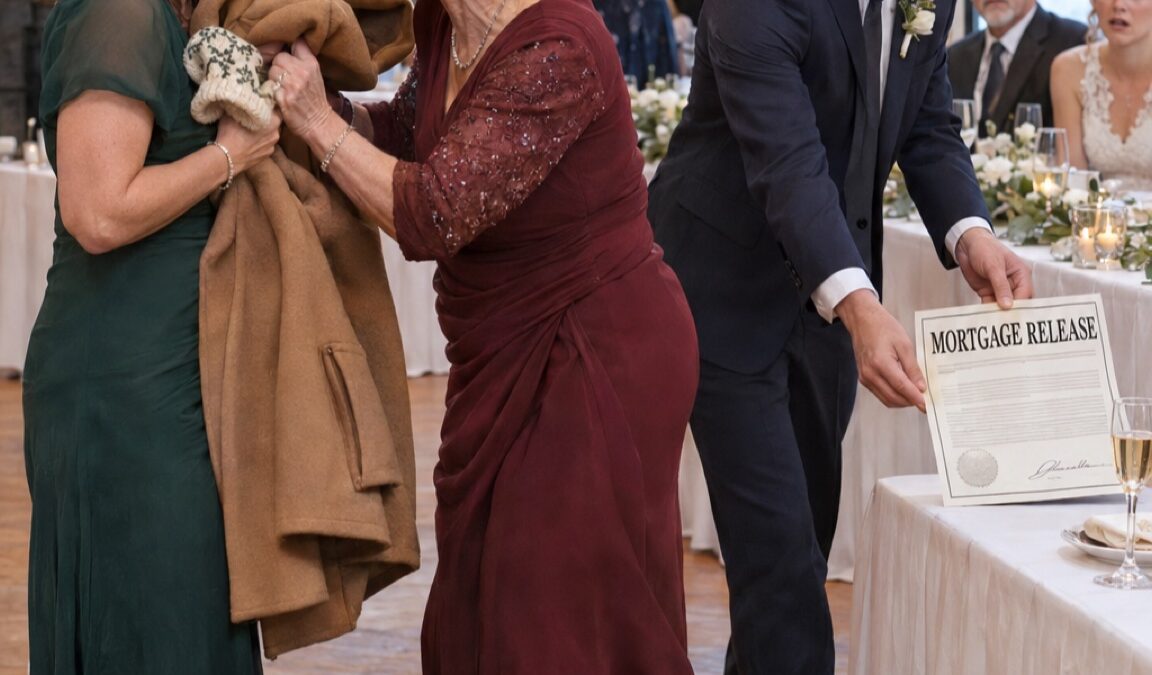
Part 3: The Line He Pointed To
“Read whatever you think you found,” Dad said.
Caleb touched the recording information on the certified release.
“This was recorded nineteen months before this reception.”
I watched Dad’s eyes move across the sheet.
Every monthly transfer came after that recording.
There had been eighteen payments of $1,000, totaling $18,000.
I had paid $46,200 directly to their mortgage servicer twenty months before the wedding. That paid off the mortgage. The servicer recorded its satisfaction the following month.
I knew my gift had paid that loan.
What I had believed afterward was Dad’s explanation that another mortgage remained.
He said it covered roof work and had separate payments.
Caleb placed the title-search report beside the certified release.
“There isn’t another recorded mortgage against their house.”
Dad kept looking at the release.
Then he stopped arguing about whether it was real.
“Not every family obligation gets recorded at the courthouse.”
Caleb waited.
“Are you saying this was a private loan?”
“I’m saying your mother and I had bills.”
“That’s different from what you told Mom.”
Dad glanced at me.
He seemed to expect me to stop Caleb now.
I moved Lucy’s mittens into my coat pocket.
“Play it,” I said.
Caleb held his phone close to the microphone.
Dad’s voice came through the reception speakers.
“Rachel, that remaining roof mortgage is still due. The bank doesn’t care that you paid the other one. If we miss this payment, they can start foreclosure. Send the usual amount.”
The message had arrived two months before the wedding.
I had listened to it at work.
I remembered stepping away from my scheduling screen to call him back.
At the reception, nobody needed me to explain that.
Dad reached toward Caleb’s phone.
Caleb moved it back and stopped the playback.
“That’s your voice,” I said.
“I was trying to get your attention.”
“You said the bank could foreclose.”
“We were under pressure.”
“From which lender?”
Dad rubbed the side of his face.
Mom answered before he could.
“The contractor needed the next payment.”
Vanessa pushed her chair away from the table.
“Mom.”
Patricia looked toward her, then back at me.
“The work was already started. We couldn’t leave her kitchen torn apart.”
I looked at my sister.
She had asked me to admire pictures of that kitchen.
I had complimented the cabinets without asking who paid.
Dad stepped closer, lowering his voice again.
“We were going to explain once everything settled.”
“You asked for another $18,000 tonight.”
“There’s still work left.”
There it was, finally stated without a bank in it.
The new demand wasn’t for their house.
It was for my sister’s renovation.
Vanessa gripped the back of her chair.
“I didn’t ask them to do this here.”
“Did you ask where the money came from?”
She stared at the chair.
“Mom said you were helping.”
“And you suspected there wasn’t a mortgage.”
“I didn’t know for sure.”
“You could have asked me.”
She didn’t answer.
Mom put her purse on the head table.
“I arranged the work,” she said. “I told your father when the payments were needed.”
That answered something else I had wondered.
Dad made the calls, but Mom knew the purpose.
She wasn’t being surprised by his explanation.
She had selected work for Vanessa’s kitchen while accepting my transfers as supposed mortgage help.
Dad pointed toward the guests.
“Can we stop giving everybody our business?”
“You made it their business when you ordered me out.”
My voice sounded ordinary through all of it.
I was grateful for that because I wanted to cry.
I pulled a tissue from my purse and wiped my nose.
Caleb set the microphone down.
He didn’t offer a speech about everything I had done.
He had shown the document and played the message.
That was enough for the people closest to us.
The woman who had lowered her fork stood up.
“Rachel, would you like me to get your daughter?”
“Yes, please.”
I told her where Lucy was sitting.
Dad took a step toward me.
“We’ll talk when you’ve calmed down.”
“I’m leaving because I want to leave now.”
Mom looked at my coat pocket.
One knitted cuff was sticking out.
“You’re upsetting Lucy over money.”
Lucy wasn’t even beside us yet.
I tucked the cuff inside.
“Please don’t tell her that.”
Caleb gathered the release and title report.
Dad watched him put both into their protective sleeve.
“How did you even get those?”
“The county record is public,” Caleb said.
He didn’t mention the errands or the calls.
He had done those during the week before the wedding.
I had called him after hearing Dad’s latest demand.
For the first time, I had told him the whole explanation.
He asked whether I had anything in Dad’s own words.
I forwarded the voicemail while we were still talking.
Then Caleb asked a title professional to check the property.
He also obtained the certified release from the county.
My parents knew the original mortgage was paid.
They had no reason to expect their grandson to investigate the separate loan they described.
I hadn’t warned them because I wanted records before another argument.
When Caleb brought me the results, I canceled my scheduled transfer.
I didn’t go to Vanessa’s wedding intending to announce anything.
Caleb carried the documents because Dad had already threatened to confront me there.
We had hoped they would stay in his bag.
Lucy came back with the woman from the nearby table.
She looked at my coat and then at Caleb.
“Are we going home?”
“Yes,” I said. “Get your things.”
She didn’t ask me about the mortgage.
She asked whether she could keep her small cake box.
I told her she could.
Vanessa stayed beside the head table as we left.
She didn’t try to stop Dad from calling after me.
“You’ll regret making this public.”
Caleb carried the document sleeve outside.
I held Lucy’s cake box while she put on her coat.
At home, I set the box in the refrigerator.
Then I sat at the kitchen table with Caleb.
We saved the voicemail somewhere besides my phone.
I downloaded the transfers and wrote down what had happened.
Caleb made copies of the certified release and title report.
I kept the originals together where they wouldn’t be misplaced.
I wasn’t ready to decide what to do next.
I was ready to stop losing records.
After the children settled down, Mom sent a message.
She wanted me to sign something before we talked again.
The attached statement called every payment a voluntary gift.
Part 4: What I Would Not Sign
I read the statement without opening the signature field.
It covered the original payoff and all later transfers.
It also said I had never relied on any explanation about a remaining mortgage.
I put my phone facedown.
Then I turned it over and saved the attachment.
I answered Mom with a short message.
“I won’t sign a statement that isn’t true.”
She called immediately.
I let it go to voicemail.
When I listened, she sounded tired rather than angry.
She said Dad was humiliated.
She said Vanessa had cried after we left.
She said nobody had forced me to send money.
I wrote those points down for the lawyer.
I didn’t call her back to argue.
The civil attorney I consulted asked about the payoff first.
“Did you expect that money back?”
“No. It was a gift.”
“Then we keep that separate.”
That mattered to me.
I wasn’t trying to change a gift into a debt because I was hurt.
I wanted the money they had obtained afterward by describing a mortgage that did not exist.
The attorney asked what I had believed.
I explained Dad’s story about a separate roof loan.
Then she asked what proof I had.
I handed over the transfer history and the title report.
I also provided the certified release and saved voicemail.
She listened to the message without interrupting.
Afterward, she asked whether anyone had heard the admissions at the reception.
I gave her the people I could identify.
Caleb could describe what he had shown and played.
Vanessa had admitted accepting the money despite her suspicion.
Mom had explained the contractor payments.
The attorney didn’t promise a quick judgment.
She explained that a lawsuit could be expensive and disputed.
A demand and negotiated settlement were possible first steps.
The documents showed the original loan had been satisfied.
The title search undermined the separate-mortgage story.
The voicemail showed what Dad wanted me to believe.
My transfers showed what I had done in response.
Taken together, they gave us something specific to pursue.
I authorized a demand for the $18,000.
Not the payoff gift.
Not an amount added for the embarrassment.
The money sent because of the false mortgage requests.
My parents’ first response was another family explanation.
Their attorney said they believed I understood the money supported general household needs.
My attorney sent the voicemail again.
She also identified the transfers following the payoff.
The next response no longer described a remaining mortgage.
Instead, they proposed sending money when they could.
Dad called me after that proposal arrived.
“We can work this out ourselves.”
“You can answer through the attorneys.”
“You want us paying legal bills instead of you?”
“I want an agreement that says what happened to the money.”
He said I was making repayment harder.
I asked whether he accepted the amount owed.
He wouldn’t answer directly.
I ended the call.
That was harder than leaving the lodge.
At the reception, people had heard him.
At home, I could still hear the father who used to call me when he needed help lifting something or setting up an appointment.
I sat with the phone in my lap.
Then I put it in the kitchen drawer and started dinner.
I kept communicating through counsel.
My parents eventually agreed to return the full $18,000.
The proposed settlement gave them a payment deadline.
It also provided a way to enforce the agreement if they failed to pay.
My attorney reviewed that language with me.
I asked what happened if Dad called the payment another gift.
She pointed out the repayment terms.
I asked what happened if they missed the deadline.
She explained the next legal steps without pretending they would happen automatically.
I signed only after I understood them.
My parents signed six weeks after the reception.
The payment arrived eight weeks after it.
I waited until my bank confirmed the funds were available.
Then I moved the money back into savings.
I looked at the balance for a while.
I had become used to making plans without that money.
Getting it back didn’t make the wedding disappear.
It did mean I could replace what they had taken without working extra hours to do it.
Vanessa called after the payment cleared.
She said our parents had used $12,000 of their savings.
She had returned $6,000 they had put toward her kitchen.
“The rest was already spent,” she said.
“I understand.”
“I had to cancel some of the remaining work.”
I waited.
She let out a breath.
“I’m not saying that’s your fault.”
“Good.”
She asked whether I wanted her to explain things to Lucy.
“No. Lucy doesn’t need the renovation details.”
Then I told her what I did need.
“If someone says I ruined your wedding, correct them.”
She was quiet long enough that I checked the screen.
“I can do that,” she said.
I didn’t invite her over afterward.
I also didn’t tell her we would never speak again.
For the time being, we spoke without discussing our parents’ finances.
Mom sent pictures from the reception.
She chose pictures taken before the argument.
I saved the one of Lucy and Caleb.
I didn’t respond to the message asking whether we could return to normal.
Dad sent a request for help with another expense.
There was no mortgage mentioned this time.
I answered that I wasn’t providing financial support.
He said he had expected that.
I left his message unanswered.
The scheduled transfers stayed canceled.
I stopped checking my phone before making ordinary purchases.
When the car needed work, I booked it without calculating whether my parents might call.
When Lucy brought home a school form, I signed it at the counter instead of setting it aside to check my account.
Caleb returned the original release after the settlement.
I put it with the agreement and the bank confirmation.
We didn’t frame it or keep it on display.
It went into a file where I could find it.
Later, Lucy and I came home from being outside.
She dropped her coat on the entry bench.
One mitten was inside a sleeve.
The other fell near her boots.
I picked them up and handed her one.
She pulled open the basket beneath the bench.
“Together this time,” she said.
I tucked the loose cuff inside its match.
Then we put both knitted mittens in her basket.








