My Sister-In-Law Ordered Movers To Put Me Outside After Knee Surgery — Then My Friend Stood Up
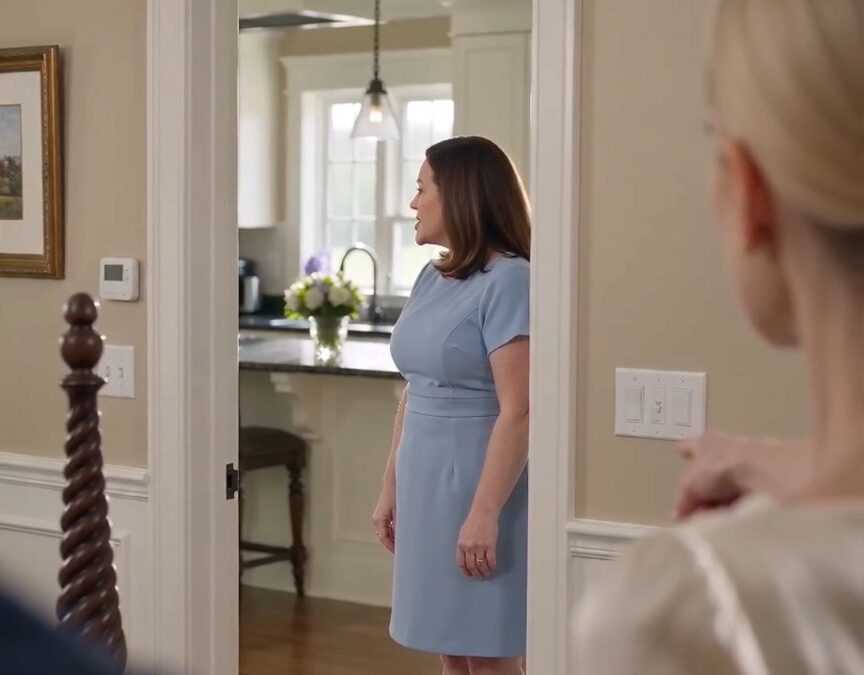
Chapter 1: The Door Beside Me
“Get her outside first,” my husband’s sister told the movers during Easter lunch.
I was 39, recovering from knee surgery, with fourteen relatives around my table.
She wore a silk dress and pointed toward my bedroom.
I had made her children’s Easter baskets the night before.
I turned toward the breakfast room and said my friend’s name.
“Beth.”
My sister-in-law, Corinne, stopped pointing long enough to look.
Through the open doorway, she saw Beth rising.
Her arm dropped against the side of her dress.
“Why is she here?”
“Because I invited her,” I said.
Both crutch grips were pressed into my palms.
My operated knee was stiff inside my loose pants.
I had been standing longer than I should.
Behind me was my ground-floor bedroom suite.
The bed was unmade from my rest before lunch.
A towel hung beside the shower chair.
My water glass sat within reach of my pillow.
I needed those things exactly where they were.
Corinne wanted the room cleared for her.
She was 44, with chronic hip trouble.
She already rented an accessible apartment for $3,100 monthly.
She wanted my suite instead of that monthly payment.
We had discussed it before Easter.
I had said no.
Now she stood beside an unmarked moving dolly.
She had rolled it across my living room herself.
Its wheels had caught briefly on my rug.
That little bump was when I addressed the crew.
“Only I authorize moves here.”
Then I had called Beth.
I hadn’t invited a moving business into my house.
I hadn’t asked anyone to pack my bedroom.
I certainly hadn’t agreed to wait outside.
It was April 20, 2025, in Dayton, Ohio.
The house was bright with afternoon sunshine.
I had opened the curtains before our guests arrived.
Now everybody could see the whole ridiculous arrangement.
My crutches.
Her dolly.
My husband holding bottled water near the kitchen.
Adam was 41, and he lived there with me.
He had been outside when his sister arrived.
I thought he was helping her children inside.
Then I saw the bags by the front door.
Then the men appeared behind her.
Corinne announced the arrangement before anyone could finish lunch.
“We’ll get the bedroom switched first,” she’d said.
“Switched to what?” I asked.
“For me. We talked about this.”
“We talked. I said no.”
She waved toward the men as though we’d settled it.
“Your things can go upstairs.”
I looked toward the staircase across the room.
I had undergone knee surgery on April 8.
Stairs were not part of my recovery plan.
Neither was having strangers handle my clothes.
Adam came inside and opened the refrigerator.
“Does anybody want bottled water?”
I stared at the bottle in his hand.
“Adam, please address what’s happening.”
He glanced toward the dining room.
“Can we not do this in front of everybody?”
“Your sister brought movers in front of everybody.”
Corinne had already taken hold of the dolly.
She pushed it toward the door beside me.
One crew member raised his hand.
“Ma’am, let’s wait.”
She spoke over him.
“The bed comes apart. It won’t take long.”
I stayed where I was.
That was when she gave her order.
Not a request for me to sit somewhere.
Not an offer to help me safely.
“Get her outside first.”
I looked at the open front door.
There was a threshold and a step beyond it.
Getting outside required care even without strangers crowding me.
Getting back inside would require care too.
“I’m not going outside,” I told her.
“You’re right in their way.”
“They aren’t authorized to be moving anything.”
Now Beth was standing in the breakfast-room doorway.
She was 40, my longtime friend.
She had come early as my invited Easter guest.
She hadn’t brought Corinne or the moving crew.
She hadn’t arranged any of this.
“Leah has told you not to proceed,” she said.
Corinne looked from her to Adam.
“This is a family arrangement.”
“Not an agreed arrangement,” I said.
A man stepped fully through the front entrance.
He looked at the dolly, then at me.
“Which person is Leah?”
“I am.”
“I’m Russell, the supervisor.”
He was 52, with a clipboard tucked beside him.
I recognized his voice before he finished introducing himself.
Corinne seemed briefly relieved to see him.
“Good. Explain that we need to get started.”
Russell didn’t approach my bedroom.
He addressed the crew member nearest the dolly.
“Nothing gets handled until we settle authorization.”
“I’ve already explained everything,” Corinne said.
“You explained what you wanted,” I told her.
Russell looked directly at me.
“Have you changed your instruction?”
“No.”
Beth stepped closer to my chair inside the bedroom.
“Would you like to sit?”
“In a minute.”
I wanted Russell to hear the whole answer.
“I didn’t hire you,” I said.
“I didn’t authorize removal of anything.”
He nodded without looking surprised.
“That matches what you told me this morning.”
Corinne turned sharply toward him.
“What do you mean, this morning?”
Russell kept his clipboard against his side.
“When I called to verify with the owner.”
Chapter 2: Before Anybody Sat Down
That morning, I had been struggling with a sock.
My foot was resting on a low chair.
The kitchen table held my phone and discharge instructions.
Beth had arrived early to help with lunch.
She was making room for her dish in the refrigerator.
My phone rang beside the folded napkins.
I almost ignored the unfamiliar number.
Then I thought it might concern my follow-up care.
I answered and gave my name.
A man asked about a moving appointment.
“I don’t have a moving appointment,” I said.
He read back my street address.
It was my address.
He asked whether I knew Corinne.
“Yes. She’s my husband’s sister.”
“Did you authorize her to arrange this job?”
I put the sock down on the table.
“What job?”
Beth closed the refrigerator.
The caller introduced himself as Russell, the moving supervisor.
He said Corinne had booked bedroom furniture relocation.
My furniture was supposed to go upstairs.
Her belongings were supposed to come into the suite.
“She listed you as the authorizing owner,” he explained.
I looked at Beth, then touched the speaker button.
“Please repeat that.”
He did.
Corinne had claimed she was handling arrangements for me.
The booking named me as the approving homeowner.
Russell needed to verify that approval before work proceeded.
There was no deed involved in her booking.
She hadn’t obtained some legal right to my bedroom.
She had told a moving business I had agreed.
That was why its supervisor was calling me.
“I haven’t approved any of that,” I said.
Beth pulled a chair beside mine.
“Nothing is to be moved,” I continued.
“Not my bed. Not my dresser. Nothing.”
Russell said he understood.
The crew was already assigned to Corinne’s booking.
He would verify with me face-to-face before any handling.
If the disputed destination remained unavailable, work wouldn’t proceed.
“Please speak to me before entering,” I said.
“I will.”
Beth heard every word.
She heard me refuse without adding conditions.
I didn’t ask him to discuss it with Adam.
I didn’t say he could move smaller items.
I didn’t offer the guest room as another destination.
After the call, I tried Adam.
He was out handling an errand before lunch.
He didn’t answer, so I sent a message.
I told him Corinne had booked movers.
I told him I had expressly refused authorization.
Then I called Corinne.
She didn’t answer either.
I left her a message and followed with a text.
No moving in.
No moving my furniture.
No permission to use my name for authorization.
Beth stayed seated until I put the phone down.
“Do you want to cancel lunch?”
I looked at the dishes waiting on the counter.
The food was prepared.
The table was set.
Fourteen relatives were expected, and none had booked movers.
Corinne wasn’t among those expected.
She had previously declined the holiday invitation.
“I want the crew to follow its rules,” I said.
“That’s a reasonable thing to require.”
Beth asked whether the title was still unchanged.
“Yes. Just me.”
She already knew I had bought before marrying Adam.
She had visited the house before he moved in.
Still, she checked the existing public property record.
She did it sitting beside me at the table.
There was no courthouse trip or emergency filing.
No judge was waiting to decide our Easter lunch.
My deed had been signed and recorded June 3, 2016.
I had purchased the house in my sole name.
Adam and I married September 14, 2019.
He had never been added to the title.
Beth turned her screen so I could see.
She didn’t print a dramatic packet.
She didn’t tell me my marriage meant nothing.
She explained what mattered for the moving job.
“A company can decline to handle disputed household goods.”
“Even if Adam says she can?”
“He hasn’t hired them to move his belongings.”
“These are mine.”
“And you’ve refused consent.”
She was careful about the limits of that answer.
We weren’t deciding possible marital claims that morning.
We weren’t trying to remove Adam from his home.
We were stopping strangers from rearranging my bedroom.
Corinne had never lived there.
She didn’t have a tenancy to end.
She had her apartment and hadn’t surrendered it.
Beth was an Ohio attorney, but also my old friend.
She didn’t usually arrive discussing recorded deeds.
She usually asked where I wanted the food.
That morning, she asked whether I wanted her nearby.
“Yes,” I said.
She was already invited to stay for lunch.
Later, she stepped into the breakfast room for a work call.
The doorway was open, but offset from the entry.
Someone standing near the front door wouldn’t see her.
Before the guests arrived, Adam came home.
I told him again about Russell’s call.
“I said no,” I told him.
“I know.”
“No movers. No bedroom arrangement.”
“I’ll handle Corinne.”
I looked down at my unfinished sock.
He picked it up and helped me finish dressing.
I accepted that help.
I also accepted his promise.
By lunch, I thought the matter had been stopped.
Now Corinne stood beside the dolly in my living room.
Russell had just mentioned the morning call.
Beth was coming toward us from the breakfast room.
Corinne looked at her brother instead of either witness.
“Adam,” she said, “tell them what you promised.”
Chapter 3: The Baskets Beside The Table
Adam was still holding the unopened water.
He looked at it before answering his sister.
I noticed because I needed somewhere to look too.
The bright plastic cap was easier than his face.
“I said I’d talk to Leah,” he said.
Corinne shook her head.
“You said you’d handle it.”
My knee was beginning to ache behind the brace.
The chair inside my bedroom was only steps away.
I couldn’t carry it while using both crutches.
“Adam, bring my chair out, please.”
He finally put the water on the counter.
He carried the chair through my bedroom doorway.
I told him where to set it.
Then I lowered myself using its padded arms.
Beth placed my crutches within reach.
Nobody needed to move me outside.
I needed a chair in my own living room.
From there, I could see the Easter baskets.
They were lined up beside the dining room wall.
The handles had ribbons in different colors.
I had chosen them sitting in this same chair.
The evening before, my operated leg had been supported.
Basket liners covered part of the coffee table.
Plastic eggs sat in a bowl beside my medicine.
I folded the liners while Adam cleared dinner dishes.
One corner kept springing back out of the basket.
I pressed it flat with an unopened egg.
“Can you bring the remaining ribbon?” I asked.
“Where is it?”
“In the bag beside the dining room cabinet.”
He brought the bag and put it near me.
I checked that I could reach without leaning.
Then I arranged the eggs around the small treats.
The children hadn’t asked for elaborate baskets.
I just liked making them.
I had hosted his family’s holidays since our marriage.
There had been meals where I forgot something.
There had been years when everybody arrived early.
Usually, Adam carried chairs while I finished cooking.
We knew where extra plates belonged.
We knew which relatives preferred the corner seats.
This Easter was supposed to require more help from him.
I had said that before my surgery.
“I can’t manage all the invitations and the meal.”
“I’ll handle invitations,” he’d promised.
“And carrying things. I can’t use crutches and carry.”
“I know.”
I had planned my recovery around the downstairs suite.
The bedroom had a bathroom I could reach easily.
There was room to place a chair safely.
I could get to the kitchen without using stairs.
When I bought the house, I liked its bright rooms.
After surgery, I appreciated the short, level route.
I kept loose clothing where I wouldn’t have to bend.
I left a water glass beside the bed.
I rested during the day without asking anyone to relocate.
Corinne knew why I had arranged it that way.
She had discussed her own accessibility needs with us.
Her hip caused trouble, especially with repeated stair climbing.
I had listened because I understood needing a practical layout.
But her apartment already had that layout.
She didn’t need rescuing from a stair-only building.
She wanted to stop paying $3,100 each month.
Before Easter, she’d described my suite as the obvious answer.
“You have the room,” she had said.
“I’m using that room.”
“You could use the guest room.”
“It’s upstairs.”
“You won’t be on crutches forever.”
I had told her my recovery wasn’t negotiable.
I also told her we weren’t offering residence afterward.
That distinction mattered now.
She couldn’t claim I had only refused for Easter.
She couldn’t claim the room was otherwise promised.
I had finished the baskets despite that uncomfortable conversation.
I had set them aside for the children.
They weren’t responsible for their mother’s housing request.
The next morning, I’d checked every ribbon again.
Now Corinne was standing near those same baskets.
Her children were watching the adults and the equipment.
A relative quietly guided them toward the dining room.
Someone asked which basket belonged to whom.
I answered, grateful for something ordinary to explain.
“The blue ribbon is on that one,” I said.
“The other one is beside it.”
Beth waited until I had settled my operated leg.
Then she asked Adam for the padded chair to support it.
He brought it without asking me to stand again.
Corinne watched him adjust its position.
“This is why I said I could help,” she said.
I looked up at her.
“Ordering me outside wasn’t help.”
“I meant while they moved things.”
“They aren’t moving things.”
Russell stood back from the bedroom doorway.
He hadn’t touched the frame or inspected my furniture.
The crew was waiting for his instruction.
Beth stayed beside my chair, not between us.
Corinne glanced toward the dining room.
She seemed to remember how many people were listening.
Then she looked directly at her brother.
“You made it sound settled.”
Adam rested his hands against the chair back.
“I hoped it would be.”
I reached for my crutches and moved them closer.
“What exactly were you hoping I’d agree to?”
Chapter 4: What He Had Promised
Adam pulled a dining chair nearer but didn’t sit.
“I thought we could make something temporary work.”
“How temporary?” I asked.
He looked at Corinne.
That was enough to tell me he hadn’t established anything.
“Until I got things sorted,” she said.
“What things?”
“My expenses. The rent. You know what it costs.”
“I know the amount.”
“Then you know why I asked.”
“Asking wasn’t the problem.”
She looked toward the relatives again.
“I came to my brother for help.”
Adam finally sat down.
“I told you I would try to persuade Leah.”
Corinne’s face tightened.
“That isn’t how you said it.”
“I didn’t tell you she agreed.”
“You said you’d handle her.”
He didn’t deny those words.
I rubbed the edge of the chair arm.
It had a loose thread near my thumb.
I had noticed it during the basket making.
Now I rolled it between my fingers.
“Did you tell her I agreed?” I asked him.
“No.”
“Did you know she booked movers?”
“She told me she was making arrangements.”
Corinne turned toward him.
“You knew I was coming.”
“I knew you wanted to come by.”
I looked at him.
“You told me she’d declined lunch.”
“She had. Then we talked again.”
“And you didn’t tell me.”
“No.”
Russell shifted his clipboard without interrupting.
He wasn’t there to sort out our marriage.
He was waiting for a clear instruction about work.
Corinne looked toward him, perhaps remembering that too.
“Adam lives here,” she said.
“He has authority in his own home.”
Beth answered without stepping closer to her.
“Adam does live here.”
“Then why are you acting like he doesn’t?”
“We aren’t deciding all their marital rights.”
Beth looked at Russell.
“We’re discussing an objected-to moving job.”
“The owner named on the booking has refused.”
“That is enough for us,” Russell said.
Corinne folded her arms.
“They’re married. The house isn’t just hers anymore.”
Beth kept her answer narrow.
“Leah purchased it before the marriage.”
“The recorded deed remains solely in her name.”
Corinne looked from Beth to me.
She knew I had bought the house.
She had been here before our wedding.
But she had assumed marriage gave Adam equal title authority.
She had never checked the deed.
She hadn’t seen Beth’s morning title confirmation.
I hadn’t told her Beth was checking anything.
I’d been trying to stop a move, not prepare an audience.
“You checked her house records?” Corinne asked.
“Existing public records,” Beth said.
“This morning.”
“You knew I was coming?”
“I heard the verification call.”
Russell nodded.
“I spoke with Leah directly.”
Corinne turned on him.
“You should have called me.”
“I was verifying the owner authorization you supplied.”
“I was arranging it for the family.”
“You named Leah as approving.”
I watched Corinne’s fingers press into her sleeves.
She couldn’t deny the booking without disputing her own arrangements.
She couldn’t deny the call because Russell had made it.
Beth had heard my refusal.
So had the phone message I’d left.
I didn’t need to recite all of it again.
But I wanted the family to hear one point plainly.
“I did not authorize this move at any time.”
Russell acknowledged that with a nod.
“No goods will be handled without approval.”
Corinne let her arms fall.
“All right. Forget the ownership argument.”
I hadn’t been arguing about owning Adam’s life.
I’d been trying to keep my bed downstairs.
She moved closer to the dining room doorway.
“This is about making an accommodation for family.”
Beth glanced toward the baskets.
“Leah has been making accommodations while recovering.”
“She was preparing those last night with her leg supported.”
Adam looked toward the ribbon handles.
“She asked me to bring the ribbon,” he said.
No one had asked him for that detail.
He said it while looking at the baskets.
Then he looked back at me.
Beth didn’t turn my holiday work into a speech.
She pointed to what was there.
The food.
The baskets.
The chair under my leg.
“She has already said what she can manage,” Beth said.
Corinne gave a short, irritated breath.
“You’re making it sound like I planned to hurt her.”
“I am discussing what happened,” Beth said.
Russell spoke before the conversation widened again.
“My crew came to verify, not begin disputed work.”
He explained why he hadn’t reached the door first.
He had stayed briefly outside checking access.
Corinne had brought the men ahead and taken the dolly.
Nobody on his crew had agreed to remove me.
Nobody had agreed to dismantle the bed.
“I was following up on our morning conversation,” he said.
He looked at me, then the assembled relatives.
“Leah told me no work here. I agreed.”
Corinne looked at the empty platform of the dolly.
For several seconds, she didn’t speak.
Then she tried a different arrangement.
“Fine. Leave her furniture where it is.”
I waited for the rest.
“Just put my things in the room for now.”
Chapter 5: The Empty Moving Dolly
“No,” I said.
Corinne stared at me.
“I’m not asking to move your bed anymore.”
“You’re asking to move your belongings into my room.”
“Against the wall. They’ll be out of your way.”
“No belongings are coming into the suite.”
She glanced toward the children.
“They shouldn’t have to watch this.”
“They can finish lunch.”
“They’re confused.”
“So was I when movers came through my door.”
I kept my voice low enough for our immediate group.
I didn’t want the children answering for her.
A relative was already passing them food.
Another had moved a basket away from a plate.
The children could eat without joining the discussion.
Corinne pointed toward her bags near the entrance.
“Those can’t stay sitting there.”
“Adam can help return them to your car.”
He stood immediately.
“I’ll take them out.”
Corinne stopped him with her hand raised.
“Not yet.”
He paused beside the bags.
For once, he didn’t look to me to decide for her.
He waited for her to accept the available answer.
Russell addressed the crew.
“No work at this address.”
The men acknowledged him.
No one complained about what my bedroom contained.
No one tried to sell me a smaller move.
They hadn’t been hired to referee a family argument.
Their supervisor had given them clear instructions.
Russell reached for the dolly handle.
Corinne still had one hand resting there.
“We paid for a service,” she said.
“You booked a service,” he answered.
“We cannot perform disputed work without authorization.”
She released the handle.
He tipped the unmarked dolly onto its wheels.
I watched its empty platform clear the rug.
He slowed at the edge so it wouldn’t catch.
Then he rolled it toward the front door.
Nothing from my room was on it.
No drawers or clothes.
No chair or lamp.
Not even the towel beside my shower chair.
The crew had removed nothing.
The dolly had come toward my suite under Corinne’s hand.
Now Russell was wheeling it outside empty.
He stopped near the entrance to address payment.
“The minimum service charge still applies.”
Corinne looked at Adam.
He didn’t reach for his wallet.
He stood beside her bags.
“That’s your booking,” he said.
She asked Russell what he meant by a minimum.
He explained the terms without raising his voice.
The crew had been assigned and had arrived.
The minimum charge was $360.
It wasn’t a charge for work inside my bedroom.
It wasn’t a penalty I had requested.
It was the minimum under her service booking.
“Can the office waive it?” she asked.
“They’ve confirmed the minimum applies.”
“I haven’t had anything moved.”
“The assigned crew and arrival are covered by it.”
She looked toward the dining room as if someone might intervene.
Nobody offered to split the charge.
I didn’t say anything about her apartment rent.
Those were separate expenses, both hers.
Russell waited while she settled the payment.
Beth adjusted the chair supporting my leg.
“Is that better?”
“A little.”
“Do you need to get back into bed?”
“Not yet.”
I wanted to finish the meal I’d prepared.
I also wanted to see the equipment leave.
Russell checked that everything belonging to the crew was outside.
They had no household goods to account for.
Corinne’s personal bags stayed near Adam.
Those had arrived with her, not from my bedroom.
Russell returned far enough to speak to me.
“Nothing was handled in the suite.”
“Thank you.”
“The job will be noted as stopped.”
He didn’t promise to investigate my sister-in-law.
He didn’t threaten her with police.
There was no need for any of that.
She had paid, and the disputed work hadn’t proceeded.
I asked whether anything further was needed from me.
“No,” he said.
Then he left with the crew.
Through the open door, I heard the dolly wheels.
The sound traveled along the walkway and stopped.
Adam looked outside, then back at his sister.
“Can I carry these now?”
She gave him a short nod.
He took her bags to the car.
Beth stayed near me until the entrance was clear.
I opened my hands on my lap.
The crutch grips had left red marks across my palms.
She noticed but didn’t announce it.
She moved my glass where I could reach.
I took a drink and set it back.
Corinne came away from the door after paying.
Her dress brushed the corner of a dining chair.
She straightened the fabric with both hands.
The moving equipment was gone.
She no longer had a crew waiting behind her.
But the family was still there.
She looked around the table.
“I’d like everybody to hear something.”
Beth glanced at me.
I stayed seated with my leg supported.
Corinne lifted her chin.
“Since apparently I need a lawyer to talk to family.”
“Beth is my friend and my invited guest,” I said.
“You know what I mean.”
“I know what you said.”
Adam returned and stopped beside an empty chair.
“Are you staying for lunch?” he asked.
She didn’t answer him.
Instead, she faced the relatives watching us.
“I want to know who thinks this was fair.”
Chapter 6: The Lunch We Finished
Nobody gave her the quick agreement she wanted.
A relative moved a covered dish toward the table’s center.
Another lowered a serving spoon onto its plate.
The children kept eating at the farther end.
Beth sat near them but could still hear us.
Corinne remained standing beside the empty chair.
“My apartment costs $3,100 every month,” she said.
“I’ve been asking for help.”
A relative asked whether her lease was ending.
“No. But I could make arrangements.”
“So you still have the apartment?” I asked.
“Yes.”
“And you can return there today?”
“Yes, Leah.”
I wasn’t asking to embarrass her.
I wanted the practical situation stated clearly.
She had somewhere accessible to sleep that night.
So did her children.
No one had to invent emergency shelter over Easter lunch.
Corinne rested her hand on the chair back.
“You have more space than you need.”
“I’m using my bedroom.”
“You have a guest room too.”
“Upstairs.”
“I know where it is.”
“Then you know why I’m not sleeping there.”
She looked at Adam.
“I asked my brother to help me.”
He pulled out the chair and sat.
“I didn’t get Leah’s permission.”
“You made it sound like you would.”
“I thought I could persuade her.”
He said it where the relatives could hear.
I watched his face while he continued.
“That wasn’t the same as her agreeing.”
Corinne looked away from him.
She changed to the help she could offer.
She could cook.
She could be around during my recovery.
She could make living there useful for everybody.
It was a proposal that should have preceded any booking.
It was also a proposal I could refuse.
“I haven’t requested a live-in arrangement,” I said.
“Then we can discuss one.”
“We already discussed whether you could move in.”
“I’m talking about temporarily.”
“You haven’t given that an ending.”
She pressed her lips together.
Neither of us needed to count months.
Her plan had no agreed duration because it had no agreement.
She had no room, no storage permission, no invitation to reside.
I wasn’t going to provide one under public pressure.
A relative asked whether Corinne wanted a plate.
She shook her head without looking.
The covered food was cooling.
I could smell the lunch I hadn’t yet eaten.
“I won’t promise housing,” I said.
“You’re welcome to have lunch if you want.”
She stared at me as though the two things belonged together.
They didn’t.
A meal wasn’t permission to take a bedroom.
An Easter basket wasn’t an agreement to share my closet.
Adam turned toward his sister.
“You can’t move in.”
She looked directly at him.
“Is that your answer too?”
“Yes.”
I would have preferred hearing it before the dolly arrived.
Still, he finally said it without sending her back to me.
Corinne picked up her phone from the table edge.
She checked it without appearing to read.
Then she called the children over.
I asked them to bring their baskets.
They hadn’t caused this, and the baskets were theirs.
One came close enough to thank me.
I straightened a bent piece of tissue near the handle.
“You’re welcome.”
I didn’t mention what their mother had done.
I didn’t tell them to remember who had been kind.
They were children leaving a difficult lunch.
That was enough for them to manage.
A relative helped make sure nothing was left beneath chairs.
Adam carried the remaining bags outside.
He asked before lifting anything near my chair.
“Only theirs?”
“Only theirs.”
Corinne waited at the entrance.
Nobody blocked her or took her arm.
She left voluntarily because she wasn’t getting the suite.
There was no eviction notice to serve.
She had never lived in my house.
Her personal bags hadn’t changed that.
Before she stepped outside, she looked back at me.
“We should talk when you’re less upset.”
“We can talk when you accept my answer.”
She didn’t respond.
Adam came back after helping them into the car.
He closed the front door.
I looked at the latch until it settled.
Then a relative asked the question everybody had avoided.
“Are we still eating?”
“Yes,” I said.
“Please bring my plate here.”
I didn’t want to navigate the crowded dining room.
I also didn’t want the meal abandoned around me.
People uncovered dishes.
Someone reheated the food that needed it.
Beth brought her plate to a chair near mine.
The first conversations were careful.
Then somebody needed the salt.
Somebody else asked where a serving spoon belonged.
A chair scraped, and the meal finally resumed.
Adam brought my plate and checked the amount.
“That’s fine,” I said.
He stayed a moment beside me.
I took the plate without adding anything.
I was hungry and tired.
Those were enough things to address for the moment.
After lunch, relatives cleared without asking me to supervise.
Dishes were washed.
Leftovers were wrapped.
Beth made sure I had my phone and water.
As the house began emptying, Adam approached my chair.
“Can we talk when everybody’s gone?”
“Yes.”
“I owe you an explanation.”
I set my fork carefully on the finished plate.
“Start with why you offered them water.”
Chapter 7: After The Plates Were Washed
Beth waited until the last relatives had left.
Then she asked whether I wanted her to stay.
“I want to speak with Adam alone.”
“All right.”
She put my crutches within easy reach.
She checked that my phone was charged.
Then she hugged me carefully and went home.
There was no moving crew left to stop.
No furniture was missing.
My bedroom door was open behind my chair.
What remained was my husband sitting across from me.
He looked at the rug before he answered.
“I offered water because I didn’t know what to do.”
“You knew I hadn’t agreed.”
“Yes.”
“You knew she brought movers anyway.”
“I was trying to calm everybody down.”
I adjusted the cushion under my operated leg.
“Who needed calming?”
He rubbed one hand over the other.
“The men looked uncomfortable.”
“So did I.”
“I know.”
“You didn’t ask me what I needed.”
“No.”
I looked toward the closed refrigerator.
The unused bottles were back inside.
I could still picture him offering them around.
“I didn’t want to embarrass Corinne,” he said.
“She was telling strangers to put me outside.”
“I heard her.”
“Then you understand why that’s not enough.”
He nodded.
I didn’t want him searching for a better-sounding excuse.
I wanted to know what he had actually done.
He explained the conversations about her apartment.
She complained about rent.
He agreed it was expensive.
She mentioned my ground-floor suite.
He said he’d talk to me.
After I refused, he hadn’t delivered that refusal firmly.
“I thought you’d change your mind,” he admitted.
“Because she kept asking?”
“Yes.”
“And because you wanted it settled.”
“Yes.”
“Settled with me agreeing.”
He looked directly at me then.
“Yes.”
I took a tissue from the box beside me.
I folded it without using it.
He had watched me lower myself into this chair.
He had helped me keep the shower floor dry.
He knew the upstairs room wasn’t a sensible recovery space.
He had expected me to adjust anyway.
“Did you tell her about Easter?”
“I said people would be here.”
“Did you invite her?”
“Not to move in.”
“That isn’t the whole question.”
He leaned forward, elbows on his knees.
“I told her she could come by.”
“She had declined lunch.”
“I know. We talked afterward.”
“And you didn’t update me.”
“No.”
“Even after I told you about the moving call?”
“I thought I could stop the move without upsetting her.”
I set the folded tissue on the table.
“That wasn’t what happened.”
“No.”
He had helped unload bags without asking what they meant.
He said he hadn’t expected a crew behind them.
But when the crew appeared, he still hadn’t stopped her.
He had hoped the confusion would resolve without his refusal.
Instead, I had stood on crutches explaining myself.
Beth had come out.
Russell had stated the facts.
Adam had offered bottled water.
“I should have stopped her outside,” he said.
“Yes.”
“I should have told you she was coming.”
“Yes.”
“I should have said you’d already answered.”
“That’s the part I need changed.”
He reached for his phone.
“I’ll call her now.”
“Don’t make another hurried promise.”
He put the phone down again.
We discussed what he would tell her.
She couldn’t move in.
The suite wasn’t available.
The guest room wasn’t an alternative offer.
Future visits required an invitation agreed upon beforehand.
We also talked about how that applied to us.
Adam lived there.
He wasn’t a guest waiting for permission to use a chair.
I wasn’t asking him to surrender ordinary household decisions.
But neither of us could add a resident alone.
Neither could volunteer the other’s bedroom belongings for removal.
If I wanted someone staying for an extended period, I’d ask.
I expected him to do the same.
He agreed.
I asked whether we needed help discussing how we’d reached this point.
He said we did.
We arranged counseling together rather than treating his apology as sufficient.
I didn’t promise immediate forgiveness.
He didn’t ask me to say the right reassuring thing.
Later, Russell followed up about the stopped service.
No household goods had been transported from my address.
Corinne had settled the $360 minimum.
I owed nothing.
I saved the confirmation with the booking information.
I saved my morning messages too.
I wanted the facts kept where I could find them.
Adam read the message I had sent before lunch.
He didn’t claim it had been unclear.
“I thought I could smooth it over,” he said.
“Please stop using that phrase.”
He looked toward my crutches and nodded.
That evening, he changed the bedding while I sat nearby.
He asked before shifting my bedside table.
I told him where the water needed to go.
He placed it within reach.
I thanked him for doing the task.
I didn’t turn that task into an answer about our marriage.
Before bed, my phone lit up beside the pillow.
Corinne had sent a message.
She said she understood the suite was unavailable.
Then she asked whether she could use the guest room instead.
Chapter 8: The Answer In Writing
I read Corinne’s message twice.
She said she would manage the stairs.
She said she only needed an exception.
She said things would be easier if everybody cooperated.
Adam stood beside the bed while I finished reading.
I handed him the phone.
He didn’t start typing on it.
He read the message and returned it to me.
“What do you want to say?”
“Not tonight.”
“All right.”
I was tired enough to lose my place in sentences.
My knee needed rest, not another housing discussion.
I took my prescribed medicine and settled my leg.
Adam asked whether I needed anything else.
I asked him to leave the door partly open.
He did that without mentioning Corinne again.
The next morning, her message was still there.
It hadn’t become a smaller request overnight.
She was asking to live in my home.
Changing bedrooms didn’t change that.
I wrote my answer sitting at the kitchen table.
She could not move into the guest room.
She could not store belongings in the suite.
My refusal concerned living there, not just using my bed.
I read it aloud to Adam.
“Do you disagree with anything?”
“No.”
“Do you want to say something separately?”
“Yes.”
He joined the same conversation from his own phone.
He said he had made the situation worse.
He should not have implied he could persuade me.
He hadn’t obtained permission for her to move in.
He could not offer her residence in our home.
I watched him read it before sending.
He didn’t blame my knee for the answer.
He didn’t suggest waiting until I felt better.
He didn’t promise to raise the matter again.
Those omissions mattered.
He had previously left her room to keep asking.
This time, there wasn’t another version available through him.
Corinne took a while to respond.
When she did, she asked about the children.
“Can they still come over?”
“Yes,” I wrote.
“They haven’t done anything wrong.”
Then I explained how visits would work.
We would arrange them in advance.
We would agree on the time.
A visit didn’t include bags packed for residence.
It didn’t include furniture storage.
It didn’t turn into an overnight stay without discussion.
Adam read the answer and supported it.
Neither of us sent a long defense of the rules.
We had already spent Easter explaining enough.
Corinne kept her accessible apartment.
Her housing hadn’t disappeared because my answer stayed no.
She continued paying the $3,100 monthly rent.
She mentioned looking at other accessible places.
I hoped she found something suitable.
I didn’t offer to become the alternative while she looked.
The moving charge remained her expense.
I asked Adam directly whether he’d paid any of it.
“No.”
“Or offered to repay her?”
“No.”
I needed a direct answer, and he gave one.
We kept the counseling arrangement we’d made.
We didn’t use it to debate whether the crew had really moved anything.
Nothing had moved because I stopped the job.
The fact that my bed stayed put didn’t excuse the attempt.
At home, we discussed the smaller habits surrounding it.
He tended to reassure his family before consulting me.
Then he wanted me to preserve that reassurance.
It happened with meals, visits, and holiday expectations.
This time, it had reached my bedroom.
I described the morning messages and my crutches.
He described helping unload bags without asking enough questions.
He admitted he had kept waiting for someone else to object.
I had objected.
Beth had objected.
Russell had objected.
He hadn’t acted until the objection was unavoidable.
He didn’t argue with that description.
Over the following weeks, his behavior became more useful.
He brought laundry downstairs before I ran out of clothes.
He cooked without asking me to supervise every step.
He checked where my phone and water needed to be.
When relatives wanted to visit, he asked me first.
Sometimes I said yes.
Sometimes I needed a quiet afternoon.
He delivered the answer himself.
He didn’t put the caller on speaker to persuade me.
He didn’t say I was in a bad mood.
He said we weren’t available.
I noticed those things because I was watching for them.
I also noticed when he started answering too quickly.
I would say his name, and he’d stop.
We didn’t pretend the habit vanished after one conversation.
My recovery improved gradually.
I still needed help carrying anything substantial.
I accepted help rather than making every task a test.
Beth visited and talked about ordinary things.
She asked about my knee and brought food.
She didn’t arrive ready to discuss deeds every time.
I liked having a friend in the house again.
Not a witness waiting for another confrontation.
Eventually, Corinne called Adam while I was nearby.
He listened, then glanced at me.
“No, not this afternoon,” he said.
“We already have plans.”
After another pause, he said he’d ask about another day.
When he hung up, he put the phone down.
“She wants to visit with the children.”
I looked toward the clear front entrance.
“She says there won’t be bags,” he added.
Then he hesitated.
“She also says she wants to talk about Easter.”
Chapter 9: A Visit We Had Agreed
I didn’t answer Adam immediately.
I wanted to think without someone waiting on the phone.
He accepted that and began clearing the breakfast dishes.
Later, I said we could arrange a visit.
Not an overnight stay.
Not a housing discussion reopened over lunch.
A visit with the children, at an agreed time.
Adam confirmed it in a conversation that included me.
Corinne agreed before driving over.
When she arrived, there were no bags beside her.
No moving equipment stood on the walkway.
She waited at the door with her children.
Adam looked toward me before opening it.
I was seated in the living room chair.
My crutches were nearby, where I’d left them.
I still used them when I needed the support.
Recovery was progressing, but I wasn’t finished.
Corinne came inside without looking toward my bedroom.
“Thank you for letting us come.”
“You’re welcome.”
The children went with Adam toward the dining table.
He had a game ready for them.
Their conversation gave Corinne and me some space.
She sat on the couch.
She didn’t remain standing over my chair.
For a moment, she smoothed the fabric across her knees.
Then she looked at me.
“I shouldn’t have brought movers.”
I waited instead of filling the pause.
“I thought Adam had worked it out.”
“He hadn’t.”
“I know that now.”
“You also knew I had said no.”
Her eyes dropped to her hands.
“Yes.”
That was the answer I needed her to give.
Not because it repaired everything.
Because without it, we couldn’t discuss what had happened.
She hadn’t simply arrived with bad information from Adam.
She’d heard my refusal herself.
She had received my morning message.
She had chosen to come with bags anyway.
“I thought once everything was there, we’d work it out.”
I looked toward my open bedroom door.
The bed remained where I’d placed it.
The dresser was untouched.
My loose clothes were still on the lower shelf.
“I was using my room,” I said.
“I know.”
“You told them to put me outside.”
Her fingers tightened together.
“I shouldn’t have said that.”
“No. You shouldn’t.”
I didn’t say it was fine.
I didn’t tell her everybody makes mistakes.
I also didn’t demand that she repeat herself.
She had acknowledged the specific thing she’d done.
We could leave it there for the moment.
At the table, one of the children called Adam’s name.
He answered and helped with the game.
Corinne glanced toward them, then back at me.
“The apartment is still expensive.”
“I know.”
“I’m looking at other places.”
“I hope you find one that works.”
She waited a moment.
I didn’t offer a room while she searched.
I didn’t suggest lending money for the rent.
I didn’t ask whether she wanted me to make calls.
She didn’t press me for any of those things.
Instead, she asked about my knee.
I told her what everyday tasks were getting easier.
I could move around the kitchen more comfortably.
I could manage short trips without as much planning.
I still wasn’t carrying full laundry baskets.
She nodded and listened without comparing our joints.
I appreciated that more than a large apology.
Eventually, the children wanted to show me their game.
Adam moved a chair so I could see.
He asked before shifting the little table beside me.
I told him to leave my glass where it was.
He worked around it.
Corinne joined the game for a while.
Nobody brought up the apartment again.
Nobody asked me whether I was ready to forgive her.
We had an ordinary visit with an uncomfortable conversation inside it.
That was all I had agreed to.
When Corinne wanted water, she asked where glasses were kept.
Adam went into the kitchen to get them.
His hand touched the refrigerator handle first.
Then he glanced toward me.
He took glasses from the cupboard instead.
There was nothing wrong with giving visitors water.
There had been something wrong with his choice during Easter.
He knew why I remembered it.
I didn’t need to explain in front of the children.
As the visit ended, Corinne asked them to gather their things.
There wasn’t much to gather.
They checked under the table and beside their chairs.
No packed bags stood waiting at the door.
Nothing was left in my suite for a future stay.
Corinne stood a few steps from my chair.
“Thank you again.”
I nodded.
“Goodbye.”
I didn’t promise the next visit before this one ended.
We could arrange another if we wanted.
Adam walked them to the door and returned alone.
He closed it, then started collecting game pieces.
“Was that okay?” he asked.
“It was a visit.”
He put the pieces in their box.
“That was what we agreed.”
“Yes.”
He didn’t ask whether things were back to normal.
He didn’t report that his sister sounded relieved.
He finished putting the game away and started dinner.
I stayed seated, listening to him open the kitchen drawers.
Then he called from the counter.
“Where do you want your plate tonight?”
I looked toward my bedroom and then the dining table.
For the first time in a while, I wanted to sit there.
Chapter 10: The Bedroom Closet
Adam carried my plate to the dining table.
I followed slowly and chose the chair with enough space.
He waited before moving anything around me.
“Is this one all right?”
“Yes. Leave the chair beside it empty.”
He did.
I set my crutches where I could reach them.
Dinner wasn’t a celebration.
There were dishes afterward and leftovers to put away.
I ate without balancing a plate on my lap.
When I finished, Adam carried it to the kitchen.
I remained at the table a little longer.
From that chair, I could see the living room rug.
Its edge was flat.
The walkway to my bedroom was clear.
Nothing about the room suggested that Easter afternoon.
I still remembered where the dolly had stood.
I didn’t have to discuss it every time I looked.
Over the following weeks, Adam kept checking before issuing invitations.
He asked before agreeing to a family meal here.
He asked before offering the guest room to anyone.
Sometimes we agreed to host.
Sometimes we chose not to.
He stopped treating my answer as the first round of discussion.
If someone called him afterward, he didn’t suggest trying me again.
He said we’d already decided.
I heard him do it from the next room.
He didn’t come in afterward expecting praise.
He returned to whatever he’d been doing.
That made the change easier to trust.
We continued the conversations we’d begun after Easter.
Some were uncomfortable.
I could still picture him holding the water bottle.
He could still remember thinking I’d somehow be persuaded.
We didn’t fix that by arguing over whose memory felt worse.
We stayed with what each of us had done.
He hadn’t booked the movers.
He had left his sister expecting access to a room I’d refused.
He hadn’t ordered me outside.
He hadn’t immediately stopped the person who did.
He said those things without waiting for me to list them.
I listened without rushing to make him feel better.
When I was tired, we stopped and talked another time.
My recovery didn’t need to accommodate every conversation at once.
Corinne remained in her apartment.
She continued looking at other accessible housing when she wanted.
Her rent was still her obligation.
The $360 charge stayed paid.
No reimbursement request arrived from her or the moving business.
I kept Russell’s follow-up confirmation in my records.
I didn’t carry it around the house.
I didn’t show it to relatives during later meals.
It stayed where I could find it if needed.
Beth came over again as my friend.
She sat at the kitchen table and asked about work.
I was a medical billing specialist.
There were always small frustrations to explain about that job.
It was pleasant discussing something unrelated to my own household.
She asked how I was managing physically.
I showed her how much easier I could get up.
She moved her chair back to give me room.
We didn’t need to mention the title.
The recorded deed hadn’t changed.
Neither had my name on it.
Adam remained my husband and lived in the house.
I remained the person who had purchased it.
None of that required another moving appointment.
The downstairs suite stayed arranged for my use.
The shower chair remained until I no longer needed it.
My comfortable clothes stayed on the lower shelf.
I returned things to their usual places gradually.
I didn’t clear recovery supplies because visitors might notice them.
Adam asked before putting anything away.
When I said leave it, he left it.
As walking became easier, I used the crutches less.
At first, I still kept them beside the chair.
Then they stayed near the bedroom door.
I liked knowing I could reach them when tired.
Nobody moved them to make the room look neater.
Nobody told me I was depending on them too long.
My care team eventually said I could stop using them.
I waited until I felt comfortable in the house.
There was no particular occasion attached to that decision.
No family meal had to happen first.
No apology had to arrive.
One afternoon, I stood from my chair without reaching for them.
I walked to the kitchen and brought back my water.
I set it on the little table beside me.
Then I looked at the crutches leaning nearby.
I didn’t need them for the trip.
Adam was upstairs putting away clean clothes.
I could hear a drawer opening above me.
I stood again and walked into the bedroom.
The closet door was partly open.
My loose recovery clothes filled the lower shelf.
I folded them into a smaller stack.
Then I made space along the inside wall.
I went back for the crutches.
I picked them up by their grips myself.
They were awkward to carry together, but light enough.
I turned sideways through the bedroom doorway.
The same doorway Corinne had pointed toward at Easter.
My bed was still beside it.
My water was within reach.
I opened the closet the rest of the way.
Then I set my crutches inside and closed the door.








