My Son Tried Selling The Truck That Got Me To Radiation — Until I Showed My Proof
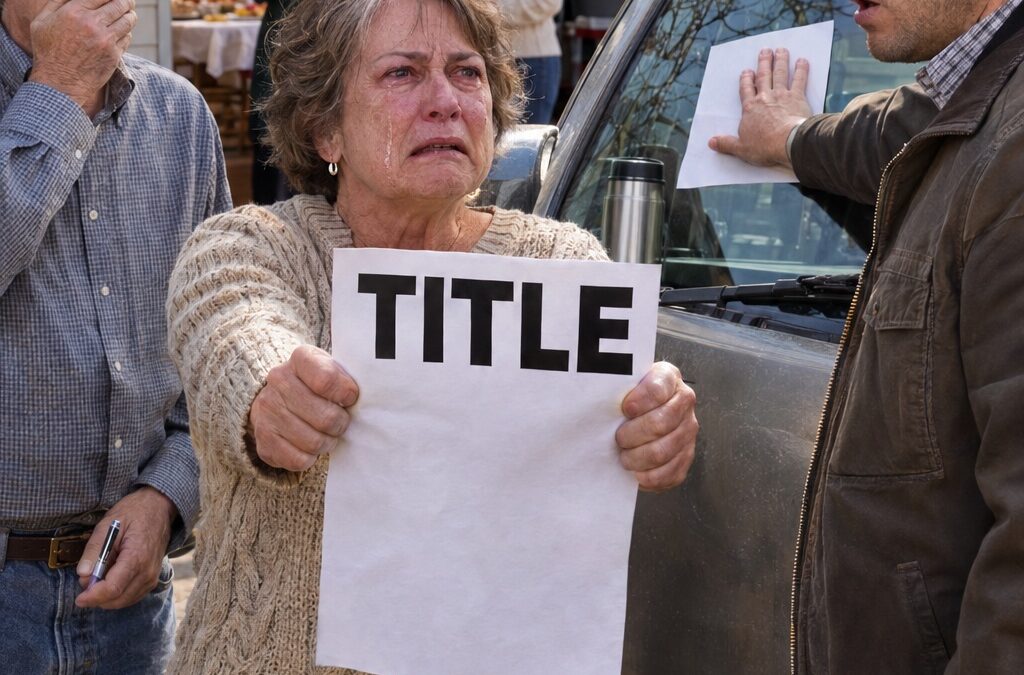
Part 3: The Sound From The Cab
My voice came out of the little speaker.
“You can borrow it through Christmas. Bring it back afterward. You cannot sell it or give it away.”
Then came Travis’s voice, clear over the heater.
“I understand. It’s a loan. I’ll bring it back.”
Peter looked at my son.
Travis reached toward the phone, then stopped himself.
I let the recording continue past his answer. There was the sound of me gathering my purse. Then I asked him not to move Paul’s thermos.
That small request hurt worse than hearing the argument.
I remembered making it without thinking. I had been getting out of the passenger seat. Travis wanted to haul some things, and I was trying to let him help himself.
I stopped the recording after the door closed.
“That was December 18,” I said. “When you borrowed it.”
Travis rubbed the edge of the sale sign.
Peter looked at the truck, then back at him.
“You told me it was yours.”
“It became mine later,” Travis said.
He said it quickly, but not loudly. He had stopped trying to reach for my phone.
“Mom and I talked after that.”
“About what?” I asked.
“You said you didn’t know whether you wanted it.”
I remembered that conversation, too. I had said I didn’t know whether I could stand seeing Paul’s thermos every morning.
I had been talking about missing my husband.
I had not been giving away my transportation.
“I said some mornings were hard,” I told him.
“That’s what I mean.”
“No. That isn’t what it means.”
Peter stepped away from the open driver’s door. He wasn’t leaving yet, but he wasn’t examining anything now.
He looked at the title I still held.
“May I see that without taking it?”
I turned it toward him.
My name was printed as the owner. There was no second owner and no lien.
Paul’s name had never been on that title.
I had bought the truck with my own money. We were married, and we shared our lives. That did not make Travis its owner after Paul died.
Peter followed the printed lines without touching them.
“Have you signed this anywhere?”
“No.”
“Have you signed another title?”
“No.”
Travis exhaled through his nose.
“She hasn’t done the paperwork yet. That’s what we were about to handle.”
Peter looked directly at him.
“Your mother just said she didn’t agree.”
For the first time, Travis stopped touching the sign.
Martin set his coffee on the porch rail. He came closer, but I didn’t move over to make room.
He had been close enough to offer a pen.
He could stand where he was and hear this.
“Joyce,” he said, “when did you find that recording?”
“The day after Travis borrowed the truck.”
I wasn’t giving an explanation because I needed permission. I wanted everyone to understand that I hadn’t manufactured anything.
The dashcam saved its recordings on a memory card. I sometimes copied files using its phone connection. I had started doing that after Paul died.
There were pieces of his voice on there.
Not speeches or messages meant for keeping.
Just my husband being alive beside me.
I had sat at the kitchen table on December 19, listening through those files. I copied the conversation with Travis because it was mixed among the recent recordings.
Then I kept it because the terms mattered.
Travis had never seen the saved file. He had never asked how the camera worked.
He knew we had spoken inside the truck.
He simply hadn’t expected to hear himself answering me.
“You could’ve told me you had that,” he said.
“You could’ve asked before arranging a sale.”
Peter folded his arms against the cold.
“Were you planning to tell me about this loan?”
Travis turned toward him.
“I wasn’t trying to sell you something stolen.”
Nobody had used that word.
I kept my title against the front of my sweater.
“I’m not asking anybody to label anything,” I said. “I’m saying I didn’t authorize this.”
That mattered to me.
I wasn’t going to turn my driveway into a courtroom. I didn’t need to accuse him of a crime to refuse his sale.
The truck belonged to me. The title was unsigned. The recording showed what we had actually agreed.
That was enough to stop my participation.
Peter nodded once.
“I’m trying to understand why I drove over.”
“Because I thought she would be reasonable,” Travis said.
My cousin looked away toward the porch.
Martin looked down at the pen in his hand.
There it was again, the suggestion that I was the problem because I hadn’t cooperated.
I shifted the title so Peter could see it clearly.
“This is my current title,” I said. “I brought it out to show you. Not to sign it.”
Travis glanced toward our relatives.
“Can we at least stop doing this in front of everybody?”
I looked at the sale sign pressed against my windshield.
“You put that up in front of everybody.”
He said nothing.
A breeze lifted the corner of the paper. Travis flattened it automatically, then took his hand away.
Peter watched that small movement.
“Was the ad already up when you borrowed it?” he asked.
Travis looked at him.
“Why does that matter now?”
“Because you just said the gift happened later.”
Peter took his phone out again.
He held it low, close to his coat, searching through his messages.
I could see my truck in the little photograph on his screen.
The picture had been taken somewhere other than my driveway.
I recognized the dent near the rear bumper. I had backed into a post long before Paul became ill.
Travis had teased me about that dent for years.
Now he had photographed it for a stranger.
Peter stopped scrolling and looked up.
“When exactly did you put this advertisement up?”
Part 4: What The Buyer Was Promised
Travis didn’t answer the question.
He pointed toward Peter’s phone instead.
“You can see what day it was posted.”
“I can,” Peter said. “I’m asking you to explain it.”
My son looked toward the house.
The front door stood partly open. Someone had pulled the brunch dishes away from the edge of the table.
I could smell the potatoes through the doorway.
There was something especially unpleasant about standing beside food I had made for people who were watching this happen.
I had wanted a manageable Christmas.
Not a cheerful one. I hadn’t expected that.
Just a meal where nobody needed me to explain why I sometimes stopped talking.
Peter turned his screen toward me.
The advertisement showed my truck from the front and side. Below the photographs was the asking price.
Then a sentence about the paperwork.
Signed title ready.
I read those words without speaking.
The original title was still in my hand.
It had been inside my kitchen drawer until I fetched it.
Travis had not seen it since borrowing the truck.
“Did you write this?” I asked him.
“Yes.”
“Why did you say it was signed?”
“Because that was the next step.”
“It wasn’t a step I agreed to.”
Peter drew his phone back slightly, then offered the screen again.
“There are messages, too.”
I read enough to understand his concern.
Travis had told him they could complete the sale during the Christmas gathering. He had described my presence as a convenience.
The paperwork would be easier because I would be home.
My son had taken my invitation to brunch and made it part of his sales arrangement.
I looked at him.
“You knew I was cooking for everyone.”
“That’s why I knew you’d be here.”
His answer came without hesitation.
Then he seemed to realize how it sounded.
“I meant we wouldn’t have to chase you down.”
I had spent the weeks before Paul’s death making myself available to nurses, relatives, delivery people, and our son.
My kitchen calendar still held appointments I couldn’t bring myself to erase.
Nobody had needed to chase me anywhere.
Peter rubbed his forehead.
“I asked whether the seller’s name matched the title.”
“And it does,” Travis said.
He pointed at me.
“She’s right here.”
That was a different story from the truck being his.
Peter noticed it, too.
“So you’re selling on her behalf now?”
“I’m helping handle it.”
“No,” I said. “You aren’t.”
I kept my voice low because Peter was standing close.
I didn’t need to make it carry across the street.
“I haven’t authorized you to advertise it, sell it, or collect money.”
Martin finally spoke without trying to quiet me.
“Travis, take the listing down.”
My son looked at him sharply.
“I’m trying to work something out.”
“With property that isn’t available,” I said.
Peter asked whether he could compare the vehicle details with the title.
I let him read the paper while I held it. Then I walked with him to the windshield.
He checked the identifying information visible there.
I didn’t hand over the title or leave it on the hood.
I had watched enough ordinary paperwork go wrong through simple carelessness. At work, I had kept forms out of food spills and away from crowded counters.
This was more important than a cafeteria delivery sheet.
Peter straightened.
“It matches.”
“Of course it matches,” Travis said.
Peter turned toward him.
“That doesn’t fix what you told me.”
A relative shifted on the porch. Another carried Martin’s abandoned coffee inside.
Nobody was laughing now.
I wanted to preserve what Peter had shown me before the advertisement disappeared.
“Would you send me the listing and those messages?”
Peter nodded.
He handed me his phone long enough to enter my contact information. Then he sent the material while I stood beside him.
My phone sounded in my hand.
I opened the images and checked that the words were readable.
Travis watched us.
“You don’t need to keep building a file.”
“I’m keeping what was offered in my name.”
I saved the images with the audio.
Then I checked that the original recording was still there, not merely a link to the camera.
That took a moment.
Nobody spoke while I did it.
I wasn’t making a threat. I wasn’t calling a lawyer from the driveway.
I wanted an accurate record of what had happened.
If Travis later told someone I had promised the truck, I wouldn’t have to reconstruct Christmas from memory.
Peter slipped his phone away.
“I haven’t paid anything,” he told me.
“I’m glad.”
“No deposit, either.”
“Thank you for telling me.”
That eased something in my stomach.
I hadn’t known whether there was money to untangle. There wasn’t.
Peter had come prepared to inspect the truck and finish the transaction only if the paperwork was right.
The paperwork was not right.
Travis crossed his arms.
“So he leaves, and then what? You keep a truck you don’t even want to sit in?”
I looked through the passenger window.
The thermos caught the light near the console.
“I get to decide when I drive it.”
“You’ve barely touched it.”
“Paul just died.”
My son looked down at his shoes.
For a moment, I thought he might apologize.
Instead, he said, “That’s why I thought taking this off your hands would help.”
Peter’s expression changed.
“Then why were the proceeds going to you?”
The question hung there.
Travis uncrossed his arms.
“Because we had a family arrangement.”
“No,” I said.
Martin looked at me, then at Travis.
Nobody offered another explanation for my son.
Peter reached toward the folded sheet sticking out of Travis’s coat pocket.
He didn’t touch it.
“You said you brought a bill of sale.”
“It’s just a form.”
“I’d like to see it.”
Travis kept his hand over the pocket.
Peter waited.
“Please show me the paper you expected your mother to sign.”
Part 5: The Blank Beside My Name
Travis pulled the folded paper from his pocket.
He opened it against the truck’s hood.
The wind caught an edge, and Martin reached forward to hold it down.
I put my title under my arm.
The form wasn’t signed.
My name had been entered as the seller.
Peter’s name was entered as the buyer.
The proposed price was there, too.
Travis had left the signature space empty for me.
Peter read it carefully.
Then he stepped back from the hood.
“You told me your mother had given you the truck.”
“She was going to sign it over.”
“To you?” Peter asked.
Travis looked at the form.
“Or directly to you. It would save doing everything twice.”
I understood what he had planned.
He didn’t need the state to issue him a title if he could pressure me to complete my own sale.
He needed me standing beside his buyer, holding the right paper.
Then he needed me to sign and let him keep the money.
The whole thing depended on me being too embarrassed to say no.
“You brought this without asking me,” I said.
“I knew you’d worry if we discussed every detail.”
“Selling my truck is the detail.”
My cousin moved closer to the porch railing.
Martin took his hand off the bill of sale.
The paper fluttered, and Travis pressed it flat.
Peter asked him a plain question.
“Who was supposed to receive the money?”
“I was,” Travis said.
“Why?”
“Because Mom was giving me the truck.”
Peter shook his head.
“She has said she wasn’t.”
Travis looked at me instead of answering him.
“I have bills, Mom.”
“So do I.”
“I know that.”
“Then you know why I need my transportation.”
He started to speak, then stopped.
I didn’t know which bills he meant.
I wasn’t going to demand that he list them in front of relatives.
His financial problem, whatever it was, did not create my consent.
“You could have asked me for help,” I said.
“You would have said no.”
“You didn’t ask.”
He dragged his palm over the folded edge of the form.
“I thought once Peter was here, you’d see it made sense.”
There was the answer.
Not a misunderstanding about a gift.
Not confusion caused by grief.
He had expected the buyer’s presence to do the persuading.
Martin looked at me.
I could see him remembering his own contribution to that pressure.
The pen had been such a small object.
He had offered it as if the only problem was finishing a task.
Peter took a breath.
“I’m not buying this truck.”
Travis turned toward him.
“We could still work it out.”
“No. Your mother isn’t selling it.”
“I could get her something smaller.”
“With what?” I asked.
He didn’t answer.
I hadn’t asked him to choose a replacement vehicle.
I hadn’t asked him to decide what I could handle.
I had driven Paul to treatment through days when he could barely climb into the passenger seat.
I had kept the truck fueled and the steps clear.
The people standing there knew at least some of that.
They had asked me how the appointments were going.
They had accepted the meals I packed around them.
I looked at Martin before speaking again.
“I drove him every time he went for radiation.”
“I know,” Martin said.
“Then don’t help somebody sell the truck while I’m saying no.”
He closed his fingers around his pen.
“You’re right.”
That was the first useful thing he had said outside.
I turned back to Peter.
“I’m sorry your Christmas was interrupted.”
“You didn’t arrange this.”
He said it without making a speech.
Then he looked at Travis.
“Please delete the advertisement. Don’t use my name as a buyer.”
Travis folded the bill of sale.
Peter didn’t ask for a test drive.
He didn’t make a lower offer or suggest returning later.
He walked toward his own vehicle.
I went with him far enough that we weren’t speaking over the others.
“Thank you for stopping when you understood,” I said.
“I wouldn’t want someone doing that to my mother.”
He paused beside his door.
“Keep your title inside.”
“I will.”
He left without paying anybody.
I watched his vehicle turn out of my street.
The sale was over.
There would be no money for Travis to collect.
There was no deposit to return and no transfer to undo.
My son had lost the transaction he expected to complete.
I still had to deal with him standing beside my truck.
When I turned around, he had pulled the sale sign loose from the windshield.
For a moment, I thought he was taking responsibility.
Then he rolled it halfway and held it against his coat.
“Everybody happy now?” he asked.
Nobody answered.
I walked back toward him.
“Put that in the trash.”
“It’s just paper.”
“Then throw it away.”
He looked toward the house, where the brunch table was visible through the open doorway.
“Can we eat before this gets worse?”
I wanted to sit down.
My knees hurt from standing on the cold driveway. The food needed putting away, and Paul’s chair was inside.
But there was still a key in my son’s pocket.
There was still a truck he had borrowed.
I held the title more firmly under my arm.
“The borrowing is finished.”
Travis frowned.
“It was through Christmas.”
“It’s back here now. You tried to sell it. You can’t keep using it.”
He rubbed his mouth with the back of his hand.
Then he tried a quieter request.
“Can I at least keep it until I get back to work?”
Part 6: The Key In His Hand
“No,” I said.
Travis looked past me toward Martin.
My brother stayed where he was.
“I need the key,” I told my son.
“I heard you.”
He didn’t reach for it.
I waited beside the driver’s door.
The engine was off, and the truck was on my property.
I had my own key inside the house.
There was no reason to pull at his coat or grab his wrist.
I wasn’t going to create another problem trying to finish this one.
“You’ve got your own key,” he said.
“I want the one I lent you.”
“What do you think I’m going to do?”
“You tried to sell it today.”
He looked toward the porch.
I could tell he disliked hearing that said plainly.
I disliked having to say it.
But pretending it was something else would not get my key back.
Martin stepped closer.
“Give her the key, Travis.”
My son took it from his pocket.
He held it by the plastic head, letting the metal point toward the pavement.
I opened my palm.
After a pause, he placed it there.
I closed my fingers around it and stepped back.
“Thank you.”
He let out a short laugh.
“You don’t have to say it like that.”
“Like what?”
“Like I’m somebody you don’t know.”
I put the spare into my sweater pocket.
I knew him.
That was why the folded bill of sale had hurt so much.
A stranger would not have known where my vehicle papers were kept, how uncomfortable I was disappointing relatives, or how badly I wanted Christmas to pass without another scene.
Travis knew all of that.
He had counted on it.
I didn’t say those things in the driveway.
I had what I needed from him.
I asked Martin to stand clear while I moved the truck.
Then I went inside for my regular key.
I put the title back into its folder first.
I checked that the unmarked signature space was still clean.
It was a small, unnecessary check.
I did it anyway.
My phone went beside the folder while I washed my hands.
There was a faint mark from the paper edge across my thumb.
I dried my hands on the kitchen towel and picked up my key.
When I returned outside, Travis had dropped the sale sign into the trash container.
That was where I wanted it.
I didn’t retrieve it as a souvenir.
I already had the listing saved.
The garage door was open, but a folding table blocked part of the space.
We had used it for extra dishes.
“Martin, would you help me move that?”
He carried the empty end while I guided the other.
Travis watched from beside the walkway.
I wasn’t asking him to help with my truck anymore.
I moved the table against the wall and checked the floor.
A box of Paul’s gardening gloves sat near the tire path.
I lifted it onto a shelf.
For a moment, I stood with my hand resting on the box.
I could have asked someone else to move the truck.
I knew Martin would do it.
But I needed to be the one driving it now.
I opened the driver’s door and climbed in.
The cab smelled like cold upholstery and the peppermint Paul used to carry.
His silver thermos was still in the cup holder.
Travis had left it there, just as I had asked.
I adjusted the seat back to my position.
Then I checked the mirrors.
Nobody spoke while I started the engine.
The ordinary sound made my throat tighten.
For months, starting that truck had meant checking on Paul before moving.
Was his seat belt fastened?
Was he warm enough?
Did he need the window cracked?
I looked toward the passenger seat automatically.
It was empty.
I put my foot on the brake until I could breathe normally.
Then I eased the truck into my garage.
Martin stood outside the opening where I could see him.
He didn’t wave me forward unnecessarily.
I knew where to stop.
I shut off the engine and sat for a moment.
The thermos lid had a shallow mark near its rim.
Paul had dropped it in our driveway.
I touched the mark with my thumb.
Then I left it where it was and climbed down.
Travis was waiting outside.
“Are you locking it up because of me?”
“Yes.”
He looked away.
I didn’t add anything.
There was no kinder explanation that would also be true.
I shut the truck door and locked it.
Then I lowered the garage door.
Travis knew the outside keypad code.
I had given it to him so he could return borrowed things when I wasn’t home.
That permission needed to change, too.
The instruction booklet was in the drawer with the household manuals.
I found the correct page and carried it into the garage.
Martin waited outside while I followed the steps.
I entered a different code, tested it, and checked the door from inside.
I did not change the house locks.
Travis had no house key and did not live with me.
I did not throw his belongings away.
His moving blankets and tool bag were still mine to return, not mine to keep.
This was about access to my truck.
I made sure that access was mine again.
When I came out through the house, Travis was near the front steps.
“I’m leaving,” he said.
“All right.”
He looked as if he expected another sentence.
I had none ready.
He walked away from the porch without coming inside for brunch.
I watched until he was off my property.
Then I closed the front door against the cold.
Martin stood beside the untouched plates.
He took his pen from his pocket and set it down.
“Joyce,” he said, “can I talk to you without everybody here?”
Part 7: The Plates Still On The Table
I looked toward the kitchen.
The eggs had gone dry around the edges.
Someone had covered the potatoes with foil.
My relatives were speaking quietly, offering to pack food and clear dishes.
I told them they could take what they wanted.
I didn’t want the whole meal sitting in my refrigerator.
They helped without asking me to entertain them.
Plates scraped into the trash.
Serving spoons went into the sink.
The ordinary work made it easier to stand there.
Martin waited until the others had gathered their coats.
He didn’t ask me to hug Travis later.
He didn’t tell me my son was under pressure.
I was grateful for that much.
After the front door closed, Martin pulled out a kitchen chair.
“May I sit?”
I nodded.
He sat on the side of the table away from Paul’s place.
I carried the coffee pot over and checked it.
There was enough left.
Neither of us needed more coffee, but I poured it anyway.
My brother looked at the cup without touching it.
“I believed him,” he said.
“You didn’t ask me.”
“I know.”
“You saw me saying no.”
He rubbed a finger along the table edge.
“I thought you were upset about letting the truck go.”
“I was upset because he was selling it.”
Martin nodded slowly.
There was a difference, and I needed him to hear it.
He had treated my refusal as grief to manage.
Not a decision to respect.
“When I offered Peter that pen,” he said, “I was helping Travis push you.”
“Yes.”
“I’m sorry.”
I picked up a serving spoon and rubbed at a dried spot.
It was already clean enough.
I kept rubbing.
Martin watched my hand.
“I should’ve asked whether you agreed before I did anything.”
“That would have helped.”
“I won’t tell people this was a misunderstanding.”
I put the spoon down.
That was an apology I could use.
Not because it erased the moment.
Because I knew relatives would talk after they got home.
I didn’t want to spend the following days defending the difference between lending and giving.
“Tell them what you saw,” I said.
“I will.”
We sat without speaking for a while.
Then Martin carried the trash out.
He didn’t ask me to stop cleaning.
He dried the dishes I handed him.
At the cafeteria, I had spent years finishing meals after everybody else left.
The work was familiar enough that my body did it even when I couldn’t organize my thoughts.
Stack plates.
Rinse serving dishes.
Wipe the counter.
Remember there was nobody upstairs resting after treatment.
That last thought stopped me beside the refrigerator.
Martin took the dish towel from my hand.
“Sit down for a minute.”
I sat.
Paul’s chair was still pulled slightly away from the table.
Nobody had used it.
I hadn’t asked them not to.
I looked at the space where his plate would have been.
Then I looked toward the kitchen drawer holding my title.
There were different kinds of paperwork after a death.
Some arrived in envelopes with instructions.
Some sat quietly until somebody tried to make use of what you owned.
I had spent enough time reading forms that month.
I wasn’t signing away my truck because my son found a buyer.
My phone sounded on the counter.
It was Travis.
He had sent a message asking me to tell Peter that things had become confused.
I read it to Martin.
“What are you going to say?” he asked.
I typed slowly.
There was no confusion about my permission. I did not agree to sell.
I read it again before sending.
Then I put the phone facedown.
Martin didn’t suggest softer wording.
He finished drying the dishes.
Later, after he left, Travis called.
I answered because I wanted to hear what he actually needed.
He started by saying the sale would have solved a problem for him.
I let him speak.
He did have bills.
He wanted money.
Neither fact surprised me.
What mattered was the way he had tried to obtain it.
“Can you lend me what I would’ve gotten?” he asked.
“The $22,000?”
“Yes.”
“No.”
He was quiet long enough that I checked whether the call had dropped.
Then he said, “You didn’t even ask what it’s for.”
“I’m not making that loan.”
“You used to help me.”
“I lent you my truck.”
“That isn’t what I mean.”
“I know.”
I didn’t need to turn the conversation into a list of everything I had done for him.
I also didn’t need to prove I could afford to refuse.
My money was not an available replacement for a sale I had stopped.
He tried another approach.
“What if I bought the truck from you over time?”
“I’m not selling it.”
“You’d still have the title until I paid.”
“I need the truck.”
“You could get something else.”
“I’m keeping this one.”
He sighed.
I could hear him walking somewhere.
I looked toward the dark kitchen window.
The garage was beyond it.
My truck was inside, locked.
I had checked the door before sitting down.
“I’m not doing a family payment arrangement,” I said.
He started to object, then changed his mind.
“Fine.”
That didn’t sound like agreement.
It sounded like he had run out of useful requests.
I didn’t chase him for an apology.
I wasn’t ready to hear one made only because he needed something.
Before hanging up, I reminded him that his blankets and tool bag were still at my house.
“I’ll put them together for you,” I said.
He answered without the sharpness from earlier.
“I’ll come for my things.”
Part 8: What Stayed On The Porch
I asked Travis to arrange the pickup before coming over.
He sent a time, and I agreed.
Then I asked Martin to be present.
I told him exactly why.
“I don’t expect trouble. I don’t want another disagreement about what was said.”
“I’ll come,” he replied.
There was no court order involved.
No officer stood in my driveway.
Travis wasn’t being evicted from a home.
He didn’t live with me.
He was collecting belongings he had left while using my truck.
I wanted that ordinary exchange to stay ordinary.
The morning of the pickup, I went into the garage through the house.
I kept the truck locked while I gathered his things.
The moving blankets were folded on a shelf.
His tool bag sat beneath them.
I checked the surrounding floor and shelf for anything else.
Then I photographed the items together.
Not to build a punishment.
To remember what I had handed back.
The blankets smelled faintly of dust.
I shook them outside and folded them again.
I didn’t wash them.
I didn’t search through his tool bag.
I zipped the opening where a handle had caught.
Then I set everything on the porch.
The front door could stay closed behind me.
There was no reason for Travis to enter the house.
That felt strange.
He had grown up coming through that door hungry.
Even after he moved out, I had listened for his footsteps when he visited.
Now I was deciding where we would stand.
I went back inside and washed my hands.
Martin arrived before Travis.
He looked at the belongings, then at me.
“Anything else you want me to do?”
“Just stay.”
He nodded and sat in the porch chair.
We didn’t rehearse a speech.
When Travis arrived, he stopped near the bottom step.
He looked toward the garage door first.
Then he saw the blankets.
“That everything?”
“Everything I found.”
He climbed the steps and lifted the tool bag.
The zipper held.
He set it down again.
“You went through it?”
“No. I closed the zipper.”
He checked the side pocket without comment.
Martin stayed seated.
I kept my hands in my sweater pockets.
Travis folded the blankets over his arm.
Then he looked at me.
“Do you have to tell people I tried to sell it?”
“I won’t tell them you had permission.”
“That’s not what I asked.”
“It’s my answer.”
He rubbed the back of his neck.
“People are going to make me sound terrible.”
“They were standing there,” Martin said.
Travis looked at him.
“You helped.”
“I did.”
My brother stood up.
“I offered the pen before asking Joyce. That was wrong.”
Travis shifted the blankets.
“So now you’re taking her side.”
“I’m correcting what I did.”
I was glad Martin didn’t turn it into an argument about loyalty.
There was no version of the afternoon where everybody could be equally right.
The truck wasn’t a gift.
The sale wasn’t authorized.
The title wasn’t signed.
My brother had helped create pressure before he checked any of those things.
He could admit that without deciding he hated my son.
Travis looked back at me.
“Can we at least say we changed our minds?”
“We didn’t make a plan together.”
He stared toward the street.
I could see how much he wanted a different sentence.
Something he could repeat that would smooth away the parts he disliked.
I had spent a great deal of my life helping family conversations go more easily.
Passing another dish.
Changing the subject.
Giving somebody time to calm down.
I wasn’t doing that by changing the facts.
“You can tell people you made a bad decision,” I said.
He gave a small, unpleasant laugh.
“That sounds easy when you’re not the one saying it.”
“No. It doesn’t sound easy.”
I meant that.
I knew embarrassment could make people defensive.
I also knew he had brought Peter to my house expecting mine to make me sign.
He looked down at the tool bag.
“I shouldn’t have called you a liar.”
It was the first apology he had offered without attaching a request.
I let it sit there.
“Thank you for saying that.”
He nodded.
I didn’t hug him.
I wasn’t withholding it as a test.
I simply didn’t want to.
He picked up the bag again.
“The truck really isn’t available?”
“No.”
“Not later, either?”
“If I ever sell it, I’ll decide how.”
That was not a promise to offer it to him.
I could tell he understood.
He walked down the steps and loaded his things.
Martin stayed beside me until Travis closed his vehicle door.
My son lifted his hand before leaving.
I lifted mine back.
There was no dramatic departure.
No demand for police.
No shouting from the street.
He had his belongings.
I had my truck and both keys.
That was the practical result.
After he left, Martin asked whether I wanted company.
“For a little while,” I said.
We sat at the kitchen table.
I didn’t make a whole meal.
I put leftovers into bowls and warmed them.
Martin ate without asking why I hadn’t cooked something fresh.
He told me he had spoken to the relatives from brunch.
Not a speech, he said.
Just a correction.
Joyce had not agreed to sell.
He had been wrong to offer his pen.
I thanked him.
Then I asked him about his own Christmas evening.
We talked about something besides my son.
That felt unfamiliar and useful.
After Martin left, I checked the garage door.
Then I opened the truck and brought Paul’s thermos inside.
I set it beside the sink.
For a while, I left it there untouched.
It had been part of caring for him.
Washing it had felt like putting away something I might still need for him.
But there was nobody to make that drink for now.
I unscrewed the lid.
The inside was clean.
I washed it anyway, slowly, turning it under warm water.
Then I left it open to dry.
I had agreed to help prepare food at a neighborhood community meal.
The date was written on my calendar.
January 4, 2025.
I hadn’t canceled.
When the thermos was dry, I set it beside my coffee supplies for the morning I would go.
Part 9: Coffee For The Driver
On January 4, 2025, I woke before the alarm.
The house was still dark.
I lay there listening for Paul in the bathroom.
Then I remembered where I was in the morning.
Not an appointment morning.
Not a morning when I needed to check whether he could manage breakfast.
Just a morning I had agreed to leave home.
I got up and turned on the kitchen light.
The silver thermos stood beside the coffee.
I put water in the kettle and set out a mug.
Then I changed my mind about the mug.
I would take the thermos.
There was no reason it had to stay empty because Paul had used it.
I still paused before filling it.
I held the handle and looked at the shallow mark near the rim.
Then I poured carefully.
The lid fitted with the same familiar turn.
I packed my apron in a grocery bag.
I had washed it after agreeing to help at the community meal.
For years, preparing food had meant reporting for work.
Then it had meant finding something Paul could swallow comfortably.
This morning it meant showing up where I had said I would.
I didn’t need to decide anything larger than that.
My phone was quiet.
Travis hadn’t asked for another loan.
He hadn’t returned for the truck.
The advertisement had been removed.
Peter had sent a brief message confirming that he no longer saw it.
I had thanked him and left the conversation there.
He wasn’t my friend or my rescuer.
He was a prospective buyer who stopped when the owner said no.
I was glad he had done that.
I was also glad I hadn’t needed him to speak for me.
The title was filed in its folder.
The saved audio and listing images were stored together.
I hadn’t played the recording again.
I didn’t need to keep hearing my son agree.
I knew what it said.
Before leaving, I checked my purse for my key.
The spare was put away separately.
Travis no longer had it.
The garage keypad opened with the code I had chosen.
I stood inside while the door rose.
My truck was where I had parked it.
There was no sale sign.
There was no stranger waiting beside the driver’s door.
I put my apron bag on the passenger floor.
Then I set the thermos in the cup holder.
For a moment, I looked at the empty passenger seat.
I didn’t put a bag there to cover it.
I didn’t apologize aloud for using the truck.
I climbed into my own seat.
The steering wheel was cold under my palms.
I started the engine and waited while the air warmed.
Then I backed out carefully.
At the end of the driveway, I checked both directions.
It was such an ordinary thing to do that I almost cried.
For weeks, leaving home had meant paperwork, funeral arrangements, or buying things I forgot I already had.
This trip was mine.
The community meal volunteers were already working when I arrived.
Someone pointed me toward the kitchen.
I hung my coat on a hook and washed my hands.
There were vegetables waiting to be prepared.
I asked where they kept the cutting boards.
Nobody asked me to explain Christmas.
Nobody needed a title or a recording.
They needed food ready to serve.
I could do that.
I tied my apron and got to work.
The motions came back without effort.
Set the board flat.
Keep the knife handle dry.
Move the prepared food away from the unwashed vegetables.
I had taught those habits to younger cafeteria workers for years.
That morning, someone beside me asked a question about keeping food warm.
I answered and showed her where I would place the pan.
She tried it and nodded.
It felt good to be useful in a way I had chosen.
I didn’t have to offer my truck or my savings.
I didn’t have to make a family problem disappear.
I could prepare a meal and go home afterward.
When we took a break, I carried my thermos to a chair near the kitchen door.
The coffee was still warm.
I unscrewed the lid and held it in both hands.
A woman nearby asked whether I wanted company.
I said yes.
We talked about the food and the weather.
I told her I was retired from a school cafeteria.
She asked whether I missed the noise.
“Not every part of it,” I said.
She laughed, and I did, too.
The sound surprised me.
I hadn’t planned on having a pleasant morning.
I had only planned on showing up.
When the meal was finished, I helped clean the work surfaces.
Then I untied my apron and folded it.
I didn’t stay until everybody else left.
Another volunteer had the final cleanup covered.
I thanked her and took my bag.
Outside, I walked straight to my truck.
I didn’t check my phone for someone asking where I was.
There was no treatment pickup to hurry toward.
I could stop for groceries if I wanted.
I did.
I bought what I needed for myself, not what I hoped someone might manage to eat.
At home, I carried the bags inside.
Then I parked the truck in the garage.
The door lowered behind it.
I checked that it had closed completely.
That had become part of my routine.
Not checking on Travis.
Checking my own home.
Martin called later to ask how the meal had gone.
I told him about the kitchen and the woman who sat with me.
He listened without bringing up the truck.
Before we hung up, he said he was glad I went.
“So am I,” I told him.
Travis and I were speaking, but not as before.
He had not received the sale money.
He had not received a replacement loan.
He had not bought the truck on installments.
I hadn’t made those decisions temporary to soothe him.
He knew what the answers were.
I still wanted a relationship with my son.
I wasn’t pretending the next visit would feel easy.
There would have to be visits without requests.
There would have to be conversations where my answer stayed my answer.
For now, his belongings were returned.
His access to my garage was ended.
My vehicle was not for sale.
That evening, I washed my apron and hung it to dry.
I put the grocery bags away.
Then I went into the garage for the thermos.
I brought it inside, rinsed it, and left the lid off.
The following morning, I filled it again.
I had errands to run.
Nothing urgent.
Nothing involving anybody’s signature.
I took my purse, my own key, and the coffee.
Then I opened the truck and climbed in.
The silver thermos sat in the cup holder beside me.








