My Stepbrother Read Dad’s Will to 45 Funeral Guests and Gave Me One Rusty 28-Year-Old Pickup—Then Dad’s Recorded Deed Cost Him a $48,000 Oil Draft
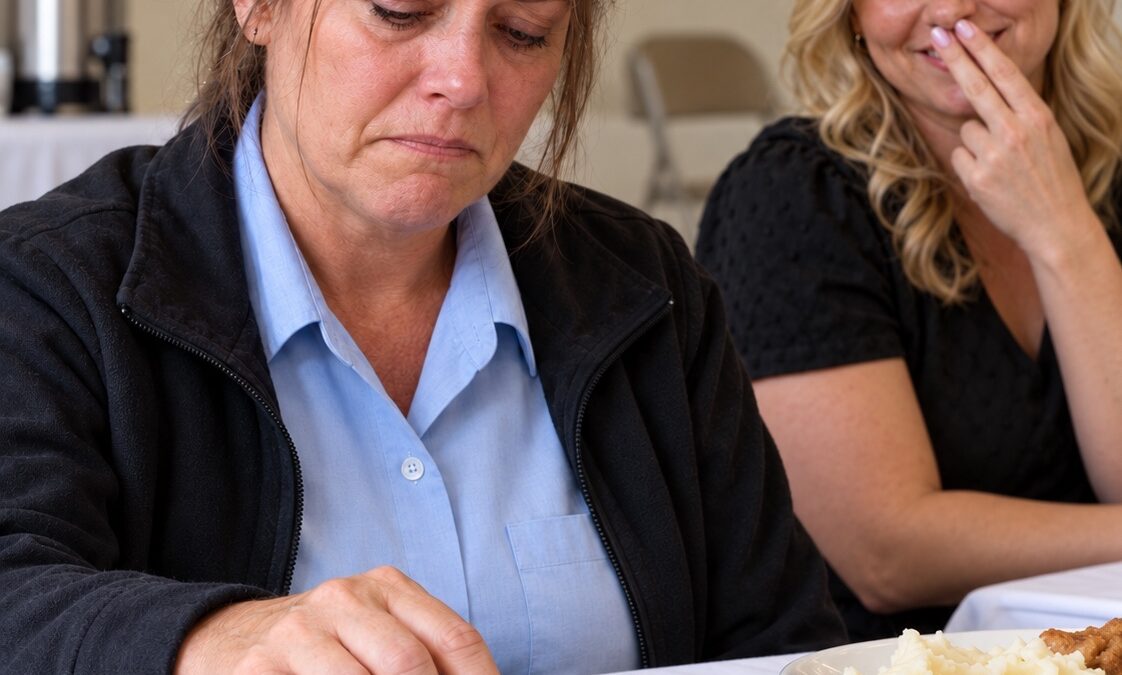
Complete story · 13 parts · about 49 minutes · ending included
Part 1 · Part 2 · Part 3 · Part 4 · Part 5 · Part 6 · Part 7 · Part 8 · Part 9 · Part 10 · Part 11 · Part 12 · Part 13
Part 1 of 13
Brianna Purcell laughed as Troy read the part of Dad’s will that left me his twenty-eight-year-old pickup.
“A stepkid gets a stepkid’s share. Rust and all.”
Her voice reached the church kitchen, where clean casserole dishes were stacked beside a plastic pitcher of sweet tea.
About forty-five people sat along folding tables joined end to end in the Grace Valley Baptist Church fellowship hall in Hennessey. An aluminum pan of macaroni and cheese rested on a stained dish towel.
Troy stood at the center, holding a photocopy chest-high. He wore a navy suit that pulled tight across his shoulders whenever he lifted an arm.
“To Shannon Dyer, I leave my pickup,” he had read, a beat before Brianna’s laugh.
He looked straight at me after my name, as though checking whether I’d understood.
I was sitting between an empty chair and a bowl of green beans, my napkin spread across one knee. The black jacket I’d worn to the service covered my mail-carrier uniform shirt. My substitute was running all of Route 3 today, and I still had a leave slip to sign at the Kingfisher post office later.
Troy had chosen the funeral lunch to make his announcement.
The key ring appeared between his fingers.
He slid it across the white tablecloth until it stopped against my plate of mashed potatoes.
There was a tiny metal tractor attached to it, the green paint worn off at one wheel. Dad had kept it even after the hook bent crooked. I recognized the shape without touching it.
Brianna covered her smile with two fingers. Her nails were painted the pale pink of the iced sheet cake waiting on the sideboard.
“Well, somebody had to take the old thing,” she said.
A fork clicked against china at the far end of the table. The sound was small enough that people could pretend nothing had happened.
“That’s one way to see it,” I said.
I lifted the key ring by its metal loop and put it in my jacket pocket. My thumb rested against the chipped paint for a moment before I withdrew my hand.
Across from me, Wanda Gentry had cut a piece of ham in half. Dad’s younger sister kept the fork poised above her plate, then lowered her eyes. She said nothing.
A paper sign at the kitchen doorway thanked the funeral-lunch committee. Brianna’s name was written at the top in larger letters than the rest.
She smoothed Troy’s lapel and watched the faces along the table.
I moved my untouched bread roll onto the edge of my plate. At the farm, wheat stubble would be standing beyond the back fence, yellow against the red dirt. Route 3 followed the section-line road past Dad’s mailbox.
The program beneath my glass was dated Saturday, August 8.
Troy folded the photocopy once but stayed on his feet.
The chair behind him scraped as he stepped clear of it. His tie matched the dark blue cover of that program.
“Dad was sharp as a tack to the very end. He did his own taxes every March.”
Troy paused to see whether anyone would nod.
He tucked the folded photocopy under one arm.
“The house and the 160 acres came to me by the deed Dad filed,” he said.
Brianna’s hand closed around his elbow. She looked past me toward Wanda, who kept her eyes on the ham.
I picked up my glass. The tea had gone lukewarm, and a lemon seed clung to the inside near the rim. I set it down without drinking.
Nobody asked a question. Chairs shifted, and a few people folded their used napkins. They had come to eat after a burial, not sit through an inventory.
A faucet ran behind the serving counter. The familiar work of cleaning up gave everybody somewhere else to look.
I rose, carried my plate to the dish return, and put the fork beside it. Brianna moved a stack of cups to make room, then straightened the committee sign with one fingertip.
Outside, the gravel parking lot shimmered in the afternoon heat. The rusty pickup stood near the grass, apart from newer vehicles. Troy had sent someone to drive it from the farm that morning so he could give me the key ring at lunch.
Red dirt had settled into the grooves of its running boards. One rear fender carried a patch of primer that Dad never painted over. When I opened the driver’s door, the hinge gave the same dry squeak it had in the farmyard.
I climbed behind the wheel, pulled off my black jacket, and laid it across my lap. My uniform collar had rubbed a sore spot on my neck.
The cab smelled of dust and warm vinyl. A square of clean glass showed where an old parking sticker had been peeled from the windshield. I found myself lining up its corners with the edge of the dashboard.
As I settled back into the seat, the sun visor dropped against my forehead.
Behind it sat a bundle of papers held with a red rubber band. The top page had curled in the heat. I left everything in place and pushed the sun visor back up.
“Not today, Dad,” I said.
At eighteen, I’d carried plates at the Sooner Cafe, balancing three dinners along one forearm while calling orders past the swinging door. Some evenings back then, my wrist ached all the way home.
The pickup’s window was cracked, but the air inside hardly moved. I rested both hands on the steering wheel and studied a shallow dent near the hood’s front edge.
Troy stood beside his own truck, talking on his phone. I could hear every word from the driver’s seat.
“All hundred and sixty, yes sir. Friday works.”
Part 2 of 13
“Get your things out of the farmhouse before Saturday. Estate’s got a timeline, sis.”
Troy’s text arrived Monday, August 10, while I was separating Route 3 mail into trays at the Kingfisher post office.
I set my phone beside the address labels and finished sorting. A letter for the wrong route went back to the center rack.
That afternoon, I eased the right-hand-drive carrier vehicle alongside the farm mailbox, arranged two envelopes and a grocery circular in delivery order, and closed the little door. The next stop was half a mile east.
I didn’t answer Troy until my shift ended.
“I’ll come Saturday after work.”
His reply was a single thumbs-up.
Saturday, August 15, I finished my route, signed out in Kingfisher, and drove the pickup toward Hennessey. The farm driveway had two worn tracks, with a strip of grass down the middle. Dad’s old disc harrow lay in the weeds along the fence.
Troy’s truck was parked beside the porch. He and Brianna had driven over from Enid for the day, and her purse hung from the back of a dining chair.
I stood in the doorway with my hand on the frame.
A yellow sticky note reading SELL was attached to the china cabinet. Another, lettered in Brianna’s tall handwriting, was on Mom’s 1956 sewing machine in its walnut cabinet. Beyond the dining room, the church’s funeral-lunch roasters were stacked unwashed in the kitchen sink.
Against the baseboard, a box fan rattled on the linoleum. Wheat dust lined the windowsill. Somebody had propped the hallway door open with an old boot.
Brianna emerged from the back bedroom carrying an empty cardboard box.
“You’re here,” Brianna said.
“I said I’d come.”
“Well, good.” Brianna glanced at my work shoes. “You could’ve changed first.”
I stepped onto the worn rug, wiped my soles, and walked back to Mom’s room.
The quilt lay folded at the foot of the bed. Her Bible rested on the dresser beside a ceramic button dish. I reached for the Bible first, keeping one finger in place where the cover had begun to split.
Brianna leaned against the doorway.
“Your mom’s things went to Clifford, so it’s estate,” Brianna said. “You can take those two.”
I picked up the quilt and brought its uneven edges together. A row of crooked blue stitches covered one corner where the binding had come loose. I tucked that end inside before laying the Bible on top.
“All right,” I said.
Brianna stayed where she was while I carried both things down the hall.
Outside, I put them on the passenger seat of the pickup, with the Bible away from the open window. I shut that door without slamming it.
I went back inside. Troy stood at the counter with his phone in one hand.
On the kitchen table lay a lease copy beside a roll of masking tape. Its heading said Oil and Gas Lease. Below that I caught the name Prairie Section Energy.
I didn’t get any farther.
Troy noticed my glance and swept the lease copy into a drawer.
“Grown-up paperwork,” he said. “Signed it yesterday.”
“I was looking for Mom’s sewing machine,” I said.
“It’s still there, sis. Hard to miss a thing that big.”
He turned toward the front room without waiting for an answer.
I followed far enough to see the auctioneer carrying a marker and a stack of blank cardboard tags.
The man moved through the rooms, checking furniture against his list. At the china cabinet, he bent down and wrote a lot number on one. The ink bled into the edge.
“Tags are tentative till the judge signs, Troy,” he said.
Troy waved one hand, as if the court could be hurried along with the fan’s warm air.
“Fine. I want a price on every last thing.”
The auctioneer made another entry without answering. A box of chipped cups stood beneath the window, and he stepped around it rather than move it.
For a man invited into a house full of somebody else’s belongings, he was careful where he put his shoes.
I stayed by the dining room wall.
Mom had kept sewing thread in the shallow compartment under the walnut lid, arranged by color in a tin. I remembered reaching for the yellow spool once and having her turn it so the loose end wouldn’t snag.
My fingers curled against my palm.
The sewing machine had stood there since we moved to the farm the summer I was eleven. That first year, I sat on the floor nearby and cut fabric scraps into lopsided squares. Mom let me have the pieces too small for her patterns.
Late at night, the pedal made a dull thump under her foot.
Brianna had gone onto the porch with her phone. The screen door didn’t close all the way; its spring had stretched years ago.
I could hear her speaking to a friend.
“Once the oil money clears, we’re done with this dirt.”
Brianna laughed at the reply. A floorboard creaked as she shifted her weight.
The auctioneer was farther down the hallway now, and Troy had followed him.
I went to Mom’s sewing machine and put one finger under the edge of the sticky note.
It lifted cleanly from the walnut finish.
The other side carried a longer instruction in that same tall handwriting:
“LOT 47 — reserve none. Let the stepkid bid if she wants it.”
Part 3 of 13
The morning after Brianna’s note, I took the coffee can from my Dover kitchen cupboard. Mom’s sewing machine had a lot number; what of Dad’s remained in my name?
The lid fit so tightly that I had to work a thumbnail under the rim. I set both pieces on the small table beside the window.
It was Sunday, August 16. The dish towel on the sink rail was dry, and the refrigerator clicked off halfway through its usual hum. In that kitchen, I could hear a car pass two streets away.
Inside were the check stubs from Dover Creek Oil, the company that had sent me small payments from the old well on Section 14. They bore my name, Shannon Dyer, in a neat block above the dollar figures.
The earliest were seven years old. The last was dated February 15, two years ago.
My lowest month came to $38.17. Another had brought $211.80. I kept each stub even after the money was spent, with the newest one on top and the older ones arranged underneath.
That was how I handled records. A date belonged with its amount. If somebody asked a question, I wanted to be able to put my finger on the answer.
I laid the stack on the table, straightened the edges, and found the yellow envelope beneath it.
Dad had handed it to me seven years ago. On the front, in pencil, he had written:
Shannon — keep
I remembered the way Dad held it until I had a firm grip.
“That’s yours. Don’t let it get lost.”
He never added anything else.
I eased the sheet out. The first line said, “Know all men by these presents.”
That was as far as I went, the same as the other times I’d looked. I folded it along the old crease and returned it to the yellow envelope.
I’d always figured that sheet was why the checks came in my name. The well had shut down that April, two months beyond the February stub, and the payments had ended with it.
One corner had softened from handling. I smoothed the flap with my thumb and laid the envelope beneath the stack.
A check stub listed ten digits beside Dover Creek Oil’s address. I took it to the counter and placed the call.
A recorded voice answered.
“The number you have dialed is no longer in service.”
After the automated announcement finished, I opened my small notebook.
On a fresh line I wrote, Sunday, August 16. Under it I copied Dover Creek Oil and the digits, followed by: Recorded message. Disconnected.
The pen left a blot after the final period. I rubbed it once with the side of my finger and closed the notebook.
I put the stub with the rest and returned everything to the coffee can. It went back into the kitchen cupboard, between a flour tin and a glass measuring cup. I pressed the lid once to make sure it held.
Then I washed the breakfast plate and set it in the rack.
For the rest of that week, Route 3 gave me its ordinary work. I passed gravel driveways and cattle guards, and leaned low to reach mailboxes below the window of my right-hand-drive vehicle. I matched every piece to its proper stop and drove only the misaddressed ones back to Kingfisher.
Every box got its mail.
When the farm came up along the route, I stopped where I always had. I had been carrying those roads for twenty-two years. The little door needed a firm push before its latch caught.
Sunday, August 23, I drove the pickup to Grace Valley Baptist Church in Hennessey.
The parking lot was filling as people arrived for the service. Men in pressed shirts stood along the church wall, waiting for the first hymn. A few cars turned in from the road.
Troy’s truck stood in the open, a trailer hitched behind it with a brand-new fishing boat aboard.
The hull was white with a narrow silver stripe. Its seats had that stiff, untouched look of things fresh from a showroom. A strap secured the motor. The dealer’s paper tag from Enid still hung from the bow.
I parked the pickup a few spaces away. When I shut the driver’s door, the sun visor rattled above the windshield. The bundle behind it had shifted, but I left it alone.
Troy was standing with several of the deacon board men. One had a hand in his pocket; another leaned forward to see the controls. Their Sunday shoes made small half-moons in the loose gravel.
I stayed beside the pickup long enough to button the cuff of my blouse. One buttonhole had begun to fray, and the thread snagged my nail.
Troy put his palm on the boat as though it needed an introduction.
“Bonus money. She ran fifty-two thousand, and that oil draft pays her off by Christmas. I’m having the oil man out to my auction to say a few words.”
One of the men gave a low whistle. Another looked toward Troy and said nothing.
I remembered the lease copy on Dad’s kitchen table, the heading I’d seen before Troy swept it away. What he’d signed hadn’t made sense to me then. It still didn’t.
The men shifted to give me room when I walked over. I stopped within speaking distance and let my hands hang at my sides.
“What exactly did you lease, Troy?”
He leaned against the boat trailer and looked past me at the deacon board men.
“Those little checks died with the well, sis. Don’t get ideas, or my lawyer will give you some.”
Part 4 of 13
Last stop on Monday’s route belonged to the woman whose office kept every paper Dad had ever filed with the county.
I eased two envelopes into Rhonda Kemp’s mailbox, holding the grocery circular flat so its corners wouldn’t catch. Leaning from the driver’s seat, I pushed the little door shut and checked the latch with one finger.
It was August 24, and the clock on the dash showed 5:10 p.m.
Rhonda had just come home from the county courthouse in Kingfisher. Her car was parked under a cottonwood, and she was crossing the yard in dark slacks and a cream blouse, with her work badge clipped to her waistband.
I kept my foot on the brake while she approached.
“Long day?”
“Just finished.”
She collected the delivery, separating a utility bill from the grocery circular without looking at the pictures. Rhonda was deputy county clerk, and she’d lived on my route long enough to know which days I carried a heavier tray.
I had meant to pull away. Instead, I shifted into park.
“How would a person find out what a dead man signed?”
Rhonda stopped sorting. She never asked whose name I meant, and I offered none.
“Land records are public. The online index won’t tell you what a paper means — come on a weekday, I’ll walk you through it. Records don’t care who’s loud.”
She tucked the envelopes under her arm and waited, giving me room to decide whether I had anything more to say.
“Thank you.”
“You’re welcome.”
A dry leaf skidded across the road behind the vehicle. Rhonda stepped back from the wheels, and I turned toward the next section line.
My route started at 7:00 a.m. and ran past 5:00 p.m.; the clerk’s office closed at 4:30 on weekdays. This week I was covering for a carrier on vacation, which meant working my usual Wednesday off, August 26. My next free day would be Wednesday, September 2.
A weekday visit would have to fit there unless I put in a leave slip. The post office had already made its schedule, and I wasn’t going to leave somebody else’s route sitting on a rack.
For the drive into Kingfisher, I kept both hands on the wheel. A combine had left tire tracks at the edge of a field, deep enough to hold the small puddles from a recent shower. The road curved past a cattle gate whose chain had been repaired with a length of baling wire.
Wednesday, August 26, ran longer than Monday. The vacation carrier’s stops were unfamiliar, and I checked the address cards before every turn rather than trust a driveway that looked right from the road.
When I finally signed out, the hallway smelled of floor cleaner. A rubber mat near the rear entrance had curled at one end. I pressed it flat with the toe of my shoe and went outside.
Wanda called as I reached my pickup.
“Girl, could you come by?”
I held the phone against my ear and looked at the empty stretch of parking spaces.
“Sure. Are you all right?”
“I’m here. I’ve got something for you.”
The line went quiet long enough that I checked the screen to see whether the call had dropped. Then I drove toward Wanda’s place outside Hennessey.
Wanda’s porch light was on when I arrived. She was waiting near the chicken coop in rubber boots, holding a carton of eggs with both palms underneath it. A few hens scratched beside a tipped feed pan. Her apron pocket sagged with clothespins.
I came through the gate and stopped an arm’s length away.
“These are for you,” Wanda said.
The carton of eggs was still warm from her hands. I took the weight carefully, keeping my thumbs clear of the lid. Wanda swept away the last bit of straw and kept smoothing the cardboard.
“You didn’t need to save me any.”
“The hens don’t know when to quit.”
Wanda gave a small nod toward the yard but made no move to return to the house. She had been alone here since her husband died. The coop door needed a fresh hinge; Dad used to say he’d get around to fixing it, and Wanda always told him the old one still worked.
Now she pinched the edge of her apron and rolled the hem between her fingers.
“I’m sorry I sat there quiet at the funeral lunch, girl,” Wanda said. “I should’ve spoken up.”
I settled the carton of eggs in the crook of my left arm.
“You came for Dad. That counted.”
Wanda looked toward the fence. One hen had found a shallow hollow near the post and was settling herself into it, sending a little dirt over her own back.
A truck passed on the county road. Neither of us tried to talk above the engine. When it had gone, Wanda took out her phone.
“You’re not in the family chat. Troy made it in 2020 and left you out.”
Wanda steadied the phone with both hands. Her thumb hovered over the screen; then she turned it toward me. I bent closer, keeping my arm level against my side.
The message was from Troy, sent Wednesday, August 5, three days before the funeral.
“Oil company’s coming out Thursday. Nobody sign anything or talk to anybody. Dad’s minerals are handled.”
Part 5 of 13
An envelope from the estate lawyer’s office caught against my damp thumb as I opened it beside my mailbox in Dover. Something stiff pressed against the back of the letter.
It was Thursday, August 27, and I’d just come home from Route 3. My old car ticked in the driveway a few feet away. I stood in the narrow strip of shade along the sidewalk and unfolded the letter.
On Wednesday, the court had officially named Troy executor. The pickup would be put in my name when the estate closed, after the creditors had their two months, “not before next spring.” Until then, I could keep the keys and drive it as Troy had allowed.
I held one corner so the breeze wouldn’t flip it over.
Folded inside was a draft auction catalog. I brought it to the kitchen table, away from the open window, and found Lot 47.
“Sewing machine, 1956, walnut cabinet, as is”
The words left out the chipped wooden knob Mom had repaired with glue. They mentioned nothing about the brass bobbin case Mom oiled every spring. I put my finger under the printed line and called Troy.
“Could I keep Mom’s sewing machine?”
“It’s estate property. Bid like everybody else.”
He hung up.
I set the phone beside the catalog. The call hadn’t lasted long enough for the kitchen light to stop flickering. Its switch had been loose since I’d moved into the rented house.
The lots had no prices listed. I could see where somebody had penciled a question mark next to a dining chair, then rubbed most of it away.
I closed the catalog and made supper. A single potato baked in the oven while I washed my uniform shirt by hand. I hung it over the bathtub rail, smoothing the collar between my fingers.
Thursday night, I lifted the coffee can from the kitchen cupboard. The letter went inside, folded to fit above the check stubs.
Troy’s words on Wanda’s phone came back to me.
Dad’s minerals are handled.
I took out the yellow envelope. Dad’s pencil had faded on the front, but I could still make out “Shannon — keep.”
This time I went beyond the familiar opening sentence. Farther down, my eyes stopped at “oil, gas and other minerals” and “Section 14.”
I couldn’t tell whether those words meant the whole farm or only the old well.
Without reading another line, I slid the sheet back into the yellow envelope. The flap had lost its glue years ago, so I tucked it in.
From the drawer under the stove, I got my notebook and a red pen. On the next clean line I wrote:
Clerk — Wed 9/2
The catalog lay nearby. I circled Lot 47, then printed $1,100 alongside it. That was everything in my savings account, apart from the change in my purse.
I put the lid back on the coffee can and set it on its shelf in the kitchen cupboard. The notebook went next to my alarm clock, away from the bills.
Friday, August 28, I meant to return after work with the paper for Rhonda to look at, but a note was taped to her mailbox: “Away till Sunday — hold mail. Taking Mama to Enid.” I took Rhonda’s letters back to the post office to wait as requested, and the yellow envelope stayed in the coffee can at home.
Saturday brought a picture of the sewing machine to my phone.
Brianna had posted it in the county buy-and-sell group, with the caption: “Vintage, comes with a sad story.”
I saw it during a break along Route 3, outside a feed store with a sagging awning. In the photo, the sewing machine’s walnut lid was raised. Mom’s pincushion wasn’t there.
A customer who had come down to collect a package stopped by my window.
“Are you all right, Shannon?”
“I’m doing okay, thank you.”
Later, near a gravel turnaround, another woman stepped out of her yard while I was closing the mailbox.
“You holding up, hon?”
“Yes, ma’am. I appreciate you asking.”
I continued down the route. At the next safe pullout, I flattened a bent magazine in the sorting tray. There were still addresses to finish before I could go home.
That afternoon, the old car would not start in my driveway; the starter gave a sharp click and quit. A mechanic from down the street checked under the hood and told me the engine had seized.
I thanked him and closed the driver’s door. The pickup, still in Dad’s name, was the only vehicle I had now.
After dark, I sat at the kitchen table with the catalog spread flat. I’d already circled the sewing machine, but I turned the pages slowly, keeping one hand against the binding. The print got smaller toward the back.
I reached the last page.
“Lot 112 — box of family photographs, wedding album (1991)”
Part 6 of 13
“Troy Purcell called this morning.”
I sat across from Debra Novak in her small room at the Kingfisher post office, still holding my route sheet.
Debra had moved a chair away from the filing cabinet so I could sit down. It was Monday, August 31, and the carrier vehicles were being loaded outside.
“He’s the executor of Clifford’s estate,” Debra said. “He claims you stop too long at the farm mailbox and go through the estate’s mail.”
My thumbnail left a half-moon in the pad of my index finger. Troy knew when I delivered there. He had seen me make that stop for years.
Debra set her pencil across a blank pad.
“While I review this, you’ll carry Route 5. Its carrier is on vacation, and the substitute assigned there can handle Route 3.”
“Will my hours change?”
“Same hours. Same pay.”
A cart squeaked past the closed door. Debra waited until the sound faded.
“Don’t go near anything with that estate’s name on it till I close this. It’ll look like he’s right.”
“All right.”
I laid the route sheet on Debra’s desk so she could mark the change. A crease ran through the printed number three. She flattened the fold with the side of her pencil.
Outside, I crossed the parking lot and climbed into the pickup. The sun had already warmed the steering wheel, and I kept both hands on it instead of reaching for the ignition.
Twenty-two years on Route 3, without a single complaint.
I knew which families needed a knock for a package and where the county road narrowed to one lane. I worked a loose thread out of my uniform cuff and rolled the strand into a knot. Then I got out, walked back to the loading area, and moved the new route’s trays into the carrier vehicle.
Route 5 had unfamiliar mailboxes along gravel lanes behind stands of cedar. I kept a finger on each label until the address matched the house, pulling over at a farm with three gates to verify the road name. Two pieces belonged elsewhere, so I brought them back.
Tuesday went much the same. A pasture lane could pass for a driveway until I found the faded house number nailed to a post. I kept the sequence in order and didn’t take shortcuts.
Wednesday, September 2, was my day off. I had left the notebook open to the line I’d written the week before:
Clerk — Wed 9/2
The yellow envelope had been in my purse since Sunday night, when I’d still meant to take it to the county clerk’s office in Kingfisher. Outside my rented house in Dover that morning, the pickup cranked but wouldn’t catch. The garage by the grain elevator towed it in and replaced the fuel pump for $940. Once the work was finished, I walked over and drove home.
At the kitchen table I unfolded the catalog to Lot 47. The red circle was still bright around Mom’s sewing machine. I drew a line through $1,100 and printed $160 below it.
The tip of the pen cut a faint groove in the page. I held the catalog flat with my palm until the ink dried.
My notebook lay within reach. I pressed my hand over the clerk reminder, then shut the cover. Records with the estate’s name would have to wait until the complaint was closed.
I took the yellow envelope out of my purse, flap still tucked, and slid it back into the coffee can beneath the check stubs. The cupboard door snagged on its hinge until I lifted the edge to make the latch meet.
A message appeared on my phone that afternoon.
“Heard you lost your route. Bless your heart.”
Brianna’s name showed above it. My thumb moved away from the reply box without touching a letter.
I opened Dad’s contact and erased the name until the field was blank. Then I typed Dad back in.
Friday, September 4, I was at my kitchen counter after work, rinsing a fork, when Debra called.
“I’ve finished reviewing Troy’s complaint,” Debra said. “The handheld records a location for every item.”
I shut off the faucet and picked up the dish towel with my free hand.
“Your scans before and after that box are forty seconds apart. That’s a delivery, not a search.”
“Thank you.”
“It’s closed. You’re back on Route 3 Tuesday, after Labor Day.”
I set the fork on the drying rack. Its handle slipped between two slots, and I straightened it while Debra was still speaking.
“I’ll be there.”
Debra said she would have my trays ready. I hung the dish towel on the oven handle and left my shoes by the door for the morning.
Friday night, my phone rang.
It was the young mother renting my old house on Route 3.
“Shannon? Your sub left a letter in our box with your name on it. From an oil company. I didn’t open it.”
Part 7 of 13
Rhonda Kemp swung the public terminal around so I could read it. Dad’s name sat on two lines, one under the other, both signed the same March morning in 2019 before the same notary.
“2019-001842 — Transfer on Death Deed — Clifford Purcell to Troy Purcell” “2019-001843 — Mineral Deed — Clifford Purcell to Shannon Dyer”
I opened the snap on my purse when I saw my name.
That was the spring Dad pressed the yellow envelope into my hand and said, “Don’t let it get lost.” I kept it in the coffee can because I always knew where the coffee can was. That morning, I’d moved it from the can to my purse.
Saturday, September 5, the young mother at my old house on Route 3 handed me the letter that had come Friday. Wade Tillman, a landman with Prairie Section Energy, had signed below “examining title to Section 14,” “you may hold the mineral interest,” and “please call.” I called the company switchboard from the pickup, reached a weekend recording, and left my name, my number, and “for Mr. Tillman.”
Troy’s complaint was closed, and I’d been back on Route 3 since Tuesday, after Labor Day. Wednesday, September 9, was my regular day off, and Rhonda had unlocked the county clerk’s counter in Kingfisher at eight.
I opened the yellow envelope and laid the copy beside the screen, matching the notary stamp.
“Can you make the writing bigger?” I asked.
“Tell me where you want to start.” Rhonda enlarged the record.
I turned the copy a little toward me and read aloud: “all of Grantor’s right, title and interest in and to the oil, gas and other minerals in and under.”
Rhonda held the bottom edge flat and read: “the NE/4 of Section 14.”
Folks on Route 3 gave directions by who’d lived in a house before the current family. I could find a place from a name that hadn’t been on the mailbox in twenty years. My pencil made a question mark beneath the fraction.
“What’s NE/4 cover?” I asked.
“The northeast quarter takes in the home place and the creek pasture,” Rhonda said. “You’re looking at one hundred sixty acres.”
“I’d thought this went with the checks from the old well,” I said.
Rhonda said, “That’s not a check, honey. That’s everything under the dirt. Forever.”
Dad had given me the minerals under the whole farm.
“Is there anything recorded with it that my copy doesn’t have?” I asked.
“Anything filed with that number will be there,” Rhonda said. “I’ll print every page. How many do you need?”
“One,” I said. “I’ll keep the copy Dad gave me.”
2019-001843 went to the printer. Rhonda pressed the county seal into the corner and laid the certified copy on the counter.
“Could Troy say I’d changed a word?” I asked.
“Troy can say what he wants,” Rhonda said. “I’m giving you what’s recorded.”
People handed me torn delivery notices on my route and asked me to find something with half a number. I copied 2019-001843 into my notebook digit by digit, checked it against the screen, and underlined it twice.
“I won’t say a word at church,” I said.
“Good. Church is loud. Paper isn’t.” Rhonda nudged the certified copy toward me.
My voice came out the way it did when I explained a service at work.
“Troy’s lawyer gets it by certified mail, return receipt,” I said. “I’ll take it to the window Monday. The oil company can run its own search. The green card comes back to me and goes in with Dad’s paper.”
Rhonda said, “Troy could still sue and say Clifford was talked into signing.”
“Then he can sue,” I said.
“Whoever a deed like that names has to file a sworn statement once the owner dies,” Rhonda said, and typed Troy’s name into the search box. “He sent an heirship affidavit in with his.”
Both were dated August 17. Each cited 2019-001842, and the heirship affidavit sat on the line under the sworn statement.
“I’ll take that one sealed, too,” I said.
“Thought you might,” Rhonda said.
I added Troy’s record number and the filing date to my notebook.
The heirship affidavit came out of the printer next, and Rhonda stamped it the same way.
I pulled a few singles from my jacket pocket.
Rhonda rang up the two copies together.
The $160 in my purse stayed folded for Lot 47, Mom’s sewing machine. I’d capped my bid at $120 and kept forty for gas.
I held back enough for the postage at the window.
“I’d like a receipt,” I said.
Rhonda tore the slip off the register with both record numbers printed on it.
I slid it into my notebook.
The copy went back inside the yellow envelope. I tucked it away with the cash and pressed my purse’s snap shut.
The two sealed copies lay on the counter, and I squared their corners.
Troy’s handwriting filled the box marked “Other claimants.” Rhonda read the line aloud:
“No other person claims any interest in the minerals. Decedent’s stepdaughter received personal property only.”
The screen returned to the index when Rhonda clicked back. She tapped 2019-001842.
“And the very next number is you.”
Part 8 of 13
“That goes on the back,” the clerk said Monday, September 14, as I pressed the green return-receipt card onto the envelope that would tell Troy’s lawyer what Dad had given me.
Once it went behind the counter, I couldn’t call it back. The address was typed across the front. Inside was the sealed copy of 2019-001843.
“Certified, return receipt requested,” I said.
She ran the piece through, set the postage, and handed me the receipt.
I slid it into my notebook before I left the lobby.
Tuesday, the tracking line said it had been signed for at the lawyer’s office.
My phone lit beside the salt shaker Wednesday, September 16, my day off.
Troy had sent one message.
“Dad’s papers aren’t your business. See you never.”
I took the screenshot and did not answer.
The phone stayed on the kitchen table while I carried a load of towels to the washer.
A folded county paper lay beside the sugar jar at a cafe on my route Thursday, September 17, and the legal notice caught me before my food arrived.
The court had ordered Dad’s machinery and household goods sold Saturday, October 3, at 10 a.m. in the farm yard.
Friday, my own copy of the notice came in the mail because Dad’s will named me.
I put it in the notebook behind the receipt.
I crossed the Grace Valley Baptist Church parking lot toward my pickup after the service Sunday, September 20, while Troy held court beside three men near the front row of vehicles.
His voice carried clear across the gravel.
“Her little royalty paper is worth the stamp it came on. After the auction, drinks on me. Oil money.”
Brianna laughed once.
One of the men asked Troy whether the company would be there.
“I’ve got the oil man coming to say a few words.”
Troy glanced my way.
I stopped long enough to meet his eyes.
“That’s one way to see it.”
Nobody followed me.
The $160 for Lot 47 was still folded in my purse.
I eased the carrier vehicle beside a Route 3 mailbox Tuesday, September 29, and killed the engine when Wade Tillman’s number appeared.
Cottonwood leaves had gathered in the ditch. A tractor worked two fields east, small enough from there to fit beneath the power line.
“Mr. Tillman?”
“Shannon, our attorney finished the title opinion yesterday, so this is the first day I could call,” Wade said.
“All right.”
“Troy’s bank draft only pays if the company approves the title. We won’t approve it.”
A grasshopper struck the windshield and dropped out of sight.
“Have you told Troy?” I asked.
“I called him first,” Wade said. “It rang out. Then I got a text back: ‘Save it for Saturday. You’re on after the toast.’”
I wrote the words beneath September 29.
“He texted back inside a minute,” Wade said. “So he had the phone in his hand.”
“Does he know what you were calling about?”
“No. I didn’t leave the company’s answer in a message.”
A delivery flag on the box beside me leaned crooked toward the road.
“I walked that fence line with Troy on August sixth — it’s in my book,” Wade said. “I’d rather hand it to him than have him read it alone.”
“You’re coming Saturday?”
“Troy invited me,” Wade said. “The company’s letter comes with me. Shannon, I need you at the auction too, with identification and your copy of the deed.”
“I’ll be the one with the mail bag.”
Wade paused long enough for a truck to hiss past on the county road.
“If anybody files suit, everything goes into suspense until a judge sorts it. Could be years.”
“I’ll still be there.”
“Good. Bring what you have. I’ll bring what I have.”
The call ended.
I wrote his name beside October 3, closed the notebook, and started the engine again.
The next mailbox waited fifty yards ahead with its flag raised.
Wednesday, September 30, was my day off, but I drove into Kingfisher and found Debra Novak sorting forms behind the post office counter.
I handed her the leave slip for Saturday, October 3.
She checked the schedule, signed the bottom, and returned my half without a word.
I clipped it inside the notebook cover and headed home.
Wanda answered on the fourth ring Thursday, October 1, while I stood in my kitchen after supper.
“Shannon? You all right, girl?”
“I’m fine.”
“Well, Ida Mae says half of Hennessey plans to be there Saturday,” Wanda said. “I’ll get there early before folks take all the shade.”
I laid my hand flat on the notebook by the stove.
“Save me a spot by the hay wagon Saturday. I’m bidding on Mom’s machine.”
Part 9 of 13
“No other person claims any interest in the minerals. Decedent’s stepdaughter received personal property only.” Troy’s handwriting rode in my mail bag into the farm yard where he was selling Dad’s things.
Dad’s old pickup rolled along the gravel edge, and I parked there at 9:30, with dust hanging low over the rutted ground. Still in the cab, I set my bag across my lap. Front to back, I checked the contents the way I sorted a Route 3 delivery.
The yellow envelope Dad marked “Shannon — keep” held his own 2019 mineral-deed copy, my September 14 post office receipt, and the green return card the lawyer’s people signed September 15. Under the envelope came a stamped copy of Troy’s sworn heirship affidavit of August 17.
My eyes found the red-rubber-band stack behind the sun visor, and I left the bundle untouched. I stepped down onto the gravel and hung my bag over my shoulder.
At the tent by the house, I signed in and took bidder card 31. About sixty buyers and neighbors filled the yard, most from Dad’s funeral lunch. Machinery stood in a row along the west side, each piece tagged with a lot number. Household goods occupied another stretch of grass with chairs, cabinets and narrow tables.
Rhonda Kemp from the county clerk’s office crouched by a small tractor. She gave me a nod, and I returned it without a word.
Wanda had come early enough to save a bench in the shade by the hay wagon. Her thermos waited at her feet. She patted the empty spot beside her, and I sat there with my bag on my knees and one hand on its flap.
“Plenty going cheap,” Wanda said.
From there I could see her neighbor Ida Mae Stokes, the retired seamstress, on a folding chair at the head of the household goods. She wore a dark blue sweater and held her bid card flat against her knee.
My purse was in the front pocket of my bag. There, I unsnapped the purse clasp and counted the folded $160 with my thumb, leaving the bills tucked inside. I would stop at $120. Another $40 had to keep my pickup gassed next week.
Wanda unscrewed the cup from her thermos, poured herself water, and set the cup on the bench between us. Dust already dulled the toes of her brown church shoes.
The auctioneer reached Lot 47 at 11:20 and pulled open the doors of Mom’s 1956 sewing machine in its walnut cabinet.
I remembered Mom guiding a strip of flowered cotton beneath the needle while her foot worked the pedal in quick little presses. Her seams ran straight, and she hardly looked down.
With one hand, I hitched my bag onto my left shoulder. I walked to the edge of the buyers around the machine. Brianna stood off to my right in the same group, with her sunglasses pushed onto her head.
The opening bids climbed until I raised my bidder card at $60.
Troy’s wife turned to the auctioneer and spoke up.
“Don’t let her bid on credit. She got the rusty truck. That’s all she’s worth.”
A few listeners laughed.
I kept my eyes on the machine.
Ida Mae lifted her number.
The price climbed between the two of us. I raised the card again when it reached my limit of $120.
She outbid me once more.
I lowered the card.
She bought Lot 47 for $140.
“Sold!” the auctioneer said. “Lunch break, folks. We pick up at Lot 48 at one.”
A hard crease formed under my thumb as I put my card in the back pocket of my jeans.
Ida Mae signed the sale slip as the crowd broke for lunch. Before anyone moved Mom’s machine, I turned away.
I walked back to the bench and sat down. Wanda refilled the cup and handed it to me.
“Drink, girl,” Wanda said.
I took the water.
Wade had read Troy’s text to me over the phone while I was parked on Route 3, his voice level through the receiver. Save it for Saturday. You’re on after the toast.
Paper plates of barbecue and beans filled two folding tables under the cottonwoods. Wanda pushed the stopper back in and set the thermos between her shoes.
At 12:00, Troy climbed onto the wagon, poured beer into plastic cups for whoever reached up from the yard, and took the auctioneer’s microphone with his own drink in the other hand.
I was still seated a few steps away with Wanda.
“To Dad’s oil — and to the man who made it real,” Troy said.
He pointed toward the gate.
A white pickup had just parked there.
The driver’s door opened. A man got out holding a company envelope.
I had never seen Wade Tillman’s face.
Brianna broke from the buyers and ran across the yard, waving both arms above her shoulders.
“There he is — the oil man!”
The man stayed by his truck, the envelope at his side, and did not wave back.
Troy grinned down from above the yard, his beer still raised.
I set Wanda’s cup on a hay bale and stood up from the bench.
Then I pulled the strap of the mail bag up on my shoulder.
Part 10 of 13
“Say a few words, Wade!”
The white pickup’s driver walked from the gate to the hay wagon with Brianna hurrying at his side. He carried the company envelope in one hand and did not slow for Brianna.
Wade reached the foot of the wagon and handed it up to Troy. “From the company, Troy. Read that one to yourself first.” He shook his head when Troy held the microphone out to him.
Troy brought it back to his mouth and said, “Wade.” I knew Wade Tillman then.
“Best part right here,” Troy called, laughing so the whole yard heard him. His beer cup hit the bale at the wagon’s edge hard enough to spill foam over the rim.
Troy clamped the microphone under his arm and tore the envelope open. He pulled out the company’s letter, unfolded the sheet, and brought his arm back up to read.
“…the Section 14 mineral interest is vested in Shannon Dyer… the draft will not be honored.”
Brianna held out her hand, and Wade walked past it to the bench. He stood in front of me as Troy’s reading broke off on its last word. A folding chair scraped the ground somewhere behind Wanda.
Wade used an everyday voice, too quiet for the back of the crowd to catch. “Ms. Shannon Dyer? I’ve been looking for you since August.” Rhonda Kemp and Ida Mae Stokes faced us from among the people close enough to hear.
“Yes.”
Troy leaned over the side of the hay wagon and raised his voice. “Those minerals came with the land. That’s what Dad’s deed says.” His hand closed around the letter.
My right hand took the yellow envelope from the mail bag on my left shoulder. Dad’s pencil words crossed the front: “Shannon — keep.” The stamped copy of Troy’s affidavit followed.
I laid them side by side on the hay bale by the bench, next to Wanda’s cup. My finger found the number printed on the stamped copy. I said, “2019-001842.”
My small notebook came out of the mail bag last. I opened the page where I had copied the following digits one by one at the clerk’s office. “2019-001843.”
I put my notebook beside the two papers and touched Troy’s handwriting on the stamped copy. My voice carried only through the near rows. “Decedent’s stepdaughter received personal property only.”
Wade looked down at the line under my finger. “That’s the affidavit your stepbrother handed me for the lease file.” He held his own notebook against his palm.
Troy’s face tightened above us. “Dad wasn’t in his right mind in 2019. She worked him.” His voice reached farther than Wade’s had.
My hand rested beside Dad’s yellow envelope. “You told forty-five people he was sharp as a tack and did his own taxes every March. He signed your deed the same morning.” Wanda lifted her chin from the bench.
Troy jabbed the microphone at the crowd. “She never said a word to me. She hid it to make a fool of me.” His words bounced off the house and the parked trucks.
I took my phone from the front pocket of the mail bag and held the screen up to him. Troy’s September 16 text filled it. “Dad’s papers aren’t your business. See you never.”
Troy turned to the yard with an easy smile, like this was some clerk’s mix-up. “Folks, I never even talked to an oil company till Dad was in the ground.” Brianna stood a few steps away with her beer cup still in one hand.
Wade opened his notebook to the entry marked “8/6 site visit.” He showed the page to the people up front and shut the cover. Wade said nothing.
Wanda rose from the bench with her own phone already in her hand. She walked out into the open yard, and several faces turned with her.
“August fifth,” Wanda said to Troy. “Three days before the funeral.” Her thumb moved on the screen, and she held it up.
“Oil company’s coming out Thursday. Nobody sign anything or talk to anybody. Dad’s minerals are handled.”
Wanda lowered her phone against her skirt. “Clifford told me in ’98 that girl saved this farm with her tip money. Nine thousand dollars. I kept quiet at that lunch, and I’ve been sorry since.” Her voice stayed slow from the first word to the last.
My tongue pressed against the back of my teeth. The tight place under my jaw eased before I opened my mouth.
I spoke to Brianna. Her beer cup hung near her thigh. “A stepkid gets a stepkid’s share. Rust and all.”
Brianna set the cup on the grass. Nobody laughed, and Ida Mae Stokes stared straight at Troy’s wife.
The auctioneer reached up, took the microphone from Troy, and switched it off. Lot 48 and every lot after it went unsold that day.
I faced Troy again. He stood above me on the hay wagon, the company’s letter in one hand and the torn envelope in the other.
“Rust and all, Troy. Dad left me what’s underneath.”
Part 11 of 13
Wednesday, October 7
“I make no claim, personally or for the estate, to the Section 14 minerals.”
Wade’s voice came through my phone in the rented house in Dover. My free palm stayed against the edge of the dining table.
“I’m at my office with copies in front of me,” Wade said. “The company sent Troy another letter Monday. It states that Troy’s lease has no effect on Section 14.”
A page shifted at Wade’s end. “His lawyer advised him to sign the next one individually and as personal representative. Troy did that Tuesday, and the firm mailed it to the company.”
“Read me the date, please.”
Wade gave the date at the top of the copy, then the two capacities beneath Troy’s signature. He kept his voice even, the way he had at the auction before everybody else got loud.
“The signed original went into the company’s file. Troy has only a duplicate. I wanted you to have the exact wording.”
Wade moved to the next page. “His lawyer also sent a cover letter. There’s one sentence in it you should know.”
He spoke more slowly. “This office will not represent Mr. Purcell in any dispute concerning the Section 14 minerals; please contact him directly on that matter.”
I moved my thumb off the edge of the table. “Thank you for telling me.”
“That’s the paper trail as of today.”
I ended the call and left my phone beside the salt shaker.
Brianna Purcell’s name still held the top of the funeral-lunch committee sign when the women’s group meeting opened that evening in the Grace Valley Baptist Church fellowship hall. Wanda and I sat side by side near the middle.
The sign had been there the day of Dad’s funeral, above the tables where Brianna ran the serving line.
Our secretary reached the committee business and asked for nominations.
A woman across the aisle named Wanda Gentry for chair. Another member seconded the motion.
Ballots went down the tables with pencils. The secretary gathered them at the front and checked each mark against the attendance page.
Nobody announced a count.
She shifted toward the room. “The funeral-lunch committee has a new chair: Wanda Gentry.”
Wanda tucked her chin down against her collar.
When we came in, Brianna had already taken a seat alone at the back of the fellowship hall, her purse across her knees and both hands over the zipper.
The secretary crossed out Brianna Purcell on the sign and wrote Wanda Gentry in its place.
Nobody at our table turned around.
Friday, October 9
Troy’s pickup came down the farm driveway with the boat behind it on the trailer. I had the carrier vehicle beside the farm mailbox on Route 3.
The rig bumped over the edge of the drive and swung toward Enid.
Troy kept going.
I opened the mailbox, put his mail inside, shut the metal door, and went on to the next box.
Saturday, October 10
Wanda’s name filled my phone during my lunch break from Route 3.
I answered from the carrier vehicle. “Hi, Wanda.”
“I cooked the church men’s breakfast this morning,” Wanda said. “Troy came in talking to the deacon board like the whole room owed him an answer.”
Her voice slowed before she gave me his words. “Put fifty-two hundred down on that boat, the dealer credited forty-four thousand against the loan, and I still had to write them a check for twenty-eight hundred. Lawyer told me back in September to sit on it.”
I rested my elbow beside the steering wheel. “He said that in front of them?”
“Sure did.”
Wanda waited a second before she went on. “The dealer took the boat back Friday. That forty-eight-thousand-dollar bank draft came back to him too. Bank wouldn’t pay it. His down payment plus that check. That boat cost Troy eight grand.”
A grasshopper clung to the outside mirror near my shoulder. “He should’ve listened in September.”
“Thought you ought to know, girl.”
“I appreciate it.”
Saturday afternoon, October 10
Dad’s pickup had not been washed since the funeral.
I parked it in my Dover driveway and rinsed the hood until the dust broke apart in narrow trails. Water ran from the running boards into the gravel and carried brown dirt toward the street. A bucket sat near the front tire. My rag worked across the doors, the roof, and the glass.
The cab came last.
I wiped the wheel and the dash, then reached above the windshield where a gray line had gathered along the trim.
My fingers released the clip on the sun visor so I could clean behind it.
The bundle slid free into my right hand.
I put the rag on the seat and pulled off the red rubber band.
The pickup’s registration lay on top, with the county clerk’s fee slip underneath, dated March 12, 2019, for recording two instruments.
Two separate lines showed 2019-001842 and 2019-001843.
The bank receipt from Red Cedar State Bank in Hennessey was stapled behind the fee slip.
“Received of Shannon Dyer $9,000.00 — applied to loan 4471-F — 6/26/98”
Part 12 of 13
CHAPTER 12 Monday, October 12
Wanda drew the clerk’s fee slip across her kitchen table with the papers behind it, and the bundle lay open between us. Columbus Day had closed the post office, so I had no mail route to run that Monday.
She held the bank receipt by one corner. “Friday, June 26, 1998. I remember that night.”
I waited.
“Clifford picked you up at the Sooner Cafe after you finished.” Wanda put the receipt down. “He drove you home. Later he came here and sat in my kitchen.”
She moved one finger along the edge of the slip. “He told me you’d saved your tip money. What he said was, ‘I’ll pay that girl back in dirt, not dollars, and she won’t take it if I hand it to her.’”
I pressed both heels flat beneath my chair.
“He sat there a good while before he went home,” Wanda said. “Clifford kept the receipt in whatever truck he drove, so it’d ride with him.”
“You knew he carried it?”
“I knew about it. But I didn’t know he had fastened it to anything.”
She lifted the corner of the slip, caught the staple with a fingernail, and read the date printed near the top: March 12, 2019.
“He kept that part to himself.”
The registration and the red rubber band remained near my elbow. Wanda returned the receipt to me, and I put the bundle together.
Monday afternoon, October 12
Ida Mae Stokes came over from next door after lunch and found me still at Wanda’s house.
“I heard what happened at the auction,” she said. “If you want your mother’s sewing machine back, you can have it for the one hundred forty dollars I paid.”
“I want it.”
I paid her, and we crossed to Ida Mae’s house.
Mom’s sewing machine in the walnut cabinet stood in the same room where Ida Mae had set it after the sale. She took one end, and I took the other.
We moved through the house in short steps. At seventy-eight, she set her feet before each lift, and I kept pace with her. Dad’s pickup waited outside by the curb.
We reached the tailgate and rested the cabinet there. She straightened her fingers, and I shifted my grip. After the pause, we lifted together and eased it into the bed of the pickup.
“That’s got it,” she said.
I drove Mom’s sewing machine home to Dover. Nobody there could help me lift it out, so the cabinet stayed in the bed under a tarp until Wednesday evening.
Wednesday, October 14
The notary turned the new lease toward me across the county clerk’s counter in Kingfisher. Rhonda Kemp stood beside me, and Wade held the remaining pages flat with one palm.
I signed where the notary marked the line.
She completed her section and moved the lease toward Wade.
He checked the signatures, then placed my bank draft in front of me. The draft showed Shannon Dyer as the payee and $48,000.00 as the amount.
“This one will be paid,” Wade said. “The title work is done. Troy signed the letter personally and as personal representative.”
My fingers closed around the draft.
“I won’t spend a dollar until the bank tells me the money is in my account.”
Rhonda said, “Good. Make them say it first.”
Wade gathered the lease, and I tucked the draft into my folder.
Wednesday afternoon, October 14
I reached the Dover house as Troy’s pickup moved away from my curb.
Troy kept going.
Mom’s box of wedding photos from 1991, Lot 112, unsold at the auction, sat on my front step. No note lay under the box or near it.
I parked and carried the box inside.
That evening, I placed it on the passenger seat of Dad’s pickup. The cabinet was still in the bed where Ida Mae and I had left it Monday.
I drove to Wanda’s house.
She opened the truck door and saw the box before I could reach the tailgate.
“Those are Carol’s wedding pictures?”
“From 1991.”
“I want to look through them.”
Wanda came around to the back with me. We lowered the cabinet from the truck together, rested it on the ground, and moved it into Wanda’s house a few feet at a time.
I went back for the box.
She cleared a place for the cabinet beside her chair. “I’ll keep the machine oiled for you, girl. You can come sew whenever you like.”
Before I left, Wanda crossed to a shelf and brought me a small picture frame.
“This came from the house,” she said. “Take it.”
The frame fit inside my palm.
Wednesday night, October 14
I sat alone in my Dover driveway with the bundle on my lap and the frame beside me.
The staple held at one bent end. I worked that end up with my thumbnail, freed the metal, and separated the pair.
The registration went behind the sun visor first. I added the clerk’s fee slip and secured those papers under the red rubber band.
The bank receipt stayed out.
I opened the frame, placed the receipt against the glass, and closed the backing. Two strips of tape fixed the frame to the dashboard.
My phone rested near the steering wheel. I called Debra at home.
She answered. “Hello?”
“Debra, can I run Route 3 Thursday morning in Dad’s pickup? The carrier vehicle is in the shop.”
“Yes,” Debra said. “That’s fine.”
I ended the call. The next day, Route 3 would carry the framed receipt past the farm mailbox with Troy’s name on it.
Part 13 of 13
Chapter 13
That small picture frame on Dad’s pickup dashboard trembled at 6:45 Thursday, October 15, as the engine caught on one turn of the key.
Today’s run would put me at that house before ten.
The receipt faced me through the glass. Behind the sun visor, the registration and the clerk’s fee slip stayed under the red rubber band. I did not touch the visor.
Two Route 3 mail trays filled the passenger seat in the Kingfisher post office lot. I had set the black jacket behind the seat before loading them. The carrier vehicle remained in the shop, so Dad’s pickup had the route for the day.
I shut the driver’s door and checked the mirrors.
The dashboard gave a light rattle at idle. Inside the frame, the receipt held still.
I pulled out of the lot and headed north.
By mid-morning, the farm mailbox came up on the right side of Route 3.
Troy’s name was still on it.
I eased Dad’s pickup beside the post and reached across with the day’s pieces for that address. A bank envelope for Troy Purcell sat among the mail, his name printed cleanly on the front.
I tucked it in with everything else for that stop.
Every box gets its mail.
My fingers closed the metal door.
I held the pickup there for exactly three seconds, counting them under my breath.
No one crossed the yard, and the farmhouse made no sound. The driveway stayed empty between the road and the porch.
I released the brake and continued down Route 3.
That roadside post dropped away behind the pickup.
At noon, Wanda opened her front door before I knocked.
“Come in,” Wanda said.
Mom’s sewing machine in the walnut cabinet stood beside Wanda’s chair by the window. On Wanda’s kitchen table, Mom’s box of wedding photos lay open.
I brought the jacket inside and draped it over a chair.
“The hem came down,” I said.
“I see it.”
Wanda took it to the cabinet and raised the machine lid.
I sat at the table next to the open photo box. The top photograph showed Mom in her church dress, turned half sideways toward Dad. A second image caught a younger Wanda with a bouquet in the crook of her arm.
Wanda drew a spool from the sewing drawer.
“Black will do.”
She threaded the machine through the guides and lowered the presser foot onto the fallen hem. Her left fingertips kept the cloth straight.
The needle began its quick climb and drop.
I lifted a photograph from the box.
Mom stood beside Dad near the church steps. Dad’s tie leaned a little crooked. Mom wore a small white hat and kept one gloved hand against his sleeve.
Wanda guided the jacket forward.
“Carol hated that hat,” Wanda said.
I checked the photograph again. “She kept wearing it.”
“Your mother could do that.”
I put the picture at the back of the stack and chose another.
Dad stood near a car with his suit coat buttoned wrong. Wanda was beside him, looking toward somebody outside the photograph.
“Clifford dressed himself that day,” Wanda said.
“I can tell.”
Wanda’s mouth pulled to one side.
The machine carried the new seam across the loosened hem. Wanda stopped near the corner, turned the cloth, and worked the last short section.
I found a picture of Mom and me near the edge of the church lawn. I was eleven and squinting into the sun. Mom had her arm around my shoulders.
I kept that photograph in front of me.
Wanda cut the thread.
“That ought to hold.”
She carried the jacket to the table and laid it by my elbow. The repaired hem ran even across the back.
“Thank you.”
Wanda nodded toward the open box. “Find anything good?”
“Plenty.”
I slid the photograph of Mom and me beneath two others so the corners would stay flat.
Wanda stayed at the machine and brushed the cabinet top clean.
I rested my forearms on the table near the photo box.
“Nobody owes a stepkid a thank-you. It’s still nice when somebody keeps the receipt.”
Wanda lowered the lid and kept her fingers on the cabinet edge.
I closed the box.
Before I left, Wanda folded the jacket over my arm. There, the machine stayed near her chair, and the wedding pictures remained on the table.
The far loop of Route 3 took Dad’s pickup along the other side of Section 14 that afternoon.
Orange flags showed ahead before the survey stakes came fully into view.
They ran straight across the cut wheat field. A breeze bent the markers and let them rise again.
I kept the pickup centered on the section-line road.
The dashboard buzzed over a washboard patch. Tape held the frame against it.
As I drew even with the field, the visor sagged a fraction above my eyes.
I raised two fingers and tapped it twice.
It stayed where it was for several yards, then settled lower at the next rough spot.
The stakes thinned behind me in the side mirror.
I finished the remaining addresses out there, turned south, and kept Route 3 moving toward Kingfisher.
The old truck still starts on the first try, and I still haven’t fixed the visor.
THE END
More stories
My daughter-in-law gave me 30 days to leave my house at Sunday dinner—then her own realtor read a county record aloud, and her planned sale collapsed.My brother-in-law claimed our 60-year-old store at my husband’s funeral lunch — Then a hidden envelope helped me reclaim it, and a judge ordered him to repay $23,780.My fiancé demanded my $210,000 for a house I wouldn’t own—Then bank records exposed who paid for my ring, and prosecutors charged him with identity theft.My HOA president sent two men with shovels into my late husband’s memorial garden and fined me $2,400—Then her own financial records cost her the presidency.








