My Brother Fired Me After My Husband’s Funeral—Then My Lawyer Joined Christmas Dinner
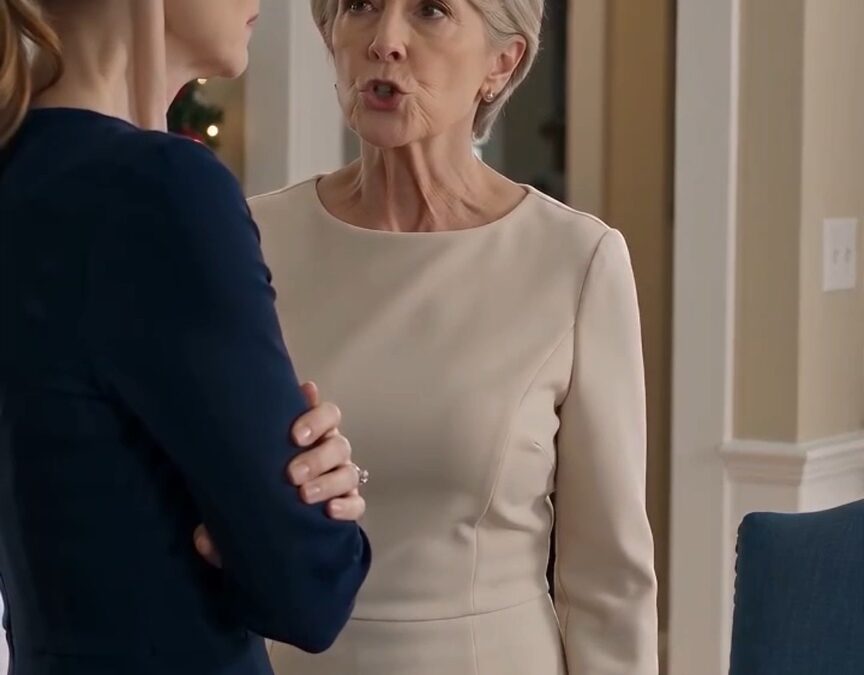
Chapter 1: The Place Beside Mother
At Christmas dinner, my brother shoved a chair aside and fired me twelve days after my husband’s funeral.
He wanted my signature before I could sit down.
My mother and his wife watched him demand the savings I needed to live on.
Then a woman stepped into the dining room, and he stopped telling me where I could stand.
But first, Grant made me stand beside the potatoes.
My coat was still folded over my left arm.
He had pushed Mother’s blue upholstered chair toward the wall.
It stayed upright, empty, and crooked against the baseboard.
His body blocked the space where it belonged.
“Sign it or get out.”
He tapped a packet beside my dinner plate.
Mother had put my place directly beside hers.
There were green beans in a white serving dish.
A towel covered the rolls near Beth’s elbow.
My glass already held water.
I looked at those things before answering him.
“Move the chair back, Grant.”
“Not until we settle this.”
Mother lowered her serving spoon onto a saucer.
“This is dinner. Let your sister sit down.”
“She’s been avoiding me.”
“I answered you,” I said.
“You didn’t give me an answer I can use.”
My brother was fifty-two, four years older than me.
He wore a solid burgundy shirt and matching trousers.
He had dressed for our mother’s Christmas dinner.
He had also brought a release of my loan.
Beth sat across from my empty place in purple.
She kept looking between Grant and the packet.
“You said this was something routine,” she told him.
“It would be, if she’d stop complicating it.”
I put my coat over another chair.
My navy dress caught briefly under the coat’s button.
I freed it and smoothed the fabric over my hip.
Then I touched the back of the blue chair.
A loose thread showed near the upholstered edge.
I had covered that seat for Mother years earlier.
She liked firm padding that didn’t swallow her.
Grant moved his hand onto the chair’s wooden back.
“Don’t start rearranging things.”
“It’s my place.”
“It’s a chair, Elise.”
“Then stop blocking it.”
Mother stood beside her own chair.
At seventy-four, she disliked standing through long conversations.
I knew her knees would hurt later.
“Grant, I asked you to move.”
He looked at her, then back at me.
“I need her to understand what she’s doing.”
I had worked as his upholstery-shop production supervisor.
I had also lent his business $80,000 that January.
Those were separate arrangements, with separate paperwork.
Grant had recently begun describing both as family obligations.
He wanted my work available whenever he needed it.
He wanted the loan treated like money I’d given him.
I wanted to eat dinner beside my mother.
“I’m not signing away repayment,” I said.
“You’ve still got a job because of me.”
“Those wages are for my work.”
He gave Beth a look, expecting support.
She picked up the packet instead.
“What exactly is she releasing?”
“An accounting issue.”
“All eighty thousand dollars?” I asked.
Beth stopped turning the page.
Grant’s face tightened.
“You have to make everything sound ugly.”
Mother looked at the packet now.
“Put those papers away.”
“No. We’re finishing this.”
He turned toward me with his shoulders squared.
“If you won’t support the business, don’t come back.”
I checked his face before I answered.
“Are you firing me?”
“You heard me.”
“On Christmas?”
“Don’t make the date the issue.”
Owen had died on December 8, 2025.
We buried him on December 13.
It was now December 25.
I had worn my funeral shoes because they still fit.
Nothing else about getting dressed felt simple anymore.
I looked down at them under my navy hem.
Then I looked back at my brother.
“I’m not signing.”
Beth put the release on the table.
“Grant, she just buried her husband.”
“I know when the funeral was.”
“Then act like it,” Mother said.
He pulled the blue chair another inch sideways.
It scraped the floor without falling.
“Sign it or get out.”
There it was again, louder this time.
The food sat between everyone while he waited.
I could smell butter on the rolls.
I had eaten a piece of toast that morning.
My stomach made a small noise.
I hoped nobody else heard it.
“Please move away from my place,” I said.
“You’re not listening.”
“I heard every word.”
“You think Owen would want you doing this?”
Mother stepped around her chair.
“Do not use Owen to get a signature.”
Grant opened his mouth, then changed his answer.
“I’m trying to keep everybody from getting hurt.”
“Whose money is she supposed to surrender?” Beth asked.
He ignored her.
I heard the front door open in the hall.
Mother glanced toward it.
Grant didn’t notice.
He was still watching me for an apology.
I had given him plenty over the years.
Sorry an order took longer.
Sorry Owen’s appointment couldn’t be moved.
Sorry I couldn’t stay another hour.
I didn’t give him one that afternoon.
Footsteps stopped at the dining-room doorway.
Vivian stood there in a solid cream dress.
Her gray bob was tucked neatly behind one ear.
She looked at the chair, then at my coat.
Then she walked directly to my side.
Grant turned with his mouth already open.
He recognized her and closed it.
His broad face lost the expression he’d been wearing.
He lowered himself into his own chair.
Vivian remained standing beside me.
“Good afternoon, Elise.”
“Thank you for coming.”
Mother pulled the blue chair back into place.
She put her palm on its seat.
“Sit down, honey.”
This time, nobody stood in my way.
I sat and drew my feet beneath the table.
Vivian waited until Mother brought her another chair.
Grant stared at the papers beside my plate.
“We don’t need lawyers at Christmas dinner.”
“You brought a legal document,” Vivian said.
Mother offered her a clean glass.
Vivian thanked her, then turned back toward Grant.
“Did you bring the complete paperwork?”
He didn’t answer.
“Or only the page you want signed?”
Chapter 2: The Paper Beside My Plate
Grant covered the packet with his right hand.
“This doesn’t concern you personally, Vivian.”
“No. It concerns my client.”
“She’s my sister.”
“And she retained me independently.”
Vivian was sixty, and she had heard his tone before.
She didn’t raise hers to meet it.
She placed a slim folder beside her glass.
Mother sat down slowly.
Beth leaned forward, looking at Grant’s hand.
“Let me finish reading it.”
He slid the packet toward her.
“It says what we discussed.”
“We discussed cleanup before the equipment sale.”
“That’s what this is.”
Vivian opened her folder.
“This releases repayment and the security interest securing it.”
Beth read the first page again.
“Without paying Elise?”
“Yes,” Vivian said.
Grant reached for his water.
“I’d still make sure she was all right.”
I watched him take a drink.
He had not asked whether I was all right.
Not when Owen died.
Not when the funeral bill arrived.
Not that morning before demanding my signature.
He had asked what time I would get there.
Mother turned toward me.
“Tell me exactly what he owes.”
I had kept the details from her earlier.
She knew about the loan, but not every term.
I didn’t want to spend Christmas explaining my finances.
Grant had made that decision for me.
“Eighty thousand dollars, plus the agreed interest.”
“How much interest?”
“Four thousand for the year.”
I looked at the packet Beth was holding.
“The full payoff is eighty-four thousand dollars.”
Grant set his glass down too hard.
“You make it sound like I borrowed from a bank.”
“You borrowed from me.”
On January 6, 2025, I lent his business $80,000.
It came from my separate savings.
The business needed replacement equipment and working capital.
The note provided five percent simple annual interest.
There were no interim payments.
Everything came due January 6, 2026.
Grant had asked for a full year without payments.
I had agreed because the business needed operating room.
But I had not agreed to an unsecured promise.
Vivian had reviewed the transaction before I transferred anything.
The business signed a security agreement covering specified equipment.
She arranged the proper Indiana financing-statement filing that same day.
There were no preexisting superior equipment liens.
Grant knew all of that.
His signature appeared on the note and security agreement.
Vivian took out copies and laid them flat.
She pointed to the equipment schedule.
“These are the assets securing Elise’s loan.”
Beth looked at Grant.
“So she owns them?”
“No,” Vivian said.
“His business owns them, subject to her lien.”
I was glad she answered before he could interrupt.
I didn’t want anything exaggerated in either direction.
I owned neither the business nor its machinery.
I held a perfected security interest securing repayment.
That was what made his sale require my attention.
On December 1, Grant signed an equipment-sale agreement.
The purchase price was $210,000.
Closing was scheduled for January 6, 2026.
The buyer required the equipment free of liens.
An independent escrow service would handle the proceeds.
Grant had agreed to those requirements before Owen died.
He had not mentioned the agreement at the funeral.
He began mentioning my release a few days afterward.
“He needs your lien released to finish selling?” Mother asked.
“Yes,” Vivian said.
“The contracted sale requires clear equipment.”
Grant rubbed his forehead.
“She’s making it sound like she controls my business.”
“I don’t,” I said.
“I control whether I forgive what you owe.”
Mother pushed the potatoes toward me.
“Take some while we talk.”
I served a small spoonful.
That ordinary action gave me something to look at.
Beth turned another page in Vivian’s copy.
“What happens to the money at closing?”
“Escrow pays the agreed obligations,” Vivian said.
“Elise receives her eighty-four-thousand-dollar payoff.”
Grant interrupted.
“Assuming everybody cooperates.”
Vivian looked directly at him.
“Assuming you perform the agreements you signed.”
Mother set a roll on my bread plate.
I tore off one corner and ate it.
Grant watched like eating was another deliberate insult.
“You’re forgetting what I did for you.”
I swallowed before speaking.
“You hired me to run production.”
“I kept you working through Owen’s illness.”
“I kept production moving through Owen’s illness.”
Beth looked up.
“You were still doing the floor work?”
“Scheduling, checks, training, whatever needed doing.”
Grant shifted in his chair.
“She had flexibility.”
“Yes,” I said. “I used it for appointments.”
“You left early.”
“And answered calls after I got home.”
I didn’t list every evening.
I didn’t name every order I had rescued.
Mother had watched me take shop calls beside her sink.
She remembered enough.
Vivian put one finger on the note.
“Employment and financing are separate.”
“Elise’s wages paid for her labor.”
“They did not buy forgiveness of this loan.”
Grant picked at the folded edge of his napkin.
“She knows I appreciated her.”
“You called it carrying me,” I said.
He looked toward Beth.
“She’s upset.”
“Yes,” I said. “I am.”
I put the remaining roll on my plate.
“That doesn’t change the paperwork.”
Beth laid the release beside Vivian’s copies.
The difference between the documents was plain.
One showed what Grant had agreed to repay.
The other asked me to give it up.
“Why would you ask her to sign this?” Beth said.
“Because there are expenses you don’t understand.”
“Then explain them.”
He didn’t.
Instead, he looked from me to Vivian.
A small, familiar confidence returned to his expression.
“You’re discussing instructions that aren’t current anymore.”
Vivian waited.
Grant leaned back in his chair.
“I already changed where that payment goes.”
Chapter 3: The Instruction He Sent
Beth turned her whole body toward him.
“What payment did you change?”
Grant kept his eyes on Vivian.
“The disbursement arrangement.”
Vivian opened another section of her folder.
“The escrow service rejected your instruction.”
He looked at me immediately.
“You told her?”
“She told me.”
Mother’s fork stopped above her plate.
Beth put both hands in her lap.
Nobody reached for another dish.
Vivian took out the December 20 correspondence.
She laid it where Grant could read the heading.
“The proposed destination was your personal account.”
“That was temporary,” he said.
“It was not authorized by Elise.”
“I would have sorted everything out.”
“After you received her payoff?”
“It was one combined distribution.”
Beth reached for the email copy.
Grant didn’t try to cover it this time.
She read slowly, moving her lips over one line.
I knew the line she had reached.
I had read it more than once myself.
On December 20, Vivian called while I was cleaning.
I had been wiping crumbs from the kitchen counter.
Owen’s mug was upside down on a towel.
There were still envelopes stacked near the telephone.
I had started putting sympathy cards into a box.
Then I would stop and take them out again.
Vivian asked whether I was somewhere private.
I sat down before she explained.
The independent escrow service had received Grant’s instruction.
He wanted my $84,000 payoff sent to his personal account.
He had described it as a seller-side adjustment.
He had supplied no authorization from me.
The service refused to change the payment destination.
It sent the attempted instruction and refusal to Vivian.
She was my identified lawyer for the secured payoff.
She was not the escrow agent or Grant’s lawyer.
Those separate roles were why somebody checked his request.
When Vivian finished explaining, I asked one question.
“Did any money move?”
“No.”
I put my palm flat on the kitchen table.
Then I asked her to send everything.
Now that same correspondence sat beside Mother’s serving dishes.
Beth looked at the refusal notice.
“They told you no.”
Grant folded his arms.
“They wanted additional documentation.”
“They told you they couldn’t divert her payment.”
“You’re using loaded words.”
Beth pointed to the destination account.
“This is yours.”
“Yes.”
“Not the business account.”
“I said I would handle it.”
“You didn’t tell me this.”
“It didn’t happen, Beth.”
“Because they stopped it.”
Mother pushed her own plate away.
I had seen her lose her appetite before.
Usually she would claim she had eaten while cooking.
This time, she didn’t bother.
“Was that why you brought the release?” she asked.
Grant looked irritated by her question.
“I brought it because we need a resolution.”
“You couldn’t get the money redirected.”
“Mother.”
“So you wanted Elise to sign instead.”
He looked toward the hallway.
Then he looked at me.
“You planned this.”
“I saved the records.”
“You invited a lawyer to Christmas.”
“You brought a release to Christmas.”
Beth placed the papers carefully on the table.
Her cheeks had gone pink.
“Was I supposed to persuade her?”
Grant exhaled through his nose.
“I thought you’d support me.”
“Did you expect me to read this first?”
“It’s not how you’re making it sound.”
“Then why didn’t you tell me?”
He reached toward her hand.
She moved it to the edge of her plate.
I looked away from them.
Their marriage was not something I wanted to examine.
But I would not help him conceal my money.
Vivian spoke without changing her tone.
“Elise’s direction remains the same.”
“No release without full payment.”
Grant tapped the table with two fingers.
“You’ve made that clear.”
“I want everyone to understand it accurately.”
Mother stood.
She took the release packet from beside Beth.
Then she set it on the sideboard.
“Not beside the food anymore.”
Grant stood halfway.
“Don’t move my papers.”
Mother faced him across the table.
“This is my house.”
He sat back down without answering.
She didn’t stop there.
“You do not block my chairs.”
“You do not decide who sits down.”
“And you do not make my daughter sign anything.”
Vivian stayed seated.
She had no authority over Mother’s house.
Mother didn’t need her to have any.
She owned it herself and could speak for herself.
Grant straightened his napkin beside his plate.
“I’m trying to preserve what’s left.”
“You have a sale price,” Vivian said.
“And a documented payoff.”
Beth asked about the remaining proceeds.
Vivian gave her the arithmetic plainly.
The sale price was $210,000.
My payment was $84,000.
That left $126,000 before expenses and other obligations.
Grant frowned.
“You make it sound like that’s all profit.”
“No,” Vivian said. “Those deductions are still yours.”
I took a bite of potatoes.
They had cooled, but I ate them anyway.
Mother noticed and sat down again.
She passed Beth the green beans.
For a minute, utensils moved against plates.
Grant did not eat.
He watched Vivian put the correspondence back in order.
Then he turned to me.
“If you’d worked with me, this could’ve stayed private.”
“I answered privately first.”
“You could have waited.”
“Until after you received my payoff?”
He looked down at his napkin.
I waited, but he didn’t answer that.
Instead, he pushed his chair back.
“Maybe I won’t sell anything.”
Mother looked up.
“Then you still owe your sister.”
Grant ignored her and stared at Vivian.
“I can stop this sale.”
Chapter 4: Before I Took My Coat
Vivian closed her folder without hurrying.
“You should discuss your contract with your own lawyer.”
“I’m asking what you’ll do.”
“I represent Elise’s interests.”
“You’re threatening my equipment.”
“No. I’m explaining an existing security interest.”
Grant stood behind his chair.
He seemed to want something louder from her.
Something he could call an attack.
Vivian gave him the limits instead.
I could not walk into the shop and seize machines.
The loan did not make me the equipment owner.
If a default required enforcement, lawful procedures would apply.
There was no judgment waiting in her folder.
There was no instant transfer of ownership.
The loan’s maturity date still mattered.
So did the equipment-sale agreement he had already signed.
She explained all of that with Mother listening.
It stopped Grant from pretending we had invented a punishment.
Mother began gathering the serving dishes.
Beth rose to help her.
I started to stand, too.
Mother touched my shoulder.
“Stay there a minute.”
She took my unfinished plate into the kitchen.
I heard a cupboard door open.
Then the soft snap of a storage lid.
Grant watched the doorway until she returned.
She placed my dinner in a container on the sideboard.
“I know you’ll be hungry later.”
“Thank you.”
I wanted to hug her.
I also wanted to leave before I cried.
Vivian asked whether I had everything I brought.
“My coat.”
Grant stepped toward the hallway.
“So that’s it?”
“I’m going home.”
“We haven’t settled the work situation.”
“You fired me.”
“I said don’t come back unless you cooperate.”
“I won’t sign the release.”
“Then you’re choosing this.”
“I’m accepting that I no longer work for you.”
His mouth tightened.
“You know production can’t run itself.”
“You’ll need to make arrangements.”
“During the holidays?”
I looked at my packed Christmas dinner.
He followed my eyes, then looked away.
Vivian stood beside her chair.
“Her earned wages remain separate from the loan.”
“I know how payroll works.”
“Then please handle it accordingly.”
Grant turned toward me again.
“You won’t even talk without her?”
“I’ve been talking.”
Beth returned from the kitchen with my coat.
She handed it to me carefully.
“I didn’t know about that account instruction.”
“I believe you.”
“I thought the release was something different.”
“He told you that.”
She nodded and looked down.
“I’m sorry.”
I thanked her.
There was nothing more either of us could fix there.
Mother walked us to the front door.
Grant stayed in the dining room.
I could hear him moving a chair behind us.
Mother handed me the leftovers.
“Call when you’re home.”
“I will.”
Outside, I stopped to button my coat.
I had missed one buttonhole.
I unfastened it and started again.
Vivian stood near my car while I worked.
“Do you want to go over the next steps?”
“Yes.”
She explained what would happen before closing.
Escrow already had my payoff demand and authorized destination.
My instruction prohibited a release without full payment.
She would verify the disbursement before authorizing lien termination.
Grant’s new requests would not replace my authorization.
If the sale did not close, we would reassess.
She didn’t promise there could be no delay.
That honesty let me listen without guessing.
I told her I might get more work messages.
“Keep them,” she said.
“Answer the practical issues separately.”
That was what I had done on December 22.
Three days before dinner, I sat at my kitchen table.
I had Grant’s proposed release open beside his invitation message.
He had written that we could finish everything at Mother’s.
I saved those messages with the escrow correspondence.
Then I sent them to Vivian.
I gave her one clear direction.
Do not authorize release without full payment.
She called to confirm she understood.
Afterward, I spoke to Mother.
I told her Grant expected me to sign at dinner.
She asked whether she should tell him not to come.
I said I still wanted Christmas with her.
She asked whether Vivian could stop by.
I called Vivian back with Mother’s invitation.
She agreed to come after her own family meal.
Grant could have left the papers at home.
I would have eaten beside him without discussing them.
Instead, he pushed Mother’s chair out of place.
At home, I put my dinner in the refrigerator.
Then I called Mother as promised.
“I’m here.”
“Are you going to eat?”
“In a little while.”
“Heat it properly. Don’t pick at it cold.”
“I won’t.”
After we hung up, I changed out of my dress.
I put my funeral shoes back in their box.
That was where I had kept them since December 13.
I didn’t know where else they belonged yet.
Owen’s coat hung beside mine in the hallway.
I checked its pocket out of habit.
There was a folded tissue inside.
I left it there and closed the closet.
Then I warmed Mother’s dinner on a plate.
I sat at the kitchen table with my phone nearby.
Grant’s first message arrived before I finished eating.
It said I had embarrassed him in his mother’s house.
The next said I was hurting everyone at work.
The third asked what time I would arrive tomorrow.
I wrote that I would arrange a records handover.
I would not return as production supervisor.
He called twice.
I let both calls finish.
Then his next message appeared.
“Bring me every production file. I want them now.”
Chapter 5: The Files In The Office
I read his message again the next morning.
Then I made a list before answering.
The production records belonged to the business.
Most were already in the production office.
The computer stayed at the shop.
So did the order folders and approved samples.
I had my personal employment records at home.
I also had the loan documents and correspondence.
Those were mine to preserve.
I asked Vivian to review my proposed reply.
Not because every message required a lawyer.
Because Grant had started calling my departure abandonment.
I wanted a clear, reasonable handover.
She told me to identify locations and current status.
She also reminded me not to retain customer materials.
I wrote down each open order.
Beside it, I noted completed work and remaining steps.
I listed where the fabric and foam were stored.
I identified jobs waiting for customer approval.
I did not add a single complaint about Grant.
The list took most of an afternoon.
That irritated me more than I expected.
Even leaving him properly required work he wouldn’t acknowledge.
Still, the records mattered to other people.
I finished them and saved the handover correspondence.
Grant wanted me at the shop before anyone arrived.
I suggested regular business hours instead.
He said we needed privacy.
I said I was there to transfer work information.
We agreed on a time when workers would be present.
I brought an empty bag for my personal things.
The shop smelled familiar when I opened the door.
Cut foam, fabric dust, and warmed machine oil.
A compressor started somewhere beyond the cutting table.
For a moment, I almost walked toward the schedule board.
Then I turned toward Grant’s office.
He stood behind the desk with his sleeves pushed up.
His gray hair looked flattened on one side.
“You can still fix this,” he said.
“I brought the handover list.”
“I mean between us.”
I set the pages on his desk.
“Everything current is listed here.”
He picked them up.
“You can’t explain a whole department on four pages.”
“The files contain the details.”
“What if someone has questions?”
“They can ask whoever you assign.”
He lowered the pages.
“That used to be you.”
“Yes.”
There was no useful answer beyond that.
I showed him where the current order folders sat.
He followed me into the production office.
I opened the drawer, then stepped aside.
“These are in scheduled completion order.”
He looked inside without touching anything.
“The delayed material?”
“Noted on the second page.”
“And the cushion repairs?”
“Third page. Samples are with the folders.”
He flipped through the handover list.
I could see him finding the answers.
It left him less to accuse me of withholding.
A worker approached while we stood there.
“Could you look at something before you go?”
I almost followed automatically.
Then I stopped beside the office door.
“Grant needs to assign someone.”
The worker looked from me to my brother.
I pointed toward the sample shelf.
“The approved panel is with that job’s folder.”
That was information, not another shift.
I wanted to keep the distinction clear.
The question brought back an afternoon with Owen.
He had been waiting in his wheelchair beside my table.
We had an appointment across town later that day.
A worker brought me a cushion cover with a crooked seam.
The panel edges had shifted under the needle.
I turned the cover inside out.
“See where these marks stopped lining up?”
The worker leaned closer.
I opened the seam carefully with a small tool.
Then I laid the panels flat.
“Match the centers first. Don’t stretch that edge.”
Owen watched from beside the table.
His appointment folder rested on his lap.
I checked the clock above the cutting station.
“We still have time,” he said.
I pinned the panels and reset the machine.
The worker watched me sew the corrected seam.
Then I had the worker align the next pair.
“Bring that corner down a little.”
“Like this?”
“Yes. Now check the other end.”
When it matched, I nodded.
“That’s what you want before sewing.”
Owen waited while I fitted the cover back on.
Then I brushed stray threads from his sleeve.
He looked down and smiled.
“You’re checking my finish, too?”
“I can’t take you out covered in thread.”
He laughed, and I remembered that sound afterward.
Grant remembered that afternoon differently.
He said I had left early again.
Now he stood beside the same worktable.
“You know this place needs you.”
I looked at the machine, then at him.
“You fired me at Mother’s dinner.”
“I was angry.”
“I still won’t return.”
He walked back toward his office.
I packed my scissors and measuring tape.
My spare shoes went into the bag underneath them.
I took Owen’s photograph from the small shelf.
It showed him standing near our kitchen window.
I wrapped the frame in my spare work shirt.
Grant appeared in the doorway.
“Anything the shop bought stays.”
“It has.”
I showed him the contents without handing him the bag.
Then I returned the company access items we had discussed.
He wouldn’t acknowledge the handover in writing.
So I sent my own factual confirmation afterward.
The records remained at the shop.
The status list had been delivered.
My personal belongings had been removed.
I did not argue about whether he liked it.
That evening, Vivian forwarded a message from his side.
Grant had another question about the sale.
Could the buyer purchase the equipment around my lien?
Chapter 6: What The Buyer Required
Vivian called before sending her response.
“I want you to understand what he’s asking.”
“He wants the sale without my payment.”
“He’s exploring whether he can avoid the release requirement.”
“Can he?”
“Not under the transaction as presently contracted.”
The buyer had agreed to purchase specified equipment.
The agreement required delivery free of liens.
My filed interest covered equipment included in that sale.
Calling the transaction something else would not erase it.
The business still owned the equipment subject to my lien.
Grant could seek different agreements.
He could consult his own advisers.
He could not supply my consent on my behalf.
I told Vivian my instruction hadn’t changed.
She sent a short response.
It explained the existing requirements without speculating about tricks.
I read it twice at my kitchen table.
Then I closed the file on my computer.
The waiting was harder than the dinner argument.
At dinner, I could hear what Grant was saying.
During the following days, I had to wait for updates.
I knew a secured claim was not instant money.
If he refused to pay, enforcement could take time.
Vivian had told me that before the loan.
She reminded me now without making it sound hopeless.
The documents gave me rights.
Using them might still require patience and expense.
I disliked thinking about either one.
I had spent December making arrangements I never wanted.
Death certificates.
Benefit forms.
Funeral paperwork.
I wanted one agreement to work as written.
Grant understood that impatience.
He sent a message about how exhausting a dispute could become.
He said nobody would benefit from a fight.
I saved it for Vivian.
Then I carried my phone into the hallway.
I washed the breakfast dishes without it beside me.
By lunchtime, I had thought of several replies.
One explained how often I had covered his emergencies.
Another listed the work I did during Owen’s illness.
A third said I couldn’t believe he was doing this.
I sent none of them.
Vivian already had the documents he needed to answer.
He tried a smaller request next.
Would I accept less now and the balance later?
He described it as temporary flexibility.
There was no new security or definite payment plan.
There was just another request to trust him.
I told Vivian I required the agreed payoff.
Grant then offered to restore my job.
He said we could return to normal after closing.
I read that message standing beside the refrigerator.
Mother’s leftovers were finally gone.
I still had the empty container ready to return.
I set my phone on top of it.
The job offer didn’t include an apology.
Even if it had, I wouldn’t have gone back.
I told Vivian I declined.
My mother called that evening.
She asked whether I had enough groceries.
I told her I did.
Then she asked whether Grant had contacted me.
“Yes. About coming back to work.”
“Are you?”
“No.”
“Good. I wanted to know before he called again.”
“He’s asking you?”
“He asked me to talk some sense into you.”
I sat down at the kitchen table.
“What did you say?”
“That I wasn’t discussing your money for him.”
I rubbed a dried spot from the table.
“Thank you.”
“He can call you about birthdays and dinner.”
“He can’t use me to negotiate.”
She asked whether I had heard from Vivian.
I told her we were waiting on closing confirmation.
Then she changed the subject.
“The blue chair still wobbles.”
“I know.”
“You fixed that seat beautifully and ignored the legs.”
“I was going to come back to it.”
“You’ll have time now.”
I laughed, then covered my mouth with my hand.
I hadn’t expected a laugh that evening.
Mother kept talking about the chair’s uneven foot.
I let her.
The next business update came from Vivian.
Escrow had confirmed the planned disbursement.
My payoff remained payable to me as authorized.
Grant’s rejected personal-account instruction had not been reinstated.
No lien release would be accepted from him alone.
Vivian explained the confirmation carefully.
The escrow service was independent.
It was following the transaction documents and proper authorization.
It wasn’t doing me a personal favor.
That distinction mattered after months of Grant’s language.
He called everything a favor when he owed something.
The escrow confirmation did not.
As closing approached, Grant’s messages became less frequent.
His side began providing the required materials.
He had decided to proceed rather than abandon his sale.
Vivian did not tell me what advice he received.
She wasn’t entitled to know, and neither was I.
We only needed to know what affected my payoff.
She sent me the final payoff statement.
Principal: $80,000.
Interest at maturity: $4,000.
Total due January 6, 2026: $84,000.
I checked every number against the signed note.
Then we verified the receiving instructions through established contact.
I did not accept last-minute changes by casual email.
After December 20, I wanted nothing assumed.
On January 5, I placed the loan file in a drawer.
I tried not to keep opening it.
I laid out clean clothes for the next morning.
Then I put them away because I had nowhere to go.
I would be home while other people handled closing.
The phone rang just after breakfast on January 6.
Vivian’s name appeared on the screen.
“The closing is moving forward,” she said.
“Keep your phone nearby.”
Chapter 7: The Morning Of Closing
I carried my tea to the kitchen table.
Then I carried it back to the counter.
I couldn’t decide where I wanted to sit.
The sale closed on January 6, 2026.
Exactly one year after I made the loan.
When I had signed that note, Owen was alive.
He had asked whether I understood the equipment schedule.
I told him Vivian had explained it.
He said he wanted me protected if things changed.
I had thought he meant the business.
I hadn’t considered all the other things that could change.
That morning, I opened a kitchen cupboard.
The shelf needed wiping, so I emptied half of it.
Then I stopped with three bowls on the counter.
My phone was still on the table.
I checked it, although I hadn’t heard a sound.
There was nothing new.
I put water in the sink and washed the bowls.
That gave my hands something ordinary to do.
Vivian called after the disbursement was confirmed.
“The full payoff has been sent as authorized.”
“All of it?”
“All eighty-four thousand dollars.”
I sat on the kitchen chair nearest the phone.
For a moment, I couldn’t remember what to ask next.
Vivian waited.
Then she explained how we would verify receipt.
I accessed my account through my usual secure method.
I checked the deposit carefully.
The amount was right.
The money had not passed through Grant’s account.
It had come through independent escrow under the closing instructions.
I told Vivian I could see it.
She confirmed the payment details through her records.
Only then did she authorize the lien termination.
The debt had been paid.
There was no reason to leave its security filing active.
She explained the paperwork she would send afterward.
I wrote a few notes on the back of an envelope.
My handwriting slanted downhill.
“Do I need to do anything else today?”
“Not about the payoff.”
I thanked her, then thanked her again.
She told me she would send the final confirmation.
After we hung up, I stayed at the table.
Grant’s business received the remaining $126,000 before transaction expenses and other obligations.
That was the contracted sale price less my payoff.
I did not receive his business.
I did not take ownership of the machines.
I received repayment of my loan with agreed interest.
The equipment went to the buyer under the sale.
That was all I had requested.
I called Mother.
She answered by asking whether I had news.
“The money came through.”
“The full amount?”
“Yes.”
She let out a long breath.
“Have you eaten breakfast?”
“I had toast.”
“Make something else.”
“I’m cleaning the cupboard.”
“Well, finish that and eat.”
I looked at the bowls lined along the counter.
For the first time that morning, I noticed the tea had cooled.
I warmed it and finished the cupboard.
Then I made eggs.
I didn’t telephone Grant.
He knew the closing figures before I did.
There was nothing I needed to explain.
That afternoon, I assembled the final loan records.
The signed note.
The security agreement and filing information.
The attempted redirection and escrow refusal.
The closing confirmation and payoff receipt.
I put them together in a labeled folder.
The folder went in the drawer with my important papers.
Not beside my plate.
Not under a stack of unfinished work.
I had no job yet, but my savings were back.
I made a household budget without counting Grant’s promises.
That part took longer than filing the documents.
I had to look at expenses Owen once handled.
I had to estimate what living alone would cost.
I wrote down utilities, food, insurance, and transportation.
Then I wrote down what I needed from a new job.
I had experience I could use.
I had not forgotten how to work.
I had only stopped working for my brother.
His message arrived late that afternoon.
He wanted help closing the shop.
There were records to sort and supplies to organize.
He said I knew where everything belonged.
I did.
That was not an agreement to do it.
I replied the next morning after sleeping.
The business records had been handed over.
I would not perform unpaid closure work.
If I had overlooked personal belongings, I would arrange collection.
Grant answered with one sentence.
“I thought family would help at a time like this.”
I put the phone face down.
Then I checked my final wage statement.
My earned wages had been paid separately.
I compared the amount with my employment records.
It was correct.
I saved the statement with those records, not the loan file.
The distinction had finally stayed clear.
A few days later, I remembered an old sweater.
I also had personal patterns in a cupboard.
They weren’t customer records or business property.
I asked to collect the small box.
Grant agreed to leave it near the office.
I arranged a time when closure work was underway.
I wanted people in the building.
Not witnesses to another confrontation.
Just an ordinary collection during an ordinary workday.
When I arrived, the loading area stood open.
Equipment had already been moved.
I could see pale rectangles on the dusty floor.
The cutting area looked too wide without its usual machines.
Grant came out carrying my box.
He set it on the office desk.
“Before you go,” he said, “I need to ask you something.”
Chapter 8: The Box I Carried
Grant kept his hand on the box.
I waited beside the office doorway.
“Are you telling people what happened?”
“I’m not making announcements.”
“Mother knows everything.”
“She was at dinner.”
“So was Beth.”
“Yes.”
He looked past me into the workroom.
There were dust marks beneath the fluorescent lights.
A section of the old schedule board had been erased.
I could still see faint writing under the clean surface.
Grant moved his hand from my box.
“Beth keeps asking about the escrow instruction.”
“You’ll have to answer her.”
“You could tell her it was resolved.”
“The loan was paid.”
“Then it’s resolved.”
“The money is resolved.”
He frowned at that distinction.
I didn’t explain it further.
He had wanted my payoff in his personal account.
Beth knew because she read his instruction.
I would not tell her she had misunderstood.
Grant leaned against the desk.
“I could’ve used your help this week.”
“You had the handover list.”
“I mean here. Doing the work.”
“I told you I wasn’t available for that.”
“You always make it sound so formal now.”
I looked at the box on the desk.
My sweater lay folded over the personal patterns.
I checked that nothing else had been placed inside.
Then I picked it up.
“Thank you for setting this aside.”
He didn’t answer immediately.
For a moment, he looked like my older brother again.
Not my boss or the man blocking Mother’s chair.
Just a man standing in a closing business.
I felt sorry that it had ended this way.
I still took the box home.
His business closed after the equipment sale.
The shop could not continue without the equipment he sold.
He received his remaining proceeds, subject to expenses and obligations.
He did not receive another loan from me.
He did not receive my help with every unfinished task.
When he asked Mother to intervene, she declined.
When he called the payoff family money, she corrected him.
I learned that from her, not from an argument.
She told me while we washed dishes in my kitchen.
“He’s not asking me to call you again.”
“What did you tell him?”
“That I wasn’t passing along business messages.”
I dried a plate and put it away.
She handed me another.
We finished the dishes without discussing him further.
I began applying for upholstery jobs in earnest.
Updating my work history took several attempts.
At first, I wrote almost nothing about supervision.
Grant had handled the ownership and financial decisions.
I had handled production.
Those were different responsibilities, but both were real.
I rewrote the description more accurately.
Scheduling.
Material planning.
Quality checks.
Pattern adjustment.
Training workers on industrial machines.
I listed the things I had actually done.
Then I gathered photographs of completed work.
I checked that nothing disclosed private customer information.
The photographs were about seams, fitting, and finish.
I could explain those without explaining my family.
At interviews, I said the business closed after an equipment sale.
That was true and sufficient.
If someone asked why I had left earlier, I answered briefly.
My employment had ended before the closing.
I was looking for stable work at another shop.
I didn’t place Grant’s release packet in my interview folder.
I didn’t need every person hiring to become a witness.
Some applications produced no reply.
One conversation ended politely without an offer.
I kept a written list of contacts and dates.
It helped to have something practical on the table.
Mother visited while I was sorting work photographs.
She stood near the empty corner beside my kitchen table.
“The blue chair would fit there.”
I looked up.
“You mean your dining chair?”
“Yes. The one you upholstered.”
“You use it.”
“I have other chairs.”
“You like that one.”
“I know. That’s why I’m offering it.”
I put the photographs down.
She ran a hand along the table’s edge.
“Besides, you promised to fix the legs.”
“You don’t have to give it to me.”
“I know that, Elise.”
She said it without being offended.
That made it easier to accept.
We arranged to bring it over.
The blue fabric still looked good after cleaning.
I turned the chair carefully on a folded blanket.
I checked the joints and tightened what needed tightening.
Then I set it upright and tested each foot.
It stood level.
The loose thread from Christmas was still there.
I trimmed it close with my personal scissors.
Mother came over after I finished.
She pressed the seat with her palm.
“Still firm.”
“That’s what you asked for.”
“I remember.”
She sat and stayed there while I made tea.
I used another chair at first.
Then I switched places when she stood to leave.
She noticed but didn’t make a speech.
She only asked whether I wanted the leftover biscuits.
Later that week, another upholstery shop invited me in.
The interview stayed focused on practical work.
I described correcting a shifted panel before sewing.
I explained how I tracked material delays.
I asked about scheduling and who approved overtime.
The person interviewing me looked at my work history.
“You were involved with financing at your last shop?”
“I made a documented loan.”
“Would you expect to invest here?”
I rested my hands beside the sample photographs.
“No,” I said. “I’m looking for a job.”
Chapter 9: Supper After My Shift
The person interviewing me nodded.
“That’s what we’re offering.”
Then we went back to discussing the work.
Nobody asked me to prove loyalty with savings.
Nobody suggested wages should purchase unlimited availability.
I asked about hours, pay, and production responsibilities.
The answers were clear enough for me to accept.
I started on February 2, 2026.
That morning, I packed my lunch before dressing.
I put my scissors in their protective case.
Then I checked the small notebook in my bag.
It contained work questions, not emergency loan figures.
My financial papers stayed in their drawer at home.
I did not invest in the new employer.
I brought my experience and expected to earn wages.
The first week required more listening than talking.
Their sample system was different.
Their material shelves were organized another way.
I asked before changing anything.
When a worker needed help aligning panels, I demonstrated.
Then I watched the worker try it.
I could still teach without taking over every task.
That surprised me more than it should have.
At Grant’s shop, I had answered every interruption.
Here, I could ask who was responsible.
I could finish one job before accepting another.
Once, a machine problem delayed my work near quitting time.
I reported it and followed the supervisor’s instructions.
I did not offer to finance replacement equipment.
I did not call home to cancel my whole evening.
The problem stayed at the shop when I left.
That night, I made soup and ate at my table.
The blue chair didn’t wobble beneath me.
Owen’s coat still hung in the hallway.
Having a new job did not make that easier every day.
Some mornings, I touched the sleeve before leaving.
Other mornings, I couldn’t look at it.
I did not force myself to sort everything at once.
His photograph stayed near the kitchen window.
I liked seeing his face there while I cooked.
The financial paperwork took up less of my day.
I checked the account when I needed to.
I paid bills from an actual budget.
I stopped calculating whether Grant might keep my savings.
The payoff was complete.
The security filing had been properly terminated after payment.
My earned wages had been paid separately.
There was no unfinished business requiring my free labor.
Grant still sent occasional messages.
Some concerned ordinary family arrangements.
I answered those when an answer was needed.
Others asked me to review a document or make a call.
I declined those without setting aside my evening.
He asked once whether I could explain a production issue.
I told him I wasn’t available.
He said it would take only a minute.
I did not start reviewing attachments.
Eventually, those requests became less frequent.
His business remained closed.
The buyer had the equipment.
Grant had received only the remaining sale proceeds before expenses and obligations.
He no longer had my money or daily supervision.
He also could not send Mother to negotiate with me.
She refused to carry those messages.
Beth contacted me after the closing.
She wrote that she was sorry about Christmas.
She said she had believed Grant’s description of the release.
I thanked her for telling me.
We did not pretend dinner had been pleasant.
We could discuss family plans without him answering for us.
That was enough for the time being.
Mother made her own rule about future meals.
No business papers at her dining table.
If Grant wanted legal advice, he could contact his adviser.
If he wanted dinner, he could come for dinner.
She told him herself.
I didn’t write the words for her.
At home, I began doing small neglected jobs.
I repaired a loose cabinet hinge.
I cleaned the refrigerator shelves.
I put sewing tools where they belonged.
I bought groceries for meals I intended to cook.
Some nights, I still ate toast.
But not because I was waiting for Grant’s next emergency.
One evening after work, Mother came for supper.
I made chicken, potatoes, and green beans.
I remembered the rolls just before she arrived.
They were warming under a towel when she knocked.
I opened the door and took her coat.
“You’re early.”
“I know. I was ready.”
“Everything’s nearly done.”
She followed me into the kitchen.
The blue chair stood at my usual place.
She touched its back while I checked the chicken.
“Still steady?”
“Yes. I did fix it properly.”
“I’m allowed to check.”
I smiled and handed her two glasses.
She filled them while I carried the food over.
There were no extra place settings.
Just Mother and me at my kitchen table.
I started pulling out the blue chair for her.
She shook her head and took the other one.
“That’s yours.”
I sat without adjusting anything around my plate.
My phone remained in the hallway.
Mother lifted the towel over the rolls.
“You didn’t forget.”
“Nearly.”
“Nearly doesn’t count.”
We served ourselves while the food was hot.
She told me about a drawer at her house.
It stuck unless she lifted the handle.
“I can look when I visit,” I said.
“No hurry. It still opens.”
“Saturday, maybe.”
“If you have time.”
I did have time.
I finished chewing before asking where the drawer was.
She described it, then asked about my new work.
I told her about a cushion finished that afternoon.
The fabric had needed careful matching across the panels.
She listened while buttering another roll.
Then she asked whether I wanted the last green beans.
I held out my plate.
There was no packet beside it.
Mother stayed for another cup of tea after supper.
I leaned back in the blue upholstered chair.
You Might Also Enjoy




