My Brother Told Me I’d Be Supporting Him Too — Then I Remembered Who Controlled The Money
Part 3: Her Own Money
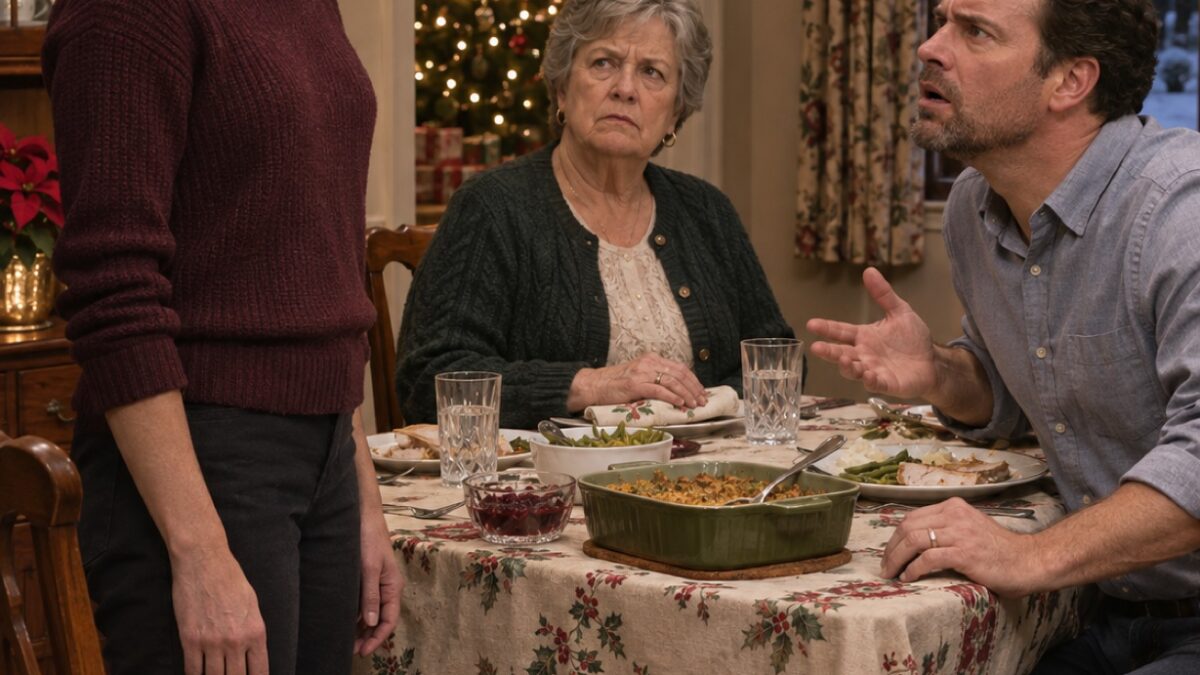
“No, Curtis. I’m not giving you that out of my retirement.”
Mom pulled her cardigan closed.
“I said I’d pass along what Lena sends. This was supposed to come from her money, not mine.”
He looked down at his plate.
I stayed beside the table, holding my green casserole dish against my sweater.
That was her answer.
She understood perfectly well what it meant to pay for his spending herself. She had refused before he could even ask her to reconsider.
“I won’t be replacing it,” I said.
Mom turned back toward me.
“Lena, that isn’t what I meant.”
“You just said what you meant.”
She pressed her napkin flat beside her plate. The food I had brought was in containers in her kitchen now, and the serving spoon lay across an empty spot on the table.
Curtis hadn’t gotten up.
From where I stood, I could see the tree lights reflected in the window behind him. He watched Mom instead of me.
“You told me it was available,” he said.
“I thought it would be.”
Neither of them asked me to sit down.
Mom reached for her water, took a drink, and set it carefully inside the damp circle already on the table.
“We didn’t expect you to stop helping.”
“I heard that.”
“You know I appreciate what you’ve done.”
I adjusted my grip on the dish. Its bottom was still damp from rinsing.
“Then you know I chose to do it.”
Curtis pushed his fork away.
He had heard Mom say no to using her own income. He didn’t tell her she already had a budget for it. He didn’t ask her why paying him would be such a hardship.
Instead, he looked up at me.
“So you’re leaving us to work this out.”
“There isn’t anything for me to work out.”
“You could at least stay.”
I glanced toward the kitchen, making sure I hadn’t left anything beside the sink.
“I’m going home.”
Mom started to rise.
I told her she didn’t need to get up. She stayed in her chair.
At the doorway, I stopped to fit the dish more securely under my arm. I had carried it into her house carefully, worried about slipping on the walk and spilling dinner.
Now I was worried about dropping it because I was trying to put on my coat while holding it.
I set it on the entry table.
Behind me, Curtis spoke quietly to Mom. I couldn’t make out the words, and I didn’t go back to hear them.
Mom called my name before I had my coat buttoned.
I turned.
She stood in the dining room doorway now, her short gray hair bright under the hall light.
“Are you really going to leave it like this?”
“The transfers are canceled.”
“I mean Christmas.”
I looked past her. Curtis was still at the table in his button-down shirt, his hands resting beside his plate.
“I didn’t bring up giving him my money.”
Mom lowered her voice.
“You don’t have to keep saying it that way.”
There was a cloth on the entry table. I used a corner of it to dry the handle of my dish before I picked it up again.
“How would you like me to say it?”
She didn’t answer that.
Instead, she asked whether I would call when I got home.
“Yes.”
It was an ordinary request. I could do that without changing anything else.
Curtis came as far as the dining room doorway.
He stayed behind her.
“You should have let us finish talking before you canceled anything.”
“I heard the arrangement.”
“You heard part of it.”
I waited.
He glanced at Mom, then back at me.
There wasn’t another part he wanted to explain in front of her.
“I’m not sending more money,” I said.
Mom opened the front door. Cold air came into the hall, and I put my free hand against the edge of the dish to steady it.
The snow on the walk had been disturbed by our shoes. I followed the firmer patches back toward my car.
Mom remained at the door until I had the dish on the passenger seat.
I waved.
She closed it.
I sat with my coat still buttoned while the windshield cleared. My phone was in my purse, and I left it there.
For the drive home, I kept the radio off.
At a stop, I glanced at the empty dish beside me. There was a little water caught in the curve of a handle.
I had forgotten a towel.
At home, I carried the dish inside before going back for my purse.
The kitchen was exactly as I had left it. A mixing bowl stood in the sink, and a damp spoon rested on a folded towel.
I took off my coat.
Then I called Mom.
“I’m home.”
“Good. The roads looked bad.”
“I took it slowly.”
She asked whether I had left the food in containers she could put straight into the refrigerator. I said I had.
For a moment, we managed an ordinary conversation about food.
Then she said, “Curtis is upset.”
I put the dish beside my sink.
“I know.”
“He thought he could count on it.”
“He didn’t ask me.”
Mom let out a breath close to the phone.
“I didn’t know you felt this strongly.”
I looked at the dish instead of answering right away. A bit of food had dried along the rim where the serving spoon had scraped it.
“I didn’t know you’d promised it to him.”
She said she had only been trying to help.
I believed that she had wanted to help Curtis. That wasn’t in question.
“You can help him with your money,” I said.
“We already went over that.”
“Yes.”
Her television was on somewhere behind her. I could hear voices but not words.
She asked whether we could stop arguing for the evening.
“We can stop talking about money.”
“That’s not the same thing.”
“It’s what I can do.”
We said good night.
I plugged my phone in on the kitchen counter and turned on the hot water. The dish needed a proper washing, even though I had rinsed it at Mom’s.
I filled it and left it to soak.
Then I washed the mixing bowl.
My hands were still in the water when the phone lit up.
Curtis.
I didn’t pick it up immediately. I finished rinsing the bowl and set it on the towel.
His message was long enough that I couldn’t read it all on the locked screen.
I dried my hands.
He said he had made a commitment because Mom had told him the money was settled. He said my decision had put him in a position he hadn’t agreed to be in.
I read that sentence again.
I had been standing over a sink in my own kitchen when he decided I was responsible for his position.
His next message arrived before I answered.
He wasn’t asking me to restart everything, he wrote. He expected me to cover what this change was going to cost him.
I leaned against the counter.
At dinner, the reservation had been something he mentioned without explaining. Now it was becoming an expense he wanted me to pay.
I typed, “What expense?”
Then I erased it.
That could wait until I understood what he was actually demanding. I didn’t need to volunteer to solve a purchase I still knew nothing about.
I set the phone down and emptied the dish.
The water had loosened the food along the rim. I wiped it away with a sponge, rinsed the handles, and stood the dish on its side to drain.
The phone sounded again.
This message was shorter.
“You need to reimburse the deposit.”
Part 4: About the Reservation
I left his message unanswered while I finished drying the counter.
Then I sat at my kitchen table and opened the conversation.
“Send me what you’re talking about,” I wrote. “I’m not agreeing to pay it.”
Curtis sent the booking confirmation himself.
The cancellation terms followed.
I opened the confirmation first.
It was for a car-detailing appointment.
Not a repair.
Not something that kept his car from running or getting him to work. He had arranged to have it cleaned and detailed, and he had paid a $180 deposit from his own money.
I scrolled back to the top.
The booking had been made before Christmas Eve dinner.
Before he announced the arrangement.
Before I knew Mom had promised him anything.
I set the phone on the table and pulled my chair closer. I wanted to read the whole thing without tapping quickly past something important.
His name was on the booking.
His car.
His appointment.
There was nothing on it that involved me.
Another message appeared.
“That’s what I’m talking about.”
I looked from his message back to the confirmation.
He had sent it as evidence that I should pay him. What it actually showed was that he had spent his own money without asking me.
“What did you expect me to do with this?” I asked.
“Cover what I lose if I cancel.”
“If you cancel?”
“I’m not paying for the rest after this.”
I hadn’t known there was a “this” until dinner.
I didn’t send that sentence.
Instead, I opened the cancellation terms.
The deposit was nonrefundable.
That was stated plainly. It wasn’t hidden under language I needed someone else to explain.
I read through the rest anyway.
There was no charge being made to my account, no payment I had approved, and no instruction I needed to give anyone.
The booking belonged to Curtis.
So did the decision about keeping it.
I put the phone down and went to get a glass of water. When I came back, there were more messages.
He wasn’t claiming I had booked the appointment.
He was careful about that now.
He said Mom had told him the monthly money was going to be available, and he had relied on what she said.
“You don’t have to keep paying everybody,” he wrote. “Just don’t leave me out the deposit.”
Everybody.
There were only Mom and Curtis in this discussion, and neither had asked before deciding what would happen to my earnings.
I took a drink and set the glass on a folded dish towel.
“Mom made that promise,” I wrote.
“She was talking about your contribution.”
“I didn’t agree to the appointment.”
He called.
I watched the phone vibrate against the table before I answered it.
“Did you read what I sent?”
“Yes.”
“Then you see I can’t get the deposit back.”
“I see what the terms say.”
He sounded more measured than he had in the dining room.
He wasn’t trying to tell me the transfers had to continue now. He wanted a smaller payment, tied to something he could point to.
“I’m not asking for the monthly amount,” he said.
“I understand what you’re asking.”
“You can’t act like I made this up.”
“I haven’t said you made it up.”
The booking was real.
The deposit was real.
Neither fact made it my purchase.
Curtis waited, as though acknowledging the expense should lead directly to agreeing to pay it.
I rubbed a damp spot on the table with my thumb.
“You booked it before we talked,” I said.
“Because Mom said it was handled.”
“She hadn’t talked to me.”
“How was I supposed to know that?”
“You could have asked me.”
He went quiet.
Then he said I was making him responsible for checking every conversation Mom had with me.
“No,” I said. “I’m saying I didn’t approve this one.”
He asked whether I thought Mom had deliberately misled him.
I wasn’t going to settle that for them.
“What Mom told you is between you and Mom.”
He made a small, impatient sound.
“That’s convenient.”
I moved the glass away from the edge of the table.
“It’s what happened.”
Curtis said he needed to decide whether to keep the appointment. He had wanted the car detailed, but he had counted on the extra spending money.
He worked.
He had earnings of his own.
I didn’t ask him what was in his account. I didn’t need his budget spread out for me any more than he had a right to plan mine.
“You have the information now,” I said.
“So you’re saying cancel it.”
“No. That’s your decision.”
He tried again.
“If I cancel, I’m out $180.”
“The terms say that.”
“And you’re fine with that?”
I looked toward the clean casserole dish on the counter.
I didn’t feel fine.
I felt tired, and I wished I hadn’t answered the phone while I still had my dinner sweater on.
But I wasn’t going to make a payment to get out of the conversation.
“I’m not deciding for you,” I said.
He ended the call without saying good night.
I stayed at the table.
The house was quiet except for the refrigerator running. I drank the rest of my water, then opened the booking again.
This time, I looked at it without his voice explaining what I was supposed to think.
The purchase had come before my knowledge of it.
His confirmation established that.
The terms established what would happen if he canceled.
Neither said anything about me.
I put the phone face down and went to change out of my sweater and dark pants. There was a pale mark on the sweater where I had carried the damp dish against it.
I rubbed the spot with a wet cloth and laid the sweater flat.
When I returned to the kitchen, his message was waiting.
“You had to know Mom depended on that contribution.”
It was a different argument from the one he had been making on the phone.
I read it without responding.
Mom’s regular household expenses were covered by her retirement income. The gifts had made her budget easier. That was why she had felt able to promise them away.
Curtis had been at the table when she refused to pay him from her own money.
He had heard exactly what I heard.
I opened the conversation again and read backward, from the deposit demand to the booking, then to the messages he had sent before supplying it.
He never said I had approved the appointment.
He said Mom had assured him.
The difference mattered.
I wasn’t going to argue from memory while he kept changing the size of the request.
I carried the phone back to the table and pulled out the chair.
Before I could sit, another message came through.
“If you won’t cover all of it, what are you willing to do?”
Part 5: What I Actually Agreed To
I wasn’t going to answer that while standing in my kitchen in my slippers.
I set the phone down.
Then I put the dry casserole dish in its usual cupboard and folded the towel beneath it.
There were still crumbs on the counter from making dinner. I wiped those up, rinsed the cloth, and hung it over the sink.
Only then did I sit.
Curtis had asked what I was willing to do as though some payment had already been agreed to and we only needed to settle the amount.
I had agreed to none.
I opened his messages and saved them, including the booking confirmation and the cancellation terms.
I kept the whole exchange.
Not just his demand.
My request to see what he meant was there too, with the sentence saying I wasn’t agreeing to pay.
I checked that the saved copies opened properly.
They did.
I wasn’t preparing to send them anywhere. I wanted to be able to look at what had actually been said without searching through messages while someone talked over me.
At work, I checked details before I let a payment go through.
At home, I had been treating questions about family money as something I ought to answer immediately.
I moved the phone away from the edge of the table and got my reading glasses.
There was no reason to hurry.
The appointment wasn’t mine.
The request wasn’t an emergency.
I read Curtis’s question again.
“What are you willing to do?”
I opened a blank message, then closed it.
First, I wanted to check my own account.
The scheduled gifts had been canceled in Mom’s dining room. I knew I had done it, but I wanted to see the schedule without Curtis waiting or Mom telling me dinner was getting cold.
I signed in.
There were no future gifts waiting to go out.
I checked the recurring payments, then the upcoming activity.
Nothing remained scheduled for Mom.
The completed transfers were still there.
I hadn’t touched them.
Scrolling through them took longer than checking the empty schedule. The same amount appeared again and again.
$900.
The help had begun when Mom reduced her hours, back when she was still a school secretary. She had been trying to adjust, and I had offered what I could afford from my paycheck.
I remembered sitting at this table when I set it up.
There had been no discussion of Curtis.
There had been no promise to keep doing it until somebody else decided I could stop.
After she retired, I had continued. I knew the money gave her extra room, and I liked being able to help.
That was all true.
It was also true that I could stop.
I checked the completed gifts carefully. There had been forty-eight, totaling $43,200.
I didn’t copy the total into a message to Mom.
I wasn’t sending a bill for having been her daughter.
I just needed to stop treating those gifts as proof that I had agreed to the next expense.
I closed the completed activity and looked at the empty future schedule again.
Then I signed out.
My phone had stayed quiet while I checked.
For once, I was glad neither of them had called.
I took a sheet of paper from a drawer and put it beside the phone. I didn’t need anything formal.
I wrote down what I had actually agreed to.
Help for Mom.
Voluntary.
From my earnings.
I had not agreed to give Curtis spending money. I had not agreed to pay Mom’s utilities separately. I had not approved a car-detailing appointment.
The list was short.
I left it beside me while I reread the messages.
Curtis had written that Mom said the money was settled.
He had sent a booking made before dinner.
He had asked me to cover a loss if he chose to cancel.
None of that changed my list.
I thought about the way Mom had answered him at the table.
She had been quick and clear when the question concerned her own retirement income. She hadn’t needed time to study a confirmation or decide whether saying no would be unkind.
I folded the paper in half.
Then I unfolded it.
I wanted it where I could see it while I answered, because I knew how easily I could slip into offering something just to make the messages stop.
I started with, “I’m sorry this got confusing.”
I deleted it.
That sounded as though I had helped arrange something badly. I hadn’t arranged it at all.
I tried, “I can’t cover your deposit.”
I deleted that too.
I could have covered it. This wasn’t about whether the money was physically available in my account.
I wasn’t going to pay it.
There was a difference.
I typed slowly, reading each sentence before adding the next.
“Mom promised you money without asking me. I did not agree to fund your appointment or reimburse a deposit. I will not pay the $180. The future gifts to Mom are canceled, and I will not take on her utilities or replace money she gives you.”
I read it against the paper.
No offer to split it.
No “right now.”
No suggestion that he should try again after I had rested.
I sent it.
Then I put the same information in a message to Mom, without forwarding Curtis’s private booking details.
She needed to know what affected her.
I told her the gifts were stopped and that I wasn’t accepting separate household bills.
I didn’t ask whether she understood.
I had said it plainly.
Afterward, I took the folded paper into the kitchen and put it in the drawer where I kept household notes.
The phone was still on the table when I came back.
Curtis had read the message.
He didn’t answer.
I let that be.
I rinsed my water glass, checked that the door was locked, and turned off the kitchen light.
For a while, I lay awake looking toward the bedroom doorway.
I could still see Mom’s face when she realized I had canceled the transfers instead of merely threatening to.
I turned onto my side.
I didn’t get up to send another explanation.
When Mom’s reply came later, the screen lit the room.
She said she didn’t want me paying for Curtis’s appointment.
That wasn’t the part she wanted to discuss.
I sat up and read the rest.
“There may be a simpler way to handle the house bills.”
Part 6: Just Pay Her Directly
I waited until I was back in my kitchen before calling Mom.
The folded note was still in the drawer.
I left it there.
She answered in the brisk voice she used when she had already thought through what she wanted to say.
“I’m not asking you to send me spending money.”
I pulled out my chair.
“What are you asking?”
“The utilities could go straight to the accounts. Then you’d know where your help was going.”
I rested my elbow on the table and moved the salt dish out of the way.
She had found a way to make the request sound more careful.
It was still the request from dinner.
“You asked me to pay those separately.”
“That was with the other arrangement.”
“It’s still an additional bill for me.”
Mom said it wouldn’t have to involve Curtis.
I didn’t think she was lying about that part. She was trying to preserve help for herself after the plan for him had failed.
But the money would still come out of my paycheck.
“I’m not taking on the utilities,” I said.
“You wouldn’t even have to send it to me.”
“I know how a direct payment works.”
She stopped.
I hadn’t raised my voice, but I could hear that she disliked the answer.
I knew how to pay a bill. I also knew that changing who received the payment didn’t change who paid for it.
Mom asked whether I had my phone where I could write down information.
“I’m not setting anything up.”
“I was only going to explain.”
“I understand what you’re proposing.”
She went quiet long enough that I could hear her moving something on her end.
Then she asked whether I had eaten.
I told her I was about to.
We ended the call without discussing an account number.
I made something simple and ate at the kitchen table.
My phone stayed beside the folded napkin, face down.
I had spent enough time that evening looking at it.
When I carried my plate to the sink, I noticed I had eaten without tasting much of the food. I scraped the plate and ran water over it.
I wanted to call her back.
Not because I had changed my mind.
Because I disliked knowing she was sitting in her house angry with me.
I stood with my hands resting on the counter until the feeling passed enough that I could leave the phone alone.
Mom owned that house.
She had her retirement income.
Before I offered help, she had paid household bills. While I was helping, her income had continued covering her regular expenses.
At dinner, she had said she could pass the gifts to Curtis.
That only made sense if she wasn’t relying on them to keep the heat on.
I dried the plate and put it away.
Then I opened her message again.
She hadn’t said a bill was overdue.
She hadn’t said her retirement income had stopped or that anything had changed since dinner.
She had proposed a different route for my money.
I didn’t need to turn it into a crisis she hadn’t actually described.
I sent a short reply.
“I’m not paying the utilities directly or sending money for them. Please use your income for your household bills.”
She called after reading it.
This time, I stayed at the counter.
“You make it sound like I don’t pay anything.”
“I haven’t said that.”
“I have expenses.”
“So do I.”
“You know what I mean.”
I picked up the towel and folded it along the counter.
“Does your retirement income still cover your regular bills?”
Mom didn’t answer immediately.
I waited.
“Yes, Lena. But it was easier with your help.”
“I know.”
That was the clearest answer she had given since dinner.
Easier was not the same as unpaid.
She said there were things she would have to reconsider.
I didn’t ask her to list them. I wasn’t going to approve or reject each item in her budget until we found something that made me offer money.
“You can decide how to use your income,” I said.
“And now I get to explain all this to Curtis.”
“He knows the transfers are stopped.”
“He’s still upset.”
“I know.”
I heard a drawer close on her end.
She asked if I thought she should never help her son.
“No.”
“That’s what this feels like.”
“You can help him. I’m not paying for it.”
She didn’t like that distinction any more than she had at the table.
But she understood it.
Her own answer to Curtis had made that clear.
Mom changed the subject to the food I had left behind. She said the containers were in the refrigerator.
I asked whether she had put the casserole away before going to bed.
“Yes.”
For a moment, we talked about warming it up without drying it out.
I could do that.
I could talk to my mother about dinner without promising to finance her household.
When we finished, I set the phone beside the sink and looked around my kitchen.
Nothing needed fixing.
I had been moving from the table to the counter and back as though there were some task I had forgotten that would make this easier.
There wasn’t.
I put the towel away and went to sit down.
Later, Mom sent another message.
She said she hadn’t intended for Christmas Eve to become an argument about money.
I read it while sitting with my feet tucked beneath me.
I could have answered with a list of everything said at the table.
I didn’t.
“I didn’t intend that either,” I wrote.
Then I left it there.
The next time she called, we talked without bringing up a payment. It was awkward, but it was still a conversation.
She asked about work.
I told her payroll had kept me busy.
She said she had been going through household bills.
I waited to see whether that was another request.
It wasn’t.
She mentioned that she knew what needed paying and when. I said that was good.
No offer followed from me.
No account information came from her.
When the call ended, I didn’t sit replaying it for something I should have said differently.
I put my phone down and finished sorting the clean clothes on my bed.
That was where Curtis’s next message reached me.
His name appeared above a line that made me stop folding.
“I canceled it. Now we need to settle the deposit.”
Part 7: His Deposit, His Decision
I put the shirt in my hands on the bed.
Then I opened the message.
Curtis said he had canceled the detailing appointment. The deposit was nonrefundable, just as the terms he had sent me stated.
He had lost the $180.
He wanted me to send it.
I read the message through before answering.
There was no question left about whether he might keep the appointment. He had made that choice himself.
“I’m not reimbursing you,” I wrote.
He replied quickly.
“It’s an actual loss now.”
“Yes. From your booking.”
He called before I could put the phone down.
I answered from the edge of the bed.
He wanted to know why I had asked to see the confirmation if I wasn’t willing to help.
“Because you demanded money for something you hadn’t identified.”
“So I showed you.”
“And I told you I wasn’t agreeing to pay.”
He said the amount wasn’t worth having an argument over.
I looked at the shirt beside my leg. I had folded the sleeves unevenly, and I straightened them while he talked.
“If it wasn’t worth arguing over, you could stop asking.”
“That’s easy for you to say. You didn’t lose it.”
“I didn’t book it.”
Curtis went quiet.
Then he said I was reducing everything to technicalities.
I stood and carried the folded shirt to the drawer.
“No. You chose the appointment. You paid the deposit. You canceled it.”
“After you changed things.”
“After you found out I hadn’t agreed to fund it.”
I closed the drawer gently.
I didn’t want the sound of it slamming to become another part of the argument.
Curtis said Mom had spoken with confidence because the gifts had been coming for years.
He wasn’t pretending anymore that I had personally approved the purchase.
He was arguing that the history should make me responsible anyway.
“I understand why you believed Mom,” I said.
“Then why should I be the one paying for her mistake?”
“I’m not deciding that between you.”
“She doesn’t have extra money to throw away.”
I sat back down.
Mom had refused to use her own money for his spending. He had accepted that refusal much more quickly than mine.
I didn’t point that out.
I didn’t need to persuade him that her budget and my budget deserved the same treatment.
“I didn’t make the promise,” I said.
He asked whether I wanted him to demand it from Mom instead.
“That’s between you and Mom.”
He said I knew she would take that badly.
I ran my thumb along a seam in the bedspread.
I knew she would.
I also knew that paying him would not change who had made the promise. It would only mean I had paid for it after all.
Curtis started explaining the cancellation terms again.
“I read them,” I said.
“I’m trying to explain why I can’t recover it.”
“I understand that.”
He stopped.
There wasn’t anything in those terms that turned me into the person who owed him.
His confirmation had already shown the booking came before dinner.
His own messages said Mom had assured him.
I hadn’t needed to uncover anything he was hiding. He had supplied what mattered himself.
“I’m not discussing the purchase again,” I said.
“You can’t just close the subject.”
“I’m ending this call.”
He said my name.
I waited.
For a moment, I thought he might say something different.
Instead, he said, “It’s $180, Lena.”
“I know the amount.”
I said good night and ended the call.
My bedroom was quiet.
I finished folding the clothes because leaving them on the bed would only mean doing it later when I wanted to sleep.
A sock had fallen beside the laundry basket. I picked it up and carried the basket back to the closet.
The phone stayed where I had left it.
I didn’t check for another message until I was done.
There was one.
Curtis said he couldn’t believe I would let this affect how we got along.
I didn’t answer.
I had already told him I wouldn’t discuss the purchase again. Sending a final explanation after that would just have started another exchange.
I saved his confirmation that he had canceled and lost the deposit.
Then I closed the conversation.
The next time Mom called, she knew.
“Curtis says you wouldn’t reimburse him.”
“That’s right.”
“He canceled because he was upset.”
“He made that decision.”
She said he felt embarrassed.
I looked down at my kitchen table. There was a small ring from my cup, and I wiped it with the corner of a cloth.
“I didn’t ask him to book anything.”
“I know that.”
It was the first time she had said it that directly.
I waited.
She didn’t add an offer to pay him herself.
She didn’t say the promise had come from her and that she would sort it out.
Instead, she asked whether I could have handled it more gently.
“I told him what I would and wouldn’t pay.”
“Sometimes the way you say something matters.”
“Yes.”
I wasn’t going to argue with that.
She had heard me at dinner. I hadn’t shouted at her. I had stood beside the table and said the gifts would stop.
I hadn’t mocked Curtis’s purchase or told anyone else about it.
There was no audience I had gathered to embarrass him.
Mom had been there because it was her dining room, her promise, and her plan to pass along the money.
“I’m not paying the deposit,” I said.
She sighed.
“All right.”
It didn’t sound like agreement.
It sounded like she had reached the end of what she could ask without repeating herself.
I let the call move to other things.
When she asked what I was doing, I told her I had laundry to put away, even though most of it was already done.
I wanted an ordinary answer.
I wanted to stop giving the appointment more time than it had already taken.
After we hung up, I looked at my account.
No payment had gone to Curtis.
No payment was waiting to go to Mom.
The money already given over the years remained given. The new earnings were still mine.
I closed the account without moving anything.
Later, Mom sent a message about the house.
I read it standing in the kitchen with the phone in my hand.
“The utilities will need paying before long.”
Part 8: The Following Month
I put the phone on the counter.
Then I picked it back up and read Mom’s message again.
She hadn’t said she couldn’t pay the utilities.
She said they would need paying.
They always did.
I answered, “You said your retirement income covers them. I’m not making those payments.”
She didn’t reply that evening.
I didn’t send anything else.
The following month arrived without the transfer going out.
I noticed because I was used to checking it.
For four years, there had been a familiar movement in my account after payday. I would see my wages, then see the gift leave for Mom.
This time, the money stayed.
I opened the scheduled payments anyway.
Still empty.
I sat at the kitchen table with my coffee cooling beside me and checked my own bills before moving anything.
There were no surprises there.
I had planned around the gift for so long that keeping it felt like something I needed to account for.
I did account for it.
It was mine.
I moved the next $900 into my savings.
The transfer stayed between accounts I controlled. No message went to Mom. No explanation went to Curtis.
I checked that it had completed.
Then I closed the screen.
There was no need to keep reopening it as though the money might disappear if I stopped looking.
I warmed my coffee and sat down again.
I had things to do that had nothing to do with their budgets.
At work, I handled payroll the way I always did.
I checked figures, followed the information I had, and didn’t approve what I hadn’t been authorized to approve.
The contrast bothered me more than I wanted to admit.
I was careful with other people’s pay.
At home, I had almost let Mom and Curtis turn my own into something they could plan around without asking.
When I got home, I put my work things away before checking my phone.
Mom had called.
I called back while my coat was still over the chair.
She asked how work had been.
“Busy.”
“Everything all right?”
“Yes.”
She talked about being home and getting ordinary things done. I listened without steering the conversation toward money.
I wasn’t going to ask whether she had paid a bill so I could decide whether I was allowed to keep what I’d earned.
Eventually, she brought it up herself.
“I took care of the utilities.”
I rested my hand on the back of the chair.
“All of them?”
“The ones that were due.”
“Okay.”
She sounded irritated by how little I said.
“I told you I would manage.”
“You said your income covered them.”
“Well, they’re paid.”
That was the acknowledgment.
No shutoff.
No unpaid expense waiting for me to rescue.
Her retirement income had done what she had said it could do.
I sat down.
“I’m glad they’re paid.”
“I still had to look things over.”
“I understand.”
I didn’t congratulate her as though paying her household bills were something she had never done before.
She was a retired school secretary who owned her house. She knew how due dates worked.
My help had made her budget more comfortable.
Without it, she had used her own income.
We talked a little longer.
She didn’t ask for reimbursement.
When we hung up, I took my coat from the chair and put it away.
I hadn’t realized I was still wearing my work shoes.
I changed into something comfortable and went back to the kitchen.
There was mail on the table. I sorted it, kept what I needed, and put the rest aside.
My phone remained quiet.
Curtis had received nothing from me.
The appointment had been canceled. His $180 deposit was gone. The monthly spending money he had expected had never started.
I didn’t know what he had done with the rest of his budget.
I hadn’t asked.
He had his own earnings, and I had no wish to manage them for him.
I opened my savings account again only because I was checking my own balances.
The $900 was there.
I didn’t move it back.
For a moment, I thought about what Mom might say if she knew I had put it into savings instead of spending it.
She might say that proved I hadn’t needed it.
Curtis might say I could have spared his deposit.
I closed the account.
I didn’t need a purchase to justify keeping my wages.
That evening, I took food out of the refrigerator and looked for a container.
My green casserole dish was in the cupboard where I had put it after Christmas Eve.
I touched the handle, then reached past it for what I needed.
I wasn’t ready to use it yet.
There was no grand reason.
Every time I saw it, I remembered carrying it into Mom’s dining room while Curtis stayed seated.
I took the container to the counter and put dinner together.
Afterward, I washed my plate before the food could dry on it.
Ordinary tasks had started taking the place of checking for messages.
I still spoke to Mom.
The calls were shorter sometimes, and there were pauses where she seemed to be deciding whether to bring up money.
I didn’t fill those pauses with offers.
When she mentioned something needed doing at the house, I listened to what she actually said.
If she asked a practical question, I answered it.
I stopped turning every complaint into an expense I should take on.
She didn’t thank me for that change.
I hadn’t expected her to.
A later conversation ended without either of us mentioning Curtis or the gifts. I noticed only after I had hung up.
I went back to what I was doing.
That felt better than sitting with the phone, waiting to see whether an ordinary call would become another negotiation.
There was still no apology.
Mom hadn’t said she was wrong to promise the gifts away.
Curtis hadn’t said he should have asked before spending against them.
The consequences didn’t depend on either admission.
The gifts stayed stopped.
The utilities stayed hers.
His deposit stayed his loss.
I was wiping down the kitchen table when Mom called again.
She asked about work, then about what I planned to make for dinner.
I told her I hadn’t decided.
She waited through a pause I recognized.
Then she said, “Are we ever going to talk about regular help again?”
Part 9: Dinner at My Place
“No, Mom. I’m not starting regular payments again.”
I set the cloth beside the sink.
She said she hadn’t asked me to decide immediately. She only wanted us to be able to discuss it without another argument.
“I’m telling you where it stands.”
“Things don’t have to stay this way forever.”
“I’m not discussing a new payment arrangement.”
She was quiet.
I could hear something being moved on her kitchen counter. I pictured her standing there with the phone against her ear, wearing a cardigan over whatever she had put on that morning.
She was still my mother.
I still knew the sounds of her house.
That didn’t require another transfer.
“I don’t want every conversation to feel awkward,” she said.
“Neither do I.”
“Then can we get past Christmas?”
“We can talk about other things.”
She didn’t like that answer at first.
She wanted getting past Christmas to include the possibility that I would resume helping. I wanted to be able to speak to her without my next paycheck being part of the conversation.
I didn’t explain all of that again.
I asked whether she had finished what she was doing in the kitchen.
She said she had been putting things away.
We talked about that.
It wasn’t warm in the way some of our calls used to be, but it wasn’t another financial argument either.
Before we hung up, she asked whether I would call later.
“Yes.”
I meant it.
I didn’t add an offer to bring dinner, buy groceries, or pay something to make the call end more pleasantly.
Afterward, I stood in my kitchen and looked at the cupboard.
I had been using pans I could put away without thinking.
The green casserole dish was still there.
I opened the cupboard and took it down.
It was clean, but I rinsed it anyway and dried it with a towel. I checked along the handles where water sometimes collected.
There was no food dried on the rim.
No pale mark from a serving spoon.
I set it on the counter.
Then I opened the refrigerator and decided what I wanted to eat.
Not what would travel well.
Not what Mom preferred reheated.
Just dinner.
I took out what I needed and began preparing it.
The dish fit on my counter beside the cutting board. I had always liked its size and the way I could hold the handles without pressing my fingers against hot food.
I had bought it for my own kitchen.
It had simply made the trip to Mom’s often enough that I had started thinking of it as something I carried to her house.
I filled it and wiped a little sauce off the edge with a damp cloth.
Then I put it in the oven.
While dinner cooked, I washed the things I had used.
There wasn’t much.
I set the cutting board to dry, put the unused ingredients away, and checked that I hadn’t left anything needing refrigeration on the counter.
My phone was in the other room.
I went to get it because I wanted to return Mom’s call later, not because I expected another demand.
Curtis’s conversation was still there if I opened it.
I didn’t.
His last purchase-related messages had changed nothing.
He had sent the proof himself. He had canceled his own appointment. I had declined his final demand.
He had received no spending money from me.
I wasn’t waiting for him to approve that outcome.
I put the phone beside my chair and sat until the oven needed checking.
The house smelled like dinner.
That was all.
There was no coat over the chair waiting to be put on, no towel arranged for carrying a warm dish, no cleared space on the passenger seat.
I checked the casserole and put it back for a little longer.
Then I set my place at the table.
I used a proper plate instead of eating over the counter.
A fork.
A glass of water.
A folded napkin from the drawer.
I had spent Christmas Eve standing beside an abandoned chair while Mom and Curtis discussed what I should pay.
Now I pulled my own chair out and left it ready.
When the food was done, I took the green dish from the oven and set it on a folded towel.
I served myself.
There was enough left for later.
I ate while it was hot.
The phone lit up during dinner, and I glanced at it.
Nothing required an immediate answer.
I finished eating before picking it up.
Afterward, I called Mom as I had said I would.
She asked what I’d made.
I told her.
“Did you use that green dish?”
“Yes.”
She said it was a good size for a casserole.
“It is.”
For a moment, I expected her to ask whether I could bring some over.
She didn’t.
I didn’t offer.
We talked about ordinary things, and when the conversation began to run out, I said I needed to clean up.
She said good night.
There was no agreement about money tucked into the end of the call.
I set the phone down and carried my plate to the sink.
The casserole dish was still warm.
I loosened the food around the edges with the serving spoon and put another portion on a small plate to cool.
Then I washed my dinner plate, fork, and glass.
The kitchen window was dark. I could see my own reflection moving between the counter and the sink.
I pushed my shoulder-length brown hair behind my ear and dried my hands.
There was no reason to hurry.
I checked my savings while I waited for the food to cool.
The $900 was still there.
Mom’s utilities had been paid from her income. Curtis had borne the lost deposit from his. Nothing had come out of my account to replace either expense.
I signed out and put the phone away.
I didn’t send anyone a picture of the balance.
I didn’t need to announce again that the payments had stopped.
They had stopped.
At the counter, I scraped the serving spoon clean and put it in the sink. Then I wiped the outside of the dish where a little sauce had run down.
I used to do that before wrapping it for the drive to Mom’s.
This time, my coat stayed in the closet.
My keys stayed where I had left them.
I took what I wanted for another meal and settled the rest evenly in the dish so it would cool.
When it was ready, I covered it.
There was room on the refrigerator shelf once I moved a container to the side.
I slid my own leftovers into the space.
Then I closed the refrigerator door on my green casserole dish.
You Might Also Enjoy




