My Ex-Husband Demanded Half My House With Our Newborn In My Arms — Until I Pushed Back
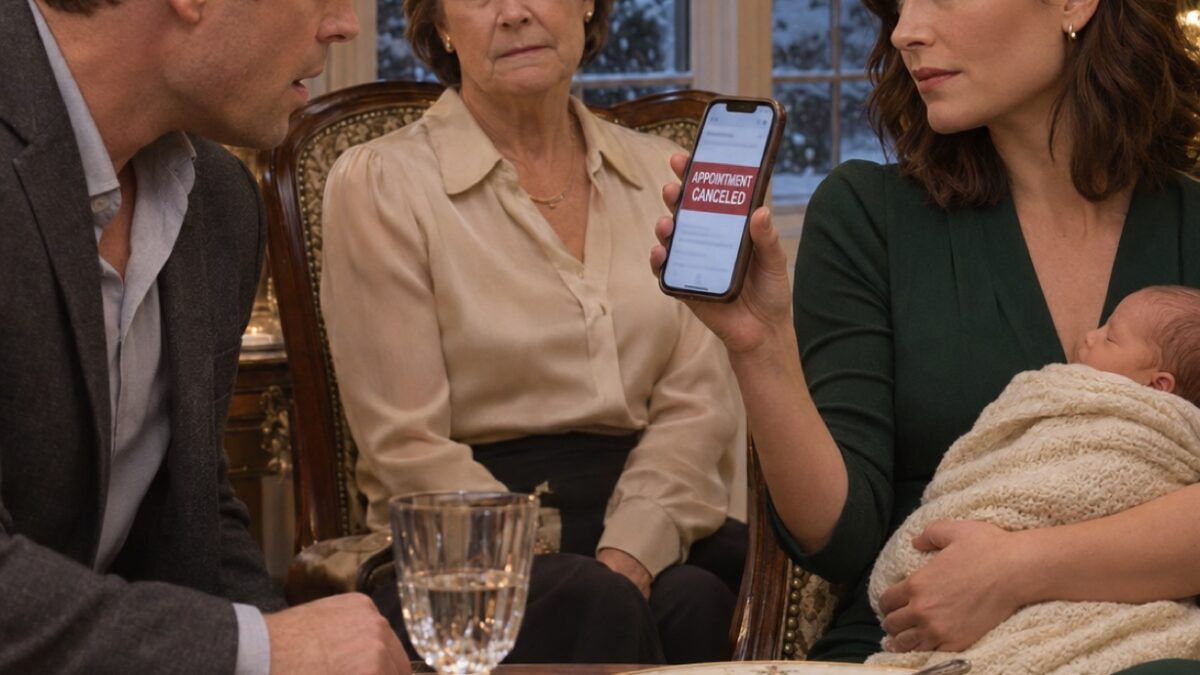
Part 3: The Sentence on His Phone
“Once I am added as an owner, I can provide Nora’s signed consent to use the mansion as security for refinancing my business debt.”
I read the sentence aloud.
Ellis put his phone beside his plate.
My mother leaned toward me, but I kept looking at the message. There was more underneath it. Not a promise from the lender. A list of things the lender would need before considering the house.
Verified ownership.
Signed approval from every owner.
I scrolled back to Ellis’s sentence, making sure I hadn’t mistaken something the lender had proposed for something he had offered.
I hadn’t.
“You told a business lender I would sign.”
“I told them what would be possible if we agreed.”
“That isn’t what you wrote.”
Our daughter moved her head against my collar. I rested the phone on the table long enough to straighten her blanket. When I picked it up again, Ellis was watching my mother.
She wasn’t helping him.
“Business debt?” she asked.
“Refinancing,” he said. “Not some new spending spree.”
I hadn’t accused him of that. He was answering an easier objection than the one sitting in front of him.
“You offered my house,” I said.
“I described a potential arrangement.”
“With my signature already promised.”
He pulled his chair closer, lowering his voice. The tree lights reflected in the dark window behind him. Outside, snow still covered the patio chairs.
“There would have been discussions before anything happened.”
“There should have been a discussion before this email.”
He rubbed a thumb over the edge of his phone.
My mother held out her hand toward mine. I turned the screen so she could read without taking it from me. Her lips moved over the sentence. Then she looked at him.
“You didn’t tell me this.”
“I was trying to explain it when Nora canceled.”
“No,” I said. “You were telling us your name was going back on the house.”
He sat back.
I read the lender’s response aloud, including the requirement that ownership be verified and every owner give signed approval. There was nothing saying the house had been accepted. Nothing saying a loan had been approved.
That mattered.
I needed to know what he had claimed, but I also needed to separate a claim from something that had actually happened.
“Did you tell them I already owned it alone?”
“I explained that the ownership would change.”
“That wasn’t my question.”
“Yes. They know the current ownership needs to be verified.”
His answer was careful. I looked down at the messages again instead of trying to interpret his expression.
The lender had asked for verification. Ellis had described a future change. Between those things, he had inserted my consent as though it were something he could deliver.
I was a commercial interior designer. My work involved estimates, approvals, changes somebody wanted made before they had decided who would pay. I knew how easily a suggestion could start traveling as an instruction if nobody corrected it. But I had never expected to sit at my own Christmas table, with my daughter asleep on me, checking whether her father had offered my home to support his business borrowing.
My mother reached for the serving spoon and put it down again.
The food had gone untouched while we read.
“Could they do anything without you?” she asked.
“Not based on what this says.”
Ellis nodded quickly.
“Exactly. Nobody was doing anything behind your back.”
I looked at him.
“You sent this without asking me.”
He stopped nodding.
“I’m talking about an actual loan.”
“I’m talking about what you told them.”
My daughter began rooting against my shoulder. I stood, keeping the phone in my hand, and moved to the chair beside the tree where I had left a clean cloth.
Ellis started to rise.
“Stay there,” I said. “I’m just getting her settled.”
I wasn’t leaving the discussion. I wanted room to hold her properly without balancing her against the table.
My mother moved the cloth within reach. She didn’t speak. I tucked it over my shoulder, sat down, and waited while our daughter fussed herself awake.
Ellis turned his chair toward me.
“If you had read the whole thing calmly before reacting, you’d have seen the safeguards.”
“I am reading the whole thing.”
“You’re making it sound like I could borrow against the place tomorrow.”
“No. I’m saying you promised my signature.”
He pressed his lips together.
That was the difference he kept trying to step around. I wasn’t claiming that an email had changed ownership. I was asking why he had represented my agreement before he had it.
My mother stood beside the table, folding the edge of a napkin.
“Ellis, did you think she would agree because I asked her?”
“I thought you understood why a shared home matters.”
“For this,” I said, lifting the phone slightly, “you needed more than a shared home. You needed me to agree to secure business debt.”
He looked toward our daughter.
I shifted her higher.
“She isn’t part of that answer.”
“I wasn’t going to say she was.”
“Then tell me what you expected me to sign.”
He looked down at his hands.
“Whatever would be required after the ownership was sorted out.”
There it was again. Ownership first. My signature afterward. All of it spoken as though the remaining difficulty was getting the steps in the proper order.
“I haven’t agreed to either.”
“I understand that now.”
“You knew it before dinner.”
He didn’t answer immediately. My mother pulled out the chair nearest me and sat, no longer positioned beside him.
I went back through the thread. I checked who had written each message and where Ellis’s forwarded conversation began. I didn’t search his phone or ask for access to his accounts. What he had sent was enough to establish what he had offered.
And enough to show what still required me.
The lender wanted proof of ownership and the owners’ signatures. Ellis could not supply my permission simply by telling someone he expected it.
I read that section again.
Then I locked the screen.
My daughter had settled, her cheek warm against my arm. I watched Ellis look from my phone to the canceled appointment message still waiting beneath the email.
He had wanted me to see urgency.
What I saw was a plan that depended on decisions I had never made.
“Is this why it had to happen before dessert?” my mother asked.
“I wanted us to stop putting things off.”
“You were the only person making this plan,” I said.
He drew a breath, preparing another explanation.
I didn’t give him a different question to answer.
“What else have you already arranged in my name?”
Part 4: The Forwarded Confirmation
“The consultation,” Ellis said, picking up his phone.
“Show me exactly what you arranged.”
He opened the confirmation he had forwarded before dinner. I brought up my copy instead of leaning over his shoulder.
The wording was still there.
Preliminary property-transfer consultation.
Tentative attendance.
My contact email appeared with the intended attendees. That was not the same as an acceptance from me, and nothing in the confirmation said I had instructed the office to prepare a transfer.
I read it slowly.
Ellis watched my face.
“That’s what I’ve been saying. It was a conversation.”
“You announced the result of it before we had it.”
He set his phone down.
My mother asked me to turn the screen toward her again. This time, she read the heading without my pointing.
“Preliminary,” she said.
“Yes.”
“So there wasn’t something waiting for her to sign?”
“Not at that appointment,” Ellis answered.
I looked up.
“At that appointment?”
“It would have started the process. We’d have discussed what was needed.”
“Only if I agreed.”
“Obviously.”
It hadn’t been obvious when he told us his name would be going back on the house.
My daughter’s eyes opened briefly. I bent my head toward her while my mother read the rest of the confirmation. There was no reason to make the baby listen to raised voices, and no reason to give Ellis a hurried answer just because she needed me.
I adjusted the cloth beneath her chin.
“Did you ask the office to prepare anything that changes ownership?”
“No.”
“Did you tell them I had authorized a transfer?”
“I told them we needed to discuss adding me.”
“That isn’t an answer about my authorization.”
He looked annoyed now, but he answered.
“No. They needed to speak with you.”
I kept the message open.
“Then there was no authorized transfer.”
“Not yet.”
“There won’t be.”
He looked away toward the tree.
My mother returned the phone to my side of the table. Her fingers stayed on its edge for a moment, as though she wanted to keep reading but had run out of words to examine.
“You made it sound settled,” she told him.
“I thought we could settle it together.”
“You said she would put your name back.”
He didn’t deny that this time, either.
I scrolled to the cancellation message. The screen still read “APPOINTMENT CANCELED.”
Canceling had stopped the tentative booking. It had not undone a transfer, because I had never authorized a transfer in the first place.
I wanted that distinction clear in my own head before I contacted anybody.
Ellis seemed to notice.
“So you understand there wasn’t some secret closing.”
“I understand what the appointment was.”
“And the lender hasn’t approved anything.”
I reopened the email.
“Show me where they say that.”
He gestured toward the requirements.
“They’re still asking for information.”
I read the response again. It described things that would have to be established before a property-backed proposal could proceed. There was no approval to point to, because there had been none.
“Have you signed anything securing your debt with this house?”
“No.”
“Has money been advanced against it?”
“No.”
“Has anything been recorded against it through this proposal?”
“No. Nora, none of that could happen from an introductory email.”
I let that answer stand.
I wasn’t going to turn his conduct into something bigger than it was. It was already enough.
He had proposed using my house, promised my cooperation, arranged a preliminary meeting, and presented the ownership change to my mother as my settled decision. That was what had happened. I didn’t need to invent a completed loan to justify refusing it.
Our daughter made an unhappy little sound.
I stood and walked beside the dining table, rocking her gently. My mother gathered the plates nearest her, then stopped when Ellis began speaking again.
“If we hadn’t had this argument, the consultation would have explained the risks.”
“You could have asked whether I wanted a consultation.”
“You’d have said no before hearing it.”
“I am allowed to say no before attending an appointment about giving away my home.”
He watched me cross back toward the chair.
I sat with my daughter facing inward, her blanket gathered loosely around her legs. She caught the edge of my sweater in her fingers.
My mother carried the plates to the kitchen. I heard the faucet, then it stopped. She came back without dessert.
“Did you know about the business refinancing?” I asked her.
“No.”
“Did he tell you the appointment was preliminary?”
“He said there was an appointment to get his name back on.”
Ellis straightened.
“I didn’t ask you to explain the appointment.”
“You asked me to help get her to agree,” she said.
He looked at her then.
She stood beside the chair she had occupied during dinner.
“I thought I was encouraging something you had talked about,” she said.
“We hadn’t,” I told her.
“I know that now.”
She sounded uncomfortable. I let her be uncomfortable.
At the table, she had known I paid every house bill. She knew he lived elsewhere. Whatever she had assumed about our spring attempt, she had heard me refuse and had still connected our baby’s father feeling welcome to an ownership interest.
The appointment language didn’t excuse that.
It did, however, leave us with a much simpler practical question.
There was nothing prepared with my permission. No approved borrowing against my home. No completed change to reverse.
I could say no plainly and put that answer where Ellis’s promise had gone.
He seemed to reach the same conclusion.
“Before you start sending messages, remember they’re looking at my business,” he said.
“I remember.”
“They don’t need a family argument in their files.”
“They need an accurate answer about my property.”
He leaned forward, keeping his hands flat on the table.
“You’ve canceled the meeting. You’ve told me no. Why involve them?”
“Because you involved my house.”
My mother looked toward the phone beside me.
“Will you tell the lender yourself?”
Ellis answered before I could.
“Nora, are you really going to put that refusal in writing to them?”
Part 5: The Reply I Saved
“Yes,” I said, and unlocked my phone.
Ellis reached toward the edge of the table, then pulled his hand back.
“Let me speak to them first.”
“You already did.”
“I can explain that we’re still discussing it.”
“We aren’t.”
My daughter had drifted off again. I moved her carefully into the crook of my arm, keeping her head supported while I opened the complete thread.
I saved it before writing anything.
Not just the sentence about my signature. The surrounding messages, the sender information, the lender’s requirements, and the confirmation Ellis had chosen to forward.
I checked that the earlier messages were included.
My mother watched without offering to take over. I was glad. I didn’t want her carrying my phone around or telling me how to soften the words.
Ellis got up and took his plate toward the kitchen. He returned with it almost immediately, as though he had forgotten why he was holding it.
He set it down.
“What exactly are you planning to say?”
“What I authorize.”
“You don’t authorize anything. I understand.”
“Then the message won’t surprise you.”
I started a reply in the thread he had sent me. I addressed it to the lender’s contact already shown there and included Ellis. I wasn’t opening a separate conversation about his accounts.
I wrote that I owned the house.
Then I wrote that I did not authorize any transfer of an ownership interest and did not consent to using my property as security for his business financing.
I stopped to read it.
There was nothing about our marriage. Nothing about Christmas dinner. Nothing about how it felt to hear my mother volunteer half my home.
Those things mattered to me.
They weren’t information the lender needed.
Ellis came around the table far enough to see my face, but not the screen.
“You don’t need to make it permanent.”
“It is my answer.”
“Right now.”
I put the phone against my leg.
“No transfer. No security for your borrowing.”
Our daughter stirred at the change in my position. I rubbed her back until she relaxed.
My mother pushed my glass within reach.
I drank, then set it down away from the phone.
Ellis looked toward the kitchen.
“If they take the property out of consideration, that changes the refinancing.”
“Yes.”
“It may mean that option isn’t available.”
“I understand.”
He seemed to want a different reaction. An apology, maybe. Or a question about what I could do to keep the option alive.
I had already read what would be required of me.
I didn’t need another explanation of why my consent would be useful to him.
“This isn’t just an email saying you don’t like the idea,” he said.
“No. It’s an email saying they don’t have my permission.”
He nodded once, but his mouth tightened.
I returned to the draft and added that I was supplying my own position only. I wasn’t requesting access to Ellis’s private financial information.
That sentence mattered, too.
I didn’t want his account statements. I wasn’t trying to supervise his business. He could seek financing, discuss his debt, and make whatever lawful arrangements were available without offering property I owned.
I read the message aloud.
My mother listened from the other side of the table. Ellis stayed standing.
“Is anything in that inaccurate?” I asked him.
“You’re making it sound like I tried to use the house without asking.”
“You offered my future signature without asking.”
“That isn’t the same as actually using it.”
“I haven’t said a loan was made.”
He looked at the phone.
I read the draft again, silently this time. It didn’t claim money had changed hands. It didn’t accuse the lender of doing anything wrong. It corrected the assumption on which Ellis had invited them to proceed.
I sent it.
Then I put the phone down.
For a moment, Ellis only looked at it.
Our daughter sighed in her sleep. I adjusted her sleeve, which had ridden up around her wrist.
My mother picked up the serving dish and carried it into the kitchen. There was a scrape of a chair as Ellis sat again.
“You could have waited until we’d talked privately.”
“I asked you here to see our daughter.”
“We could still have talked.”
“You chose the dinner table.”
He rubbed his face, then dropped his hand.
I didn’t continue. I had said what was necessary, and the email was sent.
The room looked strangely ordinary around us. A folded napkin by my mother’s place. The tree lights. A serving spoon lying on a plate nobody had cleared.
I gathered the baby’s blanket where it had fallen toward the floor.
Ellis picked up his phone and opened the thread. His eyes moved over my reply.
“You copied me.”
“Yes.”
“You wanted me to see it.”
“I wanted everyone in that discussion to have the same answer.”
He read it again.
My mother came back and sat, leaving dessert in the kitchen. She looked tired. So did Ellis. I was tired enough that the thought of standing to find a fresh cloth felt like a task I needed to plan.
None of that changed what I had sent.
Ellis placed his phone facedown.
“They may close off that proposal now.”
“It relies on a house you don’t own.”
“It relied on a possible ownership change.”
“That I have refused.”
He looked directly at me.
“You’ve made your point.”
“I’ve given my answer.”
There was a difference. A point could be argued with until everyone was worn down. My answer didn’t require him to find it persuasive.
I opened the sent message and checked that it had gone to the intended recipients. Then I saved that, too.
My mother watched me finish.
“Do you need to do anything else tonight?” she asked.
I looked at Ellis.
The lender had my refusal. What they did not yet have was a withdrawal from the person who had proposed using my house.
He could stop describing this as an available path. He could correct his own proposal instead of leaving my message to sit beside his promise.
I waited until he met my eyes.
“Will you withdraw the house-backed proposal yourself?”
Part 6: The Empty Dessert Plates
“Let me find out whether they can change the terms,” Ellis said.
I pulled the blanket away from my daughter’s chin.
“Terms that don’t involve my house are yours to discuss.”
“That’s what I’m trying to work out.”
“Then withdraw this proposal.”
He shifted his chair closer to the table.
“I’m asking you not to close every possibility before I know what they’ll offer.”
“I haven’t closed possibilities involving your property.”
He looked at my mother.
She was stacking the unused dessert plates. She stopped with a plate resting against her palm.
“Nora has answered about hers,” she said.
It wasn’t an apology.
Not yet.
But Ellis noticed the change. He stopped looking to her and addressed me directly.
“What if there were protections for you?”
“I’m not looking for different terms.”
“What if the lender—”
“No.”
He sat back.
I kept my voice low because our daughter was sleeping. It also spared me the effort of trying to match his urgency.
I was still in the chair beside the tree. He was at my dining table asking me to preserve an option I had just refused in writing.
A change in wording wouldn’t make it a different request.
He picked up his fork and moved it onto the plate.
“You’re treating this like I have no place here.”
“You have a place in her life.”
“That sounds carefully limited.”
“It is specific.”
I looked down at our daughter. Her hand was open against my sweater.
“Her visits with you aren’t an ownership discussion.”
Ellis glanced toward the hall.
“Then what does that look like?”
“We agree on when you see her and what she needs. If we need help sorting that out, we use the family-law channel we already have.”
“And I come here as a guest.”
“You don’t live here.”
His jaw tightened.
I hadn’t said he was unimportant. I hadn’t told him he needed to pay for time with the baby. I had stated where he lived, which was elsewhere.
My mother put the plates down.
“Can we finish eating something?” she asked.
“I need to feed her,” I said.
That was true, and it gave me a reason to stop the conversation before Ellis found another version of the same request.
I moved to the sitting area with the cloth and blanket. My mother carried my water over. Ellis stayed by the dining table, scrolling on his phone.
Nobody followed me into another argument.
I took care of our daughter.
For a while, the only questions were whether she was comfortable and whether I had put the cloth close enough to reach. I moved the water glass with my foot until my mother noticed and brought it nearer.
“Thank you,” I said.
She nodded.
I could see Ellis through the doorway. He wasn’t typing. He looked at the phone, set it down, then picked it up again.
When I returned, he stood.
“Can I hold her?”
“Yes. Sit down.”
He did, and I settled our daughter into his arms.
I adjusted the blanket at her shoulder, then stepped back.
My mother watched from beside the table.
There was nothing to negotiate about the house in that moment. He was holding his daughter. I was making sure she was supported. The visit he claimed ownership was needed to permit was happening without it.
Ellis looked down at her.
“She’s been awake more.”
“Sometimes.”
He touched her tiny hand with his finger. She curled her fingers around it.
I sat where I could see her face.
He didn’t bring up the lender while he held her. I didn’t reward that with an opening to restart the property discussion. We talked about the baby’s feeding and how she settled against a shoulder.
Ordinary information.
Information he needed as her father.
When she fussed, he looked toward me rather than getting up immediately. I told him how I had been supporting her, and he adjusted his arm.
My mother pulled out a chair.
“She likes being held that way,” she said.
Ellis nodded.
I let the room stay quiet.
Eventually, he handed her back. I checked her blanket and kissed the top of her head before I remembered there was still a table full of Christmas dishes.
My mother began clearing them.
Ellis put his phone in his pocket.
“I’m not saying I won’t withdraw it,” he said. “I’m asking for room to figure out the business side.”
“You have room to do that without my house.”
“I heard you.”
“Then don’t tell anyone I’m still considering it.”
He looked at me, then nodded.
I didn’t ask whether the nod meant he liked my answer. I wanted his written withdrawal, not a pleasant expression over the dishes.
My mother carried the serving dish into the kitchen. This time, Ellis helped with his plate. I heard them moving around the sink.
I stayed with the baby.
The spring before Christmas, I had mistaken some agreeable afternoons for evidence that we could repair more than we actually could. I wasn’t going to make the same mistake because he carried a plate or held our daughter carefully. Those were welcome actions. They weren’t agreements about a marriage or a home.
When my mother returned, she stopped beside the tree.
“Ellis said he thought I could help keep this from becoming a fight,” she said.
He appeared behind her.
“I wanted a calm conversation.”
“You announced that she would give you half,” she said.
He looked toward me.
I waited.
My mother touched the back of an empty chair. Her napkin was still on its seat. She picked it up and folded it without looking down.
“I wanted Christmas to go smoothly,” she said.
“So did I.”
“I thought if we could get everyone feeling like family—”
“Mom.”
She stopped.
I was too tired to listen to my baby being made responsible for another adult’s disappointment.
My mother looked at Ellis, then at me.
“Was keeping Christmas peaceful worth asking you to give away part of your home?”
Part 7: My Mother’s Chair
“No,” I said, and my mother sat down.
“You’re right,” she said. “It wasn’t.”
Ellis remained near the doorway. She didn’t turn toward him before continuing.
“I shouldn’t have told you that giving him part of the house would help your baby have a father who felt welcome.”
I held our daughter closer, keeping her blanket from slipping.
My mother looked directly at me.
“I take that back.”
I didn’t answer immediately.
She had made the first statement easily. This one took effort. I could see it in the way she kept smoothing the napkin on her knee.
“You knew I’d been paying everything,” I said.
“Yes.”
“You knew he didn’t live here.”
“Yes.”
“And you heard me say no.”
She looked down.
“I did.”
Ellis moved toward the table.
“Patricia, I wasn’t asking you to pressure her.”
She raised her head.
“You expected me to help her agree. I did pressure her.”
He stopped.
My mother put the napkin beside her plate.
“You’ve paid every house bill for eleven months,” she told me. “The house is yours. I knew those things before dinner.”
I wanted her to say them without attaching an excuse.
She did.
“I let what I wanted for the baby stand in for what you had agreed to,” she said. “That was wrong.”
I adjusted my daughter against my arm. Her sleeve had twisted, and I worked my finger gently beneath it.
“I need you not to do it again.”
“I understand.”
“I’m not going to discuss what I should give Ellis so he feels welcome.”
My mother nodded.
Ellis reached for his coat.
“I can speak for myself.”
“You can,” she said. “I won’t negotiate with Nora for you.”
He looked at her, then at me.
Nobody offered him another appointment.
Before he left, we spoke about seeing the baby again. I told him we would arrange it separately from the business discussion. He said he would send a message.
I agreed.
There was no condition attached to it.
After he had gone, my mother stood in the hall with her coat over her arm. She looked back toward the dining room.
“Do you want help with the rest?”
“I want to settle her and go to bed.”
“All right.”
She didn’t stay to explain herself again.
I locked the door after her, checked the baby, and carried my phone upstairs with the blanket.
The messages were saved. My refusal had been sent. I still wanted confirmation from the office that Ellis’s tentative appointment had not turned into instructions from me.
That had to wait until after the holiday.
When the office was open again, I sat at my worktable while our daughter slept nearby. A stack of material samples occupied the far end, pushed aside to make room for the things I needed close.
I opened the appointment confirmation.
Then the cancellation.
“APPOINTMENT CANCELED.”
I used the contact information in the original confirmation and wrote a short message. I identified the tentative consultation, said I had canceled it, and made clear that I had not requested a transfer or authorized preparation of one.
I asked them to confirm the cancellation and that they had no instructions from me to change ownership.
I read it before sending.
I didn’t accuse them of something they hadn’t done. Ellis had arranged a consultation. The office had sent a tentative confirmation. I needed the record of my own position to be equally clear.
Our daughter woke while I was checking the message.
I left the phone on the table and picked her up.
Her needs were less complicated than the messages waiting for me. She needed to be fed, changed, held. She didn’t care whether an email had arrived while I was reaching for a clean cloth.
I was glad of that.
When she settled, I returned to the table with her against my shoulder.
The office’s reply came while I was opening the saved thread from Christmas.
I read it standing.
The appointment was canceled.
It had been a preliminary consultation.
They had received no authorization from me to prepare or carry out a transfer.
I read those lines again, then saved the reply with the other messages.
Nothing had changed ownership. Nothing had been waiting for my signature because I had instructed it. The only thing that had moved ahead was Ellis’s expectation that he could obtain my agreement.
Now there was no room for that expectation in the office’s records.
I sat down.
My daughter made a small noise, and I rubbed her back while the screen dimmed.
My mother called later.
I let it ring while I finished changing the baby, then returned it.
“Did you hear from the office?” she asked.
“Yes. It’s canceled. I never authorized anything.”
“I’m glad.”
I could hear her taking a breath.
She didn’t ask whether I might reconsider after things calmed down.
That helped more than another apology would have.
“How is she?” she asked.
“Hungry. Sleepy. Then hungry again.”
My mother gave a soft laugh.
I told her about the baby gripping my sweater. We talked about something other than Ellis’s wishes for the first time since dinner.
When the call ended, I checked the messages.
There was no withdrawal yet.
The office had confirmed its part. I had made my refusal clear. Those were completed actions, and I wasn’t going to let them be blurred by waiting for Ellis to make his.
I opened the thread we had both received.
I didn’t ask about his accounts or whether the business was doing well. I wrote only that the house was not available, and I needed him to correct the proposal he had made.
Then I set the phone aside and took our daughter toward the window.
The patio chairs were still outside. The dining room no longer had plates waiting to be cleared. I had put the room back in order without deciding what to do with every feeling attached to Christmas.
My phone sounded from the worktable.
I carried the baby back, opened Ellis’s message, and read his request.
“Check the email I copied you on before you answer me.”
Part 8: The Copied Email
“I am withdrawing the proposal to use Nora’s house as security for refinancing my business debt.”
Ellis had written it to the lender and copied me.
I stood beside my worktable with our daughter resting against my shoulder. His message continued beneath the opening sentence.
He said the property was not available for the proposed financing. Any further financing discussion would need to proceed without it.
No suggestion that I might agree later.
No appointment described as unfinished business.
I read the recipients, then the message again.
This was what I had asked him to do.
I saved it.
The baby pressed her face against my sweater, and I shifted her so her nose was clear. My first response could wait until she was comfortable.
I sat in the chair beside the worktable.
For Christmas, he had brought a proposal that required me to change ownership and then sign away the protection that sole ownership gave me. Now he had withdrawn that proposal himself, in front of the same lender.
That was a real change.
It did not require me to thank him for understanding a refusal I had already given.
I wrote back that I had received the withdrawal.
Nothing more.
Ellis called before I had set down the phone.
“Did you see it?”
“Yes.”
“It’s withdrawn.”
“I saw.”
He paused.
“I’m going to have to work out financing another way.”
“I understand.”
There was a rustle at his end, then quiet.
I didn’t ask what alternatives he had. He hadn’t called to seek my business advice, and I didn’t want to turn a clear property refusal into an ongoing discussion of how his debt might be managed.
He could decide what to pursue.
My house was no longer part of the proposal.
“I’d rather we didn’t keep going over Christmas,” he said.
“I need us not to repeat it.”
“I sent the withdrawal.”
“Yes.”
The baby began fussing. I stood and shifted her, tucking the phone between my hand and my ear.
“I need to take care of her.”
“All right.”
We ended the call without discussing a visit. I put the phone on the worktable and carried her away from it.
For a while, I didn’t check anything.
I changed her, found the clean cloth I had left on the chair, and drank the water that had been sitting untouched beside my samples. I had work I would eventually need to return to, but for that afternoon my daughter’s unsettled stomach occupied most of my attention.
When she finally relaxed, I lowered myself into the chair carefully.
The phone had a new message.
The lender had acknowledged Ellis’s withdrawal.
The reply confirmed that my home was not available for this financing and would not be treated as security for that proposal.
There were no details about his balances, business income, or other possible borrowing. I hadn’t requested them, and the reply didn’t offer them.
I appreciated the narrowness of it.
My ownership and refusal were all I needed confirmed.
I saved the acknowledgement with the withdrawal and my own message. Then I moved the group of messages out of the place where I kept everyday exchanges about the baby.
I wanted to retain them.
I didn’t want to reread them every time Ellis asked whether she was awake.
My mother called while I was doing that.
“Any word?”
“He withdrew it.”
She was quiet briefly.
“Good.”
“The lender acknowledged the house isn’t available.”
“Then it’s finished?”
“The proposal involving my house is.”
I wasn’t going to make promises about every future conversation with Ellis. I could only say what had been done.
My mother accepted that.
“Have you had anything to eat?” she asked.
“Not recently.”
“Go eat. I can call another time.”
She didn’t turn it into a request to come over. I noticed.
After the call, I warmed something from the refrigerator and ate standing at the counter while my daughter slept nearby. The dining room was visible from there.
At Christmas, my mother had pushed my phone toward my plate.
Now it was on the counter beside a clean cloth and my water.
The ownership messages were saved. I had no reason to keep them open.
Ellis sent another message while I was rinsing my dish.
“Can we discuss visits?”
I dried my hands before answering.
“Yes. Send me what you’re proposing.”
He asked whether we could talk rather than go back and forth.
I agreed and called when the baby was settled.
His voice was different without the dinner table and my mother between us. Less polished. More direct.
“I want to see her regularly.”
“We can arrange that.”
“I don’t want every visit to feel like I’m arriving for an appointment.”
“We still need to agree on visits.”
“I know. I mean I want to be comfortable with her.”
“That comes from spending time taking care of her.”
He didn’t answer immediately.
I could hear him breathing.
“I can do that.”
“I want you to.”
It was important that he hear that part clearly. I had refused ownership, not fatherhood. I wasn’t keeping his daughter out of his arms until he behaved the way I wanted financially.
He had held her at Christmas after my refusal.
He would see her again now that the proposal was withdrawn, but the withdrawal wasn’t the price of admission. Her needs and our agreed arrangements governed that.
“If we can’t agree on arrangements ourselves, we use the existing family-law channel,” I said.
“I’d rather agree.”
“So would I.”
We discussed what worked around her feeding and sleep. I told him what she had been doing lately. He asked whether he should message before coming.
“Yes.”
There was a pause.
I held the phone away long enough to check that our daughter was still asleep.
When I brought it back, he spoke.
“So I come over for the visit, and afterward I leave?”
Part 9: The Agreed Visit
“Yes,” I told him. “We agree on the visit, and you go home afterward.”
“All right,” Ellis said.
I waited, but there wasn’t another condition.
We settled the arrangement in writing after the call. Nothing about moving back in. Nothing about the house. If either of us needed a change, we would ask instead of assuming.
I put the phone down and opened the material folder on my worktable.
It had been sitting beneath a baby cloth.
I moved the cloth, wiped a damp mark from the table, and set out the samples I needed. My daughter slept nearby while I checked the notes I had left myself before Christmas.
Commercial interiors involved plenty of decisions that looked small until they arrived wrong. A finish that wouldn’t tolerate the cleaning it needed. A fabric that looked different beside the flooring. I had once worked through those details without stopping to listen for a newborn stirring.
Now I paused frequently.
That was fine.
I could still compare samples, answer work messages, and close the folder when she needed me. I didn’t have to solve every part of my new routine in the same afternoon.
The house was quieter without a property argument attached to it.
I left the worktable to feed her.
When I returned, I put the samples away rather than leaving them scattered. There would be another chance to work. She had fallen asleep against my chest, and I didn’t want to wake her by reaching across the table.
Before the agreed visit, Ellis sent a message saying he was on his way.
I replied that we were ready.
Then I checked the baby’s diaper and placed a clean cloth near the chair. I moved my work folder out of reach, not because he couldn’t see it, but because I needed the space.
He knocked when he arrived.
I opened the door with our daughter in my arms.
“Come in.”
He took off his coat and looked toward the sitting area.
“Here?”
“Yes. She’s just been fed.”
He washed his hands and sat where I indicated.
I settled her into his arms.
He looked down at her for a moment before speaking.
“She looks different.”
“She keeps changing.”
He smiled at that.
I sat nearby with my water. The phone was on the table beside me, but I didn’t open the saved messages or keep the withdrawal displayed as a reminder.
He knew the terms of the visit.
I wanted to see what he did with them.
Our daughter moved her mouth and stretched her fingers. Ellis watched her as though he might miss something by looking away.
“Does she always make that face?”
“When she’s deciding whether she wants to sleep.”
“Deciding?”
“That’s what it looks like.”
He laughed quietly.
It was the sort of exchange I had hoped Christmas might allow. Not a performance of being married again. Just information and a shared interest in the child we had.
When she fussed, he didn’t immediately hand her back.
“Show me how you’ve been settling her.”
I moved closer and explained what had been working. He adjusted his hold, supporting her carefully, and tried.
She continued fussing.
“That doesn’t always mean you’re doing it wrong,” I said.
He nodded.
After a while, she settled.
I went to the worktable and put a sample back into its folder. I stayed close enough to hear them. Ellis spoke softly to her, telling her nothing important, just ordinary words while she watched his face.
He didn’t ask where I had put his old things.
He didn’t wander upstairs.
He didn’t bring up refinancing while I was occupied with a work message.
I noticed all of that without announcing it.
Later, I returned to the chair. He handed her to me when she needed feeding, then asked whether he should bring the cloth.
“Yes, please.”
He brought it.
Before the visit ended, we discussed the next arrangement. He asked rather than declaring. I checked what would work and told him I would confirm by message.
Then he stood.
His coat was still by the front door.
“I’ll wait for your text.”
“All right.”
He looked at our daughter, touched her hand gently, and left.
I closed the door and carried her back to the sitting area.
There hadn’t been a property discussion.
There hadn’t been a request to stay.
I didn’t tell myself that meant every future visit would be easy. I put the cloth in the laundry and checked whether she needed changing.
That was enough to do.
My mother’s message arrived while I was returning the work folder to the table.
“How did the visit go?”
I answered that Ellis had spent time with the baby and left as agreed.
She replied that she was glad.
Then another message appeared.
“May I come back to see you both?”
I sat down before answering.
I wanted to see my mother. I also remembered her pushing my phone across the table as though I could settle the matter before dessert.
Those were not separate memories yet. Her wanting to visit and her wanting me to make Ellis feel welcome still came together in my mind.
I looked at my daughter.
She was awake, studying the edge of my sweater.
My mother had retracted what she said. She had acknowledged the bills, the ownership, and the pressure she had applied. She had stopped helping Ellis argue.
I believed she meant the apology.
I also needed her to understand what coming back would require.
I typed that there was something we needed to agree on first.
She called instead of sending another message.
I answered, keeping my daughter tucked against my arm.
My mother spoke before I could.
“What do you need me to agree to before I come over?”
Part 10: The Phone Beside My Chair
“Stop using the baby to ask me for financial concessions,” I said.
“I will,” my mother answered.
I looked down at the phone, then lifted it back to my ear.
“I need you to hear the whole thing.”
“I’m listening.”
“You can want her to have a relationship with Ellis. So do I. That doesn’t mean I owe him part of this house.”
“I know.”
“And you can’t tell me she’ll have a better father if I give him something.”
My mother was quiet.
Our daughter stretched against me, pressing her feet into the blanket. I loosened it around her legs.
“That was what I did,” my mother said.
“Yes.”
“I won’t do it again.”
I shifted the phone to my other hand.
“If Ellis wants something from me, he can ask me. I don’t want you carrying his request or explaining why I should agree.”
“I won’t negotiate for him.”
“And if I say no, you don’t bring the baby into it.”
“All right.”
She didn’t tell me I was being harsh. She didn’t say she had only meant well.
That made it easier to answer the question she had first asked.
“You can come see us.”
“Thank you.”
We arranged the visit around the baby’s needs. Then my mother asked how I was sleeping, and I told her the truth.
“Whenever she lets me.”
“Do you want me to bring anything?”
“No. Just come.”
When she arrived, she knocked.
I let her in and stepped aside while she took off her coat. She looked toward my worktable, where the material samples were laid out beside a stack of folded baby things.
“You’re working again?”
“A little at a time.”
She leaned toward a fabric sample without touching it.
“That’s pretty.”
“It has to do more than be pretty.”
She smiled.
“I remember you saying that before.”
I did, too. It was an ordinary thing for us to talk about, and I was relieved not to have to protect it from turning into advice about Ellis.
Our daughter stirred.
My mother washed her hands and asked whether she could hold her.
“Yes.”
I showed her where to sit and settled the baby into her arms. She adjusted the blanket, then looked up to make sure I was satisfied.
“She’s supported,” I said.
My mother looked back down.
“Hello, sweetheart.”
I went to the kitchen for water.
From there, I could hear her talking softly to the baby. Not about being a family again. Not about making her father welcome. She described the little hand curled against her finger and asked how anybody could sleep through so much conversation.
I brought water for both of us.
My mother thanked me and shifted her glass farther from the baby.
For a while, I sorted the material samples while she held my daughter. I explained why a finish I liked wouldn’t work in a busy commercial space. She listened, asked a question, and let the answer remain about my work.
I hadn’t realized how much I wanted that.
After Christmas, so much of our conversation had been about something I had refused. Here was something I was doing.
My phone lit up beside the folder.
Ellis was asking about the next visit.
My mother glanced toward the screen, then back at the baby.
“Do you need to answer?”
“In a bit.”
She nodded.
No suggestion that I invite him over immediately. No worried remark about whether he would feel excluded because she was here.
She kept holding her granddaughter.
I finished putting the samples in their sleeves and closed the folder. Then I checked Ellis’s message.
He proposed a visit and asked whether it worked around her feeding.
I considered it before answering.
My mother looked at me.
“Is everything all right?”
“Yes. We’re arranging his next visit.”
“All right.”
She didn’t ask whether the house-backed financing had been replaced. She didn’t wonder aloud whether I could help him another way.
The proposal involving my home had been withdrawn. The lender had acknowledged that it was unavailable. Whatever Ellis pursued next would have to be without it.
My mother let that stay finished.
The baby began to fuss.
“Would you like her back?” she asked.
“Yes.”
She handed her over carefully, bringing the cloth with her.
I settled into the chair and checked my daughter’s face. My mother picked up the water glass so I could sit without reaching around it, then placed it within easy reach.
It was a small adjustment.
It helped.
While I fed the baby, my mother gathered the folded things from the worktable.
“Where do these go?”
I told her.
She put them where I asked and came back without rearranging anything else.
We talked about the baby, my work, and whether I had managed to eat lunch. When she asked if I wanted something from the kitchen, I said yes.
She brought it.
No argument followed the answer.
Later, she put on her coat.
“May I call before coming again?”
“Please do.”
“I will.”
She bent toward the baby, stopped short of waking her, and smiled instead.
After she left, I checked the door and returned to the chair.
There were still samples to review. A cloth needed washing. My water had gone warm, and my daughter had fallen asleep against me before I could reach the food my mother had brought.
I ate carefully with my free hand.
The house remained entirely mine. There was no transfer to complete, no tentative appointment waiting to be restored, and no lender considering it under the proposal Ellis had withdrawn.
His next visit was a parenting arrangement.
That was all it needed to be.
I picked up my phone and answered his message. I confirmed when he could come, added what he needed to know about the baby, and waited until his agreement appeared.
Then I set the phone beside my chair and held my sleeping daughter.
You Might Also Enjoy




