My Grandson Tried Selling My Farm While I Was Hospitalized, So I Requested Records — And Saw Enough
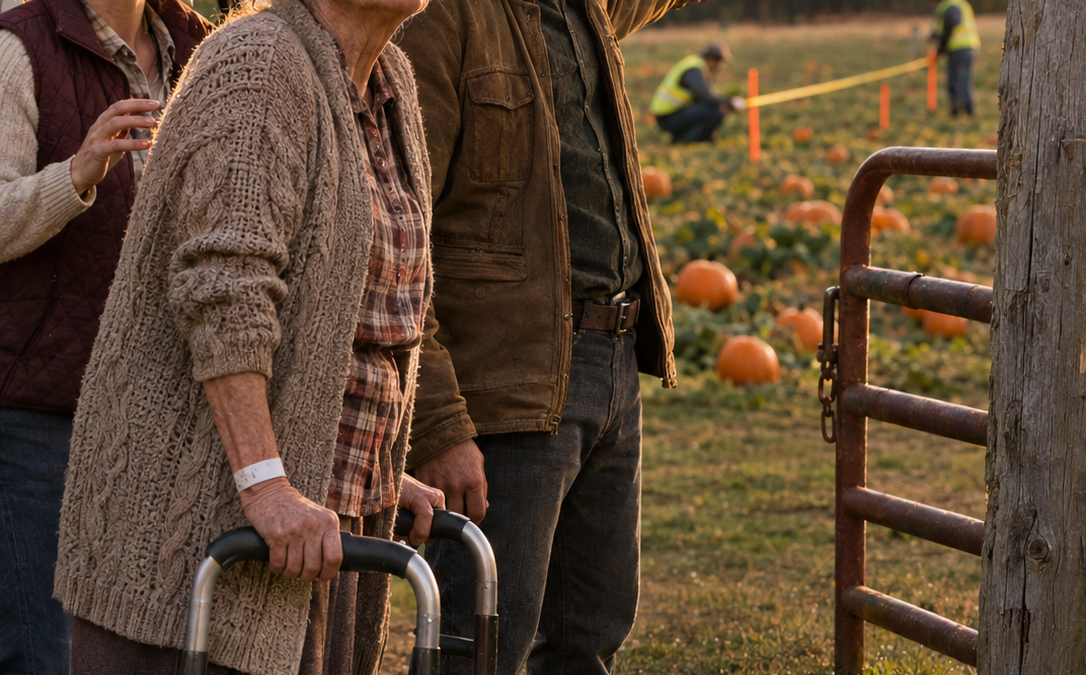
Complete story · 10 chapters · about 39 minutes · ending included
Chapter 1 · Chapter 2 · Chapter 3 · Chapter 4 · Chapter 5 · Chapter 6 · Chapter 7 · Chapter 8 · Chapter 9 · Chapter 10
Chapter 1: The Paper From Wednesday
“You signed, Grandma. Go sit down before you fall and break the other hip.”
Cameron said it like he was giving me sensible advice.
That was his talent.
He could make cruelty sound helpful.
My grandson had been doing that more often since Elmer died.
Small corrections.
Little jokes about my memory.
Offers to handle things I had handled for decades.
Each one left me feeling older than I was.
But that sentence was still ahead of me when the nurse pressed tape over my IV spot.
“You gave us a scare Wednesday afternoon,” she said.
I looked at the purple mark inside my elbow.
My hospital wristband scratched my skin.
“You kept calling for Elmer,” she said.
My stomach tightened.
Elmer had been dead since 2021.
I remembered going into the hospital for my hip.
I remembered pain.
I remembered Cameron visiting.
Wednesday afternoon was blank.
“What happened?” I said.
The nurse smoothed the tape with one finger.
“Chart notes go out only by signed records request, hon.”
That answer scared me more than I was willing to show.
I wanted a simple explanation.
Pain medicine.
Bad sleep.
Anything ordinary.
Instead, I had a missing afternoon.
Joelle was waiting downstairs to drive me home.
My daughter hugged me carefully when she saw the walker.
“You look better,” she said.
“I look expensive.”
She smiled, but it disappeared quickly.
Joelle had always worried with her whole face.
The ride toward Mount Horeb made my hip ache.
I watched cornfields pass the window and thought about my farm.
Thirty-eight acres.
The house.
The barns.
The pumpkin fields Elmer and I had worked for most of our marriage.
His parents had bought the place in 1966.
I had married him ten years later.
By the time we turned onto our road, I wanted only my kitchen chair.
Then I saw the gate.
The two iron hooks were empty.
“Elmer’s sign,” I said.
Joelle slowed the car.
The carved pine sign was lying face down in the ditch.
My chest hurt.
Elmer had carved those letters himself.
Fossum Pumpkins, since 1966.
After he died, I had repainted the grooves by hand.
Nobody had touched that sign since.
“Stop.”
“Mom, your hip.”
“Stop the car.”
Joelle pulled onto the gravel.
I got the walker out slowly.
Pain ran through my leg when I stood.
Then I heard a man calling numbers from the pumpkin field.
Orange stakes stood in the soil.
Gage Kuehn was stretching a measuring tape between them.
Another man carried survey equipment farther down the row.
Gage had gone to high school with Cameron.
I knew him as the boy who used to eat at my table.
Now he was measuring my land.
Cameron walked toward me from the field.
He did not look surprised.
That scared me.
“Why is my sign in the ditch?” I said.
Cameron glanced at it.
“We needed the hooks clear.”
“For what?”
He smiled at Gage.
Not at me.
I squeezed the rubber grips of the walker until my knuckles went white.
I was seventy years old.
My hospital band was still around my wrist.
I had been home less than ten minutes.
And men were marking my farm like I had already left it.
“Take those stakes out,” I said.
Cameron’s smile disappeared.
Gage stopped pulling the tape.
The surveyor looked over.
Joelle stood behind me near the car.
Everyone heard Cameron.
“You signed, Grandma. Go sit down before you fall and break the other hip.”
The words hit harder than the pain in my leg.
He knew how frightened I had been about falling.
He knew I had spent days learning how to stand safely.
He used that fear to make me small.
In front of strangers.
In front of my daughter.
Anger came next.
Hot and clean.
Keeping quiet had never been waiting.
It had been letting him.
“Put my sign back.”
Cameron looked toward the ditch.
Then he walked past it.
He left Elmer’s sign face down in the weeds.
That hurt differently.
The farm had belonged to Cameron’s family long before he was born.
He knew what that sign meant to me.
He knew exactly why leaving it there would hurt.
Joelle stepped closer.
“Mom, maybe it’s time.”
I turned toward her.
She looked miserable.
That did not make the words softer.
Maybe it was time.
Time to stop farming.
Time to leave my home.
Time to let younger people decide what I could remember.
I had just come out of a hospital.
They were already speaking like I had come out of my own life.
Cameron reached into a folder tucked under his arm.
He unfolded a paper.
“Sixty thousand,” he said.
I stared at him.
“For what?”
“The farm.”
My fingers went cold around the walker.
Cameron tapped the page.
“House, barns, the thirty-eight acres.”
Gage looked down at the measuring tape.
Joelle said nothing.
“Closing’s October ninth,” Cameron said.
I heard the surveyor move behind him.
Metal clicked against metal.
I looked at the orange stakes again.
They had not come to discuss selling my farm.
They had come because they thought it was already sold.
“What did I sign?” I said.
Cameron held the paper out.
“You know what you signed.”
“No.”
He gave a short laugh.
That laugh hurt.
I was not joking.
I was frightened.
There was an entire Wednesday afternoon missing from my head, and my grandson found that funny.
I took the paper.
The print blurred until I blinked hard.
An offer.
My name.
Gage’s name.
Sixty thousand dollars.
My farm described in lines of legal language.
I searched for something I recognized.
Anything.
I remembered the nurse saying I had called for my dead husband.
I remembered nothing about this page.
I had no memory of signing anything on Wednesday.
Then I reached the bottom.
A signature shook across the line.
Mine.
You may also like
My Daughter Accused Me of Ruining Her Wedding Cake, So I Asked the Baker for Proof
My Sister Claimed My Quilt At The County Show, So I Challenged Her Entry And Exposed A Lie
My Manager Called Me A Cleaner At My Retirement Dinner, So I Asked For The Program
Dated September 16.
The afternoon I had been calling for Elmer.
Picking up where the Facebook post left off
Chapter 2: The Witness Line
Nobody spoke.
Cameron tapped the bottom of the offer.
“See it now?”
My signature sat above the date.
September 16.
The afternoon I had been calling for Elmer.
I looked higher on the page.
House.
Barns.
Thirty-eight acres.
Purchase price: $60,000.
My stomach tightened.
That number could not buy back what Elmer and I had put into the place.
It could not buy the years.
It could not buy the mornings we started before sunrise.
It could not buy the farm itself.
“Sixty thousand for everything?” I said.
Gage folded his measuring tape.
“Contract’s a contract.”
His voice was polite.
That made me angrier.
He stood in my pumpkin field speaking as if the matter were finished.
Cameron pointed farther down the page.
His handwriting appeared beside a witness line.
2:40 p.m., Room 214.
I stared at it.
That was my hospital room.
Cameron had written the time himself.
He had written the place.
He had put his name under mine like he had watched something ordinary happen.
“Grandma was sharp as a tack,” Cameron said.
He looked at Gage and the surveyor.
“She read every page.”
My face went hot.
“I remember nothing.”
Cameron laughed.
A small laugh.
The kind meant to tell everyone else I was being difficult.
“You signed it.”
“I said I don’t remember.”
“Well, that’s not the same thing.”
That hurt.
He knew exactly what my missing memory meant to me.
I had already told him Wednesday was gone from my head.
Instead of worrying, he used it against me.
Fear made my hands tremble.
Anger kept me standing.
“I’m going inside.”
Joelle reached for my elbow.
I let her help me back to the house.
Behind us, I heard the tape snap against its reel.
The men went back to measuring.
As if my answer had not mattered.
As if I were already gone.
Inside, my sewing room door stood open.
My bed was in it.
I stopped with the walker halfway across the hall.
The narrow bed had been pushed under the window.
My blue quilt was folded at the foot.
My pillow sat against the wall.
“What is this?”
Cameron came in behind us carrying my hospital bag.
“Your room.”
“My room is upstairs.”
He set the bag on the bed.
“You can’t climb stairs anymore.”
The sentence was smooth.
Almost kind.
It still cut.
One surgery had become a permanent sentence before I had even healed.
“You moved my things?”
“I made it easier for you.”
“I didn’t ask you to.”
Cameron shrugged.
“You need help, Grandma.”
I hated how quickly he said it.
Need help.
Couldn’t climb.
Couldn’t remember.
Each phrase took another inch of ground.
I lowered myself onto the bed because my hip was throbbing.
The sewing machine had been shoved against the wall.
My baskets of thread were stacked underneath it.
Nothing in the room looked like mine anymore.
“Where’s my phone?” I said.
Cameron reached into his pocket.
For one second, I thought he would hand it over.
He looked at the screen instead.
“I’ve got it.”
“Give it to me.”
“You’re tired.”
“That wasn’t my question.”
He slid the phone back into his pocket.
“I’ll keep track of calls until you’re settled.”
My chest tightened.
That phone had my contacts.
My messages.
My bank alerts.
My whole small world outside that house.
“You don’t keep my phone.”
Cameron gave me the same patient smile he used around other people.
“We’ll talk later.”
Then he walked out with it.
I wanted to follow him.
My hip stopped me.
That was the worst part.
He knew it would.
Joelle stood by the doorway with her purse over one shoulder.
“Mom, I can come back tomorrow.”
“You could stay now.”
Her eyes moved toward the hall.
“I have to get home.”
I heard worry in her voice.
Something else too.
Guilt.
She came closer and lowered her voice.
“I should’ve come Wednesday.”
I looked at her.
“Why didn’t you?”
Joelle rubbed her thumb over the strap of her purse.
“Cameron texted me.”
My hands went still.
“What did he say?”
“That you were sleeping all day.”
I looked toward the hall.
Cameron was somewhere near the kitchen.
I could hear a cabinet close.
Joelle kept talking quietly.
“He said there was no point driving out.”
My stomach turned.
“You didn’t speak to me?”
“No.”
“Did you try?”
Joelle hesitated.
“I called once.”
“And?”
“Cameron answered.”
That frightened me.
He had my phone now.
Maybe he had held it then too.
I looked at the hospital bag.
At the moved bed.
At the doorway Cameron had just walked through.
Why tell Joelle not to come?
Why keep my daughter away on the same afternoon my signature appeared on that offer?
Joelle squeezed my hand.
“I’m sorry, Mom.”
I nodded once.
I did not know enough yet to accuse anyone.
But I knew enough to stop accepting explanations.
After Joelle left, the house went quiet.
Cameron stayed outside with Gage.
I heard men talking near the field.
I sat in that sewing room until my hip eased.
Then I saw my long-handled grabber leaning beside the closet.
The tool had come home from the hospital with me.
I picked it up.
Slowly, I went outside.
The ditch looked deeper from a walker.
Elmer’s carved sign still lay face down in the grass.
Cameron had not touched it.
I hooked the grabber around one edge.
Pulled.
Rested.
Pulled again.
Pine scraped against dirt.
My arms shook.
I did not stop.
I dragged the sign across the yard and through the kitchen door.
Then I propped it against the cabinet where I could see the carved words.
FOSSUM PUMPKINS · SINCE 1966.
Cameron had kept Joelle away that Wednesday.
You may also like
My Father-in-Law Called Me The Handyman At His Anniversary, So I Checked His Camera And Everything Changed
My Brother Called Me a Thief at Dad’s Birthday, So I Opened His Messages and Exposed His Lie
My Sister Claimed My Cabin At The Association Meeting, So I Checked The Records And Found A Surprise
Now I knew one thing.
I was keeping Elmer’s sign with me.
Chapter 3: The Yellow Belongings Slip
Elmer’s sign leaned against my kitchen cabinet.
My hospital bag sat beside it.
I pulled the zipper open.
I was keeping the sign with me.
Now I wanted to know what else had come home.
A toothbrush.
Two socks.
The paperback Joelle had brought me.
A plastic comb.
Then my fingers touched a folded yellow slip.
I opened it on the table.
Hospital belongings.
A short list ran down the page.
Clothes.
Shoes.
Wallet.
Then one line stopped me.
Cell phone — released to grandson.
My mouth went dry.
Below it was Cameron’s signature.
Beside that was September 14.
The day I went into the hospital.
I stared at his name.
He had not just taken my phone after discharge.
He had received it before that missing Wednesday.
My hands started shaking.
That mattered.
I did not yet know how much.
But it mattered.
Cameron had answered Joelle’s call.
He had told her not to drive in.
And my phone had already been in his hands.
I folded the slip carefully.
Then I heard Cameron talking in the next room.
His voice was loud enough to carry.
He had someone on speakerphone.
I recognized our neighbor’s voice.
She asked something about the survey stakes.
Cameron laughed.
“Nothing to worry about.”
I stayed at the kitchen table.
My hip hurt too much to move quickly.
Then he said it.
“She called Gage herself. Selling was her idea.”
My fingers pressed flat against the yellow slip.
That was a lie.
Or it had to be.
I did not remember calling Gage.
I did not remember deciding to sell.
I did not remember signing anything.
Cameron had my phone.
He knew that.
Still, he was telling our neighbor I had made the call.
My anger came sharp.
So did fear.
A lie told privately was bad enough.
A lie repeated around town could become the version everyone believed.
I hated that thought.
I hated how easy Cameron sounded.
Like he was cleaning up a misunderstanding.
Like I was the problem that needed explaining.
I pushed myself up from the chair.
The walker scraped the floor.
Cameron glanced into the kitchen.
His smile slipped briefly.
Then he put it back on.
“Grandma’s right here,” he said into the phone.
I looked at him.
“Give me my phone.”
He covered the speaker with his hand.
“You need something?”
“My phone.”
“I’m using it.”
“It belongs to me.”
He sighed.
That sigh hurt more than shouting would have.
It made me sound unreasonable.
Demanding.
Old.
“I’ll bring it to you later,” he said.
“No.”
Cameron turned away.
He finished the call before I could cross the room.
Then he slipped the phone into his pocket again.
“You should rest.”
I wanted to throw the yellow slip at him.
Instead, I held it tighter.
I had learned one useful thing.
Cameron talked too much when he thought I could not stop him.
I went back to the table.
The hospital portal had been on my phone before surgery.
I knew I could also reach it from the old laptop.
The laptop took forever to start.
I waited with Elmer’s sign beside me.
When the login page appeared, I typed my password.
Rejected.
I tried the password I had used for months.
Rejected again.
My stomach tightened.
I clicked the recovery option.
A masked email address appeared.
I recognized it immediately.
Cameron’s.
He was listed as my portal proxy.
His email.
His password access.
My medical information.
I felt exposed.
The feeling went deeper than embarrassment.
He had my phone.
He had portal access.
He had stood beside my hospital bed when that offer was signed.
And I could not remember the afternoon.
I closed the laptop.
Then I reached for the kitchen wall phone.
The cord stretched across the counter as I called the hospital ward.
A woman answered.
I gave my name and room number.
“I need the notes from Wednesday,” I said.
There was a pause while she checked something.
“I can’t read chart notes over the phone.”
“I was told I was confused.”
“I’m sorry, ma’am.”
“Can you tell me what happened?”
“Those notes come through records.”
My throat tightened.
The nurse at discharge had said the same thing.
Signed records request.
No shortcut.
No explanation by phone.
I looked at the offer Cameron had left on the counter.
My signature waited at the bottom.
Could a hospital-bed signature be undone?
I had no idea.
That frightened me.
I had run a farm.
Paid taxes.
Signed loans.
Bought equipment.
Buried my husband.
I knew how to handle hard things when I could see them.
This one was hidden inside records I did not have.
So I called someone who understood paper.
Greta Tollefson answered on the fourth ring.
“Myrna?”
Her voice was blunt even when she was worried.
I told her about the offer.
The missing afternoon.
The yellow belongings slip.
Cameron’s signature.
His portal access.
Then I told her what he had said to the neighbor.
“She called Gage herself. Selling was her idea.”
Greta did not interrupt.
I could hear a pen moving.
That was Greta.
She wrote everything down.
When I finished, she asked one question.
“Have you signed anything since you came home?”
“No.”
“Good.”
Her voice changed.
Sharper now.
Certain.
“Don’t sign another thing.”
I gripped the wall phone.
Greta said, “I’ll be there Monday.”
You may also like
My Sister Shamed Me At Her Birthday, So I Asked To See Mom’s Caregiver Bill
My Sister Shamed Me At Mom’s Memorial, Then My Niece Played The Message She Hid
My Son Banned Me From The Cabin At Christmas, So I Made A Move He Never Expected
A lawyer was coming to my kitchen.
And this time, Cameron would not choose the paper.
Chapter 4: The Number In The Truck
The kitchen table was covered with Greta’s papers.
“Read this before you sign it,” she said.
I did.
Every line.
Every word.
Greta sat across from me with a yellow legal pad beside her.
Elmer’s pine sign still leaned against the cabinet.
Cameron had gone outside when Greta arrived Monday.
That suited me.
This paper belonged to me.
The notice said I was rescinding the offer to sell my farm.
House.
Barns.
Thirty-eight acres.
Everything Cameron claimed I had agreed to sell for $60,000.
Greta tapped the signature line.
“Tell me what this does.”
“It tells Gage I’m taking back the offer.”
“And you understand that?”
“Yes.”
“Do you want to sign it?”
“Yes.”
My hand was steady.
I signed my name.
That mattered to me.
No hospital bed.
No missing afternoon.
No grandson standing over my shoulder.
Greta watched me finish.
“Good.”
She made copies.
One went by certified mail to Gage.
Another went by email.
Then Greta filled out the hospital records request.
“Nursing notes and medication record,” she said.
“Everything from Wednesday?”
“Everything we can get.”
I signed that request too.
Clear-headed.
Wide awake.
Angry.
Greta tucked it into her folder.
“The hospital says records can take up to ten business days.”
My stomach dropped.
“Closing is October ninth.”
“I know.”
“What happens if they don’t come?”
“We keep pushing.”
That was Greta.
No promises.
No soft words.
Just the next thing that could be done.
By afternoon, I was tired enough to lie down.
Then voices carried through the open kitchen window.
Two women who helped at the pumpkin stand were outside with Cameron.
I knew them both.
They had worked opening weekends for years.
Cameron laughed at something.
Then I heard him say, “She won’t even remember she hired you.”
My face burned.
I gripped the edge of the counter.
He was talking about me like I was already gone.
Not sick.
Not healing.
Gone.
That hurt worse than I expected.
I had paid those women.
Trusted them.
Shared coffee with them before customers arrived.
Now Cameron was turning my missing afternoon into a joke.
One of the women said, “I don’t want trouble.”
The other agreed.
Within ten minutes, both had quit.
Their aprons were left folded on the stand counter.
I looked at them through the window.
Two empty places.
Two people scared away.
Cameron came inside smiling.
“Problem solved,” he said.
“You created the problem.”
He opened the refrigerator.
“The farm’s sold.”
“I rescinded.”
His hand stopped on the door.
Only briefly.
Then he took out a soda.
“You think Greta scares Gage?”
“No.”
I looked straight at him.
“But paper does.”
His jaw tightened.
That gave me one small piece of satisfaction.
Later, I needed a jacket from Elmer’s truck.
The old pickup had been sitting beside the machine shed since before my surgery.
Getting into it with my hip was awkward.
I opened the passenger door instead.
Elmer’s canvas jacket was behind the seat.
When I pulled it free, a small notepad slid onto the floorboard.
I recognized Cameron’s handwriting before I picked it up.
Block letters.
Hard numbers.
I turned one page.
Then my heart started pounding.
G: 60 → Ridgeview 415. My cut 40.
I stared at the numbers.
Sixty.
Four hundred fifteen.
Forty.
The sale price offered to me was $60,000.
Ridgeview was written beside $415,000.
And Cameron had written his own cut as forty.
My hands went cold.
This was not about helping me.
It was not about my stairs.
It was not about whether I could manage the farm.
He expected money.
I wanted to march into the bunkhouse and put the page in his face.
I did not.
Greta had told me to start thinking like evidence mattered.
So I took a picture of the page.
Then another.
I put the notepad exactly where I had found it.
Back on the floorboard.
Under the edge of Elmer’s jacket.
Cameron did not know I had seen it.
I wanted to keep one thing that way.
When I returned to the kitchen, Greta had forwarded me an email.
It was from Gage’s lawyer.
I opened it on the old laptop.
Ms. Fossum was alert. Her grandson witnessed it. We close October 9 or sue.
My stomach tightened.
They were not backing away.
They were using Cameron’s witness line against me.
His handwriting.
His version.
His word against a blank space in my memory.
Can she prove what she cannot remember?
That question stayed with me while I looked at the yellow belongings slip.
While I looked at the offer.
While I thought about Cameron’s notepad hidden in Elmer’s truck.
I had pieces.
But the piece I needed most was still inside the hospital.
That evening, Joelle called the wall phone.
Her voice was tense.
“Mom, have you seen the town group?”
“No.”
She went quiet.
Then she sent a screenshot to Greta, who forwarded it to the laptop.
Gage Kuehn had posted it publicly.
Last season at Fossum’s. New owners on site Saturday.
I stared at the words.
Saturday.
You may also like
My Daughter Made Me Her Free Camp Grandma At The Summer Kickoff, Then A Dad Handed Me Her Week 9 Envelope
My Supervisor Called Me A Cleaner At Christmas Dinner, So I Kept My Seat And Questioned Her Credit
My Adoptive Mother Pulled My Chair Away At My 50th Birthday, So I Called The Woman She Hid
They were coming back.
And this time, Gage wanted the whole town watching.
Chapter 5: The Nurse Wrote It Down
Greta laid the hospital records beside Cameron’s offer.
“Here it is,” she said.
My hands went cold before she read a word.
Friday afternoon had dragged toward four while I waited at the kitchen table.
Eleven days had passed since the rescission went out.
Elmer’s sign leaned against the cabinet.
The yellow belongings slip sat beside my elbow.
Greta had driven straight from the records office.
She opened the packet.
“Medication record first.”
Her finger moved down the page.
“2:05 p.m. Morphine, four milligrams IV.”
I stared at the number.
Morphine.
I remembered pain after surgery.
I remembered nurses coming and going.
But that afternoon was still empty.
Greta turned another page.
“Now the nursing note.”
She read slowly.
2:30 p.m. Pt confused, asking for husband (deceased), unable to state date.
My throat closed.
Elmer.
The nurse at discharge had told me I kept calling for him.
Now it was written down.
Not Cameron’s opinion.
Not mine.
A nurse’s note made while I was in that room.
“I didn’t know he was dead?” I said.
Greta looked at me.
“The note says you were asking for him.”
That hurt more than I expected.
For five years, I had known exactly where Elmer was.
I had stood beside his grave.
I had learned to wake up alone.
Yet that afternoon, my mind had gone looking for him.
Fear crawled into my stomach.
“What time did I sign?”
Greta pulled Cameron’s offer closer.
His witness line was still there.
2:40 p.m., Room 214.
Ten minutes after the nurse called me confused.
My fingers tightened around the table edge.
Cameron had said I was sharp as a tack.
He had laughed when I said I remembered nothing.
Now his own time sat beside the hospital’s words.
Greta did not stop.
“There’s another note.”
She moved to the next page.
Her mouth became a thin line.
“Listen carefully.”
Then she read it aloud.
2:50 p.m. Grandson and visitor G. Kuehn at bedside with papers. RN advised pt not able to sign documents at this time.
I looked at Greta.
Then at the offer.
Then back at the note.
“Gage was there?”
“Yes.”
My chest tightened.
Cameron had not simply brought me something after Gage left.
Gage had been standing beside my hospital bed.
With papers.
And a nurse had warned them.
My anger was so strong it made me feel steady.
“They knew.”
Greta nodded once.
“The note names Gage.”
I pressed my palm against the table.
Cameron’s witness line said 2:40.
The nurse’s warning came ten minutes later.
Whatever had happened around my bed, those papers were still there.
Gage was still there.
Cameron was still there.
And the nurse believed I could not sign.
“I told them I don’t remember,” I said.
Greta closed the packet halfway.
“That is not the only question.”
“What is?”
“Whether you understood the nature and consequences of the transaction when you signed.”
She tapped Cameron’s witness line.
“Competency is judged on the signing date.”
I looked at the hospital note.
“So this can stop them?”
“It gives us strong evidence.”
“Strong enough?”
Greta did not soften her answer.
“If Gage refuses the rescission, a court can decide it.”
“How long?”
“Months, potentially.”
My stomach dropped.
Months meant lawyers.
Money.
Waiting while someone else claimed my farm.
I hated that.
I wanted one clean sentence that fixed everything.
Greta never gave me one when it did not exist.
“But Gage heard the warning,” she said.
“The note puts him in that room.”
That mattered.
He could not pretend he had bought from a woman sitting calmly at her kitchen table.
He had seen the hospital bed.
The medication.
The nurse.
He had been warned.
At 5:10, Greta attached the records to an email for Gage’s lawyer.
I watched her type.
Medication record.
Nursing notes.
Rescission already sent.
Then she clicked send.
No celebration.
No smile.
Just evidence going where it needed to go.
I reached for the kitchen wall phone.
“Who are you calling?” Greta said.
“The sheriff.”
Her eyebrows lifted.
“Non-emergency line.”
“That’s sensible.”
I called and explained that people claiming ownership planned to come onto my farm the next morning.
I said there had already been survey stakes.
I said I had withdrawn permission for anyone to treat my land as theirs.
The dispatcher listened.
I asked whether a deputy could be present to keep the peace.
She took my information.
When I hung up, my hand was shaking.
Not from weakness.
From anger.
The town group post was still open on the laptop.
Last season at Fossum’s. New owners on site Saturday.
Gage had written that before his lawyer saw the hospital records.
Now he had them.
The morphine.
The confusion.
The nurse’s warning.
Would Gage come anyway?
Greta stacked the papers.
“You can close tomorrow if you want.”
I looked toward Elmer’s sign.
Forty-five years of marriage had taught me something about him.
If a storm knocked a pumpkin flat, Elmer did not stand over it complaining.
He checked what remained.
Then he worked.
Cameron wanted me hidden in the sewing room.
Gage wanted my gate.
I wanted neither man choosing what happened next.
I pointed toward the sign.
“We open at nine.”
You may also like
My Sister Knocked My Birthday Plate Down, So I Kept The Receipts She Signed
My Son Stranded Me Before Our Family Reunion, So I Called The Driver And Heard What He Sent
My Son Called My Gift Garbage At His Housewarming, So I Asked His Wife About The Bill
Greta looked at me.
“Bring the stepladder.”
Chapter 6: The Time On The Page
The stepladder stood beside Elmer’s empty gate hooks.
Greta had brought it just as I asked.
By nine Saturday, thirty-seven customers and neighbors had gathered near the stand.
Some carried coffee.
Some carried pumpkin wagons.
Most were watching the road.
My hip still hurt.
I used the walker because pride was not worth another surgery.
Elmer’s sign waited inside the kitchen.
I had not hung it yet.
Not while Gage still believed those hooks belonged to him.
A truck turned onto the gravel.
Then another.
Gage climbed out of the first one.
Two crew members got out behind him.
They carried orange stakes.
One man had a rolled banner under his arm.
My stomach tightened.
Gage smiled when he saw the crowd.
That smile made me angry.
He had received the hospital records the night before.
He had still come.
“Morning, Myrna,” he said.
“Gage.”
He nodded toward the gate.
“Busy day.”
“It usually is.”
One crew member unrolled the banner.
Black letters crossed white vinyl.
SOLD — RIDGEVIEW LOTS
My hands tightened around the walker.
They had made it for Elmer’s hooks.
The same hooks Cameron had cleared by throwing our sign into the ditch.
That was not paperwork anymore.
It was something meant to replace us where everyone could see.
I felt sick.
Then Cameron stepped onto the gravel beside Gage.
He raised one hand toward the people around the stand.
“Last season, folks.”
A few people looked at me.
Nobody laughed.
Cameron kept smiling anyway.
He liked an audience when he believed he controlled the story.
I remembered his words outside the hospital.
Go sit down before you fall.
He had treated my weakness like permission.
Now he was trying to turn my farm into an announcement.
A sheriff’s vehicle came slowly up the road.
It stopped beside the gate.
Deputy Tobias Hegg stepped out.
He was forty-two, broad through the shoulders, and moved without hurry.
Cameron’s smile faded.
Deputy Hegg looked from me to Gage.
“Morning.”
I nodded.
“Thank you for coming.”
“I’m here to keep the peace.”
Gage gave him a polite smile.
“No problem here, Deputy.”
Greta walked from the stand carrying a folder.
“There is a problem,” she said.
That was Greta.
No warm-up.
No performance.
She opened the folder.
“Mr. Kuehn, Ms. Fossum rescinded the offer in writing.”
Gage folded his arms.
“My lawyer answered.”
“I saw it.”
Greta turned toward the people gathered near the gate.
Cameron shifted beside her.
“Do we really need a show?” he said.
Greta looked at him.
“You already invited the town.”
That stopped him.
A few people murmured.
I felt my fear ease by one small degree.
Greta took out the rescission notice.
She read the important part aloud.
I had withdrawn the offer.
I disputed that I had been competent to sign it.
I had authorized no closing.
My name was at the bottom.
This signature was steady.
Mine.
Chosen.
Gage shook his head.
“The agreement was signed before that.”
Greta nodded.
“That is why the signing matters.”
She placed Cameron’s witness line against the first hospital page.
Her finger touched his handwriting.
2:40 p.m., Room 214.
Cameron stared at the paper.
Greta lifted the medication record.
“Hospital record.”
She read the time.
“2:05 p.m.”
Then the medication.
“Morphine, four milligrams IV.”
People around us went quiet.
I felt heat move into my face.
I did not like strangers hearing about my hospital care.
I did not like standing there while my worst afternoon became evidence.
But Cameron had told those same people I was sharp.
Gage had called himself the owner.
They had made private humiliation public.
The truth had to meet them in the same place.
Greta turned to the next page.
“Now the nursing note.”
Cameron said, “Come on.”
Greta ignored him.
She read the time.
“2:30 p.m.”
Ten minutes before Cameron claimed he witnessed my signature.
Then Greta read the nurse’s words.
Pt confused, asking for husband (deceased), unable to state date.
Someone near the pumpkin wagons whispered my name.
I looked at the gravel.
Elmer had been gone five years.
Hearing those words again still hurt.
I had called for him because my mind had not known where I was.
Ten minutes later, Cameron claimed I understood a contract selling everything we had built.
My throat tightened.
I made myself look up.
Cameron was staring at Greta.
Gage was no longer smiling.
Greta put the two pages side by side.
“Mr. Fossum says Mrs. Fossum signed at 2:40.”
Her finger moved to the hospital note.
“Ten minutes earlier, the nurse documented confusion.”
Gage rubbed his jaw.
Cameron said nothing.
Deputy Hegg stayed beside the gate.
He did not interfere.
He did not need to.
People could see the times.
They could hear the words.
They could decide which version made sense.
The grandson or the nurse?
That was the question sitting in front of all thirty-seven people.
Cameron had told them I read every page.
The nurse had written that I could not state the date.
I looked at my grandson.
For a moment, I hoped shame might reach him.
Instead, his mouth hardened.
He pointed at the nursing note.
Then he looked at the crowd.
“Nurses write ‘confused’ on every old lady in that ward.”
The words cut clean through me.
You may also like
My Husband Shamed Me At Our Anniversary, So I Called The Jeweler He Named
My Fundraiser Chair Sent Me To Eat By The Trash, So I Refused To Keep Serving
My Brother Accused Me Of Selling Mom’s China At Thanksgiving, So I Asked For The Buyer
He was not denying the note.
He was attacking the woman who wrote it.
Chapter 7: The Warning At Two Fifty
Nobody defended Cameron.
Greta turned one page.
“There’s more.”
Cameron’s face tightened.
The thirty-seven customers and neighbors stayed near the gate.
Gage still stood beside his crew.
The rolled Ridgeview banner rested against his truck.
Greta looked directly at him.
“2:50 p.m.”
Gage’s smile disappeared.
Greta read from the nursing note.
Grandson and visitor G. Kuehn at bedside with papers. RN advised pt not able to sign documents at this time.
Gage stared at the page.
Greta tapped one line.
“Visitor G. Kuehn.”
Nobody had to ask who that meant.
Gage had been there.
The nurse had warned him.
My stomach twisted as I watched him.
He had stood beside my hospital bed while I was confused.
He had heard someone say I could not sign.
Then he had walked away with an offer for my farm.
That hurt.
It also cleared something inside me.
I was done wondering whether Gage had simply trusted Cameron.
He had heard the warning himself.
I reached into Greta’s folder.
The yellow belongings slip was inside.
I held it where Cameron could see it.
“You had my phone.”
Cameron looked toward the road.
I kept my voice level.
“Who called Gage?”
He did not answer.
I unfolded the slip.
Cell phone — released to grandson.
His signature sat beneath it.
My hand shook, but I did not lower the paper.
“You had it before Wednesday.”
Cameron’s jaw worked.
“Grandma, this proves nothing.”
“It proves you had my phone.”
I let the sentence sit there.
Then I reached for the photograph Greta had printed from my picture.
Cameron saw it before I spoke.
His face changed.
That frightened me in a different way.
He knew exactly what I had found.
I held up the image of his notepad page.
G: 60 → Ridgeview 415. My cut 40.
A neighbor near the stand said, “What?”
Cameron came closer.
“How did you find that?”
“Elmer’s truck.”
“You went through my stuff?”
“It was in my truck.”
Gage turned toward Cameron.
“My cut forty?” I said.
Cameron looked from me to Gage.
Then toward the crowd.
“I was going to give her half.”
My chest went tight.
He kept going.
“It was for her own good.”
That was worse than denial.
He had expected money.
He had planned what to do with it.
And he still wanted everyone to believe he had been helping me.
My anger felt almost calm now.
He had made me doubt my own missing afternoon.
He had moved my bed.
Kept my phone.
Told neighbors I had chosen this.
Now his own handwriting sat in my hand.
Forty thousand dollars.
His price for helping take my farm.
A car door closed behind the crowd.
Joelle came forward.
Her phone was already in her hand.
Cameron looked at her.
“Aunt Joelle, don’t.”
She stopped beside me.
Her face was pale.
“I should have come Wednesday.”
Cameron rubbed one hand over his forehead.
Joelle looked at the screen.
“Eleven fifty-eight.”
Her voice trembled.
Then she read.
Grandma’s sleeping all day, don’t drive in.
She lifted the phone higher.
“You kept me away, Cameron.”
My throat tightened.
Joelle had blamed herself for staying home.
Cameron had arranged it.
He had my phone.
He had warned her off.
Then he had stood beside my bed with Gage and those papers.
Joelle looked sick.
So did I.
Family betrayal did not become smaller because you finally understood it.
Sometimes the truth only showed you the full size of the wound.
Gage stepped backward.
“This is between you people.”
Greta turned toward him.
“No.”
Gage pointed toward the field.
“Cameron gave us permission.”
Greta opened the offer again.
She found a section and held it up.
“Section seven.”
Gage’s crew stopped moving.
Greta read the provision aloud.
No entry or survey before closing without Seller’s written consent.
Then she looked at me.
I knew what she wanted.
I looked at Gage.
“I withdraw it.”
Gage frowned.
“You can’t just—”
Deputy Hegg stepped closer.
His voice stayed even.
“Ma’am, want them off your land?”
Every face turned toward me.
Seventeen days earlier, I had been in a hospital bed calling for my dead husband.
Now thirty-seven people were waiting for my answer.
“Yes.”
Deputy Hegg nodded.
“Mr. Kuehn, you heard her.”
Gage looked at Greta.
Then Cameron.
Nobody rescued him.
He turned to his crew.
“Pull the stakes.”
The first orange marker came out of the pumpkin field.
Then another.
I watched each one leave the soil.
My hands were still trembling.
This time, I did not hide them.
Greta brought the stepladder from beside the stand.
Deputy Hegg set it beneath the gate hooks.
Then Joelle carried Elmer’s carved pine sign from the kitchen.
FOSSUM PUMPKINS · SINCE 1966.
My chest hurt when I saw it.
Not from fear.
From five years of missing the man who carved it.
Deputy Hegg steadied the ladder.
“Just one rung, ma’am.”
“One is enough.”
I put my foot up carefully.
My hip protested.
I climbed one rung.
No more.
Joelle passed me the sign.
It was heavier than I remembered.
Deputy Hegg kept one hand on the ladder while I lifted the pine board.
The first hook caught.
Then the second.
Behind me, Gage’s crew pulled the last orange stake from my field.
The Ridgeview banner never touched the gate.
Cameron stood near the truck.
He looked smaller without an audience agreeing with him.
What happens to Cameron?
I did not know yet.
But I knew where he stood now.
Outside my gate.
I looked down at him.
“Go sit down, Cameron, before you fall.”
Then I touched the carved letters.
You may also like
My Husband Humiliated My Son At His Academy Banquet, So I Checked The Mail He Handled
My Mom Mocked My Job At Thanksgiving, So I Asked Questions And Uncovered My Brother’s Secret
My Stepdaughter Locked Me Out Of My Own Cabin Bedroom, So I Read Her Group Text Out Loud
“Elmer carved this sign.”
“Nobody takes it down but me.”
Chapter 8: The Release On The Desk
Nobody moved.
Elmer’s sign hung above me on both iron hooks.
Cameron looked away first.
By Tuesday, Greta had us around a different table.
Her office smelled like coffee and printer paper.
Gage sat across from me with a release in front of him.
Cameron took the chair beside him.
I sat next to Greta.
My walker rested against the wall.
Greta slid the document toward Gage.
“This cancels the offer.”
Gage looked down at it.
He had lost the easy smile he wore at my farm.
“No sale,” Greta said.
“No closing.”
Gage ran his thumb down the page’s edge.
“My lawyer says signing this is cleaner than fighting.”
“Your lawyer is right.”
Greta did not smile.
Neither did I.
I had spent too many days wondering whether strangers could take my home.
I wanted the question dead on paper.
Gage picked up the pen.
He hesitated.
That pause made my stomach tighten.
I hated that he could still make me nervous.
One signature from him stood between my farm and another legal fight.
Then he signed.
Gage Kuehn.
Greta turned the release toward me.
I looked at his name.
The offer was cancelled.
Nothing had been paid.
Nothing would close.
My hands shook once beneath the table.
Relief hurt almost as much as fear had.
I had carried both too long.
Gage’s phone lit beside his elbow.
He glanced down.
I saw only a few words before he picked it up.
Ridgeview was out.
His face hardened.
“The developer dropped it,” he said.
Cameron leaned toward him.
“Gage, listen.”
Gage stood.
“No.”
Cameron’s mouth stayed open.
Gage tucked his phone into his jacket.
He gathered his copy of the release.
“Forty thousand,” he said quietly.
Cameron looked at the floor.
Gage did not look at me again.
He did not look at Cameron either.
He walked out.
The door clicked shut.
Cameron sat very still.
I watched him.
Eighteen days earlier, he had laughed when I said I remembered nothing.
He had called my farm sold.
He had told people I could not remember hiring them.
Now the buyer had left him sitting alone at Greta’s table.
I felt no pleasure in it.
Only anger that had finally found its proper address.
Greta closed the folder.
“Now your property.”
Cameron glanced at her.
“What?”
Greta looked at me.
I nodded.
“Give it back.”
Cameron’s face tightened.
“Grandma.”
“My phone.”
He reached into his jacket.
My phone landed on Greta’s desk.
Then he pulled a key from his pocket.
The truck key.
He placed it beside the phone.
Metal clicked against wood.
I held out my hand.
“My checkbook.”
He stared at me.
“I was helping with bills.”
“You were not asked.”
“You had surgery.”
“That does not make my things yours.”
His cheeks reddened.
For once, he had no crowd to charm.
No neighbor on speakerphone.
No Gage beside him.
Just Greta.
Just me.
Cameron reached into a folder near his chair.
My checkbook came out last.
He laid it beside the key.
Three things.
My phone.
My truck key.
My checkbook.
Small objects.
Too much control.
I looked at them and felt sick.
He had taken pieces of my ordinary life and treated them like permissions.
That ended now.
I picked up the phone.
The hospital portal still had Cameron listed as proxy.
Greta pulled her laptop closer.
“Let’s fix that.”
I logged in through the recovery process with Greta beside me.
Cameron watched.
His name appeared under proxy access.
I selected it.
Remove.
The screen asked me to confirm.
I did.
His name disappeared.
Cameron shifted in his chair.
“You don’t trust me at all now?”
The question made me angry.
Not because I lacked an answer.
Because he still wanted my reaction to sound cruel.
“You kept my daughter away.”
He looked down.
“You kept my phone.”
Nothing.
“You helped put papers in front of me after a nurse warned you.”
His jaw tightened.
“I thought you’d be better off.”
I looked at him.
“You thought you’d get forty thousand.”
He said nothing.
That silence told me enough.
Greta pushed my checkbook toward me.
I put it in my purse.
Then the truck key.
Then my phone.
Mine.
All three.
Where would Cameron live?
The answer had been waiting since Saturday.
He lived free in my bunkhouse.
A few hundred feet from the home he had tried to sell out from under me.
I had spent days asking whether he understood what he had done.
Now I stopped asking.
Understanding did not restore trust.
Consequences did not need his agreement.
Cameron looked at me carefully.
“So what happens now?”
I stood with one hand on the desk.
My hip still ached.
You may also like
My Son-in-Law Sent Me To A Motel For Christmas, So I Came Back With A Pie And His Own Texts
My Daughter-in-Law Trashed Sunday Lunch, So I Brought Proof That Silenced Her Celebration
My grandson skipped my 70th birthday for Vegas. Monday he stormed into my bingo night, furious his truck payment bounced, but the truck was in my name.
My voice did not shake.
“The bunkhouse is empty by Sunday.”
Chapter 9: The Bill On Top
“The bunkhouse is empty by Sunday.”
Cameron had heard me clearly.
On Sunday, a trailer sat outside it.
He was loading boxes when I walked across the yard.
My walker bumped over the gravel.
I was getting stronger.
Not strong enough to pretend the last two weeks had not happened.
Cameron carried a plastic storage bin down the bunkhouse steps.
His clothes were packed into black bags.
A lamp leaned against the trailer rail.
His dirt bike was gone.
I noticed that first.
Then I saw the envelope lying on top of a box.
Gage’s name was printed in the corner.
Cameron saw me looking.
“He sent me the survey bill.”
“How much?”
“Twenty-five hundred.”
I nodded.
The survey had been Cameron’s idea.
The orange stakes had been meant for my field.
The bill belonged with him.
Cameron shoved the envelope under a strap.
“I sold the bike.”
I looked toward the empty spot beside the bunkhouse.
He had loved that dirt bike.
He had spent weekends cleaning it.
Now it was paying for the survey that should never have happened.
I felt no victory.
Consequences were not the same as revenge.
They were simply bills finally reaching the right person.
Cameron picked up another box.
“You happy now?”
The question hurt.
Even after everything, he wanted me cast as the cruel one.
I tightened my hands around the walker grips.
“No.”
He looked surprised.
“I wanted my grandson to be someone I could trust.”
His face hardened.
He carried the box to the trailer.
No apology.
No argument.
Just distance.
I watched him fasten the last strap.
The bunkhouse door stood open behind him.
For years, I had let him live there free.
I had told myself family needed room to get started.
I had not expected him to use that room while planning how to sell the ground under it.
Joelle came out of the farmhouse.
“Mom, I’m ready for the bed.”
I turned away from Cameron.
That was enough.
Inside, the sewing room still looked wrong.
My bed filled the space beneath the window.
The machine remained pushed against the wall.
Joelle grabbed one end of the mattress.
I took the bedding off first.
“You are not carrying anything,” she said.
“I can carry a pillow.”
“One pillow.”
I gave her a look.
She almost smiled.
It felt good to see that.
A neighbor helped Joelle with the frame.
Piece by piece, my bedroom came back upstairs.
I climbed carefully behind them.
Each step pulled at my hip.
I took my time.
Nobody rushed me.
Nobody said I could never climb stairs again.
When the mattress was back where it belonged, Joelle stood beside the bed.
Her eyes filled.
“I should have come Wednesday.”
I looked at her.
The old hurt rose again.
Cameron’s text.
My phone in his hands.
Joelle kept away while papers were placed beside my hospital bed.
“You believed him,” I said.
“I did.”
“You won’t next time.”
She shook her head.
“No.”
That was enough for me that day.
Guilt could become another kind of prison.
I did not want Joelle living in one.
She pulled out her phone.
“I changed Thanksgiving.”
I raised an eyebrow.
“Changed what?”
“The list.”
She showed me the family group.
Cameron’s name was gone.
My stomach tightened.
He was still my grandson.
That fact did not disappear because I was angry.
Neither did what he had done.
Joelle watched my face.
“I’m not sitting across a holiday table pretending this didn’t happen.”
I nodded.
“Neither am I.”
That choice hurt.
Some consequences did.
Silence would have hurt worse.
Downstairs, the kitchen table had another list waiting.
This one made me stop.
Names filled an entire sheet.
Eleven of them.
Neighbors.
Some had worked the stand before.
Some never had.
“What’s this?”
Joelle smiled.
“People volunteering for opening weekends.”
I counted the names.
Eleven.
The two helpers Cameron had scared off were not my whole town.
That mattered.
For days, I had watched things disappear.
My phone.
My bedroom.
My workers.
My confidence.
Now people were putting their names down to come back.
By afternoon, pumpkins were rolling out of the field.
Customers filled wagons.
One neighbor worked the scale.
Another carried gourds.
Joelle stood at the stand with a pencil behind her ear.
I stayed near the cash box.
My hip ached.
I sat when I needed to.
Nobody made that decision for me.
Can the farm carry on?
I had asked myself that while Cameron packed the trailer.
The answer did not arrive as a speech.
It came in small things.
A wagon wheel rattling over gravel.
A neighbor asking where the pie pumpkins were.
A child holding a pumpkin too large for his arms.
Cash folding into the box.
Late in the day, Cameron’s trailer was gone.
The bunkhouse was empty.
The pumpkin stand was not.
Joelle called toward me.
“Last wagon.”
A family rolled it to the counter.
Joelle totaled the pumpkins and took their money.
Then she handed them their change.
I sat beside Elmer’s old cash box.
Bills in one stack.
Coins in their trays.
You may also like
My Son-in-Law Called Me Forgetful On Mother’s Day, So I Took Notes And Exposed His Plan
My Cousin Called Me A Thief At Thanksgiving, So I Checked The Log And Found What He Hid
My Son-in-Law’s Mother Locked Me Out On MEA Weekend, So I Photographed What She Left Behind
Joelle sold the last wagon of pumpkins.
And I counted the cash.
Chapter 10: The Gate Opens Again
The cash box closed under my hand.
A year later, Elmer’s sign still hung on both iron hooks.
I carried the stepladder to the gate myself.
No walker.
No Cameron telling me where I could stand.
My hip still reminded me when rain was coming.
That was different from being helpless.
I set the ladder beneath the sign and stepped back.
Opening day had come again.
The pumpkin rows were full.
Wagons waited near the field.
Eleven neighbors had returned to help, along with others who had joined us since.
The farm had carried on.
So had I.
Joelle worked the scale beside the stand.
She had become good at it.
“Forty-two pounds,” she called.
One of the neighbors wrote it down.
Joelle looked toward me and smiled.
That smile had changed over the year.
Less worry.
Less guilt.
More trust.
We had talked about Wednesday more than once.
We had also learned when to stop talking about it.
Cameron had moved out.
He had paid Gage’s $2,500 survey bill after selling his dirt bike.
Gage’s release stayed in Greta’s files.
Ridgeview never came back.
The orange stakes were gone.
The bunkhouse had become storage for baskets and folding tables.
Nobody had asked me to give Cameron his old place back.
I had not offered.
Family could heal without pretending nothing happened.
That was a truth I had needed years to learn.
A sheriff’s vehicle pulled in near the stand.
Deputy Hegg got out with his daughter.
She ran toward the pumpkin rows.
He followed more slowly.
“Morning, Myrna.”
“Morning.”
His daughter chose two pumpkins before he could argue about size.
Deputy Hegg carried one under each arm.
“You charging law enforcement extra?”
“Only the troublesome ones.”
He laughed.
Joelle weighed the pumpkins.
When he paid, I opened the cash box.
The old hospital wristband lay beneath the coin tray.
I had put it there months earlier.
I could have thrown it away.
I had not been ready.
The plastic was faded now.
My name was still printed across it.
That band had been around my wrist while Cameron took my phone.
While Joelle stayed away because of his text.
While Gage stood beside my bed with papers.
While I called for Elmer and did not know he was gone.
For a long time, I had been ashamed of that afternoon.
Ashamed of the confusion.
Ashamed that I could not remember.
Ashamed that somebody had used my weakness against me.
I was done carrying that shame.
Being vulnerable did not mean I had agreed to be used.
Deputy Hegg took his change.
His daughter hugged her pumpkin against her coat.
Before they walked away, he put one hand on my shoulder.
Just once.
No speech.
No reminder of what happened.
Only recognition.
My throat tightened.
I looked toward the gate until I could trust my voice again.
Joelle noticed.
She always did now.
“You okay?”
“Yes.”
And I was.
I picked up the pumpkin wreath lying beside the ladder.
Joelle had made it from small orange gourds, dried vines, and burlap ribbon.
“Elmer would’ve called that fancy,” I said.
“He would’ve complained about the ribbon.”
“He hated ribbon.”
Joelle laughed.
I climbed the first rung.
Then the second.
My hip held.
I hung the wreath above Elmer’s carved pine sign.
The wood had weathered another year.
The letters remained deep.
FOSSUM PUMPKINS · SINCE 1966.
I ran my thumb across the last words.
SINCE 1966.
Elmer’s parents had started this place.
Elmer had kept it going.
Then we had kept it going together.
Now Joelle stood at the scale.
Neighbors waited at the stand.
Children ran between pumpkins.
The farm did not belong to the person who shouted ownership loudest.
It belonged where the truth said it belonged.
I climbed down.
Joelle came over from the scale.
She looked at the wreath.
“Too much ribbon?”
“Absolutely.”
She smiled.
Then she pulled the chair beside the cash box out for me.
The chair at the center of the stand.
My place.
I put my hand over hers before I sat.
“I’m glad you came back.”
Joelle’s eyes filled.
“So am I.”
That was enough.
Some families rebuilt with apologies.
Ours rebuilt with showing up.
Again.
And again.
Until trust had somewhere to stand.
A wagon rattled near the gate.
The first customers were ready.
I opened the cash box and saw the wristband again.
This time, I took out my pocket scissors.
One cut.
The plastic snapped.
I dropped the wristband into the trash.
You may also like
My Son-in-Law Banished Me At Christmas Dinner, So I Checked The Papers He Thought I’d Ignore
My Daughter Mocked My Seventieth Birthday, So I Checked A File That Changed Her Party
My Son Called Me His Dependent At Thanksgiving, So I Stopped Paying And Found His Family’s Secret
Then I walked to the gate and lifted the latch.
The first wagon rolled beneath Elmer’s sign and into the pumpkin field.
THE END
More stories
My husband refused to pin my son’s police badge in front of 300 people, saying real fathers only. Then the chief carried badge 417 onto the stage.At my son’s housewarming, he called my handmade sofa garbage before 16 guests. Then his wife showed me the $2,400 bill he gave her.At our 35th anniversary, my husband told 40 guests I gambled away my wedding ring. The jeweler still had the pickup slip he signed.At our school fundraiser, the chair made me eat behind the dumpsters after 18 years cooking lunches. Then the treasurer opened her $6,800 catering invoice.At our school’s Christmas dinner, my supervisor called me the cleaner. Then a donor asked why she had signed my 14 repair estimates.At Thanksgiving, my brother told 23 relatives I had sold Mom’s wedding china. Then the buyer arrived carrying his shipping box.
You Might Also Enjoy




