My Husband Grabbed My Throat While Pregnant, but My Son Remembered the Wedding Microphone
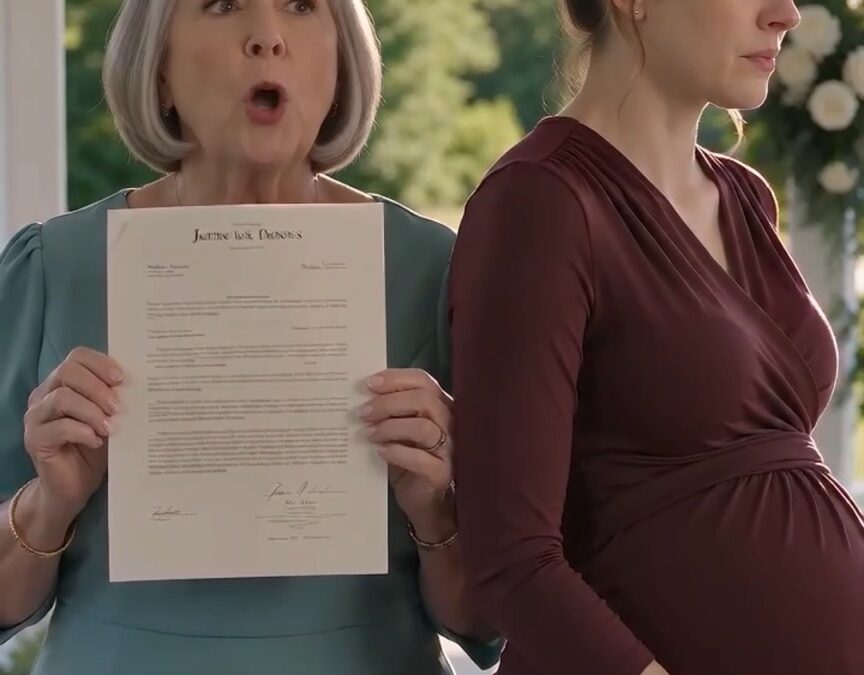
Chapter 1: Behind the Wedding Arch
My husband grabbed my throat behind the wedding arch.
I was 28 and seven months pregnant.
Grant pushed me backward against one wooden post.
I turned sideways, trying to protect my stomach.
“You’re signing that transfer tonight.”
His face was close enough to block the tables.
I could still see one woman beyond his shoulder.
She was putting down her glass.
I tried pulling his wrist with my left hand.
My injured right hand wouldn’t close around it properly.
“I told you no.”
The words came out rough and thin.
He tightened his mouth and leaned closer.
Then a chair scraped across the gravel.
The woman stood.
Her companion came around the table beside her.
Grant let go before either guest reached us.
He touched the chain resting above my dress.
“Your necklace was twisted.”
He said it loudly, looking past me.
I pressed my fingers beneath my jaw.
Swallowing hurt.
The woman stopped beside the arch.
“I saw your hand on her throat.”
Grant gave her a small, patient smile.
“I was straightening her necklace.”
Her companion pulled a chair away from the table.
“Would you like to sit?”
“Yes.”
Grant reached toward my elbow.
I stepped away and took the guest’s offered hand.
That annoyed him.
I saw it before he arranged his face again.
“Mallory, don’t make this into something.”
I lowered myself into the chair.
The edge pressed against the backs of my legs.
My dress had twisted beneath my stomach.
I smoothed it while trying to swallow again.
On the table sat the place cards I’d made.
Ivory paper. Dark lettering. Folded neatly across the middle.
I recognized Eli’s card near the flowers.
The final letter dipped below the others.
My right hand had cramped while I finished it.
Across the grass, Eli left the drink table.
He was nine, and Grant wasn’t his father.
He came toward us without the cup he’d wanted.
Grant noticed him coming.
“Go sit down, Eli.”
Eli looked at me instead.
“What happened?”
I held out my left hand.
He came around Grant and took it.
His eyes went straight to my neck.
“Did you fall?”
“No.”
The woman beside me answered before Grant could.
“Your mother needs some help.”
Grant exhaled through his nose.
“She got upset. That’s all.”
“My throat hurts,” I said.
The other guest took out her phone.
“Should I call an ambulance?”
“Yes. Please.”
Grant stared at me.
“For that?”
I didn’t answer him.
I watched the woman press the numbers.
Nadine arrived carrying a dessert plate and a fork.
She was 56, my stepmother, dressed for photographs.
“What’s going on over here?”
I looked directly at her.
“Grant grabbed my throat.”
Her eyes moved toward the wedding table.
Then she looked at Grant.
He lifted his hands, showing her empty palms.
“I adjusted her necklace. She’s worked herself up.”
Nadine set her fork against the plate.
“Pregnancy hormones can make things seem worse, Mallory.”
The woman who had stood first shook her head.
“I watched him grab her neck.”
Nadine glanced toward the other guests.
“Please don’t disrupt Paige’s wedding over this.”
I looked down at Eli’s hand around mine.
He was holding tightly enough to flatten my ring.
I loosened my fingers without letting him go.
Paige was already crossing the lawn.
She lifted her skirt to clear a chair leg.
At 26, she looked younger when she was worried.
“What happened to her?”
Grant turned toward my stepsister.
“We’re having a disagreement about our house.”
“It isn’t our house,” I said.
He stopped looking at Paige.
We were renting our home.
The house he wanted was somewhere I hadn’t chosen.
He wanted my money for it.
He wanted his name alone on the deed.
“This is not the place,” he said.
“You brought me behind the arch.”
His jaw moved.
For a moment, nobody spoke.
Then Nadine put down her dessert plate.
“We should take this somewhere private.”
The witness stayed beside my chair.
“She asked for medical assistance.”
June rose from a table beyond the flowers.
She was 52, my settlement attorney and a family friend.
I had seen her during the ceremony.
Now she came over without her purse.
“What happened?”
I told her.
She crouched enough to see my face clearly.
“Does swallowing hurt?”
“Yes.”
“Any change in your voice?”
“It feels scratchy.”
Grant made a frustrated sound.
“You’re all acting like she’s been attacked.”
June looked up at him.
“Step back.”
He didn’t.
She repeated it.
“Give her room.”
Paige pulled another chair beside mine.
Her skirt spread across the gravel.
Eli moved between my knee and the table.
He looked at the cards, then at Paige.
“Mom made every one.”
Grant stared at him.
“This isn’t about the cards.”
“She kept stopping because her hand hurt.”
Eli pointed at the one bearing his name.
“She did them three nights.”
Paige reached toward him, then stopped.
“I know she did.”
“She didn’t charge you anything.”
Grant stepped closer.
“Enough, Eli.”
I pulled my son beside my chair.
“Don’t speak to him like that.”
Grant looked at June, then toward the garden entrance.
His hand moved toward the front of his navy shirt.
Eli followed the movement.
He lifted his head.
“The microphone.”
Grant had served as a ceremony reader.
The videographer had clipped a microphone inside his shirt.
It was still there beneath the fabric.
I had forgotten it completely.
Eli turned toward the equipment table.
The videographer was already watching us.
“He still has it,” Eli said.
Grant’s fingers touched his collar.
Eli raised his voice.
“Please don’t let him take it off.”
Chapter 2: The Paper Beside June
The videographer approached with his hands away from Grant.
He looked at the microphone beneath the shirt.
“That recorder has been running since the ceremony.”
Grant dropped his hand.
“It was for the reading.”
“Yes,” the videographer said.
“It records locally on its own track.”
“You can’t broadcast private conversations.”
“Nobody is broadcasting anything,” June said.
She asked the guest on the phone about emergency services.
“They’re coming.”
The witness gave the venue’s entrance details.
We were at a rented garden venue in Columbus, Ohio.
It was May 18, 2024, Paige’s wedding day.
Staff were still carrying dishes between the tables.
One stopped beside us with a tray of empty glasses.
Paige asked her to keep the entrance clear.
Grant watched people begin moving around him.
He tried to recover the tone he used with strangers.
“This has gotten completely out of hand.”
June stood beside my chair.
“Mallory needs medical attention.”
“She needs to calm down.”
“She has asked you to step away.”
He looked at me.
“Tell them we’re fine.”
I kept my hand around Eli’s.
“We’re not fine.”
June had already heard those words from me.
Before the ceremony, I’d found her near her seat.
She had been invited as a family friend.
I had asked her to arrive early.
My document case was inside my tote.
I took it out while Grant spoke with the videographer.
“Will you keep this until I leave?”
June opened it enough to identify the contents.
“Your settlement copy?”
“Yes.”
She looked toward Grant, then back at me.
“What happened?”
“He keeps asking for a transfer.”
“Have you authorized anything?”
“No.”
“Signed a purchase agreement?”
“No.”
She closed the case.
I held the tote strap with both hands.
“I need somebody who handles divorce.”
June waited while I looked down at the grass.
“I don’t want his lawyer. Or somebody he chooses.”
“I’ll arrange independent counsel.”
She asked whether I felt safe going home.
I said Grant hadn’t hit me.
June didn’t accept that as an answer.
“Does he let you leave a room?”
“Sometimes he stands in the doorway.”
“Does he take papers or your phone?”
“He’s been looking through my sewing drawers.”
“What is he looking for?”
“Bank papers. Anything about the settlement.”
She placed the case beside her chair.
“You haven’t agreed to give him the money?”
“No.”
“Then don’t sign because he says it’s urgent.”
I had nodded and returned to the wedding preparations.
My right hand was aching from the place cards.
I had spent three evenings making all 78.
Paige came over while I finished the last batch.
She sorted the dry cards across our kitchen table.
Eli’s was beneath my hand when she noticed me stopping.
“Mallory, these can just be printed.”
“I’ve already started.”
“You don’t have to finish tonight.”
I steadied the ivory card with my left fingertips.
My right thumb had begun pulling inward.
I put down the pen and opened my hand slowly.
Paige moved the unfinished stack away.
“Leave those.”
“I can finish the others if we take breaks.”
She sat down.
“Then we’re taking one now.”
Eli watched from his homework at the table.
When I picked up the pen again, he leaned closer.
“Is mine done?”
“Almost.”
I finished the final curve of his name.
He smiled before I folded it.
Paige asked what she owed me.
“Nothing.”
“You’ve spent hours on these.”
“Then help me count them.”
We counted twice because I kept losing my place.
Grant had been standing in the kitchen doorway.
“Funny how you can sign things when you want.”
He meant the bank transfer.
I put the pen in its cap.
Paige looked at him, confused.
He walked away before she could ask.
Now she sat beside me in her wedding dress.
Her eyes kept returning to my neck.
June went back to her table for the document case.
Grant noticed immediately.
“What’s she getting?”
I didn’t answer.
He started after her.
June stopped beside the chair and faced him.
“Stay there.”
“That’s my wife’s paperwork.”
“It’s in my custody at her request.”
He looked around, measuring who was watching.
Then he gave another tight smile.
“You’re turning a family disagreement into a legal performance.”
June removed the settlement copy.
The detailed pages remained behind the plain cover.
She held it flat with both hands.
The cover faced outward.
SETTLEMENT.
Grant recognized the document case first.
Then he looked at the title.
His smile disappeared.
He glanced at me as though I had done something sneaky.
June stepped beside my chair with the papers visible.
“Mallory has not authorized your proposed transfer.”
He stopped advancing.
The chair beside the table had been offered twice.
He had refused it both times.
Now he lowered himself into it.
Eli moved closer to my shoulder.
An emergency crew came through the garden entrance.
June returned the papers to the case.
The crew asked Grant to give them space.
He stood again, but he stayed behind his chair.
I answered questions about pain and breathing.
When he tried answering for me, Paige interrupted.
“They’re asking her.”
A police officer approached while they checked my pulse.
Grant pointed toward the case at June’s feet.
“She can hide behind those papers all she wants.”
The officer asked him to step aside.
Grant’s voice carried across the table.
“We’re married. That makes all that money mine too.”
Chapter 3: What The Papers Covered
The settlement did not assign one purpose to every dollar.
June had explained that before I accepted it.
The net proceeds totaled $140,000 after fees and liens.
Of that, $120,000 compensated personal injury and future care.
The other $20,000 replaced earnings lost during our marriage.
Grant knew the total.
He had never asked about the supporting records.
A delivery van struck my car on June 12, 2023.
My right hand was injured badly enough to interrupt sewing.
I worked part-time doing alterations.
After the collision, I couldn’t reliably hold fine fabric.
A zipper replacement could leave my fingers aching for hours.
Sometimes I dropped the needle before threading it.
June collected medical records and treatment recommendations.
She collected my employment records too.
The claim correspondence separated different losses during negotiations.
The final allocation reflected that documentation.
It wasn’t simply a useful heading on a cover.
When the funds cleared on April 26, 2024, I followed instructions.
I kept them in an individual account.
I never deposited household money there.
I never moved settlement money into our joint funds.
Grant had no ownership on that account.
He also had no login credentials.
June had warned me that account title wasn’t everything.
A divorce court would examine what the payment replaced.
Money compensating marital earnings could be marital property.
The supported injury compensation could be treated differently.
I needed the agreement, the records, and the tracing.
At the wedding, she didn’t pretend she could decide ownership.
She told the officer what she actually knew.
“Mallory has not signed a transfer authorization.”
Grant folded his arms.
“She promised to help with a house.”
“I didn’t,” I said.
The officer looked at me.
“We’ll speak separately.”
The two guests were separated for their accounts too.
One stayed near the arch.
The other walked toward an empty table with an officer.
Neither could hear what the other was saying.
I watched that while the crew asked about swallowing.
My voice sounded different when I answered.
Not just frightened.
Rougher, with effort behind ordinary words.
They recommended immediate hospital assessment.
I agreed.
Nadine came close enough for me to smell her perfume.
“Can’t your regular doctor see you tomorrow?”
A crew member answered her.
“Neck compression needs prompt medical evaluation.”
Nadine looked down at her shoes.
Paige asked what I needed her to do.
“Stay with Eli until June can bring him.”
Eli shook his head.
“I want to go now.”
“I know. Let them get me settled.”
He pressed his lips together.
I touched his sleeve.
“You’re coming. I’m not leaving without telling you where.”
Grant started toward us as we prepared to leave.
The officer stopped him.
For once, I didn’t have to keep saying no.
At the hospital, a nurse asked to speak privately.
The room felt too bright after the garden.
She checked my name and asked who had hurt me.
“My husband.”
“Do you feel safe returning to your residence?”
“No.”
I looked at the blanket across my knees.
She waited until I looked up again.
“Has he hurt you before?”
I answered what she asked.
I described the doorway blocking and the financial pressure.
I didn’t add excuses for him.
The clinician examined my neck and noted the tenderness.
They documented the change in my voice.
They assessed the pregnancy and asked about the baby’s movements.
I followed their directions and answered repeated questions.
Nobody asked whether the wedding had been expensive.
Nobody said I should have waited until after photographs.
I received instructions about symptoms requiring urgent attention.
I asked for everything in writing.
By then, ordinary details were hard to keep straight.
June arrived with Eli after the initial examination.
He stopped near the bed, still wearing his wedding clothes.
“Can I touch you?”
“Of course.”
He hugged me carefully around the side.
I put my left arm over his shoulders.
June set the document case on a chair.
“The officers have the witness information.”
“What about the microphone?”
“The videographer is preserving it.”
Grant’s warning about consent kept returning to me.
“Can we get in trouble for that?”
June pulled up the other chair.
“The lawyers will address legal questions about the recording.”
She didn’t promise that every second would be admitted.
“The witnesses matter. Your examination matters.”
She tapped the case lightly.
“The property issue has its own evidence.”
I asked again whether he could make me fund the house.
“Not because he says so.”
“What if he tells a court I agreed?”
“Your independent lawyer will respond with the records.”
She had already arranged that referral.
June would provide her settlement file and explain its history.
Separate divorce counsel would handle the marriage case.
I was grateful she made those roles clear.
I didn’t need somebody promising to solve everything that night.
I needed the next step to be correct.
Eli sat with his shoes tucked beneath the chair.
“Is Grant allowed in here?”
“I told the hospital I don’t want him visiting.”
“What if he asks somebody else?”
“They know who can come in.”
He looked at the doorway anyway.
June asked whether he had eaten.
He shook his head.
She helped arrange food while I reviewed the discharge papers.
My hand hurt from gripping the blanket.
I opened my fingers against my thigh.
June’s phone vibrated as Eli started eating.
She checked the screen and stepped into the hallway.
When she returned, she left the door partly open.
“The videographer checked the track,” she said.
“He heard what Grant said before anybody approached.”
Chapter 4: The Separate Audio Track
I asked whether Eli needed to leave the room.
June nodded.
She helped him settle where he couldn’t hear our conversation.
Then she returned and sat close enough to speak quietly.
“The demand for the transfer is on it.”
I stared at the document case.
“And me saying no?”
“Yes.”
Grant had acknowledged that I’d already refused the purchase.
That mattered because he was claiming a shared plan.
June did not play the recording in the hospital.
The police were arranging direct delivery from the videographer.
They wanted the original audio, its metadata, and a working copy.
Eli had identified the microphone attached to Grant’s shirt.
He accompanied the videographer to the officers.
He had not handled digital evidence alone.
Nobody sent him away carrying a recorder or files.
That distinction mattered to me afterward.
He had noticed something.
Adults had taken responsibility for what followed.
I first listened later with my lawyer.
She asked whether I wanted to stop at any point.
I kept my hands flat on my knees.
Grant’s voice sounded almost normal at first.
He asked about the transfer.
I refused.
He said I had already made that position clear.
Then came the sentence I remembered against the wooden post.
“You’re signing that transfer tonight.”
I heard myself say no again.
There was movement against the microphone.
My next words sounded strained.
“Take your hand off my neck.”
A chair scraped.
Then Grant announced that my necklace had twisted.
I looked at my lawyer’s desk until the track stopped.
The audio couldn’t show where his fingers were.
The two guests could describe that.
The medical records addressed my condition afterward.
The recording supplied the demand and the acknowledgment.
It also preserved how quickly his explanation changed.
Grant first said nothing had happened.
Then he said the contact was misunderstood.
Then, through the legal process, he began discussing context.
He described financial stress.
He described a wife refusing reasonable household planning.
He said I was withholding money from the family.
My lawyer let me read those claims.
She didn’t let them become the only subject.
“We respond to what needs a response.”
I wanted to answer every sentence.
I wanted to list every alteration job I’d attempted.
I wanted to explain every painful exercise.
She pointed to the medical evidence.
“You don’t need to argue your injury in text messages.”
That was harder than it sounded.
Grant knew which accusations made me explain myself.
He had used them throughout the weeks before the wedding.
I was selfish.
I was suspicious.
I cared more about an account than our family.
Now I saved the messages instead of arguing.
I kept full conversations, not selected angry sentences.
I gave the material to counsel.
I did not send the audio around to relatives.
I didn’t upload it for strangers to judge.
The police obtained it directly.
The witnesses supplied their own statements.
My examination records could be requested through proper channels.
There were enough people doing their jobs.
I didn’t need to create another version to circulate.
I checked my individual bank account directly.
No transfer had been made.
No authorization had been scheduled.
I changed my password and confirmed my contact information.
Then I stopped looking every hour.
The bank records would show what had happened.
I made no voluntary house contribution.
I also left the joint household funds alone.
My lawyer warned against hurried financial moves.
We could document safety concerns without creating hidden transactions.
The first civil protection order was temporary.
A hearing would follow before a final order.
My lawyer read the terms with me.
She explained what the order covered.
She also explained what it didn’t decide.
It was not a divorce decree.
It did not classify every dollar in the settlement.
It did not permanently settle parenting arrangements.
Those matters required their own proceedings.
I kept a copy where I could find it.
I did not put Eli in charge of watching for Grant.
He still checked doors.
He still asked whether a car outside belonged to him.
I answered without giving him a task.
“You don’t have to handle that.”
Once, he asked whether remembering the microphone caused everything.
We were folding his clean clothes.
He held one sock in both hands.
“I told them where it was.”
“You told them something true.”
“But then the police came.”
“The police came because I needed help.”
He twisted the sock.
“Is he mad at me?”
“You don’t have to speak with him.”
“What if he calls?”
“Bring me the phone.”
Paige brought belongings through an arranged process.
She brought my sewing supplies and Eli’s school folder.
Inside another envelope was his ivory place card.
“I found it where he was sitting.”
Eli took it without opening the envelope.
Later, I saw him checking the lettering.
Nadine called while Paige was still there.
I let it go to voicemail.
Her message began with concern about the wedding.
I stopped listening and saved it.
Paige looked at my phone.
“Was that Nadine?”
“Yes.”
She went outside to make her own call.
I didn’t ask her to report back.
My voice improved over the following days.
My sleep did not improve as quickly.
I woke to hallway footsteps and checked my phone.
Then my lawyer received Grant’s formal property position.
He was asking the court to treat the settlement as marital money.
Chapter 5: The House Paperwork
My divorce lawyer asked for the complete financial file.
I brought June’s case and a stack of statements.
I brought the house messages too.
She wanted the entire conversations.
Not only the lines where Grant mentioned my settlement.
She read my questions about ownership.
She read his answers about keeping the purchase simple.
Then she asked one direct question.
“Did you sign anything connected with this property?”
“No.”
“Anything agreeing to contribute?”
“No.”
“Anything authorizing a transfer?”
“No.”
There was no ownership agreement.
There was no purchase signature from me.
There was no document placing my name on a deed.
Grant had talked as if only timing remained.
The records showed the disagreement existed before the wedding.
His lawyer described the proposed purchase as family planning.
Grant expected a contribution toward shared housing.
He said the baby would benefit from stability.
He emphasized that we were married when the money arrived.
Those statements sounded organized on paper.
They did not explain why the proposed deed named only him.
My lawyer requested the relevant purchase documents.
When they arrived, she spread them across her desk.
Grant appeared as the proposed buyer.
I did not appear as an owner.
She placed my saved questions beside that page.
“Here is where you raised the issue.”
I read my own message again.
I had asked why I should provide most of the cash.
I had asked what legal interest I would receive.
He had answered that I didn’t trust him.
There was no hidden agreement behind those messages.
There was only another demand.
My lawyer was careful about what the papers proved.
A deed proposal alone didn’t decide every marital issue.
An individual account alone didn’t establish separate property.
Together with the other records, they answered specific claims.
The house file showed the plan I had refused.
The settlement file showed what the proceeds compensated.
The bank statements showed where the money remained.
Each item had a purpose.
I started putting small labels on the folders.
Not accusations.
“Agreement.”
“Medical records.”
“Bank statements.”
“House messages.”
That made appointments easier when I hadn’t slept.
June supplied the settlement correspondence directly to counsel.
Grant questioned whether the allocation had been invented for divorce.
The correspondence showed how it developed during the injury claim.
My treatment needs were documented before the wedding assault.
My missed earnings were documented separately.
The payment matched the agreement after fees and liens.
The deposit matched the payment.
No household deposits obscured the account history.
Grant’s lawyer could review the tracing.
There was nothing for me to reconstruct from memory.
The protection hearing came before the divorce was finished.
I worried about explaining an injury no longer visible.
My neck looked ordinary in the bathroom mirror.
My lawyer told me not to perform distress.
“Answer accurately. Take your time.”
The two guests described where they had been standing.
One explained why she rose from her chair.
The other described approaching when Grant released me.
Neither claimed to know our private arguments.
They testified about the hand at my throat.
The examination records documented tenderness and voice changes.
The audio supported the demand and my refusal.
Grant could dispute my interpretation of our finances.
That did not turn the neck grab into necklace adjustment.
After the hearing, the temporary order became a final order.
My lawyer reviewed it with me outside the courtroom.
We discussed communication, distance, and permitted exceptions.
We discussed how later parenting orders would be coordinated.
I asked questions until I understood what to do.
I didn’t want to rely on what relatives thought sounded reasonable.
Paige met me afterward.
She waited until we were seated in her car.
Then she turned down the air blowing at her face.
“I should have said something sooner.”
“You came over.”
“I heard what Nadine said.”
I looked at the papers on my lap.
“She told me not to ruin your wedding.”
“I know.”
Paige rubbed a crease in her skirt.
“I should have answered her right there.”
I didn’t tell her it hadn’t mattered.
It had mattered.
Eli had heard every word.
“I don’t want him thinking I ruined it.”
“He won’t hear that from me.”
She waited before speaking again.
“You were hurt. You asked for help.”
I folded the order along its existing crease.
Paige didn’t ask me to reassure her.
That made it easier to stay in the car.
Nadine requested a visit later.
I answered in writing.
No minimizing the assault.
No messages delivered for Grant.
No questions for Eli about what he told police.
She called my conditions unnecessary.
I left the invitation unanswered.
My hand treatment continued through all of this.
I had appointments, exercises, and work I couldn’t accept.
Grant’s house claim did not pause those needs.
Neither did pregnancy.
I began arranging clothes for the hospital.
I put my medical papers where I could reach them.
The hospital asked about visitors and information access.
I supplied the people I trusted.
I also explained the protection order.
The nurse checked the instructions and looked back at me.
“What would you like us to do if he arrives?”
Chapter 6: The Hospital Visitor List
I asked the nurse to follow the hospital’s safety procedures.
I gave her the current order.
I wanted the restrictions understood before labor began.
My lawyer had explained what the visitor list could do.
It could control who entered my room.
It could not settle Grant’s future parenting rights.
He was the unborn baby’s father.
He was not entitled to ignore a protection order.
Those facts had to be handled together.
I wrote down my questions for counsel.
I didn’t want to improvise while exhausted.
Eli watched me pack the hospital bag.
He folded a small blanket three times.
“Will you be gone a long time?”
“I don’t know exactly.”
“Can I come?”
“When the hospital says it’s a good time.”
He put the blanket in the bag.
“Is Grant coming?”
“He won’t be in my room.”
That was the part I could promise.
I did not tell him no court would ever allow contact.
The baby would have separate arrangements.
Eli needed simple information, not guesses about future rulings.
The baby was born July 20, 2024.
Paige was with me.
Grant did not enter the room.
The staff followed the visitor instructions we had discussed.
Nobody asked me to negotiate access from the bed.
When they placed the baby against me, I cried.
Paige reached for a tissue before I could ask.
My right hand felt awkward beneath the blanket.
I couldn’t maintain the position comfortably.
“Can you move this part?”
She tucked a fold beneath my elbow.
“Here?”
“A little farther.”
The nurse helped me find a better hold.
I needed practical assistance, and they gave it.
There was no argument about whether I should manage alone.
I remember that as clearly as the baby’s weight.
There were forms and checks and interrupted sleep.
There were instructions I asked to hear twice.
Paige wrote things down while I fed the baby.
I kept water beside the bed.
I practiced standing without carrying everything at once.
Eli visited when it was permitted.
He came close to the bassinet, then stopped.
“Can the baby hear me?”
“Yes.”
He said his name carefully.
Then he looked at the tiny hand above the blanket.
“That’s smaller than I thought.”
He stayed beside the bassinet until the baby fussed.
Then he stepped back like he’d done something wrong.
“It’s okay,” I told him.
“Babies do that.”
He sat beside my bed.
“Where are we going after this?”
“To the place we arranged.”
“Not back to the rental?”
“No.”
He picked at the visitor sticker on his shirt.
“Does he have a key there?”
“No.”
That answer seemed to help him breathe more normally.
After discharge, the legal questions continued.
The baby’s arrival required actual parenting arrangements.
My lawyer worked within the existing orders.
Temporary provisions used supervision and controlled communication.
I followed what had been ordered.
I did not agree to private visits in a parking lot.
I did not send the baby through Nadine.
When a relative proposed something different, I referred it to counsel.
I was tired enough to agree just to stop talking.
Having written instructions helped prevent that.
Finding a home took ordinary work.
I looked at rental listings while the baby slept.
I needed space for Eli, the baby, and my sewing.
I needed a payment I could manage consistently.
I didn’t need the house Grant had chosen.
At viewings, I paid attention to things I’d once overlooked.
Could I work the lock with my sore hand?
Was there room to put the infant seat down?
Could I manage the laundry without carrying too much?
Would Eli have a reliable place for homework?
I stood in one kitchen and opened a lower drawer.
It slid without sticking.
That tiny detail made me unexpectedly relieved.
My lawyer explained the financial rules while the divorce continued.
I kept records of deposits and expenses.
I did not hide money behind a new address.
I did not empty the joint account.
Every statement remained available for review.
I rented a home I had chosen myself.
There were boxes longer than I wanted.
The sewing machine stayed covered while I arranged baby supplies.
Eli asked where his school papers should go.
I cleared one drawer and showed him.
“Yours.”
“All of it?”
“All of it.”
He immediately put something inside.
Later, while I sorted baby laundry, counsel called.
Grant had proposed a faster divorce settlement.
He wanted more of my compensation in return.
The proposal was framed as saving time and legal work.
It also mentioned cooperation concerning the baby.
My lawyer separated those subjects.
Parenting arrangements were not payment for property concessions.
I asked how long refusing could take.
She explained the next steps without promising an end date.
I stared at a small sleeper across my knees.
My fingers had cramped while fastening it.
I wanted the case finished.
I also knew why that money existed.
“Don’t exchange the injury compensation for speed.”
She repeated my instruction.
I confirmed it.
That evening, another message arrived through counsel.
Grant wanted to know whether I understood the offer expired.
Chapter 7: The Months Between Hearings
I understood the offer.
I asked my lawyer to decline it.
Then I returned to the baby laundry.
There was still a damp load in the machine.
Eli needed help finding a page for school.
The legal dispute occupied hours, but not every hour.
Sometimes that was a relief.
Sometimes a routine chore made me cry unexpectedly.
I would be turning a tiny sleeve right side out.
Then I’d remember Grant saying I had no choice.
I put the clothing down when that happened.
I didn’t call him.
I didn’t reopen the bargaining.
I waited until I could finish the task.
The civil protection order remained in place.
The divorce and criminal proceedings continued separately.
My lawyer reminded me of that when notices arrived close together.
One court date concerned property.
Another concerned the assault.
The evidence overlapped without making the cases interchangeable.
I kept a calendar beside my treatment binder.
I wrote appointments where I could see them while feeding.
I checked transportation and childcare before each legal meeting.
I stopped pretending I could remember everything.
June remained available for the settlement history.
She did not become my divorce attorney by convenience.
When counsel needed correspondence, she supplied the file.
When I needed family-law advice, I asked divorce counsel.
That prevented conflicting instructions.
It also kept Grant from claiming June had invented a division afterward.
Her file showed the negotiations as they occurred.
My hand still needed prescribed treatment.
I attended follow-up appointments and did the exercises.
I began accepting simpler alterations again.
I could shorten a straightforward hem more easily than replace certain fastenings.
I tested the task before promising a deadline.
Sometimes I stopped halfway and resumed after a break.
The lost pace frustrated me.
Grant had called that laziness when he wanted an argument.
The therapist called it something to accommodate.
I followed the treatment plan.
I adjusted the work surface and supported the fabric.
I recorded symptoms when I was asked.
The compensation wasn’t a reason to abandon treatment.
It helped make treatment possible.
Paige visited without announcing herself as help.
She asked what needed doing.
Sometimes I handed her laundry.
Sometimes I asked her to sit with the baby.
Once, she counted finished sewing pieces while I rested my hand.
She lined them up the way she’d sorted place cards.
Neither of us mentioned it immediately.
Then she said, “You always try to finish one more.”
“I know.”
“You can leave this one.”
I did.
Nadine continued asking for more access than I wanted.
I kept the visits limited.
I did not ask Eli to hug her.
I did not discuss the recording over dinner.
When she said Grant had sounded upset during the argument, I stopped her.
“I’m not discussing excuses.”
She looked toward Paige.
Paige kept folding the blanket in her lap.
“She’s already told you.”
Nadine changed the subject.
It wasn’t the apology I wanted.
It was at least a conversation that ended when I said so.
Eli gradually stopped keeping his shoes beside his bed.
He left them near the door with mine.
He began asking ordinary questions about the house.
Could he put a drawing on the refrigerator?
Could his school folder stay on the kitchen chair?
Could we keep the little table lamp on?
I said yes where I could.
When he asked about Grant, I answered briefly.
I didn’t tell him the property dispute.
I didn’t explain sentencing possibilities.
I told him that adults and courts were handling it.
He asked whether his microphone memory was still important.
“Yes.”
“Do I have to do anything else?”
“If someone needs to speak with you, I’ll tell you.”
He nodded and returned to his homework.
I watched until he picked up his pencil again.
The ivory card remained inside his folder.
One corner had bent during the moves.
He brought it to me one evening.
“Can you make it straight?”
“I can try flattening it.”
“Not with the iron.”
I smiled.
“No iron.”
I placed it beneath the heavy treatment binder.
He checked the spot before bed.
“It’s still there?”
“Still there.”
Grant’s criminal case moved toward resolution.
I received information through the appropriate channels.
I didn’t call witnesses to compare what they remembered.
I didn’t ask the videographer to make a dramatic version.
The original recording had already been preserved.
My attorney explained what was scheduled.
I asked what I would need to do.
Then I put the notice in the correct folder.
Grant pleaded guilty to domestic violence on January 10, 2025.
I sat in the courthouse and listened to the resolution.
He received probation with treatment conditions.
The no-contact restrictions were consistent with the court orders.
The plea did not cancel the protection order.
It did not end supervised arrangements for the baby.
It did not divide the settlement.
My lawyer explained those points afterward.
I drank water from a paper cup in the hallway.
Grant didn’t approach me.
I was watching the exit when my lawyer spoke again.
“Now we still have his property claim to finish.”
Chapter 8: The Final Property Papers
Grant continued disputing the money after the guilty plea.
His lawyer made the arguments in formal language.
The household had suffered while I couldn’t work normally.
The settlement arrived during our marriage.
He had expected us to acquire a family home.
My lawyer didn’t ask the divorce court to punish him.
She asked it to classify the proceeds using the evidence.
We acknowledged the marital earnings portion from the beginning.
The $20,000 wasn’t hidden inside an individual account.
It replaced earnings lost during the marriage.
The injury and future-care portion required a different analysis.
June’s file showed the basis for that $120,000 allocation.
Medical records described the injury and ongoing needs.
Employment records supported the lost-income figure.
Settlement correspondence addressed those components during the claim.
The bank statements traced the payment after it cleared.
The account had remained separate from household funds.
Grant questioned whether the allocation was convenient.
My lawyer responded with the earlier documentation.
He questioned whether I had really refused the house plan.
She produced the full conversations.
He emphasized the benefits the baby would have received.
She pointed to the sole-title proposal and lack of consent.
There was no signed contribution agreement.
There was no authorization to transfer the requested $95,000.
He had asked repeatedly.
I had refused repeatedly.
That was not an incomplete signature process.
It was a disagreement he had tried to override.
At one meeting, I watched Grant review the statements.
He turned a page and spoke quietly to his lawyer.
He didn’t look toward me.
There was no table full of relatives to persuade.
Nadine wasn’t there to explain my hormones.
Paige wasn’t there in a wedding dress.
He had the records and his lawyer beside him.
I sat with my own counsel and answered questions.
Sometimes I needed a moment to find the relevant page.
Nobody took that as permission to answer for me.
The divorce concluded March 14, 2025.
The court accepted the supported allocation and tracing.
The $120,000 injury and future-care portion remained my separate property.
The $20,000 marital portion was divided equally.
I received $10,000 of that portion.
Grant received the other $10,000.
He did not receive the $95,000 he had demanded.
My lawyer reviewed the final documents with me.
I checked the amounts against the order.
Then I asked how the distribution would be completed.
I wanted practical instructions, not congratulations.
There were still parenting provisions to follow.
Grant’s time with the baby remained supervised.
Any later change would require court review.
The order provided the arrangement.
I did not get to ignore it because I disliked him.
He did not get to ignore it because he was the father.
I sent the supplies the baby needed.
I used the required communication method.
I followed the scheduled process for supervised time.
I kept records without turning every exchange into a confrontation.
Grant had no parental rights concerning Eli.
My lawyer explained that clearly.
He was not Eli’s father.
Our marriage had not given him authority over my son.
Eli was not required to attend the baby’s visits.
He was not required to speak to Grant.
I had worried about that more than I admitted.
Grant had often spoken as if everyone belonged under his direction.
The order did not treat Eli that way.
His proposed house purchase failed.
I didn’t call the seller or interfere with financing.
I didn’t need to.
The contribution he expected from me never happened.
His purchase could not proceed as he had planned.
When my lawyer confirmed it, I simply wrote it down.
It belonged with the other completed matters.
My own rental had boxes left in one corner.
I had a kitchen drawer that stuck unless lifted slightly.
There was nothing impressive about that.
But I had chosen the place after looking carefully.
I knew what the payment required.
I knew where Eli would do his homework.
I knew Grant had no key.
Paige came over after the decree was entered.
She brought food in containers I could open easily.
“Have you eaten?”
“Not yet.”
“Then sit down.”
I fed the baby while she warmed dinner.
Eli worked at the opposite end of the table.
He kept looking at the document case.
“Is that court stuff?”
“Yes.”
“Do you have to go again?”
“Not for this part.”
He thought about that.
Then he returned to writing.
Paige lowered her voice.
“Is the house issue finished?”
“Yes.”
“He isn’t buying it?”
“No.”
She nodded and put a plate in front of me.
There was no toast.
I was grateful for that.
I didn’t want Eli remembering another dinner organized around Grant.
We ate and discussed the baby’s latest habit.
We discussed Paige’s work without turning it back to the wedding.
When she left, I filed the final documents.
I kept the treatment material in its own section.
My hand did not improve because a decree existed.
I still needed prescribed care.
I still had sewing jobs I couldn’t accept.
The separate compensation remained available for those documented needs.
Eli brought his empty glass to the sink.
Then he came beside the case.
He watched me close the fasteners.
“Do we still have my wedding card?”
Chapter 9: Our Own Kitchen Table
I lifted the treatment binder from the counter.
The ivory card was still beneath it.
Its bent corner had flattened.
Eli took it by the edges.
“You fixed it.”
“The binder helped.”
He checked the lettering and opened the fold.
There was a faint mark on the back.
He had noticed it while I was making the cards.
He rubbed it once with his thumb.
“Can it stay at the table?”
“Yes.”
“Not just tonight?”
“It’s your card.”
He put it beside his plate.
Then he moved it slightly so the name faced him.
I stood there while he went to wash his hands.
The baby began fussing from the other room.
Dinner needed heating.
The sewing basket was still on a chair.
I picked up the baby and moved the basket.
There was no room in the evening for a speech.
There were plates to fill and a bottle to prepare.
That was how our home began feeling settled.
I assigned drawers and stopped shifting things every week.
Eli’s school papers stayed where he expected them.
The baby’s supplies had their own shelf.
My sewing things no longer shared space with packed bags.
I kept the legal documents accessible but put away.
The court orders remained easy to find.
The settlement agreement stayed with its supporting records.
I didn’t need the cover displayed on a counter.
June had held it when I needed help.
After that, the detailed pages had done their work.
I continued prescribed hand treatment.
Some mornings, my fingers loosened after the exercises.
Other mornings, I needed longer before sewing.
I arranged tasks around what I could manage.
I used the supports recommended for my hand.
I stopped before pain made my grip unreliable.
If an alteration required more than I could safely do, I declined.
I no longer treated every refused job as failure.
I simply told the customer what I could offer.
My income still came from ordinary work.
Hems. Repairs. Adjustments requiring patience and good light.
I kept the treatment appointments in the calendar.
I managed the compensation with advice and clear records.
I did not spend it trying to prove we were fine.
Grant’s probation and treatment conditions remained his responsibility.
I followed the protection and parenting orders.
When a permitted message concerned the baby, I answered that subject.
When it concerned the marriage, I referred it to counsel.
If he wanted different parenting terms, he could request review.
I did not bargain through Nadine.
I did not ask Paige to explain my position.
The responses were usually short.
“The current arrangement remains in place.”
“Please use the approved process.”
“The baby’s supplies will be ready.”
I checked the order if I was uncertain.
That was easier than arguing about what he meant.
Some messages still upset me.
I set the phone down before answering.
I finished washing the bottle or helping Eli first.
Then I returned when I could read accurately.
I didn’t need to reply because Grant wanted immediate attention.
Eli gradually stopped checking every car outside.
He started asking whether a friend could visit.
He left drawings on the refrigerator.
He complained about homework and asked for different snacks.
I was glad to hear ordinary complaints again.
I spoke with his school about the changes at home.
I kept the information focused on what would help him.
He did not need adults asking for the wedding story.
He needed consistent pickup arrangements and a place to ask questions.
At home, I reminded him he wasn’t responsible for my safety.
He had remembered the microphone.
He did not have to remember everything forever.
When he asked whether I’d locked the door, I answered.
Then I told him I had it handled.
Sometimes he asked again.
I answered again.
Nadine eventually agreed to the limits I’d set.
Her visits remained brief.
Paige was present the first time.
Nadine sat at our table with her purse closed.
She said she had been worried about the wedding.
I placed my cup on the table.
“I was worried about swallowing.”
She looked at the cup instead of me.
“I should have asked whether you were hurt.”
“Yes.”
I didn’t tell her it no longer mattered.
I didn’t say everything was fine between us.
She stayed for the agreed visit.
When she began discussing other guests’ reactions, I stopped her.
“I’m not going through that.”
She changed the subject.
That let the visit continue.
It didn’t restore the relationship all at once.
Paige kept showing up in smaller, more useful ways.
She folded laundry while I did exercises.
She entertained the baby while I finished a hem.
She asked before inviting Nadine along.
She stopped apologizing every time something reminded her of the wedding.
One evening, she noticed Eli’s card beside his plate.
“You really saved it.”
“Mom said I could.”
“I remember.”
He straightened the fold with both hands.
Paige looked at me, then reached for the serving spoon.
We ate while the baby dropped a spoon.
Eli retrieved it and put it by the sink.
I thanked him and asked about school.
He began explaining with food still in his mouth.
“Chew first.”
Paige laughed.
He rolled his eyes and finished chewing.
After she left, he carried his plate to the counter.
I washed the dishes without rushing my sore hand.
Then I dried it and opened the treatment binder.
Eli wiped the place where he’d spilled his drink.
He lifted the ivory card so it wouldn’t get wet.
When the table was dry, he set it back.
The last curl in his name still dipped slightly.
I remembered taking a break before finishing it.
I remembered telling him he could keep it.
I checked the baby and turned off the kitchen light.
Eli’s saved ivory wedding place card stood beside his plate at our own kitchen table.
You Might Also Enjoy




