My husband left me having contractions at our 600-acre ranch on Christmas Eve, supposedly fetching the truck, while he showed his first love the breeding barn.
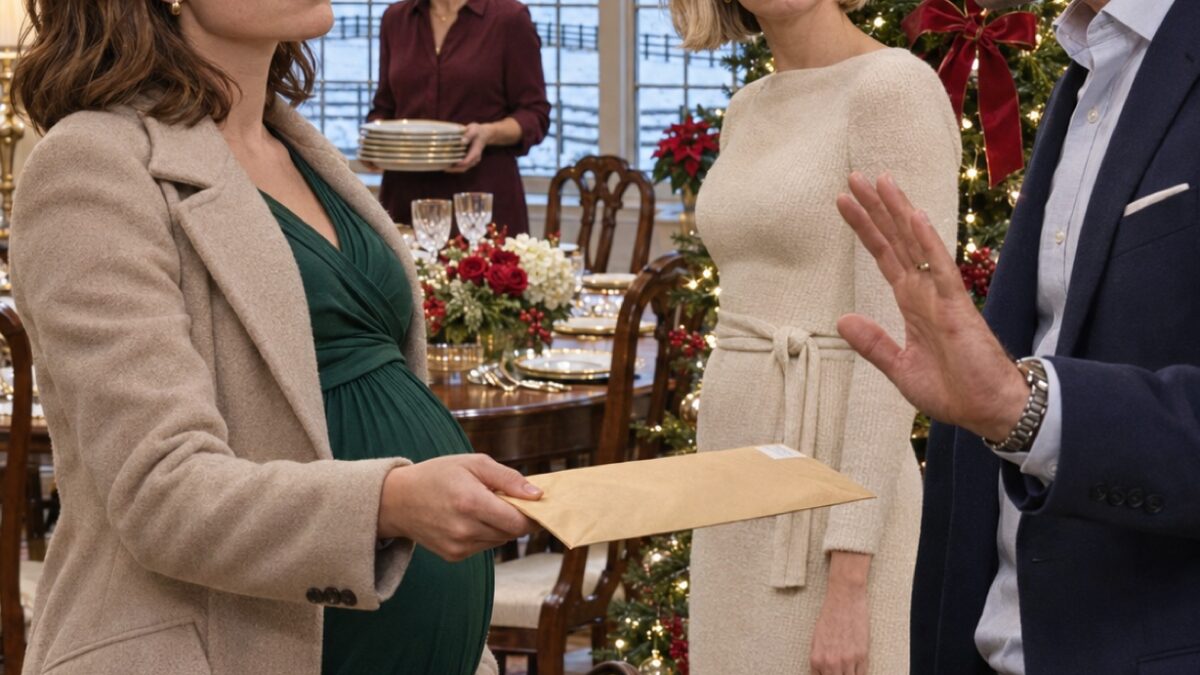
Part 4: The Page Beside His Chair
“Your business has to leave at the end of March,” I said as Wade lowered the page.
He looked up.
“I’ve arranged for an independent riding instructor to use the facilities beginning in April, if they’re lawfully available.”
Our daughter stirred beside my bed. I put my palm against her blanket while Wade turned to the next sheet.
He had opened the envelope marked “LEASE REVIEW” expecting something we could negotiate.
That much was clear.
He read the ending again, then looked at the transition contact information underneath it.
“You found somebody else?”
“Yes.”
“Before you talked to me?”
“I talked to you in the fall. You kept asking me to agree without answering my questions.”
He set the pages on his knee. His jacket had slipped off the chair, and he picked it up before speaking again.
“This is our home, Holly.”
“The business rents the barns and arena. That isn’t the same as living in the house.”
He looked toward the door.
I wasn’t telling him to leave our home from a hospital chair. I wasn’t deciding our marriage or where he could see his daughter.
I was ending a business arrangement when it was due to end.
Those were different decisions.
He wanted them discussed together, with the baby asleep between us and my hospital bag still unopened against the wall.
I moved the water cup closer.
“You can’t arrange my replacement while we’re married and pretend it has nothing to do with me.”
“It affects you. That doesn’t mean you get to decide.”
His mouth tightened.
He lifted the notice again, looking for something beyond the ending date. The page didn’t accuse him of anything. It didn’t mention Celia, Christmas dinner, or the calls he hadn’t answered.
I had signed it before any of that happened.
He noticed.
“You had this ready.”
“Yes.”
“Then last night wasn’t even why.”
“No.”
He stood, then sat again when our daughter made a small sound.
I watched him smooth the page over his knee. He had spent the fall treating my questions as delays. Now he was looking at an answer he hadn’t expected me to give.
“You could have told me there was somebody waiting.”
“I could have. You also could have listened when I said I hadn’t agreed.”
He folded the page along its original crease, carefully this time.
Then he asked whether I had promised the instructor anything that couldn’t be changed.
“The arrangement depends on the facilities being lawfully available,” I said. “I’m not promising somebody else more than I can provide.”
He heard that.
For a moment, he studied the transition sheet instead of me.
*
Later, while our daughter slept, Wade spread the pages on the rolling table.
He had brought the table closer without asking. I needed it for my water and the food I hadn’t finished, so I moved his papers to the chair.
“Not there,” I said.
He stepped back.
“Tell me what this instructor is getting.”
“Use of the facilities after your term ends. We’ll follow the arrangements already made.”
“Are they taking over my customers?”
“No.”
“My horses?”
“No. Your business has to arrange their care and their move.”
He rubbed his face.
I understood why he was asking. His business had grown around a place he didn’t own, and moving would require work he hadn’t planned to do.
But that work didn’t belong to me.
He picked up the transition sheet and tapped the space for his business contact information.
“What am I supposed to put here?”
“Who will coordinate departure. How you’ll reach customers. What needs moving.”
“You make it sound like hauling out furniture.”
“I know horses need planning. That’s why this isn’t an immediate departure.”
He looked at our daughter, then back at the paper.
“I should be home getting things ready for you.”
“You can still do that.”
“And apparently start looking for barns.”
“Yes.”
I didn’t enjoy saying it.
I was sore, tired, and wearing a gown that kept slipping off my shoulder. The man sitting beside me had touched our daughter’s fingers with such care the night before.
I wanted that part to have been the whole story.
Instead, he was asking whether my decision could wait until I felt better.
“It was made before I came here,” I told him.
He put the papers back inside the torn envelope.
Not neatly.
*
Before we left the hospital, he brought it up again while I checked the bag.
I had folded the emerald dress around my small gold earrings so they wouldn’t disappear into a pocket. Wade stood near the chair, holding the envelope against his side.
“Did you get advice on this?”
“I spoke with my attorney in the fall.”
“Without telling me?”
“It concerned my property and a term that was ending.”
He watched me fasten the bag.
For 3 years, I had paid for structural work from my inherited funds while his separate business paid $1,200 a month. Keeping the barns sound had never meant handing him the choice of who used them next.
I had tried to say that over dinner.
He had answered as though my contribution explained why nothing should change.
Now he asked whether the instructor understood that he had established his business there.
“Yes.”
“And that I’m your husband?”
“Yes.”
He shifted the envelope beneath his arm.
“This isn’t just about whose name is on something.”
“I know. It’s also about what we agreed.”
He glanced at the baby carrier.
I stopped packing.
“Our daughter isn’t part of a rental negotiation.”
“I didn’t say she was.”
“Then don’t ask me to decide this because we just brought her into the world.”
He looked away first.
We still had to get home. There were clothes to wash, instructions to follow, and a baby who didn’t care whether either of us had slept.
I wanted the conversation finished.
Wade wanted it postponed.
*
At the house, the dinner things were put away.
The tree lights were still on. The brass horse ornament hung slightly sideways, just as I had left it when the contractions became too hard to ignore.
I walked past it carrying our daughter.
Wade set the hospital bag down, then placed the envelope on the dining table where the platter had been.
He didn’t open it again.
I settled into a chair and asked him to bring the blanket from the bag. He did. For a while, we managed ordinary things.
Then his phone lit up.
He read the screen, turned it facedown, and looked toward the envelope.
“What?”
“Nothing that can’t wait.”
I didn’t press him. I adjusted our daughter’s sleeve and listened to him move around the kitchen.
When he came back, he was carrying a glass of water for me.
He set it within reach.
Then he stood beside the table, his hand resting on the torn flap.
“You’re making this sound like I imagined our plans.”
“I’m saying I didn’t agree to another term.”
He pulled out a chair.
“We discussed continuing here.”
“We discussed your request.”
He sat down slowly, watching me as though there might still be a phrase that would make me take the papers back.
Then he said, “You already promised me another term in the fall, and I expect you to honor it.”
Part 5: The Messages From Fall
“Show me where,” I said.
Wade pulled his phone from his pocket but didn’t unlock it.
“You know how those conversations went.”
“I remember asking questions. I remember you saying we’d work it out.”
“That meant we were continuing.”
“No. It meant we hadn’t settled it.”
Our daughter moved against my chest. I lowered my voice and pointed toward the drawer where I kept my copy of our arrangement.
“Bring that folder, please.”
He hesitated.
Then he opened the drawer.
The folder had been there long before Christmas. It held the signed terms, maintenance records, and the correspondence I had started saving when he asked for another 3 years.
He brought it over closed.
I put our daughter in her nearby sleeping space before opening it. I needed my hands free, and I didn’t want to keep discussing papers across her blanket.
Wade remained standing.
I found the pages we had signed and laid them flat.
His business had permission to use specified barns and the covered arena until the end of March. Written nonrenewal had to be delivered at least 90 days beforehand.
There was no automatic extension.
No option allowing him to renew without my agreement.
He leaned forward.
“I know what the original terms say.”
“Then you know I didn’t give you permanent use.”
“That isn’t what I’m saying now.”
He was careful.
He wasn’t denying the writing. He was claiming something had happened afterward that changed what it meant.
So I reached for my phone.
*
The saved fall conversation opened beneath my thumb.
I read it before turning the screen toward him, making sure the surrounding messages were visible. I didn’t want a cropped sentence becoming another argument.
His request was there.
Another 3 years. Same favorable terms.
My response asked about the breeding schedule, shared access, and the work I wanted done on the property.
He had answered that we would figure it out.
I had written that I wasn’t agreeing until we discussed those things.
Wade took the phone when I offered it.
He scrolled upward.
Then down.
“There were conversations besides this.”
“Yes. None ended with my agreement.”
“You were planning around me.”
“I was planning around the term you already had.”
He set my phone beside the folder.
The baby began fussing, and I picked her up. Wade reached toward her, then stopped when I settled her against me.
I wasn’t withholding her.
I was already holding her.
He returned to the screen.
“You never told me to stop building the business.”
“I didn’t have to stop you from running it during your term.”
He pulled out the dining chair and sat.
That was the first time he stopped talking as though the notice itself could be dismissed.
He asked whether the new arrangement had already been signed.
“I’ve arranged it through my attorney,” I said. “It depends on lawful availability.”
“So you protected them.”
“I made clear what I could offer.”
He looked at the message again.
The words had been sitting on his own phone all along. He had just never expected me to put them beside the agreement.
*
Denise came by with the serving dish she had taken home after Christmas dinner.
Wade was still at the table when she arrived. I was putting clean baby clothes into the hospital bag so I could carry them upstairs together.
She looked at the folder.
“Are you still doing this?”
“We’re checking what I agreed to,” I said.
Wade told her I had already found somebody else for the barns.
Denise set the dish on the counter.
“While he was planning to stay?”
“While I was saying I hadn’t agreed.”
She looked at him.
He explained that married people didn’t conduct every conversation in writing. It was a reasonable point by itself, and he delivered it that way.
I put the bag down.
“No, they don’t,” I said. “But he asked for a business commitment. I answered in writing.”
I showed her the exchange.
Not the entire phone.
Just the request, my questions, and my refusal to agree before discussing them.
She read without taking it from me.
Wade stood behind her, close enough to see.
“You were still considering it,” Denise said.
“Yes. Considering isn’t agreeing.”
I laid the signed terms beside the phone.
“This is what his business currently has. This is when it ends.”
Denise ran a finger along the edge of the serving dish.
She didn’t call the tour customer service again.
Instead, she asked whether he could have time to work something out.
“He has until the end of March,” I said. “I’m not closing the barns on him.”
Wade picked up the folder, then put it down when he realized the pages weren’t his copy.
“I need to get advice.”
“You should.”
Denise looked between us.
I carried the baby clothes upstairs.
Behind me, nobody resumed the argument about a promise.
*
When the house was quiet, I called my attorney.
I had the signed terms open in front of me. My copy of the notice lay beside them, with the delivery instructions marked.
“I gave him the envelope,” I said. “I still want the required delivery completed.”
We went through the method specified in the existing terms.
I confirmed the address and the business information. I asked that the notice be sent before the deadline and that proof be kept with the file.
Not just my account of handing it over.
Actual proof.
The attorney confirmed what would be sent and how the delivery record would be preserved. I checked the copy afterward, including the ending at the end of March.
Nothing had changed because Wade disliked it.
I saved the confirmation where I could find it again.
Then I closed the folder.
My phone needed charging. There was a damp cloth over the chair, and I couldn’t remember whether I had eaten what Wade left on the counter.
I went to check.
He was standing by the kitchen window, speaking quietly into his phone.
When he saw me, he ended the call.
“Was that about another location?” I asked.
“I’m looking into things.”
“Good.”
He didn’t like that answer.
He asked whether I understood how disruptive moving could be for customers who had planned around the ranch.
“I understand they need accurate information.”
“They need certainty.”
“Then give them the ending we already have.”
He looked toward the closed folder.
His next argument wasn’t about my signature or the messages anymore.
“My spring customers can’t wait for me to find another barn.”
Part 6: The Forwarded Customer Messages
“Why can’t they?” I asked.
Wade put his phone in his pocket.
“Because they’ve made plans.”
“What plans?”
“Training. Transport. Their schedules.”
I pulled a chair out rather than keep standing in the kitchen doorway.
“Then I need an accurate transition list.”
He frowned.
I explained what belonged on it: the horses his business was responsible for, the customer equipment stored in my facilities, the people arranging transport, and the person handling questions.
I didn’t ask for his entire business.
I needed to know what had to leave my property.
He took out his phone again.
“I’ll handle my customers.”
“I expect you to. I still need departure information.”
He said he would send it when he had something useful.
I asked him to send what he already knew.
The answer should have been simple. He knew which horses were there. He knew which belongings weren’t his.
Instead, he asked whether I planned to contact everyone myself.
“Not to take over your business,” I said. “To avoid confusion about access and departure.”
He stared at the empty chair across from me.
Then he said he needed time to put things together.
I went upstairs when our daughter woke.
My phone stayed downstairs on the table.
For once, I wasn’t going to follow him around asking for an answer while carrying her.
*
The list arrived while I was sitting beside the window with our daughter asleep against my arm.
It was incomplete.
There were horses identified, equipment noted, and gaps where the transport arrangements should have been. Wade had forwarded customer messages to explain the gaps.
I opened the first conversation.
The customer was asking whether spring training would happen at the ranch as promised.
Below that was Wade’s earlier response.
He had described the ranch as his business’s permanent home.
I read it again.
Then I opened the attached exchange beneath it.
A customer had already paid a spring deposit.
Another message referred to money reserved for training after the end of March, with the location understood to be here.
I set the phone on my knee.
Our daughter’s hand had curled around the edge of my shirt. I eased the fabric out of her fingers before picking the phone back up.
Wade hadn’t simply hoped to stay.
He had taken money while speaking as though the decision belonged to him.
I saved the forwarded messages in their full form.
Then I sent them to my attorney.
My question was narrow: how should I respond to requests about use of my property without taking responsibility for his promises?
I didn’t contact the customers while I was upset.
I didn’t send screenshots to Denise.
I waited until our daughter was settled, then went looking for Wade.
He was by the back door, pulling on his work coat.
“Your messages say this is your permanent location.”
He stopped with his arm inside a sleeve.
“People need confidence in a trainer.”
“They also need the truth.”
He finished putting on the coat.
“I expected us to work this out.”
“You expected me to agree.”
“I expected my wife not to put me out of business.”
“I’m not running your business.”
He looked at the phone in my hand.
Now he knew exactly what he had forwarded.
*
We sat at the table with the transition list between us.
I turned the screen so he could see the customer’s words beneath his own promise.
“You accepted spring deposits?”
“Yes.”
“For work here after your term ends?”
“For work with me.”
“But you described the location as permanent.”
He looked at the message.
He didn’t deny it.
That mattered.
Instead, he said deposits were normal, and training schedules had to be arranged ahead. He could still provide services somewhere else.
“Then tell them that,” I said.
“I don’t have another place settled.”
“That doesn’t make this place settled.”
He leaned back.
“If I start telling people the location is uncertain, they’ll want their money back.”
I put the phone down.
“That’s between your business and your customers.”
He asked whether I understood that refunds could make relocating harder.
I did.
I also understood that letting him keep collecting money against my facilities would make leaving harder every time another customer paid.
“I won’t endorse these promises.”
“I’m not asking you to endorse anything.”
“You’re asking me to make them true.”
He looked toward the window.
Beyond it, the barns were operating as usual. Nobody had shut a gate on him. Nobody had disconnected anything or moved a horse.
His current term was still being honored.
I pointed to the list.
“Complete the departure information. Don’t list a future booking as permission to stay.”
He drew the paper toward him.
For the first time, he wrote beside the blank spaces instead of telling me the blanks were my fault.
*
The corrected list was more useful.
It showed which customers could arrange transport themselves and which needed Wade to coordinate. It separated his equipment from customer belongings.
It also made clear how much he had assumed.
Spring work appeared in notes attached to horses whose owners believed nothing was changing. Some had asked about moving dates and received reassurance instead of an answer.
I checked the list against the barn records available to me.
I didn’t change training instructions.
I didn’t speak for the owners.
I marked questions about departure and sent those back to Wade.
When a customer contacted me directly about whether the facilities were secured for spring, I held the message until I had the factual wording reviewed.
My reply would concern my property.
Nothing else.
Wade came inside while I was saving that draft.
“Did you answer anybody?”
“Not yet.”
“Please don’t make this sound worse than it is.”
“I’ll give them the current ending. I won’t discuss our marriage.”
He put both hands on the back of a chair.
“What if I move the training but keep some access here?”
“That isn’t agreed.”
“I’m trying to find a way that doesn’t hurt everybody.”
“Then start with accurate information.”
He stayed behind the chair.
I could see him choosing what to ask next. The old claim that I had promised another term was gone. So was the suggestion that the envelope meant nothing.
Now he wanted my name attached to whatever he told people.
He glanced at my draft, then said, “Send something with me saying the ranch is still secured for spring, just until I sort out another location.”
Part 7: The Statement He Wanted
“No,” I said, closing the draft.
Wade pulled the chair out.
“I’m asking for time, not another term.”
“You’re asking me to tell people something that isn’t true.”
“We can say we’re working together on continuity.”
“We can coordinate departure. That’s different.”
He sat across from me.
There was a burp cloth tucked under my elbow. I moved it before laying the transition list on the table, mostly because I needed something ordinary to do with my hands.
Wade watched me straighten the paper.
“If customers panic, moving gets harder.”
“If they plan around the wrong location, moving gets harder for them.”
He suggested a joint message that didn’t mention the end of March. It would say arrangements were being finalized and everyone could proceed with spring plans.
I read the wording on his screen.
It wasn’t crude or obviously false.
That was why he wanted it.
With my name beside his, customers would reasonably think the owner had agreed the facilities were available.
I pushed the phone back.
“I won’t sign that.”
“You don’t have to sign. Just send it from your phone.”
“No.”
He picked up the phone.
I expected an argument about supporting him.
Instead, he asked exactly what I intended to say.
I opened my reviewed wording.
His business’s current use ended at the end of March. There was no agreement for use beyond that. Questions about services, deposits, refunds, and relocation belonged with his business.
Access for lawful departure would be coordinated.
That was all.
He read it without speaking.
*
I sent the statement only when affected people contacted me.
Not to everyone I knew.
Not to the neighborhood.
I didn’t mention Celia, the hospital, or the calls Wade had ignored. None of those things helped a customer decide where a horse would be kept.
A customer asked whether I was closing the ranch.
“No,” I wrote. “His business’s term is ending.”
Another asked whether a deposit could be transferred to whatever program came next.
I explained that I hadn’t received the deposit and couldn’t transfer his business’s money or promise services on the instructor’s behalf.
That question made me set the phone down.
Already, people were trying to join arrangements that had never been joined.
I checked my wording again before sending.
Wade came in from the barns carrying the updated inventory.
“They’re calling me.”
“They need answers.”
“You’re making it sound final.”
“It is final.”
He put the inventory down harder than he needed to.
Our daughter startled in her sleeping space. He looked over, lowered his shoulders, and moved the paper away from the edge.
I waited until she settled.
Then I showed him the exact statement I had sent.
No insults.
No private details.
No suggestion that I would hold anyone’s horse or belongings.
He read it, then looked at the messages beneath it.
Customers had started comparing what he had promised with what the property owner was now confirming.
He couldn’t keep those accounts separate anymore.
“What am I supposed to tell them?”
“That the location wasn’t secured beyond your current term.”
His jaw moved.
I left the statement open on the table.
*
Wade drafted his correction in the kitchen.
He didn’t ask me to write it for him. He did ask me to look at the paragraph concerning the ranch before he sent it.
I stood beside the counter and read.
The first version said circumstances had changed.
“That suggests I withdrew an agreement,” I said.
He deleted the phrase.
The next version said renewal discussions had not resulted in another term.
I shook my head.
“Say you didn’t have another term.”
He looked at me.
“That sounds terrible.”
“It’s accurate.”
He rested his phone on the counter, then picked it up again.
The final message acknowledged that his current use ended at the end of March and that he had not secured continued use for spring.
It directed customers to him for relocation plans and questions about their payments.
He didn’t mention our daughter.
He didn’t call me unreasonable.
I checked only the parts concerning my property, then stepped away.
“Is that enough?”
“For the ranch information, yes.”
He pressed send while I was still beside him.
Afterward, he stood looking at the screen.
I filled the kettle.
He asked whether I was satisfied.
“I wanted people given the right information.”
“That’s not what I asked.”
“I know.”
I didn’t have another answer I was willing to give him.
*
The replies changed the departure plan.
Customers wanted transport details instead of general reassurance. Some needed to know whether their spring work could happen elsewhere. Others wanted their belongings collected before a move.
Wade brought those questions to the table with the inventory.
This time, he didn’t ask me to promise the facilities.
He asked about access.
“When can transport come through?”
“During coordinated hours that protect the horses and the ranch’s work.”
“What about owners who need to collect tack?”
“We’ll arrange it. Nobody’s property is being held.”
He marked the list.
I asked him to distinguish items leaving with horses from items being collected separately. That would let us check the spaces properly afterward.
He added another column.
The work was dull.
Names, belongings, transport arrangements, confirmations.
It was also the first useful conversation we’d had about the ending.
My attorney kept the notice record and the relevant correspondence. Wade sought his own advice about the business terms.
After that, he stopped suggesting I couldn’t enforce the ending because we were married.
He still disliked it.
But he began planning around it.
I kept copies of the updated lists in the folder. I checked that ordinary utilities and horse care would continue through departure.
Nothing would happen by surprise.
At the end of a long afternoon, Wade brought back the list with transport arrangements marked beside the horses.
Some spaces were still blank.
He held the page against the kitchen counter, looking at those gaps rather than at me.
“What happens if transport can’t be arranged before the end of March?”
Part 8: The List On The Gate
“Then we work on transport now,” I said.
I drew the list toward me and pointed to the blank spaces.
“We don’t wait until the ending and call that a plan.”
Wade pulled up a chair.
We went through the departures in the order they could reasonably happen. I checked the ranch’s breeding work against the access he needed.
He checked with customers and transport arrangements.
When something wasn’t confirmed, we marked it that way.
No hopeful answers.
No “probably.”
The plan kept his business responsible for the horses in its care. Feed, routine attention, and the people needed to handle them would continue.
The barns would have water and power.
Gates wouldn’t suddenly be locked against scheduled access.
I wrote those points down because I wanted him to stop treating every practical question as a threat.
He read the sheet.
“You’re not going to change this after people book transport?”
“Not without a real reason and coordination.”
He nodded.
That was enough for the moment.
I sent the plan through the same channels we were using for the departure correspondence. My attorney kept a copy.
Wade’s business had an ending.
The horses still needed ordinary care until they left.
I wasn’t going to make that harder to prove I could.
*
At the barns, I clipped the access schedule where we both could find it.
Wade stood beside the gate with his phone, confirming a collection.
He gave the customer the agreed route and asked them not to block access needed for the other horses.
When he finished, he looked at me.
“That work?”
“Yes.”
I checked the aisle.
Customer belongings were being labeled for collection. His training equipment had been gathered away from items belonging to the ranch.
There were still mistakes to correct.
A brush box had gone into the wrong group. A piece of equipment listed as his belonged to a customer.
We fixed the list instead of arguing over who had remembered wrong.
Wade carried the box back.
I marked the correction.
The place sounded normal: hooves shifting, a bucket being moved, a horse calling from farther down the barn.
That helped.
My stomach had tightened whenever my phone lit up for days. Here, there were things I knew how to do without rehearsing what I would say.
I checked a latch and asked about the next scheduled departure.
Wade answered.
Then he asked whether he could have unscheduled owners come through if they called him first.
“They need to be coordinated with access here.”
“I’ll be with them.”
“That helps. It still needs confirming.”
He looked at the schedule.
Then he took a photograph of it.
*
I walked the facilities with the incoming instructor while Wade’s business was still using them.
The visit was coordinated.
No customer was surprised by someone entering a space, and we stayed clear of the work underway.
I carried the facility notes.
The instructor checked the covered arena, the access points, and the areas included in the new arrangement. We discussed what could be prepared without disturbing Wade’s existing use.
Some work would have to wait.
That was understood.
I pointed out the structural maintenance already completed and the ordinary things I wanted checked between occupants.
The instructor asked about the transition.
“The beginning of April is still dependent on lawful availability,” I said.
We kept that clear.
I wasn’t going to solve Wade’s habit of promising my property by doing the same thing myself.
At the arena entrance, I paused with my hand against the rail.
For 3 years, my visits there had often turned into discussions about what Wade needed next.
Now we were talking about how the facilities would function under the arrangement I had chosen.
It felt unfamiliar.
Not bad.
Just unfamiliar enough that I checked my notes twice.
Wade came across the yard as the visit ended.
He waited until the instructor had finished asking about access before speaking.
“Everything all right?”
“We’re checking what needs doing between uses.”
He looked toward the arena.
I could see him measuring what would soon no longer be available to him whenever he wanted it.
He didn’t challenge the instructor.
He asked me to speak afterward.
*
Back inside, I put the facility notes away and washed my hands.
Wade remained by the table.
“The horses can move,” he said.
“That’s good.”
“I mean I think we can make the transport work.”
“Then confirm it on the list.”
He stayed where he was.
I dried my hands slowly.
There was more.
He began with the weather at other facilities, then the difficulty of finding covered riding space, then the customers whose schedules depended on regular training.
I let him finish.
He wasn’t asking to keep the barns now.
He was narrowing the request.
“If the horses are gone, the arena doesn’t interfere with their arrival.”
“It interferes with the new use.”
“They won’t use it every minute.”
“That isn’t the point.”
He suggested access around the instructor’s schedule. His customers could come at limited times. He would carry his own responsibilities and keep equipment out of the way.
It sounded more practical than demanding another 3 years.
It still required me to give him use I hadn’t agreed to give.
I asked him to put the proposal in writing so I could answer the actual request instead of a conversation that might become another supposed promise.
He didn’t like that.
But he wrote it.
I read it at the kitchen table while our daughter slept nearby.
The request had no clear departure benefit. It kept his business operating at the ranch after the existing term and placed the new arrangement around his needs.
I laid it beside the schedule.
Wade watched me read to the end.
“You could help me keep the customers who are willing to stay.”
“I’ve kept the departure orderly.”
“This is different.”
“Yes.”
He pushed his chair back, then stopped before standing.
“I’m not asking for the barns anymore.”
“I understand.”
He tapped the written request.
I looked at the same hand that had refused the envelope beside the Christmas tree.
This time, I would answer in writing.
Wade leaned forward and said, “Let me keep the covered arena after the horses move, even if the instructor has to start around me.”
Part 9: The Request Beside The Schedule
“No extra term,” I said.
I set his request beside the departure schedule.
Wade looked at the pages without touching either.
“You haven’t even talked to the instructor.”
“I don’t need to ask them to surrender part of what I arranged.”
“I said around their schedule.”
“You’re asking to remain after your term ends.”
He sat back.
The request had seemed small when he described it aloud. On paper, it was another business occupancy, with customers, access, equipment, and responsibility continuing at my ranch.
It wasn’t departure coordination.
I wrote my response while he waited.
The existing ending remained unchanged. We would continue coordinating lawful departure within that term. No continued arena use was agreed.
I gave him the response.
He read it.
“You’re willing to lose business income just to keep me out.”
“I’ve chosen another use.”
“You could have both.”
“I don’t want both.”
That stopped him.
Not because he liked it.
Because there was no problem left for him to solve by adjusting hours or moving equipment. I wasn’t looking for a version of his proposal that would persuade me.
He folded the response.
I kept a copy.
*
Wade found another location before the deadline.
He told me at the table, with his phone beside the transition list.
“I’ve rented somewhere.”
I looked up.
“Can it take the horses you’re moving?”
“Yes.”
“Then we can finish the schedule.”
He waited as though I might ask him to describe everything or soften the ending now that he had an alternative.
I asked what affected departure from my property.
He gave me the transport arrangements and the changes needed for customer collections.
Some customers were continuing with him.
Some weren’t.
His business would handle refunds where they were due and the costs of relocating. He said the new place would be more expensive to operate.
I didn’t ask how much.
That wasn’t a bill I had agreed to pay.
He showed me the revised customer message. It gave the new location information and directed payment questions to his business.
I checked that it didn’t imply continued use of my arena.
It didn’t.
“Thank you for making that clear,” I said.
He put the phone away.
“That’s what you wanted.”
“Yes.”
There was no point pretending otherwise.
I had wanted him to secure somewhere he could actually offer customers.
He had.
It had cost him work, money, and some business he might have kept if he had been honest earlier.
I didn’t say that part aloud.
He already had the replies on his phone.
*
The departures began under the plan we had agreed.
Wade handled the horses.
I handled access to the property and checked items against the inventory as they left.
Customers collected belongings without being asked to listen to our private dispute. When someone thanked me for keeping access straightforward, I said they were welcome and showed them where their things had been set out.
No speeches.
No explanations about Christmas.
A customer asked whether Wade would ever train here again.
“His business is moving,” I said.
That was enough.
Wade was within hearing distance.
He didn’t contradict me.
Later, he brought a revised list with collected items crossed out and confirmations saved on his phone.
I compared it with my copy.
We found something still waiting for collection and arranged access for it.
Nothing was being kept as leverage.
I walked through the covered arena after the training equipment had been removed.
Without it, I could see worn patches I had stopped noticing.
Ordinary use.
A rail needed attention. There were marks where equipment had rested. I made notes for the inspection instead of deciding what any of it meant while standing alone.
Wade appeared at the entrance.
“Anything wrong?”
“Things to check together when it’s empty.”
He looked around.
Then he asked whether the instructor was still coming at the beginning of April.
“Yes, once the facilities are lawfully available.”
He nodded.
This time, he didn’t ask me to change that.
*
The last horse left before the end of March.
I stood clear while Wade checked the loading arrangements and spoke with the person transporting it.
He was careful.
Whatever I thought of him as my husband, I could still recognize him doing that work properly.
The horse hesitated.
Wade waited, adjusted, and tried again without making a scene.
Then the loading was finished.
He checked what needed checking and stepped back.
I watched the vehicle move down the drive.
No sheriff.
No locks changed behind somebody’s back.
No horse held over a disagreement about money.
His business left because the term ended, the terms were confirmed, and he had arranged somewhere else to go.
Wade stood beside me after the drive was clear.
“That’s the horses.”
“We still have the inspection and the remaining items.”
“I know.”
His voice was flat.
I looked down at the inventory instead of at his face.
There had been so much preparation that I had expected the final departure to feel busier. Instead, there was a stretch of yard with nobody waiting to enter it.
I could hear movement from the breeding side of the ranch.
My work hadn’t stopped.
I checked the facilities with him for anything needing immediate attention before we closed up for the inspection. We left ordinary services intact.
He took photographs for his records.
I took mine.
At the house, I placed the updated inventory in the folder and confirmed the inspection arrangements.
Wade brought his keys to the table.
Not the house keys.
The keys associated with the business spaces.
He set them beside the list but kept his fingers on them.
“We’ll account for these at inspection,” I said.
He nodded.
Then he opened the inspection notes he had made on his phone and turned the screen toward himself.
“Before you walk through the empty barn, we need to agree how you’re going to treat the wear in there.”
Part 10: The Keys On The Counter
“Ordinary wear is ordinary wear,” I said.
I picked up the inspection list, and Wade took his hand off the keys.
“We’ll look together. We’ll write down what’s there.”
He nodded, though he still looked prepared for an argument.
At the barn, we started at the entrance and followed the spaces his business had used.
I carried the original inventory and the departure updates. Wade carried his photographs.
The marks were what I expected from a working horse facility.
Scuffed surfaces.
Worn areas.
Small jobs that belonged on a maintenance list.
Nothing suggested sabotage.
I said that plainly.
“I’m not calling this damage to punish you.”
He looked up from his phone.
“All right.”
We checked the rail I had noted earlier. We compared the empty spaces with the equipment list and made sure customer items hadn’t been overlooked.
When we found something still assigned to his business, he took it with the rest of his belongings.
No mystery.
No last surprise hidden in a stall.
I was glad.
I had enough to manage without turning ordinary wear into another fight.
Wade photographed the cleared area after we checked it.
I marked it complete.
*
We accounted for the keys at the counter afterward.
I checked access devices and keys associated with the business spaces against the list. Wade confirmed he wasn’t keeping any for continued business use.
His business belongings were accounted for.
Customer collections were completed or documented through the agreed arrangements before departure was finished.
I put the completed record in the folder.
Then I closed it.
Wade sat opposite me, looking at the cleared place where the envelope had spent so much time.
“So that’s it.”
“For the business here, yes.”
He nodded toward the stairs.
“And the rest?”
“We need to handle that separately.”
By then, we had begun doing exactly that.
I had told him I wanted to separate. I didn’t say it during a customer departure or over a horse being loaded.
I said it in the house, without anyone else standing there.
He had asked whether the business decision meant I had already decided everything.
“No,” I told him. “But Christmas wasn’t something I could just put aside.”
We weren’t going to solve our marriage by arguing over barn access.
We also weren’t going to solve residence and parenting by pointing to who owned the ranch.
My attorney handled those discussions with his counsel.
The household arrangements were negotiated.
So were interim parenting arrangements.
I didn’t put his belongings outside.
I didn’t claim that owning the house let me decide when he could see our daughter.
Those choices needed their own process.
They got it.
*
At the beginning of April, the instructor began using the facilities under the new arrangement.
I was there when access was handed over.
We walked through the spaces, reviewed what belonged to the ranch, and checked the maintenance notes made after Wade’s departure.
The instructor asked a question about storing equipment.
I answered it.
Then I wrote down the decision.
It felt good to have a question followed by an answer that stayed an answer.
The program didn’t appear all at once.
There were ordinary adjustments: schedules to confirm, places for equipment, and arrangements that needed checking after actual use.
I stayed involved.
This was my ranch, including the breeding work I had continued overseeing while the business dispute was happening.
I wasn’t handing control to somebody else because the new arrangement was easier.
I was choosing who used the facilities and on what terms.
During a quiet stretch, I stood at the arena entrance and watched the instructor prepare.
There was no need to look for Wade before discussing the space.
I took out my phone and answered a question about the breeding program.
Then I put it away.
For a while, I watched the work in front of me without waiting for another message asking me to reverse something.
*
The parenting arrangements became part of the week.
I kept what our daughter needed ready and shared practical information through the agreed channels. If a change affected her care, we dealt with that.
I didn’t attach barn messages to updates about her.
Wade didn’t get business access because he was coming for a parenting visit.
Those were separate.
When household questions came up, I sent them through counsel instead of trying to settle them during a handoff.
It wasn’t friendly every time.
It was more manageable.
I stopped leaving my phone beside me through every meal. I checked the ranch schedule before agreeing to extra work. I asked questions when I needed answers, even if somebody looked impatient.
There were still afternoons when I looked up from our daughter and expected Wade to come through the kitchen.
Then I remembered the arrangements.
I’d pick up the cup he wasn’t coming to use and put it away.
That was the sort of thing that caught me.
Not the folder.
Not the notices.
A spare cup.
As the next Christmas approached, I checked the parenting plans before making any holiday arrangements.
The visit was already agreed.
I made sure I had the time and practical details right. Our daughter’s routines had changed as she grew, and those details mattered more than anybody’s idea of a perfect holiday.
Wade sent a message after I confirmed.
He asked about coming earlier.
I asked what change he meant.
His reply wasn’t about travel or our daughter’s needs.
He wanted us to have Christmas together at the ranch.
Not just the arranged visit.
Dinner, the tree, the house.
I read the message while standing beside a box of decorations.
The brass horse ornament was wrapped near the top. I left it there and set the phone on the table.
After our daughter settled, I picked it up again.
I didn’t answer from the ache I felt looking at the box.
I read his words carefully.
There was nothing about a new agreement between us. Nothing that changed our separation.
Just a request to step back into the holiday as though the rest could be left outside for an evening.
His next message arrived before I had finished my reply.
“Can’t we spend Christmas together here as a family instead of making it only my scheduled visit?”
Part 11: The Ornament In The Box
“We’ll keep the parenting visit we already arranged,” I wrote.
I reread it before sending.
Then I added that we were not resuming the marriage or changing any business arrangements.
Wade called.
I let it ring while I moved the decoration box away from our daughter’s things. Then I answered where I could speak without waking her.
“I wasn’t asking about the business,” he said.
“I’m making sure there’s no confusion.”
“Christmas doesn’t have to mean everything is fixed.”
“I know. It also doesn’t mean we pretend we’re back together.”
He was quiet.
I could hear movement on his end.
“I just don’t want her growing up thinking we can’t be in a room together.”
“We can follow the visit we arranged.”
“That feels formal.”
“It’s what we agreed.”
He asked whether Denise could drop something off for our daughter.
I told him we could coordinate that separately.
Not a dinner invitation.
Not an excuse for everyone to arrive and decide the holiday in my kitchen.
He didn’t accuse me of withholding the baby.
He knew the visit was going ahead.
Finally, he said he would come as arranged.
I confirmed the practical details.
Then we ended the call.
I put the phone down and went back to the box.
The ornament could wait until our daughter woke.
*
At the facilities, the riding program was operating.
I checked the schedule with the instructor before walking through the covered arena. Equipment was stored where we had agreed. Questions about access came to me before promises were made.
When something needed adjusting, we discussed it.
That still wasn’t magic.
A working property always needed attention, and I still had days when I came inside with dirt on my coat and a list longer than when I’d left.
But I wasn’t explaining ownership every time I wanted to use a space.
I checked on the breeding program, answered the questions waiting for me, and looked over the maintenance notes.
Structural upkeep still came from my separate inherited funds.
That remained my responsibility.
The difference was that helping someone operate here no longer meant accepting whatever they decided to call permanent.
The instructor came over with a question about the holiday schedule.
We worked it out against the ranch’s needs.
Then the instructor went back to work.
I stood by the gate long enough to watch a horse settle before heading to the house.
My daughter was waiting for me.
There were decorations spread across the table and ordinary things still undone.
I preferred that to checking whether someone had promised another season of my property without asking.
On the way inside, I passed the place where transport had waited during Wade’s departure.
Nothing marked it now.
It was just part of the yard again.
*
Wade arrived for the visit as arranged.
He brought things for our daughter and asked where to put them. I showed him a clear place instead of letting bags collect around the doorway.
He took off his coat.
For a moment, he looked toward the dining table.
I knew what he remembered.
I remembered it too.
I picked up our daughter and brought her over.
He smiled when she reached toward him.
I gave him the care information he needed and let the visit be about her.
He didn’t ask to walk through the barns.
He didn’t ask whether the instructor was working out.
His business was operating elsewhere, with the costs and customer responsibilities belonging to him. I didn’t manage it, promote it, or answer for it.
We had no renewed term.
There wasn’t a hidden arrangement waiting for the holiday to make it easier to ask.
At one point, he looked toward the tree.
“You kept the horse.”
“Yes.”
He nodded.
Our daughter reached for something in his hand, and his attention returned to her.
I went into the kitchen.
There was a time when I would have stayed nearby, watching his expression and trying to decide whether a pleasant moment meant the difficult conversation could be avoided.
This time, I finished what I was doing.
When the visit was ending, we followed the arrangements.
Wade gathered his things.
We exchanged the information needed for the next parenting time. Anything that required changing the agreement would go through the proper channels.
He paused by the door.
“I’m glad I came.”
“I’m glad you spent time with her.”
He looked at me, recognizing the difference.
Then he put on his coat.
I didn’t ask him to stay for dinner.
He didn’t pretend I had.
After he left, I checked that I hadn’t missed anything our daughter needed.
Then I closed the door and went back to her.
*
That evening, I put the remaining decorations away.
The house wasn’t arranged exactly as it had been the Christmas before. I had moved things to make room for our daughter and stopped keeping places ready for people who didn’t live there.
The hospital bag was no longer beside the tree.
The folder containing the business ending was put away with the records where it belonged. I didn’t need it on the dining table.
I checked the next day’s ranch work.
There was a note from the instructor, a question concerning the breeding program, and routine maintenance to arrange.
I answered what couldn’t wait.
The rest stayed for morning.
Our daughter fell asleep nearby while I folded a blanket.
I watched her for a moment, then set the blanket down rather than wake her by fussing with it.
The Christmas tree still needed the ornament I had left in its wrapping.
I took it out carefully.
The brass had a small dull place where my thumb always rested. I rubbed it with the cloth from the box, turning it to check the hanging loop.
Nothing was wrong with it.
I had simply put off hanging it because I remembered standing there in the emerald dress, waiting for a truck that wasn’t coming to the door.
I remembered calling Beth.
I remembered Wade stepping past my bag.
Then I looked over at our daughter, asleep and comfortable in the house where we lived.
I didn’t need to take the ornament apart from the rest of my things.
I didn’t need Wade beside me to put it back.
I found a branch where it wouldn’t hang crooked or brush against anything fragile.
From there, I could see it from the chair where I often sat with our daughter.
I adjusted the loop.
Checked that it held.
Behind me, she made a sleepy sound and settled again.
I left my phone on the table.
With our daughter sleeping nearby, I hung the same brass horse ornament on the Christmas tree.
You Might Also Enjoy




