My Husband Shoved Me After My Mother’s Funeral—Then the Wedding Coordinator Stepped In
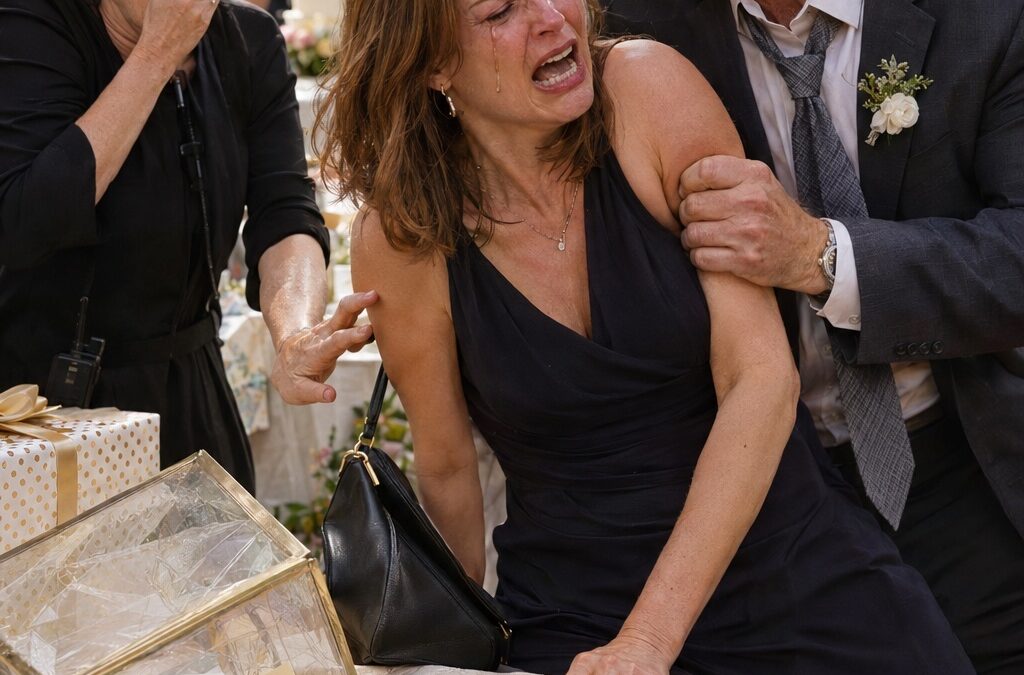
Part 3: The Page Jo Opened
Jo read the clause without adding anything to it.
The farm belonged to me alone. I had inherited it from my grandmother in 2021.
Eric’s business had permission to use the packing barn. That permission came through a signed commercial-use license.
It cost his business $600 monthly. Either side could terminate it with thirty days’ written notice.
His name was underneath those terms.
Mine was above the line identifying the property owner.
The officer looked at Eric, then back at Jo.
“I’m Sergeant Leon,” he said. “I need everyone separated.”
Eric pointed at the paper as though Jo had altered it.
“That doesn’t explain the whole situation.”
“It explains why I brought it,” Jo answered.
I rested my bag against the table. My arm had begun to throb beneath my sleeve.
Leon asked whether I needed immediate medical help.
“I don’t think anything is broken,” I said.
“That isn’t quite what I asked.”
I looked down at my hand. I could move my fingers, but lifting my arm hurt.
“I’d like someone to check it.”
He asked the other officer to stay near Eric. Then he moved with me toward the greenhouse office.
Jo walked beside me without touching my injured arm.
Behind us, Eric said, “Nina, don’t do this here.”
I stopped long enough to turn around.
“You did it here.”
Leon didn’t tell either of us to settle down. He asked Eric to remain where the other officer indicated.
Inside the office, the ceiling fan was turning unevenly.
I had meant to fix that before the wedding.
There was a clean towel hanging beside the sink. Jo folded it and set it under my forearm.
Leon asked me to describe what had happened.
I began with the folder, then the guarantee.
He stopped me gently before I got too far.
“We’ll discuss that. Tell me about the physical contact.”
So I described Eric’s fingers around my upper arm.
I showed him where I had been standing.
I explained how the chair had blocked my other side.
Then I described the table corner against my hip.
He asked whether I had struck Eric.
“No.”
Had I pushed him before he grabbed me?
“No.”
Had anything like this happened before?
I looked at the office door before answering.
“He has blocked doors. He has taken things from my hands.”
“Has he hurt you physically before today?”
“Not like this.”
Leon wrote that down without changing my words.
He asked permission to photograph my arm and hip. I agreed, and Jo stayed while I adjusted my sleeve.
The marks were clearer than I expected.
I kept looking at the towel instead of my skin.
“Did he threaten you after this happened?” Leon asked.
“He told me not to make a scene.”
“What happened to your bag?”
“It fell open.”
I took out the cloth and unwrapped the marker.
Jo made a small sound when she saw the crack.
It wasn’t valuable in any insurance-company sense.
My mother had used it beside her planting trays.
The writing was uneven because her fingers had stiffened.
I explained that, then stopped talking.
Leon asked whether he could photograph it too.
I laid it flat beside the towel.
Through the office window, I could see wedding guests gathering near the far tables. Someone had moved the card box back upright.
The bride stood beside her husband with both hands pressed together.
I wanted to go apologize to her immediately.
Jo saw where I was looking.
“She knows you didn’t cause this.”
“I should still talk to her.”
“Later,” Jo said. “You don’t have to walk back out yet.”
Leon asked about my relationship with Eric.
We were still married. We shared a rented home elsewhere.
Nobody lived on the farm.
That distinction mattered, so I said it clearly.
The packing barn held tables, chairs, linens, and equipment belonging to Eric’s business. I wasn’t claiming those things.
I owned the land and buildings.
He had signed the license in 2022.
A lawyer had prepared it because business storage required clear terms. Eric had wanted insurance information for his customers.
At the time, he had called the agreement sensible.
Now he was telling people it didn’t explain anything.
Leon listened, then put his pen down briefly.
“I’m not deciding a property dispute today.”
“I understand.”
“The agreement may help us understand what started this. It doesn’t determine whether an assault happened.”
I nodded, although my mouth felt dry.
“I don’t need you to remove his inventory.”
“What do you need right now?”
“I need him not to grab me again.”
He looked directly at me.
“That part is why we’re here.”
Outside, the other officer spoke with the server.
Jo stepped into the doorway to identify the guests beside the cake. She asked their names quietly, without making an announcement.
The bride came to the office a little later.
She had taken the flowers from her hair.
“Nina, I’m sorry,” she said.
I started saying the same thing, but she interrupted.
“No. Please don’t.”
She set a glass of water beside my good hand.
Then she told Leon she hadn’t seen the shove.
She had seen Eric crowding me before it happened.
She wouldn’t claim more than that.
I appreciated her for saying exactly what she knew.
When she left, Jo pulled a chair close.
“Do you want somebody called?”
“My lawyer, when she can answer.”
“What about somebody to stay with you?”
“I haven’t thought that far.”
“You don’t have to decide everything from this chair.”
I drank some water and set the glass down carefully.
My bag was still on my lap.
I kept one finger pressed against the wrapped marker.
Leon stepped outside to speak with the other officer. Their conversation stayed too quiet for me to follow.
Eric’s voice carried farther than theirs.
He said I was trying to destroy his business.
He said I had become unreasonable after Marian died.
Then he said something about paperwork being ready.
Tessa appeared near the office doorway holding the presentation folder.
She looked first at Jo, then at me.
“The lender already approved it,” she said. “Eric showed me the application.”
I looked at the folder she was hugging.
“An application isn’t an approval.”
Her forehead tightened.
“He said everything was finished except your signature.”
Part 4: The Approval He Promised
“Then let’s find out what my signature means.”
I said it to Tessa, not to Eric.
She opened the folder on the office desk.
The guarantee was clipped behind an application summary.
My name appeared where a guarantor would sign.
The space beneath it was empty.
I had seen a version before the wedding.
Eric had left it beside my breakfast mug.
He had described it as permission to finish underwriting.
I had told him I needed independent legal advice.
He had taken it away before I finished reading.
Now Jo stood beside me while I read every page.
The proposed loan was for $85,000.
The guarantee language did not sound like housekeeping.
It described responsibility if his business failed to pay.
My reserve held $18,000. That didn’t limit what a guarantee could expose me to.
I didn’t pretend I understood every legal sentence.
I understood enough to keep my pen away.
“There should be a contact person,” Jo said.
Tessa pointed to the application summary.
I called the listed office from my own phone.
The person who answered could not discuss everything immediately.
I explained that my name appeared as a proposed guarantor.
I gave the information needed to verify who I was.
Then I asked a narrow question.
“Have I signed or authorized a guarantee in your records?”
The employee checked while I sat beside the fan.
“No completed guarantee from you is in the file.”
“Has the financing been finally approved?”
She explained that the application had received conditional review.
Final approval required additional documents and my voluntary participation.
I asked whether the farm secured an existing loan.
She said this application had not created any such loan.
I asked for the explanation in writing.
She agreed to send what they could properly provide.
I did not ask her to punish Eric.
I said plainly that I was not agreeing to guarantee anything.
Jo wrote down what I asked and what I heard.
Tessa kept staring at the unsigned page.
“He told me the money was already coming.”
“He told me I was only embarrassing people.”
She pressed the folder shut.
“I thought you were refusing after agreeing.”
“I never agreed.”
For a moment, neither of us spoke.
Then she asked, “Does he know you called?”
I looked toward the doorway.
“He’ll know soon enough.”
Leon returned before she could say anything else.
He asked Tessa to wait outside with the other officer.
Then he told me he had spoken with witnesses.
Their descriptions matched the physical contact I had described.
The server had seen Eric grip my arm.
A guest had seen him push me toward the table.
Another had seen me strike the wooden corner.
Nobody he interviewed described me attacking Eric.
He explained that there was probable cause for an arrest.
I stared at the glass beside my elbow.
“Do I decide that?”
“No,” he said. “You tell us what happened.”
He explained what would happen next in plain language.
He did not promise a conviction or a sentence.
He did not tell me the agreement made me untouchable.
The document protected my right to control commercial access.
The witnesses and injuries were evidence of what Eric did.
Those were separate matters.
I needed to hear the difference.
Outside the office, Eric demanded to speak with me.
Leon told him that wasn’t happening.
His voice rose, then stopped.
Jo moved between me and the office window.
“You don’t have to watch,” she said.
I heard the other officer giving instructions.
Then I heard Eric say my name again.
He didn’t sound sorry.
He sounded as though I had missed a cue.
I stayed in the chair until the voices moved away.
The bride returned after the officers led him out.
She asked whether I wanted the reception stopped.
I looked at the unfinished plates outside.
Her husband was trying to speak with the caterer.
“Please let people eat,” I said.
She bent down and hugged my uninjured side.
Neither of us said anything about family loyalty.
There wasn’t room for that conversation in the office.
Jo drove me to get my arm checked afterward.
I brought the agreement, my bag, and the folder.
The flowers I had planned to plant stayed untouched.
At the hospital, a nurse asked how I had been injured.
“My husband grabbed me and pushed me,” I said.
I didn’t say I had bumped a table.
That felt important, even while filling out routine forms.
The examination showed bruising without a fracture.
The nurse explained how to manage the discomfort.
She also asked whether I felt safe going home.
“No,” I answered.
Saying it changed where we went afterward.
Jo helped me arrange somewhere safe to stay.
I did not go back and change the rental locks.
I did not move Eric’s things onto the lawn.
I put my lawyer’s contact information beside the discharge papers.
Then I placed the wrapped marker in a drawer.
My phone began lighting up before I could rest.
Some messages came from guests who had seen only pieces.
Some asked if I was all right.
I answered the people I trusted.
I left the rest alone for the evening.
Then a message from Eric appeared.
He had sent it before any no-contact order was served.
He said we could avoid making everything worse.
He said I could explain that I had lost my balance.
In exchange, he would stop bringing the guarantee to me.
At the bottom, he added a condition about the barn.
I read it, then read it again.
He wanted written assurance that his business could stay.
Part 5: What I Would Not Sign
I didn’t answer Eric’s message.
I saved it and sent it to my lawyer.
Then I put my phone facedown beside the discharge papers.
Jo had brought a plain sandwich from the kitchen.
I managed to eat it without tasting much.
“What did he say?” she asked.
I told her about the proposed exchange.
She set down the cup she was holding.
“He thinks you can trade away what happened.”
“I don’t know what he thinks anymore.”
But that wasn’t completely true.
I knew he expected me to make things convenient.
I had done that through years of ordinary interruptions.
A customer arrived before he was ready.
I opened the greenhouse and found extra chairs.
A delivery arrived while he was elsewhere.
I signed the delivery sheet and checked the count.
My mother needed help while he needed an errand.
I planned both so nobody would complain.
Those habits had not all been terrible.
Some had simply become expected.
The shove made it impossible to call them harmless.
My lawyer spoke with me when she was available.
She asked what I needed handled immediately.
I said safety first, then the property and money.
She asked whether I had signed the guarantee.
“No.”
“Keep it that way until you receive independent advice.”
“I don’t want the loan at all.”
“Then we will make that clear.”
She explained that preserving records mattered more than arguing.
I sent the unsigned guarantee and the lender correspondence.
I sent the commercial-use license and Eric’s message.
I kept the originals in a place he couldn’t access.
She told me not to alter conversations or delete replies.
She also told me not to negotiate through Tessa.
I had no intention of doing that.
The criminal court addressed contact restrictions through its process.
A temporary criminal protection order was issued.
I received a copy and read it carefully.
The restrictions were not something I could casually waive.
The prosecutor’s office explained how to report prohibited contact.
I wrote the instructions beside my lawyer’s notes.
Housing required another careful conversation.
The rented home was not the commercial farm.
Being sole owner of the farm didn’t answer residential questions.
My lawyer handled arrangements for belongings and access.
I stayed elsewhere until lawful arrangements were in place.
I didn’t ask friends to confront Eric at the house.
I didn’t ask Jo to carry messages between us.
She had already done more than I had expected.
Next came the documents my grandmother had left.
I took the estate papers from their storage box.
The deed named me, not Eric.
The inheritance records explained how the property reached me.
My lawyer reviewed them instead of relying on my memory.
We traced the roof payment to inherited funds.
That payment had been $24,000 in 2022.
I remembered choosing the contractor with my grandmother’s old notes nearby.
Eric had complained that the roof cost too much.
Then he had moved more inventory beneath it.
The license had followed because I wanted clear responsibilities.
He had signed willingly when business insurance required documentation.
Now that signature kept our recollections from becoming the contract.
My lawyer was careful about what she promised.
Separate property can still raise questions in divorce.
Contributions and financial history needed review.
She would not tell me every issue was settled.
She did tell me not to surrender ownership out of embarrassment.
We prepared formal notice under the commercial-use license.
It gave the full thirty days required by the agreement.
The notice identified the packing barn and allowed arranged inventory removal.
It did not claim his tables or his linens.
It did not threaten to sell things he left overnight.
My lawyer arranged proper delivery and kept proof.
I felt sick after approving it.
That surprised me, because I knew what I wanted.
I wanted him out of my work space.
I wanted to stop underwriting his business choices.
Still, the notice made our separation feel physical.
There would be empty floor where his stacks stood.
There would be no van turning into the service yard.
There would be nobody calling me from the barn doorway.
I cried over that in the parked car.
Then I went inside and copied the inventory photographs.
My lawyer asked about recurring business expenses I covered.
We reviewed them without shutting off services recklessly.
Existing commitments needed to be handled properly.
I stopped agreeing to new expenses for his company.
I gave appropriate notice where my name was involved.
I did not cancel coverage in the middle of an event.
I did not interfere with customers’ paid rentals.
I could protect myself without creating another mess.
The lender confirmed that I had not guaranteed the proposed loan.
I kept that confirmation with the unsigned pages.
No money appeared in my account afterward.
Nobody sent me damages because Eric had been cruel.
I still had ordinary expenses and a part-time paycheck.
The reserve remained something I needed to protect.
One afternoon, I went to the farm with Jo.
The greenhouse smelled damp and slightly sour.
Flowers from the wedding had started dropping petals.
We took down the decorations that belonged to me.
We left rented items for their proper collection.
I found the place where my hip hit the table.
There was no mark in the wood.
That bothered me more than I expected.
Jo put a bucket beside the door.
“Flowers first?” she asked.
“Yes.”
We worked without talking until the bucket was full.
My phone rang while we were stacking empty vases.
My lawyer had heard from Eric’s representative.
He wanted access for inventory removal, which was expected.
But his proposed inventory list included the greenhouse planting benches.
It also included equipment he had never purchased.
Part 6: Everything Inside the Barn
I asked my lawyer to send me the list.
I read it at the greenhouse office desk.
Some entries belonged to Eric’s business without any question.
His folding tables had purchase records in his company files.
His linen racks still carried delivery labels.
The portable dance floor was his too.
Other entries made me open my old photographs.
The planting benches had been there before his business moved in.
My grandmother stood beside them in an estate photograph.
The potting equipment appeared in the estate inventory.
A set of tools came from my own purchases.
I gathered evidence instead of adding angry comments.
My lawyer sent a marked response through the proper channel.
She separated agreed items from disputed ones.
The pickup arrangement would not depend on shouting in the yard.
Eric could send movers for things clearly belonging to him.
Any permitted personal attendance required compliance with court restrictions.
I did not have authority to rewrite those restrictions.
Neither did his lawyer.
The arrangements were cleared before the appointment happened.
I stayed away during the actual removal.
I wanted to be there, which wasn’t a good reason.
My lawyer arranged for independent people to document it.
Jo helped identify the property layout and existing fixtures.
She wasn’t there to argue with Eric.
She was there because she knew the greenhouse.
Before the pickup, I walked through with a camera.
I photographed the barn walls and the floor.
I photographed the shelves that were staying.
Then I photographed the inventory that was leaving.
The place looked different through a camera screen.
I noticed my old stool behind a stack of chairs.
I noticed a leak stain beneath the repaired roof.
I noticed how little of the building I could use.
At the back, Eric had stored the wedding signs.
His sister’s names were still chalked on them.
I turned them around before taking the next photograph.
Tessa sent a question through the approved business channel.
She wanted to know whether the company could extend access.
My lawyer replied that the notice deadline remained unchanged.
No separate promise had been made to Tessa.
There was no agreement giving her management authority over the property.
I heard later that she had been handling calls from customers.
She had believed the proposed financing would solve overdue obligations.
It didn’t excuse her standing beside him at the table.
It explained why she had kept holding that folder.
She had been holding a plan he had sold her.
The lenders hadn’t agreed to it.
I hadn’t agreed to it.
The farm wasn’t available to make it happen.
Eric’s representative sent an apology proposal before the pickup.
It came attached to another request for continued access.
Eric was willing to say he had handled things badly.
He wanted me to acknowledge that we had both been emotional.
My lawyer asked whether I wanted to respond.
“Not to that version,” I said.
She wrote a response addressing only the access arrangements.
The criminal case would proceed separately.
The property deadline would remain in place.
There would be no guarantee from me.
I read those sentences before she sent them.
They sounded plain enough to keep.
On removal day, I sat at Jo’s kitchen table.
We were supposed to be sorting greenhouse seed packets.
Instead, I kept checking whether my phone was charged.
Jo pushed a tray between us.
“Put the damaged packets over here,” she said.
I started working because my hands needed something.
The task was small and uncomplicated.
A torn packet went in one pile.
A sealed packet went in another.
Outside, somebody was cutting grass.
I could hear the mower pass and return.
I didn’t hear the truck at the barn.
That was the point of staying away.
Updates came through my lawyer when necessary.
The agreed business inventory was loaded.
The disputed benches stayed where they belonged.
A shelving unit was resolved by its purchase record.
Nobody was allowed to turn the appointment into a visit.
Nobody delivered an apology on Eric’s behalf.
By the time the truck left, I had sorted every packet.
Jo made tea while I read the final update.
The barn had been surrendered before the notice deadline.
The keys provided for business access were returned.
There was no need to change a residential lock.
This was a commercial building with an ended license.
The distinction had taken more paperwork than anger would have.
It had also left a much clearer record.
I returned to the farm after the appointment was over.
The floor looked enormous.
Dust marked the places where storage racks had stood.
A plastic chair foot lay near the wall.
I picked it up and put it in the trash.
Then I opened the side door for air.
For years, I had turned sideways through that doorway.
Now I could carry a whole planting tray straight through.
I put a tray on the nearest bench.
There weren’t any seedlings in it yet.
I just wanted to see it there.
Jo stood in the doorway and looked around.
“What do you want to do with this space?”
“Not decide today.”
She nodded and brought in the seed packets.
We set them on the empty shelf.
Later, my lawyer sent the completed removal record.
Eric still owned his business and its inventory.
He would have to operate somewhere else.
Losing access didn’t erase what he owed other people.
It didn’t transfer those obligations to me.
I filed the record behind the license termination notice.
Then another envelope arrived from the court.
It concerned the criminal case.
Eric was scheduled to enter a plea.
Part 7: The Statement I Read
I carried the court notice around in my bag.
It stayed beside my wallet and the discharge papers.
I kept thinking I should know how to feel.
Mostly, I wanted to know where to park.
The prosecutor’s office explained the scheduled hearing.
They also explained that I could provide a statement.
I didn’t have to turn it into a speech.
I could describe what happened and how it affected me.
At home, I wrote a version full of explanations.
I explained the affair and my mother’s illness.
I explained the greenhouse and the business license.
Then I read it and crossed out most of it.
Those things mattered, but they were not the shove.
He had gripped my arm and pushed me.
I had struck a table in front of witnesses.
I had needed medical care and somewhere safe to sleep.
I had changed how I entered familiar places.
That was enough to describe honestly.
Jo drove me to court because I asked her.
She didn’t tell me I would feel better afterward.
She brought tissues and a bottle of water.
At the entrance, I had to empty my bag.
The plant marker wasn’t inside anymore.
I had left it safely at the farm office.
That morning, I was glad I had.
The courtroom was smaller than I had imagined.
People waited with folders resting against their knees.
Nobody there knew about the greenhouse flowers.
Nobody needed to.
The case was called through the normal calendar.
Eric appeared with his lawyer.
I looked at the front of the room.
His lawyer spoke, then the prosecutor spoke.
Eric entered a guilty plea to misdemeanor domestic violence.
The judge asked the required questions before accepting it.
There was no argument about the barn license.
There was no discussion of who had paid for flowers.
The proceeding concerned his conduct toward his wife.
When it was my turn, I unfolded my statement.
I had printed it large enough to read easily.
“My husband grabbed me at a wedding reception,” I began.
I said he had shoved me into the gift table.
I described the bruising and the hospital examination.
I described being afraid to return to our rented home.
Then I spoke about the messages afterward.
I did not ask the judge to repair my marriage.
I asked for the contact restrictions to remain enforceable.
I wanted to work without Eric approaching me.
I wanted communication limited to lawful, approved channels.
My mouth went dry partway through.
I stopped, drank water, and finished the page.
The judge didn’t congratulate me or make a dramatic speech.
He addressed Eric’s responsibility and the conditions being imposed.
Eric received probation and required domestic-violence intervention.
The sentence included no-contact terms.
The consequences were real, even without a prison scene.
He would have obligations, reporting requirements, and restrictions.
Violating them could bring further consequences.
I listened until I understood what applied.
Afterward, an employee gave me information I could keep.
I put it behind the copy of my statement.
Eric did not come over to apologize.
The order did not permit a hallway conversation.
His lawyer spoke with mine where appropriate.
Jo and I walked back to the car.
“Do you want lunch?” she asked.
“Yes,” I said.
I was surprised by how hungry I felt.
At the restaurant, I ordered something simple and ate it.
We talked about the greenhouse heater.
It needed servicing before colder weather.
I liked discussing a problem that had a service number.
The divorce continued after the criminal hearing.
It involved more waiting than the wedding had.
My lawyer requested records and reviewed his disclosures.
His business accounts did not become mine by magic.
The inherited farm did not become his because he used it.
Still, tracing everything took time and attention.
I gathered estate statements and the deed.
I showed where the roof money had come from.
I showed the commercial-use payments separately.
My bookkeeping work helped, but I needed professional advice.
There were retirement accounts and ordinary household things too.
We could not settle a marriage by discussing only land.
The rented home required its own practical arrangements.
I collected my belongings through the approved process.
I left things I had no claim to.
A kitchen chair wasn’t worth another argument.
My mother’s bowl was, so I documented it.
Eric’s proposed settlement arrived through his lawyer.
Some terms were reasonable.
Others tried to exchange certainty for a personal favor.
He would acknowledge the farm as my separate property.
He would retain his business and related debts.
But he wanted me to sign a statement with it.
The statement described the wedding incident as a mutual misunderstanding.
My lawyer called before forwarding her response.
“You do not have to sign that,” she said.
I looked at the copy of my court statement.
The pages were still creased where I had folded them.
“What happens if I refuse?”
“We continue negotiating the financial issues.”
“And the criminal case?”
“Your divorce settlement does not rewrite that conviction.”
I asked her to reject the statement.
Then I read the financial proposal again.
There was another demand underneath the signature block.
Eric wanted me to promise I would never describe the wedding.
Part 8: The Terms I Kept
I asked my lawyer to remove that demand too.
I wasn’t planning to give interviews about Eric.
I also wasn’t signing away ordinary truthful conversation.
I wanted to answer my doctor and my friends.
I wanted to explain why his company had moved.
My lawyer handled the wording instead of my sending messages.
The negotiation continued through the proper channels.
There were revisions, records, and stretches without any update.
During those stretches, I still had to go to work.
I entered bills and reconciled accounts for other people.
I bought groceries and renewed ordinary paperwork.
Some mornings, I forgot the case until my phone rang.
Other mornings, I checked my email before getting dressed.
Grief did not wait politely behind the legal work.
I still reached for the phone to call Marian.
Once, I bought the soup she liked without thinking.
I stood in the aisle holding it for a while.
Then I put it in my cart anyway.
I ate it at my own kitchen table.
It didn’t taste like the soup I remembered serving her.
Nothing was wrong with the soup.
I was just eating it without her.
The divorce was completed the following spring.
The farm remained my separate inherited property.
Eric retained his business and its debts.
The settlement did not create a guarantee I had refused.
It also did not erase any creditor’s existing rights.
My lawyer explained exactly what the decree could do.
I signed after reading the final version with her.
There was no statement calling the assault a misunderstanding.
There was no promise to lie about what happened.
The division of our other property was less dramatic.
Some items were sold, and others were divided.
I kept what I needed and what mattered.
I did not get everything I had ever wanted.
I did get an ending I could understand.
The farm was mine to manage without Eric’s access.
The criminal restrictions remained governed by the court.
The divorce did not cancel those either.
When the final documents arrived, I made copies.
I filed them instead of leaving them on the counter.
Then I went to the greenhouse.
The packing barn still looked too large without his inventory.
I had started using it for ordinary farm storage.
Empty trays stood on shelves I could reach.
Potting mix stayed away from the damp outer wall.
I marked a place for tools and kept it clear.
I was not ready to turn the farm into a grand business.
I needed a budget I could actually maintain.
My bookkeeper’s pay covered my regular living expenses.
The remaining reserve stayed separate and carefully recorded.
I postponed repairs that were cosmetic rather than necessary.
The heater received proper attention before anything decorative.
I did not spend money making the place prove something.
Jo suggested a volunteer workday for the greenhouse beds.
She knew people who missed working with plants.
I told her I could offer coffee and simple food.
“That’s plenty,” she said.
“I don’t want a party.”
“Then don’t call it one.”
We made a list of tasks on scrap paper.
Cleaning trays went at the top.
Sorting usable pots came underneath.
The heavier repairs would wait for qualified help.
I didn’t want volunteers climbing ladders to impress me.
We would work near the ground and stop when tired.
It sounded manageable when she said it aloud.
Before the workday, I finally unwrapped the plant marker.
I had looked at it often without repairing it.
The crack followed part of the wood grain.
Marian’s pencil lettering crossed above the damaged section.
I set it on the office desk beneath a lamp.
There was dried soil along one edge.
I brushed that off with an old toothbrush.
Then I fitted the cracked pieces together carefully.
The repair took less time than avoiding it had.
I used a suitable wood adhesive and a small clamp.
I followed the instructions instead of guessing.
When it was ready, I removed the clamp.
The crack remained visible if I looked closely.
I didn’t sand away Marian’s writing to hide it.
I rubbed a little loose dirt from the point.
Then I laid it beside the seed packets.
Jo came by carrying a box of mugs.
“These are extras,” she said. “They don’t match.”
“Neither do mine.”
She put them on the shelf without apologizing again.
We walked the paths volunteers would use.
I moved a hose away from the doorway.
She checked that the bathroom had soap and towels.
Those were the kinds of details she always noticed.
At the gift-table corner, I paused.
The table itself had gone back to its owner.
There was only open floor near the window.
Jo waited without asking what I was remembering.
“I want the potting station here,” I said.
She looked at the light coming through the glass.
“That makes sense.”
We carried a workbench into the space.
It was heavy enough that we had to rest.
I laughed when she told me to stop pretending otherwise.
Then we pushed it into place together.
That evening, I set out the cleaned trays.
I put the mugs beside the coffee supplies.
I placed Marian’s marker on the nearest shelf.
For once, I didn’t pack it away before leaving.
The next morning, I opened the greenhouse early.
Air moved through the doorway without carrying Eric’s voice.
I had barely finished filling the kettle.
Outside, gravel shifted beneath an arriving pair of shoes.
Part 9: The Greenhouse Door
Jo came through carrying a covered dish.
“I know you said simple food,” she told me.
“That looks simple enough.”
“It is, if somebody else makes it.”
She put it on the office counter and washed her hands.
Then she asked where I wanted her working.
I gave her the clean trays near the potting station.
She took off her watch and rolled up her sleeves.
For a while, it was only the two of us.
We moved soil from an opened bag into shallow containers.
Some spilled across the bench.
Jo brushed it into her palm and tipped it back.
The door stayed open behind us.
More volunteers arrived carrying gloves and ordinary garden tools.
I greeted them without making a speech.
I showed them the bathroom and the coffee.
I pointed out the uneven patch near the service door.
Then I asked what work they preferred.
One person wanted to sort pots while sitting.
Another offered to clean the outside planting labels.
Someone else checked whether the hose connection leaked.
It did, so we used the watering cans.
I wrote the needed washer on my maintenance list.
Nobody acted as though the workday required perfection.
A volunteer asked how long the greenhouse had been there.
I told her it had belonged to my grandmother.
She looked up at the repaired window frames.
“You’ve done a lot in here.”
“Yes,” I said. “I have.”
That was all I needed to add.
Jo glanced over from the potting station.
She smiled, then went back to leveling soil.
I thought about what she had said at the wedding.
She had named work she had actually witnessed.
Not an amount from a statement.
Not a favor Eric could call insignificant afterward.
She had seen the windows cleaned and the benches restored.
She had seen my sleeves wet from washing planting trays.
When he said I had contributed nothing, she knew better.
She had also seen him push me.
She hadn’t turned that into a private conversation later.
She had called for help while help could still act.
During the workday, she didn’t mention any of that.
She asked where I kept the spare gloves.
I showed her the drawer beneath the office sink.
There were things I still had to manage carefully.
Court paperwork stayed in its own file.
I kept records of any communication requiring a response.
My lawyer remained the channel for unresolved administrative matters.
I did not ask mutual friends for reports about Eric.
I didn’t check his business through other people.
What I needed to know came through proper channels.
He had entered the required intervention program.
Probation and no-contact conditions still applied.
He was responsible for complying with them.
His business operated without my barn or my guarantee.
The loan he wanted had not become my obligation.
He and Tessa were not part of my daily schedule.
I had no interest in making them one again.
That did not mean every memory disappeared.
A dropped clipboard still made me look up quickly.
I still preferred having the greenhouse door fully open.
Sometimes I moved my chair without noticing why.
I talked about those things with someone qualified to help.
I didn’t demand that gardening solve them.
Gardening gave me something else to do during a morning.
That was useful enough.
At the coffee break, we pulled chairs into the shade.
The mugs didn’t match, just as Jo had warned.
A volunteer took the chipped one after checking the rim.
We ate from paper napkins and discussed the weather.
Someone asked whether I would host another workday.
“Let me finish this one first,” I said.
They laughed, and nobody pressed.
I checked my phone while the others refilled their cups.
There was a message from Eric’s sister.
She had sent a photograph from the wedding ceremony.
Not the reception, and not anything involving Eric.
The photograph showed the flowers Marian had helped choose.
She said she wanted me to have that picture too.
I sat with it open longer than I expected.
Then I saved it and thanked her.
I wasn’t ready to display wedding photographs in the office.
I also didn’t need to delete the flowers.
Those could remain a separate memory.
After the break, I went back to the potting bench.
A volunteer had arranged seedlings in small groups.
I checked the roots before we moved them.
Some needed more room than the others.
I loosened them gently with my fingers.
Marian used to tell me when I rushed that part.
I could almost hear her asking me to slow down.
I did slow down.
Jo carried over the wooden marker from the shelf.
“Is this going in today?” she asked.
“Yes. Right here.”
She handed it to me without examining the repair.
The pencil letters were faint but readable.
I turned it between my fingers before setting it down.
There was no ceremony for it.
Somebody behind us was rinsing a watering can.
Somebody else asked where the empty bags belonged.
I answered and brushed soil from the bench.
Then I showed a volunteer how deep to plant.
My mother had shown me the same motion.
Thumb beside the root, fingers supporting underneath.
We settled the seedling and pressed the soil lightly.
I missed her so suddenly that I stopped talking.
Jo kept working beside me.
She didn’t ask me to explain my face.
I wiped my cheek with the inside of my wrist.
Then I reached for the next seedling.
By the time the volunteers left, the greenhouse looked used again.
There were damp footprints near the hose.
The sink held muddy brushes waiting to be washed.
The covered dish was nearly empty on the counter.
I thanked everyone at the door as they left.
Jo stayed long enough to stack the dry mugs.
“Want help with anything else?” she asked.
“Not today.”
She checked that I meant it, then gathered her things.
I walked her to the gravel service yard.
We agreed to talk about another workday later.
After her car left, I returned through the open greenhouse door.
I washed the brushes and hung the towel to dry.
Then I checked the new planting trays before leaving.
The seedlings stood upright in their damp soil.
Beside them was Marian’s repaired wooden plant marker.
You Might Also Enjoy




