My Mother-In-Law Demanded My Savings At Work While I Mourned Dad — Until My Lawyer Revealed A Message
Chapter 1: Beside the Baby Gifts
My mother-in-law demanded my savings in front of my coworkers.
She stood between me and the break-room doorway. Her shoulder pushed mine as I tried to move.
“Your father’s funeral wasn’t free,” she said.
Behind her, someone stopped separating the paper plates. Leah held a folded baby blanket against her stomach.
I took a step forward, wiping my cheek.
“I cared for him daily.”
“Then pay what you owe.”
“I asked you for proof.”
Marsha looked toward the people standing near the cake.
“I sent you the invoice.”
“You sent the same invoice again.”
She stayed where she was, blocking my way.
It was May 15, 2025, in Columbus, Ohio. My father had been buried on May 10, 2025. I was back at my hospital billing job, trying to eat lunch with people who weren’t discussing his death.
Instead, my mother-in-law was demanding my emergency fund.
My blue lunch bag sat behind the shower cake. I’d put it there because the refrigerator door was open, and Leah needed help moving her gifts.
Now I couldn’t reach it without brushing against Marsha.
“You haven’t answered me at home,” she said.
“I answered. I asked for verification.”
“You’ve had plenty of time.”
I looked toward Grant beside the gift table.
“Please tell her we’re not doing this here.”
My husband rubbed his mouth, then lowered his hand.
“Mom just wants this resolved.”
“So do I.”
He looked down at the large gift bag he’d brought.
That bag was supposed to be his only responsibility. Before Dad died, Grant had promised to deliver it for Leah’s shower. I had appreciated having something ordinary already handled.
He arrived with the bag and his mother.
Both had checked in downstairs as shower visitors. They had permission to attend our break-room gathering. They weren’t there for hospital business or anything involving Dad.
I’d stood up to help Grant find table space.
Marsha had stepped into the opening before I could move.
Now Leah was still holding the blanket she’d unwrapped.
“I’m sorry,” I told her.
She shook her head, but Marsha answered instead.
“You don’t need to apologize to her. Settle this.”
“This is her baby shower.”
“And I’ve been trying to reach you.”
My phone was in my purse beneath my chair. Her messages were on it, along with my answers. I had stopped replying when she kept demanding payment without providing any record showing she’d paid.
I didn’t pull the phone out.
I didn’t want my coworkers reading another family argument.
At 34, I handled disputed hospital charges every workday. I could explain an account, request documentation, and tell someone what needed checking.
I couldn’t make my mother-in-law step aside.
She was 62, dressed neatly, with her purse tucked against her ribs. She wasn’t confused about where she’d come. She kept glancing toward the people who could hear her.
“Your husband told me you’ve got savings.”
I pressed my thumb against my lunch bag’s seam.
“That isn’t permission to take them.”
“Nobody’s taking anything. I’m asking you to pay.”
“You’re asking for money you haven’t shown you spent.”
Her mouth tightened.
Grant moved closer to the cake. For a moment, I thought he was finally going to tell her to stop.
Instead, he reached into the gift bag.
He took out an ordinary envelope.
He held it toward the coworker standing nearest him.
“If anyone wants to help us get this settled—”
“Grant, put that away.”
He kept his arm extended.
“I’m trying to take some pressure off you.”
“You’re collecting money for a debt I’m disputing.”
The coworker set her plate on the counter.
She didn’t touch the envelope.
Nobody else reached for it either.
Grant lowered it until it rested beside his leg. He didn’t put it back in the bag.
I stared at the open flap.
I’d watched him carry that gift through our front door. I’d thought he was helping me keep a promise to Leah. I hadn’t known he’d brought something to collect money for his mother.
“Did you plan this?” I asked him.
“Rachel, we’re already here.”
“That wasn’t my question.”
Marsha moved closer before he could answer.
“Don’t turn on him for trying to help.”
“Then he can stop.”
She glanced at the envelope, then at my coworkers.
“Families help each other through these things.”
“Nobody here owes you money.”
I hadn’t raised my voice. That made the sound of the refrigerator motor seem unusually loud.
Leah lowered the blanket onto the gift table. Her hand stayed on it.
“Rachel doesn’t have to do this here,” she said.
Marsha gave her a quick, stiff smile.
“This will only take a moment.”
I wanted to tell Leah to sit down. She was 29, pregnant, and standing at her own shower while my family argued beside her presents.
But Marsha was still watching me.
She wanted an answer before I could leave.
“I already sent you $600,” I said.
“And I credited it.”
“You haven’t supplied proof of the rest.”
“The total is right there.”
“A total isn’t a payment record.”
I had said that to her before, privately. Hearing myself repeat it beside the baby gifts made my face burn.
Grant shifted the envelope behind his leg.
I could still see its corner.
Marsha leaned toward me.
“You can transfer it now. Then we’re finished.”
My emergency account held $18,000.
She knew the balance because Grant had told her.
It was my account, in my name alone. It paid for things that couldn’t wait for another paycheck. I hadn’t spent 9 months getting Dad settled before work so someone could decide my savings belonged to her.
I moved away from the gifts as far as the table allowed.
“I have a meeting about this.”
“With somebody you’re paying to make it harder?”
“With my lawyer.”
Grant looked up at that.
Marsha’s expression changed, but she didn’t move.
“You called a lawyer instead of paying family?”
“I called someone to verify your claim.”
She opened her purse, then shut it again.
“Rachel, don’t embarrass yourself.”
I looked at the envelope beside my husband’s knee.
“I am not giving you my savings.”
Chapter 2: The Phone at Lunch
Before that lunch, I had tried to dress normally.
I put on a clean work blouse. I packed food in my blue lunch bag. Then I found funeral tissues still tucked inside my purse.
I left them there.
At work, Leah had offered me an easy way out.
“You don’t have to sit through all this today.”
“I’d rather be here than sitting home.”
She moved a gift bag so I could sit.
I helped straighten the plates because my hands needed work.
For 9 months, there had always been something waiting.
Dad’s feeding-tube care began August 1, 2024. Before my hospital shifts, I rinsed his feeding syringe and checked his tube. I steadied his shoulder when he needed to change position.
“You’ll be late again,” he told me one morning.
“Then quit watching the clock.”
He smiled while I wiped water off his shirt.
I kept a spare blouse beside his sink. Sometimes I needed it after getting him settled. His supplies stayed where I could reach them without leaving him.
He apologized over things he couldn’t control.
I moved the towel closer and kept working.
Dad was Warren, and he was 71 when he died. On May 5, 2025, the calls changed from care questions to funeral arrangements.
Grant said he would handle the correspondence.
“You’ve already got enough to do.”
I let him.
I knew how to check Dad’s tube. I knew which shirt he liked and where he’d kept his burial shoes. I cleaned those shoes with a damp washcloth.
I didn’t follow every funeral email.
After the burial, Marsha said she’d covered the expense.
She sent an invoice identifying her as the payer. The total was $18,600.
“I need my money back, Rachel.”
“Why didn’t anybody tell me about this?”
“You had other things on your mind.”
That part was true.
I had counted supplies and watched Dad swallow. I had stopped taking overtime when he needed me home. Over his care, I gave up $2,400 in extra earnings.
I didn’t assume a relative would invent a funeral debt.
On May 11, 2025, I sent Marsha $600.
I sat on the edge of my bed afterward, checking the transfer confirmation. The emergency account had held $18,600. Now it held $18,000, and Marsha wanted the rest.
She described it as money I personally owed.
Not a question for Dad’s estate.
Not something she wanted us to sort out later.
She wanted my account emptied.
I asked for her payment confirmation.
She sent the invoice again.
“That shows a charge,” I told her. “Where’s the record of you paying it?”
“Don’t make this ugly over your own father.”
I stayed seated with my shoes on.
Then I contacted Audrey.
That was May 12, 2025.
She was 48, and I trusted her to read what I couldn’t keep looking at.
“I need somebody to check this before I pay.”
“Send me what she sent you.”
I forwarded the invoice and the messages.
Audrey asked permission to contact the funeral director. As Dad’s next of kin and funeral contact, I authorized him to provide the relevant records.
I wasn’t asking for medical information.
I needed to know who had paid for the funeral.
By May 14, 2025, Audrey had received records directly.
“There are discrepancies we need to discuss,” she said.
“Does that mean I shouldn’t send anything?”
“Don’t send another payment.”
We arranged a lunch meeting at work.
My supervisor approved Audrey meeting me at the break room after visitor check-in. I expected to take my lunch somewhere quiet and review documents.
I hadn’t seen the decisive messages.
I only knew someone had finally checked.
Now Marsha stood in front of me, demanding payment before that meeting could happen.
Grant still held his collection envelope.
At the open doorway, my supervisor appeared with Audrey.
Audrey wore her visitor identification where it could be seen. Her phone was down by her side.
“Rachel, are you ready for our meeting?”
Marsha turned before I could answer.
“This is family business.”
“Rachel asked me to verify your reimbursement claim.”
“I already sent her the invoice.”
“I reviewed the copy she received.”
Audrey didn’t reach into Marsha’s purse or ask anyone to move.
She looked directly at me.
“Would you like me to address this here?”
I looked around the room.
A coworker who had been coming in had stepped back. Leah stood beside her blanket. Grant’s envelope remained open.
“They’ve already asked everybody else to pay,” I said.
I swallowed and moved my hand away from the lunch bag.
“Yes. Please address it here.”
Audrey stepped closer.
Her phone screen faced her, not the room.
“Rachel was caring for her father before her shifts.”
Marsha folded her arms.
“That doesn’t answer what she owes.”
“She managed his feeding-tube care for 9 months,” Audrey said. “Asking for verification was reasonable.”
I looked down at my blouse.
There was no spare blouse waiting beside Dad’s sink now. I had brought it home, washed it, and hung it with everything else.
Marsha looked at Grant, but he didn’t speak.
Audrey continued without changing her tone.
“The funeral director preserved the correspondence relevant to this claim.”
“Correspondence can mean anything,” Marsha said.
“He supplied it directly, with Rachel’s authorization.”
I moved closer so I could see.
Audrey asked me again, quietly, whether I wanted her to proceed.
“Yes.”
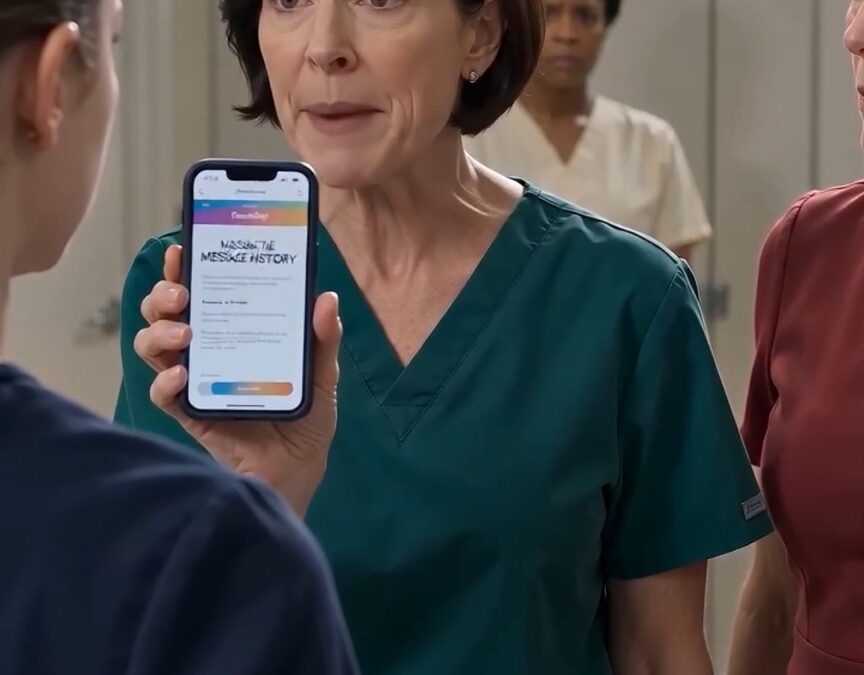
She turned the phone outward at chest height.
The prominent heading read “MESSAGE HISTORY.”
Marsha leaned toward the screen.
Her eyes moved across it.
The smile left her face.
Then she stepped away from the doorway.
Chapter 3: The Name She Wanted Changed
Audrey stood beside me with the phone held steady.
“Marsha, her father already paid everything.”
Marsha jerked back.
“Wait. Put that away.”
Grant looked from the screen to his mother.
“What does that mean?”
I wasn’t looking at him.
I was reading the message Audrey had opened.
It wasn’t a note about flowers or service times. It was Marsha asking the funeral director to change the payer’s name.
Dad’s name was the one she wanted removed.
I put my hand against the table behind me.
Audrey lowered the phone enough for me to read comfortably.
“Your father prepaid his guaranteed funeral arrangement,” she said.
“When?”
“September 8, 2023.”
The date sat on the account confirmation beside his name.
Warren.
The amount was $18,600, paid from his own funds.
I read the line again.
The final services matched that prepaid arrangement. There wasn’t an unpaid addition or a remaining balance.
Nothing remained due.
Marsha moved her purse from her shoulder to her hand.
“This shouldn’t be discussed at her job.”
“You brought the demand here,” I said.
Audrey looked at me before continuing.
I nodded.
She showed me the original invoice supplied by the director. It identified Dad as payer and showed that the services had been paid.
Then she opened the copy Marsha had sent me.
The funeral details matched.
The total matched.
The payer did not.
On Marsha’s copy, her name occupied the field.
I held my phone beside Audrey’s screen, opening the attachment I’d received. My fingers kept selecting the edge of the message instead of the file.
Audrey waited.
When I finally had it open, the difference was plain.
“That is the copy you relied on?” she asked.
“Yes.”
“And the copy supporting your $600 payment?”
“Yes.”
Marsha glanced toward the doorway she’d just cleared.
Grant shifted closer to her.
“Could the funeral home have sent different versions?”
Audrey returned to the preserved correspondence.
“The director addressed that before the funeral.”
She read the relevant exchange aloud, identifying the date.
On May 7, 2025, Marsha had asked him to replace Warren’s name with hers as payer.
His response refused the change.
The record identified who had actually paid. He would not change that record to name someone else.
Marsha hadn’t been correcting a misspelling.
She had requested a different payer.
I could see her name attached to the request.
I could see the director’s refusal beneath it.
“Did he send you this?” I asked Audrey.
“Directly.”
Not a screenshot someone had forwarded through family.
Not something Grant had found and interpreted.
The director had voluntarily supplied the original invoice, prepaid confirmation, and preserved messages after receiving my authorization.
There had been no subpoena or court order.
Audrey had asked for records, and he had provided them.
Marsha looked at me.
“Your father made arrangements. There were still things to handle.”
“Were there additional funeral charges?” I asked Audrey.
“No. The final services matched the guaranteed arrangement.”
“What balance remained?”
“Nothing.”
I looked back at Marsha.
“You asked me for $18,600.”
“I was trying to get everything organized.”
“You told me you paid it.”
She lifted her hand toward the phone.
Audrey moved it back against her own chest.
Marsha dropped her hand without touching it.
The coworkers near the cake remained where they were. Nobody asked to take the phone. Nobody needed to crowd around it now.
Audrey had read the request aloud.
Marsha had heard the refusal again.
Grant set Leah’s gift bag farther onto the table.
The envelope was still in his other hand.
I looked at it, then back at the invoice.
Before lunch, I had expected a possible billing mistake. I had imagined Audrey finding a missing receipt or a payment listed under the wrong account.
I hadn’t imagined Dad’s money sitting behind the demand.
He had paid before the feeding-tube supplies filled his counter. Before the spare blouse hung beside his sink. Before I began missing overtime to get him settled.
He had already handled this expense.
I pulled a tissue from my purse and folded it.
“Did you know he prepaid?” I asked Marsha.
She looked at Audrey.
“I’d prefer to discuss the details privately.”
“You discussed my savings publicly.”
“Rachel, people are listening.”
“Yes.”
I kept the tissue between my fingers.
Audrey placed the authentic invoice beside the altered copy on her screen again. The payer fields were close enough to compare without moving between pages.
“The genuine record names Warren,” she said. “The copy used for reimbursement names you.”
Marsha pressed her lips together.
“Electronic paperwork gets changed.”
“Your request was refused,” Audrey said.
“I understand what you’re suggesting.”
“I’m identifying what the records show.”
Grant stepped away from the table.
“Mom, did you change it?”
She didn’t answer him.
She looked at me instead.
“You’re upset. This isn’t the place to sort it out.”
I checked the phone once more.
Dad’s payment date hadn’t changed.
Neither had her request.
I had sent her $600 because I believed she had paid a real bill. She had used the genuine funeral total, genuine services, and a changed payer field to make that claim believable.
I put my tissue in my purse.
“There isn’t an unpaid funeral bill here,” I said.
Marsha’s eyes moved toward Grant again.
Audrey kept both versions available on the phone.
“Marsha,” she said, “please explain why your copy names you as payer.”
Chapter 4: The Invoice Grant Forwarded
Marsha didn’t answer Audrey’s question.
Grant did.
“I sent her the invoice.”
I turned toward him.
“What invoice?”
“The funeral paperwork. The one I received.”
He put the envelope flat against his palm.
I watched him open his email on his phone.
For days, he’d said he was handling correspondence. I had thanked him while folding Dad’s clean clothes into bags.
Now he was searching the correspondence in front of us.
“Here,” he said.
The forwarded message was dated May 6, 2025.
It went from Grant to Marsha.
The attachment was the genuine paid invoice.
Audrey asked him to open it rather than describing it.
He did.
Dad’s name appeared in the payer field.
Grant stared at it.
“I didn’t read that part.”
“You forwarded it without reading it?” I asked.
“I was sorting messages. Mom offered to help organize.”
“What did you ask her to organize?”
“The funeral correspondence. Things we needed to keep.”
His voice had dropped.
“I thought she could put it together while we handled everything else.”
Marsha adjusted the purse strap around her wrist.
“That’s what I was doing.”
Audrey kept her phone beside Grant’s.
“The original went to you on May 6, 2025.”
Grant nodded.
“The request to change the payer followed on May 7, 2025.”
He looked at the date on Audrey’s screen.
His mouth opened, then closed.
“I didn’t know about that.”
“Did you know she changed her copy?” I asked.
“No.”
“You believed she paid?”
“She told me she had covered it.”
“And you didn’t open the invoice again?”
“No.”
I could hear someone quietly moving a plate away from the counter’s edge. It was an ordinary sound, but I looked toward it because I needed to look away from Grant.
He was 36.
He knew how an attachment worked.
He knew I hadn’t been tracking every funeral message.
He had offered to do that for me.
“Why didn’t you ask me about the payer?” I asked.
“I didn’t notice it.”
“Why didn’t you ask her for a payment record?”
“I thought the invoice was enough.”
Marsha started to speak, but Audrey interrupted with a question.
“Did Marsha tell you the director had refused her request?”
“No.”
“Did you receive that exchange?”
“No.”
Grant looked directly at his mother.
“You told me Rachel needed to reimburse you.”
“She needed help getting things settled.”
“That isn’t what you told me.”
Marsha tightened her grip on her purse.
“We can discuss what I meant at home.”
I stepped away from the gift table.
“We’re discussing what you asked me to pay.”
Audrey showed the sequence again.
The genuine invoice had reached Marsha through Grant. Her request to change its payer followed. The director refused. Later, the altered copy reached me as proof that I personally owed her reimbursement.
There was no gap the size of a mistaken funeral charge.
There was a documented payment by Dad.
There was a documented request by Marsha.
There was a copy bearing the change she’d been refused.
Grant rubbed the side of his face.
“I didn’t help her change anything.”
Audrey didn’t accuse him of doing that.
“The correspondence establishes her separate request,” she said.
I looked at him.
“I’m asking what you did know.”
He held the phone down near his waist.
“I knew you disputed the payment.”
“And you knew I called Audrey.”
“Yes.”
“You heard me ask your mother for proof.”
“Yes.”
His envelope bent slightly under his fingers.
I remembered him telling me to rest while he handled emails. I had taken him at his word because Dad needed me somewhere else.
That was why his explanation didn’t settle what he’d done here.
Not reading an invoice was one thing.
Passing an envelope while I disputed the debt was another.
Marsha reached toward his elbow.
“Grant, let’s go.”
He moved his arm away.
Audrey looked at me, waiting.
I asked her to leave the records open.
I wanted Grant to see what I was seeing.
He leaned toward the phone.
Dad’s payment confirmation was still there.
The guaranteed arrangement.
The paid total.
The absence of a balance.
Then the refused request.
Grant looked down at his envelope.
“Nobody’s put anything in this,” he said.
“That doesn’t answer me.”
“I know.”
“You offered it to my coworker.”
He swallowed.
“I thought people helping would make it easier.”
“Easier for whom?”
He looked at Marsha, then back at me.
“I thought you were both upset about the money.”
“I was asking whether the money was owed.”
He didn’t answer.
Leah stood near the cake now, with the blanket resting safely among her gifts. I could see her watching Grant’s hand.
He was still holding the envelope open.
I hadn’t realized that until I followed her eyes.
“Close it,” I said.
He folded the flap down.
That small motion made my stomach tighten.
He could have done it when I first asked.
He could have put it away before Audrey arrived.
Marsha looked toward the doorway again.
“This has gotten out of hand.”
I kept my eyes on Grant.
“Why were you collecting money while I was disputing the claim?”
Chapter 5: No Collection Today
Grant looked at the folded envelope.
“Because I believed her.”
He said it without looking toward Marsha.
“I thought you needed help paying.”
“I told you I needed proof.”
“I heard you.”
“You kept holding it out.”
He slid the envelope into the gift bag.
“There won’t be a collection.”
“There shouldn’t have been one.”
“I know.”
Nobody had contributed.
The coworker he’d approached had never touched the envelope. No money needed to be tracked down or returned.
I watched him press the empty envelope beneath the bag’s tissue paper.
Then I looked at Leah.
“I’m sorry this happened during your shower.”
“You didn’t bring it here,” she said.
Marsha shifted toward the doorway.
“This was a family misunderstanding.”
Audrey put her phone down at her side.
“A misunderstanding doesn’t leave Rachel owing this amount.”
“I didn’t say it did.”
“You demanded the outstanding $18,000 here today.”
Marsha’s expression tightened.
“That was before we had all the paperwork together.”
“You had the genuine invoice,” I said.
Grant looked down.
“You asked to change it.”
Marsha’s eyes stayed on Audrey.
“I don’t want to argue in front of strangers.”
“They’re my coworkers,” I said. “You asked them for money.”
“I didn’t pass the envelope.”
“No. Your son did.”
Grant didn’t defend that.
He moved the large gift bag closer to Leah.
“This belongs over here,” he said.
She nodded without thanking him.
He tucked the tissue back around the actual shower gift. The collection envelope disappeared beneath it, empty and folded.
I wanted that bag away from me.
I wanted Leah to open what she’d been given without remembering my husband offering an envelope beside it.
Audrey asked whether I wanted to continue the reimbursement discussion after Marsha left.
“Yes.”
Marsha turned toward me.
“Then let’s all sit down privately.”
“No.”
“Rachel, we need to clear this up.”
“You can respond to Audrey.”
“We’re family.”
“I am not having a private argument with you.”
She glanced toward the coworkers again.
I knew what she wanted.
In private, she could change her wording. She could tell me I misunderstood, tell Grant I was upset, and describe the invoice as confusing.
Here, the people she’d asked to witness my supposed debt had heard the payment records.
Audrey spoke before Marsha could try again.
“We need a written withdrawal of the entire reimbursement demand.”
Marsha looked at her sharply.
“And the return of Rachel’s $600.”
“That payment was voluntary.”
“It was made because you claimed reimbursement was owed.”
“I didn’t force her bank transfer.”
I took my phone from my purse.
The confirmation was still saved.
“You told me you paid Dad’s funeral.”
Marsha’s face changed slightly at Dad’s name.
I didn’t keep talking.
Audrey outlined what she would request in writing.
The full demand withdrawn.
An acknowledgment that I owed Marsha nothing.
The $600 returned.
No additional payment from me.
Marsha listened without interrupting that time.
When Audrey finished, she asked a narrower question.
“If I return it, does that settle the money?”
“Rachel wants the disputed payment returned and the claim withdrawn,” Audrey said. “I’ll send the terms in writing.”
She didn’t promise to delete records.
She didn’t promise that everyone would forget.
Marsha looked at Grant.
“Are you coming?”
He glanced at me.
I couldn’t tell whether he wanted permission or an answer about us.
“I’m staying for my meeting,” I said.
“I know. I meant—”
“Not here.”
He nodded.
It was the first time that afternoon he’d stopped when I asked.
Marsha stepped fully into the doorway, then paused.
“I don’t want this discussed any further.”
I looked at the people behind her.
“You chose this room.”
She didn’t respond.
Grant picked up neither the gift nor the envelope. He left them where Leah could get them.
Before following his mother, he faced the coworker he’d approached.
“I shouldn’t have asked.”
I wasn’t ready to count that as the apology everyone deserved.
He hadn’t addressed what he’d told the room.
But he had finally stopped collecting.
Audrey waited until they were gone before moving closer.
“Do you want to sit?”
I nodded.
Leah pulled out the chair she’d cleared earlier.
I sat and put my purse in my lap.
The cake was still waiting.
The plates were still stacked unevenly.
Nobody tried to restart the shower with a cheerful announcement.
Someone moved a cup of water within my reach.
I drank because it gave me something ordinary to do.
“You can use the room,” Leah told me.
“No. You should have your shower.”
“We can give you space for your meeting.”
My supervisor checked whether I wanted that.
I said yes.
Not because I wanted to hide.
I needed to look at the records without Marsha standing over me.
Audrey set her phone on the table, screen down.
“We’ll preserve everything before anything gets lost.”
I picked up my blue lunch bag.
Its side had a crease where I’d gripped it.
I carried it to the refrigerator and made room on the shelf.
When I turned back, Audrey had opened her case.
“The copy she sent you,” she said. “Let’s save that first.”
Chapter 6: Saving Every Copy
I sat where I could see the doorway.
Audrey placed her phone beside mine.
We were finally having the lunch meeting we’d arranged.
There was no family audience now. The shower things stayed around us, but my coworkers gave us room. My supervisor knew we were reviewing the disputed claim.
I opened Marsha’s message.
The altered invoice filled my screen.
“Don’t mark up the original attachment,” Audrey said.
“I haven’t.”
“Keep the message it came with too.”
We saved the attachment and the conversation together.
I had wanted to delete Marsha’s messages after every call. Now I scrolled carefully, checking that the demand and my requests for proof remained visible.
There was my question about her payment record.
There was her answer sending the same invoice.
There was the demand for the remaining $18,000.
I didn’t need to explain my tone.
The messages showed what I’d asked.
Audrey had the director-supplied material organized separately.
The original invoice.
The guaranteed prepaid account confirmation.
The preserved message history.
She showed me how she was keeping their source clear.
“These came directly from the director,” she said.
“And mine came from Marsha.”
“Yes. We keep that distinction.”
I opened the $600 transfer confirmation.
The date was May 11, 2025.
The recipient was Marsha.
The money had left my account.
I checked the details before saving the confirmation with the other records.
It was strange seeing that payment beside Dad’s prepaid arrangement.
The expense I thought I’d begun repaying had already been covered by him.
I pressed my palm against my knee.
Audrey waited until I looked up.
“Do you want me to send the written demand?”
“Yes.”
We reviewed it before she sent anything.
I read slowly.
I didn’t want words suggesting I had agreed to a loan. I hadn’t borrowed from Marsha. I hadn’t promised to empty my emergency savings.
I’d sent a partial payment based on her false reimbursement claim.
Audrey’s wording made that clear.
It requested withdrawal of the entire $18,600 demand, acknowledgment that nothing was owed, and return of my $600.
“No additional payment,” I said.
“Correct.”
“And I don’t negotiate this through Grant.”
“You can direct communications about the claim to me.”
I nodded.
Audrey sent the demand.
I watched until it showed as sent.
Then I closed the banking screen.
For the moment, my balance was still $18,000.
The records didn’t put the missing money back.
They did tell me not to send the rest.
My supervisor returned when we had put the financial documents away.
“Do you need anything documented about the visit?”
“Yes.”
I set my phone facedown.
“I don’t want future workplace visits from Marsha.”
My supervisor asked me to put the request in writing.
I typed it while Audrey sat beside me.
I named Marsha.
I explained that she had attended as a shower visitor and used that access to demand money in the break room.
I requested no future visits from her.
This wasn’t a request for a public confrontation downstairs.
I wanted the existing visitor process used properly.
Permission to attend Leah’s shower wasn’t permission to return whenever Marsha wanted a conversation.
My supervisor read the request.
“I’ll document this.”
“Thank you.”
“Does Grant know?”
“I’ll tell him.”
I didn’t ask my supervisor to fix my marriage.
I asked for a workplace restriction.
Those were different problems, and I needed them kept separate.
After my supervisor left, I checked the message once more.
There was no apology for making the request.
There was no invitation for Marsha to explain herself at work.
Audrey gathered the records we’d reviewed.
“Keep anything else she sends.”
“Even if she calls it a misunderstanding?”
“Yes.”
“What if Grant sends something?”
“Keep relevant communications. Don’t edit them.”
I put my phone in my purse instead of deleting anything.
For months, I’d kept care notes because Dad needed continuity. I knew which supplies were running low and which shirt needed washing.
This was a different kind of keeping.
I didn’t like doing it.
But I knew how to be careful.
Before Audrey left, I asked her to show me Dad’s confirmation again.
She opened it.
September 8, 2023.
$18,600.
His own funds.
I ran my finger along the table’s edge.
“He never told me it was all paid.”
“He may have expected the records to do that.”
I didn’t answer.
I remembered him apologizing because I was late.
I had stood beside his sink and told him to stop watching the clock.
He’d already paid for something I was now being told to buy again.
Audrey closed the screen only after I nodded.
We walked to the doorway together.
She checked that I knew what would happen next.
A written response.
An acknowledgment.
A returned payment I could verify myself.
Not a promise delivered through Grant.
Not another invoice.
After she left, I returned to the table.
Leah’s blanket had been folded beside the gift bags.
The cake had finally been cut.
I accepted a plate and sat down.
My phone stayed in my purse until the lunch break ended.
When I checked it afterward, Audrey’s sent demand was there.
Now Marsha had to answer it.
Chapter 7: The Withdrawal
On May 16, 2025, I checked my messages before work.
There was nothing from the bank showing returned money.
I put the phone beside my breakfast and finished eating.
Grant sat across from me.
“Did you hear from Audrey?”
“Not yet.”
“Mom says she’s going to resolve it.”
“Then she can respond in writing.”
He nodded, but he didn’t leave the subject alone.
“She says she doesn’t want this getting worse.”
I placed my spoon in the bowl.
“I want my payment returned.”
“I understand.”
“And an acknowledgment that I owe nothing.”
“She knows.”
I picked up my bag.
“I need the documents, not updates from her.”
He let me leave without another message from his mother.
At work, I answered billing questions and checked account notes. When my phone showed Audrey’s name, I waited until I could step away from my desk.
“Marsha has signed the acknowledgment,” she said.
I leaned against the break-room counter.
“What exactly does it say?”
“I’ll send you the copy. Read it before we discuss it.”
She sent it while we were still connected.
I opened the document.
Marsha’s name appeared beneath the acknowledgment.
She withdrew the entire funeral reimbursement demand.
It confirmed that I owed her nothing.
Not merely that she’d stop asking for the remaining balance.
Not that she was forgiving a debt.
Nothing was owed.
I read that part again.
“Does this cover the $18,600 she claimed?”
“Yes. The entire demand.”
“And not just what was left?”
“Correct.”
I looked toward the refrigerator.
My lunch bag was inside, where I’d put it that morning.
The room was ordinary again, but I still checked the doorway when footsteps passed.
“Has she returned the $600?”
“Not yet.”
“Then that part isn’t done.”
“No,” Audrey said. “It isn’t.”
I saved the acknowledgment with the records we’d preserved.
I didn’t forward it around the office.
My coworkers had already been made part of something they hadn’t requested.
The signature was for ending the claim, not giving them more family paperwork.
I called Grant during my break.
“She signed.”
“I heard.”
“I’m waiting for the payment.”
He was quiet.
“She said signing it should reassure you.”
“It confirms I owe nothing.”
“Right.”
“It doesn’t return my money.”
“I wasn’t saying it did.”
I held the phone away from my cheek briefly.
I didn’t want another conversation where I had to defend a simple fact.
When I brought it back, Grant was still there.
“I’ll stop relaying what she says,” he told me.
“Please do.”
I ended the call and checked my bank account.
The balance remained $18,000.
There was no incoming credit.
The signature mattered.
It meant Marsha had withdrawn the demand she had tried to enforce in front of witnesses. Audrey had obtained the acknowledgment without any court judgment or arrest.
But $600 was still gone.
I closed the app without refreshing it again.
Later, Audrey and I reviewed the acknowledgment together.
She asked whether anything remained unclear.
“Could she tell Grant that she just dropped it for peace?”
“She can describe her feelings. The signed acknowledgment states that you owe nothing.”
“Keep that copy.”
“I will.”
“And the messages.”
“Yes.”
She wasn’t discarding the evidence because Marsha had signed.
The authentic invoice stayed with the altered copy.
The payment history stayed with the refused payer-change request.
I wanted those distinctions preserved if the story changed again.
At home, Grant had cleared a place for my lunch bag on the counter.
I set it there and took out the empty container.
He stood near the sink.
“Can we talk?”
“About what?”
“What happened at work.”
“Yes. Not about your mother’s version.”
He nodded.
“I should have checked the invoice.”
“You should have stopped when I asked.”
“I know.”
I rinsed the container.
He waited while I dried it.
I wasn’t ready for a long conversation, but I didn’t want him thinking the signed acknowledgment had resolved what he’d done.
“Your mother withdrawing the claim doesn’t fix the envelope.”
“I know that too.”
“You need to apologize to the people you asked.”
He looked down at the counter.
“I will.”
I put the container beside my bag.
He didn’t ask me to call Marsha.
He didn’t ask when we would visit her.
That helped me stay in the kitchen, but it wasn’t forgiveness.
Before bed, I checked the account once more.
No return had arrived.
I set the phone on the nightstand with the screen dark.
Audrey had sent a final update.
The withdrawal was complete.
The return of my payment was still outstanding.
Chapter 8: The Money Returns
On May 17, 2025, I saw the incoming payment.
I didn’t announce it from the bedroom.
I sat on the edge of the bed and opened the account directly.
The credit was $600.
The sender was Marsha.
I checked the transaction details, then the available balance.
$18,600.
I waited before touching anything else.
On May 11, 2025, I’d sat in almost the same place after sending that money away. My shoes had still been on. I’d believed a real expense existed and wondered how quickly I could replace my savings.
Now the account held what it had held before.
No additional payment had been made.
Not to Marsha.
Not to cover an unexplained funeral balance.
Dad’s prepaid arrangement had covered the funeral.
I saved the incoming payment confirmation.
Then I sent it to Audrey.
“The return is in my account,” I wrote.
She asked me to verify the amount and available balance.
I did.
She didn’t treat a message from Marsha as proof.
She used the receipt from my own account.
That mattered after everything we’d just checked.
Grant came to the bedroom doorway.
“Did it arrive?”
“Yes.”
“All of it?”
“The $600 she owed back.”
He nodded.
“I’m glad.”
I set the phone in my lap.
“I am too.”
He waited, perhaps expecting more.
I didn’t offer it.
The account being restored didn’t change the lunchroom. It didn’t take the envelope out of his hand in my memory.
But it meant I wasn’t still waiting for his mother to return money she’d obtained with that invoice.
I stood and put my phone on the dresser.
Grant stepped aside so I could pass.
Later, Audrey called.
“We can close the reimbursement dispute now.”
“What are you keeping?”
“The acknowledgment, the payment confirmations, both invoice copies, and the director-supplied records.”
“Please keep the correspondence too.”
“It’s included.”
I sat at the kitchen table.
My blue lunch bag was drying beside the sink.
I’d wiped it out, including the seam I’d gripped at the shower.
Audrey reviewed what had been completed.
The entire demand had been withdrawn.
The acknowledgment confirmed I owed nothing.
The partial payment had been returned and verified.
There was no remaining reimbursement to negotiate.
“So I don’t need to answer her about funeral money.”
“Correct. Send me anything attempting to revive the claim.”
I looked at the saved acknowledgment.
There was no hearing date to wait for.
No judgment to collect.
No arrest had occurred.
Marsha had lost this demand when the records were shown where she’d chosen to press it.
Then she’d signed the withdrawal and returned the payment.
I thanked Audrey for checking the records directly.
“I nearly sent the rest.”
“You stopped and asked for proof.”
I didn’t make a speech about that.
I opened my saved copy of the account confirmation instead.
Dad had paid from his own funds.
I could read that now without immediately opening Marsha’s altered invoice beside it.
When the call ended, I reviewed my emergency account.
It remained solely in my name.
I had never given Marsha access.
I wasn’t going to start allowing conversations about my balance to substitute for permission.
Grant came into the kitchen while I was closing the app.
“We should talk about money,” I said.
He pulled out a chair.
“Okay.”
“My emergency account stays under my control.”
“It already is.”
“And you don’t share its balance with your mother.”
“I won’t.”
“You told her what was in it.”
“I know.”
“She used that at my job.”
He looked at the table.
“I shouldn’t have told her.”
“No. You shouldn’t.”
He didn’t ask to see the restored balance.
He didn’t suggest moving it somewhere jointly held.
I put the phone facedown.
I wasn’t changing the account because it had done something wrong. It had belonged to me before Marsha’s demand, and it still belonged to me afterward.
What needed changing was who thought they could discuss it.
Grant asked whether I wanted him to contact his mother.
“About what?”
“To tell her the payment arrived.”
“Audrey has the confirmation.”
“So nothing from me?”
“Nothing on my behalf.”
He nodded.
I picked up the lunch bag and checked the lining.
It was dry.
I folded the top down and set it beside the food containers.
For months, mornings had started with Dad’s supplies. Then they had started with funeral messages. Now I was trying to put lunch things where I could find them.
Grant stayed at the table.
“I want to apologize properly at your work.”
I turned toward him.
“To the people who were there.”
“Yes.”
“Not another visit arranged without asking.”
“I’ll ask first.”
That was the right answer.
It didn’t make the earlier ones disappear.
I put the empty container inside my bag.
“Then we’ll arrange it.”
He nodded without asking whether we were okay.
I was relieved he hadn’t.
There were still people who deserved to hear him say what he’d done.
Chapter 9: What Grant Had to Do
Grant asked before coming back to my workplace.
I checked with my supervisor.
I wasn’t giving him permission to arrive with another relative. I wanted a brief, approved apology to the coworkers who had witnessed his collection attempt.
Marsha wasn’t invited.
He agreed she wouldn’t accompany him.
He checked in as a visitor.
When he reached the break room, his hands were empty.
No gift bag.
No envelope.
I stood near the counter while the coworkers who’d been there listened. Leah was among them.
Grant didn’t begin by explaining his mother’s conduct.
“I owe you an apology,” he said.
He looked at the coworker he’d approached first.
“I asked you to contribute to a debt Rachel was disputing.”
His fingers pressed against each other.
“I hadn’t verified the claim. I shouldn’t have asked.”
Nobody hurried to reassure him.
He looked toward Leah.
“I interrupted your shower and put Rachel in that position at work.”
Leah kept her hands around her cup.
“You should have listened when she told you to stop.”
“Yes,” he said. “I should have.”
He turned toward me.
“I believed my mother instead of checking the invoice.”
I waited.
“And I kept collecting after you disputed it.”
“You offered the envelope,” I said.
“I did.”
Nobody had contributed, and he said that plainly.
He didn’t pretend he was returning donations.
He didn’t describe the collection as something we’d planned together.
When he finished, my supervisor ended the visit without making it a gathering.
Grant followed the visitor process out.
I stayed at work.
That was important to me.
I wasn’t leaving behind him to discuss whether the apology had earned anything.
I had accounts waiting at my desk.
At home, he asked whether he’d said enough.
“You said what you did.”
“I meant it.”
“I heard you.”
He sat at the table while I put my lunch things away.
I wasn’t going to grade the apology like paperwork.
The people he’d embarrassed deserved it regardless of what happened between us.
“I’m not promising that we’re fine,” I said.
“I know.”
“I want counseling.”
“I’ll go.”
“Not so someone tells me to get over it.”
“I understand.”
“And no more workplace visits with your mother.”
“Agreed.”
I dried my container and set it down.
“Even if she says she just wants to apologize.”
“I won’t bring her.”
“Even if she checks in properly.”
“I understand.”
My workplace had documented the restriction.
Grant agreeing mattered, but it didn’t replace that documentation.
I wanted both.
He looked toward my phone on the counter.
“Are you going to see her?”
“No.”
“For now?”
“I’m suspending visits.”
He nodded slowly.
“She’ll ask when.”
“I don’t have a date.”
I had spent enough time answering demands that arrived as though my answer had already been chosen.
I wasn’t choosing a future visit to make this conversation easier.
Grant rested his palms on the table.
“What should I tell her?”
“That I’m not visiting.”
“Nothing else?”
“Don’t promise anything for me.”
He said he wouldn’t.
I picked up my phone.
There were plenty of words I could have sent Marsha.
I could have described Dad’s care again. I could have reminded her about rinsing syringes before work, changing blouses, and cleaning his shoes.
She had already heard those things.
Audrey had said them in front of her.
They hadn’t prevented the demand.
I wrote only what Marsha needed to know.
I was suspending visits.
She was not to visit my workplace.
Any matter concerning the withdrawn reimbursement demand could go through Audrey.
I read it before sending.
There was no question at the end.
I didn’t ask her to agree that the invoice was wrong.
The evidence and her acknowledgment had already settled the claim.
Grant watched me set the phone down.
“Do you want me here tonight?”
I looked at him.
“I want you to stop asking for an answer about everything at once.”
“Okay.”
“We can attend counseling. That doesn’t mean I’ve forgiven you.”
“I understand.”
He stayed seated while I finished putting the dishes away.
I remembered him standing beside Leah’s cake, holding the envelope after I’d asked him to stop.
I also remembered him standing in the break room without it, admitting what he’d done.
Both had happened.
I wasn’t going to erase either to make him comfortable.
Later, he moved my lunch bag away from a damp spot near the sink.
He set it where I usually kept it.
He didn’t turn that into a reason I should soften toward him.
I appreciated that more than another explanation.
Before bed, I checked my work schedule.
I had a regular shift coming.
No lawyer meeting.
No family visitor.
No collection.
I set my alarm and placed the phone facedown.
Grant asked whether I wanted him to pack my lunch.
“I’ll do it.”
He nodded.
For the first time since the shower, he let an ordinary answer remain ordinary.
I left the empty bag on the counter.
In the morning, I would decide what went inside it.
Chapter 10: Back in the Break Room
On May 22, 2025, I packed my lunch before work.
The container lid fit without a fight.
I wiped the outside dry and lowered it into my blue bag.
My phone sat beside it.
There was no message demanding a transfer.
There was no instruction from Marsha about when I needed to answer.
I checked the time, then put the phone in my purse.
Grant stood at the other end of the kitchen.
“Do you need anything carried out?”
“No, I’ve got it.”
He stepped away from the doorway.
I picked up my own things.
We were still married.
We had agreed to counseling.
That didn’t mean our mornings had returned to what they’d been before. I wasn’t checking his face for permission to be upset, and he wasn’t asking whether his apology had finished the matter.
He asked about my shift.
I answered.
Then I left for work.
At the hospital, I entered as an employee.
The visitor process continued around me.
My supervisor had documented that Marsha wasn’t to visit my workplace. Grant had agreed not to bring her again.
I didn’t have to stand at the break-room door and enforce that request myself.
Nobody was waiting beside the gifts.
There weren’t gifts there anymore.
Leah’s shower things had gone home with her.
I stopped at my desk and put away my purse.
The first question someone asked concerned a billing account.
I opened the record.
There was a payment to verify and a note to read.
I checked both before answering.
The familiar work kept me seated.
I didn’t need to explain why I was back. I had already returned. I needed to finish what was on my screen.
Leah passed my desk carrying her cup.
“Are you eating in the break room?”
“Yes.”
“Good. I’m going in too.”
She didn’t lower her voice.
She didn’t ask if I could face it.
I picked up my blue lunch bag.
We walked down the hallway together.
The door was open.
Nobody stood across it.
Inside, a coworker moved a chair so Leah could sit comfortably. Someone was rinsing a cup at the sink.
The cake was gone.
The counter had its ordinary scratches and water spots.
I put my bag on the table while I washed my hands.
Leah asked about an account we’d both worked on.
I told her what I’d found.
She listened, then asked a follow-up question.
It was exactly the kind of conversation I’d wanted when I’d come back after the funeral.
Something with an answer I could find.
Something that didn’t require me to explain how I was holding up.
I dried my hands and sat.
A coworker asked whether the chair beside me was taken.
“No.”
She sat down.
Nobody reached for an envelope.
Nobody looked toward the doorway expecting an announcement.
We ate and talked about work.
I opened my container without having to move funeral paperwork out of the way.
After lunch, I checked my phone privately.
The account balance was still $18,600.
Untouched.
Solely under my control.
I closed the banking app.
I didn’t send a screenshot to Grant.
I didn’t need Marsha told that the money remained there.
The emergency fund had a job. It wasn’t waiting to satisfy another family demand.
Audrey retained the records.
The signed withdrawal stayed saved with the payment confirmations.
The director’s preserved exchange stayed with the authentic invoice and the altered copy.
I didn’t need to carry printed versions in my lunch bag.
The reimbursement dispute was closed.
Marsha had returned the $600 and acknowledged I owed nothing.
She no longer had access to me through my workplace.
Our visits remained suspended.
I hadn’t promised when that would change.
Grant’s apology had been heard by the people who’d witnessed his collection attempt.
Counseling was something we’d agreed to do, not a statement that everything was repaired.
Those matters could remain unfinished without reopening my account.
I put the phone away.
At my desk, I worked through the afternoon’s billing questions.
When an attachment didn’t match the account notes, I checked the source before answering.
That was familiar work too.
Near the end of my shift, I found a tissue in my purse.
It was one of the funeral tissues I’d carried without thinking.
I held it for a moment.
Dad had apologized for making me late while I stood beside his sink.
I’d steadied his shoulder and checked what he needed.
There had been no audience for most of that.
I didn’t need another one now.
I folded the tissue and tucked it into the small pocket.
Then I finished the note I was writing.
Before leaving, I returned to the break room for my bag.
Leah was at the table, gathering her things.
“See you tomorrow,” she said.
“See you.”
She picked up her cup.
I checked the refrigerator shelf.
There was room where I usually kept my lunch.
I had taken the bag out earlier and left it beside my chair. Now I noticed the container inside still needed to stay cold while I finished up.
I lifted the bag by its handles.
The crease near the seam was still faintly visible.
I didn’t rub at it.
I didn’t hide that side against my body.
I opened the refrigerator door and moved a container aside.
No visitor followed me.
Nobody asked what I had in savings.
I set my blue lunch bag on the shelf.
You Might Also Enjoy




