My Parents Shoved My Wheelchair After My Stroke—Then My Attorney Made Dad Stop Smiling
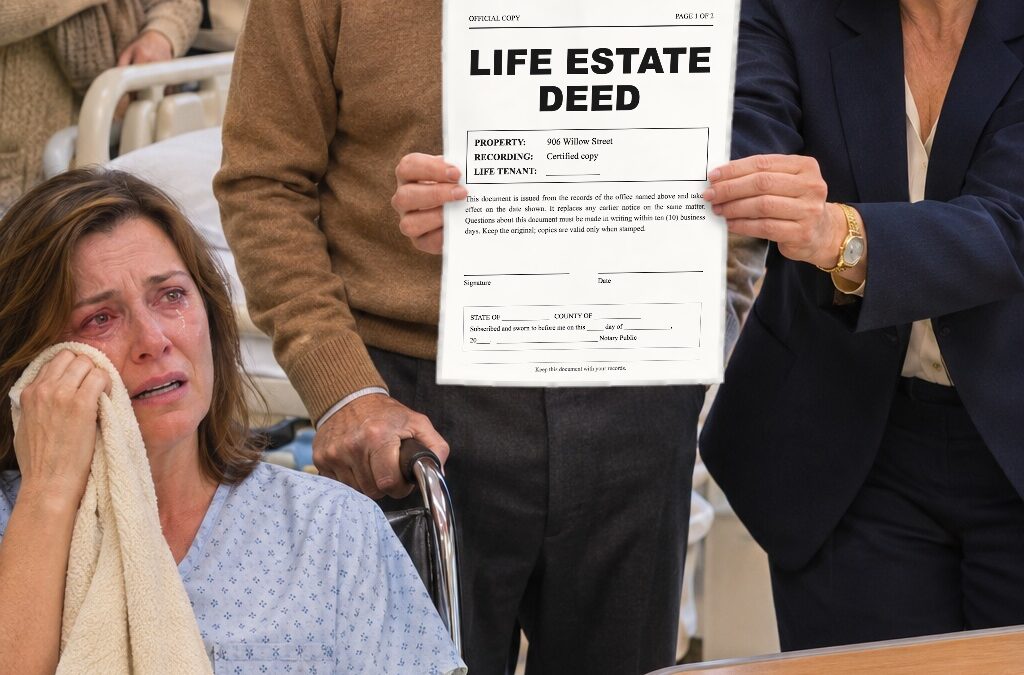
Part 3: The Name Beside Life Tenant
“Lydia,” Tamsin read, holding the deed where everyone could see.
She moved her finger along the next line.
“‘For and during her natural life.’ That means possession belongs to Lydia while she lives.”
Dad looked toward the open hospital doorway.
Tamsin continued before he could speak.
“‘Temporary absence for medical care shall not terminate this life estate.’ Being hospitalized does not surrender her home.”
I pushed my blanket away from the wheelchair tire.
“Please read that last sentence again.”
She did, without shortening it or changing anything.
Owen lowered himself into the chair beside my bed.
Mom stayed standing near the tote and my sweater.
Dad pulled the buyer’s letter closer but didn’t lift it.
“We were told there was an occupancy issue,” he said.
“There is a recorded life estate,” Tamsin answered.
I looked at my name beneath the printed heading.
LIFE ESTATE DEED.
I remembered accepting that document from my grandmother. Reading it now required moving my eyes slowly across each line.
Nothing in those lines required me to walk independently.
Nothing required my left hand to work properly.
“Does rehabilitation count as medical care?” I asked.
“Yes,” Tamsin said. “Your absence does not end your estate.”
Bethany checked that my foot remained on its support.
Mom watched her adjust the blanket around my ankle.
“We haven’t thrown away anything,” Mom said.
“You were trying to take me somewhere else.”
“We could have brought your things later.”
“I wasn’t agreeing to leave my home.”
Tamsin waited until I had finished speaking.
Then she moved the deed away from the water pitcher.
“This document determines possession. Not where her clothes are.”
Dad folded his arms and studied the certification.
He hadn’t asked to read the paragraph again.
He had understood it.
“You’re saying her grandmother could do that without us?”
“She owned the property outright,” Tamsin said.
“She was its sole owner and the grantor.”
Tamsin opened the sleeve to the supporting pages.
The recording information was there, along with the acknowledgment.
The deed had been properly prepared and acknowledged.
My grandmother had received advice from an independent drafting attorney.
She executed it in November 2020, after I moved in.
Tamsin kept the explanation plain enough for everyone present.
“She delivered the deed to Lydia. Lydia accepted it.”
I nodded.
“And it was recorded,” she added.
Dad tapped the edge of the page.
“We never signed this.”
“You weren’t conveying the property. Your signatures weren’t required.”
Mom leaned forward to see the signature area.
“This is the document you saw today?” Tamsin asked.
Dad looked at Mom before he answered.
“We hadn’t examined the actual deed.”
They knew their interests had come from my grandmother.
They had treated that information as permission to remove me.
Until Tamsin uncovered the paragraph, neither had seen its terms.
Owen rubbed his palms against his trousers.
“So her grandmother gave her the right to stay?”
“Yes,” Tamsin said. “For her natural life.”
I rested my good hand against the document sleeve.
My grandmother’s arrangement hadn’t been an unpaid nursing contract.
There was no wage amount and no reimbursement total.
I had started caring for Mom in January 2020.
My grandmother wanted my home settled while I did that.
The arrangement also set out my household responsibilities.
Property taxes, insurance, utilities, and ordinary maintenance were mine.
I had kept the statements because those bills were mine.
When Mom needed help eating, I paid them anyway.
When my parents moved into their condominium, I kept paying.
Later flare-ups still brought calls asking me to come help.
Mom shifted my folded sweater from the tote to the bed.
Nobody asked whether I could put it on myself.
Dad drew the visitor chair up to the table.
“We have interests in that house,” he said.
“Yes,” Tamsin replied. “Remainder interests.”
“So we aren’t strangers trying to take her property.”
“No one has said you are.”
She turned the deed so he could follow along.
“Your interests do not give you present possession over hers.”
Dad pressed his finger against the address.
“We can still sell what belongs to us.”
“You can discuss transferring your interests subject to her estate.”
“That isn’t what the buyer wants.”
“Then you cannot promise what the buyer wants.”
Owen looked from Dad to the buyer’s letter.
Tamsin left the deed open between them.
“You cannot require Lydia to release her estate.”
Mom put her hand on the visitor chair.
“She can’t take care of that place right now.”
“My discharge team will assess what I need,” I said.
“You’ll need people coming in.”
“Then I’ll have approved help.”
Dad started to speak, but Tamsin raised her hand.
“Medical needs don’t transfer possession to remainder owners.”
Bethany asked whether I needed to return to bed.
I did, but I wanted the papers explained first.
She adjusted my position and stayed beside the chair.
I could feel the chair handle against my shoulder.
Dad’s hand wasn’t on it anymore.
“Where did this sale assurance come from?” Tamsin asked.
Dad glanced toward the hallway again.
“We were trying to keep an interested buyer.”
“By representing that Lydia would sign?”
“We expected to work something out.”
“With me?” I asked.
He didn’t answer until I repeated it.
“We expected you to understand the family’s situation.”
“I was in this hospital.”
Tamsin slid the printed correspondence beside the deed.
The buyer’s attorney had already flagged the life estate.
The objection wasn’t about my furniture or an inconvenient move.
The proposed vacant possession required resolving my recorded interest.
“They asked for a release,” Tamsin explained.
“Without it, they wouldn’t accept the proposed arrangement.”
Dad reached for the page, and she let him read.
The seller’s broker had supplied the correspondence on December 31, 2025.
Tamsin had requested it after I retained her.
She turned to the response my parents had sent.
Their email said I had agreed to sign a release.
My name appeared in that assurance, too.
I hadn’t written it, approved it, or authorized it.
Owen leaned closer without touching the papers.
“You told them she’d sign?” he asked.
Mom answered before Dad could.
“We thought it would be settled within the family.”
“That isn’t an agreement,” I said.
Dad laid the email flat with careful fingers.
“We hadn’t sent them a signed release.”
“No,” Tamsin said. “You represented that one was coming.”
He stopped arguing about who presently owned possession.
Now he studied me instead of the deed.
“The house is too much for you,” he said.
“We could make the move easier.”
I reached for my water cup.
Bethany held it steady while I drank.
Serena’s basement still had stairs, regardless of Dad’s offer.
My home still had my bed and my shower chair.
“I didn’t agree to give this up,” I said.
Mom moved beside Dad, away from the tote.
“What about your sister’s plans?”
“What about my rehabilitation?”
“She has already been planning around this.”
Tamsin kept the email visible beside the operative paragraph.
“Her plans cannot substitute for Lydia’s consent.”
Dad looked down at the papers once more.
Then he pulled his chair closer to mine.
“Will you sign the release anyway?”
Part 4: The Signature I Refused
“No,” I said. “I will not sign a release.”
Dad waited as though I might add a condition.
I put my cup back on the rolling table.
“I’m not surrendering possession of my home.”
Mom picked up my sweater again.
“Don’t decide while you’re upset.”
“I have decided.”
Tamsin put the email beneath the certified deed.
“My client’s answer is clear,” she said.
Dad turned his chair toward her.
“Then send whatever position you’re taking in writing.”
“I will.”
He stood without touching my wheelchair.
I looked at Bethany rather than at either parent.
“I want this visit ended.”
Bethany moved toward the doorway and indicated the hall.
Mom held out the sweater.
“Put it on the bed,” I told her.
She did, smoothing its sleeves before leaving.
Dad followed her out without taking the tote.
Owen remained beside the visitor chair, looking at me.
“I need to rest,” I told him.
He nodded and left my slippers within reach.
Tamsin stayed while Bethany helped me back into bed.
The transfer took concentration I didn’t have for conversation.
I watched my left foot while Bethany guided it.
Once I was settled, she checked for pain again.
There had been no fall and no new injury.
I asked her to document what she had witnessed.
“I’m documenting the movement, your objections, and my response.”
“Please remove their visitor authorization, too.”
She explained how the unit would handle my request.
My parents weren’t authorized to visit me anymore.
They weren’t to decide my destination or transportation.
Bethany repeated those instructions back so I could confirm them.
I said yes to each without looking toward the door.
When she left to enter the information, Tamsin waited.
I pulled the blanket over the place Dad had gripped.
Then I asked her to bring the papers closer.
I couldn’t manage a crowded folder with my left hand.
Tamsin separated the deed from the sale correspondence.
“Which copies do you want available on your phone?”
“All of them,” I said. “Especially their email.”
She helped me save the documents where I could open them.
We checked that the attachments actually opened.
I enlarged the message containing their promise of my signature.
It was harder seeing it without everyone talking around me.
“They wrote this while I was here,” I said.
“Yes.”
“And the buyer’s attorney had already questioned the title.”
“Yes.”
I saved that letter beside the email.
My work in medical billing involved checking what records supported.
I knew better than to rely on a missing attachment.
We kept the certification attached to the deed copy.
Tamsin asked permission to send the relevant title materials.
“Yes. Send them to the prospective buyer’s attorney.”
She wrote down my authorization and the instructions.
“I won’t negotiate a release unless you instruct me otherwise.”
“I’m not asking you to negotiate one.”
She closed that section of her folder.
The discharge folder remained underneath, its corners bent.
I asked Bethany to bring it where I could see.
“I want home planning based on my actual address.”
She asked whether I meant 906 Willow Street.
“Yes. Not Serena’s basement.”
She noted that for the discharge team.
I asked about a home-safety assessment and approved assistance.
Rehabilitation still came before any return home.
Nobody promised that knowing my address made recovery simple.
That was the conversation I had wanted all morning.
What could I do, and what help would I need?
Bethany wrote down my questions for the team.
Then she moved the tote away from my wheelchair.
On January 2, 2026, Tamsin called about the written demands.
She asked whether I was ready to review them.
I rested my phone where my good hand could reach.
“Read the part about possession first.”
She read my refusal to release the life estate.
The letter identified the recorded deed and its medical-absence language.
It demanded withdrawal of my parents’ removal demand.
It also corrected their assurance that I would sign.
“That says exactly what I want,” I told her.
She sent it to my parents and their broker.
With my authorization, the relevant title documents went onward.
The prospective buyer’s attorney would have the actual deed.
Nobody needed to rely on Dad’s description of it.
“Does sending this end the listing?” I asked.
“Not automatically,” Tamsin said.
She explained the distinction without promising an instant result.
My refusal stopped them from truthfully promising my voluntary release.
The listing agreement still required its own proper termination.
“What should I do if they send forms?”
“Save them. Don’t sign them. Send them to me.”
I put those instructions beside my discharge questions.
Later, the team discussed what home would require.
I explained where the bathroom was and where I slept.
They asked about access, transfers, and daily tasks.
I answered what I knew and admitted what I didn’t.
Before the stroke, I hadn’t measured my day that way.
Now getting dressed required planning and someone nearby.
The assessment would address the house as it stood.
I didn’t want anyone approving an imaginary independent version of me.
“Please plan for what I can actually do,” I said.
That request went into the conversation with the discharge team.
My medical plan and my housing papers stayed separate.
Both needed attention, but neither belonged to my parents.
Serena called while my lunch tray was still there.
I watched her name until I could reach the phone.
“Mom says you stopped the sale,” she said.
“I refused to release my home.”
“They were counting on that money for my relocation.”
“I know.”
She asked whether the attorney had explained another arrangement.
I asked what arrangement she meant.
“Something that still lets them sell it empty.”
“That requires me to surrender possession. I said no.”
Serena exhaled close enough for me to hear.
“I’ve been making plans, Lydia.”
“I’m making a recovery plan.”
“You wouldn’t have been left without somewhere to stay.”
“Your basement has stairs.”
“We could have worked on that.”
“No destination there was approved.”
She went quiet while I moved the tray farther away.
I didn’t fill the pause by offering part of the house.
“The proposed sale can’t fund your move through my surrender.”
“So what am I supposed to tell them?”
“That I’m not signing.”
She ended the call without asking about rehabilitation.
I saved the sale emails again in a separate folder.
Then I checked the attachment names with Tamsin’s list.
My sweater lay folded across the chair by the bed.
I asked for it when I got cold.
Nobody packed it.
When Tamsin called again, I expected another demand from Dad.
Instead, she had a message from the seller’s broker.
“The broker is requesting their signatures on a mutual listing termination.”
Part 5: The Listing Comes Down
I asked Tamsin whether that meant the buyer was gone.
“We have confirmation from the buyer’s attorney,” she said.
“They won’t proceed with vacant possession unavailable.”
I moved the phone away to adjust my pillow.
Then I asked her to repeat it.
The buyer wouldn’t proceed on the proposed terms.
There was no executed purchase contract to unwind.
There had been an offer under discussion, not a closing.
My parents’ assurance hadn’t made my signature exist.
“Does their attorney have my refusal?” I asked.
“Yes, along with the relevant title materials.”
I opened the correspondence saved on my phone.
The original objection was still there beside the false assurance.
Now the written response confirmed the buyer’s position.
Tamsin had shown me what the recorded deed could do.
This was it working outside my hospital room.
No one was scheduling a moving truck for me.
No one could offer my possession as already surrendered.
“The broker still needs their signatures?” I asked.
“Yes. A request isn’t an executed termination.”
I left the document open until I finished reading.
Then I saved the buyer’s response with the other papers.
At rehabilitation, I practiced moving without grabbing at furniture.
The work left me tired enough to forget my tea.
I had to ask for help opening a container.
My phone sat nearby with its saved property documents.
I could need help with lunch and still make decisions.
When I returned to my room, I checked for messages.
There was nothing asking me to sign a release.
I set the phone down and finished the tea.
On January 5, 2026, Tamsin called during a rest period.
“The documents are complete,” she told me.
I asked her which documents she meant.
“Your parents’ withdrawal and the mutual listing termination.”
Russell and Marlene had withdrawn the demand that I leave.
They had signed the termination with their broker.
The broker had countersigned it.
Tamsin sent the completed copies while we were talking.
I opened the withdrawal first.
There was no request that I approve their account.
There was no release attached for me to sign.
I read it through before opening the listing termination.
The signatures were visible on the completed agreement.
This time my parents had signed something they controlled.
“The listing has been removed,” Tamsin said.
She had confirmation from the broker, not just their promise.
I held the phone against the blanket.
“Do I need to answer them?”
“Not to make these documents effective.”
“Please keep all contact about the property through you.”
She confirmed that instruction and noted it.
I asked whether there was anything I needed to return.
“No. Keep your copies.”
I put the phone down to straighten the blanket.
Then I picked it up and checked the signatures again.
The house wasn’t being sold out from under my recovery.
I still had therapy to attend that afternoon.
I rang for help getting ready rather than attempting it alone.
The completed papers could wait in their folder.
Tamsin reviewed the copies with me where I could follow.
She kept the deed separate from the termination.
“These do different things,” she said.
“The deed establishes your estate. This ends the listing.”
I asked whether my parents had given up their interests.
“No. They still retain the remainder interests.”
She pointed to the same provision Dad had challenged.
The termination didn’t transfer those interests to me.
There was no judgment stripping them of ownership.
There was no damages award tucked into the paperwork.
My possession rested on the deed already recorded.
Their interests remained subject to that life estate.
“So I keep doing what my arrangement requires.”
“Yes. Keep your household records and maintain the property.”
I told her where I kept the insurance papers.
The tax records and ordinary maintenance receipts were together.
I needed a way to handle them during recovery.
Tamsin suggested keeping the documents accessible without distributing house keys.
“I’m not giving my parents access,” I said.
“Then we’ll keep that instruction clear.”
I checked the account reminders on my phone.
Some tasks I could manage sitting up in bed.
Others would require approved practical help at home.
None required handing my father possession.
I slipped the printed copies into the discharge folder.
The folder now had a place for my home address.
The sale correspondence went behind the completed termination.
I didn’t throw away the false promise of my signature.
It stayed with the buyer’s objection and my refusal.
Tamsin checked that I had everything before leaving.
Then I turned back to the rehabilitation schedule.
I had a transfer to practice and wanted my shoes.
Owen called before coming to rehabilitation.
“Is a visit all right?” he asked.
I looked toward the chair where visitors could sit.
“Yes. Here.”
He arrived without the tote and waited by the doorway.
I told him he could come in.
He sat down without moving anything from the table.
“I packed your slippers because Russell said you’d agreed.”
“You heard me ask you to put them back.”
“I did.”
He looked down at his empty hands.
“I should have asked you before touching your belongings.”
I waited, and he continued without blaming my parents.
“You told me to stop. I kept packing.”
“That’s what I need you to understand.”
“I’m sorry, Lydia.”
He asked whether I wanted him to handle anything at home.
“No. You don’t have permission to enter the house.”
He nodded instead of explaining why he should.
“You can visit me here,” I told him.
“That’s enough.”
When I needed help repositioning, he reached toward the chair.
Then he stopped and asked what I wanted.
“Please call the staff,” I said.
He did, leaving the chair where it was.
While we waited, he asked about my therapy.
I described practicing a transfer rather than discussing my parents.
He listened without offering the basement as an alternative.
When he left, he asked where my slippers belonged.
“Beside the bed, please.”
He put them there and checked with me before leaving.
The home-safety assessment took the house into account.
I answered questions about doors, the bathroom, and my bedroom.
The assessment addressed what I could manage with support.
It wasn’t permission for anyone to move me elsewhere.
I asked to review the recommendations with the team.
They described the assistance I would need each day.
Home therapy would continue the work begun in rehabilitation.
I would have help with tasks I couldn’t safely manage.
I asked about getting from my bed to the bathroom.
We reviewed the plan until I understood the steps.
I asked what to do when I was too tired.
The answer wasn’t to push through without assistance.
I wrote that down with the other instructions.
My home was available, but readiness still mattered.
I practiced the tasks the team wanted me to practice.
I stopped treating a rest period as wasted time.
When the assessment was complete, the team reviewed it.
I sat with the discharge folder open on my lap.
The house papers were underneath the care instructions.
“Your return home is approved with the support plan.”
Part 6: My Slippers Beside My Bed
I asked the team to go through the plan again.
Not because I doubted them. I needed it written clearly.
Home therapy would continue after inpatient rehabilitation ended.
Daily assistance was included in the approved plan.
I asked which tasks I should not attempt alone.
I asked where the written instructions would be kept.
The answers went into the folder beside my medication information.
I practiced using that folder without scattering its pages.
My left side still required attention with every transfer.
Sometimes I finished a session and needed help settling afterward.
Nobody suggested that needing help canceled my decisions.
The staff asked before moving me.
I started answering with specifics instead of saying, “Whatever works.”
“Please move the foot support before I turn.”
“Put the folder where my right hand can reach.”
“Wait until I’m ready.”
Those requests became part of an ordinary day.
I worked on getting dressed without rushing the difficult parts.
I practiced reaching for what I needed while seated.
When I couldn’t safely do something, I asked for assistance.
My job as a medical billing clerk remained something to consider.
It wasn’t a task I had to settle before discharge.
For now, I kept track of appointments and household papers.
I checked my property-tax records and insurance information.
I made sure the utility accounts remained accessible.
Ordinary maintenance would need scheduling rather than my own hands.
My grandmother’s arrangement hadn’t disappeared during the stroke.
I would carry out my responsibilities with appropriate help.
Tamsin confirmed there was still no release for me to sign.
The terminated listing stayed terminated.
I kept the copies, then returned to practicing daily tasks.
Before going home, I arranged for the locks to change.
The locksmith’s work was at my instruction.
I made sure the timing matched the return plan.
My parents weren’t to receive replacement keys.
Their remainder interests did not give them my entry permission.
I asked Tamsin to make that instruction clear in writing.
“Neither parent may enter unless I invite them.”
She confirmed the wording before sending it.
I didn’t ask her to threaten a lawsuit.
I wanted a clear record of what I had authorized.
Then I checked who actually needed access for my care.
The approved support arrangements were handled separately.
I wasn’t giving out keys simply because someone was family.
I kept that information with the home-care instructions.
Mom’s number appeared on my phone while I was sorting.
I let the call finish before checking the message.
The property discussion still concerned Serena’s move.
My parents needed another way to fund her relocation.
They couldn’t do it by selling away my possession.
I sent no offer to release part of my estate.
Their withdrawn removal demand remained in the document folder.
So did the email claiming I had agreed to sign.
I gave Tamsin the property-related message and continued preparing.
There were clothes to choose for going home.
I selected things I could manage with assistance.
I checked that the discharge papers had the right address.
906 Willow Street, Toledo, Ohio.
Then I asked where the tote would travel.
I didn’t want my slippers separated from the things returning home.
Owen agreed to bring the tote to the house.
He asked when the approved arrival would happen.
I gave him the arrangement, not permission to let himself inside.
On February 2, 2026, I returned to 906 Willow Street.
The house was quiet when I reached the entrance.
The new key had been checked after the rekeying.
I waited for help rather than trying to hurry through.
My discharge folder came inside with me.
So did the care instructions I had reviewed in rehabilitation.
The return followed the approved home-safety plan.
I wasn’t proving anything by crossing the threshold alone.
Inside, I could see the familiar route toward my bedroom.
My clothes were still where I had left them.
The shower chair hadn’t been carried to Serena’s basement.
I asked to have the folder placed within reach.
Then I sat while the immediate arrangements were checked.
The assistance plan covered the tasks I couldn’t safely manage.
Home therapy was part of what happened next.
This wasn’t the same routine I’d had before December 26, 2025.
I would need reminders, appointments, and time to finish things.
I wanted the household paperwork near my usual place.
We put the insurance information with the other house records.
I checked the utility account from where I was sitting.
I didn’t need to stand at a counter to do that.
For maintenance, I would arrange help rather than risk injury.
I made a note of what needed attention.
Nothing on that list required calling Dad for permission.
The certified deed copy stayed in its protective sleeve.
The original arrangement remained in force without another signature.
I hadn’t sold it, surrendered it, or exchanged it for care.
I put the sleeve away after checking the folder.
The daily assistance instructions stayed out where they belonged.
Those were the pages I would need most often now.
Owen arrived carrying the tote that had caused so much trouble.
He stopped at the doorway instead of testing the handle.
I could see my sweater folded near its opening.
“Would you like me to come in?” he asked.
“Yes. Bring it to the bedroom, please.”
He waited while I settled before stepping farther inside.
Then he placed the tote where I could reach it.
He didn’t open a closet or start putting things away.
“Is there anything you want unpacked?”
“I’ll do this with help if I need it.”
He nodded and sat where I indicated.
For a while, we discussed the practical things ahead.
I told him when visits would work around therapy.
He asked before adding anything to the household list.
I allowed the visit without handing him access to the house.
When he was ready to leave, he checked the door.
“I’ll wait for you to invite me next time.”
“Please do.”
Afterward, the house settled into the approved routine.
I could ask for help without agreeing to move out.
I could finish a household task sitting down.
A difficult morning meant adjusting the day with my support.
It didn’t mean calling my parents to take over.
My parents had their condominium and their remaining property interests.
Serena’s relocation would need money that didn’t require my release.
There was no sale closing for me to prepare for.
There was no basement waiting at the end of rehabilitation.
I drew the tote closer with my good hand.
My sweater came out without anyone packing it elsewhere.
Under it were the slippers Owen had finally put back.
I took them out and set them together carefully.
My slippers sat beside my own bed.
You Might Also Enjoy




