My Parents Told Me To Leave My Own Christmas Table — Then I Stopped Paying For Their Getaways
Chapter 1: My Place at the Table
“My parents told me to leave the Christmas table in my luxury mountain house because they were tired of supporting my Navy lifestyle. Dad pointed toward the hallway while my brother pushed my plate aside. I had paid every bill for that house, and I opened the payment history they thought I never checked.”
My blue dinner plate slid toward the empty chair.
“Leave the table,” Dad said. “We support you enough.”
His arm was still extended toward the hallway when Mom looked across the table at me.
“You can eat in there, Natalie.”
She meant the kitchen.
Adam’s hand stopped beside my plate. He had moved my whole dinner, not just nudged it while reaching for something.
“Are you actually moving my dinner?”
“Don’t make this worse.”
I stood.
My chair was close to the wall. I had to turn sideways to get out without catching the tablecloth, and Dad stood beside the adjacent chair, between me and the hallway.
He took my standing as agreement.
“That’s better.”
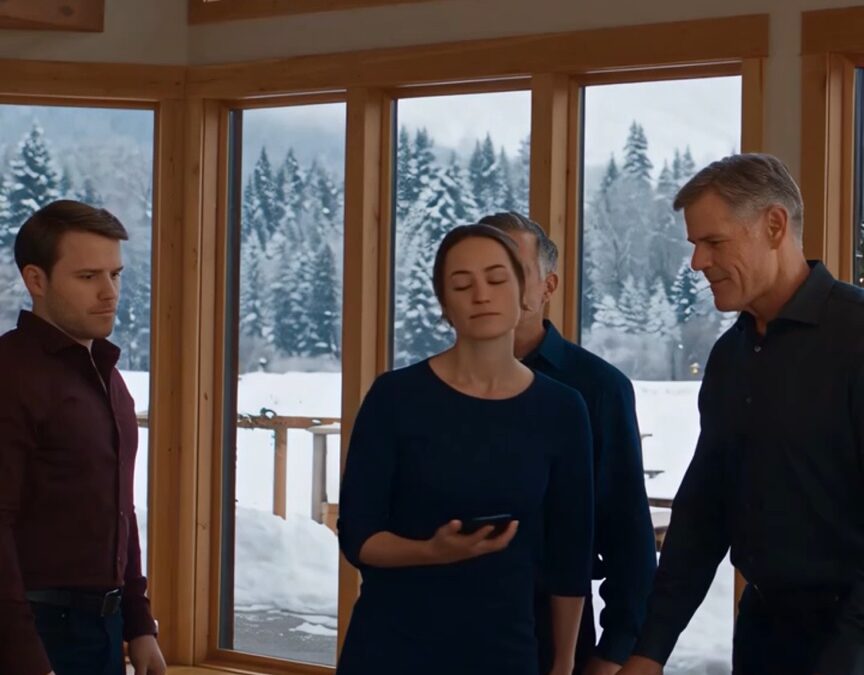
The Christmas tree glowed beside the tall windows. Outside, snow had settled along the railing, and the glass reflected our warm dining room back at us.
I had set that table.
I had carried the food from the kitchen and asked whether anyone wanted anything before sitting down. My own dinner was still untouched.
“Support me?”
Dad leaned toward me.
“We pay while you play Navy and come here freeloading.”
I looked at Mom.
She picked up her napkin, folded it across her lap, and left my father’s statement alone.
I was 39, an active-duty Navy officer. My father, Warren, was 67. He knew what I did for work, although he preferred to describe it as traveling whenever he wanted to make it sound optional.
“I paid every household bill.”
He gave a short, nasal laugh and turned his face away.
Not a question.
Not even a request to explain.
I rested my hand on the back of my chair. The wood was smooth beneath my palm, and I kept looking at the space where my plate had been.
I owned that mountain house near Bend, Oregon.
My parents knew it.
The mortgage was in my name, and the money for the down payment had come from my savings. Nobody had given me the place or paid my way into it.
Mom and Dad had their own permanent home.
They received no mail at mine. They kept clothes in their overnight bags, not in my closets, and they were supposed to leave the next morning when the Christmas visit ended.
They were guests.
So was Adam.
At 36, my brother knew perfectly well that I had bought the house. Whatever he believed about the bills, he had never believed our parents owned it.
“Before I go anywhere,” I said, “what exactly have you been supporting?”
Mom glanced at Dad.
“Our time here costs money.”
“Yes. It does.”
Dad lowered his arm but stayed beside the adjacent chair.
“We’re the ones who come up here.”
“For weekends you ask to have.”
“While you’re off doing whatever they send you to do.”
“Working.”
Mom pressed her lips together.
“Nobody said you don’t work.”
Dad had just called it playing Navy. I waited for her to acknowledge that, but she reached for her water instead.
I could see my phone beside my place.
I did not pick it up yet.
There was still a chance, I thought, that somebody would stop and explain what they meant without turning Christmas dinner into something uglier.
I wanted Adam to ask.
He had been quiet while Dad spoke, but his hand remained near my plate as though he had been assigned to keep it away from me.
“Did you hear what he said?” I asked him.
“He’s frustrated.”
“With what?”
“With having to keep helping.”
“Have you asked me whether that’s true?”
He leaned back.
“Come on, Natalie.”
That was all.
I pulled my chair away from the wall a little, giving myself room to stand without being pressed between the furniture and Dad.
He watched the movement.
“You’re away so much,” he said.
“For work.”
“Somebody has to keep things going here.”
“I do.”
The kitchen was visible through the doorway behind him. There was a serving spoon on the counter and a pan I had left to soak.
Mom followed my glance.
“You don’t need to make a scene. Take your plate in there, and we can finish dinner.”
“You told me to leave the table.”
“Because of your attitude.”
I looked at the empty place in front of my chair again.
My fork was still where I had put it.
Somehow that bothered me nearly as much as the plate. Adam had moved my food but left the place setting, as though I could come back later and clear it.
I picked up the fork and laid it across my napkin.
Dad started to sit.
He seemed satisfied that the conversation had returned to what I was supposed to do next.
I remained standing.
“Have either of you paid a provider for this house?”
Mom smoothed the tablecloth beside her glass.
“There are different kinds of help.”
“I asked about the house bills.”
“Not everything needs to be accounted for at dinner.”
“You just accounted for it. You said you support me.”
Dad settled into his chair and looked up at me.
“You always need the last word.”
I could have taken my dinner into the kitchen.
I considered it.
I pictured standing beside the sink with the blue plate in my hand, listening to the others finish the meal I had made.
Then Mom said, “We’ve been very patient with you.”
I took my hand off the chair.
“Patient about what?”
“About you taking responsibility.”
She said it without looking toward the kitchen this time. She looked directly at me, expecting me to accept it.
I had reviewed the house bills whenever they arrived. I knew which payments had cleared because I was the person making them.
What I had never done was gather the entire history to defend myself at my own table.
Dad reached for his fork.
Adam pulled his hand away from my plate at last, but he did not move the plate back.
My phone lay beside my folded napkin.
I reached for it.
Chapter 2: The Bills I Paid
Dad watched me lift the phone.
“Put that away.”
“I’m checking something.”
“Right now?”
“Yes.”
I unlocked it while standing beside my chair. My dinner was still beyond my reach, next to the empty place Adam had pushed it toward.
I bought the house three years ago with my savings for the down payment and a mortgage I could afford on my Navy pay. My parents loved it immediately and asked whether they could come up for twelve weekends a year, provided I wasn’t using it. They offered to reimburse the ordinary running expenses, which averaged $420 a month, and I agreed because I wanted them to enjoy the place. I kept paying the providers directly because the accounts were mine, and I wasn’t going to let anything go unpaid while waiting for them.
That was our agreement.
It was not a shared purchase, a family property, or a place they maintained in exchange for letting me visit.
The mortgage was always mine.
So were the household accounts.
I had a separate checking account for the house, funded by transfers from my own money. Keeping it separate made it easier to check the bills without sorting through everyday purchases.
I opened that account.
Adam shifted in his chair.
“This is petty.”
I looked up.
“Calling me a freeloader wasn’t?”
“You know what I mean.”
“No. Explain it.”
He glanced at Mom instead.
Dad leaned forward over the table.
“Nobody needs a financial presentation.”
“You just said you pay while I play Navy.”
“We’ve helped plenty.”
“With these bills?”
Mom answered before he could.
“We aren’t doing an argument over money at Christmas.”
“You told me to eat in the kitchen over money.”
“Over your attitude.”
I looked back at the screen.
For three years, I had paid every bill for that house and let my parents use it for their regular getaways.
Their reimbursements had never arrived.
At first, Mom said they would catch up after their next visit. Later, she wanted us to sit down and sort it out together.
There was always some reason not to settle it when I asked.
There was never any difficulty finding time to request another weekend.
I remembered standing in the kitchen during a previous visit, checking that a payment had cleared while Mom talked about when they hoped to return.
I had asked whether she wanted me to send the expense information again.
“Let’s do it when we’re home,” she had said.
Then she had asked whether their next visit would work.
I had said yes.
That was my part in how this continued.
I had let promised reimbursements stay unresolved because I could cover the bills, and because asking my parents again had begun to feel more exhausting than paying them.
But none of that meant they had supported me.
“Have you ever seen them pay a bill for this house?” I asked Adam.
“That’s not the point.”
“It’s the point you just made.”
He looked down at his plate.
I waited.
“Did you check their story with me?”
“No.”
He said it reluctantly, as though the answer itself annoyed him.
I turned the phone slightly away while I selected the complete account history. I had checked individual payments plenty of times, but I had never laid the incoming and outgoing transactions together for this purpose.
Dad had not seen it.
Neither had Mom.
They were watching my face, not reading the screen.
Mom pushed her chair back a little.
“Natalie, nobody needs a performance.”
“You asked me to leave.”
“We asked you to think about how you behave.”
“No. You told me where to eat.”
I found the history and let it load.
There were the transfers from my own money.
There were the payments to the providers, cleared rather than waiting.
I checked the incoming transactions too.
Nothing from Mom.
Nothing from Dad.
Exactly what I expected.
The ordinary running expenses averaged $420 a month. Over the three years, that came to $15,120, separate from the mortgage I had also paid myself.
I did not need Dad to agree with the total for the payments to exist.
I needed him to stop telling everyone they were his.
“Promising to reimburse a bill isn’t paying it,” I said.
Mom reached toward her napkin again.
“We know how bills work.”
“Then let’s be accurate.”
Adam looked toward the hallway.
“Can’t you talk about this later?”
“You were willing to talk about it while moving my plate.”
He drew his hands into his lap.
Dad started to speak, but I was already moving.
I left the space beside my chair and walked past him toward the unobstructed head of the table.
My heels sounded on the wood.
He turned in his seat to follow me, and I stopped where everyone could see without my leaning across the food.
I raised my phone to chest height.
The heading read “PAYMENT HISTORY.”
“I own this house. I paid every bill.”
Dad looked at the screen.
Mom leaned close enough to read it.
“These are payments that cleared,” I said. “Not reminders.”
I showed them the transfers into the account first.
“That is my money going in.”
Then the outgoing payments.
“That is the house being paid for.”
Mom’s eyes followed the screen as I moved through the history slowly enough for her to read.
I did not name any contribution from anybody else.
I knew of none.
“The reimbursements you promised aren’t here.”
Dad leaned back.
For the first time since he pointed toward the hallway, he seemed to be considering something other than how to make me sit down or leave.
Mom opened her mouth, then closed it.
I kept the phone steady.
Dad looked from the screen to me.
“So you paid every bill?”
Chapter 3: What Mom Collected
“Yes.”
I lowered the phone just enough to look directly at him.
“Every bill. The mortgage too.”
Dad stared at the edge of the table.
Mom reached for her water but put it down without drinking.
I had expected an argument over the payments. I had not expected my father to look surprised by the answer to a question he could have asked before ordering me away.
“Where are the reimbursements you promised?” I asked.
Mom folded her hands.
“We said we would work that out.”
“You told everyone you were supporting me.”
“Keeping a place like this involves more than payments.”
“I’m asking about the payments.”
Dad looked at Adam.
My brother was no longer leaning back. He had moved closer to the table and was watching Mom.
“What do you mean, you paid every bill?” he asked me.
“The bills came to me. I paid them.”
“All of them?”
“Yes.”
He glanced at my phone.
“Then what was the money for?”
I waited.
Mom turned toward him quickly.
“Adam, this isn’t the time.”
“What money?” I asked.
He rubbed his thumb along the side of his glass.
“Last spring. Mom said there were bills you hadn’t paid.”
I stayed at the head of the table.
It would have been easy to start talking over him. Instead, I put my phone flat in my palm and let him finish.
“She said they needed to catch things up.”
“How much did you send?”
“$600.”
Mom pulled her napkin off her lap.
“I was trying to handle a family matter.”
“You asked him for money for my bills?”
“It wasn’t like that.”
Adam looked at her.
“That is what you said.”
I glanced down at the house-account history again, although I already knew what it showed.
No deposit from Adam.
No payment from Mom.
No unexplained credit that had gone toward a provider.
I had not been waiting on help last spring. I had been paying the bills as they came due.
“Did you send it to me?” I asked Adam.
“No. To Mom.”
“Did she tell you I knew?”
“She said she didn’t want to embarrass you.”
I put my free hand on the back of the head chair.
Mom was watching that hand instead of my face.
Apparently, I had been kept out of the conversation about my own supposed unpaid bills on purpose.
Dad cleared his throat.
“There’s no reason to make this sound criminal.”
“I asked where the money went.”
“Nobody stole your money,” he said.
“I didn’t say it was mine.”
Adam took out his phone.
The movement was small, but Mom noticed it immediately.
“What are you doing?”
“Checking.”
He found the payment confirmation and turned the screen toward me.
There it was.
$600 to Elaine.
I did not reach for his phone. I asked him to keep it open while I checked my own account for that period.
My payments were there.
They had cleared.
The incoming money was mine.
“This never came to the house account,” I said.
Mom looked toward Dad again.
“Some things were handled separately.”
“Which bill?” I asked.
She did not name one.
“Which provider received it?”
“We didn’t say we sent it directly.”
Adam set his phone on the table.
“You said the house needed catching up.”
Mom’s shoulders dropped slightly.
“We were going to sort it all out.”
“Did you keep it?”
She looked at the food.
“Yes. But there were things to discuss.”
I felt the edge of the chair press into my palm.
I loosened my grip.
“Then don’t describe that as paying my bills.”
Adam was scrolling again.
He stopped and looked up.
“Ruth sent money too.”
Mom turned all the way toward him.
“Don’t drag my sister into Christmas dinner.”
“She’s already in it.”
My aunt Ruth was 62. She was not at the house, and until that moment I had no reason to think she had anything to do with its expenses.
I had spoken with her about ordinary family things.
She had never mentioned helping me catch up.
“How do you know?” I asked.
“Mom told me she was helping.”
“Call her.”
Mom began to stand, then sat again.
“Can’t we speak privately first?”
“No,” Adam said.
It was the first time that evening he had refused her anything.
He called Ruth and put the phone on speaker after explaining that we were all at the dinner table.
I stayed beside the head chair.
Dad’s fork lay across his plate. Mom had folded her napkin into a narrow strip.
Adam asked Ruth whether she remembered sending money last spring.
“Yes,” she said. “Is something wrong?”
“How much did you send Mom?”
“$600.”
I closed my eyes briefly, then looked at the account still open in my hand.
“Ruth, it’s Natalie. What did Mom say it was for?”
There was a pause.
“She said you had let the household bills fall behind.”
“I hadn’t.”
Another pause.
“I paid them myself.”
Ruth asked whether I was certain that Elaine had not paid something separately.
I told her I had the complete history in front of me and that Mom had not identified any payment.
“Elaine?” Ruth said.
Mom leaned toward the phone.
“I was going to talk to you.”
“About the money?”
“Yes.”
“Did it go toward the house?”
Mom rubbed the folded napkin between her fingers.
“No.”
Adam looked at his own confirmation again.
“So neither payment did.”
I said the total aloud.
“$1,200.”
Ruth’s voice became quieter.
“I still have what she sent me, Natalie.”
Chapter 4: Dad Had Asked Too
“Please keep it,” I told Ruth.
“I will.”
I asked whether she could send me Elaine’s request and her payment confirmation. I did not want anyone trying to reconstruct the wording from an uncomfortable phone call.
Ruth agreed.
Mom reached for Adam’s phone as though she wanted to take the conversation off speaker, but he moved it closer to his plate.
“She can hear us here,” he said.
Dad sat forward.
“Your mother was trying to help.”
“With what?” I asked.
“With keeping this from becoming a whole family discussion.”
“She made it a family discussion when she asked them for money.”
He looked toward the windows.
The reflection showed all of us around the table and my empty place along its side.
My blue plate was still where Adam had pushed it.
I had been so focused on the phone that I had almost stopped seeing it.
Adam picked up his phone again.
“Dad knew.”
Dad turned back.
“Knew what?”
“That Mom asked me.”
I watched my father’s face.
He had just treated this as something my mother had tried to handle. Now Adam was searching through a conversation Dad had apparently expected him to leave alone.
“What are you looking for?” Dad asked.
“The message.”
“Don’t start pulling pieces out of context.”
Adam stopped scrolling.
He read silently, then looked at me.
“Dad encouraged me to send the $600.”
Mom pressed the folded napkin flat.
Dad did not ask what message Adam meant.
That told me something, but I waited for the actual words.
Adam turned the phone so I could read.
The message from Warren referred to Elaine’s request and encouraged Adam to send her the $600 to help catch up the household bills at my house.
It was not a vague expression of concern.
It identified the reason for the payment and directed him toward Mom.
I read it again.
“You knew she was asking him for money.”
Dad adjusted his chair.
“I knew she was trying to get things handled.”
“By saying I hadn’t paid.”
“That was what I understood.”
I looked at Mom.
She studied the crease in her napkin.
Ruth was still listening on speaker.
“Warren, did you ask whether anything was actually overdue?” she said.
He gave a small, impatient movement of his hand.
“We’re not going to account for every conversation.”
“We’re accounting for that request,” I said.
Adam kept the message visible.
Dad had not seen my full payment history before I raised it. He had helped solicit money without checking whether the bills were unpaid, then had stood in my dining room and claimed he was supporting me.
Those were different facts.
Both mattered.
My phone signaled that Ruth’s messages had arrived.
I opened them without closing the house history completely. Her saved request from Elaine described the same supposed problem Adam had described.
Unpaid household bills.
A need to catch things up.
Then came Ruth’s payment confirmation.
$600 to Elaine.
I thanked her.
“I’m sorry, Natalie,” she said.
“You sent what you thought would help.”
“I should have asked you.”
Mom looked toward Adam’s phone.
“I didn’t want Natalie upset with everybody knowing.”
“You didn’t ask me before saying it,” I said.
“That would have been an awkward conversation.”
I looked around the table.
Nobody answered that.
I opened my original exchange with Mom about using the house.
I knew roughly where it was because I had returned to it before when she asked for weekends that did not work for me.
The terms were ordinary.
Twelve weekends a year, if I agreed and was not using the house. They would reimburse the ordinary running expenses.
I would keep paying the providers.
I held the screen where Mom could see it.
“This was what we agreed.”
“I remember.”
“Then the payments I made weren’t evidence that I needed help. They were what I said I would do.”
Dad glanced at the screen but did not reach for it.
“We used the place. We were going to contribute.”
“You promised to reimburse expenses. You didn’t.”
“We can still settle that.”
“Not by saying I left bills unpaid.”
Adam asked me to send him the relevant exchange.
I agreed, but only the part establishing the arrangement. He did not need my account credentials or every private conversation with Mom to understand what had happened.
He sent me Dad’s message.
Ruth confirmed that I had received her request and payment proof.
I had the pieces now.
My original agreement.
My payments.
Their requests for money.
Dad’s encouragement.
I put my phone down briefly and moved my blue plate back to my place.
Adam watched me do it.
He did not touch it.
Mom spoke softly.
“Can we please finish Christmas before deciding what this means?”
I looked at the food, then at the phones on the table.
“I’m going to check everything before I answer.”
Dad straightened.
“Answer what?”
“What happens with the house.”
Chapter 5: Checking Before I Answered
I took my phone into a quiet room and closed the door.
Not hard.
I needed to hear myself think without Dad interrupting a sentence or Mom offering another description of what she had meant.
I sat on the edge of the bed.
My phone screen had gone dark. For a moment, I let it stay that way and listened to the faint sounds from the dining room.
A chair moved.
Water ran in the kitchen.
Nobody came down the hall.
Then I unlocked the phone.
I saved the account history where I could find it without opening the banking app again. I checked that the heading and the transactions were readable rather than assuming the saved view had captured everything.
“PAYMENT HISTORY.”
The same words Dad had finally looked at across the table.
I went through the incoming entries slowly.
My transfers.
My transfers again.
No reimbursement from Warren.
None from Elaine.
I checked the period last spring alongside the confirmations Adam and Ruth had supplied.
The money they sent had not reached me.
Mom had admitted that it had not gone toward the house, but I wanted my own records checked before I said anything further.
That mattered.
I was angry enough to make an assumption and call it a fact if I rushed.
I did not want to do that.
I checked the outgoing payments next. The household expenses had cleared, and the mortgage payments were separate from the ordinary running costs I had agreed to discuss with my parents.
Their promise had never made them responsible for my mortgage.
It also had never made them owners.
I saved the original text exchange with Mom beside the records.
Reading it alone felt different from holding it up at dinner.
There was no grand promise about taking care of me. No suggestion that my career left my parents supporting an empty house.
There was a request to use a place I had bought.
There was an offer to reimburse the running expenses.
And there was my agreement, conditional on my own use and approval.
I could see my own friendly answers.
I had wanted them there.
That part was hard to look at.
I had imagined them enjoying the windows, sitting over coffee, coming home rested. I had not imagined standing beside my Christmas dinner while Dad told me I was a freeloader.
I put the phone down and rubbed my eyes with the heels of my hands.
Then I picked it up again.
Adam’s message contained Dad’s original encouragement to send Elaine the $600.
Ruth’s messages contained Mom’s request and her own confirmation.
I saved them without adding descriptions that went beyond what they showed.
I did not write that Dad had known every household balance.
I had no proof of that.
I had proof that he helped solicit money by repeating a claim he had not checked, and that he had made the same claim at my table.
That was enough to address.
A soft knock came at the door.
“Natalie?”
Adam.
I opened it but stayed beside the doorway.
“Ruth wanted to make sure you got everything.”
“I did.”
He held his phone loosely.
“Do you need anything else from me?”
“Not right now.”
He looked past me at the bed, where I had set my phone.
“I really thought they were paying the expenses.”
“You could have asked me.”
“I know.”
I was not ready to help him turn that into a longer conversation.
“I need to finish checking.”
He nodded and stepped back.
I closed the door again.
Next, I opened my personal calendar.
Mom had already requested future weekends. Some were entered as requested, others marked from conversations in which she had spoken as though the decision was settled.
I opened each entry.
I checked the notes against our messages instead of relying on the irritated version of events running through my head.
There were the familiar requests.
There were my replies saying I would check.
There were entries I had kept because it was easier to plan around them than reopen the reimbursement conversation.
I made a clear list from my own calendar.
I was not making a schedule for them.
I was identifying what I needed to cancel so that nobody could later say I had left a particular weekend untouched.
My parents were temporary guests.
Their Christmas stay ended the next morning.
I would not change that.
I did not need them driving away at night, and I did not need a fight about packing while snow sat outside the windows.
But the future weekends were invitations I could stop offering.
I checked the guest access settings without changing anything.
Their code remained active for the visit already underway. After they left, I could delete it and put the new arrangement in writing.
No physical keys needed collecting.
No one needed to be removed from a home.
They had their own.
I set my phone on the bedspread and looked at the closed door.
The decision was not whether I could afford to keep paying the bills.
I had been doing that.
The decision was whether I would keep making the house available under an arrangement they had not honored.
I opened the calendar once more.
I read the requested weekends from beginning to end.
Then I stood, put the phone in my hand, and went back toward the dining room.
Dad looked up when I entered.
“Well?” he said. “How are we settling this?”
Chapter 6: No More Reserved Weekends
My blue plate was back in front of my chair.
I had put it there before leaving the room, but seeing it waiting for me made it easier to sit down.
The food had cooled.
I took a sip of water.
Dad watched me as though I had returned with an overdue decision about a household purchase.
“The regular getaways are over,” I said.
Mom stared at me.
“What does that mean?”
“It means I’m not offering the house for your weekends anymore.”
Dad looked toward my phone.
“You checked the account. Fine. We understand.”
“I also checked our agreement and the requested dates.”
“We can settle the expenses.”
“I’m canceling the future invitations.”
He sat back.
That was not the answer he had been arranging his proposal around.
Mom put her hand beside her glass.
“You’re saying we can’t come here?”
“Not without a fresh invitation.”
“We have weekends planned.”
“I know. I checked my calendar.”
Dad leaned forward.
“Then let’s be practical. We resume the reimbursements, and this doesn’t need to become something bigger.”
“Resume?”
He paused.
“Start paying them, then.”
“No.”
I said it without lifting my voice.
He looked annoyed, but he had stopped pretending the payments already existed.
That mattered.
“You wanted the expenses covered,” he said. “I’m offering to cover them.”
“The weekend arrangement is ending.”
“So this isn’t really about money.”
“It includes money. It also includes what happened at this table.”
Mom glanced toward my plate.
“Nobody stopped you from eating.”
“Adam moved my dinner. You told me to eat in the kitchen. Dad told me to leave.”
“We were upset.”
“I heard you.”
I picked up my fork, then put it down again. I did not want to discuss whether I was allowed to eat while holding it.
Adam sat very still.
Dad tapped a finger beside his plate.
“You’re going to deny us the house over an argument?”
“I’m withdrawing an invitation you treated as guaranteed.”
“It was an agreement.”
“An agreement you didn’t honor.”
“We’re trying to fix it.”
“You’re trying to keep the weekends.”
He stopped tapping.
For a moment, he looked directly at me without speaking.
I did not add anything.
He wanted twelve weekends a year without covering the running expenses he had promised to reimburse. Now that the payment history was in front of everyone, he was offering to pay going forward rather than lose access entirely.
I understood the proposal.
I did not accept it.
Mom tried another approach.
“We’ve always asked when we could come.”
“You’ve asked. Sometimes you’ve also spoken as though my answer was already yes.”
“You could have said no.”
“I’m saying it now.”
She looked toward Adam.
He did not help her.
Instead, he moved his water glass away from the edge and stared at the space between his hands.
Dad asked whether I expected them to leave immediately.
“No. Your visit ends tomorrow morning, as planned.”
“Then what?”
“You leave as planned. Afterward, I delete the guest code.”
Mom’s face tightened.
“There’s no need to do that.”
“There’s no need for an active guest code when there are no planned visits.”
“We wouldn’t just arrive.”
“Then this won’t prevent anything you intended to do.”
Dad looked down at the tablecloth.
I explained it once more, keeping it plain.
Their current visit was not being cut short. They could sleep in the guest room and leave in the morning.
Future visits would require a new invitation from me.
The requested weekends would come off my calendar.
Their old code would no longer be available to use or share.
Mom asked whether I planned to hold the money from Adam and Ruth against them forever.
“That money belongs back with them.”
“You want us to pay them and you?”
“I haven’t asked you to give me their money.”
Dad looked up.
“Then what exactly are you asking for?”
“I’m telling you the access arrangement is over.”
He had been looking for a price.
I was not giving him one.
I got up and carried my plate into the kitchen to warm the food. This time, I took it there because I wanted my dinner hot.
Nobody directed me.
Mom followed as far as the doorway.
“Natalie, can we talk without everybody listening?”
“We can talk. The decision stays.”
She folded her arms, then unfolded them.
“We love this place.”
“I know.”
“We thought it would stay part of our routine.”
“I know that too.”
I watched the plate turn behind the small window and waited for the food to heat.
Mom stood beside the counter, looking at the serving spoon I had left there.
She did not apologize.
When I brought my plate back, I sat at my original place and ate.
Adam kept his hands on his own side of the table.
Dad finished his water.
There was no pleasant way to recover the meal, and I did not pretend otherwise by offering another topic.
Afterward, I carried dishes into the kitchen.
I rinsed my blue plate separately and set it in the drying rack where its edge would not knock against the serving pan.
Behind me, Dad spoke to Mom.
“We should pack tonight.”
Chapter 7: Leaving in the Morning
I heard their bags moving before I went to bed.
The guest-room door stayed open while Mom folded clothes, and Dad carried their coats out to the hallway.
They were packing for the departure already planned.
I did not stand over them.
In the kitchen, I finished putting away the food and checked that the counters were clear. My blue plate was dry by then.
I put it in the cupboard.
Adam came in carrying the remaining glasses from the table.
“Where do these go?”
“Beside the sink.”
He set them down carefully.
For a while, we worked without talking.
I washed.
He dried.
When Mom came through to collect something from the dining room, she paused at the doorway and watched us.
Neither of us looked up immediately.
“I don’t want tomorrow to be unpleasant,” she said.
“I don’t either.”
“Your father is ready to leave early.”
“You can leave when you’re ready.”
She waited for more.
I dried my hands.
“The visit still ends tomorrow. Nothing has changed about that.”
She went back down the hall.
Adam placed the towel over the sink edge.
“I’ll stay out of the discussion about the code.”
“It isn’t a discussion.”
He nodded.
“I understand.”
I checked the doors before bed as I usually did. The guest code was still active.
I left it alone.
They were still invited guests for the night, and I had told them exactly when I would remove it.
In the morning, the house was quiet except for the sounds of packing.
I made coffee.
Snow remained along the railing outside the tall windows, though the room looked different in daylight. Without the tree lights reflected in the glass, I could see the dining table clearly from the kitchen.
No plates.
No phones held up.
Just chairs that needed pushing in.
Dad came out wearing his coat.
“Road looks fine,” he said.
“Good.”
Mom carried her overnight bag to the hallway. There were no drawers to empty, no mail to sort, no question of where she would live afterward.
They were going home.
Dad stopped beside the kitchen counter.
“I still think you’re making too much of this.”
“I know.”
“We could have settled the costs.”
“The future weekends are canceled.”
He looked toward Mom.
She adjusted the handle of her bag.
“We heard you.”
I poured coffee into my mug.
I did not reopen the account history.
The proof had already been shown in front of everyone. I did not need to hold the phone up again every time Dad disliked the consequence.
Adam stood near the dining room while they brought their bags out.
Mom looked at him.
“Are you leaving now too?”
“I’m getting my things.”
Nobody asked me to carry anything.
I stayed by the counter while Dad checked that they had their coats and bags.
At the door, Mom turned.
“You’ll let us know when we can come again?”
“I’ll invite you if I decide to.”
Her hand tightened around the strap.
Then she nodded once.
Dad opened the door.
They left voluntarily, as planned, and I watched until they were away from the house before closing it.
I waited a moment in the hallway.
Then I took out my phone.
The guest-code settings were easy to find because I had checked them the night before. I selected their code and deleted it.
I read the confirmation before leaving the screen.
It was gone.
I did not change a lock while they were inside or leave them outside with bags. Their holiday stay had ended before I removed their access.
Next came the calendar.
I opened the requested weekends I had checked and removed them from my personal schedule.
Some had notes attached.
Bring extra towels.
Check whether I would be there.
Ask Mom about the reimbursement conversation.
I deleted those too.
I was not going to keep preparing for visits I had canceled.
At the kitchen counter, I wrote a message to both parents.
I kept it short enough to read without scrolling through an argument.
Their Christmas visit had ended.
Their guest code had been deleted.
The requested future weekends were canceled.
Future visits required a fresh invitation from me, and they no longer had permission to use or share the old code.
I read it before sending.
No insults.
No threats.
No demand that they agree with my feelings.
Just the arrangements for my house.
Mom answered first.
She acknowledged that the code was no longer available to them and that they needed a new invitation.
Dad’s reply came afterward.
He acknowledged it too.
Neither message contained an apology.
I saved both.
Adam came into the kitchen with his bag and saw the phone in my hand.
“Done?”
“The code and calendar are done.”
He looked toward the dining table.
“I need to talk to you about last night.”
“You do.”
He set down his bag, but his phone sounded before he could begin.
He looked at the screen.
“Ruth,” he said. “She wants her money back.”
Chapter 8: The Money Goes Back
“That’s between her and Mom,” I said.
Adam nodded.
“And mine.”
He sat at the kitchen table with his phone while I finished my coffee.
Ruth had the request Elaine sent and her payment confirmation. Adam had his confirmation and Dad’s message encouraging him to send the money.
They did not need me to claim the $1,200.
I had not paid it to Elaine.
It belonged back with the people who had.
Adam read his draft aloud before sending it.
He asked for the return of his $600 because the reason given for collecting it was not true.
He did not call it a loan.
He did not offer to let it become credit toward another family favor.
“That says what happened,” I told him.
He sent it.
Ruth contacted Mom separately.
I learned that when she called me later, after Adam had left and I was alone with the dishes and the quiet house.
“I asked for all of it back,” Ruth said.
“You should.”
“I wanted you to know I didn’t send it because I thought you were careless.”
“What did you think?”
“That something had gone wrong and you didn’t want to say.”
I stood beside the cupboard with my hand on the handle.
“I wish you’d asked.”
“So do I.”
She had been trying to help a niece who did not need that particular help. Elaine had made sure the request sounded private enough that checking with me would feel like exposing me.
Ruth understood that now.
She did not ask me to smooth things over with her sister.
I appreciated that.
Over the next two weeks, I kept the house records where I had saved them but stopped opening them every evening.
The immediate checks were finished.
No payment from my parents had reached me.
No provider needed catching up.
No requested weekend remained reserved.
What remained was the return of money I had not received and could not return for anyone else.
Mom sent me a message saying she intended to settle things with Adam and Ruth.
I answered only that she needed to speak directly with them.
She could not make me responsible for confirming her promises again.
When Adam received his refund, he called.
“She sent the $600.”
“Good.”
“From her own money.”
“That’s where it needed to come from.”
He had checked the receipt rather than relying on a statement that the payment was on its way.
I asked him to keep the confirmation.
He said he already had.
Ruth called after hers arrived.
“The full $600,” she told me.
Within two weeks, both had been repaid.
Neither repayment came through my account.
I did not collect the same money or treat it as a payment against the household expenses I had already covered.
Elaine had returned money she had collected under a false explanation.
That was separate from my decision about access.
Dad tried to connect them anyway.
His message asked whether, now that the money had been returned, we could put Christmas behind us and discuss the house normally.
I answered that the canceled weekends remained canceled.
There was no new payment arrangement.
I did not write a long explanation.
He had heard it at the table.
A little later, Adam called again.
This time he did not lead with a refund or a message from Mom.
“I owe you an apology.”
I sat down before answering.
“For what?”
He took a breath.
“For believing them without asking you.”
I waited.
“And for calling you a freeloader.”
I looked at the kitchen doorway, where I had nearly taken my Christmas dinner because it seemed easier than arguing.
“Keep going,” I said.
He did.
“For moving your plate. I had no right to touch it.”
“No.”
“And for calling the payment history petty.”
I pressed my thumb against the edge of my phone case.
“What should I have done instead?”
“You shouldn’t have had to prove it.”
“That wasn’t how you acted.”
“I know.”
He did not say he was only trying to keep Christmas peaceful.
He did not tell me Dad had been upset or Mom had meant well.
For once, he stayed with his own actions.
“I treated you like they had already established you owed them,” he said. “I never asked you anything.”
“You knew I bought the house.”
“I thought they paid to keep it running.”
“You still could have asked.”
“Yes.”
I let the silence sit for a while.
Then I told him I accepted the apology.
That did not restore the Christmas dinner, but it let us talk without pretending he had only watched it happen.
Before we ended the call, he asked whether he should tell Mom and Dad I had accepted.
“No. This conversation was about you.”
“All right.”
Afterward, I opened the cupboard to put away a glass and saw my blue plate in its usual place.
I left it there.
I no longer felt the need to keep it out as a reminder.
Later, my phone lit up with a message from Elaine.
She wanted to know whether a familiar getaway weekend might still be possible.
Chapter 9: A Weekend They Couldn’t Book
Mom’s message sounded almost ordinary.
She asked about a weekend they had often requested, then mentioned how much they missed the house.
There was no claim that they still had permission.
She had acknowledged in writing that they did not.
But she wanted me to make an exception large enough to restore the old pattern.
I read the message at my kitchen counter.
Then I checked my own plans before answering, not because her request had priority, but because I wanted to notice what I actually wanted.
I wanted to go to the house.
I had been considering it without putting anything in the calendar.
There was nothing I needed to move.
No parental visit to work around.
No promise to prepare beds or leave supplies.
I wrote back.
“No. The regular getaway arrangement isn’t being reinstated.”
I did not add that I might reconsider if she offered money.
I did not ask what they planned to do while there.
Those questions would have turned a decision into a negotiation.
Mom replied that it would only be a visit.
I answered that a visit still required an invitation, and I was not offering one for that weekend.
Dad joined the conversation later.
“We could cover the running costs.”
I looked at the words.
That was the smarter offer now. He could no longer claim to have paid all along, and the return of Adam’s and Ruth’s money had removed any reason to keep discussing that collection.
So he offered a future contribution.
“No,” I wrote. “I’m keeping the house for my own use that weekend.”
He asked whether every request would be treated this way.
“I’ll decide about invitations when I’m ready.”
Then I put the phone down.
I did not block them or send a message to the rest of the family. There was no need to create another audience for a question I had already answered.
Their old guest code no longer worked.
They knew it.
They had their own home and the ability to arrange their own getaways somewhere else.
Eventually, Mom said they had made other arrangements.
I answered that I hoped they had a good trip.
I meant that.
I did not need their plans to fail for mine to stay in place.
When I opened my calendar, the weekend was blank except for what I chose to enter.
I added my own stay.
Then I packed for myself.
That took less thought than preparing for guests. I did not check whether Mom preferred different bedding or whether Dad would want the dining chairs moved nearer the windows.
I checked what food was already at the house.
I made a list of what I wanted to cook.
The mortgage and ordinary bills were still my responsibility, just as they had been before the argument. Stopping the getaways had not made those costs disappear.
It had stopped me from paying for visits while being told somebody else was carrying me.
At the house, I let myself in and set my bag down in the quiet hallway.
There were no overnight bags waiting to be carried to the guest room.
No message asking where I had put extra towels.
No one had arrived ahead of me.
I checked the kitchen, then the thermostat, doing the ordinary things I always did when I came in.
Everything was where I had left it.
I stood at the dining-room windows for a while.
The house had looked beautiful when I bought it. I had liked the light and the space, and the way the mountains made me want to stay home instead of filling every free hour with errands.
Somewhere during the years of accommodating weekends, I had begun thinking of my own visits as openings around other people’s plans.
I took my coat off.
Then I moved my bag to my room instead of leaving it in the hall while I answered requests.
My phone stayed on the kitchen counter.
When I checked it later, there was no emergency.
There was no message announcing that my parents were on their way despite my answer.
They had made other arrangements, and they kept them.
That was a real change.
So was dinner.
I cooked what I wanted and used the dining table without moving my things to make space for anyone else.
I put my plate at the end nearest the windows.
I did not choose that seat to make a point.
It was where I wanted to sit.
After eating, I washed the dishes and left the kitchen ready for morning.
I checked the guest-access list as part of the house settings.
Their code was still absent.
I did not restore it because they had accepted a refusal without an argument.
Accepting the refusal was what I had asked them to do.
Later, Adam called.
He asked whether I was at the house, and I said yes.
“Did they leave you alone about the weekend?”
“They made other plans.”
“Good.”
He asked how the place looked.
“Like I left it.”
He laughed a little, then stopped.
“I’m glad.”
We talked about ordinary things after that.
When the call ended, I looked at my calendar again. I was considering when I might return, without first checking a list of weekends my parents expected.
I left it open on the counter.
Then I reached into the cupboard for a mug, and my hand brushed the blue plate.
I pulled it forward far enough to see the whole face of it.
For the following winter, I entered a weekend of my own.
Chapter 10: My Blue Plate
The following winter, I arrived with a bag of groceries and no guest list.
Snow lay outside the tall windows again.
I carried everything into the kitchen before taking off my coat, then went back for my overnight bag.
There was no need to check whether somebody had arrived early.
Nobody had permission to.
My parents’ old code was still deleted, and the weekends I had removed from my calendar had stayed removed.
There had been no replacement arrangement.
I set my phone on the counter and opened the grocery bag.
Dinner was something I could make without following a complicated recipe. I wanted to eat at the table, wash what I used, and spend the evening doing nothing I had promised anybody.
I put the food away.
Then I walked through the house.
The guest room was clean and unused.
The extra towels were folded where I had left them.
I checked the windows and turned on the lights as the afternoon faded. Warm reflections appeared in the glass, like the ones I remembered from Christmas.
I could look at them without hearing Dad’s order every time.
That had taken longer than deleting a code.
For a while after the holiday, I had caught myself rehearsing replies to things nobody was currently saying. I would be driving or washing a dish, suddenly explaining again that I paid the mortgage.
I did not do that now.
The records were saved.
Adam and Ruth had their money.
My parents had acknowledged the access change and made their own plans.
Nothing required another presentation at my dining table.
I came back to the kitchen and filled a glass of water.
My phone had a message from Adam.
He hoped I enjoyed the weekend.
No question about whether I could fit Mom and Dad into it.
No request that I make things easier for him by changing my answer.
I thanked him and put the phone down.
We had spoken regularly since his apology. He had not become someone who agreed with me about everything, and I had not asked him to.
He asked questions now.
That was enough to make our conversations different.
Ruth had kept her distance from the argument after getting her money back. She no longer treated a request supposedly made on my behalf as something she could confirm with everybody except me.
My parents remained unhappy about losing the weekends.
I knew that without needing regular reports.
Elaine could still ask whether I wanted a visit. Warren could still believe the old arrangement should have been repairable by a promise to pay.
Neither belief gave them access.
They had their permanent home.
They planned their time without reserving mine.
I took out a pan and started dinner.
The house was quiet enough that I could hear the food cooking from the other side of the kitchen.
I opened a drawer for a serving spoon and found the one I had used at Christmas.
I rinsed it because it had been sitting unused, then laid it on a folded towel.
There was nothing remarkable about it.
I was glad of that.
I did not want every object in the house assigned a part in the worst dinner I had hosted.
While the food cooked, I opened my calendar to check when I needed to leave.
My own obligations were there.
My own return trip.
No block of weekends held for my parents.
I closed it without changing anything.
Then I checked that the house bills had cleared.
I still did that.
Owning a place meant paying attention to it whether anybody praised me for the payments or not. The separate account remained useful, and I had kept it.
My money went in.
The house payments went out.
The ordinary expenses were not a family mystery.
I put the phone away in the drawer beside the counter.
Not because anyone had ordered me to.
I simply did not need it at dinner.
When the food was ready, I turned off the heat and opened the cupboard.
My blue plate stood beside the others.
I took it down.
There was no special mark on it from Adam moving it. No chip along the rim, no scratch that could tell somebody what happened.
It was the same plate I had bought because I liked the color.
I washed it briefly and dried it with a clean towel.
Then I carried it into the dining room.
The head of the table was unobstructed.
I pulled out the chair.
At Christmas, I had stood there with my phone at chest height because it was the only way to get my parents to look at what I was showing them.
This time, I placed a folded napkin beside the plate and went back for my dinner.
I did not set extra places.
There was no need to leave room in case somebody decided to come after all.
They had not been invited.
They did not arrive.
I carried the food in, then the water, making the small trips at my own pace.
Outside, the snow along the railing had turned blue in the fading light.
Inside, the room was warm.
I sat down at the head of the table and adjusted my chair until I was comfortable.
The house did not feel empty.
There were rooms I was not using and chairs nobody occupied. That was all.
I could invite someone another time.
I could also finish this weekend alone without offering an explanation.
I unfolded my napkin and put it on my lap.
Then I picked up my fork.
My blue dinner plate was directly in front of me, at the head of my table, and I ate there.
You Might Also Enjoy




