My Parents Took My Wedding Gifts To “Pay Themselves Back”—Then I Held Up My Phone
Chapter 1: The Gift Table
My parents started collecting the gift envelopes at my wedding reception, telling everyone they were finally getting back what they had spent.
My mother had her hand behind the envelopes.
She was sliding them toward her open purse.
Not into it.
Not yet.
The cream-colored gift basket sat beside her elbow, its folded handle resting against the rim. Before dinner, the envelopes had stood inside it.
Now most lay on the table.
“We figured this would be easier,” my father said to the guests nearby. “Instead of having her pay us back separately.”
I stopped beside the table.
“Pay you back for what?”
My mother smiled.
“The wedding, honey.”
Above us, the chandeliers were still bright. Someone had moved a chair away from the dinner tables, leaving an open space between me and the people listening.
There was nowhere to pretend this was private.
I put my fingertips on the tablecloth.
“Those are for us.”
“We know who they’re addressed to,” Mom said.
She wore a navy dress. Her purse matched it closely enough that I had noticed earlier, when she asked whether everything looked all right.
I had said yes.
I hadn’t meant this.
My father stood beside her in his charcoal shirt and trousers, talking as though they had already settled the matter with me.
They hadn’t even mentioned it.
I was Valerie, the bride, standing there in my ivory dress, being told I owed money for a wedding I had already paid for.
Every bill.
I was 34.
I worked in payroll.
I knew the difference between money someone had spent and money someone wished to collect.
The whole wedding had cost $18,400.
For six months, I had paid those expenses from my savings. Owen hadn’t funded the bills, and neither had my parents.
There was no remaining wedding balance.
I looked at the envelopes closest to Mom’s purse. A guest had drawn a little underline beneath our names on one.
Another had tucked the flap neatly inside.
Nothing had been opened.
That mattered more than anything my father was saying.
We could still take our gifts home without wondering what had disappeared.
“Please put them back,” I said.
Mom looked past me.
“You can do your thank-you notes later.”
“I can also keep my own wedding gifts.”
“Don’t start.”
A relative standing nearby touched the back of a chair. Another guest looked toward the dance floor.
Nobody moved closer.
Dad glanced down at the envelopes.
“There should be roughly $6,000 here.”
“You don’t know what’s in those.”
“We know our family.”
He sounded almost pleased with the estimate.
I hadn’t estimated anything.
I had been eating dinner beside my new husband and trying to remember which guests we still needed to speak to before they left.
My parents had apparently been doing different calculations.
“Did you tell people we agreed to this?” I asked.
Dad shifted his attention toward me.
“We shouldn’t have to make a production out of helping our daughter.”
“That isn’t what I asked.”
Mom straightened an envelope with her fingertips.
I watched her do it.
The envelope didn’t belong to her, but she handled it like something she had brought from home.
Owen came up beside me.
He was 36, and we had been married only long enough to finish dinner. I turned toward him expecting him to ask my mother to move her hand.
Instead, he leaned close.
“Can we just let them keep the envelopes?”
I stared at him.
“What?”
“We can discuss it after the honeymoon.”
He spoke quietly.
That made me look at his face again, because I wanted to be certain he understood what he was asking.
He knew where the wedding money came from.
He had sat across our kitchen table while I checked payments. He had watched me close the folder when everything was finally paid.
“Why would we leave our gifts here?” I asked.
“I don’t want a scene.”
“I didn’t make this arrangement.”
“I know.”
“Then why are you asking me?”
He looked toward Dad.
Not at me.
I waited.
He didn’t answer.
Mom took his hesitation as support.
“Your husband understands.”
“No,” I said. “He wants us to stop talking.”
Owen rubbed the side of his jaw.
I moved my hand away from the tablecloth before I pulled it crooked. My phone was already in my other hand, down beside my dress.
I had been using it for pictures.
I hadn’t come over prepared to defend my own wedding gifts.
“There are people listening,” Dad said.
“I noticed.”
“Then lower your voice.”
I was speaking normally.
He had been explaining the supposed reimbursement loudly enough for guests to hear, but apparently I was expected to question it somewhere else.
I looked at the basket again.
Its lining had folded inward where Mom had pulled out the envelopes. I could see the empty bottom through the gap.
“There wasn’t any agreement about this,” I said.
Mom pressed her lips together.
“We’re your parents.”
“I know who you are.”
For months, they had accepted thanks for supposedly paying for the wedding. If somebody praised them for helping us have a lovely reception, Dad nodded and Mom smiled. I usually moved the conversation toward the flowers or dinner because I was trying to keep planning, working, and answering everybody’s questions without turning each family conversation into an explanation of my savings account. I had let remarks pass. I had not assigned them our gifts, promised repayment, or agreed to leave my own reception without the cards people had brought for us.
Dad looked at Owen again.
“Help her understand.”
Owen stayed beside me, but he didn’t say anything.
“Understand what?” I asked.
Mom swept her arm behind the envelopes, bringing them closer to the purse in a single movement.
“These gifts pay back what we spent.”
I drew a breath.
“You spent?”
She stepped nearer the corner of the table, her hands dropping to her sides.
“We paid plenty. Don’t embarrass us over money.”
A guest stopped adjusting the chair.
Dad’s mouth tightened.
I didn’t reach for an envelope. I didn’t touch the purse. I kept my phone down and gave them the chance to name what they claimed.
“Which wedding bill do you think I still owe you?”
Chapter 2: What I Had Already Paid
“Valerie,” Dad said, using the warning tone I remembered from home.
“I’m asking about a bill.”
He glanced toward the guests.
“We shouldn’t have to explain our contribution in front of everybody.”
I looked at Mom.
She was still between the basket and her purse.
Nobody had named an unpaid expense.
The week before the wedding, I had sat at our kitchen table with my phone, matching confirmations against the amounts that had left my account.
Owen had been there.
“Are you still finding things to pay?” he had asked.
“No. Checking what’s finished.”
That was ordinary work to me.
In payroll, somebody saying a payment was handled wasn’t the same as seeing that it had actually gone through.
I treated my savings the same way.
The reception room in Richmond, Virginia, had looked different when I first walked through it during planning. The tables weren’t dressed yet, and I had stood under the chandeliers trying to decide whether I could afford the place without borrowing.
I could.
But only if I kept track.
For six months, I checked what was due before I agreed to the next expense.
I paid from savings, then saved the confirmation.
Sometimes I did it at the kitchen table. Sometimes I checked a message after work, still wearing my work clothes, before answering a question about the reception.
No parent contribution appeared in my budget.
There was no agreement that gifts would replace my savings.
The gifts weren’t part of paying for the room.
They were gifts.
At the reception, Dad lifted his chin toward my phone.
“What are you doing?”
I hadn’t opened anything yet.
“Checking the thing you’re claiming.”
Mom gave a small, irritated breath.
“Oh, please.”
Owen shifted beside me.
“Can we talk somewhere else?”
“After the envelopes are back.”
Dad looked toward the people standing near us.
“You really want to do this here?”
“You told them here.”
I unlocked my phone.
The payment information was already saved. So were the vendor confirmations and the family messages I had kept while planning.
I wasn’t discovering something.
I was opening what I had checked before putting on my wedding dress.
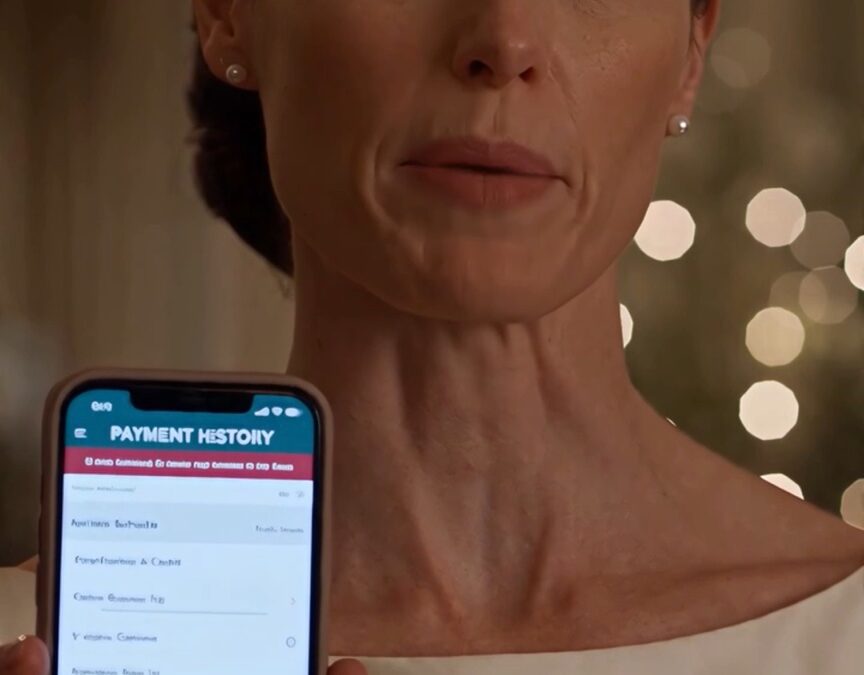
The heading on the screen read “PAYMENT HISTORY.”
I had saved the information because a paid bill should stay easy to prove, especially when different people were involved in arranging something.
That had seemed practical.
Now Mom watched my thumb stop moving.
“Put that away,” she said.
“Name the bill.”
“Your father has already explained.”
“He explained what he wants.”
Dad reached for the back of a chair but didn’t sit.
A nearby guest looked from him to the basket.
Until then, the guests had heard a family explanation that sounded almost routine: parents pay, daughter reimburses, wedding gifts make it easier.
Nobody had asked whether the parents had actually supplied the money.
I was asking now.
I remembered closing the payment information the week before, after checking the full $18,400 against the confirmations.
“Finished?” Owen had asked.
“Paid.”
I had turned the screen toward him then, pleased to have the checking done.
He knew exactly what that word meant.
At the gift table, I looked at him long enough for him to look away.
“I paid every bill they’re claiming,” I said.
“I know,” he answered.
Mom heard him.
Her expression changed slightly, but she didn’t move.
Dad spoke before she could.
“This isn’t a bookkeeping exercise.”
“It’s a claim about money.”
“We’ve done plenty for you.”
“I’m asking about this wedding.”
I could hear glasses being moved at a nearby table. People were still in the room, still trying not to appear involved while listening to every word.
I wished we were talking about dinner.
I wished Owen had simply said the envelopes belonged in the basket.
But the envelopes were still beside my mother’s purse, and wishing wasn’t returning them.
I raised my phone to chest height.
“Then look at this.”
I turned the screen toward Mom, keeping my arm close to my side rather than reaching across the table.
She could read the heading.
She could see the saved payment information beneath it.
I hadn’t selected an individual payment or opened a family message.
I didn’t need to yet.
“I paid every wedding bill myself.”
Mom glanced at Dad.
I kept the phone where it was.
“There isn’t a wedding debt for you to collect.”
Dad’s fingers tightened around the chair.
The people nearby could hear me, but the screen faced Mom, not the room. I wasn’t waving my account information around for strangers.
I was showing her that the records existed.
They had not seen the information organized this way before.
That was becoming clear.
Mom had expected me to object.
She hadn’t expected me to stand there with the payments ready.
“Put our envelopes back,” I said.
My mother looked at my phone, then stepped away from the gift table.
Her smile was gone.
“You kept all of that?”
“Yes.”
I lowered the phone slightly, but I didn’t close it.
The space she had left beside the table was narrow. Still, I could now reach the envelopes without reaching around her.
Dad moved his attention from my face to the screen.
He had stopped talking about the total in the basket.
That claim hadn’t worked.
Now he was deciding what part of the payment history I might show next.
Mom looked at him too.
For a moment, neither spoke.
I could have picked up the envelopes then, but Dad’s next words made the guests turn toward him again.
“You promised you wouldn’t tell people about that deposit.”
Chapter 3: His Supposed Contribution
“I promised not to volunteer where it came from,” I said.
Dad released the chair.
“That’s what I said.”
“No. You said I owed you.”
Mom remained away from the table, close enough to see my phone if I turned it back toward her.
The unopened envelopes lay where she had pushed them.
Nobody reached for them.
Dad had brought up the deposit in front of the same guests who had heard him describe reimbursement. I wasn’t going to let the word sit there as proof of something it wasn’t.
“The venue deposit was $1,200,” I said.
He glanced toward Owen.
“You know I handled that.”
I looked down at the saved payments and opened the transfer I had already checked during planning.
“Yes. After I sent you the money.”
A guest’s hand stopped on the back of a chair.
Dad didn’t look at the screen.
He looked at me.
During the booking period, he had wanted to handle the deposit himself.
We had been talking about the reception room, about getting the booking settled, and about how the family would hear the wedding plans.
“Let me take care of the deposit,” he had said.
At first, I thought he meant he wanted to pay it.
Then the conversation changed.
He wanted the payment to come through him.
I remember holding my phone while he explained it, looking at the booking information and trying to understand why the path mattered if the amount was coming from my savings anyway.
“I can transfer it,” I had told him.
“That works.”
The money went from me to Dad before he paid the venue.
I didn’t lend it to him.
I supplied the exact money for the deposit.
Afterward, he had asked me not to volunteer that part when relatives thanked him.
I agreed.
It seemed like an awkward favor, but a limited one.
I wasn’t going to announce the transfer every time somebody mentioned the room.
I hadn’t agreed to anything beyond that.
At the reception, I turned the phone so Dad and Mom could see the transfer entry without offering it around the room.
“This came from my account before you paid the venue.”
Dad looked.
He had never needed to see my saved version before. He had known the money arrived because he had used it.
But knowing that privately was different from standing beside the gift table while I showed how it happened.
“You asked me to handle it,” he said.
“I agreed you could handle it.”
“That’s what a contribution is.”
“No. It was my money.”
Owen stood close enough to read the screen.
He didn’t interrupt.
I moved to the saved venue confirmation.
The deposit belonged within the full $18,400 wedding cost. It wasn’t an extra expense Dad had covered after I finished paying.
I showed the connection plainly.
The transfer went first.
The venue received the deposit after that.
“You didn’t advance anything,” I said.
Dad looked toward the guests instead of answering.
Mom adjusted the side of her dress.
One of the people near the table leaned slightly forward, then straightened as though she hadn’t meant to.
I kept my voice at the same level.
“I let you say you handled it. I didn’t agree to owe it to you.”
“You knew what people thought,” Dad said.
“Yes.”
That was the part I could own.
I had heard relatives praise him.
I had let him accept it.
I had wanted the booking finished and the family conversations kept simple. I had thought a little public credit would cost me nothing because the actual payments were clear.
Now he was trying to collect the money again.
“Then don’t act like we invented this,” he said.
“You invented the repayment.”
His mouth closed.
I looked at the basket.
I wanted the envelopes back where the guests had put them, but I needed the people listening to understand why I was refusing.
Otherwise, my parents could leave them with the version where I had humiliated generous parents over a technicality.
This wasn’t a technicality.
I had supplied the money.
They wanted more.
Dad pointed toward my phone without touching it.
“You agreed to keep our business private.”
“The transfer was private until you claimed these gifts.”
“You could have spoken to us later.”
“After you took them?”
“We weren’t leaving this minute.”
That was careful.
He didn’t say he had permission.
He didn’t say there was a bill.
He was trying to move the disagreement toward my timing, where he could argue that a daughter should have waited instead of answering him publicly.
I put the phone back at my side.
“You told people I was paying you back.”
Mom looked at the guests.
“Nobody needs every detail.”
“They need the correct one.”
I faced the people nearest us.
“The deposit money came from my savings. So did the rest of the wedding payments.”
I didn’t give anyone my phone.
I didn’t need to.
Dad and Mom had both seen enough to dispute the transfer if it were wrong.
Neither did.
Owen looked at me, then at the envelopes.
I could see him starting to understand why postponing this would not have made it easier. Once the envelopes left with my parents, I would have been asking for money back instead of stopping a false claim.
Dad folded his arms.
“So everything we did means nothing?”
“That isn’t what I said.”
“You’re making it sound that way.”
“I’m saying you don’t have a wedding debt to collect.”
Mom stepped closer, though she stopped short of the gift table.
She was no longer smiling.
She glanced at Dad, then at the screen still lit in my hand, and changed the claim.
“Your father handled that booking. That still counts.”
Chapter 4: What My Mother Knew
“Handling it doesn’t make the money yours,” I said.
Mom looked toward the guests again.
“He made sure it was taken care of.”
“With money I sent him.”
“You don’t have to say it like that.”
“How should I say it?”
She didn’t answer.
Dad stayed beside her, his arms folded. The envelope pile was still between the basket and the purse.
I could have moved directly to collecting it.
But Mom was trying to make the deposit sound like a contribution of money again, only with different wording.
She knew better.
I knew she knew better.
I opened the family messages I had saved while planning.
Mom watched my thumb.
“What are you looking for now?”
“Your message.”
Her eyes went to Dad.
There had been ordinary reasons to save those messages. Wedding planning scattered information across conversations, confirmations, and whatever somebody happened to remember.
I had kept anything connected to the payments.
A vendor confirmation belonged with the bill.
A message about money belonged there too.
I hadn’t saved Mom’s acknowledgment expecting to use it against her at my reception.
I had saved it because she had confirmed the arrangement.
During the booking period, after Dad paid the venue with the money I transferred, Mom had sent a message thanking me.
Not for the wedding.
For letting him have the credit.
I remembered opening it at our kitchen table, reading it, then setting the phone beside the planning information.
I hadn’t argued.
The deposit was paid.
Dad was pleased.
I had moved on to the next thing that needed doing.
Now I found the saved message and checked that I had the right conversation before turning the phone.
Mom leaned just enough to read it.
“Don’t read our messages to everybody,” she said.
“I’m going to read the part about the deposit.”
“It was a family conversation.”
“So was the arrangement you’re using to claim our gifts.”
Dad unfolded his arms.
“What did she say?”
I kept the screen toward Mom.
She already knew.
That was the difference between her and the guests.
Until this moment, they could still have imagined she believed Dad had supplied the deposit himself.
The message removed that possibility.
I read the relevant words.
“Thank you for sending your father the deposit money and letting him tell the relatives he covered it.”
Nobody interrupted.
Mom looked at the screen rather than at me.
I let her finish reading it herself.
Then I turned the phone enough for Dad to see the message too.
“This is what we agreed,” I said.
Dad read it.
He didn’t claim it wasn’t hers.
Mom’s purse remained open on the table.
For some reason, that bothered me again. The whole conversation had moved through payment records, promises, and family credit, but the purse was still sitting where our gifts had been gathered beside it.
I wanted it moved.
I wanted the basket filled.
I wanted to stop explaining something they both already knew.
“You knew I supplied the deposit,” I told Mom.
“Yes, but—”
“And you knew I paid the rest.”
“We helped make this happen.”
“That’s not an unpaid bill.”
A guest nearby looked down at the envelopes, then away from my mother.
The claim had changed in front of them.
First, my parents were supposedly collecting money they had spent.
Then Dad was supposedly entitled because he handled a payment.
Now Mom wanted their help treated as a reason to take gifts.
I wasn’t going to argue about whether parents could be helpful.
That wasn’t what she had said while sweeping the envelopes toward her purse.
I locked my phone.
The proof had done what I needed it to do.
Nobody had to scroll through my private account information. Nobody had to take my word against theirs.
They had seen the transfer.
They had seen Mom’s acknowledgment.
The people who heard the repayment claim had heard the correction.
Dad looked toward the far side of the room.
“You could have spared your mother that.”
“She asked me to accept a claim she knew wasn’t true.”
“She didn’t ask for this conversation.”
“She started collecting our gifts.”
Mom’s face tightened.
“I was keeping them together.”
I glanced at the empty basket beside her purse.
“They were together.”
Owen looked at it too.
For the first time since he walked over, he moved closer to my side instead of leaning toward my parents.
He didn’t speak.
I didn’t ask him to.
I needed to finish this myself.
Mom touched the purse strap, then let it go.
“Everyone’s going to misunderstand.”
“They heard exactly what happened.”
Dad drew a breath as though he had another explanation ready.
I raised my free hand slightly.
Not toward him.
Toward the envelopes.
“No more payment claims.”
He stopped.
I could feel the edge of my phone case pressing into my palm, and I loosened my grip before speaking again.
I wasn’t going to turn this into a discussion of everything my parents had ever done for me.
I wasn’t going to apologize for saving a message.
There was a specific pile of unopened envelopes on a specific table, and it needed to go back where it belonged.
Mom looked at Owen.
He looked at me.
She had lost the easy agreement she expected from him, even if he hadn’t found the words for that yet.
I stepped into the space she had left beside the table.
Dad didn’t block me.
Mom moved her hand away from the purse strap.
The guests stayed where they were.
I pointed to the empty cream-colored basket, keeping my other hand around my phone.
“Put every envelope back in the basket.”
Chapter 5: Nothing Had Been Opened
Mom looked at the pile instead of moving it.
I waited, then set my phone beside the basket.
“Leave them there,” I said. “I’ll do it.”
I picked up the envelopes closest to the edge.
Their flaps were intact.
Some were tucked.
Some were sealed.
None had been opened.
I checked as I lifted them, not because I wanted to inspect anybody’s gift in public, but because I needed to know we were taking home what our guests had brought.
Mom watched.
“I told you we weren’t stealing anything.”
“I’m collecting our gifts.”
“You don’t have to check them like that.”
“They were moved without asking us.”
I put the envelopes upright in the basket.
The lining caught beneath a corner, so I flattened it with my fingertips before setting the next envelopes inside.
My wedding ring tapped the rim.
That small sound was easier to concentrate on than Dad’s breathing beside me.
Owen stood at the corner of the table.
He didn’t reach past me.
He could see I wanted to do this myself.
There were envelopes lying close to Mom’s purse, but none was inside it. I could see the tablecloth between the pile and the open top.
I gathered those too.
Mom shifted her purse slightly away.
I didn’t touch it.
I didn’t need to.
No gift had left the room with either parent.
That was still something I could make certain of.
A guest who had been standing nearest the table stepped aside so I had more room.
“Thank you,” I said.
She nodded.
Nobody offered a speech.
I was grateful for that.
I wasn’t asking the room to vote on my parents. I wanted the envelopes returned, the false claim corrected, and the reception to become a reception again.
Dad watched me lift the remaining cards.
“You’re acting like we planned to keep the cards from you.”
“You planned to keep the gifts.”
“You could still have thanked people.”
“That doesn’t make the gifts yours.”
Mom smoothed the tablecloth where the pile had been.
It was an ordinary movement, something she might have done earlier while checking how the table looked.
Now the cleared space made the whole arrangement obvious.
The basket had been here.
The purse had been there.
The envelopes had been moved between them.
I picked up my phone and checked beneath it before putting it away.
Nothing was left under it.
Then I lifted the basket slightly and looked beneath its folded handle. A corner had slipped against the lining.
I tucked it back with the others.
“Is that all?” Owen asked.
“All that was on the table.”
Dad looked toward the people nearby.
“Everybody can stop watching now.”
Nobody had been doing anything dramatic.
But his words made a guest look down at her hands, and another turned toward the dinner tables.
I didn’t like that he was making them responsible for having heard him.
“They were here when you explained the repayment,” I said.
“They understand families help each other.”
“I haven’t asked them to decide anything.”
Dad looked back at me.
His first argument was finished.
There was no unpaid wedding bill.
The deposit money had come from me.
Mom had known it.
The envelopes were back in the basket.
He could no longer present this as collecting a clear debt, so he tried a different reason for wanting the same money.
“Maybe reimbursement wasn’t the best word,” he said.
Mom stopped smoothing the cloth.
I kept my hands around the basket.
“What word do you mean?”
“A thank-you.”
“For what?”
“For everything we did to be here and help.”
“That wasn’t the arrangement.”
“Does everything need an arrangement?”
“When you’re taking our gifts, yes.”
Owen glanced at Dad.
I could see why the change might sound more reasonable if someone had missed the beginning. Parents could be thanked for helping with a wedding.
But these weren’t gifts from me to my parents.
They were gifts from our guests to Owen and me.
My parents were trying to change the reason after the original reason failed.
Dad kept his voice lower now.
“We’ve had expenses too.”
I set the basket down directly in front of me.
Not beside Mom.
Not between her and her purse.
In front of me.
“We’re talking about the wedding bills you said I owed.”
“And I’m talking about everything around the wedding.”
He had stopped looking at my phone.
There was nothing on it that would prove whether a dress, a trip, or showing up deserved a thank-you.
That was why he had moved there.
I understood the change.
It didn’t make me owe him.
Mom folded her hands.
“We didn’t come here for nothing.”
I looked at her navy dress.
Earlier, she had asked whether it looked all right.
I had thought she wanted her daughter to notice she looked nice.
I had never imagined the dress would become part of a claim against our wedding gifts.
“What expenses are you asking me to pay?” I said.
Dad tilted his head.
“You know weddings cost the family money too.”
“I know what this wedding cost me.”
“You aren’t the only person who spent something.”
“I haven’t said I was.”
He was waiting for me to sound unreasonable, as though acknowledging his expenses required accepting his right to the envelopes.
I didn’t give him that.
I kept my hands on the basket and waited for him to name what he meant.
He looked at Mom, then back at me.
“What about everything we spent coming here?”
Chapter 6: Expenses I Never Agreed To Pay
“Your clothing and travel aren’t wedding bills I owe,” I said.
Dad’s eyebrows lifted.
“We’re your parents.”
“That doesn’t change what I agreed to pay.”
Mom glanced down at her dress.
“So you expected us to spend money to attend?”
“You chose what to wear and how to come.”
“For your wedding.”
“Yes.”
I didn’t add anything.
There was no useful way to argue about whether their attendance had value. I had wanted my parents there.
Wanting them at my wedding wasn’t the same as hiring them to attend.
Nobody had discussed paying for their clothes.
Nobody had assigned travel costs to me.
Nobody had agreed that the guests’ envelopes would cover either.
Dad rested a hand on the table.
“You could show some appreciation.”
“I have thanked you for coming.”
“That’s all?”
“I’m not paying a bill we never agreed to.”
Mom looked at Owen.
He stayed quiet.
I picked up the basket.
The handle was folded, so I held it from underneath. It wasn’t elegant, but I wasn’t leaving it beside her purse while we discussed new reasons she should have the contents.
My phone rested safely against my dress.
The payment history was still available if I needed it, but the records couldn’t answer an argument about gratitude.
Only I could answer that.
“No gift money is going toward your clothes, travel, or attendance,” I said.
Dad drew himself upright.
“You don’t need to announce it.”
“You asked in front of people.”
The nearby guests had started drifting back toward their seats, but some were still close enough to hear.
I turned toward them before Dad could replace the repayment story with another version.
“I need to correct what you heard.”
Mom said my name sharply.
I continued.
“All the wedding bills were paid from my savings. There isn’t an unpaid expense my parents are being reimbursed for.”
I paused.
“The gifts are going home with us.”
A guest nodded.
Another looked at Dad, waiting.
He didn’t dispute it.
Not the savings.
Not the paid bills.
Not the fact that the deposit had been funded before he handled it.
He had already seen the proof in front of them.
“We’re not going to argue about family matters with guests,” he said.
“I’ve finished explaining.”
That mattered to me.
I wasn’t going to follow anyone around the room giving a longer account. The people who heard the original claim now had the correction.
I didn’t need to make them witnesses to every private hurt involved.
Owen moved aside as I stepped away from the table.
The basket stayed in my hands.
Mom’s purse stayed on the table.
For the first time since I noticed it, there was nothing of ours beside it.
I stopped near our chairs, where I could set the basket down without leaving it unattended.
Owen came with me.
Behind us, Dad said something quietly to Mom.
I didn’t turn around.
My dress caught lightly against a chair leg. I freed it before sitting, then kept a hand near the basket while Owen moved his chair closer.
A guest passed and gave us a small smile.
“Thank you for being here,” I said.
It came out more normally than I expected.
She answered kindly and moved on.
That brief exchange helped.
Not because everything was fixed.
Because it was possible to speak to someone without being asked to pay for their feelings about what had happened.
Owen sat beside me.
“I should have said something,” he said.
I looked at the basket.
“Yes.”
He put his hands on his knees.
“I thought if we stopped it from getting bigger—”
“They were gathering the gifts.”
“I know.”
“You asked me to leave them.”
He looked toward the gift table.
My parents were still there.
Mom had put her hand on her purse, but she hadn’t picked it up.
I didn’t know whether they were deciding what to do next or simply waiting for the attention to fade.
I wasn’t going back to persuade them.
I adjusted the basket so the envelopes leaned securely against its side.
Owen watched my hands.
“Are you worried they’ll come over?”
“I’m not leaving it there.”
“I can carry it.”
“Stay with it when I’m talking to people.”
“I will.”
That was practical.
I needed practical.
The reception room was still ours for the celebration. Guests were still there, and I didn’t want the rest of the evening spent guarding a table.
We could keep the basket beside us.
We could move it together.
No new plan had to include my parents.
Dad looked in our direction.
Owen noticed.
His shoulders pulled inward slightly, and I could almost see him considering another way to smooth things over.
I waited for him to say what he meant.
He didn’t at first.
Instead, he reached toward the basket and straightened the folded handle, then let it rest again.
I remembered him watching me check the final payments at home.
He had understood the numbers then.
He understood them now.
What he hadn’t understood was that keeping the peace by giving them money would make me the only person paying for a claim everybody knew was false.
Mom said something to Dad.
He shook his head.
Owen leaned toward me, lowering his voice as he had at the gift table.
“Couldn’t we give them something just to finish this?”
Chapter 7: My Husband’s Request
“No,” I said.
Owen looked down at his hands.
“I don’t mean all of it.”
“I know what you mean.”
“I just want us to enjoy the rest of the reception.”
“So do I.”
He looked at me then.
I kept my voice low because this conversation belonged between us, not because I was ashamed of my answer.
“They know there’s no debt. You know there’s no debt. I’m not paying to end a claim everybody here knows is false.”
He rubbed his palms against his trousers.
“I wasn’t trying to take their side.”
“You asked me to do what they wanted.”
“I was trying to stop the argument.”
“By having me give them our gifts.”
He didn’t answer immediately.
I moved an envelope whose corner had caught against the basket handle. There was nothing wrong with it.
I just needed something to do with my hands while he thought.
The room carried on around us.
A chair scraped.
Someone laughed farther away.
I could still have an ordinary wedding reception if I didn’t have to keep defending the same money.
Owen looked toward my parents again, then turned his chair fully toward me.
“You’re right.”
I waited.
“I knew you paid the bills. I shouldn’t have asked you to leave the envelopes.”
“No.”
“And I shouldn’t be asking you to give them something now.”
I set my hand flat beside the basket.
“Thank you.”
“I’m sorry.”
That was the first thing he had said since walking over that didn’t ask me to surrender something.
I let myself look at him properly.
He looked embarrassed, but he wasn’t trying to make me comfort him about it.
“What do you need me to do?” he asked.
“Keep the basket with us.”
“I will.”
“And don’t offer them money to settle this.”
“I won’t.”
We sat for a moment.
Then I noticed Dad speaking to a guest near the edge of the room.
I couldn’t hear the words.
I wasn’t going to invent them.
But he was gesturing toward us, and I wasn’t willing to spend the evening wondering whether he was trying to collect sympathy for another claim.
I stood.
Owen rose too.
“Stay with the basket,” I said.
He nodded.
I walked toward my parents without my phone in my hand.
The proof was saved.
It didn’t need to be displayed again.
Dad stopped speaking when he saw me.
Mom looked over his shoulder.
“I need you both to stop approaching guests about money,” I said.
Dad glanced at the person beside him.
“We’re allowed to talk to people.”
“Of course.”
“Then don’t tell us who we can speak to.”
“I’m asking you not to discuss collecting our wedding gifts.”
Mom folded her arms.
“You’ve already made sure everyone thinks badly of us.”
“I corrected the claim.”
“You read my message.”
“Because you knew where the deposit money came from.”
The guest stepped away quietly.
I didn’t stop her.
Dad watched her leave.
“You couldn’t let it go.”
“The envelopes are with us now. There’s nothing left to collect.”
He looked toward Owen.
My husband was standing beside our chairs with the basket directly in front of him.
He wasn’t coming over to suggest a compromise.
Dad noticed that too.
Mom pressed her lips together.
“We should go.”
I didn’t ask them to stay.
That hurt in a very plain way.
I had expected to see my mother in the room for the rest of my wedding reception. I had expected to have pictures in my head of Dad talking to guests without thinking about money.
Instead, I watched him consider whether leaving would make me call them back.
I didn’t.
“Your purse is still on the table,” I told Mom.
“I know where it is.”
She walked back and picked it up.
There were no envelopes beside it anymore.
She looked at the empty space before putting the strap over her shoulder.
Dad stayed near me.
“You’re going to regret how you handled this.”
“I’m not discussing it further tonight.”
“You’ve embarrassed your mother.”
“I’m going back to my husband.”
I didn’t say anything about who had embarrassed whom.
That would have kept us standing there.
Dad wanted a response he could continue arguing with.
I had already given the relevant answer.
Mom came back carrying only her purse.
No gift envelope had been opened.
No envelope was leaving with them.
She stopped beside Dad and looked toward our chairs.
Owen was watching us now.
He didn’t wave them over.
He didn’t approach with the basket.
Mom looked at me.
“We did want you to have a nice wedding.”
“I wanted you here as my parents.”
She adjusted the strap on her shoulder.
For a moment, I thought she might answer that directly.
She didn’t.
Dad moved toward the door.
Mom went beside him.
I returned to Owen before they reached it, because I didn’t want to stand in the middle of the room waiting for another accusation.
He pulled my chair out.
The basket was exactly where I had left it.
“Are you all right?” he asked.
“Not yet.”
He nodded.
He didn’t tell me to let it go.
At the doorway, Dad turned back far enough for me to hear him over the room.
“We’ll discuss what you owe us when you get home.”
Chapter 8: The Actual Total
“Nothing,” I said, though Dad was already turning away.
Owen kept his hand on the back of my chair.
“They’re leaving without anything.”
I looked toward the doorway.
“Yes.”
Mom’s navy dress disappeared beyond it.
Dad followed.
Then they were gone, and the basket stayed beside us.
I sat down.
For a little while, I let Owen handle moving it when we stood to speak with guests. If I stopped beside someone, he stayed close enough that I could see where it was.
He didn’t make a show of guarding it.
He simply kept it with us.
That was what I had asked.
We thanked people for coming.
We listened when they spoke about the reception room, the dinner, and the ceremony.
Nobody nearby repeated my parents’ claim.
I didn’t bring it up again.
When the reception was over, we took the basket with us.
Every envelope was still unopened.
Later, in private, I set it between us and pulled out the information we needed for thank-you notes.
Owen sat beside me.
“Tell me what you want written down.”
“Who gave it, what they gave, and anything we should remember from the card.”
He nodded.
We didn’t start by counting.
We started by opening the cards.
I read the names before passing each envelope aside. Owen recorded the gifts, then checked the spelling against what people had written.
Some messages were short.
Some took longer to read.
I slowed down over those.
At the reception, the envelopes had become something to retrieve and protect. Here, with no one reaching for them, I could finally read what our guests had meant to give us along with the money.
Owen handed me a card after checking it.
“Keep that with the note list.”
I did.
We worked through the basket until I could see the lining again.
This time, seeing the empty bottom didn’t make me reach for my phone.
The envelopes were beside us.
The cards were being kept.
The money was accounted for.
Dad’s estimate had been roughly $6,000.
He hadn’t known what was inside.
Neither had we.
When we finished adding the gifts, the total was $5,760.
Owen checked the list against the money.
I checked it again.
Not because I distrusted him.
Because I wasn’t going to spend the next part of our marriage wondering whether we had recorded someone’s gift correctly.
“$5,760,” he said.
“That’s what I get.”
He looked at the empty basket.
“They were ready to take all of it without knowing.”
“Yes.”
He put the list down.
“I keep thinking about asking you to leave it.”
I folded a card along its existing crease.
“I heard you.”
“I know.”
“You knew I hadn’t agreed.”
“I did.”
He didn’t explain himself again.
That helped more than another account of how uncomfortable he had been.
I stacked the cards and put the gift list with them.
The money was ours, but it wasn’t payment for enduring the reception argument. I didn’t want the gifts permanently attached to that scene.
People had given them because we got married.
I wanted to remember that part.
Before we left for our honeymoon, we secured the money.
We didn’t leave it sitting in the basket.
We didn’t put my parents in charge of anything connected to it.
Owen helped keep the list and cards together so we could finish the thank-you notes afterward.
I checked the recorded total against the money again before we put everything away.
Nothing was missing.
Then I opened the saved payment information on my phone.
Owen watched me.
“Do you need to keep all that together?”
“I’m saving the relevant records separately.”
“Because of what your dad said?”
“Yes.”
I didn’t need to build a larger case or search for something new.
I saved the transfer showing the $1,200 had come from me, the vendor confirmations already checked, and Mom’s message acknowledging the arrangement.
The heading “PAYMENT HISTORY” was still there when I opened the payments.
I checked that the copies were readable.
Then I closed them.
I wasn’t going to spend our honeymoon scrolling through wedding bills.
But I wasn’t going to delete proof because the reception had ended.
Dad had said we would discuss what I owed when I got home.
I knew exactly what he meant.
He still expected money, even though the reason for it had changed in front of witnesses.
Owen reached for the empty basket.
“Where do you want this?”
“Keep it with the cards for now.”
He set it aside carefully.
I looked at it and remembered Mom’s hand sweeping the envelopes across the table.
Then I looked at the list we had made together.
Every gift was recorded.
Every card was ours to answer.
No envelope had gone with my parents.
That was settled, whatever they wanted to say afterward.
We put away the remaining wedding things before leaving.
I checked my phone for anything we still needed to handle.
A message from Mom appeared.
I opened it beside Owen, with the saved records already separate and the gift money secured.
“Your father is still expecting you to make this right.”
Chapter 9: After the Honeymoon
“I’m not promising them anything,” I told Owen.
He read Mom’s message when I turned the phone toward him.
“I know.”
I didn’t write a long answer before leaving.
There was no unpaid bill to investigate and no envelope to retrieve. The gifts were secure, and my parents had already seen why their claim was false.
We went on our honeymoon.
When we came home, I put the gift list on our kitchen table and opened Mom’s message again.
Owen set the cards beside it.
I wanted my answer in writing.
Not because I expected her to agree.
Because I didn’t want another conversation where a limited courtesy became a promise I had never made.
I typed slowly.
“There is no wedding debt. I paid the full $18,400 from my savings, including the $1,200 I sent Dad before he paid the venue deposit.”
I read it before continuing.
“I did not agree to reimburse your clothes, travel, or attendance. I did not agree to give you our wedding gifts. I will not replace money you expected to receive.”
Owen stood beside the table.
“That says it.”
I checked the wording again.
It didn’t accuse them of taking something they hadn’t taken.
It didn’t suggest we had recovered missing money.
They had tried to claim the unopened gifts.
I had stopped them.
I wanted the answer to be just as exact.
I sent it.
Mom responded without identifying any unpaid wedding bill.
She wrote about how the reception had looked.
She wrote that Dad felt humiliated.
I read the messages once.
Then I set the phone down.
I wasn’t going to pay for the fact that witnesses had heard the truth.
Owen sat across from me.
“What did she say?”
“Nothing about an actual debt.”
He nodded.
“Do you want me to answer?”
“You can answer for what you said at the reception.”
He picked up his phone.
I stayed at the table with the gift list while he wrote to both of them.
He didn’t ask me to soften my response first.
He didn’t suggest a smaller amount.
When he finished, he read me what he was sending.
“I was wrong to ask Valerie to let you keep the envelopes. That request did not authorize you to take anything. Neither of us agreed that you would receive our gifts.”
I looked at him.
“Send it if you mean it.”
“I do.”
He sent it.
That didn’t erase his first request.
It did stop my parents from using it as proof that part of the couple had agreed.
I needed that correction from him.
He had made the request.
He could take responsibility for it himself.
Later, relatives asked about what had happened.
I didn’t send a family announcement.
I answered the people who contacted me.
One asked whether there had been a misunderstanding over the deposit.
I sat with my phone and answered directly.
“I supplied the deposit money before Dad paid it. There was no remaining amount to reimburse.”
Another asked whether my parents had helped pay for the wedding.
“No. The wedding bills came from my savings.”
I didn’t attach my whole payment history.
The people at the table had seen the relevant proof, and my parents hadn’t disputed the transfer or Mom’s message.
I would clarify the facts.
I wasn’t distributing my account information around the family.
When someone said they had assumed Dad covered the room, I understood why.
He had wanted that assumption.
I had allowed it.
So I corrected that too.
“He handled the deposit payment after I sent him the money.”
It was an awkward sentence to keep saying.
It was also accurate.
Owen heard some of those conversations.
He didn’t interrupt to call it a misunderstanding.
If someone asked him, he said I had paid the wedding bills and we had never agreed to give my parents the gifts.
That was a small change in daily behavior.
It mattered.
At the reception, he had looked at Dad when I asked why I should surrender the envelopes.
Now he answered for our actual agreement.
Mom kept returning to the public embarrassment.
I kept returning to the same facts.
No debt existed.
The money wasn’t being replaced.
The gift total wasn’t hers to negotiate.
I didn’t tell her what each guest had given.
That information belonged on our thank-you list, not in a discussion about my parents’ expectations.
Dad sent no bill.
There was no wedding balance he could point to.
There was only the money he had expected to collect.
I saved the written exchange with the payment records, then put my phone away so we could start the thank-you notes.
Owen pulled out a chair.
“Where should we begin?”
“With the list.”
He checked the names while I set the cards nearby.
We could work together without mentioning my parents in every conversation.
I wanted more of that.
We stopped when we needed to make dinner, leaving the unfinished notes neatly together rather than pushing them aside under wedding papers.
Afterward, I checked my phone.
Mom had written again.
The message wasn’t about a bill.
It wasn’t about the deposit.
For the first time since the reception, she asked plainly for what she wanted, without calling it reimbursement.
“Are you really refusing to give us any of it?”
Chapter 10: The Thank-You Notes
“Yes,” I typed.
Then I added, “We are keeping our wedding gifts.”
I read the reply once and sent it.
There was no amount to bargain over.
No portion was waiting to be negotiated.
The full $5,760 remained ours, and I wasn’t going to turn the thank-you list into a calculation of what my parents might accept.
Mom called.
I let Owen see the screen before answering.
“I’m not negotiating,” I told him.
“I know.”
I put the phone to my ear.
“So that’s it?” she asked.
“Yes.”
“After everything?”
“There is no wedding debt.”
“You keep saying that.”
“Because you keep asking for wedding money.”
She went quiet for a moment.
I could hear her move the phone.
Then Dad’s voice came through more clearly.
“You could at least make an effort to put this behind us.”
“I’m not replacing money you expected.”
“Nobody’s talking about replacing anything.”
“Mom asked whether I would give you any of the gifts. The answer is no.”
He didn’t name a bill.
He didn’t dispute where the deposit came from.
The proof shown at the reception had ended that part, even if he disliked the result.
Now the only question was whether I would pay anyway.
I wouldn’t.
I sat at the kitchen table with an unfinished thank-you note in front of me, and I waited until he stopped talking about how other people might view the situation.
Then I said what would happen next.
“We can have future visits without discussing wedding money. If you bring up collecting it, I’ll end the conversation.”
Mom spoke again.
“You’re making rules for seeing us?”
“I’m telling you what I’ll discuss.”
“What if your father still has something to say?”
“He’s said it.”
Owen sat nearby without reaching for the phone.
I appreciated that.
He had corrected his part in writing.
This answer was mine to give.
Mom tried once more to make it about whether I appreciated them.
I didn’t list birthday presents, childhood expenses, or every ordinary thing parents do for a daughter.
None of that had been an agreement about our wedding gifts.
“I’m not discussing money for attending,” I said.
Dad made a dissatisfied sound.
“All right,” Mom said at last.
It wasn’t an apology.
I didn’t pretend it was.
But neither of them had a wedding debt left to claim, and neither had any of the gifts.
The people who heard them say otherwise had heard the correction.
When the call ended, I put the phone face down.
Owen looked up from the list.
“Are you all right?”
“I’m ready to finish these.”
He slid the next card toward me.
We returned to the names.
That felt better than talking through the phone call again.
We checked each gift against the record we had made after the reception. The total still matched.
$5,760.
Nothing had gone to my parents.
Nothing had been set aside to soothe them.
We wrote to the people who had given it.
Owen handled the list while I finished a note, then we switched so he could write too.
He didn’t say he was helping me with my task.
They were our gifts.
They were our thank-you notes.
When he wasn’t sure whether we had already finished one, he checked instead of guessing.
I smiled at that.
“What?”
“Nothing. Keep checking.”
“I learned from you.”
He said it plainly, then went back to the card in front of him.
There was no speech about becoming a better husband.
I didn’t need one.
I needed him to do what he had said he would do.
He did.
We made dinner when we were hungry.
We moved the notes away from our plates.
Later, he cleared the table while I found the remaining envelopes.
The ordinary parts of being married started taking up more room.
Work clothes went over chair backs.
We talked about what we needed from the store.
I went back to payroll, where checking payments was just part of my workday again.
When my phone lit up, I didn’t automatically open the saved wedding records.
They were still there.
I no longer needed to keep them on the screen.
The next conversation with Mom didn’t include a demand for gift money.
I answered an ordinary question ordinarily.
I didn’t offer payment because she had managed not to ask.
Dad still didn’t apologize for his estimate or his repayment story.
I stopped waiting for him to explain it differently.
His expectation had not become a debt, and the money stayed with us.
Owen didn’t ask me to send them something.
He didn’t suggest that keeping the peace required reopening the question.
When we returned to the thank-you notes, he brought the list without being reminded.
I brought the cards.
We checked the remaining names and finished what was left.
Then I looked around for somewhere to keep the completed envelopes together.
The cream-colored basket was beside the wedding things.
Its handle was still folded.
I picked it up and brought it to the table.
Owen looked inside before setting down the notes.
“Everything finished?”
I checked the list.
“Yes.”
He put the completed notes in neatly, and I straightened the envelopes so none of the corners bent against the lining.
There was no purse beside it.
Nobody was calculating what they could take.
Our names were on the notes we had written together, ready for the people who had celebrated with us.
I left them resting in the cream-colored gift basket.
You Might Also Enjoy




