My Sister Claimed My Quilt At The County Show, So I Challenged Her Entry And Exposed A Lie
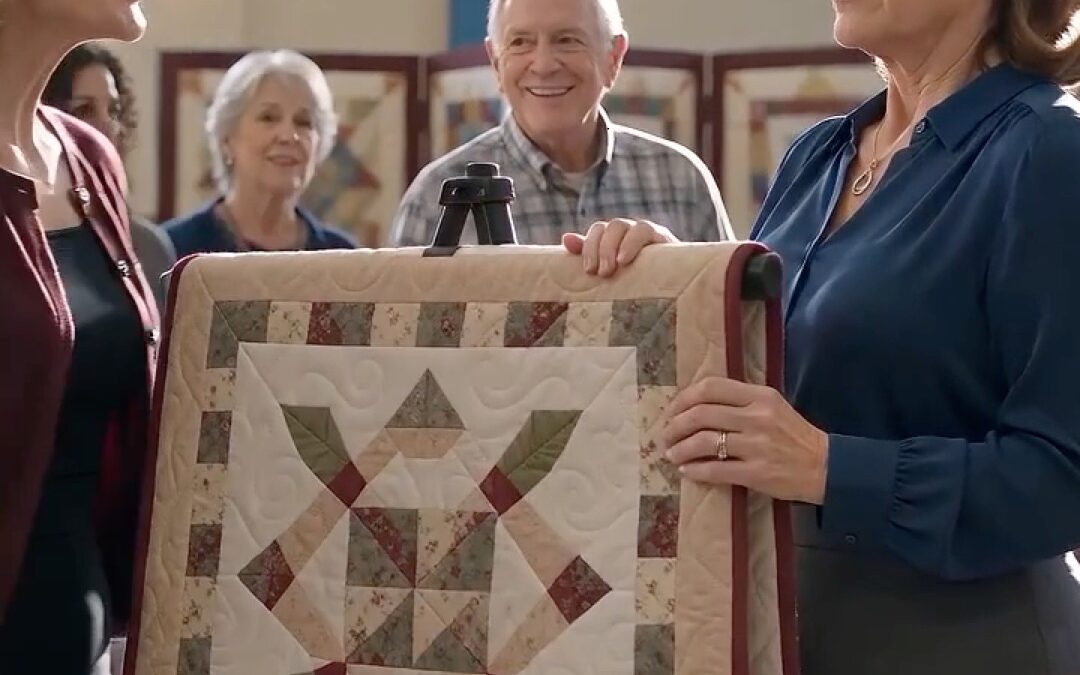
Complete story · 10 chapters · about 43 minutes · ending included
Chapter 1 · Chapter 2 · Chapter 3 · Chapter 4 · Chapter 5 · Chapter 6 · Chapter 7 · Chapter 8 · Chapter 9 · Chapter 10
Chapter 1: The Ribbon In Her Fist
“Thirty years sewing hems, and you still think you’re an artist.”
Lora said it in front of the thirty guests, then pulled the blue ribbon from my quilt.
The clip caught in a cream thread near the corner.
I caught the quilt before the tug could drag it off the stand.
My fingers held the cloth steady while Lora pulled again.
The thread stretched. The clip finally came loose.
“Leave the stitching alone,” I said.
Lora pressed the ribbon against her blouse as if it belonged there.
“Entry 24 is mine,” she said.
My stomach tightened.
I had spent thirty years making things fit, repairing what other people wore out, and keeping my work quiet when family wanted the credit.
I knew the feel of a seam that had been pulled too hard.
I knew the small sound a thread made before it broke.
I also knew the look on Lora’s face when she expected me to smile and let her have something.
The cream-and-rust quilt stayed on its stand.
I had pieced every section, quilted it by hand, and bound the edges myself.
No one had given it to Lora.
No one had asked me to give it away.
Lora kept the ribbon pinned against her chest.
The display card beside the quilt carried her name as maker.
I looked at it long enough to make sure I was seeing what I thought I was seeing.
My throat felt tight.
The guests had gone quiet, but their faces kept arranging themselves into polite smiles.
They looked at the quilt, then at me, then away.
Candice stood near the end of the row with her volunteer badge clipped to her sweater.
“Rachelle only sewed the binding,” Candice said, repeating the explanation Lora had given her.
Candice’s voice was gentle.
That made it hurt more.
She had carried the quilt to the show for me.
She had seen me fold it carefully and explain how the cream blocks met the rust-colored pieces.
But she had not watched me make it.
A child beside the stand reached toward one of the quilt’s lower squares.
When Lora lifted the ribbon higher, the child pulled the hand back.
I felt that small retreat as sharply as the thread catching.
The quilt was still mine, but the room had started treating it as if I were the visitor.
Lora smiled at the guests.
“She knows I do the show work,” she said. “Rachelle helps when I need an extra hand.”
I wanted to tell them what thirty years of work looked like.
The sore place at the base of my thumb.
The needle marks that never quite faded.
The hours spent matching points so the corners met cleanly.
Instead, I looked at the card again.
“Who changed the maker card?” I asked.
Nobody answered.
I walked toward the registration desk.
My right hand had started to shake, so I curled my fingers against my palm.
The skin along my thumb was rough from years of guiding fabric beneath a needle.
There was a pale line where a pin had caught me that morning.
I rubbed it with my other thumb and kept walking.
Behind me, the guests resumed their careful expressions.
One woman lifted her program.
A man studied the floor.
Candice moved away from the quilt, but Lora stayed beside the stand with the ribbon against her blouse.
At the desk, Candice tapped the intake tray.
“Entry 24,” she said.
A folded sheet protruded from the envelope beneath the number.
I stopped before touching it.
The envelope had been sealed when Candice brought it in.
The show’s instructions were clear: only the invited judge could open an intake envelope.
That protected the entry record and kept the review in the right hands.
I would not break the seal just because my sister had embarrassed me.
Candice kept one finger on the envelope.
“Lora filled this out when I picked up the quilt,” she said.
Lora had followed us from the stand.
“It’s just the delivery paperwork,” she said. “Put it away, Rachelle.”
Her voice had softened.
That was how she spoke when she wanted a room to think she was being reasonable.
I looked at the folded edge showing above the envelope.
“Why do you want ordinary paperwork put away?” I asked.
Lora’s smile stayed in place.
“You’re making a scene over a ribbon.”
My face felt hot.
It was not only the ribbon.
It was the years she had called my work helping.
It was the way she made my skill sound like a favor she allowed me to do.
It was the way Candice had repeated her words because they sounded simple.
I wanted the guests to know what I had made.
I wanted the name on the card to be corrected.
Most of all, I wanted the original form handled by someone who had the authority to open it.
“Please bring the original intake form to the judge,” I said.
Candice glanced at Lora.
Lora gave a small laugh.
“There’s nothing in there that changes anything.”
I did not answer her.
The folded sheet remained inside the sealed envelope.
I pointed to the number on the tray.
“Entry 24,” I said. “I want the judge to review the original intake form.”
You may also like
My Father-in-Law Called Me The Handyman At His Anniversary, So I Checked His Camera And Everything Changed
My Brother Called Me a Thief at Dad’s Birthday, So I Opened His Messages and Exposed His Lie
My Son Banned Me From The Cabin At Christmas, So I Made A Move He Never Expected
My voice was quiet.
My decision was not.
Picking up where the Facebook post left off
Chapter 2: The Wrong Name
The volunteer behind the desk reached for the intake ledger.
I kept my finger beside entry 24.
“I am requesting an immediate attribution review,” I said. “My name is Rachelle Davis. Entry 24.”
The volunteer looked toward the quilt stands.
“Are you asking for another judging?”
“No,” I said. “I am asking for the maker’s name to be checked.”
I had entered my quilt for workmanship.
I had not asked anyone to give me another score.
I wanted the original record examined before the presentation.
The volunteer wrote something in the margin of the ledger.
“Antoinette Malone is the invited judge,” the volunteer said. “I’ll make sure she receives your request.”
I nodded.
My hands still felt unsteady.
I pressed my fingertips against the desk until they stopped moving.
Behind me, Lora had returned to the quilt.
She was standing with the blue ribbon held against her blouse.
Her smile was back.
The same smile she used when customers complimented a dress I had altered and she accepted the praise for finding the seamstress.
I knew that smile.
I had watched it take credit for small things for years.
This time, the thing was thirty years of work.
I walked back toward entry 24.
Lora had gathered several guests near the stand.
“Rachelle only sewed the binding,” she said. “The design and the quilting were mine.”
My stomach tightened again.
She had made the lie sound so ordinary.
As if the quilt had arrived at her house unfinished and she had simply completed it.
I looked at the cream center.
The hand quilting ran through it in small, even stitches.
I had worked those lines by hand, following the shape of each pieced section.
The rust-colored blocks had their own stitching pattern.
The corners met because I had taken the time to match them.
I touched the edge without lifting the quilt.
“The quilting is hand done,” I said.
Lora tilted her head.
“I know what hand quilting looks like.”
“I quilted it.”
A woman near the next stand leaned forward.
Lora gave her a pleasant little smile.
“Rachelle is very good with finishing work,” she said. “That’s always been her strength.”
My cheeks grew warm.
Finishing work.
That was what she called the years I had spent learning how cloth behaved.
It was what she called the careful work nobody noticed until something went wrong.
I wanted to pull the quilt down and show the guests every seam.
I wanted to turn it over and point to the stitching on the back.
But the stitches could show how the quilt was made.
They could not, by themselves, establish what had been written on the entry record.
I would not replace one unsupported claim with another.
“I want the intake form reviewed,” I said.
Lora lowered her voice.
“Must you do this in front of everyone?”
That question hurt more than her earlier joke.
She had taken my work in front of everyone.
Now she wanted my objection kept private.
I looked at the ribbon in her hand.
“You made the claim here,” I said.
Lora’s fingers tightened around the ribbon.
A guest looked down at the program.
Another turned toward the next display.
Nobody wanted to be part of the conversation.
I understood that feeling.
I had spent years avoiding family arguments because I did not want people choosing sides.
But silence had already chosen a side.
I returned to the desk.
Candice was standing beside the intake tray.
She had stopped smiling.
“Candice,” I said, “you collected this quilt on Friday, didn’t you?”
Candice nodded.
“I was the courier.”
“Did you bring the intake envelope with it?”
“Yes.”
I glanced at the envelope marked entry 24.
The folded sheet still showed above its edge.
I did not touch the seal.
“Please bring that original envelope to Antoinette Malone,” I said. “I want her to review it before the presentation.”
Candice looked at the envelope.
Then she looked toward Lora.
“I can take it to her,” she said.
“Thank you.”
My voice sounded calmer than I felt.
Candice had been trying to keep peace between us.
I knew that.
She was a practical woman who liked things settled before they became arguments.
She had probably thought repeating Lora’s explanation would prevent trouble.
But her explanation had helped put my name out of sight.
I needed her to understand that.
“Candice, I want to ask you something about Friday.”
Candice folded her hands in front of her.
“What?”
“Who prepared the form?”
Her eyes moved briefly toward the quilt.
“I didn’t fill it out.”
“I didn’t ask whether you filled it out.”
Candice swallowed.
Lora appeared beside us.
“Why are we discussing Friday?” she asked. “The show has a schedule.”
Her voice was pleasant again.
Too pleasant.
I looked at her.
“Because the form was part of the loan.”
Lora gave a small laugh.
“Rachelle, you told me I could bring the quilt.”
“I agreed to the exhibition.”
“That’s what I said.”
She looked at Candice as if the matter had already been settled.
I felt anger rising in my chest.
I had agreed to let the quilt be displayed.
I had not agreed to disappear from its history.
There was a difference, and Lora knew it.
Candice looked uncomfortable.
“Maybe we should let Antoinette handle the paperwork,” she said.
“That is what I’m asking,” I replied.
Lora adjusted the ribbon against her blouse.
“You’re turning a nice morning into an argument over a card.”
I looked at the card on the stand.
Her name was printed where mine belonged.
The quilt remained on the display.
The ribbon was still in her hand.
I could see a loose cream thread near the corner where the clip had caught.
My thumb rubbed the rough skin beside my fingernail.
I had spent enough years repairing damage quietly.
I would not repair this by pretending it had never happened.
Candice stepped closer to the desk.
“Rachelle, there’s something I should tell you.”
I turned toward her.
Her voice dropped.
“Lora filled out the form herself before I took the quilt.”
I stared at Candice.
Lora had written the original intake form.
Before the quilt left my hands.
You may also like
My Sister Shamed Me At Her Birthday, So I Asked To See Mom’s Caregiver Bill
My Sister Shamed Me At Mom’s Memorial, Then My Niece Played The Message She Hid
My Son Called My Gift Garbage At His Housewarming, So I Asked His Wife About The Bill
Before the show received it.
Before my name disappeared from the stand.
Chapter 3: Follow The Number
The room seemed to hold its breath around Candice.
“What did you just say?” Lora asked.
Candice looked at me, then at the intake tray.
“I said you filled out the form before I took the quilt.”
My stomach tightened.
Lora had not merely changed a card after the quilt arrived.
She had prepared the paperwork before it left my hands.
I wanted to ask Candice why she had not told me sooner.
I wanted to ask Lora what she had written.
But the envelope was still sealed, and I would not reach for it.
“Can you show Antoinette which envelope you collected?” I asked Candice.
Candice nodded.
I walked with her to the intake tray.
Lora followed close behind us.
The desk volunteer moved aside so we could see the labels.
Candice checked the row, then found the envelope marked entry 24.
She did not lift it right away.
“That’s the one,” she said.
I watched her take it from the tray.
The envelope had a crease along one corner and a narrow strip of tape over its flap.
The folded sheet still showed slightly above its edge.
Nothing had been added to it while it sat there.
Nothing had been taken out.
Candice held it by the edges, careful not to disturb the seal.
I stayed beside her.
I wanted there to be no question about where the original had been or who carried it next.
The volunteer glanced at the number on the envelope.
“Entry 24,” she said, marking the intake ledger.
Candice nodded again.
That small mark mattered to me.
It connected the quilt on the stand to the record in Candice’s hands.
Lora stepped forward.
“She gave it to me. It’s mine.”
Her voice carried past the desk.
A man waiting near the programs turned his head.
I felt the familiar pull to lower my voice and make the trouble disappear.
That pull had kept me quiet through years of small insults.
It had not protected my work.
“She loaned it to me,” Lora said. “You all heard her.”
I looked at her.
“I agreed to let you exhibit it.”
“You let me take it.”
“For the show.”
“That’s what a gift looks like in this family.”
The words stung.
Lora had turned a clear permission into something I had supposedly surrendered.
I could feel my hands tightening, so I opened them against my skirt.
“I am not withdrawing my complaint,” I said.
Lora’s smile thinned.
“You’re making this ugly.”
I felt embarrassed, though I had done nothing wrong.
I hated that feeling.
I hated that she could make me feel responsible for the scene she had created.
Candice shifted the envelope against her palms.
“I’m taking this to Antoinette,” she said.
Lora stepped toward her.
“There’s no reason to bother the judge with family paperwork.”
The dismissal made my stomach twist.
She was still trying to make the record sound unimportant.
Candice did not answer.
She carried the envelope away from the desk, toward the judge’s table.
I watched until she reached the aisle.
The original remained sealed.
That was important.
Antoinette would open it, not me, and the record would stay in the custody of the person assigned to review it.
Lora stood beside the desk with her arms close to her body.
“You could still stop this,” she said.
I turned away from her.
The quilt was waiting on its stand.
I returned to entry 24 and checked the lower edge where the clip had caught.
A cream thread lay loose against the binding.
I tucked it back with one finger.
My hands knew what to do with cloth, even when the rest of me felt unsteady.
The quilt had been made square by square.
I remembered matching the rust pieces to the cream center and easing the seams until the points met.
I remembered quilting the lines by hand, one section at a time.
Those hours had not vanished because Lora had put her name on a card.
A woman near the stand moved closer.
“Is there a problem with the entry?” she asked.
I looked at the guests gathered around us.
Some had heard Lora’s claim.
Some had watched her pull the ribbon.
They deserved to hear the correction if the judge made one.
“I’ve asked for the original intake form to be reviewed,” I said. “If the maker credit changes, I want the announcement made here.”
The woman nodded.
“I hope they get it right.”
“So do I.”
I did not ask anyone to take my side.
I wanted the record checked.
I wanted the name corrected.
And I wanted the people who had heard the lie to hear the truth.
Across the aisle, Candice continued toward the judge’s table with the envelope held in both hands.
Lora watched her go.
Her face had lost its practiced warmth.
I wondered whether her claim of ownership would survive her own signature.
The answer was still inside that envelope.
Lora came close enough that the guests could no longer hear her clearly.
“Withdraw the complaint,” she said.
I kept my eyes on the quilt.
“No.”
Her voice dropped further.
“If you don’t withdraw, I’ll introduce the winning quilt myself.”
You may also like
My Husband Shamed Me At Our Anniversary, So I Called The Jeweler He Named
My Husband Humiliated My Son At His Academy Banquet, So I Checked The Mail He Handled
My Mom Mocked My Job At Thanksgiving, So I Asked Questions And Uncovered My Brother’s Secret
She was willing to claim it from the microphone, too.
In front of the entire room.
Chapter 4: The Maker’s Chair
Her threat was still hanging between us.
I looked toward the demonstration area, where Lora had already taken the chair reserved for the maker.
The blue ribbon was still in her hand.
She had placed herself beside the demonstration table, facing the guests.
A small group had gathered around her.
Lora smiled as if nothing unpleasant had happened.
I felt my stomach tighten.
She was preparing to introduce the quilt as her own work.
I walked closer.
The demonstration chair had a small sign beside it identifying the maker of entry 24.
Lora had positioned herself directly behind it.
“Would you tell us how you made the central stitching?” a woman asked.
Lora lifted her chin.
“The whole design came together beautifully,” she said. “I wanted something traditional, but with a little more warmth.”
She pointed toward the cream center.
“Let’s save the details for the presentation. They’ll explain everything then.”
The woman nodded.
I stood at the other side of the table.
The blue ribbon rested across Lora’s fingers.
I could see the small space where the clip had caught my thread.
“Lora, how did you join the central seam?” I asked.
Her smile tightened.
“What?”
“The seam where the cream sections meet.”
I pointed toward the center of the quilt.
“How did you join those pieces so the points matched?”
Lora glanced at the guests.
“Rachelle, must you do this now?”
“I asked about the seam.”
She gave a short laugh.
“You’re spoiling a family success over a little recognition.”
My face grew warm.
Family success.
She made it sound as if I had come to ruin something everyone else had earned.
I felt embarrassed standing there.
I also felt angry.
For years, Lora had treated my sewing as something useful but unimportant.
Now she wanted to stand behind my work and answer questions about it.
“I’d like you to describe the construction,” I said.
Lora touched the ribbon.
“I already explained that you helped with the binding.”
I looked at the quilt.
The central seam was clean.
The hand quilting followed the shapes without crossing the joins.
I knew how I had done it.
I could explain the order, the pressure, and the way I had eased the fabric.
But I did not mistake a difficult question for proof.
Someone could fail to describe a seam and still have made a quilt.
Someone could describe a seam and still be lying about who made it.
The original form was what mattered.
Lora leaned toward me.
“You’re making me look bad in front of these people.”
I felt a familiar ache in my chest.
She had taken my credit, and now my objection was the offense.
I wanted to tell her that I had spent more years at a sewing machine than she had spent presenting herself as a quiltmaker.
I kept my answer short.
“I want the correct name on the entry.”
A man near the demonstration table looked between us.
Lora turned toward him immediately.
“We’re sisters,” she said. “Sometimes family disagreements get carried into public events.”
She smiled as if she had just explained an amusing inconvenience.
I felt my fingers curl against my palm.
She was making the truth sound like a private squabble.
That was easier than explaining why her name appeared on my quilt.
I stepped away from the table.
I did not want another argument without the original record.
Across the room, Candice appeared beside Antoinette Malone.
Candice was carrying the sealed envelope.
Antoinette walked beside her, holding the intake ledger against her side.
I recognized the number on the envelope before they reached us.
Entry 24.
My stomach tightened again.
The original was finally with the judge.
Lora saw them coming.
She straightened in the demonstration chair and lifted the ribbon.
“Antoinette, we’re just getting ready for the presentation,” she said.
Antoinette stopped beside the table.
“I need to interrupt that introduction.”
Her voice was calm.
She did not raise it or look around for approval.
Lora lowered the ribbon slightly.
“Is something wrong?”
“There’s a request for an attribution review involving entry 24.”
Antoinette looked first at Lora, then at me.
“I’ll need both sisters present.”
The guests began whispering.
I felt exposed again.
My hands were cold, despite the warmth in the hall.
Antoinette turned toward the quilt.
“Please leave the entry where it is while I review the intake record.”
Lora gave a small smile.
“I’m happy to explain everything.”
“Thank you,” Antoinette said. “I’ll hear from both of you.”
Candice stood quietly beside her.
She looked worried.
I knew she regretted repeating Lora’s explanation.
But she had brought the envelope.
That was the part I needed from her now.
Antoinette held it carefully by its edges.
“Rachelle, do you understand that the workmanship score will remain under review only for attribution purposes?”
“Yes.”
“The show allows loaned work with the maker’s permission. If the record supports a correction, the original workmanship score remains valid.”
I nodded.
I had not come to ask for another competition.
I wanted the work credited to the person who had done it.
Lora shifted in her chair.
“And what happens to the ribbon while you’re deciding?”
Antoinette looked at her.
“We’ll address the award after the record is reviewed.”
Lora held the ribbon closer to her blouse.
I felt a small sting of fear.
She might refuse to surrender it.
She might keep insisting that the quilt belonged to her.
She might make the review harder than it needed to be.
“I want the maker credit corrected,” I said. “Even if the ribbon has to be held during the review.”
Antoinette nodded.
“That’s a reasonable request.”
I looked at the quilt.
The loose cream thread was still visible near the lower corner.
I wanted to fix it.
My fingers almost reached for it, then stopped.
I would not touch anything until the review was finished.
Lora stood from the demonstration chair.
“You’re treating me like a thief,” she said.
I felt hurt.
She was my older sister.
I had expected many things from her over the years.
I had never expected to stand in a public hall and defend my right to name my own work.
“I asked for the record to be checked,” I said.
Antoinette stepped toward a small table beside the demonstration area.
Two chairs stood on opposite sides.
She placed the sealed envelope on the table, keeping one hand over its folded edge.
“Neither of you needs to address the guests right now,” she said.
Candice moved back to give us room.
Lora looked at the envelope.
I looked at it too.
The handwriting inside was still hidden.
Whatever Lora had written when she borrowed my quilt was about to become part of the review.
Antoinette pulled out the two chairs.
“Rachelle. Lora. Please sit.”
You may also like
My Stepdaughter Locked Me Out Of My Own Cabin Bedroom, So I Read Her Group Text Out Loud
My Son-in-Law Sent Me To A Motel For Christmas, So I Came Back With A Pie And His Own Texts
My Daughter-in-Law Trashed Sunday Lunch, So I Brought Proof That Silenced Her Celebration
The sealed entry 24 envelope lay between us.
Antoinette was ready to open it.
Chapter 5: Her Handwriting
Antoinette placed one hand on the sealed envelope.
Lora sat opposite me, still holding the blue ribbon.
I kept my hands folded in my lap.
Antoinette checked the number on the envelope against the intake ledger.
“Entry 24,” she said.
She broke the seal and removed the folded original.
The paper had a crease down the middle.
Antoinette opened it carefully and laid it flat between us.
“I’m going to read the fields as written,” she said.
My stomach tightened.
The handwriting was familiar before I could make out the words.
Lora’s letters leaned slightly to the right.
I had seen that handwriting on birthday cards, grocery lists, and family notes for years.
Antoinette pointed to the first field.
“Owner and maker.”
I leaned forward.
Owner and maker: Rachelle Davis.
My name.
My full name.
I felt my throat close.
Antoinette moved her finger to the next field.
“Construction.”
Piecing, quilting, binding: Rachelle Davis.
I stared at the paper.
Every part.
The piecing.
The hand quilting.
The binding.
Lora had written down exactly what I had done.
Then Antoinette reached the third field.
“Borrower.”
Borrower: Lora Davis; exhibition only; return Saturday; no gift.
For a moment, I could not speak.
The room around our little table seemed far away.
I looked at the words exhibition only.
Then return Saturday.
Then no gift.
My sister had signed a form identifying me as the owner and sole maker.
She had identified herself as the borrower.
She had written that the quilt was to come back to me.
The paper had been there all along.
Lora shifted in her chair.
I looked up.
Her eyes were fixed on the signature at the bottom.
“You recognize this?” Antoinette asked.
Lora’s mouth tightened.
“That’s my signature.”
Her answer was quiet.
I felt anger rise in my chest.
She had known what the form said.
She had written it herself.
Then she had put her name on the display card and told thirty guests she made my quilt.
I looked down at my work-worn fingers.
Those hands had pieced the cream and rust squares.
Those hands had guided the needle through the center.
Those hands had finished the binding Lora claimed was my only contribution.
The form did not need me to explain any of that.
Lora reached toward the paper.
Antoinette placed her hand beside it.
“Please leave the original where it is.”
Lora withdrew her hand.
“Can we settle this privately?” she asked.
Her voice had changed.
The sharpness was gone.
She looked toward the other guests, then back at me.
“This is a family matter,” she said. “We don’t need to embarrass each other.”
I felt hurt all over again.
She had not worried about embarrassing me when she pulled the ribbon.
She had not worried when she called my work hers.
Now that her handwriting was on the table, she wanted privacy.
“I want the correction made before the people who heard what you said,” I replied.
Lora shook her head.
“Rachelle, please.”
I kept my eyes on Antoinette.
“She told them she made the quilt herself,” I said. “She told them I only sewed the binding.”
Antoinette folded her hands.
“I understand.”
“I want the correct maker credit before the presentation.”
Antoinette nodded.
“Then I’ll begin the correction now.”
Lora looked down at the ribbon.
I felt a small flicker of fear.
The paper was clear, but the ribbon was still in Lora’s possession.
She might refuse to give it up.
She might insist that the family arrangement mattered more than the signed form.
Antoinette turned the original so both sisters could see the signature.
“These are the show’s signed intake terms,” she said. “Loaned work is accepted with the maker’s permission.”
She pointed to the three fields.
“The borrower identifies the owner and maker. The construction credits identify the work completed. The return terms establish that the exhibition does not transfer ownership.”
Lora crossed her arms.
“I put her name down because she hates doing paperwork.”
Antoinette looked at her.
“Your reason for completing the form does not change what you signed.”
Lora glanced at me.
I felt my face grow hot.
She had made my dislike of paperwork sound like a convenient excuse.
I had never asked her to substitute her name.
I had never asked her to claim my work.
Antoinette continued.
“The workmanship judging was blind. Entries were scored by number, not by the name on the display card.”
I listened carefully.
“The score for entry 24 remains valid,” she said. “The attribution can be corrected without changing the workmanship result.”
I felt my shoulders loosen slightly.
I had worried that challenging the card might cost me the recognition itself.
Antoinette was explaining that the work would keep its score.
The correction would put the right maker beside it.
Lora touched the ribbon again.
“What happens if I don’t agree to this?”
Antoinette did not change her expression.
“The signed terms govern the maker credit and presentation. The award will be handled according to the review.”
“But I have the ribbon.”
Antoinette looked at the blue ribbon against Lora’s blouse.
“I’ll handle the award.”
I felt afraid that Lora would make another scene.
She had already shown how tightly she held on when something was being taken away from her.
I did not want Antoinette pulling at the ribbon.
I did not want the quilt damaged.
“Please don’t ask me to handle it,” I said. “I’ll leave the ribbon with the judge.”
Antoinette nodded.
“That is fine.”
Lora looked at me.
“You’re really going to do this?”
I felt sadness beneath my anger.
I had wanted my sister to be proud of my work.
I had wanted her to introduce me as the person who made the quilt.
Instead, she had made me defend my own name.
“Yes,” I said.
Antoinette refolded nothing.
She kept the original open and gathered the intake ledger.
“I’ll address the attribution before the presentation,” she said.
Lora stood.
Her fingers closed around the ribbon.
I remained seated until Antoinette had the paper safely in her hand.
Then she rose and turned toward the quilt stands.
She was returning to entry 24.
The original was in her hand.
You may also like
My grandson skipped my 70th birthday for Vegas. Monday he stormed into my bingo night, furious his truck payment bounced, but the truck was in my name.
My Son-in-Law Called Me Forgetful On Mother’s Day, So I Took Notes And Exposed His Plan
My Cousin Called Me A Thief At Thanksgiving, So I Checked The Log And Found What He Hid
My name was written as owner and maker.
Lora’s name appeared only as borrower.
Chapter 6: Read The Name
The guests were still gathered around entry 24 when Antoinette returned.
Lora stood beside the quilt, the blue ribbon clenched in her hand.
“I made this quilt myself,” she said.
Her voice carried across the hall.
I felt my stomach tighten.
She was repeating the same claim after seeing her own handwriting on the original form.
The guests looked toward Antoinette.
I stood a few feet away, keeping my hands folded.
Antoinette placed the intake ledger on the presentation table.
“I have the original entry form,” she said. “I’d like to clarify the maker attribution.”
Lora smiled at the guests.
“There’s been a misunderstanding.”
Antoinette did not answer that.
She unfolded the signed form and held it where the people nearest the stand could see.
“This is the original document collected with entry 24.”
I watched Lora’s face.
Her fingers tightened around the ribbon.
Antoinette began with the first field.
“Owner and maker: Rachelle Davis.”
A woman near the front looked directly at me.
I felt my cheeks grow warm.
Hearing my name spoken aloud in that room felt different from seeing it on the paper.
It belonged to me.
Antoinette moved to the next field.
“Piecing, quilting, binding: Rachelle Davis.”
She paused.
“All three construction stages are credited to Rachelle Davis.”
I looked at the quilt.
The cream center caught the overhead lights.
The rust-colored pieces met in the same careful points I had worked to match.
I remembered the hours spent turning the fabric and checking each seam.
Those hours had never been Lora’s.
A man near the second row leaned toward his wife.
Lora lifted her chin.
“I put her name down because she hates doing paperwork,” she said.
Her tone suggested she had done me a favor.
I felt anger rise behind my ribs.
She had written my name because she knew I made the quilt.
She had written my name because the show required the maker’s permission.
Then she had replaced it on the display card.
Antoinette looked at her.
“Why did avoiding paperwork require assigning Rachelle all three construction stages?”
Lora blinked.
Nobody spoke.
Antoinette continued in the same calm voice.
“You identified her as the person responsible for the piecing, quilting, and binding.”
Lora glanced at me.
“She helped me.”
“That isn’t what this field says,” Antoinette replied.
I felt my hands begin to tremble.
I pressed my fingertips together.
For years, I had heard Lora describe my work as helping.
Helping with hems.
Helping with repairs.
Helping finish something she supposedly started.
Now the original form showed how much she had known about my work before the quilt ever reached the hall.
She had not written that I helped.
She had written that I made it.
A woman near the front asked, “Then why is Lora’s name on the display card?”
Lora turned toward her.
“Because she gave it to me. It’s mine.”
My stomach dropped.
There it was again.
The gift claim.
She had changed the story without changing the paper.
I wanted to answer her.
I wanted to remind the room that I had never given away the quilt.
But Antoinette raised one hand slightly.
“Please let me finish the record.”
Lora looked annoyed.
“I’ve already explained this.”
Antoinette held the original firmly.
“I understand your position. I’m reviewing the document you signed.”
Lora shifted her weight.
I watched her thumb move over the ribbon’s edge.
She had taken it from my quilt in front of everyone.
Now she was holding it as if keeping possession of the ribbon could settle the question.
Antoinette turned the paper slightly.
“The signed intake terms allow loaned work to be exhibited with the maker’s permission.”
Lora looked toward the guests.
I felt embarrassed again.
She was still trying to make this sound like a disagreement between sisters.
But the form had not been written by me.
It had been completed by Lora.
She had signed it herself.
Antoinette looked at the original.
“Borrowing an entry does not transfer its ownership or authorship.”
Lora shook her head.
“We’re sisters. We don’t divide things like strangers.”
That sentence hurt.
It reminded me of every time I had been expected to give something away because refusing would make me difficult.
My time.
My sewing.
My work.
My name.
I had mistaken family peace for permission to keep taking.
I looked at Lora.
“You knew it was mine,” I said.
She did not answer.
Antoinette kept the original in her hand.
“I’m retaining this document as the record supporting the attribution review.”
Lora’s expression changed.
She looked from the paper to the ribbon.
I wondered whether she would finally surrender it.
Could she still claim ownership after signing a form that identified her as a borrower?
Antoinette turned to the third field.
She looked at the guests before speaking.
“The borrower designation reads as follows.”
Lora’s mouth opened.
Antoinette read the words clearly.
Exhibition only. Return Saturday. No gift.
Nobody moved.
You may also like
My Son-in-Law’s Mother Locked Me Out On MEA Weekend, So I Photographed What She Left Behind
My Son-in-Law Banished Me At Christmas Dinner, So I Checked The Papers He Thought I’d Ignore
My Daughter Mocked My Seventieth Birthday, So I Checked A File That Changed Her Party
Lora had signed it herself.
The quilt had never been hers.
Chapter 7: Whose Years
The quilt had never been hers.
Lora stared at the original form in Antoinette’s hand.
Then she looked toward the guests.
“We’re sisters. Everything we make belongs to the family.”
Her voice was softer now.
She sounded as if she were explaining a family custom nobody else understood.
I felt something tighten in my chest.
For years, I had accepted that explanation.
If I made something, Lora could borrow it.
If someone praised it, she could accept the compliment.
If I objected, I was being selfish.
That was how she had kept my work and my name separate.
I stepped closer to the presentation table.
“Thirty years sewing hems, and you still think you’re an artist.”
I repeated the exact words she had used against me.
Lora’s eyes lifted.
“That was different,” she said.
“No,” I replied. “It wasn’t.”
I looked at Antoinette.
“I want my name.”
My voice shook slightly.
I wanted it on the display card.
I wanted it in the presentation.
I wanted the people who had heard Lora’s claim to hear mine.
Antoinette held the original form open.
“The signed terms identify Rachelle Davis as the owner and maker,” she said.
She looked toward Lora.
“Family relationships do not change those terms or the maker credit.”
Lora folded her arms.
“I never meant to hurt her.”
I felt the old urge to accept that answer.
It would have been easier.
But the paper was still open between us.
Antoinette had not needed to guess what Lora meant.
She had written it herself.
I looked toward Candice.
Candice stood a little behind the presentation table.
Her hands were clasped together, and her face was red.
“I need to say something,” she said.
Antoinette nodded.
Candice turned toward the guests.
“I repeated Lora’s story. Rachelle made the whole quilt.”
The room became still.
Candice looked directly at me.
“I picked it up on Friday, and I believed what Lora told me. I never asked Rachelle about the work.”
I felt my throat tighten.
Candice had helped carry my quilt.
She had also helped carry the wrong story.
Hearing her correct it publicly mattered.
“I should have asked you,” she added.
I nodded.
“Thank you, Candice.”
She lowered her eyes.
“I thought I was keeping peace.”
I understood what she meant.
She had wanted a smooth morning.
She had repeated the explanation that made everything convenient.
But peace built around someone else’s humiliation was not peace.
Lora turned toward Candice.
“You’re taking her side now?”
Candice did not move.
“I’m correcting what I said.”
Lora looked away.
I felt sadness for Candice, too.
She had finally understood that repeating a confident explanation did not make it true.
Antoinette placed the original form beside the ledger.
“I’ll confirm the award now,” she said.
My stomach tightened again.
The ribbon was still with Lora.
I had waited through the arguments, the questions, and the reading of the original form.
I wanted the award.
I also feared Lora would refuse to surrender it.
Antoinette addressed the guests.
“Entry 24 received the blue workmanship ribbon under the show’s blind judging process.”
She paused.
“The score remains valid. The maker attribution is corrected to Rachelle Davis.”
For a moment, I could not move.
My name.
Spoken clearly.
Before the guests who had heard my sister take credit for my work.
Antoinette continued.
“Rachelle Davis is the recipient of the workmanship award.”
A woman near the front began clapping.
Then another guest joined her.
The applause spread across the small group around the stand.
I felt tears pressing behind my eyes.
I kept looking at the quilt.
I knew every section.
I knew where the cream blocks met the rust-colored pieces.
I knew the hours hidden in the hand quilting.
That ribbon represented more than a morning at a county show.
It represented work I had done while people called me helpful.
It represented years when I had been too embarrassed to correct my sister.
Lora looked down at the blue ribbon.
Her fingers slowly loosened.
She walked to the presentation table and placed it on the surface.
The ribbon lay flat.
For the first time that morning, it was not against her blouse.
Antoinette waited until Lora stepped away.
Then she turned toward me.
“Rachelle, would you please collect your award?”
My hands felt cold.
I walked to the table.
The ribbon looked smaller lying there than it had in Lora’s fist.
I picked it up carefully.
The clip was still attached.
A tiny cream thread remained caught near its edge.
I thought about the moment Lora had pulled it from the quilt.
I had caught the cloth before it slipped.
I had protected the stitching even while she was taking the recognition away.
My fingers closed around the ribbon.
I turned toward my sister.
“You borrowed my quilt, Lora. You didn’t borrow my years.”
Lora’s mouth tightened.
She did not answer.
I felt no need to fill the space for her.
Antoinette moved beside the stand.
The corrected maker credit would follow.
The original form would remain with the judge’s records.
The workmanship score would stay exactly where it belonged.
I took the ribbon toward the quilt.
The cream center was visible above the rust-colored sections.
I checked the display backing and fastened the blue ribbon beside the center, without piercing the quilt itself.
The clip held.
I stepped back.
The blue ribbon hung beside the cream blocks.
I could see the little stitches around the center from where I stood.
Mine.
All mine.
Antoinette pulled the demonstration chair away from the table.
“Please take your place, Rachelle.”
I looked at the chair.
Lora had occupied it earlier, holding my ribbon and preparing to introduce my work as hers.
Now the chair was waiting for me.
I sat down.
My hands rested on my knees.
Lora stood beside the presentation table.
Her right hand remained lifted slightly, as if she were still holding something.
But the ribbon was no longer there.
Her hand slowly fell empty.
You may also like
My Son Called Me His Dependent At Thanksgiving, So I Stopped Paying And Found His Family’s Secret
My Stepmother Demanded My Guest Cottage, So I Locked The Gate And Let Her Story Unravel
On Thanksgiving, my daughter told 31 relatives I was too confused to handle money and had filed for guardianship. In June she’d had me co-sign her $38,000 car loan.
Behind the maker’s chair, the blue workmanship ribbon hung against my cream-and-rust quilt.
My name stood beside it.
Chapter 8: The Corrected Card
The hall had settled around the maker’s chair.
Candice approached the quilt with a new display card in her hand.
“Rachelle, I’d like to replace this.”
I looked at the card she was holding.
The old one still carried Lora’s name.
Candice carefully unclipped it from the stand.
She placed it face down on the presentation table and slipped the corrected card into its holder.
Rachelle Davis.
My name looked simple on that little piece of paper.
I felt my throat tighten.
It should never have taken a public argument to put those two words there.
Candice stepped back to check that the card was straight.
“Is that right?” she asked.
“Yes,” I said. “Thank you.”
She nodded.
I looked toward Lora.
She was standing near the end of the presentation table, watching Candice replace the card.
Her face was stiff.
She did not offer to help.
She did not ask to see the corrected wording.
For once, nobody was waiting for her approval.
Antoinette approached with the presentation list.
“I’ve corrected the maker attribution here as well,” she said.
She showed me the revised entry.
My name appeared beside entry 24.
“Your workmanship award remains unchanged,” she said. “The presentation will identify you as the maker.”
I nodded.
“What about the demonstration?” Lora asked.
Antoinette looked at her.
“Your maker demonstration has been canceled.”
Lora’s lips parted.
“I was scheduled for that.”
“The demonstration was scheduled under the incorrect maker attribution.”
Antoinette spoke without raising her voice.
“The person who made the quilt will demonstrate its construction.”
I felt a little nervous.
I had spent years sewing for customers who cared more about the finished garment than the person behind the machine.
Standing in front of guests and explaining my work felt different.
But I knew how the quilt had been made.
I had nothing to hide.
Lora moved away from the table.
I watched her go.
There was hurt in my chest, but I did not chase her.
I had spent enough time trying to make her comfortable while my own work went unrecognized.
Antoinette invited me to the demonstration area.
The corrected card remained beside the quilt.
A woman from the front row stepped closer.
“Could you explain how you got the central points to meet so neatly?” she asked.
I smiled.
That was a question I could answer.
I stood beside the cream center and pointed to the joining seam.
“The important part is matching the intersections before you sew,” I said.
I showed her where the cream sections met.
“When I join pieces like these, I check the points first. I use pins to keep the intersections from shifting, and I keep the seam allowance consistent.”
The woman leaned closer.
I traced the central seam with one finger.
“You don’t want to pull one side harder than the other. That can make the fabric stretch and leave the points uneven.”
I explained how I pressed the joined sections so the seam allowances nested together.
Then I showed how the hand quilting followed the pieced design without hiding the careful joins.
A man standing behind the woman nodded.
“So the quilting doesn’t correct a bad seam?”
“No,” I said. “It follows the work underneath.”
I heard someone laugh softly.
Not at me.
With me.
My shoulders relaxed.
Another guest asked how long I had been sewing professionally.
“Since 1996,” I said.
“That’s a long time.”
“Thirty years.”
I looked down at my hands.
The fingers were work-worn.
The skin around my nails was rough.
I had spent thousands of hours handling cloth, measuring seams, and fixing mistakes before customers ever saw them.
I was proud of those hands.
A woman holding a small notebook stepped forward.
“Do you ever teach beginners?”
I looked at her.
“I could.”
“Would you consider holding a workshop at your workroom?”
My stomach fluttered.
Nobody had asked Lora whether I could teach.
Nobody had asked Lora to arrange the invitation.
The woman was speaking directly to me.
“Yes,” I said. “You can contact me about it.”
She wrote something in her notebook.
Antoinette stood nearby, listening.
“You explained that seam very clearly,” she said.
“Thank you.”
I felt my cheeks warm.
The compliment was small.
But it belonged to me.
At checkout, I returned to the stand with a protective cover for the quilt.
The ribbon remained beside the cream center.
I checked the clip and made sure it was secure.
Then I folded the quilt carefully, supporting the corners so the fabric would not drag against the stand.
Antoinette handed me the corrected entry record.
“Your attribution review is complete,” she said.
I thanked her and placed the record with my belongings.
Lora approached while I was preparing to leave.
“You’re really taking it home now?” she asked.
I looked at her.
“It’s my quilt.”
She glanced toward the ribbon.
“I could have brought it to another show.”
“No.”
My answer was short.
Lora frowned.
“What do you mean?”
“I won’t give you permission to arrange loans or exhibitions for my work anymore.”
She stared at me.
“I was only trying to help.”
I felt sadness rise in my chest.
I had heard that explanation so many times.
It had covered too many decisions made without asking me.
“I’ll handle my own entries,” I said. “If I want something exhibited, I’ll arrange it myself.”
Lora looked toward Antoinette.
Antoinette remained beside the checkout table, occupied with the records.
There was nobody for Lora to appeal to.
I finished folding the quilt and secured the cover.
The woman who had asked about a workshop returned.
She gave me her notebook and asked for my contact information.
I wrote my full name and workroom phone number on her inquiry card.
Then I handed it back.
“Please call me,” I said. “We can discuss what you’d like to learn.”
She thanked me and tucked the card away.
I felt proud carrying my quilt toward the exit.
The blue ribbon rested safely beside the cream center.
My name was on the corrected card.
My name was on the presentation list.
And the woman who wanted to learn had my number.
I wondered who the family would call now when someone needed the actual maker.
Candice walked beside me as I collected my things.
She had been quiet since the correction.
At the doorway, she stopped.
“Rachelle, can I ask you something?”
“Of course.”
She looked at the quilt, then back at me.
“Could I bring a beginner to your workroom?”
You may also like
My Ex Stole My Ring For His Wedding, So I Went Home And Found What He Forgot
My Daughter-in-Law Excluded Me From Christmas Eve, So I Made A Delivery She Never Expected
My Daughter-in-Law Soaked My Dress With Wine At Her Fundraiser, So I Read What She Wanted Hidden
I looked at Candice.
She held her notebook open, her pencil poised above a blank line.
Chapter 9: No Spokesperson
Candice’s pencil hovered over the blank line in her notebook.
“Yes,” I said. “Bring a beginner.”
She smiled, but she did not write anything yet.
“I’d like to come with them,” she said. “If that’s all right.”
“That’s all right.”
She closed the notebook and followed me to my car.
On Sunday morning, Candice came to my workroom with the notebook tucked under her arm.
I had customers’ repairs hanging from the rail along the wall.
A pair of trousers needed a new hem, and a jacket sleeve was waiting for a small adjustment.
I moved a stack of folded fabric off the worktable so Candice could sit.
She looked around the room.
“You have more work here than I expected,” she said.
“It’s been a busy week.”
She nodded toward the rail.
“I won’t touch any of that.”
“Thank you.”
Candice set her notebook beside the telephone.
“I thought we should correct the story with the family,” she said. “Not let it keep traveling.”
My stomach tightened.
I wanted the truth known.
I did not want another argument that ended with everyone asking me to make things comfortable.
Candice asked if she could call the family and put the phone on speaker.
I agreed.
She dialed, then placed the phone in the middle of the table.
A few relatives answered. Their voices came through one at a time, followed by the small noises of people settling in to listen.
Candice cleared her throat.
“I need to correct something I said about the quilt show,” she began.
I stood beside the worktable, close enough to hear every word.
“I repeated Lora’s explanation that Rachelle only did the binding. That wasn’t true. Rachelle pieced the quilt, hand-quilted it, and bound it. The original form named her as the owner and maker.”
One relative asked why Lora’s name had been on the display card.
Candice paused.
“Lora changed the display card after the intake form was completed. I carried the quilt to the show, but I didn’t make it. I should have asked Rachelle before repeating what Lora told me.”
I felt my throat tighten.
Candice had not softened the correction.
She had not called it a mix-up or said both sisters had contributed.
She had said what happened.
Another relative asked whether the judge had agreed.
“Yes,” Candice said. “The workmanship score stayed the same. The maker credit was corrected to Rachelle, and she received the ribbon.”
I rested my palm against the worktable. Its smooth surface felt cool against my skin.
The wood was cool beneath my fingers.
For years, family conversations had made my work sound like a favor.
Now Candice was telling them it was mine.
One of the voices said, “Well, that’s good to know.”
Another asked whether I would be showing more quilts.
Candice looked at me before answering.
“That’s Rachelle’s decision. If you want to ask her about her work, you can contact her directly.”
I felt a small ache behind my ribs.
That was the part I had wanted.
Not a defense made on my behalf.
A clear path to me.
Candice ended the call after the relatives had finished asking their questions.
The workroom seemed quiet again.
“Thank you for saying it plainly,” I told her.
“I should have done it sooner,” she said.
I did not tell her it was all right.
It had hurt, and I wanted her to understand that.
But she had come to correct it herself.
That mattered.
The telephone rang before I could say anything else.
Lora’s name appeared on the caller display.
Candice looked from the caller display to me.
“Would you rather I step out?” she asked.
“No. I’ll take it.”
I answered.
Lora spoke in the careful voice she used when she wanted to sound reasonable.
“I hear Candice has been discussing the show with everybody.”
“She corrected what she said.”
“Well, I think this whole thing could be explained as a misunderstanding.”
My stomach tightened.
She still wanted a softer word for what she had done.
“You put my name on the intake form as the maker,” I said. “Then you put your name on the display card.”
“I was handling the arrangements.”
“The correction stands, Lora.”
She went quiet.
“I don’t see why we have to make this permanent,” she said. “We’re family.”
“I won’t lend you the quilt again, and I won’t authorize you to arrange another loan.”
Her voice sharpened.
“So that’s it?”
“Yes.”
I ended the call.
My hand shook as I put the telephone down.
Candice did not ask what Lora had said.
She had heard enough.
“She wanted to call it a misunderstanding,” I said.
Candice nodded.
“You don’t have to agree to that.”
I sat in the chair beside the worktable.
I felt sad, and I felt tired.
I also felt relieved that I had not changed my answer to make the call easier.
Candice opened her notebook.
“I brought the workshop inquiries from the show,” she said.
She turned the pages toward me.
There were names and contact details from people who had asked about learning to sew.
She passed the notebook across the table instead of offering to handle the calls herself.
“They can reach you directly,” she said.
I looked over the names.
“Thank you.”
Candice stood and began clearing the far end of the worktable.
She moved the empty boxes and folded the spare cloth, but left the customer repair rail alone.
I checked each garment hanging there.
Those jobs belonged to my customers.
They had been waiting before the quilt show, and they still needed my attention.
I kept the repair rail where it was.
Then I brought out fabric for the beginners.
Four small stacks.
Cream cotton, rust-colored prints, and plain backing pieces.
Candice cleared enough room for the stacks without moving my customers’ work.
“Where do you want the first chair?” she asked.
I looked at the front of the table.
There was room for me to sit where everyone could see my hands.
I had spent years standing behind other people’s introductions.
Lora had always been ready to explain who I was and what I supposedly contributed.
This time, there would be no introduction from her.
I pulled the front chair out myself.
Candice placed the notebook beside the fabric.
“Do you want me to tell them the session is happening?”
“I’ll tell them.”
I picked up the telephone and called the first person on the inquiry list.
Saturday’s small session was confirmed.
You may also like
My Son-in-Law Trashed My Retirement Lunch, So I Went For Ice And Found His Secret
At my 68th birthday in the church hall, my son-in-law informed 40 guests I had skipped paying the caterer. My grandson’s phone video showed him canceling my $1,200 order.
My husband left his son the $1.2M lake house and me his old feed store. At the funeral lunch, my stepson laughed, not knowing the lake road crosses my lot.
Four beginner places.
The instructor’s name was Rachelle Davis.
Chapter 10: The First Square
The corrected card stood beside the cream-and-rust quilt.
Four beginners arrived at my workroom the following Saturday.
One carried a small sewing basket, and another brought folded fabric.
Candice came in with the others and took the last chair.
She looked toward the quilt resting on its stand.
“May I straighten this corner?” she asked.
I nodded.
“Yes. Just be careful of the ribbon.”
Candice adjusted the loose edge without touching the blue workmanship ribbon.
Then she settled into her chair.
A week earlier, she had stood beside me while the family heard the truth.
She had admitted repeating Lora’s story without asking me.
She had also passed the workshop inquiries directly to me.
That mattered.
Lora had lost the maker introduction and demonstration at the show.
Her name had been removed from the display card.
I had also ended her permission to arrange loans of my work.
There would be no more entries under someone else’s name.
I folded the quilt over its stand so the cream center faced the room.
The corrected card remained beside it.
The blue ribbon hung near the center.
“Today we’re going to join two squares,” I told the beginners.
I placed two pieces of cotton on the worktable.
One was cream, and the other carried a small rust-colored pattern.
“Start by matching your edges,” I said.
I placed the pieces together and showed them how to check the corners.
“Don’t pull one side tighter than the other. Let the fabric lie naturally.”
One beginner leaned forward.
“How do you know when it’s straight?”
I pointed to the meeting edges.
“Look at the corners before you sew. If they match here, you’re starting well.”
I placed a pin through the fabric.
Then I demonstrated how to guide the squares beneath the needle.
The machine moved steadily.
I showed them how to keep the seam allowance even and how to press the joined pieces afterward.
A woman near Candice’s chair raised her hand.
“Will you show us the back, too?”
“Certainly.”
I turned the sample over.
“The back tells you whether the seams have been handled carefully.”
They leaned closer.
I smiled.
Nobody was asking Lora to explain my work.
Nobody was waiting for my sister to introduce me.
I was standing at my own worktable, teaching what I knew.
A woman asked how long I had been sewing professionally.
“Thirty years,” I answered.
“That’s wonderful. You must have learned so much.”
I looked at my hands.
The skin around my fingers was rough.
There were small marks from needles and years of guiding cloth.
“Yes,” I said. “I have.”
Candice smiled from her chair.
Then she stood and came around the table.
She rested one hand gently on my shoulder.
“You should be the one teaching this,” she said.
My throat tightened.
I covered her hand with mine.
She had not always understood what my work meant to me.
But she had come back, told the truth, and made room for me.
That was a start I could accept.
The beginners began working on their practice pieces.
One of them tried to sew two squares together.
The fabric slipped beneath the needle.
The seam wandered toward the edge.
The beginner stopped and frowned.
“I’ve ruined it already.”
I recognized that disappointment.
I had seen it in customers who thought one crooked stitch meant an entire garment was lost.
I had seen it in my own hands when I was learning.
A crooked seam did not mean the person holding the needle lacked talent.
And being useful to a family did not mean I had to let others take credit for my work.
I had learned to say my name without apologizing.
I had learned that helping someone did not mean surrendering ownership.
I could share what I knew without giving away what I had earned.
I moved my chair closer to the beginner.
“Let’s see what happened,” I said.
The beginner turned the fabric toward me.
“Can you fix it?”
“We can work through it together.”
I examined the seam.
The stitches had wandered, but the cotton was still good.
I carefully loosened the crooked thread, working backward without pulling the fabric out of shape.
The beginner watched my fingers.
“Will I have to start over?”
“No. You still have plenty of good fabric.”
I showed where the edges had slipped apart.
Then I placed the needle back in the beginner’s hand.
“Try again. I’ll stay beside you.”
The beginner lowered the needle and started sewing.
This time, the two edges met.
The seam wasn’t perfect.
It was straight enough to keep.
“That’s it,” I said.
Candice returned to her chair.
The other beginners arranged their fabric around the worktable.
Nobody rushed.
Nobody needed to pretend they already knew everything.
I looked at the cream-and-rust quilt on its stand.
The blue ribbon caught the light beside the center.
I had spent years thinking that keeping family peace meant swallowing hurt.
It didn’t.
My work deserved my name.
My family could learn to respect that, or I could build something beyond the old arrangement.
I was glad Candice had found her way back.
I was glad the others had come.
You may also like
My late husband’s brother charged his wife’s 17 relatives $2,400 to spend Thanksgiving at the hunting cabin I inherited. I found the rental listing with my porch on it.
On Christmas Eve, my dad thanked my brother for paying his $31,400 knee surgery and gave him Grandpa’s watch in front of 22 relatives. His card was in my purse.
At Mom’s 75th birthday dinner, my brother told 22 relatives I let scammers take her $40,000. Then Mom called the number that texted her, and his jacket started ringing.
And I was glad my workroom had room for people who wanted to learn.
Beside the blue ribbon, four small squares lay open on my worktable.
THE END
More stories
At her school board fundraiser, my daughter-in-law poured red wine on my cream dress before 300 guests. Her filing listed my house as hers.My son-in-law dumped my lunch in the trash at my retirement party and told 14 guests he pays my mortgage. My bank statement said otherwise.At my 68th birthday in the church hall, my son-in-law informed 40 guests I had skipped paying the caterer. My grandson’s phone video showed him canceling my $1,200 order.My husband left his son the $1.2M lake house and me his old feed store. At the funeral lunch, my stepson laughed, not knowing the lake road crosses my lot.At my granddaughter’s wedding, my daughter-in-law told 120 guests the $8,000 dress came from a Philadelphia boutique. I’d sewn every stitch of it myself.At my 70th birthday, my son told 40 guests I’d outlived my usefulness. That morning a realtor had emailed me photos of my own house, listed for $289,000.
You Might Also Enjoy




