My Sister-in-Law Blocked Me After Surgery, Until a Graduation Guest Stepped Beside Me
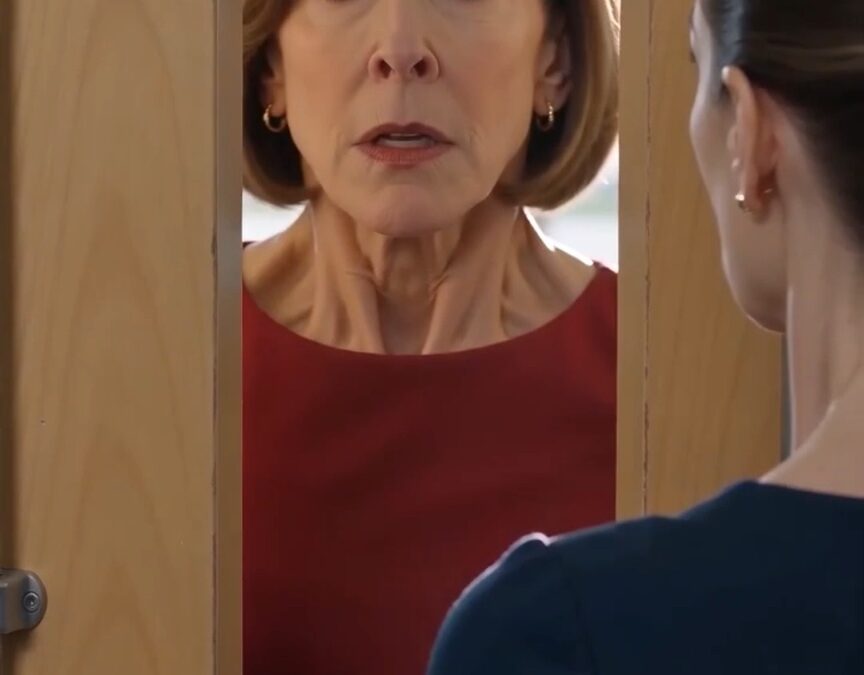
Chapter 1: The Reception Doorway
At 41, recovering from abdominal surgery, I watched my sister-in-law block the graduation reception doorway.
She wanted my signature before she would let me celebrate the girl I had helped through nursing school.
My husband stood behind her, holding my yellow cushion.
Then a woman left the reception and came straight toward us.
Paula stopped smiling when she saw where that woman stood.
Before that, I thought Paula was simply making room.
She moved sideways as Eric and I approached.
I stopped to let her pass.
Instead, she planted herself across the entrance.
“Wait right there,” she said.
Inside the campus commons, families were gathering around tables.
Graduation programs lay beside paper plates and flower bouquets.
I could see an empty chair near the windows.
I had been thinking about that chair since the hallway.
“What is it?” I asked.
“We need to settle something before you go in.”
“Can we settle it sitting down?”
Paula looked at the cushion against Eric’s leg.
“This won’t take long if you cooperate.”
It was May 17, 2025, in Dayton, Ohio.
Molly had graduated from her community college nursing program.
She was 22, and I was her aunt by marriage.
I had watched her cross the stage earlier.
She had found us afterward and waved.
That was what I had come for.
I wanted to congratulate her and get a photograph.
I had undergone abdominal surgery on April 28.
My instructions included lifting restrictions and avoiding prolonged standing.
Getting dressed that morning had required a rest afterward.
Eric, my 43-year-old husband, had driven over the rough pavement slowly.
He had carried my yellow chair cushion without being asked.
I was not expecting anyone to fuss over me.
I just needed somewhere to sit.
Paula reached into the tote against her hip.
“I brought the agreement.”
“What agreement?”
“The one that puts this behind us.”
Eric shifted the cushion.
“Paula, not now.”
“That’s what she always says.”
“I haven’t seen anything,” I said.
“Then look at it.”
“After I sit down.”
She stayed where she was.
Paula was 47, six years older than me.
She had a way of smiling while refusing something.
She did it now as another family approached.
“Beth likes to make things complicated,” she said.
The family slowed, then used the space beside us.
I stepped closer to the wall.
Straightening too quickly pulled at my incision.
I placed my palm against my stomach.
“Please let me through.”
“Are you going to sign?”
“I’m not signing something I haven’t read.”
“It says we’re family.”
“Then it can wait.”
Her smile thinned.
“You want to sit with the family?”
Eric finally looked directly at her.
“She’s coming in with me.”
“Then talk some sense into her.”
I could hear conversations inside slowing down.
I kept looking for Molly.
I did not want her walking into this.
“Paula, move.”
“You don’t belong in here.”
She said it clearly.
A couple near the entrance turned toward us.
Eric tightened his hold on the cushion.
“Don’t talk to her that way.”
Paula barely glanced at him.
“You never paid for anything.”
I looked at her tote.
I knew what money she meant.
I also knew exactly what she had signed.
But I had not come carrying financial records.
I had brought a graduation card.
It was tucked inside my purse beside my discharge instructions.
That combination suddenly embarrassed me.
I had planned so carefully just to attend.
Now I was standing outside like an uninvited stranger.
“Beth,” Eric said, “we can go somewhere else.”
“No.”
He looked surprised.
I adjusted the purse strap on my shoulder.
“I came to see Molly.”
Paula lifted her eyebrows.
“Then stop acting like this.”
“Let me sit down.”
“You can end this right now.”
She tapped the tote.
I did not reach for it.
I could feel sweat beneath my collar.
The commons was cool, but standing hurt.
Eric looked past his sister toward the chairs.
For a moment, I thought he would lead me through.
Instead, he said her name again.
“Paula.”
She ignored him.
That was when I saw Ruth near the refreshments.
She had turned toward the doorway.
Ruth was 62, a retired nursing instructor and my neighbor.
Molly had invited her to the graduation herself.
Ruth had encouraged her throughout the program.
She looked at my hand against my stomach.
Then she looked at Eric’s cushion.
She put down what she was holding.
Paula was still watching me.
“This could all be very easy,” she said.
Ruth walked out of the reception.
She came straight toward us.
I expected her to ask what was wrong.
Instead, she stopped beside me, facing Paula.
Her shoulder was nearly level with mine.
“Beth needs to sit,” she said.
Paula’s smile disappeared.
Her eyes went from Ruth to me.
“Ruth, this is family business.”
“You’re discussing it in a doorway.”
“You don’t know what’s been going on.”
“I heard what you said.”
Eric moved closer to me.
Ruth glanced toward the empty chair.
“Move aside, Paula.”
Paula gripped the strap of her tote.
“I know what Beth needs.”
“Then let her get to a chair.”
Several people inside had stopped talking.
I looked down at the floor tiles.
I wished everyone would look somewhere else.
Ruth lowered her voice.
She did not take my arm or speak for me.
She just stood where Paula could not ignore her.
“You said Beth never paid for anything.”
“That isn’t what I meant.”
“It’s what you said.”
Paula looked at Eric.
He did not answer for her.
Ruth turned slightly toward me.
I knew what she was about to mention.
Paula knew, too.
Her fingers tightened around the tote strap.
“Don’t do this here,” she said.
Ruth kept her eyes on me.
“Beth, do you want me to tell them what I witnessed?”
Chapter 2: What Ruth Had Witnessed
I looked into the room before answering.
Molly was near the windows with her flowers.
She had noticed us.
Her smile had faded, and she was watching her mother.
I did not want her hearing a different version later.
“Yes,” I told Ruth. “Tell them what you saw.”
Paula stepped backward.
That finally opened the doorway.
Ruth stayed beside me.
“On September 1, 2023, I watched Paula sign a loan agreement at Beth’s kitchen table.”
Paula opened her mouth.
Ruth continued without raising her voice.
“Beth lent her $24,000 for Molly’s education and living expenses.”
Someone near the door looked away.
I wished I could have done the same.
“It was interest-free,” Ruth said.
“The agreement required repayment on July 1, 2025.”
Eric looked at his sister.
“You know that’s true.”
“There were other conversations,” Paula said.
“Not changing the agreement,” I answered.
“You said you loved helping Molly.”
“I do.”
“You said you were glad she could go.”
“I was.”
Paula spread her hands.
“Then why are we doing this?”
“Because you won’t let me sit down.”
She looked around as though someone might support her.
Nobody offered.
Ruth had not called her a thief.
She had not guessed about her finances.
She had described a signing she personally witnessed.
Paula could argue with my intentions all afternoon.
She could not make Ruth forget that afternoon.
Eric stepped through the doorway.
He placed the yellow cushion on the empty chair.
Then he came back for me.
“Come on, Beth.”
This time, he did not ask Paula.
He stood beside me as I walked in.
Ruth came with us.
I lowered myself onto the cushion carefully.
For several seconds, I said nothing.
I rested my purse on my lap.
Eric brought water and pulled a chair beside mine.
“Better?”
“Yes.”
It was not entirely true yet.
But sitting was already helping.
Molly reached us before I took a drink.
“What happened?”
Paula followed her.
“Nothing. A misunderstanding.”
Molly looked at my hand against my stomach.
“Are you hurting?”
“I needed to sit.”
“Why were you outside?”
“Your mother wanted to discuss something.”
“At my graduation?”
Her voice was quiet.
Paula glanced toward another table.
“I was trying to handle a family matter.”
“I didn’t come to discuss it,” I said.
“I know,” Molly answered.
I looked down at my water.
That answer nearly made me cry.
I took a drink instead.
Ruth sat after I pointed toward a chair.
Eric stayed close beside me.
Molly lowered her flowers onto the table.
“Was the money Ruth mentioned for my school?”
“Yes.”
“Mom said she handled everything.”
“She arranged the payments,” I said.
That part was true.
Paula had transferred the money for Molly’s expenses.
I was not claiming she had stolen tuition money.
The question was repayment to me.
Molly rubbed the folded edge of her program.
“Why didn’t you tell me?”
“Because you weren’t borrowing it.”
“But it was for me.”
“You were studying. The agreement was between adults.”
Paula pulled out a chair.
“You make it sound like she wasn’t an adult.”
“That isn’t what I said.”
Molly kept looking at me.
“I would have thanked you differently.”
“You thanked me plenty.”
“For supper and rides.”
“Those counted.”
She pressed her lips together.
I remembered her arriving tired after classes.
Sometimes all she wanted was food and quiet.
I had gladly given her both.
Neither came with a bill.
Paula leaned toward me.
“See? You wanted to help.”
“I wanted to make a loan.”
“You keep saying it like that.”
“Because that’s what we signed.”
Eric looked at her.
“Stop making her repeat it.”
Paula sat back.
A family passed our table carrying flowers and coats.
We all waited until they were gone.
The reception was returning to normal around us.
That relieved me.
I had no interest in making an announcement.
The people who heard Paula had heard Ruth.
That was enough.
“You could have handled this privately,” Paula said.
“I asked to come inside.”
“You know what I mean.”
“Yes. You wanted my signature first.”
Molly looked sharply at her mother.
“Signature on what?”
Paula reached toward her tote, then stopped.
“A solution.”
“To what?”
“So we can move forward.”
Eric looked at the bag.
“Put it away.”
“It isn’t your decision.”
“No,” I said. “It’s mine.”
She looked at me for a long moment.
I kept both hands around my water cup.
I did not need to fill the pause.
Finally, Paula turned toward Ruth.
“You’ve only heard Beth’s side.”
“I witnessed both signatures,” Ruth answered.
“And you saw the money?”
“I saw the agreement. Beth can speak to the transfer.”
“I have the record,” I said.
Paula shook her head.
“You’re making this sound criminal.”
“No one said anything criminal,” Eric replied.
“I borrowed money to help my daughter.”
“Yes,” I said. “You did.”
Molly moved her flowers away from the table edge.
Her fingers were clumsy with the paper wrapping.
I wanted her afternoon back.
I wanted Paula to stop making me explain plain facts.
Most of all, I wanted not to be tired.
The operation had left me with less patience for standing.
It had also left me with less patience for this.
“The due date hasn’t arrived,” I said.
“I’m not asking you to pay today.”
Paula’s shoulders relaxed slightly.
“Then we agree.”
“We agree that July 1 is the due date.”
She looked down.
Her hand returned to the tote strap.
“You don’t understand my position.”
“Then explain it without blocking a doorway.”
She glanced at Molly, then at Eric.
“The estate still hasn’t paid me,” she said.
Chapter 3: The Afternoon We Signed
I had heard that explanation before.
At the reception, Paula said it almost patiently.
As though I had forgotten an important arrangement.
But her repayment promise had never depended on an estate.
It had started at my kitchen table.
On September 1, 2023, she brought a folder.
The corner was bent from being carried around.
She kept pressing it flat with her palm.
Molly had been accepted into her nursing program.
Paula had worked out what remained uncovered.
The figures were written in two groups.
There was $18,000 for education-related expenses.
Another $6,000 was needed for living expenses.
Paula wanted to handle those costs for Molly.
She did not have the money available then.
“I can repay you,” she said.
“I need to know when.”
“Once things settle down.”
“That isn’t a date.”
She looked toward my sewing machine.
A pair of trousers lay over the chair.
There was a dress hanging nearby, waiting for pickup.
I wondered whether she understood how long $24,000 took.
I worked as an alterations seamstress.
My savings came from shortened hems and repaired zippers.
Sometimes I worked while Eric watched television nearby.
Sometimes I finished hand stitching after he went to bed.
I kept those savings in a separately held account.
It was not hidden money.
Eric knew about it.
It gave me room during slow stretches.
It also covered things my uneven income could not predict.
Lending the full amount was not casual for me.
Paula knew that because I told her.
“I need this repaid,” I said.
“I’m not asking for a gift.”
“I understand.”
“I mean it, Paula.”
She put her hand over the bent folder corner.
“I wouldn’t ask you to give that much away.”
Eric was at work that afternoon.
He knew we were considering the loan.
Before leaving that morning, he had told me something practical.
“Get it written down.”
I had almost felt embarrassed doing it.
Paula was his sister.
We ate meals together and exchanged family photographs.
But writing down the terms seemed fair to everyone.
There would be no interest.
The full principal would be due July 1, 2025.
Paula would receive the money and handle Molly’s expenses.
She would remain the person responsible for repayment.
Molly would not be signing anything.
Paula read the agreement at the table.
I remember her following one paragraph with her finger.
She stopped at the due date.
“That gives me time,” she said.
“Yes.”
“And no interest.”
“No interest.”
She turned the page back.
I asked whether she needed longer to read it.
“No. I understand it.”
Ruth had stopped by to return something I had altered.
I had asked whether she could witness our signatures.
She knew us both.
She also knew witnessing was not the same as advising.
“I’m not giving either of you legal advice,” she said.
“We know,” Paula answered.
Ruth waited while Paula read again.
There was no hurry.
Nobody stood over her with a pen.
I offered her water.
She declined and signed.
Then I signed.
Ruth watched and added her witness signature.
Paula gave a small laugh.
“Now nobody can say I didn’t read it.”
Ruth smiled politely.
I remember putting the original in my records drawer.
I had other paperwork there from my alterations work.
Receipts, measurements, account records, and completed orders.
The agreement belonged with things I needed to keep.
I transferred the $24,000 from my separate savings.
Paula sent it onward for Molly’s stated expenses.
The money did what it was supposed to do.
Molly continued with school.
I never had reason to claim otherwise.
That evening, I told Eric the agreement was signed.
He asked whether I felt comfortable.
“As comfortable as I can feel lending that much.”
“She’ll have to repay it,” he said.
“That’s the plan.”
He looked at the transfer confirmation with me.
He knew the amount.
He knew the due date.
Nothing about the loan was a surprise to him.
Later, Paula thanked me more than once.
Her early messages called it a loan.
She said she appreciated having time to repay.
I saved those messages with the transfer record.
Not because I expected trouble.
I kept records because my work required it.
If someone questioned a hem measurement, I checked my notes.
If someone forgot a deposit, I had the receipt.
This was a larger amount, not a different habit.
Over time, Paula’s assurances grew less specific.
“I haven’t forgotten,” she would say.
Then she started mentioning the estate.
Money would be coming.
Paperwork was taking longer.
There was always another explanation.
I listened without changing our written terms.
The due date still had not arrived.
At the reception, Eric asked her about it.
“The estate hasn’t paid anything?”
“That’s what I said.”
I watched him consider her answer.
I had heard it before, too.
But I remembered her sitting at my table.
I remembered the finger beneath the due date.
I remembered that she had read every page.
Ruth sat across from me with her hands folded.
She had been there for the same afternoon.
That was why Paula’s expression changed in the doorway.
Ruth had not needed my version afterward.
She already had her own memory.
Molly looked between her mother and me.
“Was the estate part of the loan?”
“No,” I said.
Paula lifted her chin.
“It was understood.”
“Not by me.”
“You knew I expected money.”
“That isn’t the same thing.”
I placed my water cup down carefully.
“If the estate delay changes your position,” I said, “explain it in writing.”
Chapter 4: Supper Beside The Sewing Machine
Paula looked at me as though I had insulted her.
“There’s no reason to write another letter.”
“Then don’t change what we already signed.”
“I’m talking about family.”
Molly looked down at her hands.
I recognized the way she folded her fingers.
She did it when she was trying to listen carefully.
I had seen it at my kitchen table.
Back then, the table usually held her notes.
Sometimes there was an open supper container beside them.
She would arrive after classes, tired and hungry.
I kept food for her when I could.
She did not need to explain every difficult day.
There were evenings when she barely talked.
I sewed, and she studied.
The machine made enough noise to keep it comfortable.
One evening, she arrived holding her nursing uniform.
A pocket hung loose along one side.
“I caught it,” she said.
“On what?”
“I’m still trying to figure that out.”
She spread it across my table.
The seam had torn through a worn section.
Simply stitching the opening closed would not hold long.
I turned on the small sewing light.
“Eat your supper first.”
She set a packed container beside her notes.
“You’re sure you can fix it?”
“Yes.”
“Because I need it.”
“I figured that part out.”
She laughed and sat down.
I found thread close to the original color.
Then I checked inside for anything left in the pocket.
Molly watched me pull out a folded scrap of paper.
“That’s mine.”
“I assumed.”
“It’s what I need to practice saying.”
I handed it back.
She read silently while I examined the seam.
Then she covered her face with one hand.
“What?” I asked.
“I sound strange introducing myself.”
“To whom?”
“A patient. Just saying it properly.”
“Let me hear it.”
She sat straighter in the kitchen chair.
“Hello, I’m Molly. I’m a student nurse.”
The words rushed together.
I looked up from the uniform.
“Are you allowed to breathe during that?”
She laughed into her napkin.
“Yes.”
“Then try doing that.”
She tried again.
This time, she paused after her name.
I nodded and guided the fabric under the needle.
She asked whether she sounded too stiff.
“You sound like you’re concentrating,” I said.
“I am concentrating.”
“Then that makes sense.”
I knew nothing about teaching nursing.
I could only tell her how it sounded.
She practiced while I reinforced the pocket.
I suggested leaving room for the patient to answer.
She asked whether that would feel awkward.
“Less awkward than talking over someone.”
She considered that and tried again.
By then, she had finished half her supper.
I stopped sewing to check the new line of stitches.
The weakened fabric needed support behind it.
I added that before closing the seam.
Molly watched the needle move.
“You make that look easy.”
“It wasn’t the first time.”
“Same with introductions, I guess.”
“Probably.”
I did not turn it into a speech.
She did not need one.
She needed her uniform repaired before the next day.
When I finished, she put her hand in the pocket.
Then she tugged gently on the edge.
“It feels stronger.”
“Don’t test it until you tear something else.”
She grinned.
I packed the remaining supper for her to take.
She folded the uniform over her arm.
At the door, she practiced the introduction once more.
Slower that time.
I told her it sounded fine.
Those evenings were separate from Paula’s loan.
So were the rides when I was available.
So were the meals and little repairs.
I did them because I cared about Molly.
I never kept a bill for them.
At the reception, Molly touched her graduation program.
“Did you pay for the food, too?”
I looked at her.
“Sometimes I cooked extra.”
“And the rides.”
“I was already going out sometimes.”
“Not every time.”
“No. Not every time.”
Paula leaned back.
“Beth always enjoyed having you over.”
“I did,” I said.
Molly looked up.
“I enjoyed coming over.”
That was enough for me.
I did not need her listing every favor.
I did not want Paula using affection as proof of forgiveness.
Both things could be true.
I loved helping Molly.
Paula still owed me $24,000.
Ruth glanced toward the windows.
“There’s good light for photographs over there.”
Molly looked at the flowers in front of her.
“I don’t want to leave Beth.”
“I’m seated now,” I said.
Eric touched the back of my chair.
“I’m staying here.”
Ruth offered to go with Molly.
They could get a few photographs while the area was clear.
Molly hesitated.
I moved my purse off the edge of her flowers.
“Go. We’ll get ours afterward.”
“Promise?”
“Yes.”
She leaned down and hugged my shoulders carefully.
Then she went with Ruth.
I watched her straighten the paper around her bouquet.
She was trying to smile again.
Paula watched her, too.
“This is why I wanted it settled,” she said.
I turned back toward her.
“Take out the paper you brought.”
Chapter 5: The Paper In Her Tote
Paula kept one hand inside her tote.
For a moment, I thought she might refuse.
Then she drew out two folded sheets.
“There’s nothing unreasonable here,” she said.
She slid them toward me.
I left them on the table while she explained.
“It just says the support was voluntary.”
Eric leaned forward.
“What support?”
“The money.”
“A loan can be voluntary,” I said.
Paula looked annoyed.
“You know what I mean.”
“I want to read what it actually says.”
I unfolded the pages.
The wording was longer than her explanation.
It described the $24,000 as a family gift.
It also released Paula from repayment.
I read it twice.
My back was getting tired from sitting upright.
I shifted against the yellow cushion.
Paula watched my face rather than the document.
“Who prepared this?” I asked.
“I found wording.”
“Did an attorney advise you?”
“We shouldn’t need attorneys for family.”
“That wasn’t my question.”
“No.”
I looked again at the part calling it a gift.
“That isn’t what happened.”
“It could be what we agree now.”
“Yes,” I said. “It could.”
Her shoulders eased.
Then I finished.
“But I’m not agreeing.”
She leaned closer.
“Beth, you have no idea what this has been like.”
“What part?”
“Trying to manage everything.”
“I know school was expensive.”
“I was doing it for Molly.”
“So was I.”
Eric held out his hand.
I passed him the pages.
He read slowly.
Paula turned toward him.
“You understand why I want this finished.”
He reached the release language and looked up.
“You wanted her signing this outside the reception?”
“I wanted a private conversation.”
“You blocked a doorway.”
“I knew she’d avoid me.”
“She asked for a chair.”
Paula folded her arms.
“You’re making too much of that.”
I looked at Eric.
He had heard that now, too.
He placed the pages flat between us.
“She had surgery on April 28.”
“I know when she had surgery.”
“Then why did you keep her standing?”
“I wasn’t keeping her anywhere.”
I put my palm on the document.
“You said I couldn’t come in unless I signed.”
“That isn’t how I meant it.”
“You told me I didn’t belong.”
Paula looked toward the windows.
Molly was standing with Ruth, holding her bouquet.
She had managed a real smile for a photograph.
I wanted her to keep it.
“Fold the paper,” I told Paula.
She looked back.
“I’m not signing it.”
“You should take it home and consider it.”
“I’ve considered it.”
“You’re deciding while you’re upset.”
“I can read while I’m upset.”
Eric pushed the pages toward her.
“Put it away.”
She stared at him.
“Since when do you talk to me like that?”
“Since you treated Beth like that.”
Paula gathered the pages.
She folded them along the same creases.
There was no shouting.
No one snatched anything.
She put the proposed agreement back inside her tote.
Then she pushed her chair away.
“I’m going to be with my daughter.”
“That’s a good idea,” I said.
She waited a moment.
Perhaps she wanted me to call her back.
I picked up my water instead.
When she left, Eric watched her cross the room.
Then he looked at the cushion behind me.
“I should have helped you.”
“Yes.”
“I thought she’d stop.”
“She didn’t.”
He rubbed both palms over his knees.
“I kept thinking we could avoid making it worse.”
“I was already standing there hurting.”
“I know.”
“I kept waiting for you to get me inside.”
He looked at me.
“I’m sorry, Beth.”
I nodded.
I did not tell him it was fine.
I did not want another explanation about his sister.
He seemed to understand that.
He stayed beside me without talking.
When Molly returned, she asked for our photograph.
Eric stood immediately.
“By the windows?”
“Can Beth sit there?” Molly asked.
“Yes,” he said. “I’ll bring the cushion.”
We used a chair near the light.
Molly sat beside me rather than making me stand.
Ruth helped arrange the flowers in her lap.
Eric took the photograph.
Then Molly checked it and asked for another.
“Your eyes were closed,” she told me.
“I was resting them.”
She laughed.
The second photograph was better.
I looked tired, but I was beside her.
That was the picture I wanted.
Before we left, Molly asked about the loan again.
“Am I supposed to pay you when I start working?”
“No.”
“But the money was for my expenses.”
“Your mother borrowed it.”
“I could make payments.”
“You didn’t promise me repayment.”
She looked troubled.
I held her hand briefly.
“Being grateful doesn’t make you the borrower.”
Ruth stayed nearby without adding anything.
Eric heard me, too.
I wanted both of them to remember it.
In the parking area, he opened my car door.
He put the cushion on the seat first.
Then he waited while I lowered myself carefully.
“Do you want to talk tonight?” he asked.
“Yes.”
“What do you need?”
I looked up at him.
“After we get home, bring me the original agreement.”
Chapter 6: The Original On My Table
Eric knew which drawer I meant.
The agreement was not hidden from him.
It was filed with the records I had kept.
He brought the folder into the kitchen.
I sat on the yellow cushion while he made tea.
For several minutes, we read without talking.
The amount was plain.
So was the repayment date.
Paula’s signature was beneath mine.
Ruth’s witness signature was there, too.
Eric touched the edge of the page.
“I remember you telling me she signed.”
“You saw the transfer.”
“I know.”
“You knew it wasn’t a gift.”
“Yes.”
I waited while he read the last paragraph.
Then he left the agreement in front of me.
He did not put it away to end the discussion.
“Are you going to call a lawyer?”
“Yes.”
“Okay.”
I watched his face.
I expected him to mention keeping peace.
Instead, he asked whether I wanted him involved.
“Not as a messenger,” I said.
“I don’t want that either.”
“And I need you to stop explaining her behavior.”
He nodded.
“I can do that.”
I was willing to watch whether he did.
After the graduation, I consulted Simone.
She was 50 and practiced law in Ohio.
I brought the signed original and the transfer record.
I also brought Paula’s messages about repayment.
Some messages were only a few words.
Others thanked me for giving her time.
Several called the money a loan.
Simone read them before asking questions.
“Did you ever agree to forgive this?”
“No.”
“Did you change the repayment date?”
“No.”
“Was repayment conditional on an inheritance?”
“No.”
She looked back at the agreement.
“It isn’t written that way.”
“That’s how she’s been talking.”
“Her expectation doesn’t change the contract by itself.”
I felt better hearing that.
Not triumphant.
Just better able to understand the problem.
“What can we do now?”
“Preserve everything. Don’t sign her proposed release.”
“And demand the money?”
“We can confirm the obligation and the due date.”
She turned the page toward me.
“But July 1 hasn’t arrived.”
I nodded.
“I know.”
“Nothing about the reception automatically makes payment due early.”
I appreciated her being direct.
I did not want promises she could not keep.
The loan was unsecured.
There was no property I could simply claim.
No bank was required to give me Paula’s balance.
Simone explained that enforcing an unpaid loan required proper steps.
We had not reached those steps.
“What do you want from this?” she asked.
“My $24,000 back.”
“Would you discuss voluntary early payment?”
“Yes.”
“Any demand for interest or your attorney fees?”
“No interest. No fees.”
I wanted advice, and I would pay for it.
I did not want to enlarge the debt.
I also did not want Molly involved.
Simone wrote that down.
I told her Eric would not negotiate for me.
She wrote that down, too.
Her letter confirmed that I had not forgiven the loan.
It identified the signed agreement and July 1 deadline.
It asked that repayment discussions come through her.
It also offered to discuss an earlier settlement.
“She doesn’t have to accept early payment terms,” Simone said.
“I understand.”
When I got home, Eric asked how it went.
“Nothing happens automatically,” I told him.
“Okay.”
“We’re not taking her belongings.”
“I didn’t think we were.”
“I just want us clear.”
He leaned against the counter.
“We are.”
Paula called him after receiving the letter.
He told me about it that evening.
“She wants me to talk you out of this.”
“What did you say?”
“That she needs to speak with Simone.”
I set down the shirt I was repairing.
“Did she accept that?”
“No.”
“What else?”
“She said you were letting a stranger divide the family.”
I waited.
He looked uncomfortable, but he kept going.
“I told her she blocked you from the reception.”
“And?”
“That you weren’t the person who did that.”
I picked up my needle again.
He did not ask whether he had answered correctly.
That helped.
Molly sent the graduation photograph a few days later.
I put it near my sewing machine.
She had not asked me to withdraw the letter.
She had not offered her future wages again.
I was glad she had listened at the reception.
Ruth came over and noticed the photograph.
“You got a good one.”
“After I opened my eyes.”
“She looks happy.”
“She does.”
Ruth asked whether Simone needed a statement.
“Possibly.”
“I can give her what I remember.”
“Only what you actually saw.”
“Of course.”
That meant the signing and the doorway.
It meant my permission before she spoke publicly.
It did not mean guesses about Paula’s intentions.
I wanted the facts kept separate from everything else.
Paula eventually consulted an attorney of her own.
I was relieved when Simone told me.
Someone else could explain the agreement to her.
Someone else could explain why a release required my consent.
Simone called after their first exchange.
“Her attorney is discussing full repayment.”
“On July 1?”
“Possibly earlier, if we agree on terms.”
I moved the sewing scissors away from my paperwork.
“What terms?”
“We’re still discussing them.”
She paused before continuing.
“They’ve also offered voluntary supporting financial disclosure.”
“About the estate?”
“Yes,” Simone said. “Including the deposit record.”
Chapter 7: The Deposit Already There
I did not obtain Paula’s records through a favor.
Eric did not know her banking password.
Nobody searched an account behind her back.
Her attorney voluntarily provided a relevant record during negotiations.
Simone explained that before showing it to me.
I wanted every step handled properly.
The record showed a deposit of $38,000.
It was inheritance money paid into Paula’s own account.
The date was March 14, 2025.
I read the date again.
It was before my April 28 surgery.
It was before the May 17 graduation.
It was before she stood beside my chair and said the estate had not paid.
“Is there any question about this?” I asked.
“Not about the receipt reflected here.”
“And she knows you have it?”
“Yes. It came through her attorney.”
I sat back.
I had expected an explanation about paperwork.
Something incomplete or delayed.
Instead, I was looking at money already received.
“What does she say?”
“She was worried about her own expenses.”
“She could have told me that.”
“Yes.”
“She said it hadn’t arrived.”
Simone waited while I looked at the page.
I did not need her to repeat what was obvious.
Finally, she spoke.
“The important part is the proposed repayment.”
“Is she asking Molly for it?”
“The negotiations concern payment by Paula.”
“I don’t want Molly taking this over.”
“That hasn’t changed.”
I knew I had said it before.
I needed to say it once more.
Paula had borrowed the money.
She had received her own inheritance.
Molly had not signed either agreement.
Simone described the settlement being discussed.
Paula would pay the entire $24,000 early.
The proposed payment date was June 20, 2025.
I would sign a release after the funds cleared.
No interest would be added.
No attorney fees would be demanded.
Each side would handle its own legal expense.
The release would settle the loan completely.
I would not be able to collect it again.
“That’s what I want,” I said.
“Read all the wording before deciding.”
“I will.”
I took the proposed terms home.
Eric waited until I sat down.
“What did the disclosure show?”
“She received the inheritance.”
“When?”
“March 14.”
He pulled out the chair across from me.
“How much?”
“$38,000.”
He looked at the table.
For a while, neither of us spoke.
Then he asked why she had denied receiving it.
“I don’t know.”
He started to say something.
I could see him reconsidering it.
Then he asked about the settlement instead.
I handed him the proposed terms.
He read everything.
“You get the full amount?”
“Yes.”
“And then you release the loan.”
“After the money clears.”
He nodded.
“No interest?”
“None.”
“What about Simone?”
“I’m paying her.”
“Okay.”
I waited for him to suggest forgiving part of it.
He did not.
Instead, he returned the pages without folding them.
“Are you comfortable?”
“If the final terms stay like this.”
“What about afterward?”
“The debt will be finished.”
“I mean between you and Paula.”
I lined up the corners of the pages.
“I’m not agreeing to anything else.”
He nodded again.
That was all I needed from him then.
Paula could repay the loan.
She could not make a new loan part of the bargain.
She could not require dinners or favors.
She could not require me to call the money a gift.
Her attorney asked whether I would speak with her directly.
I declined for the time being.
There was nothing necessary I could not say through Simone.
The fewer conversations I repeated, the easier it was to rest.
Paula left Eric a message about having dinner afterward.
He summarized it without playing the recording for me.
“She thinks we should get together once this is done.”
“I’m not agreeing to that.”
“I told her we weren’t planning anything.”
“Thank you.”
He put his phone away.
It stayed away through supper.
Molly called separately that week.
She asked whether I was feeling better.
“I can stand at the sewing table longer.”
“Are you taking breaks?”
“Yes.”
“Actual breaks?”
“I sit in the kitchen.”
“On the cushion?”
“Usually.”
She sounded pleased with that answer.
Only afterward did she ask about the money.
“Has Mom talked to you?”
“Through the attorneys.”
“Do I need to know anything?”
“You haven’t acquired a new responsibility.”
She breathed out.
I heard it clearly through the phone.
“I keep worrying.”
“You can ask me.”
“I don’t want you thinking I’m choosing sides.”
“You don’t have to report to anybody.”
She was quiet for a moment.
Then she asked about her repaired uniform.
“Did the pocket look crooked in the photograph?”
“No.”
“Are you sure?”
“I would have fixed it.”
She laughed.
“I know you would.”
After we hung up, I read the settlement again.
It described repayment, not a revised family history.
It did not accuse Paula of misusing tuition money.
It did not put Molly under an obligation.
It resolved the loan Paula had signed.
I approved the final terms through Simone.
Paula agreed through her attorney.
June 20 would be the payment date.
It was an early settlement, voluntarily negotiated.
There was no court order making her pay that day.
Simone called when the arrangements were complete.
“The agreement is in place,” she said.
“Now we wait for the money.”
Chapter 8: Until The Funds Cleared
On June 20, 2025, Simone called while I was sewing.
A length of white thread clung to my sleeve.
I pulled it loose before answering.
“The payment has arrived,” she said.
“All $24,000?”
“All of it.”
I stopped touching the thread.
For several seconds, I just held the phone.
Then Simone explained the next step.
“The funds still need to clear.”
“So I don’t sign the release yet.”
“Correct.”
I wrote it down.
The settlement required cleared funds before the release.
I intended to follow the terms exactly.
After the call, I checked the date on my note.
June 20, 2025.
Earlier than July 1, as negotiated.
The payment had arrived in full.
I put the note beside the settlement papers.
Then I went back to the sleeve on my machine.
There was still work to finish.
Eric came home before I put the papers away.
“Did you hear anything?”
“The payment arrived.”
He smiled.
Then he noticed the note.
“Not finished yet?”
“Not until it clears.”
“Okay.”
He opened the refrigerator and asked about supper.
I was grateful for the ordinary question.
We had spent enough evenings discussing Paula’s next response.
I wanted to talk about food.
The waiting was uneventful.
There was no visitor at the door.
No new paper appeared in a tote.
Simone handled the necessary communications.
I checked my records without calling Paula.
Eric did not call her to ask how she felt.
That was new for him.
He used to hear disappointment and immediately try fixing it.
Now he let her speak with her attorney.
When Simone confirmed the funds had cleared, I sat down.
The money was available in my own account.
Not promised.
Not waiting on an estate.
Not subject to another family conversation.
I looked at the balance for a while.
Then I closed the account screen and made tea.
I did not buy something to celebrate.
I wanted the money where it had been intended.
In my savings.
Available when my work was slow.
Available if I needed more time to recover.
Available without asking Paula’s permission.
Simone sent the release for signing.
I read it against the agreed terms.
Then I signed it.
She delivered it through the proper channels.
The loan was satisfied.
Paula no longer owed me under that agreement.
I had no claim to collect the principal twice.
I had no intention of trying.
There had been no lawsuit.
No court entered a judgment.
Nobody placed a lien on Paula’s property.
No police came to the house.
She repaid a debt she had personally signed.
I accepted the full principal without interest or fees.
That was the entire financial result.
It was also enough.
Eric helped me organize the records.
He brought a folder and sat beside me.
The original agreement went behind the settlement documents.
The release went at the front.
We kept the transfer and cleared payment records together.
Then I returned the folder to the drawer.
For the first time in weeks, I stopped checking it.
Paula sent Eric a message afterward.
She wanted to know whether we were “done.”
He showed me the relevant part.
I was standing at the kitchen counter.
“With the loan, yes,” I said.
“What should I tell her?”
“Exactly that.”
He did.
He did not promise a dinner.
He did not say I would come around soon.
He did not tell her to give me time.
I noticed what he left out.
Later, he brought up the reception himself.
“I keep thinking about that doorway.”
I folded a clean dish towel.
“I remember it.”
“I was holding the cushion.”
“Yes.”
“I should have put it on a chair.”
“You should have helped me get there.”
He looked down at his hands.
“I know.”
I let him sit with that answer.
I did not want him miserable.
I wanted him to remember what waiting had cost me.
He had changed what he did afterward.
If Paula called during supper, he called back later.
If she asked about my schedule, he did not supply it.
If she tried negotiating through him, he refused.
He did those things without asking for credit.
That mattered more than another explanation.
Ruth stopped by after the release was completed.
I told her the money was back.
“Good,” she said.
Then she asked whether I was taking alterations again.
“I am.”
She set a garment on my table.
“Whenever you have time.”
I laughed.
“Straight back to work?”
“If you’re ready.”
“I’m ready.”
While I checked the hem, I thanked her properly.
Not hurriedly between graduation photographs.
Not while I was trying to get into a chair.
She accepted it without making much of herself.
“Did you know Paula brought that paper?” I asked.
“No.”
“Then why did you come over so quickly?”
Ruth looked at me.
“You needed to sit.”
That was her whole answer.
I smoothed the garment across the table.
After Ruth left, Molly called.
She sounded lighter than she had after graduation.
She had been sorting her school materials.
Then she asked about visiting.
“Could I come over July 1?”
“Of course.”
There was a pause.
“Just me,” she said. “If that’s okay.”
Chapter 9: A Place In My Kitchen
Molly came over on July 1, 2025.
It was the original due date on the loan.
By then, the money had cleared and the release was signed.
There was no payment left to discuss.
Eric opened the door before I reached the hallway.
He did not call for me to hurry.
Molly stood outside holding fresh flowers.
“I brought these for the table.”
“They’re pretty,” I said.
Eric took them into the kitchen.
Molly followed me past the sewing machine.
A finished garment hung nearby.
There were measurements written on a pad beside it.
“You’re busy again.”
“Enough.”
“Are you feeling better?”
“I can get through work with breaks.”
She smiled.
“Are you still taking them?”
“Yes.”
I was still careful with heavy lifting.
But ordinary movements were easier now.
I no longer thought through every turn and reach.
The yellow cushion remained on my kitchen chair.
I sat there while Eric brought lunch to the table.
Molly took her old place across from me.
For a moment, I remembered her studying there.
Her supper container beside the notes.
Her torn uniform pocket under my sewing light.
I did not say it aloud.
I asked whether she wanted water.
She said yes.
Eric filled her glass and sat with us.
Nobody mentioned Paula before we started eating.
We talked about Molly’s plans after graduation.
She was working through applications and references.
She was considering what kind of nursing work interested her.
I listened without turning everything into advice.
She had received plenty of that.
When she asked my opinion, I gave it.
When she did not, I passed the bread.
She asked whether I had kept the photograph.
I pointed toward my sewing machine.
Eric had placed a copy where I could see it.
Molly leaned slightly to look.
“I like that one.”
“So do I.”
“You looked comfortable.”
“I had finally gotten to use my cushion.”
She smiled, then looked down at her plate.
After a while, she mentioned the loan.
“Mom said everything is finished.”
“It is.”
“She said you signed something.”
“A release after she repaid me.”
Molly nodded.
I waited while she considered it.
“So there isn’t anything left for me to do?”
“No.”
“Or for her?”
“Not under that loan.”
Her shoulders lowered.
I did not show her the inheritance record.
She did not need her mother’s bank information.
The debt had been resolved.
I would not ask Molly to examine every decision.
“I don’t want every visit to be about this,” she said.
“Neither do I.”
“But I don’t want to pretend it didn’t happen.”
“You don’t have to.”
Eric set down his glass.
“No one’s asking you to.”
She looked between us.
Then she took another drink of water.
“I love Mom.”
“I know,” I said.
“I love you, too.”
“I know that, too.”
There was nothing she needed to prove.
I would not ask her to carry messages.
I would not ask what Paula said at home.
I would not make her explain why she visited.
If Paula wanted to contact me, she could.
Whether I agreed to a visit would be my decision.
For now, the financial arrangements were finished.
Paula had repaid the entire $24,000.
She retained the rest of her money.
She was responsible for her own expenses.
I was not paying them.
Eric had made that clear when she asked about more help.
I had heard his side of the conversation.
“No, Paula. Beth isn’t lending more money.”
He did not present it as a temporary mood.
He did not tell her to ask again later.
He repeated the answer and ended the call politely.
At the table, Molly adjusted her flowers.
Then she laughed at herself.
“I keep fixing them.”
“You did that at graduation.”
“I was nervous.”
“I noticed.”
“Not only because of what happened.”
“Graduation was a big day.”
She nodded.
“I wanted you there.”
I rested my hand beside my plate.
“I wanted to be there.”
“I saw you sitting by the windows afterward.”
“I was waiting for our picture.”
“You looked like you.”
I glanced toward the photograph.
My hair was not quite how I wanted it.
My face looked tired.
But Molly was leaning against my shoulder.
Her flowers were across her lap.
Paula was not between us.
That was the photograph I kept.
After lunch, Eric cleared the dishes.
Molly stayed seated with me.
She did not offer to clean everything to earn her visit.
I did not ask whether she needed money.
We talked until the room grew warmer.
The flowers opened a little on the table.
Molly told me she had found the repaired uniform.
“The pocket held,” she said.
“Good.”
“All the way through.”
“Then I did my job.”
She smiled.
She stayed long enough that Eric made more tea.
There was no rush to settle anything before she left.
No paper waited beneath my purse.
No promise needed my signature.
When she finally stood, she hugged me carefully.
“You can squeeze a little harder now,” I said.
“I’m still practicing.”
“You’re doing fine.”
Eric walked her to the door.
I stayed at the table and listened to their goodbyes.
After the door closed, he came back for my plate.
“Comfortable?” he asked.
“Yes.”
He carried it to the sink.
My work was ready for the next morning.
The savings I had earned were in my account.
Molly had left knowing she could visit again.
I remained at the kitchen table, on my yellow cushion.
You Might Also Enjoy




