My Sister-in-Law Expelled Me After Surgery, Until My Old Friend Stood Beside Me
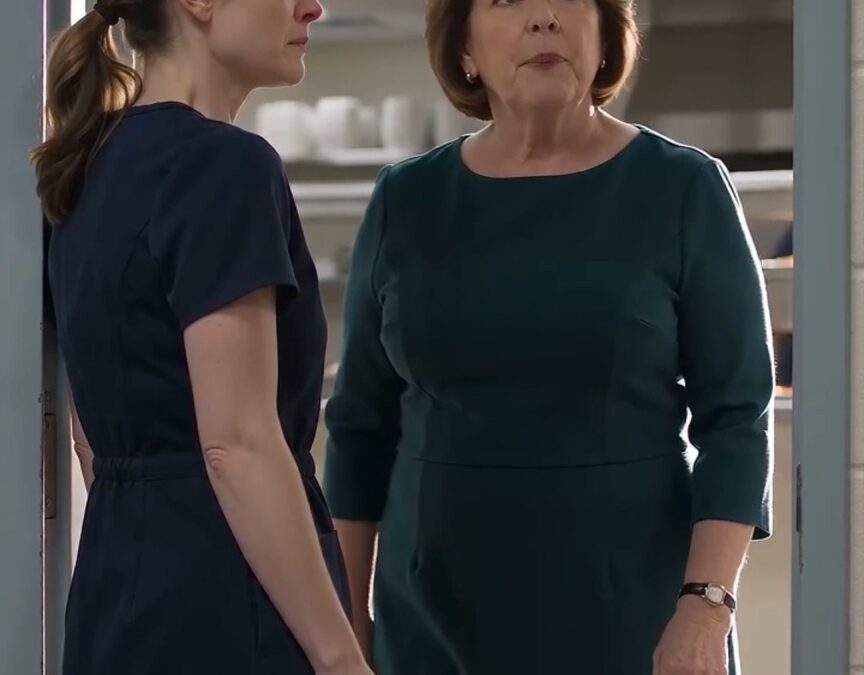
Chapter 1: The Chair Beside the Door
My sister-in-law forced me out of our workplace party while I was 39 and wearing a surgical boot.
She told everyone medical leave meant I wasn’t staff anymore, although she had just asked me for more money.
Then my oldest friend left the head table and stood beside me.
Bethany stopped smiling before either of us explained why.
It started beside a stack of paper plates.
I had just reached the lunchroom doorway with Evan.
He went toward the counter to put down our food.
I stopped to straighten the cuff above my boot.
Bethany came around the end of the table.
She was wearing the blouse she saved for customers.
“Why are you here?” she asked.
“For Nora’s lunch.”
“This is an employee celebration.”
“I know.”
She looked down at my ankle.
“You’re on medical leave.”
“And Gordon invited me.”
Behind her stood a blue vinyl chair.
Gordon had moved it beside the doorway for me.
He had called before we left home.
“Don’t worry about standing around,” he’d told me.
“I’ll have somewhere ready.”
At 68, Gordon still carried workshop chairs himself.
He owned the business outright and liked practical solutions.
His daughter managed it.
That difference hadn’t seemed especially important until that afternoon.
“I’m going to sit,” I told Bethany.
She stepped into the opening.
“Actually, I think you should go home.”
I looked past her at my chair.
“I’m allowed to be here.”
“You’re supposed to be recovering.”
“I can recover sitting down.”
Her smile stayed in place for the employees nearby.
She moved closer instead of letting me pass.
I stepped backward to keep her from bumping me.
My boot caught briefly against the door trim.
I steadied myself against the wall.
“Get out. You’re not staff.”
A serving spoon struck the side of a bowl.
Then the woman holding it stopped moving.
I looked at Bethany’s face.
She wasn’t joking.
“I work here,” I said.
“You’re not currently working.”
“That doesn’t mean I stopped being an employee.”
“Please don’t start this at Nora’s retirement lunch.”
I had known Nora longer than I’d known Evan.
At 62, she was finally retiring as production supervisor.
She had asked me to come even before Gordon called.
I had brought her a card.
It was still inside my purse.
“I came to eat lunch and thank my friend.”
“Then call her later.”
Evan turned from the counter with an empty plate.
“What’s happening?”
“Claire’s leaving,” Bethany told him.
“No, I’m not.”
My voice carried farther than I intended.
Several employees looked toward us.
Evan set down the plate.
“Why would she be leaving?”
“She needs to rest.”
“Then let her sit.”
Bethany stayed where she was.
I shifted my weight onto my good leg.
The pressure inside the boot had become uncomfortable.
My ankle surgery had been February 3, 2025.
This was February 21.
I was permitted brief protected standing and walking.
I was also supposed to sit regularly.
Arguing in a doorway hadn’t been on my recovery instructions.
“The chair is right there,” I said.
Bethany glanced at it without moving.
“This is supposed to be a pleasant afternoon.”
“It was.”
Her eyes narrowed.
I regretted saying it, then resented regretting it.
I had spent nine months helping this workshop recover.
I had done my regular paid upholstery work.
I had cleaned damaged pieces, rebuilt seats, and saved usable materials.
Now my manager was acting like I had wandered inside.
“You can’t just decide I don’t work here.”
“I’m responsible for this event.”
“Your father invited me.”
“And I’m telling you to go home.”
Evan started toward us.
Employees moved awkwardly to make room.
From the head table, Gordon stood up.
He couldn’t see my whole body behind Bethany.
“Claire?” he called.
“I’m here.”
Bethany turned her head toward him.
“I’m handling it, Dad.”
That made my stomach tighten.
Handling it meant standing between me and a chair.
It meant explaining my own employment in front of coworkers.
It meant backing up because I couldn’t risk being bumped.
I looked down at the blue vinyl seat.
There was a small split beside its frame.
I had repaired that cushion before the flood.
I knew how firm it felt beneath a person.
I wanted to sit there badly enough to cry.
Instead, I tightened my fingers around my purse strap.
Bethany was 44.
She knew exactly what my job involved.
She knew I was on leave, not separated from employment.
She also knew what she had asked me earlier that week.
On February 18, she had called about more money.
I hadn’t agreed to anything.
I hadn’t signed anything.
Apparently, that didn’t stop her from expecting an answer.
“Move, Bethany,” Evan said.
“We aren’t doing this here.”
“Then let her through.”
He was almost beside us now.
Bethany looked from him to me.
For a moment, I thought she would step away.
I pictured lowering myself into the chair.
I pictured accepting a plate and watching Nora open cards.
I would have let Bethany pretend nothing had happened.
Then she advanced again.
I moved backward into the hall.
The boot scraped against the floor.
Evan said her name sharply.
At the head table, Nora pushed back her chair.
Her napkin fell onto the seat.
She left it there.
“Nora, please stay seated,” Bethany said.
My friend kept walking.
She passed the counter and came straight to me.
She checked my boot before looking up.
Then she stood directly beside my shoulder.
“Bethany, let her come back in.”
Chapter 2: The Letter in Her Bag
Nora looked past Bethany toward the head table.
That was when Bethany lost her smile.
She knew Nora intended to say something publicly.
“Nobody needs to make an announcement,” Bethany said.
“I haven’t made one yet.”
Gordon came around the table.
He looked at me, then at the empty chair.
“Why is Claire standing out here?”
“I told her she needed to rest.”
“Then why isn’t she sitting?”
Bethany didn’t answer.
Gordon pointed toward the blue chair.
“I put that there for her.”
Evan moved beside me without crowding my ankle.
“Can you get through if she moves?”
“Yes.”
Bethany finally stepped back.
I went past her carefully and reached the chair.
Evan held it steady while I lowered myself.
The relief made me close my eyes.
When I opened them, Nora was still beside me.
Bethany remained in the doorway where she had stopped me.
“Are you all right?” Gordon asked.
“I needed to sit.”
“I’m sorry.”
He said it plainly, where everyone could hear.
Bethany folded her arms.
Nora waited until I had positioned my boot comfortably.
Then she reached for the bag on her shoulder.
“Claire, I brought the acknowledgment.”
I stared at her.
I knew which acknowledgment she meant.
I didn’t know why she had brought it.
“I wanted to ask your permission,” she explained.
“For what?”
“To thank you during my remarks.”
Bethany made a small sound through her nose.
“We already have the program arranged.”
Nora turned toward her.
“Then we need to correct it.”
Gordon looked between them.
“What needs correcting?”
Nora touched my shoulder lightly.
“May I tell him?”
I swallowed.
The money had never been a secret from Gordon.
But I hadn’t wanted it discussed over a retirement meal.
I certainly hadn’t expected to discuss it after being expelled.
“What are you planning to say?” I asked.
“Only what happened.”
I looked at Evan.
He appeared as confused as I felt.
Then I nodded.
Nora took a folded letter from her bag.
“After the flood, Claire contributed $43,200 toward payroll.”
Someone near the counter looked straight at me.
I dropped my eyes to my purse.
“It came from her separate inherited savings,” Nora continued.
“It covered the payroll shortfall over twelve weeks.”
Bethany uncrossed her arms.
“Nobody needs everybody’s financial history.”
“They need the correct history.”
Gordon held out his hand.
Nora didn’t immediately give him the letter.
“She allowed me to keep this copy,” she said.
“I helped coordinate the contribution. Bethany signed the acknowledgment.”
Then she handed it over.
The room stayed awkwardly still.
A plate sat half-filled beside the serving dishes.
Someone moved it away from the edge.
That small scrape sounded louder than it should have.
Gordon read the first paragraph.
Then he started again from the top.
Bethany watched his face.
“I handled the payroll arrangements,” she said.
Nora nodded.
“You handled the office side.”
“And all the recovery planning.”
“You did work. That isn’t in dispute.”
Bethany looked at me.
“You could say something.”
“I don’t know what you want me to say.”
“That I worked.”
“I never said you didn’t.”
Evan crouched beside my chair.
“Did you know Nora was bringing that?”
“No.”
He looked at his sister.
“What is this about?”
Bethany shook her head.
“A misunderstanding.”
Gordon was still reading.
There was nothing complicated in the letter.
It identified me as the contributor.
It listed the amount and payroll purpose.
It said the contribution was unconditional.
There was no repayment schedule because it wasn’t a loan.
There were no shares because I wasn’t buying ownership.
I had wanted that language clear before transferring my savings.
Bethany had agreed to it.
Now she stood watching her father read her signature.
Nora pulled a nearby chair closer.
She didn’t sit yet.
“I also watched Claire do the recovery work,” she said.
“She didn’t just send money and disappear.”
“That was her job,” Bethany answered.
“Yes,” Nora said. “Her paid job.”
I looked up at that.
Nora understood what mattered.
I hadn’t been an unpaid family helper.
I hadn’t visited occasionally to offer suggestions.
I was an upholsterer employed by the workshop.
My medical leave hadn’t changed that.
Gordon lowered the acknowledgment.
“I knew Claire contributed,” he said slowly.
Then he looked toward his place at the head table.
A small stack of papers lay beside his plate.
Bethany followed his glance.
“Dad, we can discuss this later.”
He walked over and picked up the papers.
I watched him separate one sheet from the others.
“What is that?” I asked.
“My proposal for the celebration,” Bethany said quickly.
“It’s just the outline.”
Gordon came back holding both documents.
He looked down at the proposal.
Then he looked at the acknowledgment again.
Nora’s hand settled on the back of my chair.
She hadn’t known about the proposal either.
I could tell from her face.
Bethany took a step toward Gordon.
He didn’t hand her either page.
“Why,” he asked, “does this say the payroll rescue came from your personal savings?”
Chapter 3: When Production Stopped
The flood happened on May 6, 2024.
By lunchtime, we were moving anything we could safely reach.
Evan and Gordon dealt with equipment and heavier pieces.
Nora checked furniture frames and separated damaged materials.
I helped move chair seats onto higher surfaces.
Bethany stayed in the office calling customers and suppliers.
Nobody stood around waiting to be useful.
We had orders in progress and materials we couldn’t replace immediately.
We also had wet foam that couldn’t responsibly be reused.
That bothered me more than throwing away ruined cardboard.
Someone would eventually sit on whatever we sent out.
I wouldn’t cover contaminated padding and pretend it was fine.
Nora agreed.
“Put it with the disposal pile,” she told me.
“We’ll document it before anything leaves.”
The paperwork grew almost as quickly as the damaged-material pile.
We photographed pieces, marked orders, and checked what remained usable.
At home, I washed my work clothes separately.
Evan left his shoes by the door.
We ate dinner later than usual and talked about production.
Then he stopped talking.
“What?” I asked.
He flattened his napkin beside his plate.
“Payroll is going to be a problem.”
“Your payroll?”
“Everybody’s.”
Gordon had business funds for some expenses.
But delayed production meant delayed receipts from finished orders.
Available money wouldn’t cover the entire interruption.
Evan didn’t ask me to contribute.
He actually looked uncomfortable when I mentioned my inheritance.
“That’s yours,” he said.
“I know.”
“I don’t want you doing this because I work there.”
“I work there, too.”
“That still doesn’t make it your obligation.”
I asked what the shortfall was expected to be.
He told me to speak directly with Gordon.
So I did.
Gordon spread the figures across his desk.
He didn’t pretend the business would recover overnight.
He showed me what money was available.
He explained which expenses business funds would cover.
I asked about payroll separately.
Nora joined us because she understood staffing and production needs.
Bethany brought the office records.
I kept asking questions.
Would this be enough for the expected payroll gap?
How would it be recorded?
Was Gordon asking for an investment?
Would anyone treat it as a loan?
“I’m not offering you ownership,” Gordon said.
“I’m not asking for ownership.”
“And I can’t promise a repayment date.”
“I’m not proposing repayment.”
Bethany looked relieved.
I remember that clearly.
She leaned back and set down her pen.
“So you’d just contribute it?”
“For payroll,” I said.
We discussed the amount until I understood it.
The shortfall was $43,200 over twelve weeks.
The business would continue paying other expenses from its funds.
My contribution would not magically cover the entire recovery.
I knew that before agreeing.
I also knew an unconditional contribution was not recoverable on demand.
If I gave it, I needed to mean it.
That evening, Evan asked whether I was certain.
We sat at the kitchen table with the figures.
He read them more slowly than I did.
“You can still say no,” he told me.
“I know.”
“You don’t have to protect my job this way.”
“I’m thinking about more than your job.”
I was thinking about Nora and the employees.
I was thinking about the workshop where I liked working.
I was also thinking about whether I could afford the choice.
I checked my remaining savings instead of guessing.
Then I decided.
On May 10, 2024, I transferred the $43,200.
It came from my separate inherited account.
I kept the transfer confirmation with my personal records.
I didn’t put Evan’s name on the contribution.
I didn’t describe it as money Bethany had found.
Nora helped coordinate the payroll information afterward.
The contribution covered the shortfall through August 2, 2024.
That was the twelve-week period we had discussed.
There was no secret payment to Bethany.
No unexplained withdrawal.
The money went toward the purpose I approved.
That mattered when everything later became ugly.
I never wanted my anger mistaken for a theft allegation.
Bethany’s acknowledgment came after the transfer cleared.
She brought the letter to the work area.
“Here’s what you wanted,” she said.
I wiped my fingers before touching it.
The letter named me and identified the amount.
It described an unconditional contribution for the payroll shortfall.
I read it all before looking up.
“This is right.”
Bethany signed it.
Nora was there and asked whether she should retain a copy.
“With the coordination records?” I asked.
“Yes.”
“That’s fine.”
At the time, it seemed like sensible paperwork.
Bethany didn’t object.
She didn’t say the letter misrepresented anything.
She knew whose savings had been used.
Afterward, I returned to the upholstery table.
There was a dining-chair seat waiting for me.
The frame could be saved.
The padding and webbing could not.
Nora came over and studied the stripped seat.
“I keep looking at these and wondering where to start.”
“Start by checking the frame.”
“I meant after that.”
I pulled a spare chair close for her.
“Then watch this one.”
Months later, in the lunchroom, Gordon held the acknowledgment beside Bethany’s proposal.
She reached for the proposal again.
He kept it.
“Claire didn’t misunderstand the arrangement,” he said.
“Your signature says you understood it, too.”
Bethany looked toward me.
For once, I had no explanation she could borrow.
Gordon turned the proposal so she could see its wording.
“Read me the sentence about your personal savings.”
Chapter 4: The Work Nora Remembered
Bethany didn’t read the sentence.
She stood beside her father with her lips pressed together.
Nora lowered herself into the chair beside mine.
My boot needed more space, so she moved back.
It was the same practical attention she’d shown after the flood.
I remembered her beside that damaged dining chair.
She had watched me remove the last ruined padding.
“I usually send these straight to you,” she said.
“You can learn this part.”
“I can also ruin a perfectly usable frame.”
“Not if we stop before that happens.”
I showed her where the webbing needed to sit.
Then I moved aside.
She lined it up and checked my face.
“Like this?”
“A little straighter at that edge.”
She adjusted it.
Her first attempt pulled unevenly across the seat.
She noticed before I said anything.
“There. I did it again.”
“You caught it.”
“Because you were looking.”
“I won’t always be looking.”
She laughed and started over.
I explained why the tension needed to stay consistent.
Too loose, and the seat wouldn’t support properly.
Too uneven, and the finished cushion would show it.
Nora held the webbing where I indicated.
I fastened one section and let her handle the next.
We checked each other’s work without making it personal.
That was one reason I liked working with her.
She could be production supervisor and still ask questions.
I could teach something without being accused of showing off.
When we reached the foam, she wanted to rush.
I put my hand beside the edge.
“Check this first.”
She bent closer.
“It’s sitting high.”
“Yes.”
“Would the cover hide that?”
“Not after someone uses it.”
She nodded and adjusted the fit.
We worked until she could repeat the steps herself.
Then she pressed her palm across the finished seat.
“That feels right.”
“Try sitting.”
She did.
She shifted her weight and looked pleased.
“Somebody can actually use this.”
“That’s why we saved it.”
She brushed loose fibers from her trousers.
I cleaned the work surface for the next piece.
It wasn’t a grand moment.
It was paid work done carefully by people who cared.
There were months of afternoons like that.
We rebuilt damaged seats and finished delayed orders.
We checked stored materials before using them.
We moved pieces around while production found its rhythm again.
I earned my regular wages for my upholstery work.
The savings contribution was separate from my paycheck.
Bethany gradually mixed those things together when convenient.
If Gordon thanked me, she called me a helpful family member.
If someone asked about a repaired piece, she discussed her scheduling.
If Nora praised the upholstery, Bethany changed the subject.
At first, I let it go.
There was always another order to finish.
Then I started noticing how often it happened.
Once, I corrected her after a customer discussion.
“I did the seat repairs,” I said.
“I know,” she answered.
“You said you handled them.”
“I handled getting them done.”
She said it like I was being difficult.
I went back to my table instead of continuing.
Later, I told Evan.
He looked annoyed with his sister.
But the next day, nothing changed.
By the time I fractured my ankle, I was tired.
I still liked my work.
I just disliked explaining that I actually performed it.
My surgery on February 3, 2025, interrupted that routine.
I expected to miss familiar tasks.
I hadn’t expected my absence to erase my employment.
Then Bethany called on February 18.
She asked about another $18,000 from my savings.
She spoke as though the previous contribution established a pattern.
I told her I needed to think.
I did not agree.
I did not authorize a transfer.
I did not sign a commitment.
That conversation stayed with me when she blocked the doorway.
She still knew how to find me for money.
She supposedly couldn’t find me on the staff.
At the lunch, Gordon waited for her to address the proposal.
Nora looked from the papers to Bethany.
“I didn’t know you’d written that,” she said.
“It was a celebration outline,” Bethany answered.
Gordon held it flat against the table.
“This part was meant for my remarks.”
“I summarized what I did.”
“You wrote that the payroll rescue came from your personal savings.”
Bethany looked at the employees.
“We don’t need to dissect every phrase publicly.”
“You planned to have me say it publicly.”
Evan stepped closer to the table.
His plate remained untouched near the counter.
“You let Dad believe you supplied Claire’s money?”
Bethany turned on him.
“That’s not what happened.”
“Then what happened?”
She looked at me next.
I waited.
I wanted an answer as much as he did.
The acknowledgment lay beside the proposal.
One document accurately identified me as the donor.
The later document claimed Bethany’s personal savings supplied the same rescue.
Her signature was on the first.
Her proposal contained the second.
Gordon placed a finger beside the false sentence.
“I need your explanation, Bethany.”
Chapter 5: What Bethany Called Helping
“I coordinated everything,” Bethany said.
Gordon didn’t interrupt.
That gave her enough room to continue.
“The calls, the records, the customer problems. All of it.”
“You did office work,” he said.
“I managed the entire recovery.”
“You managed important parts.”
Bethany glanced toward me.
I knew she wanted an argument about who worked harder.
That argument would move us away from the documents.
Nora didn’t let it.
“No one said you didn’t work,” she said.
“We’re discussing whose savings covered the payroll shortfall.”
Bethany tapped the edge of the table.
“Everyone knew Claire helped.”
Gordon looked at her.
“I didn’t know you meant Claire when you wrote personal savings.”
“You knew there had been a contribution.”
“I thought you were telling me you supplied it.”
She shook her head.
“You misunderstood.”
He looked down at the sentence again.
“Then explain how else I should read this.”
Bethany didn’t answer immediately.
Evan stayed beside my chair.
I could see him working to keep from interrupting.
Finally, he spoke.
“Did you ever tell anyone it was Claire’s contribution?”
“I didn’t hide it.”
“That isn’t an answer.”
She folded her arms again.
“You’re all acting like I stole something.”
I looked up.
“I’m not saying you stole the money.”
“Then why humiliate me?”
“The money went toward payroll. I know that.”
“Exactly.”
“But you claimed it came from your savings.”
Bethany opened her mouth, then shut it.
I kept going because stopping would let her change it.
“You also told me I wasn’t staff.”
“You’re on leave.”
“I’m still employed.”
“You shouldn’t have been standing.”
“There was a chair behind you.”
Nora nodded toward the blue vinyl seat beneath me.
“Gordon put it there so she could sit.”
Bethany looked at her.
“You’ve decided I’m the villain here.”
“I decided to stand beside my friend.”
“You don’t understand what I’ve been dealing with.”
“I understand what I saw.”
Bethany turned toward Evan.
“You know I didn’t touch her.”
“You made her back up in a surgical boot.”
“She could have fallen.”
I looked at him.
He wasn’t trying to soften it anymore.
That helped, even though I wished it had happened sooner.
Gordon set both documents down.
“We’re canceling the recognition presentation.”
Bethany stared at him.
“Dad.”
“I won’t read something false to the employees.”
“The rest of it is accurate.”
“That doesn’t fix this.”
She pulled out a chair but didn’t sit.
“This is my workplace, too.”
“It is,” Gordon said. “And I need to review what happened.”
He told her she would be placed on paid administrative leave.
He would review the documents and hear her response.
He would speak with witnesses and consult employment counsel.
Then he would decide about her employment.
He did not fire her during lunch.
He did not ask the employees to vote.
He did not turn ownership into a family debate.
At 41, Evan had worked beside his father for years.
Bethany had worked there longer than I had.
Neither owned the business.
Gordon did, and he retained hiring and termination authority.
Bethany seemed to remember that all at once.
“You’re serious.”
“Yes.”
“After everything I’ve done?”
“I’ll review that, too.”
She looked around the room.
Nobody rescued her from the conversation.
Nora picked up my purse from beside the chair.
“Would you like your card?”
I had forgotten it.
“Yes, please.”
She handed it over, and I gave it back.
“It’s for you.”
She laughed softly.
“Then I’ll open it later.”
That small exchange finally let people move again.
Gordon asked everyone to sit and eat.
The food had been waiting too long.
Nora deserved more than a room full of witnesses.
Evan brought me a plate.
He asked what I wanted rather than choosing everything.
I managed bread and some of the lunch.
My ankle settled once I stopped changing position.
Gordon spoke about Nora without the prepared proposal.
He thanked her for keeping production organized.
He mentioned how patiently she taught and learned.
Nora wiped her eyes with a napkin.
I looked down at my plate until mine stopped watering.
There were cards and ordinary retirement conversations.
Someone asked what she planned to do first.
“Not check the production board,” she answered.
People laughed.
For a little while, the lunch belonged to her again.
Bethany stayed near the office entrance.
She didn’t apologize.
When we were getting ready to leave, Evan went ahead.
He wanted the path clear before I stood.
Nora was talking with Gordon.
Bethany approached my chair.
“You need to tell Dad I wasn’t lying.”
“I can’t do that.”
“You know how hard I worked.”
“That doesn’t make the proposal true.”
She glanced toward her father.
“He’ll calm down.”
“I don’t know.”
Her eyes dropped to my purse.
Then she lowered her voice.
“We still need the money I asked you about.”
I stared at her.
“The $18,000,” she said. “That problem hasn’t gone away.”
Chapter 6: The Answer I Gave
“No,” I said.
Bethany waited.
I knew what she expected after that word.
An apology.
A condition.
A reason she could argue against.
I gave her a complete sentence instead.
“I’m not contributing the $18,000.”
“You haven’t heard the full situation.”
“We discussed it before the lunch.”
“You said you would think.”
“I did.”
She looked toward Gordon.
“Keep your voice down.”
I wasn’t speaking loudly.
That made me angrier than if she had shouted.
“You told everyone I wasn’t staff,” I said.
“Now you want my financial answer kept quiet.”
“Don’t twist this.”
“I never agreed to give you more money.”
She pressed her fingers against the back of a chair.
“The workshop still has needs.”
“I understand.”
“Then you know why I asked.”
“I also know I can refuse.”
Evan returned before she could answer.
“What happened?”
“Nothing,” Bethany said.
“She asked about the money again,” I told him.
He looked at his sister.
“Here?”
“She’s making it sound—”
“Here, today?”
Bethany stepped away.
“I’m not discussing this with both of you.”
Evan watched her leave.
Then he turned back to me.
“What did you say?”
“No.”
“Good.”
He helped me gather my things without touching my boot.
Nora hugged me carefully before we left.
Her retirement card was tucked beside her plate.
“I wanted to thank you,” she said.
“I know.”
“I didn’t plan any of this.”
“I know that, too.”
Gordon apologized again near the office.
I was too tired to discuss it there.
“I’ll call after we get home,” I told him.
“Rest first.”
He said it without blocking my way.
At home, Evan set water beside the couch.
I settled my ankle and waited for the ache to ease.
He stood near the coffee table.
“Sit down,” I said.
He sat opposite me.
“Did you know about the proposal?”
“No.”
“Did you know she claimed the contribution?”
“No.”
“Did you hear her leave me out of things?”
He rubbed his forehead.
“Yes.”
That answer hurt.
I was glad he gave it honestly.
I was also tired of needing honesty after the damage.
“Why didn’t you correct her?”
“I thought arguing with her would make work worse.”
“For whom?”
He looked down.
“For you, I told myself.”
“It was already worse for me.”
“I know.”
“I told you.”
“You did.”
He didn’t ask me to list every conversation.
He didn’t say I should have been more forceful.
I watched him turn his wedding ring once.
“I should have said something before today,” he said.
“Yes.”
“I’m sorry.”
I moved the cushion beneath my ankle.
The movement pulled, so I stopped.
“Can I help?” he asked.
“Bring it closer.”
He adjusted it the way I indicated.
Then we talked about the money.
He knew I had contributed the original $43,200.
We had discussed it before the transfer.
He knew it was separate inherited savings.
He had never believed the contribution belonged to Bethany.
He hadn’t known she wanted another $18,000.
“Why didn’t you tell me she called?”
“I was deciding how to answer.”
“Did you think I’d want you to give it?”
“I didn’t know what you’d say.”
He sat still for a moment.
“I don’t want your account treated like business cash.”
“I need you to say that outside this room.”
“I will.”
“And I don’t want requests coming through you.”
“They won’t.”
“I don’t mean just this request.”
“I understand.”
We discussed specific things, not promises to fix the family.
No business-money conversations over dinner.
No assuming my savings could cover another shortfall.
No leaving a false statement uncorrected because Bethany disliked correction.
Evan listened without defending her.
That didn’t erase his earlier silence.
It gave us somewhere practical to begin.
Later, Gordon called.
He asked about my ankle first.
Then he asked whether I could discuss the review.
I said yes.
“I’m gathering the acknowledgment and the proposal,” he told me.
“I’ll also need your account of the doorway.”
“I can write it.”
“Please include only what you know directly.”
“I will.”
He confirmed Bethany’s paid administrative leave.
He would hear her explanation privately.
He would consult counsel before making a final employment decision.
“I’m not asking you what punishment you want.”
“Good.”
“I am asking what happened.”
“I can tell you that.”
We discussed my job separately.
My medical leave had not ended my employment.
My existing position would remain available during recovery.
I would return after medical clearance, not before.
Gordon didn’t ask me to hurry back.
He also didn’t ask me to reconsider the money.
Afterward, Evan reheated dinner.
I ate at the couch with my ankle supported.
He carried the dishes away and brought my phone closer.
I was tired enough to fall asleep sitting up.
Then Bethany called.
I considered letting it ring.
Instead, I answered.
She skipped any greeting.
“Tell Nora to take back what she said.”
Chapter 7: The Account I Wrote
“There’s nothing for Nora to take back.”
Bethany exhaled sharply.
“She announced private family information.”
“She corrected a business claim.”
“She could have spoken to me privately.”
“You blocked me in front of everyone.”
“That’s not the same thing.”
I adjusted the phone against my ear.
Evan looked over from the kitchen.
I shook my head when he started toward me.
I wanted to answer this myself.
“What do you want Nora to say?” I asked.
“That she misunderstood my role.”
“She didn’t.”
“She made it sound like I did nothing.”
“No. She said you handled office work.”
“That makes it sound small.”
“It makes it accurate.”
Bethany went quiet.
I could hear a door close somewhere near her.
“Dad is treating me like an employee he can remove.”
“You are his employee.”
“I’m his daughter.”
“I know.”
“He shouldn’t be taking instructions from you.”
“He isn’t.”
I hadn’t asked Gordon to terminate her.
I hadn’t threatened to quit unless he did.
He was reviewing his manager’s conduct.
Bethany seemed unable to accept that without giving me control.
“If you wrote that I coordinated the rescue, it would help.”
“I can describe what you actually did.”
“You know what I mean.”
“I’m not signing a different story.”
She ended the call without saying goodbye.
I sat with the phone in my lap.
Evan brought over the water.
“What did she want?”
“For me to change what Nora said.”
“Are you going to?”
“No.”
He nodded.
“Then tell Dad she called.”
“I will.”
I didn’t begin the written account immediately.
My ankle needed repositioning, and I needed sleep.
Those things had to come before another family-business task.
The next morning, I opened a blank document.
I started with Gordon’s invitation.
Then I described arriving with Evan.
I wrote where Bethany stood and where the chair sat.
I included her exact words when I remembered them.
“Get out. You’re not staff.”
I stopped after typing that sentence.
On the screen, it looked as ugly as it sounded.
I read it again to make sure I hadn’t softened it.
Then I continued.
I described her advancing and my stepping backward.
I said I had been permitted brief protected walking.
I explained that I needed regular sitting.
I did not claim she touched me.
She hadn’t.
I did not write that she intended to injure me.
I couldn’t know that.
I wrote what she did.
That was enough.
For the financial part, I separated facts from later discoveries.
I knew about the original contribution and acknowledgment.
I did not know about the celebration proposal before Gordon produced it.
I had not authorized Bethany to claim my savings.
I had not agreed to the additional $18,000.
I also wrote something I wanted especially clear.
The original contribution had been used for its stated purpose.
I was not alleging theft or diversion.
I was not demanding repayment of an unconditional contribution.
Then I attached the records I retained.
I read everything before sending it.
Evan asked whether I wanted him to check it.
“Just for anything unclear.”
He read without adding stronger language.
He pointed to one sentence about where he stood.
We corrected that detail.
He would provide his own account separately.
Nora called after sending hers to Gordon.
“I wanted you to know,” she said.
“Thank you.”
“I explained why I had the acknowledgment.”
“I’m glad.”
“With your permission. From the original coordination.”
“Yes.”
“I don’t want anyone pretending I took it secretly.”
“Neither do I.”
She sounded tired.
I apologized again about her retirement lunch.
“Claire.”
“I know.”
“No, listen. You didn’t make her do any of it.”
I pressed my thumb against the edge of the couch cushion.
“I still hate that it happened at your lunch.”
“I hate that she wouldn’t let you sit.”
Neither of us spoke for a moment.
Then Nora asked whether I was resting enough.
I told her I was trying.
“Try without answering every phone call,” she said.
I laughed.
“That might help.”
She told me she wasn’t returning to supervise production.
Retirement meant retirement.
She would provide her witness account, not manage the aftermath.
“I’ll visit you as a friend,” she said.
“I’d like that.”
“But I’m not solving Gordon’s staffing.”
“You shouldn’t.”
After we hung up, I muted Bethany’s calls.
I didn’t block Gordon or the workshop.
I simply stopped making myself available for repeated pressure.
Bethany could put anything relevant in writing.
Gordon could handle his review.
I could follow my recovery instructions.
For a little while, that arrangement worked.
Then Gordon called to say he had heard Bethany’s explanation.
He had also spoken with employment counsel.
“I’ve made my decision,” he said.
Chapter 8: What the Owner Decided
I moved my notebook closer before Gordon continued.
I didn’t want to rely on memory.
“Her employment is ending,” he said.
I looked toward the window.
A car moved slowly along our street.
Someone had left a trash can near the curb.
Everything outside looked ordinary.
Inside, I was hearing that my husband’s sister had lost her job.
“After the review?” I asked.
“Yes.”
“Did you hear her response?”
“I did.”
I needed that confirmed.
Not because I doubted the documents.
I didn’t want the decision described later as something done at lunch.
Gordon had placed Bethany on paid administrative leave.
He reviewed the acknowledgment and celebration proposal.
He heard her account and spoke with witnesses.
He consulted counsel.
Only then did he terminate her employment.
“What did she say about the proposal?”
“She said she meant to recognize her leadership.”
“The sentence doesn’t say leadership.”
“No,” he said. “It doesn’t.”
He didn’t repeat every part of their private meeting.
I didn’t ask him to.
Bethany’s personnel details weren’t mine to collect.
The outcome mattered because she had managed my work.
She no longer would.
“She has no ownership interest,” Gordon said.
“I know.”
“And there’s no contract guaranteeing the position.”
“I wasn’t asking you to explain your authority.”
“I know. I’m making sure this stays clear.”
I appreciated that.
Bethany had always moved between daughter and manager when convenient.
Gordon was now speaking strictly as the owner.
He wasn’t giving me her job.
He wasn’t giving Evan her authority.
He would handle management while deciding the next arrangement.
Then he told me about a staff correction.
“I’ll keep it factual,” he said.
“No theft language,” I told him.
“There won’t be.”
“And no claim that my work was unpaid.”
“There won’t be that either.”
He sent it after we finished speaking.
I read it on my phone.
The message identified me as the source of the $43,200 contribution.
It described the twelve-week payroll support accurately.
It thanked employees for their paid recovery work.
It confirmed medical leave had not ended my employment.
It also stated that Bethany was no longer employed there.
There were no details about private family conversations.
No attempt to turn everyone against her.
No inflated description of me as a business partner.
I remained an employee with no ownership interest.
That was what I had been before the lunch.
It was what I wanted restored.
Evan read the correction after work.
He sat beside me instead of standing over the screen.
“That should have been clear already,” he said.
“Yes.”
He handed the phone back.
“How do you feel?”
“Tired.”
“Anything else?”
“I don’t know yet.”
He accepted that.
I wasn’t pleased that Bethany lost her job.
I also wasn’t willing to pretend she lost it accidentally.
She had signed the accurate acknowledgment.
Later, she wrote a false claim about the same contribution.
She had mistreated an employee in front of witnesses.
Those were decisions she made while managing the business.
I didn’t need to enjoy the consequences to stop interfering with them.
The next time Gordon called, we talked about recovery.
He didn’t ask whether I had forgiven Bethany.
He asked whether I needed anything from my work area.
I thought of my tools and unfinished habits.
Then I thought of the doorway.
“Not yet,” I said.
“Whenever you’re ready.”
Afterward, I looked through some photographs on my phone.
Several showed repaired pieces from the flood recovery.
One was the dining chair Nora had learned on.
I enlarged it and looked at the seat.
I remembered her pulling the webbing unevenly.
I remembered correcting the foam together.
I wanted that part of my work back.
I didn’t know whether I wanted the rest.
At dinner, Evan noticed I was quiet.
He waited until the plates were cleared.
“Are you worried about returning?”
“Yes.”
“Because of Bethany?”
“Not only.”
“What else?”
“Everyone watched.”
“They watched her.”
“They watched me back into the hall.”
He nodded slowly.
“I know.”
“I don’t want every workday to start there.”
“It might feel strange at first.”
I appreciated that he didn’t promise otherwise.
He couldn’t erase the room.
He couldn’t control what I remembered in it.
“What if I decide not to go back?” I asked.
“Then we talk about what you want next.”
“You wouldn’t ask me to stay for your father?”
“No.”
I looked at the boot beside the couch.
I had spent years learning my work.
I didn’t want to abandon it because of Bethany.
I also didn’t want to return merely to prove she hadn’t chased me away.
“I like being an upholsterer,” I said.
“I know you do.”
“I’m not sure I want to be one there.”
Evan reached for the empty plates.
“Then don’t decide tonight.”
I let him carry them into the kitchen.
For once, there was no business deadline attached to my answer.
Still, before bed, I opened Gordon’s correction again.
Below it was his message about keeping my position available.
I stared at the screen.
Eventually, I typed that I wanted to discuss returning.
Chapter 9: Through the Same Entrance
Gordon called when I said I was ready.
I had written down questions beside my recovery instructions.
That made the conversation easier.
“What would coming back look like?” I asked.
“We’ll start with your medical clearance.”
“And after that?”
“We’ll match the work to any restrictions.”
“Who handles my schedule?”
“I’m handling it for now.”
I asked about family conversations during work.
Gordon paused long enough to understand what I meant.
“You won’t be expected to discuss Bethany while working.”
“And money requests?”
“They stay separate from your employment.”
“I want that in writing.”
“You can have it in writing.”
He didn’t sound insulted.
That alone made me feel less defensive.
I told him I wasn’t promising to return immediately.
He said he understood.
We could discuss a plan without overruling the doctor.
Afterward, he sent a short written summary.
My existing position remained available.
My refusal to contribute more savings would not affect it.
Any return would follow medical clearance.
Work adjustments would be discussed before I resumed tasks.
I read the message without looking for hidden conditions.
There weren’t any.
At my medical follow-up, I asked practical questions.
What positions should I avoid?
How long could I safely remain at the table?
When should I stop and rest?
I didn’t ask to return early.
I had no interest in proving toughness with a healing ankle.
When clearance came, it included limits I needed to follow.
I sent those to Gordon.
We agreed on a manageable return plan.
The night before, I set out comfortable work clothes.
I checked that nothing would catch awkwardly on the boot.
Then I put my lunch beside Evan’s in the refrigerator.
He saw me checking it.
“Want me to drive?”
“Yes.”
“Want me to walk in with you?”
“Yes. But don’t call everyone over.”
He smiled.
“I wasn’t planning a welcome committee.”
“Good.”
The building looked the same when we arrived.
Same windows.
Same office entrance.
Same place where we usually parked.
I found that irritating for a moment.
So much had changed without leaving a mark outside.
Evan carried our lunches.
I managed my own purse.
At the entrance, he opened the door and waited.
I stepped inside.
The familiar workshop smell reached me first.
Fabric, wood, and the ordinary dust of production.
I stopped just beyond the entrance.
Evan didn’t push me forward.
He didn’t ask whether I was all right.
He waited until I moved again.
The lunchroom doorway stood open.
No one blocked it.
The room had returned to its usual arrangement.
There were no flowers at a head table.
No retirement napkins.
No untouched serving dishes.
I looked for the blue vinyl chair.
It wasn’t there.
For a second, I felt foolishly disappointed.
Then Gordon came out of the office.
“Morning, Claire.”
“Morning.”
“Want to review the plan before you start?”
“Yes.”
We sat in the office.
He asked about the clearance and confirmed the restrictions.
We discussed tasks I could manage without rushing.
He showed me where scheduling questions would go.
We did not discuss Bethany’s feelings.
He did not ask whether I had spoken to her.
I wasn’t expected to reassure him about terminating his daughter.
It was a work meeting.
When it ended, I went toward my table.
My tools were where I expected them.
The surface had been cleared without being rearranged completely.
Needed materials were within safe reach.
Beside the table stood the blue vinyl chair.
I stopped again.
Gordon glanced at it.
“I thought you might want this one.”
“Yes,” I said.
He nodded and returned to the office.
He didn’t wait for a speech.
I sat carefully and rested my hand on the work surface.
There was a worn place near the edge.
A small rough patch I always avoided catching fabric against.
I knew that table.
That helped before anything else did.
An employee came over with a sample.
“Do you want this here?”
“Yes, please.”
She placed it down and welcomed me back.
She didn’t mention the lunch.
She didn’t lower her voice with sympathy.
She asked an ordinary work question and waited for my answer.
I started with a manageable piece.
I checked the alignment before fastening anything.
My hands remembered what to do.
My body needed reminders.
When I leaned too far, I stopped and moved the material closer.
When my ankle wanted a different position, I adjusted it.
Nobody asked me to ignore the recovery plan.
At lunch, Evan came over.
“How is it?”
“Like work.”
He smiled.
“That sounds good.”
“It is.”
I ate without discussing the business accounts.
Then I returned to the piece on my table.
Later, I heard a familiar voice near the office.
It asked where I was working.
Nora appeared at the end of the aisle.
“Well,” she said, “there you are.”
Chapter 10: Beside My Worktable Again
Nora stopped near the blue vinyl chair.
“I wondered where that ended up.”
“Gordon moved it here.”
“Good.”
She looked at the upholstery piece in front of me.
“Are you supposed to be doing that much?”
“Yes.”
“According to you or according to the doctor?”
“The doctor.”
“That’s the answer I wanted.”
She pulled another chair closer.
Before sitting, she checked the space around my boot.
“Is this in your way?”
“No. You’re fine there.”
I moved a loose piece of fabric off the edge.
She settled beside me and put her bag down.
For once, she wasn’t carrying production notes.
She wasn’t checking who had finished what.
She was visiting me.
“How’s retirement?” I asked.
“I keep waking up when I don’t need to.”
“Do you get up?”
“Sometimes. Then I remember nobody needs me here.”
“We miss you.”
“That’s different from needing me to fix the schedule.”
“It is.”
She looked toward the office.
“Gordon tried asking me a production question.”
“What did you say?”
“That I was visiting a friend.”
I laughed.
“Did he accept that?”
“He found someone who works here.”
She sounded pleased with herself.
I was pleased for her.
She had earned the right to sit beside a table without supervising it.
Nora watched while I checked the seat edge.
“You’re doing that differently.”
“I’m keeping it closer so I don’t lean.”
“Does it work?”
“So far.”
She nodded.
No lecture followed.
No suggestion that I prove I could do more.
I adjusted the material and continued.
For a while, we talked about ordinary things.
What she was doing in the mornings.
What Evan and I planned for dinner.
Whether I was getting tired earlier than expected.
I told her I was.
“Then say so,” she answered.
“I have been.”
“Good.”
She glanced at my ankle.
“Is the chair comfortable enough?”
“Yes.”
The vinyl cushion still had the repaired seam.
The small split near the frame remained.
I could fix that when it needed fixing.
For now, the chair did its job.
After a while, Nora asked about Bethany.
“Has she contacted you?”
“Not about more money.”
“Has she apologized?”
“No.”
Nora nodded.
She didn’t promise an apology would arrive.
She didn’t tell me I should call first.
I appreciated both things.
“Is everything settled with Gordon?”
“As far as my job and my savings.”
The $43,200 had already served its intended purpose.
It covered the payroll shortfall during those twelve weeks.
I had not recovered any of it.
I wasn’t trying to turn a voluntary contribution into a loan.
Bethany’s misconduct didn’t change what I had agreed to.
It also didn’t create an obligation to contribute again.
The additional $18,000 remained in my savings.
No transfer was scheduled.
No pledge was waiting for a signature.
The business had to plan without it.
Bethany no longer managed the workshop.
Her employment had ended after Gordon’s documented review.
There was no arrangement for her to return quietly.
She wasn’t approving schedules from home.
She wasn’t sending work instructions through Evan.
Gordon handled management while deciding how to fill the role.
He did not offer it to me as compensation.
I was glad.
I didn’t want a management job.
I wanted to do upholstery and receive my wages.
I wanted my medical limits respected.
I wanted business requests kept out of my personal savings.
Those arrangements were now clear.
Nora looked at the seat again.
“You got that flatter than I did.”
“You learned.”
“I learned enough to see the difference.”
“You could still do it.”
“I could. I’m not going to.”
We both laughed.
I set the piece down and changed my ankle position.
Nora waited while I got comfortable.
Then she asked about Evan.
“He’s doing better,” I said.
“At what?”
“Answering things when they happen.”
He had told his father that my savings weren’t company resources.
He had also said it to Bethany.
I hadn’t written the words for him.
I hadn’t listened on another line.
He told me afterward, and his behavior matched it.
When someone casually referred to Bethany’s payroll rescue, he corrected them.
He said the contribution came from me.
Then he continued the work conversation.
No speech.
No waiting until we were alone to admit the mistake.
That was what I had needed earlier.
I was glad he was doing it now.
Nora stood when I began clearing loose scraps.
“I’ll leave you to your paid employment.”
“Thank you.”
“I can visit again?”
“Yes.”
“Without another retirement lunch?”
“Definitely.”
She picked up her bag.
At the aisle, she turned back.
“I’m glad people know what actually happened.”
“Me, too.”
I still didn’t enjoy discussing my savings at work.
I hadn’t wanted a public argument.
But I no longer had to listen to someone else claim the contribution.
I no longer had to wonder whether correcting it would cost my job.
Nora waved and headed toward the office.
I heard her say goodbye to Gordon.
Then the workshop returned to its ordinary sounds.
Materials moved across a table.
Someone asked about an order.
Evan discussed a repair near the back.
I checked the seat in front of me.
One edge needed a small adjustment.
I made it and checked again.
When lunchtime came, I put my work aside.
Evan arrived carrying our food.
“Lunchroom or here?”
“Here.”
He cleared a clean space at the table’s end.
Then he sat where Nora had been.
Nobody questioned whether I belonged.
My surgical boot rested comfortably in front of me.
Beneath me was the blue vinyl chair.
You Might Also Enjoy




