My Son-in-Law Called Me Forgetful On Mother’s Day, So I Took Notes And Exposed His Plan
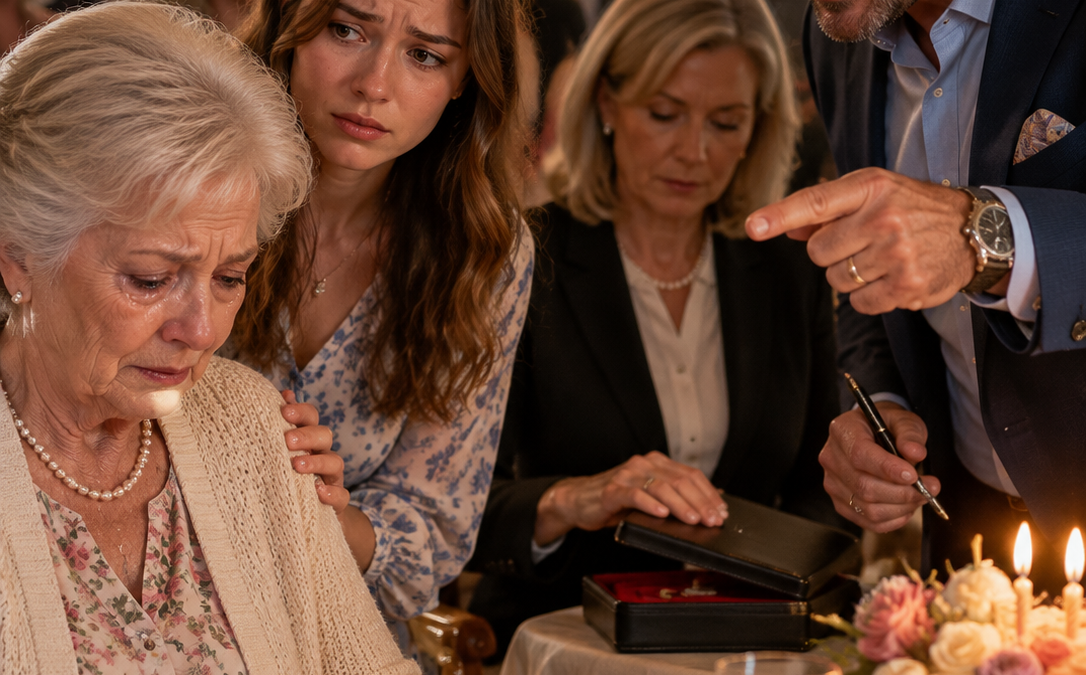
Complete story · 10 chapters · about 42 minutes · ending included
Chapter 1 · Chapter 2 · Chapter 3 · Chapter 4 · Chapter 5 · Chapter 6 · Chapter 7 · Chapter 8 · Chapter 9 · Chapter 10
Chapter 1: The Torn Check
“You dated it last year, Mom.”
Byron pulled the check from under my pen before I finished signing.
I reached across my plate, but he held it above the breadbasket.
“Give that back,” I said.
He tore it down the middle.
The sound stopped Alison with her water glass against her mouth.
“Sally forgets what day it is. From now on, I handle her paperwork.”
His voice carried beyond the back-room door to the server in the hall.
Eleven relatives sat at that table.
Nobody told him to put the pieces down.
My face burned.
I still held my pen.
He had destroyed something I was using, then offered himself as the solution.
The corrections had been going on for months.
A word I supposedly misheard.
A story I supposedly told wrong.
Byron would smile at Alison afterward, waiting for that small, tired nod.
I had started dreading the smile.
This was worse.
This was Mother’s Day, and he had made me the family problem.
I set my pen beside my plate.
Byron dropped the torn pieces near the butter dish.
“Saved you an embarrassing call from the bank,” he said.
His words hurt, and I resented the embarrassment that followed.
I hadn’t seen a mistake.
I had seen him take the check.
Still, I wanted to reach for the pieces without anyone watching.
Instead, I opened my purse.
My shorthand notebook had a black cover and a bent lower corner.
I laid it beside my untouched steak.
“Say that again, slower.”
Byron leaned back and looked around for company.
“Sally forgets what day it is,” he repeated, louder. “From now on, I handle her paperwork.”
I wrote his words in shorthand.
Then I added the time from my watch.
My hand shook at the beginning.
By the last word, my strokes were clean.
“What are you doing, Mom?” Alison said.
“Writing down what he said.”
Byron gave a short laugh.
“Guess we’re in court now.”
I felt the old urge to close the notebook.
He wanted the table laughing again.
I wanted someone to ask whether I had actually written the wrong year.
Nobody did.
“I worked in court,” I said.
For thirty-eight years, I had recorded what people said.
An accusation needed more than someone saying it loudly.
Across the table, Riley lowered her fork.
“Grandma asked for her check back,” Riley said.
“It’s torn,” Byron said. “Let’s move on.”
He reached for the basket.
Riley watched him take a roll, then looked at me.
I answered my granddaughter with a slight nod.
I wasn’t ready to talk about how much that plain sentence had helped.
The server came through the door with a fresh water pitcher.
Byron asked for more butter.
A cousin started talking about the drive home.
I collected the pieces of my check while the pitcher passed between us.
One half had slipped under the butter dish.
I lifted the dish, pulled the paper free, and placed it inside my checkbook.
My stomach still hurt.
Being embarrassed in public did not make his version true.
I kept the notebook open.
Byron watched me put the checkbook away.
“Let me see your license a second.”
“What for?”
“For Sunday’s guest list.”
He held out his hand as if I had already agreed.
I looked at Alison.
Alison folded the edge of her napkin.
“Your birthday,” Alison said. “He’s getting things organized.”
I was turning seventy-one.
I had hosted family meals without needing to prove who I was.
“A guest list needs names,” I said.
“So that shouldn’t be hard.”
He aimed his smile at the relatives seated beyond Alison.
I hated that smile.
It made my ordinary question look difficult.
I could feel people waiting for me to hand over the card.
I took my license from its slot.
Byron lifted his phone before I had fully extended my hand.
He photographed the front.
“Turn it over.”
“Why?”
“So I have it.”
I didn’t let go of the card.
“That wasn’t my question.”
Byron lowered his voice a little, but kept the smile.
Alison said, “Mom, we just want to make your birthday nice.”
I turned the license over.
I wished I hadn’t.
I wanted lunch to settle down, and he knew it.
The phone clicked.
I took my license back and pushed it deep into my wallet.
Then Byron spoke across the table.
“House is still just in your name, right? For the insurance.”
My fork rested against my plate.
The question felt too personal for that room.
He had already made me feel foolish.
Now he expected me to discuss my house over the rolls.
“It is,” I said. “Why?”
“Just checking.”
I waited.
He picked up his glass.
I had paid off my house.
I knew whose name belonged on it.
Yet he had asked as though I might need help remembering that, too.
Alison touched his wrist.
“Tell Mom about the brunch.”
Byron sat forward.
“Birthday brunch. Her patio. Twenty relatives, and a surprise guest who’ll make it official.”
I looked at my daughter.
“On my patio?”
“We thought that would be easiest,” Alison said.
“For whom?”
Byron laughed.
“No driving. Your own bathroom. Your own chair. We’ve thought of everything.”
My throat tightened.
He had described my home as a place to keep me manageable.
The others heard a thoughtful arrangement.
I heard another decision made around me.
“I haven’t agreed to host,” I said.
Alison leaned closer.
“He’s just trying to help, Mom.”
That hurt more coming from Alison.
I wanted my daughter to hear what I was asking.
Instead, Alison was asking me to stop.
“With what?” I said.
“The arrangements.”
Byron raised his glass toward me.
“Leave the details to us.”
I closed my notebook and tucked it beneath my wallet.
I wanted to go home.
As chairs scraped back, Riley came around the table.
“I’ll walk out with you,” Riley said.
In the hallway, I stopped beside a framed landscape.
My hands needed something steady.
I braced one hand against the cold wall.
Apparently, a birthday brunch required my license and details about my house.
Riley waited without telling me to hurry.
Outside, Byron called goodbye as though lunch had gone well.
I got into my car and shut the door.
Before starting the engine, I opened my checkbook.
I laid the torn halves across my lap and smoothed them together.
The date joined cleanly beneath my fingers.
Sunday, May 10, 2026.
You may also like
My Cousin Called Me A Thief At Thanksgiving, So I Checked The Log And Found What He Hid
My Son-in-Law’s Mother Locked Me Out On MEA Weekend, So I Photographed What She Left Behind
My Son-in-Law Banished Me At Christmas Dinner, So I Checked The Papers He Thought I’d Ignore
This year.
In my clear hand.
Picking up where the Facebook post left off
Chapter 2: The Message After Dark
The car felt close and hot around me.
“Grandma, are you okay?”
Riley stood outside my window, her hand resting against the door.
I lowered the glass and held the torn check where my granddaughter could see.
“The date was right,” I said.
Riley looked at the joined pieces.
“Then why did he tear it?”
“I don’t know.”
That answer embarrassed me.
I could record what Byron said.
I couldn’t explain why my daughter had let him say it.
Riley offered to ride home with me.
“I can drive,” I said.
“I know. I meant for company.”
My eyes stung.
I had heard so much help offered as a correction.
Riley had offered something I actually wanted.
“Thank you,” I said. “I’ll call when I get there.”
At home, I laid the check on my kitchen table.
I fitted the edges together and secured the back with clear tape.
The paper was useless for paying anyone now.
I kept it anyway.
Then I put my notebook beside the telephone.
I wanted Byron’s words somewhere I could find them.
The next morning, my front lock clicked while I was rinsing my breakfast plate.
“Mom?”
Byron’s voice came down the hall.
I turned off the water.
He had a spare key for emergencies.
I hadn’t called him.
“I’m in here,” I said.
By the time I dried my hands, he was at my desk.
My assessment letter lay beside the lamp, where I had left it.
Byron picked it up.
“What do you need?” I said.
“I just need the tax letter for your homeowners insurance renewal.”
He folded the page along its crease.
I felt that same small loss of control.
He had entered without asking.
Now something from my desk was already in his hand.
“I handle my insurance,” I said.
“I’m saving you a phone call.”
“I didn’t ask you to.”
He glanced toward the kitchen.
“You’re welcome, Mom.”
My jaw tightened.
He made my objection sound like poor manners.
I wanted to take the paper back.
Instead, I stepped closer to the desk.
“Let me see which letter.”
He held it toward me without releasing it.
The assessed value appeared above the property details.
$318,400.
Below that were my address and the identifying information for my parcel.
I recognized the page.
I had opened the envelope myself.
“That’s the assessment,” I said.
“Right. The tax letter.”
“What does the insurance company need from it?”
“House information.”
“That doesn’t tell me much.”
Byron pressed the fold flat with his thumb.
“Sally, I’ve got to get back to work.”
There was my name.
No audience now.
No warm little “Mom.”
My stomach tightened at how quickly his voice changed.
He slid the letter into the envelope.
“Who are you sending it to?” I said.
“I’ll take care of it.”
I thought about the lunch check.
He had stopped me from paying, but I had never asked him to pay.
Now he was taking time away from work to collect paperwork I hadn’t requested.
I wondered whether money was behind the sudden attention.
“If there’s an expense you’re worried about, tell me,” I said. “I can offer you some money.”
He looked straight at me.
“We don’t need a dime from you. Alison and I are doing great.”
I felt foolish for offering.
Then I felt irritated.
I had asked a plain question, and he had answered like I’d insulted him.
“Then leave my bills with me,” I said.
“This isn’t a bill.”
He lifted the envelope.
“It’s one piece of paper.”
It was mine.
That seemed to be the part he kept leaving out.
“I want it back,” I said.
“After I get what I need.”
He walked toward the front door.
I followed him, but he was already turning the knob.
When the door closed, I stood beside the key hook.
I wished I had asked for the spare.
I wished I had taken the envelope from his hand.
Anger came more easily after he left.
I went back to my desk and opened the notebook.
My desk clock gave me the time.
I wrote it beside his sentence.
I just need the tax letter for your homeowners insurance renewal.
Under that, I added what he had said about money.
We don’t need a dime from you. Alison and I are doing great.
Writing steadied my hands.
It didn’t make me feel better.
He had my assessment letter.
I had his explanation.
Those were different things.
That evening, I carried my tea into the living room.
The refrigerator clicked on in the kitchen, its low hum reaching my chair.
I had my notebook on the chair arm when my phone sounded.
The message arrived at 9:12 p.m.
I expected something about the brunch.
Instead, I saw an appointment confirmation.
A mobile notary.
I set my cup down before I spilled it.
I hadn’t booked anyone.
I hadn’t agreed to sign anything.
Why would my birthday brunch need a notary?
I checked the message.
Bridges Mobile Notary: booking #0517 confirmed Sun 5/17, 11:30 AM, 2210 Peakland Place. 1 signer. Requester note on file. Requested by B. McGuire.
My pulse beat hard against my collar.
I reached for the notebook.
At 9:14, I copied every word of it into my shorthand notebook.
My pencil moved in tight, careful strokes.
The requester’s name was Byron’s.
You may also like
My Daughter Mocked My Seventieth Birthday, So I Checked A File That Changed Her Party
My Son Called Me His Dependent At Thanksgiving, So I Stopped Paying And Found His Family’s Secret
My Stepmother Demanded My Guest Cottage, So I Locked The Gate And Let Her Story Unravel
My son-in-law.
The man who had taken my assessment letter.
Chapter 3: The Deleted Message
The living room felt less private with my address on that screen.
“What did you book, Byron?” I said aloud.
My notebook lay open beside the phone, his name at the bottom of the page.
I put the pen through the spiral binding.
I wanted an answer from him.
On Tuesday, I carried my phone into Alison’s kitchen in Forest.
Alison was at the counter, working cream cheese across the cut surface of a bagel.
“Mom? Is everything okay?”
“I got a message about the brunch.”
I opened the text and placed the phone beside the cutting board.
Alison wiped a hand on a towel.
“From whom?”
“A notary.”
Before Alison could pick it up, Byron came around the counter.
He took my phone.
I held out my hand.
“Let Alison see it.”
He kept looking at the screen.
“That’s a scam, Sally. Delete it before they drain your account.”
My stomach tightened.
He hadn’t asked what I had received.
He hadn’t asked whether I had answered it.
He had gone straight to telling me what to do.
“Your name is on it,” I said.
“Anybody can put a name in a text.”
“Then give it back.”
His thumb moved.
A small box appeared on the screen.
He touched it, and the message disappeared.
“There. Gone.”
I stared at his hand.
I was angry enough to feel it in my teeth.
He had erased something I had brought there for Alison to see.
My daughter had watched him do it.
“I told you to give it back,” I said.
Byron set the phone on the counter.
“You’re welcome.”
I picked it up.
The screen showed my other messages.
The one I wanted was missing.
Alison pushed the cutting board aside.
“He gets those fake messages at work, Mom.”
“Did you see mine?”
“Not the whole thing.”
“Then you don’t know what it was.”
Alison looked toward Byron.
He opened a cabinet and took down a mug.
I wanted Alison to ask him why he had deleted it.
Instead, my daughter smoothed the towel against the counter.
That small movement hurt.
It gave Alison something to do while I stood there waiting.
“I copied it,” I said.
Byron stopped with the mug under the cabinet.
“What?”
“Into my notebook.”
He set the cup down.
“Well, don’t reply to it.”
I put my phone in my purse.
“I hadn’t.”
I left before Alison finished the bagel.
In my car, I checked the notebook.
The message was still there in my handwriting.
He had taken the text off my phone.
He hadn’t taken it out of my possession.
At home, I sat at my desk and found my insurance folder.
My agent’s number was on the inside cover.
I dialed it with the notebook open beside me.
“I need to check something about my homeowners policy,” I said.
Before discussing the policy, the agent asked me to verify my details.
I answered without trouble.
Then I asked whether anything was needed for renewal.
“No,” the agent said. “Your policy renews automatically in November.”
“Does anyone need my property assessment?”
“Not for that renewal.”
I braced my hand against the edge of the desk.
“My son-in-law said he was helping with it. Did someone call about my policy?”
“Nobody called.”
I looked at the empty space beside the lamp.
That was where my assessment letter had been.
Byron had carried it out of my house for a task nobody needed done.
I felt angry.
Under that was fear.
I didn’t know what he wanted the paper for.
I wrote the agent’s answer beneath Byron’s explanation.
Policy renews automatically in November. Nobody called.
“Thank you,” I said.
After I hung up, I pulled the drawer farther open.
My house papers were in a separate folder.
I took that out and found the property information I needed.
Then I called the Circuit Court land records office.
I kept my question simple.
“Can you tell me whether anything new has been recorded on my parcel?”
The clerk asked for the address and checked the records.
I waited with the receiver pressed against my ear.
“Nothing new,” the clerk said.
“Who is listed as the owner?”
The clerk gave my name.
Mine alone.
My shoulders eased, but I kept hold of the pen.
“So there’s no new recording?”
“Nothing new on that parcel.”
I wrote the answer down.
Nothing new recorded. Sally Beck, sole owner.
The house was still mine.
That should have settled me more than it did.
Instead, I kept seeing Byron’s thumb touching my screen.
After the call, I carried the notebook into the kitchen.
I wanted the name at the top of the copied message to lead somewhere.
The text named Bridges Mobile Notary, booking #0517, and Byron’s name.
It did not say what document I was supposed to sign.
It did not tell me what the requester note said.
I searched for Bridges Mobile Notary online and found a phone number.
I called.
A recorded voice answered.
“Booked through Sunday, calls returned Thursday.”
I waited for the tone.
“This is Sally Beck,” I said. “I’m calling about booking #0517. Please call me back.”
I left my number and hung up.
My tea had gone cold beside the notebook.
Nothing new was recorded on my house.
My insurance needed no attention.
Yet someone was expected at my birthday brunch.
If nothing had changed in the records, what did Byron want me to sign?
I looked at the reminder for my doctor’s visit.
Byron had already answered questions I hadn’t asked him.
I didn’t want him answering the doctor’s questions for me.
I called Riley.
“Will you drive me to my appointment?” I said.
“Yes. What do I need to bring?”
“Just yourself.”
You may also like
On Thanksgiving, my daughter told 31 relatives I was too confused to handle money and had filed for guardianship. In June she’d had me co-sign her $38,000 car loan.
My Ex Stole My Ring For His Wedding, So I Went Home And Found What He Forgot
My Daughter-in-Law Excluded Me From Christmas Eve, So I Made A Delivery She Never Expected
I picked up my pen and added a line beneath the reminder.
Wednesday. Doctor’s visit. Riley driving.
Chapter 4: The Keys Off the Hook
The wet ink shone beneath my kitchen light.
“I’ll be ready,” I said.
Riley was still on the phone while I set down my pen.
“I’ll come to the door,” Riley said.
I thanked my granddaughter and ended the call.
The appointment reminder stayed beside my notebook.
By Wednesday morning, I had put my insurance card and medication list in my purse.
Alison arrived before Riley.
I let my daughter in, expecting a question about the appointment.
Instead, Alison reached past me and took my car keys off the hook.
“What are you doing?” I said.
“Byron says you got lost on Wards Road Friday.”
I stared at the keys dangling from Alison’s hand.
I had been at book club.
I hadn’t been lost.
My own daughter had entered my house ready to believe I was.
“Say that again, slower.”
“Mom, please.”
“Tell me what he said happened.”
Alison closed a hand around the keys.
“He said you were confused about where you were.”
“Did he say he saw me?”
“I don’t know.”
“Did he say I called him?”
“No.”
“I was at book club.”
Alison looked toward my purse on the kitchen chair.
“Maybe you don’t remember afterward.”
That hurt badly.
My answer hadn’t counted.
A story Alison couldn’t explain had counted more.
I had spent years listening carefully to my daughter.
Now Alison was listening for a reason to dismiss me.
“Ask the people I was with,” I said.
“I’m only keeping these until we know.”
“Know what?”
“That you’re safe.”
I reached out.
Alison slipped the keys into a bag.
My hand stayed open between us.
I felt humiliated in my own doorway.
Alison couldn’t even look at the hand I had extended.
A knock came before I could speak.
Riley stepped inside and noticed me standing beside the empty hook.
“What’s going on?”
“Your mother took my keys,” I said.
“Grandma already arranged a ride with me,” Riley said.
“Then there’s no problem,” Alison said.
There was a problem.
Alison had made a decision about me without asking me anything.
Having another ride didn’t make that hurt less.
Riley picked up my purse.
“Are you ready, Grandma?”
“Yes.”
I took my notebook.
Alison left ahead of us, my keys still in the bag.
In Riley’s car, I reached for the seat belt with clumsy fingers.
My granddaughter waited until I had fastened it.
“There’s something you should see,” Riley said.
The car was still parked when Riley handed me a phone.
A family conversation filled the screen.
I recognized the names above the messages.
Then I saw Byron’s.
Go easy on Sally Sunday. She’s slipping. Just let her sign the card.
I held the phone against my lap.
My stomach felt cold.
He wasn’t only talking about me when I was present.
He was giving the family instructions before I arrived.
“Did your mother answer?” I said.
“Not that message.”
“What card?”
“I don’t know.”
Riley didn’t soften the answer.
I appreciated that more than reassurance.
“Send me a copy,” I said.
“I will.”
I handed the phone back.
He had called it kindness.
Now I could see how much preparation his kindness required.
At the clinic, Riley sat beside me while I checked in.
When the nurse called my name, my granddaughter stood.
“Do you want me to come?”
“Yes.”
Inside the exam room, I put my medication list on the counter.
“I want to talk about my memory,” I said.
The words embarrassed me.
I hated that Byron had followed me into that room without coming along.
But I wanted a clear answer.
The clinician asked what had concerned me.
“My family says I’m forgetting things,” I said. “I don’t agree with what they’re saying.”
I described the torn check.
I described the story about Wards Road.
Riley stayed quiet until I finished.
“Grandma asked for this checked,” Riley said.
The screening questions came one at a time.
I listened and answered.
Nobody finished a sentence for me.
Nobody smiled toward someone else when I paused.
When the clinician reviewed the result, I gripped the edge of my purse.
“Your memory screening is normal,” the clinician said.
My eyes filled.
I wasn’t surprised by my answers.
I was relieved someone had allowed me to give them.
“Could I have that printed?” I said.
“Yes.”
Riley collected the page before we left.
I read the result, then put it inside my notebook.
Outside, I called Alison from the passenger seat.
“The screening was normal,” I said.
“That’s good, Mom.”
I waited for something about my keys.
Alison said nothing.
“There’s something else,” Alison said. “I saw an email in our shared inbox.”
“What email?”
Alison read the subject.
Your home equity pre-qualification – 2210 Peakland Place.
I pressed the notebook against my knees.
That was my house.
My paid-off house.
“Why would you get that?”
“Byron said it was spam.”
“Did you open it?”
“I saw the subject. I asked him.”
I looked at Riley.
My granddaughter had turned toward me.
“Please keep that email,” I said.
“Mom, he said—”
“I heard you. Keep it.”
After the call, I told Riley the subject.
Neither of us spoke while my granddaughter started the car.
The printed result rested inside my notebook.
It answered one question.
It didn’t explain the appointment, the card, or the email.
What would Byron do if I refused to sign?
His truck was in my driveway when we returned.
Byron stood beside it, looking at his phone.
Riley parked and came around to my door.
“I’ll be right here,” my granddaughter said.
I stepped out holding the notebook.
Byron put his phone away.
“Alison said you called.”
“My screening was normal.”
“This doesn’t need to become a whole thing, Sally.”
My hands tightened around the cover.
Even a normal result had become something I was doing wrong.
I wanted him out of my driveway.
“I’m not signing something I haven’t read,” I said.
Byron glanced at Riley, then back at me.
“Sign what we bring Sunday, or we let a judge decide what you sign.”
You may also like
My Daughter-in-Law Soaked My Dress With Wine At Her Fundraiser, So I Read What She Wanted Hidden
My Son-in-Law Trashed My Retirement Lunch, So I Went For Ice And Found His Secret
At my 68th birthday in the church hall, my son-in-law informed 40 guests I had skipped paying the caterer. My grandson’s phone video showed him canceling my $1,200 order.
A judge.
For refusing to sign.
Chapter 5: The Note On File
My driveway felt smaller with Byron standing between me and the front door.
“Are we finished?” I said.
“That’s up to you.”
I felt afraid, and I hated that he could see me holding the notebook tighter.
He had threatened me.
Now he was leaving the blame with me, too.
Riley stayed beside my car while Byron climbed into his truck.
I waited until he backed out before walking to the house.
Inside, I wrote down his threat.
Riley sat across from me without asking whether I was sure.
On Thursday, my phone rang while I was wiping crumbs from the kitchen table.
“This is Nichole Bridges,” the caller said. “I’m returning your voicemail. May I speak with Sally Beck?”
“Speaking.”
“I’m the mobile notary booked for your home appointment.”
I pulled out a chair.
The name from the text had a voice now.
Polite.
Businesslike.
Nothing like the scam Byron had described.
“I confirm the document with every signer before a home visit,” Nichole said. “Your booking is for a quitclaim deed, two pages, one signer.”
I sat down.
My hand stopped halfway to the notebook.
“A deed?”
“Yes, ma’am.”
“For my house?”
“The property address listed is yours.”
I could hear a faint tapping from Nichole’s end.
I looked at the place where my assessment letter had been.
The letter.
My license.
The appointment at my house.
I felt sick before I understood exactly what the pages would do.
“Who booked you?” I said.
“Byron McGuire.”
“What is the requester note on #0517?”
Nichole paused, then spoke plainly.
“Mom forgets, just let her sign fast.”
I closed my eyes.
He had written it down himself.
The insults weren’t careless jokes.
He had sent one ahead to the person he expected to witness my signature.
My face burned even though nobody was watching.
“That’s his note?” I said.
“Yes.”
“I haven’t agreed to sign a deed.”
“I’ll question you myself first,” Nichole said. “Before anything proceeds.”
“He told my family we’re signing a birthday card.”
“I’ll ask you directly what you’re signing.”
I opened the notebook.
“Keep the appointment. Ask me in front of everyone.”
“Mrs. Beck, you’re under no obligation to sign.”
“I understand.”
“I’ll need to see your identification when I arrive.”
“I’ll have it.”
I wrote Nichole’s name and the document description.
Then I copied Byron’s note.
Mom forgets, just let her sign fast.
The words looked uglier in ink.
They also looked harder to explain away.
I asked Nichole to keep the booking information.
Nichole said it would remain with the appointment record.
After we ended the call, I phoned Riley.
“I know what the card is supposed to hide,” I said.
My granddaughter came over with a laptop.
I told Riley what Nichole had read from the booking form.
Riley opened the computer at my kitchen table and searched the document’s name.
I watched my granddaughter’s face while the page loaded.
“What does it do?” I said.
“A quitclaim deed transfers your ownership interest to whoever is named on it,” Riley said.
My fingers curled beneath the chair seat.
“So I sign it, and I hand my house away.”
“That’s what he’s asking you to sign.”
My house had been paid off for years.
I knew which drawer stuck in the kitchen.
I knew where the afternoon light reached the patio table.
Byron had reduced that home to pages he wanted signed quickly.
I felt frightened.
Then angry enough that I had to get up.
I carried my cup to the sink and left it there.
“Cancel it,” Riley said.
“I could.”
“You don’t owe him a party.”
“I know.”
I turned back toward the table.
“If I cancel this notary, what stops him from booking another?”
Riley didn’t answer.
“He still has the paper,” I said. “And the family still thinks I’m slipping.”
“You can tell them.”
“I will. But I want them to hear him, too.”
I thought about the torn check.
He had spoken loudly, and the table had accepted his account.
If I shouted now, he would have the scene he wanted.
An upset old woman.
A patient son-in-law.
I could already picture Alison asking me to calm down.
“I’ll answer what Nichole asks,” I said.
“That’s the plan?”
“That’s where I start.”
Riley turned the laptop toward me.
I looked at the explanation without reading it aloud.
There was still something I needed to know.
Was Alison’s name on that deed?
My daughter had mentioned an email addressed to their shared inbox.
That didn’t tell me whether Alison knew about these pages.
I wanted to ask Alison immediately.
I was afraid of the answer.
Before I decided, Byron’s truck pulled up outside.
Riley closed the laptop.
I met him at the door.
He held an enormous birthday card in a white envelope.
“Put this somewhere people can sign it,” he said.
I took it.
“Where are the other papers?”
“What other papers?”
He looked past me toward Riley.
Then he smiled.
“Let’s have a nice birthday, Mom.”
My stomach tightened.
He knew how to sound kind with someone behind me.
I stood in the doorway until he stepped back.
After he left, I carried the card to the table.
Riley watched me slide it out.
I opened it fully and checked the crease.
Printed birthday wishes.
Empty space for relatives’ names.
No deed.
This was the card they would remember seeing.
My phone sounded beside the notebook.
Byron had written to the family chat.
11:30 sharp, card signing before cake.
I set the giant card aside and pushed my notebook toward Riley.
“Sit next to the cake. Hold my notebook.”
You may also like
My husband left his son the $1.2M lake house and me his old feed store. At the funeral lunch, my stepson laughed, not knowing the lake road crosses my lot.
My late husband’s brother charged his wife’s 17 relatives $2,400 to spend Thanksgiving at the hunting cabin I inherited. I found the rental listing with my porch on it.
On Christmas Eve, my dad thanked my brother for paying his $31,400 knee surgery and gave him Grandpa’s watch in front of 22 relatives. His card was in my purse.
The card was for the relatives.
The notebook was for his words.
Chapter 6: The Case Beside the Cake
The giant card crowded the kitchen table.
“I’ll hold it,” Riley said.
My granddaughter picked up the notebook and tucked the pen through its binding.
I left the card where Byron had told me to put it.
By Sunday, relatives had filled its empty spaces with birthday wishes.
At 11:30, twenty relatives were gathered on my patio.
The cake sat near my elbow, with upright candles shaped into my age.
71.
Riley had taken the chair beside it.
My notebook rested on my granddaughter’s lap, beneath the table.
I had my license in my pocket.
I wanted to enjoy the cake.
I wanted the people around me to mean the things they had written.
Instead, I watched Byron pick up the giant card from the side table.
He carried it over and slid it toward me with a pen.
“It’s a birthday card, Mom. Everybody’s waiting on your signature.”
A cousin stopped arranging paper plates.
Alison stood near the patio door, holding a serving spoon.
I felt the attention settle on my hand.
He had made my signature a condition of getting on with the party.
If I hesitated, I would be keeping people from their cake.
“There’s plenty of room,” Byron said, tapping the open card.
I left the pen where it was.
A folded edge of paper showed beneath one panel.
It hadn’t been there when Riley and I checked the card.
I looked at my granddaughter.
Riley’s fingers closed around the notebook.
Byron turned toward the woman standing beside the table.
“And this is Nichole,” he said. “A friend who stamps keepsakes.”
Nichole wore a plain jacket and carried a work bag.
I recognized the voice when Nichole said hello.
Byron had made the appointment sound like a party favor.
He had invited a professional, then introduced a decoration.
My stomach tightened.
I was afraid someone would laugh and tell me to stop making things difficult.
Nichole set a small stamp case beside the cake.
“Mrs. Beck, may I see your identification?”
I took out my license.
Byron reached toward it.
I placed it directly in Nichole’s hand.
Nichole checked the photograph, then looked at me.
The patio chairs had gone still.
I could hear someone setting a glass on the far table.
“Mrs. Beck, tell me in your own words what you’re signing today.”
“My son-in-law says a birthday card.”
Byron gave a quick laugh.
“It’s her birthday. We thought we’d make it special.”
Nichole kept looking at me.
“Is that what you were told?”
“Yes.”
My heart was racing.
I had practiced answering plainly.
Now that the question had come, I wanted to explain everything at once.
The check.
My keys.
The threat beside my car.
I kept my answer where Nichole had asked for it.
“May I see the pages?” Nichole said.
Byron put a hand on the giant card.
“It’s just family paperwork.”
“I need to examine the document.”
His hand stayed there a moment longer.
Then he lifted it.
Nichole drew out the folded pages and opened them on the table.
The paper covered part of a relative’s birthday message.
Alison lowered the serving spoon.
“What paperwork?” Alison said.
Nichole looked at the heading.
“Quitclaim Deed. Grantor: Sally J. Beck. Grantees: Byron T. McGuire and Alison B. McGuire.”
My daughter’s name.
I had wondered.
Hearing it aloud still hurt.
I looked at Alison, searching for recognition before I could stop myself.
Alison stared at the pages.
“My name?” Alison said.
Byron moved closer to the table.
“It’s a formality. She agreed to this months ago. She just forgets.”
My face went hot.
He had said it before anyone asked me whether it was true.
That was how he did it.
He supplied the answer, then made my objection part of the problem.
“I did not agree,” I said.
Byron smiled at a relative standing behind Nichole.
“See what I mean?”
I felt suddenly small in my own chair.
I hated him for making that smile familiar.
Worse, I feared the family might still accept it.
Would they believe his “she forgets” now that the pages were open?
Riley shifted forward.
I touched my granddaughter’s wrist beneath the table.
My notebook stayed on Riley’s lap.
Nichole took a tablet from the work bag.
“I’m going to read the note attached to this booking,” Nichole said.
Byron’s smile thinned.
“We don’t need to do that.”
“You entered it with your request.”
Nichole looked at the screen.
“Mom forgets, just let her sign fast.”
Nobody reached for a plate.
Alison set the serving spoon down beside the bowl.
I watched my daughter pull an empty chair out, then leave it standing.
Byron shook his head.
“That was for scheduling.”
I wanted to ask him which part meant scheduling.
Instead, I watched Nichole.
The notary placed the tablet beside the open pages.
“I don’t notarize a deed for a signer who was told it’s a card.”
Nichole closed the stamp case.
The small click carried across the table.
My shoulders loosened, but my hands still shook.
I hadn’t signed.
The empty space beneath my printed name remained empty.
Byron picked up the pen.
“Mom, tell her we discussed this.”
“We did not.”
“Don’t do this in front of everybody.”
I felt anger rise through the fear.
He had chosen the audience.
He had counted on my embarrassment to finish the work.
“I’m answering the question,” I said.
Nichole moved the closed case closer to the work bag.
No stamp touched the pages.
Byron looked from me to Nichole.
You may also like
At Mom’s 75th birthday dinner, my brother told 22 relatives I let scammers take her $40,000. Then Mom called the number that texted her, and his jacket started ringing.
At my 71st birthday lunch, my son-in-law told 18 relatives I’d signed a power of attorney online to sell my $640,000 lake house. That Tuesday I was in surgery.
At my granddaughter’s wedding, my daughter-in-law told 120 guests the $8,000 dress came from a Philadelphia boutique. I’d sewn every stitch of it myself.
His face had lost the birthday smile.
“Fine. I’ll find a notary who does her job.”
Chapter 7: The Email On The Patio
The closed stamp case sat between Byron and the cake.
“Before you find someone else, listen,” I said.
Riley placed my notebook in my hand.
I opened it to the entry about the assessment letter.
May 11, 10:02 a.m.: “I just need the tax letter for your homeowners insurance renewal.”
Byron looked toward the patio door.
“I told you what that was for.”
“And I asked my insurance agent.”
I wanted to hurry.
I was afraid someone would interrupt and turn this into another argument about my memory.
I pressed a finger beneath the next line.
“The policy renews automatically in November,” I said. “Nobody called about it.”
A relative at the far end of the table leaned forward.
Byron still held the pen.
“House insurance needs house information,” he said.
“The agent didn’t need my assessment.”
I asked Riley for the property folder on my desk.
My granddaughter went inside and returned with it.
I found the parcel information I had used when calling the records office.
Nichole moved the deed closer so I could compare the entries.
I put my finger beside the tax map number.
“The same number,” I said.
It matched the property record.
It was the number on the assessment letter Byron had taken.
He hadn’t needed that letter for my insurance.
He had needed information for these pages.
My hands were steadier now.
The paper gave me somewhere to look besides his face.
I turned back to the notebook.
“At 9:14 p.m., I copied the appointment text.”
I read the address and the appointment details.
Then I read the last part.
Requested by B. McGuire.
“You told me that message was a scam,” I said.
“I said it looked suspicious.”
I found the sentence I had written after leaving Alison’s kitchen.
“That’s a scam, Sally. Delete it before they drain your account.”
“You took my phone,” I said. “You deleted it.”
Alison looked down at the giant card.
My daughter had been standing beside that counter.
I felt the hurt again.
I had asked Alison to look, and Byron had made sure there was nothing left to see.
Nichole brought the booking record up on the tablet.
“Mr. McGuire made the appointment,” Nichole said. “The booking payment was one hundred seventy-five dollars.”
“Who paid it?” I said.
“Byron McGuire. Visa ending 4471.”
Byron set the pen down.
“Are we really doing this over a fee?”
“It was your appointment,” I said.
Nobody laughed.
He looked around the patio, searching the faces that had smiled at his jokes.
“I was protecting her. Ask anyone here how she’s been lately.”
My stomach clenched.
Even with the deed open, he was asking them to judge me.
He wanted concern to do the work evidence couldn’t.
For a second, I feared someone would offer a harmless mistake as proof.
A forgotten name.
A misplaced cup.
Riley reached beneath the notebook cover and removed the printed screening result.
My granddaughter laid it beside the card.
“Grandma had her wellness visit,” Riley said. “Her memory screening was normal.”
Byron glanced at the page.
“A little test doesn’t tell you everything.”
“It tells us what the screening found,” Riley said.
I wanted to thank my granddaughter.
I couldn’t speak yet.
Riley hadn’t argued that I was perfect.
My granddaughter had put the answer on the table.
Alison took out a phone.
I watched my daughter search, pause, then touch the screen.
“Byron,” Alison said.
“We’ll talk at home.”
“No. You said this was spam.”
Alison held the phone closer and read the subject aloud.
Your home equity pre-qualification – 2210 Peakland Place.
I felt my chair beneath me.
I kept my feet flat on the patio.
This was why he needed the house.
Alison opened the message.
My daughter read the application details aloud.
Byron’s application.
$150,000.
Pending title in applicants’ names.
Alison stopped.
“Applicants?”
My daughter scrolled farther.
Then Alison looked at the deed.
“My name is on the application?”
Byron reached toward the phone.
Alison stepped away before he touched it.
“It’s a pre-qualification,” he said. “It doesn’t mean anything went through.”
My daughter looked at the deed.
Then Alison came around the table and stood beside my chair.
“You put my name on Mom’s house so you could borrow against it.”
Hearing Alison say it hurt.
It also let me stop wondering whether my daughter understood.
I had wanted that understanding before the pages came out.
I was grateful to have it now.
Byron faced me.
“You should’ve kept this between us.”
I opened the notebook to the entry from Mother’s Day.
“You said this in front of the family,” I said.
I read the date and time.
May 10, 1:14 p.m.
Then I read his words.
“Sally forgets what day it is. From now on, I handle her paperwork.”
I lifted my eyes from the page.
“Thirty-eight years in court taught me one thing: read first.”
Byron looked toward Alison.
My daughter stayed beside me.
Where did he go from here, with the deed exposed and his wife reading the email?
“Let’s go,” he said to Alison.
“You need to leave,” Alison said.
“Don’t start.”
“Leave, Byron.”
I felt my daughter’s hand touch the back of my chair.
Alison didn’t push me forward or tell me to calm down.
My daughter simply stayed.
Byron picked up his phone.
He left the pen on the table.
I never touched it.
We heard the patio gate close, then his truck start beyond the house.
Nichole opened the journal and wrote an entry.
The deed remained unsigned on my table.
My name was still mine to write.
Nichole turned the journal so I could see the entry.
Beside the document description was one word.
You may also like
At my 70th birthday, my son told 40 guests I’d outlived my usefulness. That morning a realtor had emailed me photos of my own house, listed for $289,000.
On Thanksgiving, my daughter threw wine in my face in front of 14 guests. The $38,000 piano she brags about is still in my name.
At my grandson’s 18th birthday dinner, my son told 22 relatives the $41,000 college fund I built would go to his stepson instead. He forgot whose name is on it.
Declined.
The unsigned pages stayed exactly where they were.
Chapter 8: The Key On The Desk
The unsigned pages lay flat across the lawyer’s desk.
“Start with what you were told,” he said.
“A birthday card.”
Riley sat beside me while I opened my property folder.
My granddaughter had driven me because Alison still had my car keys.
I hadn’t forgotten them.
I simply had something more urgent to settle.
The lawyer examined the deed without touching the empty signature line.
“And did you sign either page?”
“No.”
I watched his hands.
I wanted someone outside my family to look at those pages without telling me what I remembered.
He turned his computer screen slightly toward me.
The land record showed the owner.
Sally J. Beck.
Mine alone.
“The current record is still in your name,” the lawyer said.
My shoulders eased.
I had heard Nichole refuse the notarization on my patio.
I needed to see what had happened to my house after everyone went home.
Nothing had happened to it.
My name was still there.
That simple fact nearly made me cry.
It was my house before Byron’s party.
Keeping it shouldn’t have required this much relief.
I handed the lawyer my notebook and the printed memory screening.
He asked about the assessment letter.
Then the spare key.
Then the threat in my driveway.
I found the entry and turned the notebook toward him.
“Sign what we bring Sunday, or we let a judge decide what you sign.”
The lawyer read the sentence without interrupting.
“I want him told to stay away,” I said.
“I’ll put that in writing.”
He began preparing the warning.
Riley stayed quiet beside me.
I could hear keys clicking from the lawyer’s keyboard.
No one hurried me.
No one called me confused because I needed a minute.
The office door opened before he finished.
Byron walked in.
His jaw tightened when he saw me.
“Good,” he said. “Everybody’s here.”
I felt fear hit my stomach before anger followed.
He hadn’t been invited into my confidence.
Still, he walked in as if the meeting belonged to him.
“What are you doing here?” I said.
Byron looked at the lawyer.
“I want my papers.”
The lawyer turned the unsigned pages toward him.
“These?”
“Yes.”
Byron reached for them.
The lawyer kept one hand beside the pages.
“Mrs. Beck never signed them.”
Byron looked at me.
“We know that.”
The lawyer turned the computer screen farther.
“And the land record remains Sally J. Beck alone.”
Byron’s mouth tightened.
He had spent days talking as though my house was something already halfway transferred.
The screen said otherwise.
My name.
My house.
No speech required.
“They’re still my papers,” Byron said.
“They concern Mrs. Beck’s property,” the lawyer said.
I watched Byron stare at the deed.
The signature line remained empty.
I had never touched the pen.
That mattered more than anything he could call the pages now.
The lawyer printed the warning and signed it.
Then he handed it across the desk.
“This is written notice that you are not to enter Mrs. Beck’s property or present documents for her signature.”
Byron scanned the page.
“This is ridiculous.”
My hands tightened in my lap.
He had entered my house without permission.
He had taken my assessment letter.
He had brought a deed to my birthday and called it a card.
Now the boundary was ridiculous.
That hurt.
It also clarified something.
His convenience had depended on me having none.
The lawyer pointed to the rest of the letter.
“Any matter concerning her property goes through this office.”
Byron looked at me.
“You really need a lawyer to talk to family?”
“I need you out of my house,” I said.
He gave a short, hard laugh.
Then he reached into his pocket.
A brass key landed on the desk between us.
My spare.
The sound was small.
My chest hurt anyway.
For years, that key had meant someone could come if I needed help.
Byron had used it to walk straight to my desk.
Now he pushed it toward me with two fingers.
“There.”
No apology.
No explanation.
Just the key.
I picked it up and closed my hand around it.
My phone rang inside my purse.
Alison.
I answered while Byron was still standing there.
“Mom,” my daughter said. “The lender closed his application.”
I looked at Byron.
His face changed.
Only slightly.
Enough.
“What did they tell you?” I said.
“That it couldn’t proceed.”
The unsigned deed sat between us.
The land record remained on the screen.
The loan had depended on my house becoming theirs.
That hadn’t happened.
“There’s more,” Alison said.
I took out my notebook.
“He owes sixty-one thousand eight hundred dollars.”
I wrote the amount.
$61,800.
Byron looked toward the window.
For a moment, I couldn’t fit that number beside the man who had stood in my kitchen.
He had told me they were doing great.
He had said they didn’t need a dime.
I felt used all over again.
“Is that still due?” I said.
“Yes.”
“What is he doing about it?”
“He listed his truck.”
I looked at Byron.
I could picture him threatening me beside that same vehicle.
Now he was trying to sell it.
“Did you know about the debt?” I said.
“I didn’t know the amount.”
Alison went quiet.
I waited.
“I should have opened that email,” my daughter said.
“Yes.”
The word hurt coming out.
I didn’t add anything to make it easier.
My daughter had needed to look.
I had needed to be heard.
When the call ended, Byron reached for the warning.
He folded it once.
Then he took the unsigned pages.
The lawyer stopped him with one sentence.
“Leave those on the desk.”
Byron stared at him.
Then he let go.
The pages stayed flat.
His paperwork.
My unsigned name.
My house still mine.
Byron left without another word.
The door shut behind him.
My phone sounded again before Riley and I stood.
An email from Nichole.
Her appointment record included the journal time.
11:41 a.m.
You may also like
At his brother’s food truck opening, my husband thanked our $60,000 home loan in front of 40 people. I never signed it because I was in surgery that day.
Eleven days after I gave birth, my husband’s sister moved into my nursery and told 9 relatives she’d raise the baby. My doorbell camera heard what she said at my door.
At their housewarming, my son-in-law told 35 guests they bought the house with zero help and I came for the free food. I hold their mortgage.
I looked at the spare key in my palm, then at the land record still showing one owner.
Sally J. Beck.
Chapter 9: The Question She Finally Asked
Nichole’s email was still open when my phone rang.
“I’m bringing your keys back,” Alison said when I answered.
I looked toward the hook beside my front door.
“Okay.”
My daughter arrived carrying a bag and holding the key ring.
Alison stopped just inside the doorway.
“I sent Byron to his brother’s house.”
I kept my hand on the door.
“Did he go?”
“Yes.”
Alison lifted the keys, then hung them where they belonged.
The metal tapped against the wall.
I had heard that sound for years without thinking about it.
This time, my eyes filled.
“I shouldn’t have taken them,” Alison said.
“No.”
“I’m sorry, Mom.”
I wanted to hold my daughter.
I needed Alison to understand what had happened in that doorway.
Wanting closeness hadn’t stopped the hurt.
“You put them in your bag while I held out my hand,” I said.
“I know.”
“You didn’t ask anyone from book club.”
“No.”
“You asked him.”
Alison nodded.
My daughter looked at the hook instead of at me.
I let the silence stay.
I had spent too much of that week filling uncomfortable pauses for other people.
“I believed him,” Alison said.
“I know you did.”
“That doesn’t make it right.”
“No,” I said. “It doesn’t.”
We went into the kitchen.
Alison put the bag on an empty chair.
I filled the kettle, but neither of us asked for tea.
My daughter noticed the property folder on my desk.
“Did the lawyer explain everything?”
“Yes.”
“Will you tell me if Byron contacts you?”
“I’ll tell the lawyer.”
Alison looked back at me.
Then my daughter nodded.
“That’s fair.”
The knot in my stomach began to loosen.
Alison hadn’t asked me to soften the warning.
My daughter hadn’t said Byron was only upset.
That mattered more than another apology would have.
My phone sounded on the table.
Then Alison’s sounded inside the bag.
A relative had answered in the family chat.
I opened the conversation and scrolled to Byron’s message.
Go easy on Sally Sunday. She’s slipping. Just let her sign the card.
Seeing those words still hurt.
He had made me a warning people should pass around.
Alison stood beside the table while I read the reply beneath it.
She knew exactly what she was saying. You told us it was a card.
Another message appeared.
You had her house on those pages. Don’t call that helping.
I sat down.
A cousin added a reply.
I heard the notary. I heard the note you wrote.
The messages came separately.
Someone would type, then stop.
Another relative would answer.
I watched the conversation grow beneath the words that had frightened me.
Nobody asked whether I might have forgotten agreeing.
Nobody offered Byron a joke to hide behind.
Alison pulled out a chair but waited before sitting.
“Go ahead,” I said.
My daughter sat across from me.
A relative who had been at the steakhouse wrote next.
I should have said something when you tore her check.
My throat tightened.
I had wanted that sentence at the lunch table.
Getting it later didn’t erase the room full of people who had watched.
Still, I was glad someone remembered what had happened.
“I didn’t help you,” Alison said.
“No.”
“I thought keeping things calm would help.”
“It kept him comfortable.”
My daughter lowered the phone.
I didn’t want to punish Alison with every answer.
I wanted to stop protecting my daughter from the truth of what I had felt.
Then a short notice appeared beneath the replies.
Byron McGuire left the conversation.
I stared at his name.
He had wanted the family listening when he described me.
He hadn’t stayed to hear their answers.
Alison pushed the phone away.
“I won’t ask you to call him,” my daughter said.
“Good.”
The kettle clicked off behind me.
I made the tea.
We drank it without settling anything else.
Over the next few weeks, Alison called about ordinary things.
Work.
The weather.
Whether I needed anything from the grocery store.
I answered, but I didn’t offer an invitation just to ease the strain.
Sometimes the conversation was brief.
Once, Alison started telling me what Byron thought.
My daughter stopped before finishing.
“You don’t need that,” Alison said.
“No,” I said. “I don’t.”
Later, Alison called with news about the debt.
“He asked his brother to co-sign a loan.”
I put down the dish towel.
“What did his brother say?”
“No.”
“Is Byron still staying there?”
“Yes. But his brother won’t sign for him.”
I thought of the pen beside my birthday card.
He had tried to make my refusal look unreasonable.
Now someone else had refused to put a name beneath his obligation.
“It’s still his debt,” I said.
“I know.”
Alison didn’t ask me for money.
I was grateful.
I was also angry that I had needed to brace myself against the possibility.
Afterward, I went out to the patio.
I wiped dust from the table and straightened a chair.
The place looked ordinary again.
I could still picture Alison standing near the door with the serving spoon.
I could picture my daughter moving to my side, too.
I wanted us to sit there again.
I didn’t know whether I could do it without watching for the next excuse.
That evening, a message arrived from Alison.
There was no announcement about arrangements.
No guest list for my house.
You may also like
My ex-husband’s new wife sat in the mother-of-the-bride seat and told 120 guests she paid for the wedding. Every one of the 14 vendor receipts has my name.
At our Labor Day cookout, my son-in-law called my gift pathetic in front of 12 relatives. The truck he drives to every job is leased in my name.
My son’s wife texted 22 relatives that Thanksgiving was “couples and kids only” this year. The lake lodge she rented for it was booked on my credit card.
On the screen, beneath my daughter’s name:
Could I come Sunday, with a real card this time?
Chapter 10: The Seat I Chose
The phone rang against my ear in the quiet kitchen.
“Come for lunch,” I said when Alison answered.
“Are you sure?”
“Yes.”
My daughter didn’t ask what to bring or who else was coming.
Alison simply thanked me.
I stood beside the table after the call, holding the phone.
I could miss my daughter while I was still angry with her.
Inviting Alison didn’t mean I had forgotten.
It meant I wanted a meal together.
By June 14, I had washed the patio table and put fresh cushions on the chairs.
I set out the plates myself.
My car keys hung beside the front door.
The spare key was still in the drawer.
Byron remained at his brother’s house, with his truck listed for sale and his debt still his.
The lender had closed the application.
The lawyer’s warning stayed in my property folder with the unsigned deed.
None of those papers needed a place at lunch.
Riley came through the gate carrying a covered cake plate.
“Lemon,” my granddaughter said.
“You remembered.”
“You asked for it.”
I smiled.
Such an ordinary answer.
It made me happier than Riley could have known.
My granddaughter set the cake where the birthday cake had stood.
There were no upright numbers this time.
Riley had brought a single candle in a small paper sleeve.
“It’s a little late,” my granddaughter said.
“The cake is fresh. That’s what counts.”
Alison arrived while I was pouring water.
My daughter stopped at the open patio door.
“Can I carry something?”
“The bread,” I said. “It’s on the counter.”
Alison brought it out and waited while I chose my chair.
Then my daughter sat beside me.
We ate slowly.
Riley talked about nursing school.
Alison told us about a patient who had asked whether dental floss expired.
I laughed with a mouthful of bread and reached for my napkin.
Nobody looked relieved that I was behaving.
Nobody corrected the story I told afterward.
I noticed those things.
I wished I didn’t need to.
But as the plates emptied, I stopped waiting for something to go wrong.
Alison helped carry the dishes inside.
When we returned, my daughter took a small envelope from a bag.
“This is for you.”
I set it beside my water glass.
My hands were steady when I opened it.
The card was plain folded paper.
Alison had written inside in blue ink.
I recognized the shape of the letters from school notes and grocery lists left on my counter.
“May I read it aloud?” I said.
“Yes.”
I started at the top.
Mom, I believed him when I should have listened to you.
Alison kept looking at me.
I continued.
I am sorry I took your keys.
My voice trembled, but I got the words out.
I will ask. I will listen. I will wait for your answer.
I love you.
Alison.
I had read every word.
There was nothing underneath.
Nothing tucked into the fold.
I reached for the pen in my notebook.
Under Alison’s line, I signed my name.
Sally.
My daughter watched the pen move.
“I wanted to put that there,” I said.
Alison nodded, with tears slipping down my daughter’s face.
I felt my own eyes fill.
For once, I didn’t turn away to find a napkin or offer someone water.
I let Alison see.
Riley lifted a phone.
“Can I take a picture?”
I turned the open card toward my granddaughter.
Alison rested a hand beside mine.
Riley took the picture with our names visible.
Then my daughter turned my hand over and held it between warm palms.
“I should have taken your hand instead of your keys,” Alison said.
I cried then.
Alison moved closer, and I leaned against my daughter’s shoulder.
We stayed that way until I could speak.
“You can listen now,” I said.
“I will.”
I couldn’t know what our next disagreement would sound like.
I could hear the answer Alison had given me at my own table.
That was enough for lunch.
Riley uncovered the lemon cake.
The smell reached me before the plate did.
I put the card safely beside my water glass.
Alison noticed the black notebook near the cake knife.
“I’m glad you kept the message,” my daughter said.
I tapped the cover.
“Nine fourteen. I wrote it down.”
My granddaughter smiled at me.
I remembered sitting alone with the appointment text, copying words I couldn’t yet explain.
I hadn’t needed to understand his entire plan to preserve what he had sent.
I had only needed to trust that it was worth keeping.
I would read what I was given.
I would ask what I needed to know.
I would make my own decisions.
Alison picked up the candle.
“May I?”
“Yes,” I said.
I closed the shorthand notebook and set it beside the cake.
You may also like
At our 45th anniversary dinner, my son’s wife handed me a senior-living brochure in front of 14 guests. I’ve paid her $1,900 mortgage for six years.
For 4 Christmases my son-in-law said the table was full. This year I counted 22 guests through the window of the house I rent to him.
At my son’s engagement party, his fiancée told 30 guests I was too cheap to invest in their future. Her fund was under an Indiana cease-and-desist order.
Then I let my daughter light the candle.
The small flame glowed above the lemon frosting, with Alison’s hand cupped beside it.
THE END
More stories
At my 68th birthday in the church hall, my son-in-law informed 40 guests I had skipped paying the caterer. My grandson’s phone video showed him canceling my $1,200 order.My husband left his son the $1.2M lake house and me his old feed store. At the funeral lunch, my stepson laughed, not knowing the lake road crosses my lot.At Mom’s 75th birthday dinner, my brother told 22 relatives I let scammers take her $40,000. Then Mom called the number that texted her. His jacket started ringing.At my 71st birthday lunch, my son-in-law told 18 relatives I’d signed a power of attorney online to sell my $640,000 lake house. That Tuesday I was in surgery.At my granddaughter’s wedding, my daughter-in-law told 120 guests the $8,000 dress came from a Philadelphia boutique. I’d sewn every stitch of it myself.At my 70th birthday, my son told 40 guests I’d outlived my usefulness. That morning a realtor had emailed me photos of my own house, listed for $289,000.
You Might Also Enjoy




