Part 3: My Husband Put Driveway Papers Beside Our Diaper Bag And Promised My Signature — Then I Refused
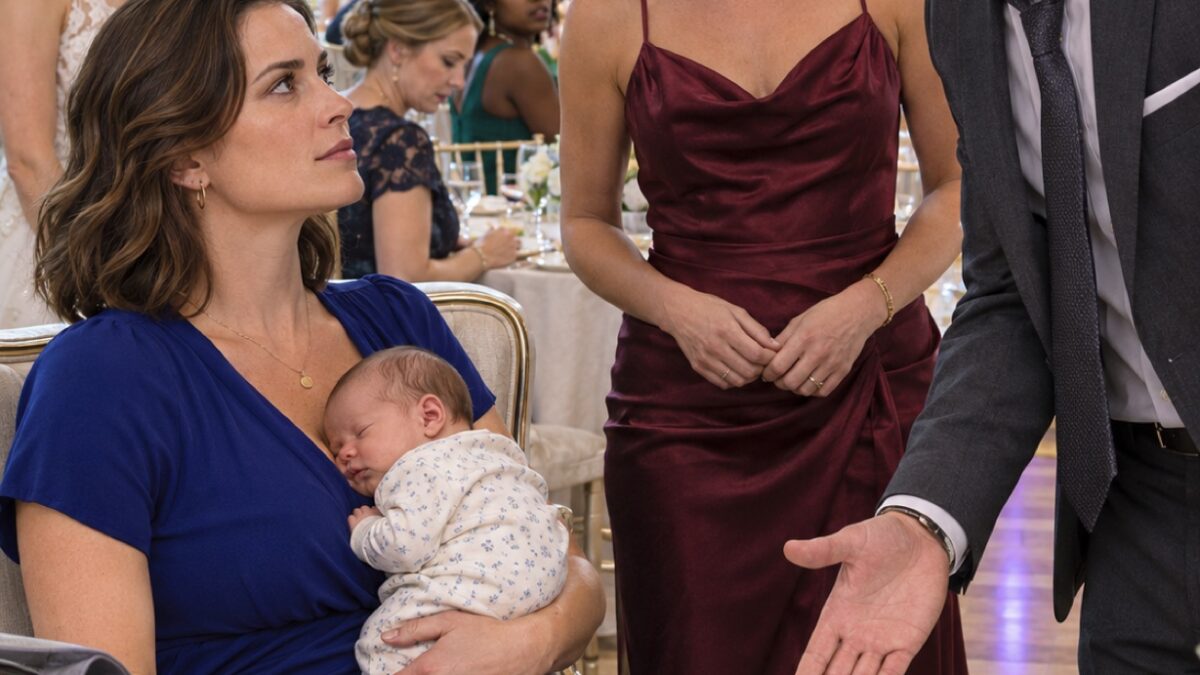
Part 3: The Messages On Her Phone
“Ellis lent me $18,000,” Tessa said. “He’s expecting it back when the sale closes.”
She held her phone where I could read it.
June’s blanket had slipped over my wrist. I pulled it clear, then looked at the messages instead of my husband.
There it was.
Two months before the reception, Ellis had lent Tessa money from savings he had brought into our marriage.
He had never mentioned it.
The correspondence included their written agreement. Tessa moved down the screen slowly enough for me to read the repayment terms myself.
The money was due from the sale proceeds, or after six months if the sale didn’t close.
“So the wedding isn’t your deadline,” I said.
Ellis glanced toward the dining-room doors.
“No. But this is the sale she has.”
I looked again.
Nothing said I owed him a driveway. Nothing said my land secured the loan or that I had agreed to help him get repaid.
My name wasn’t there.
“Send that to me,” I told Tessa.
Ellis reached toward her phone, then stopped before touching it.
“That’s private correspondence.”
“It explains why you brought a permanent agreement to my dinner plate.”
Tessa lowered the phone.
“I can send my own messages,” she said.
She did.
I felt my phone vibrate inside the diaper bag, beneath a folded cloth I had packed before leaving home.
I didn’t reach for it immediately.
I needed Ellis to answer while Tessa was still standing there, with the messages open and no chance for him to explain this differently later.
“Were you going to tell me about the loan before I signed?”
“I was going to explain it when we got home.”
“After I signed.”
He pressed his lips together.
That was enough.
June began rooting against my shoulder. I shifted her carefully and asked Ellis to hand me the bag.
He set it beside me without speaking.
I took out what I needed, keeping my eyes on the ordinary printed agreement still folded in his hand.
“Give me that, too.”
“You’ve already read it.”
“I want the copy you brought.”
He passed it over.
I laid it across the bag and looked at the blank space beneath the printed terms.
“ACCESS AGREEMENT” was at the top.
His loan wasn’t mentioned anywhere.
Neither was the fact that he had been waiting to get his savings back from the very transaction he was asking me to make possible.
Tessa took a step away from him.
“I thought you knew,” she said.
“You thought I knew about the loan, or the driveway?”
“Both.”
Ellis cut in.
“She knew I wanted to help you.”
“That isn’t what I asked.”
I kept the paper flat with my palm while I settled June. My dress had bunched beneath me, and I pulled it free without getting up.
I didn’t want to spend another moment standing in clothes that pinched while he decided which facts counted as mine to know.
Kendra came closer from the dining-room doors.
“Do you need somewhere else to sit?”
“No. This is fine.”
She looked at Tessa’s phone, then at the page on my bag.
I told her what I had just learned.
Ellis exhaled through his nose.
“We don’t need to turn this into an announcement.”
“You brought the agreement here,” I said. “I’m answering it here.”
Kendra stayed beside the bench.
She didn’t ask me to sign again.
Tessa explained that she had expected the sale to cover repayment without trouble. When the buyer wanted the other driveway, she had gone to Ellis because he had mentioned discussing access with me.
I looked up.
“Discussing it, or getting my agreement?”
“She said she’d consider it,” Ellis answered.
I waited.
Tessa looked at him before speaking.
“He said you were fine with it.”
Kendra’s fingers tightened around the edge of the chair beside her.
“Nora has been clear,” she said.
Ellis turned toward me.
“Fine. I should have explained the money. But it’s my savings, not our household money.”
“I’m not asking you to call it household money.”
“Then why are we arguing about it?”
“Because you tried to use my land to get it back.”
He started to answer, but I lifted the unsigned proposal from the bag.
“This is mine to decide.”
I put it back down.
He couldn’t dispute that without contradicting the page he had brought for my signature.
Tessa asked whether I understood that she still owed him if the sale failed.
“Yes. I read it.”
“I’m not trying to put that on you.”
“Then don’t.”
She nodded.
Ellis sat on the far end of the bench. Until then, he had kept himself standing over me.
“I didn’t think it would become this complicated,” he said.
I looked at the folded corner of the agreement.
“For whom?”
He didn’t answer.
I had spent $14,400 from my separate inherited savings on taxes and upkeep over six years. I had kept the records because I handled payroll for work and liked knowing what had been paid.
Now I would need those records for a conversation I had never expected to have with my husband.
“None of that changes what the strip is worth,” Ellis said.
“I’m not discussing a price tonight.”
“I didn’t say you had to.”
“You brought me a place to sign.”
June’s mouth relaxed, and her hand opened against the blanket. I watched until she settled.
Then I reached into the bag for my phone.
The loan messages had arrived.
I checked that the repayment terms were included, not just Tessa’s explanation of them.
Then I asked for the rest.
“All the driveway messages. From when you started discussing it.”
Tessa glanced down.
Ellis leaned forward.
“She doesn’t need every conversation we’ve ever had.”
“I asked for the driveway conversation.”
“There’s personal stuff mixed in.”
“Then send the parts about my land, with enough around them that I can see what was being answered.”
Kendra moved aside as Tessa came nearer the bench.
Tessa searched her saved correspondence while Ellis watched her screen.
I could see that she had found something before she spoke. Her thumb stopped moving, and she looked directly at him.
Ellis stood.
“We can sort that out at home.”
I stayed seated with June.
“I want to know what you told her for me.”
Tessa turned the phone toward me and said, “Then you need to read the offer he answered without asking you.”
Part 4: The Offer He Answered
“I offered $12,000 for the driveway,” Tessa said. “Ellis told me you didn’t want anything.”
She opened the exchange.
Three weeks before the reception, while I was home caring for June, Tessa had asked about paying for permanent access.
Ellis had answered for me.
I read her offer, then his reply. He had told her I wanted nothing for it and that they should keep the arrangement simple.
I looked at him.
“You told me there was no money involved.”
“I meant we weren’t asking her for money.”
“You decided that.”
He glanced at Kendra.
“I wasn’t going to charge a childhood friend for something we could help with.”
“The land isn’t yours.”
“I know whose name it’s in.”
“Then you knew whom to ask.”
Tessa kept holding the phone, although I had finished reading.
I asked her to send that exchange with the rest.
She did.
Ellis didn’t try to stop her this time. Instead, he asked whether we could finally leave Kendra’s reception out of it.
Kendra stepped toward the dining-room doors.
“I need to go back in,” she said.
“I know,” I told her.
Her eyes moved to June.
“Do you have everything?”
I checked the bench before answering. Blanket, phone, agreement, bag.
“Yes.”
Tessa said she would send the remaining driveway correspondence when she had gathered it.
“I want what was actually said,” I told her. “Not a new explanation.”
“You’ll have it.”
Ellis waited beside the exit.
I tucked the unsigned agreement into the diaper bag, separate from June’s things, and stood without handing him the baby.
At home, I put June down before taking the papers out.
Ellis stayed in the kitchen doorway while I smoothed the agreement on the table.
He watched me place my phone beside it.
“Are you collecting evidence against me?”
“I’m keeping what concerns my property.”
“You could just ask me.”
“I did.”
He looked away.
I saved the messages somewhere I could find them again, including the loan terms and the offer he had declined.
Then I wrote down what I needed to ask my own property lawyer.
Not whether I should forgive Ellis.
Not whether Tessa was desperate.
Whether this proposal gave continuing rights, what the existing road entrance meant, and how to communicate a refusal without leaving room for another promise made in my name.
Ellis pulled out a chair.
“I thought you’d be relieved not to handle the details.”
I kept writing.
“I was feeding our daughter, Ellis. I wasn’t appointing you to give away use of my land.”
He sat without answering.
I had known he considered the acreage mostly empty ground. I hadn’t known that he believed caring for June made my answer unnecessary.
When he asked to see the notes, I turned the page over.
“They’re for my lawyer.”
The next morning, I called while June slept nearby.
I explained that I was on maternity leave, that my husband had presented a proposed permanent driveway agreement, and that I had signed nothing.
My lawyer asked me to send the actual proposal.
I sent that first.
Then I sent the correspondence and explained that Tessa already had a usable entrance from another public road.
I didn’t call it a dispute over a landlocked property.
It wasn’t.
The buyer wanted a different route and had made that route a condition of this purchase.
My lawyer wanted the existing entrance reviewed along with the proposed rights, rather than relying only on what Ellis had told me.
That suited me.
I gathered my ownership records and the bills I had kept for taxes and upkeep. The folder still had a loose receipt folded inside the cover.
I flattened it and put it with the others.
Six years of paying and arranging things were easier to show than to argue about.
Ellis came through the kitchen while I was scanning the records.
“Are you charging this to us?”
“I’m getting advice about land I own.”
“I’m asking about the bill.”
“I’ll keep track of it.”
He set down his cup.
“This is getting bigger than it needs to be.”
“It was permanent before I called anyone.”
He had no answer to that.
When my lawyer called back, I sat at the table with the proposal open.
The review confirmed that the acreage remained mine alone and that I had not granted the proposed driveway rights.
The existing public-road entrance mattered, too. This was a requested alternative for a particular buyer, not the only way Tessa could reach her land.
I asked about the language covering future owners.
“Yes,” my lawyer said. “That is part of what you would be agreeing to.”
“I don’t agree.”
We discussed how to make that plain.
I instructed my lawyer to communicate my refusal. No offer to revise it. No suggestion that Ellis could negotiate a substitute for me.
When the message was sent, I read my copy before closing it.
My answer was in writing now.
Ellis came to the table after June woke.
He had seen the refusal.
“Could you have waited until we talked again?”
“We talked at the reception. We talked here.”
“Without everyone watching.”
“I said no here, too.”
He looked toward the diaper bag hanging from the chair.
For a moment, I thought he might apologize for putting the paper beside it.
Instead, he asked whether the lawyer had considered compensation.
I lifted June from her seat and settled her against me.
“What compensation?”
“The offer Tessa made.”
“You turned it down.”
“I can tell her that was a misunderstanding.”
I rubbed a small crease out of June’s blanket.
Ellis pulled the chair closer, as though he had finally found a version I might accept.
“If she pays the $12,000, will you reconsider?”
Part 5: The Answer At Home
“No,” I said. “I don’t want a permanent driveway there.”
Ellis left his hand on the chair.
“You haven’t even talked about what you could do with the money.”
“I know what I’d be agreeing to.”
He sat down.
I stayed standing because June was fussing, walking the short stretch between the table and the kitchen doorway.
Ellis followed me with his eyes.
“Your lawyer could protect you.”
“From what I’m choosing not to grant?”
“From problems with the driveway.”
“I don’t want the driveway.”
He rubbed the back of his neck.
The money had changed his proposal, not my answer. I wanted the strip left available for my own use, and I didn’t want future owners driving through it.
I had said that at the reception.
I said it again in our kitchen.
Ellis asked whether I was refusing because he had handled it badly.
“I was refusing before I knew about the loan or the offer.”
“Then what am I supposed to do?”
“Handle your loan with Tessa.”
He pushed his chair back.
“Just like that?”
“Under the agreement you made.”
June startled at the sound of the chair. I stopped walking and held her closer until she settled.
Ellis looked at her, then lowered his voice.
“We can’t keep having this conversation.”
“I agree.”
He looked relieved before I finished.
“I want us to separate.”
He stared at me.
I adjusted June’s blanket and waited.
“Over this?”
“Over you telling people I agreed when I hadn’t, then asking me to sign before I knew why you needed it.”
“I already said I should have told you.”
“You’re still asking me to change my answer.”
He looked down at the table.
I didn’t tell him he had to leave immediately. I didn’t make claims about who would get what or say he couldn’t see June.
I asked for separate advice and practical arrangements.
We had a baby. We had a home to manage while we worked out what came next.
None of that could be settled by pointing at my acreage.
Ellis asked whether I had already decided everything.
“No. That’s why I want advice.”
He stood and carried his cup to the sink.
I could hear him setting it down carefully.
Later, Kendra called while I was folding June’s clean clothes at the table.
I moved the little stack away from the phone.
She didn’t start by asking whether the sale would survive.
“I need to apologize for what I said.”
I sat down.
“You asked me to sign.”
“I did. You were holding June, and I asked you to give in because I wanted the argument out of my reception.”
I kept a small shirt spread across my lap.
Kendra continued before I answered.
“I knew you’d looked after that land. I should have asked Ellis why he brought the paper there, not asked you to make him happy.”
That was the apology I needed.
Not that everybody had been tired.
Not that weddings were stressful.
“You made it harder to say no,” I told her.
“I know.”
I folded the shirt along its seams.
“I accept your apology. But I’m not going to tell you it didn’t matter.”
“I’m not asking you to.”
We stayed on the phone while I put the clothes away.
She asked how June was sleeping. I answered without turning it into a report on Ellis.
For the first time since the reception, we talked about my daughter without somebody using her as a reason to hurry me.
When Ellis came back into the kitchen, the folded clothes were gone and my lawyer’s notes were on the table.
He nodded toward them.
“About separating?”
“Yes.”
He sat across from me.
“I’ll talk to someone, too.”
“You should.”
He asked about temporary living arrangements. I told him I wanted us to discuss those with advice, along with expenses and caring for June.
He didn’t argue that my request meant he had lost his place as her father.
I didn’t say it did.
We talked about where June’s things would stay while we sorted out the details, and about sharing information instead of relying on conversations neither of us wrote down.
It was awkward.
Ellis reached for a pen, then stopped.
“What do you want me to write?”
“For now, what we need advice about.”
He pulled the paper toward him.
That was more useful than another promise to handle everything.
During the following week, I kept the property messages separate from the notes about our household.
I didn’t want the driveway slipping back into a discussion about parenting time, expenses, or who needed the car.
When Ellis mentioned Tessa, I asked whether he was updating me or asking me to reconsider.
“Updating you.”
“All right.”
He said she was waiting for the buyer’s answer.
I nodded and returned to checking what was packed for June.
The agreement was no longer in the diaper bag. I had put it with the saved correspondence, where it belonged.
The bag held the things our daughter needed.
Tessa contacted me later that week.
I was at the table, with June asleep nearby, when her message appeared.
“The buyer has acted on the driveway condition.”
I read it, then set the phone down.
Ellis was in the kitchen. I told him what she had written.
“Did she say what they decided?”
“Not yet.”
He came closer but didn’t pick up my phone.
I asked Tessa to send the actual written response.
She said she would.
Ellis stood beside the empty chair while I waited. His thumb kept catching the edge of his sleeve.
I wasn’t going to guess from his face whether the buyer had granted more time.
I wanted to read what had happened.
Then Tessa’s next message appeared: “I have the buyer’s written decision, and I’m sending it now.”
Part 6: The Buyer’s Written Answer
“They terminated the purchase,” Tessa wrote.
The written notice came through behind her message.
I opened it at the table while Ellis stood beside me.
The buyer was ending the purchase under the unmet driveway contingency. The $210,000 sale would not close.
There was no extension hidden farther down.
I read the notice before handing Ellis the phone.
He held it without scrolling.
“So that’s it,” he said.
“For this sale.”
He looked up.
I didn’t add anything about what Tessa should do next. I wasn’t her seller, her buyer, or the person she had borrowed from.
Tessa called after sending it.
I put the phone on the table where I could hear while checking June.
“I wanted you to have the actual notice,” she said.
“Thank you for sending it.”
“I’m not asking you to change your mind.”
“All right.”
Ellis sat down.
Tessa said she understood the driveway had not been hers to promise, either.
I told her I appreciated her sending the correspondence, but that it didn’t erase what had happened at the reception.
She didn’t ask me to pretend it did.
When the call ended, Ellis stayed at the table.
He had expected his savings back at closing. There would be no repayment from that closing now because there would be no closing.
He stared at the notice on my screen.
“I need to talk to her about the loan.”
“Yes.”
“Not you?”
“Not me.”
He returned the phone.
I saved the termination with the other property records.
The sale ending did not make the debt mine. It also did not make Tessa’s loan disappear or automatically make it overdue that day.
Their written terms still applied.
Ellis took out his own copy and read it at the table.
He traced the repayment language with his finger.
“She still has the later deadline.”
“That’s what the agreement says.”
“I know.”
I let him read.
He had asked me to sign something permanent so his money could come back sooner. Now he had to deal with the arrangement he had actually made.
I didn’t offer my inherited savings.
I didn’t ask how much was left in his account.
When he started explaining how certain the sale had seemed, I moved June’s blanket away from the paperwork.
“You need separate advice about that.”
He nodded, reluctantly.
The next time we discussed it, he didn’t bring the driveway proposal to the table.
He brought his loan correspondence.
“I’m going to ask what I should do under this.”
“That makes sense.”
He waited, perhaps expecting more.
I picked up June’s laundry.
There wasn’t more for me to decide about his loan.
Several weeks later, I sat with my own lawyer and a draft of temporary arrangements in front of me.
I had brought notes about June’s care, ordinary household bills, and the acreage.
They were on separate pages.
My lawyer went through the draft with me instead of treating our separation as if it had already resolved every question.
Nothing about moving into separate homes automatically decided custody.
Nothing about Ellis leaving gave me a final divorce.
We needed workable terms while each of us had advice.
I asked where the land belonged in that discussion.
My lawyer confirmed again that I still owned the inherited acreage. I had not granted the proposed driveway, and the failed sale had not changed that.
I asked for any language suggesting otherwise to be removed or clarified before I agreed.
Then we moved to June.
I put my hand on the page with her routine.
I wanted clear arrangements for time with her, communication about her needs, and changes made in writing rather than announced at the door.
Not permission for either parent to disappear.
Not a reward or punishment for what had happened between us.
“Will this settle everything permanently?” I asked.
“No.”
That mattered.
I wanted to understand what I was signing, including what it didn’t decide.
We also reviewed household expenses and what each of us would keep paying while the separation was temporary.
I asked questions until I could explain the proposed terms back without using words I didn’t normally say.
At home, Ellis had begun gathering what he would take to a rental.
His clothes were folded on the bed.
He asked whether a bag of June’s supplies could stay with him once the arrangements were settled.
“Yes. She needs what she needs with either of us.”
He picked up a folded blanket.
“This one?”
“We can work that out.”
I wasn’t going to make him improvise everything for June just because I was angry with him.
I was also done doing all the planning without an agreed routine.
He set the blanket aside and asked what my lawyer had said about the draft.
“I have changes.”
He sat on the edge of the bed.
“About June?”
“About several things.”
His eyes moved toward the folder in my hand.
I kept it closed until we were both seated at the kitchen table, away from the clothes and half-packed bags.
He had his notes ready.
That helped.
We went through practical questions without the driveway page between us. When we didn’t agree, I marked the item to take back for advice instead of arguing until somebody gave in.
Ellis crossed out a vague line about discussing visits later.
“We need something clearer than that,” he said.
“Yes.”
He wrote a note for himself.
I watched him do it.
He was moving to a rental, but we still had to make our daughter’s days work. The fact that we were speaking quietly didn’t mean I should sign the draft as it stood.
I placed my marked copy beside his.
Ellis looked at the changes and asked, “What exactly are you willing to agree to about the land and how we live now?”
Part 7: The Bag Beside My Chair
“The land stays mine, without that driveway,” I said. “The rest needs clear terms we can both follow.”
I opened the draft to my notes.
Several months later, those temporary arrangements were in writing.
They covered parenting and household expenses while we lived apart. They were not a final divorce, and neither of us described them that way.
Ellis lived in a rental.
I still owned the twelve acres I had inherited, without the proposed driveway across them.
The document with the blank place for my signature stayed in my property folder. So did the refusal, the messages, and the notice ending Tessa’s sale.
I didn’t carry them around.
I knew where they were.
Ellis and I had worked through the temporary arrangements with separate advice, making changes before we agreed instead of promising we could fix things afterward.
We wrote down how we would communicate about June.
We dealt with household expenses plainly.
If a question remained unsettled, it stayed a question. We didn’t cover it with a sentence saying we would be reasonable and hope that meant the same thing to both of us.
That had taken longer.
It was worth taking the time.
At a handoff at Ellis’s rental, I set the diaper bag just inside the doorway while he came to take June.
He had cleared a place for her things.
I told him when she had last eaten and pointed out the clothes tucked into the side pocket.
He checked the written update rather than asking me to remember everything while standing at the door.
“Anything different today?”
“She’s been wanting that blanket.”
I touched the corner sticking out of the bag.
He nodded and adjusted June against his shoulder.
I waited while he got comfortable holding her, then let go.
Leaving without her still took getting used to.
I checked my empty hands before picking up my keys.
Ellis didn’t ask me to come inside and discuss Tessa. He didn’t use the handoff to argue about the separation.
When there was something practical to change, we used the arrangement we had written down.
That didn’t make us cheerful.
It made the handoffs possible.
At another exchange, he brought up the loan after June was settled and her things were accounted for.
“I’m handling it under the agreement,” he said.
I nodded.
“With my own advice,” he added.
“Good.”
He looked down at the bag strap in his hand.
“I understand it wasn’t yours to solve.”
I didn’t rush to make that easier for him.
“No. It wasn’t.”
He handed me the bag.
There was no new request attached.
His loan remained between him and Tessa under the terms they had made. There had been no repayment from the canceled closing, and my land had not become a substitute for it.
I didn’t ask for a report every time he contacted her.
He no longer offered one as a reason I should feel responsible.
We talked about June’s supplies, a change in her routine, and when we would next exchange her.
Then I left.
At home, I unpacked the bag before hanging it beside my chair.
The clothes needed washing. The blanket needed folding.
I did those ordinary things before looking at any messages.
That had become part of my routine.
There was no property proposal mixed in with June’s things, no page I needed to read with her pressed against my shoulder.
When a document came in about our separation, I opened it at the table with time to look at it properly.
If I didn’t understand something, I asked.
If Ellis wanted a change, he put the request in writing so we could consider it without June waiting between us.
Kendra called while I was packing for a visit to the acreage.
She asked whether I wanted company.
“Not today,” I said. “I’m taking June out.”
“All right.”
She didn’t make me explain.
We had stayed in touch after her apology. She asked about the land now without referring to it as the thing that had spoiled part of her reception.
I appreciated that.
After the call, I checked the bag again.
Blanket. Clothes. What June would need.
I left the property folder in its drawer.
On the acreage, I carried June from the car before going back for the chair and bag.
The ground looked familiar.
The strip Tessa’s buyer had wanted was still open, with no driveway cut through it. I could see across it without watching for a vehicle headed to the neighboring property.
I stood there longer than I had meant to.
June shifted against me.
“All right,” I told her.
I opened the chair where I wanted to sit and checked that it stood firmly before lowering myself into it.
The bag stayed on my lap while I found her blanket.
I spread it carefully, keeping the clean side away from the ground.
There were still taxes to pay and upkeep to arrange. I had my notes at home and knew what needed attention next.
Nothing about refusing the driveway had made the acreage take care of itself.
It was still mine to look after.
I watched June’s fingers close around the blanket’s edge. She let go, then caught it again.
My phone made a sound inside the bag.
It was a routine message about her next handoff. I read it, answered, and put the phone away.
No argument followed.
I settled back and loosened the blanket around June’s feet.
We had time to stay.
The reception agreement wasn’t coming out of a pocket. Nobody was standing over my chair waiting for a signature, and I wasn’t trying to read permanent terms while soothing a hungry baby.
I took out what June needed, closed the zipper, and set the same diaper bag beside my chair.
You Might Also Enjoy




