Part 4: My Husband Decided My House Would Back A Loan Without Asking Me — Then Came My Answer
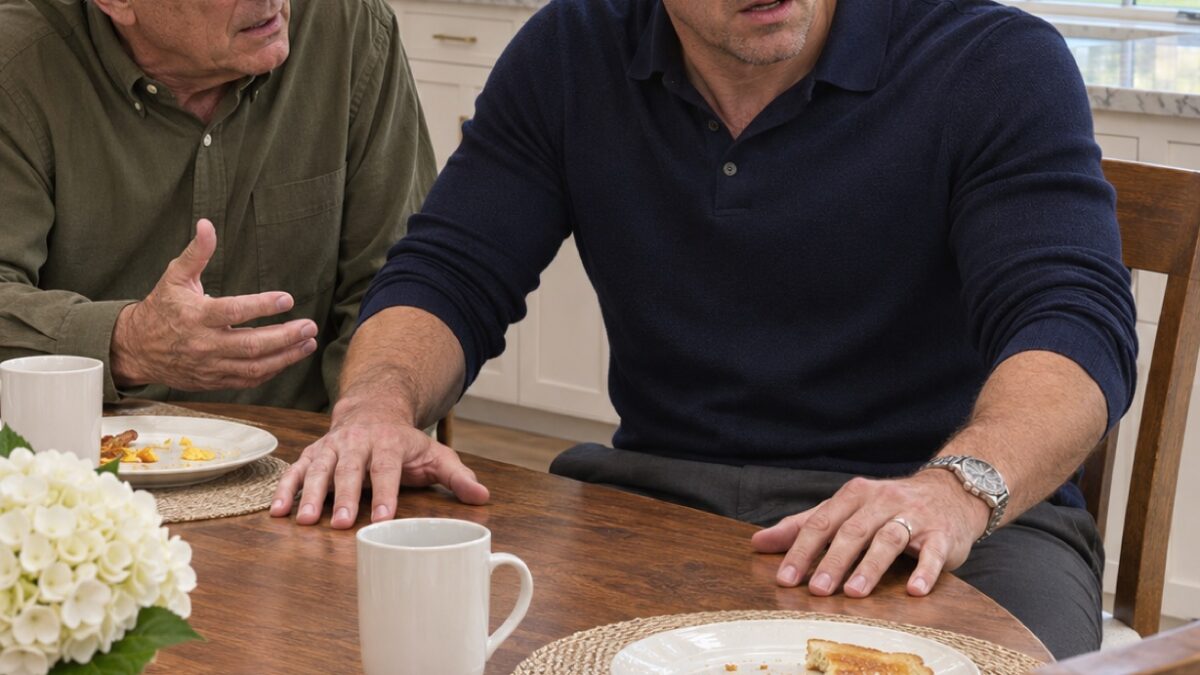
Part 4: The Call Back
“Gary said you’d borrowed against your house,” the supplier told me when I called him back.
“He promised we’d all be paid in full by Friday.”
I looked across the kitchen at Gary.
He put his hand on the chair but didn’t sit.
“Who is ‘we’?” I asked.
The supplier meant the people Gary owed through the business. Suppliers and other creditors. Gary had told them the money would come from a loan against my house.
Not a possibility.
He had given them a deadline.
“I haven’t borrowed anything,” I said. “I never agreed to.”
Travis moved closer to the table.
The supplier stopped talking long enough that I checked my screen to make sure the call hadn’t dropped. Then he asked whether there had been a delay.
“There isn’t a loan coming from me.”
Gary pulled out the chair.
“Amber, let me explain it to him.”
I held up my hand.
The supplier wasn’t shouting. That almost made it harder. He sounded like somebody checking on a payment he had already worked into his plans.
He said Gary had been very definite.
I could see that.
“I didn’t authorize Gary to make promises for me,” I said. “I haven’t guaranteed his debts, either.”
The supplier asked whether he should speak to Travis.
“About what?”
“About getting this straightened out.”
Travis watched my face.
I told the supplier that Travis couldn’t agree to borrowing against my house for me. Whatever Gary had said, I wasn’t the source of his payment.
Gary sat down.
He rubbed at a mark on the tabletop with his thumb. It was the sort of motion I had watched him make while waiting for coffee, comfortable enough to be distracted by something small.
Now he wouldn’t look up.
The supplier said he had messages.
I asked him to send the existing exchange, including what Gary had said about me. I didn’t want a new explanation written after this call.
“The messages you already have,” I said.
He agreed.
I confirmed where he could send them, then asked him not to use my number as a way to collect Gary’s business debts. I had returned his call to correct what he had been told.
He said he understood.
Before we hung up, he asked whether Gary was there.
“Yes.”
“Then he knows what I’m talking about.”
Gary stopped rubbing the table.
I ended the call and kept my phone in my hand.
Nobody reached for it.
I had expected an explanation about Gary exaggerating our conversation. Instead, strangers were expecting payment from a house loan I had never agreed to take.
“By Friday?” I asked.
Gary nodded slightly.
“That’s what I was working toward.”
“You told them it was happening.”
He looked at Travis.
I moved my plate farther from the edge of the table. My sleeve had brushed it when I sat down, and a dry piece of toast slid against the fork.
Such a small noise.
Travis finally spoke.
“He needed them to give him room.”
“So he gave them my house?”
“He didn’t give anybody your house.”
“He promised money from it.”
Travis pressed his lips together.
Gary said creditors didn’t wait forever. He had needed something concrete to tell them. Saying he was trying, he explained, wasn’t enough anymore.
I didn’t dispute that.
I asked why my name had become the concrete thing.
He said he had thought we would work this out as a family. That was different from his earlier claim that I’d already agreed privately, but he said it in the same careful tone.
I had heard enough to notice.
“You gave that supplier my number.”
“He wanted to know the money was real.”
“And you sent him to me without asking.”
Gary shifted in his chair.
Travis said the supplier shouldn’t have called before Gary had a chance to explain. I looked at my husband until he stopped.
The call wasn’t the problem.
My phone lit up with the first message.
I didn’t open it at the table. I stood, took my phone into the other room, and shut the door most of the way.
I could still hear their chairs.
I sat where I had made the appointment with the divorce lawyer and opened the supplier’s messages. He had sent pictures of his exchange with Gary, with enough of the conversation visible to show what he had asked and what Gary had answered.
I read slowly.
The supplier had asked where the money would come from. Gary had described the house-backed loan. He had promised full payment by Friday.
There was my name.
Not my words.
I saved what the supplier sent without changing it. Then I checked that the messages would still be available if I needed to show the lawyer.
My work as a payroll clerk had taught me not to depend on what somebody remembered saying when the written version was available.
I was 41.
I could keep a record without anybody at my kitchen table approving.
From the kitchen, Travis called my name.
“I’m reading.”
“Let us talk to you.”
“You’ve been talking to me.”
He didn’t come through the door.
I set the phone down long enough to press my fingertips against my closed eyes. I had offered Gary somewhere to live. He had turned that offer into an explanation for people he owed.
I needed to know exactly how far it had gone.
I sent the supplier a brief reply confirming that I had received the exchange. I repeated that I had never agreed to a loan or guaranteed Gary’s debts.
Then I went back.
Gary stood when I entered, as though he were about to leave the room. Travis stayed beside the counter.
“I have the messages,” I said.
Gary’s hand closed around the chair.
“I wasn’t trying to drag you into anything.”
“My name and phone number are in it.”
“I thought Travis could explain.”
That made me look at my husband.
He didn’t answer.
I placed my phone beside my plate, screen down. I wasn’t ready to let either man turn the conversation into an argument about individual words before I’d finished reading everything.
Gary started describing the customer he had lost.
I stopped him.
“I know why the business is in trouble.”
He swallowed.
“What I don’t know is why you promised my money.”
Travis said we needed to be practical now. The supplier had been told there would be payment, and correcting that would make things difficult.
“For Gary,” I said.
“For all of us.”
“No. I haven’t borrowed.”
He looked toward the doorway.
I picked up the phone when it vibrated again. The supplier had answered my correction and added that he had understood Travis was already aware of the arrangement.
I read that sentence without speaking.
Gary watched me.
The supplier then sent another piece of the saved exchange, the part explaining why he had believed there was no disagreement inside our house.
I opened it with Travis standing close enough to see whose message had arrived.
The supplier had sent the part of Gary’s exchange that explained why he believed Travis already knew.
Part 5: Before the Dishes Moved
“Read it aloud,” I told Travis.
I held the phone where he could see the supplier’s saved exchange.
He didn’t take it.
Gary had told the supplier that Travis already knew about the payment promises and would handle getting me through the borrowing discussion.
I read the relevant part myself.
Then I put the phone on the table between us.
“Did you know before breakfast?”
Travis glanced at his father.
“Amber—”
“Before you took my plate.”
“Yes.”
Gary sat back.
There was no misunderstanding left to sort out. Travis had known that his father was promising payment from my house, and he had cleared away my food before telling me what I would do.
“You knew I hadn’t agreed.”
“I knew we hadn’t discussed it properly.”
“That isn’t what I asked.”
Travis pulled out a chair but didn’t sit.
He said Gary had told him about the promises before breakfast. He had believed that if we sat down together, with his father there to explain the need, I would understand why they couldn’t wait.
“Then why say he told you I’d agreed privately?”
He rubbed the back of his neck.
Gary looked down.
Travis said he’d hoped I would stop arguing about whether the conversation had happened and focus on what needed doing.
I moved my phone closer to me.
“You wanted me to feel committed.”
“I wanted you to see how serious it was.”
“You told me it was settled.”
He didn’t deny that.
The saved exchange was still on my screen. I left it there while he spoke, and Gary kept looking at it instead of at me.
Travis had let his father take responsibility for the false story while leaving out what he himself had known.
Now he couldn’t.
He sat beside Gary again.
“Refusing now makes his situation worse.”
That was his answer.
Not that he had been wrong to tell me what would happen to my house. Not that giving a supplier my number had gone too far.
The trouble would be worse if I refused.
I drew my plate toward me, then pushed it aside. The toast had a dent where my fork had rested against it.
I still hadn’t eaten.
“His promises weren’t mine,” I said.
Travis leaned forward.
“People are counting on that money.”
“They need the truth.”
Gary asked whether I understood what would happen when he called them back. He couldn’t just say the money wasn’t coming without having something else to offer.
“I don’t have an offer for them.”
He stared at me.
I hadn’t spoken loudly.
That seemed to bother them more than if I had.
Travis stood and went to the sink. He braced his hands against the counter, right where my unfinished breakfast had been put earlier.
I watched him look at the empty space.
Then he turned.
“Can we stop talking about blame?”
“We can talk about what you’re going to tell them.”
Gary said he needed time to figure that out.
I told him not to use that time to make another promise involving me. No loan. No savings. No suggestion that I was waiting for paperwork.
Travis opened his mouth.
I looked at him.
“That’s my answer.”
He closed it.
I carried my cold toast to the trash and rinsed the plate. I wasn’t cleaning up after an ordinary breakfast, although the motions were familiar enough that I almost reached for the dish towel automatically.
I set the plate down instead.
Behind me, Gary asked Travis what he should say.
I didn’t turn around.
My husband answered quietly that they would work something out.
I dried my hands.
“Without my money.”
Neither corrected that.
I went into the other room with my phone and gathered what I wanted to bring to the lawyer. The supplier’s messages came first.
Then the information about the house.
I knew where I kept it. I had bought the place and finished paying for it before marriage, and the papers hadn’t changed because Travis had moved in.
I didn’t need to hunt.
I laid everything together and checked that my phone had enough charge for the appointment.
Travis appeared in the doorway.
He didn’t enter.
“Are you really taking those?”
“Yes.”
He looked at the house papers, then at me.
The public argument in the kitchen had been about what he wanted me to do. This was something I was doing without him, and he seemed less certain how to approach it.
“You don’t have to decide everything today.”
“I’m getting advice.”
“From somebody whose job is ending marriages.”
“From a divorce lawyer.”
He looked away.
I put the papers into my bag.
He said he had never meant for me to lose the house. His father expected to recover, and the loan would have been paid.
I asked whether he would have owed it.
He didn’t answer directly.
“We’re married.”
“That didn’t make me agree.”
For a while, he stayed in the doorway while I checked the messages again. I saved the exchange where Gary had referred to Travis knowing.
He watched me do it.
“Are you going to show that?”
“Yes.”
“You’re making it sound planned.”
“You knew before breakfast.”
He stepped back.
I carried my bag into the kitchen and set it near the door. Gary was still at the table. He had pulled his own phone out but wasn’t using it.
He asked whether I was leaving.
“For the consultation.”
Travis followed me.
He said we should talk privately, without his father involved. I looked at the chair beside Gary, the phone on the table, the place where he had chosen to put the lender on speaker.
“We can speak here.”
Gary began to rise.
Travis told him to stay.
Then he asked me to sit.
I stayed beside my bag.
He said he could speak to the supplier himself. He could help Gary make the calls. He wouldn’t bring up the loan again if I would give him a chance to handle things.
“You can help him make calls,” I said.
“That isn’t what I’m asking.”
“I know.”
He wanted me to undo the appointment. He hadn’t said it yet, but he kept looking toward my bag as though removing it would put us back where we had been.
Gary folded his hands on the tabletop.
Travis said he was asking for his marriage, not the business. He said there was still time to keep a private family disagreement from becoming something formal.
I picked up my bag.
He moved aside rather than block me.
But he kept talking.
Before I reached the door, Travis said, “Cancel the appointment, Amber, and let me fix this without a divorce lawyer.”
Part 6: The Afternoon Appointment
“I’m keeping it,” I said.
I opened the door and took my bag with me.
Travis remained in the kitchen.
I didn’t ask him to understand before I left. I’d spent enough of that morning answering questions whose answers he wanted to change.
At the lawyer’s office, I sat with my bag against my leg and my phone in my hand.
When the lawyer asked what brought me there, I started with the house.
“I owned it before marriage. It was paid off.”
The lawyer let me finish.
I explained the breakfast, the preliminary lender inquiry, and my refusal. I made clear that I had never applied, signed, or agreed to borrow.
Then I showed the supplier’s messages.
The lawyer read them without filling the pause.
I watched a finger move down the screen.
“Did you ever guarantee his business debts?”
“No.”
“Did you tell any creditor you would pay?”
“No.”
I explained that Gary had lived with us for eleven months and hadn’t contributed to household costs. I had agreed to housing, not business money.
The lawyer asked about Travis.
I said he had known about the promises before breakfast and had admitted it in front of his father after I showed them the saved exchange.
Saying that outside my kitchen felt different.
I didn’t have to pause while Travis explained what I supposedly meant.
The lawyer asked me to describe the ownership history without skipping anything because it seemed obvious. I told it from the beginning.
The house was mine before marriage.
It had stayed in my name alone.
There had been no house debt during the marriage. No marital earnings had paid down a balance because there hadn’t been a balance to pay.
We had paid ordinary living expenses from our earnings.
That wasn’t the same thing.
The lawyer asked about major improvements and any ownership promises. There weren’t disputed improvements to sort out, and I had never promised Travis a share.
I answered carefully.
I didn’t want advice based on a tidier version of my marriage than the one I actually had.
The lawyer explained that the house history mattered, but a divorce still required proper steps and a complete look at our finances. Keeping my house wasn’t a reason to ignore everything else we would have to resolve.
I nodded.
I could do that.
Then I asked the question I had called about earlier.
“What do I do while they’re living there?”
The lawyer set the phone down.
We discussed occupancy separately from ownership. I couldn’t simply decide that being angry made it safe to change locks or put their possessions outside.
I hadn’t wanted that.
Still, hearing it plainly helped.
“So I don’t tell them they’re locked out.”
“No.”
We talked about requesting a voluntary move-out arrangement in writing, and what would need to happen if they refused. The lawyer didn’t promise me an empty house just because I wanted one.
There would be a process.
I asked what I could say without threatening something I wasn’t entitled to do.
That got a practical answer.
I could tell them I was seeking a divorce and wanted an agreed departure. I could discuss how they would collect their belongings and surrender occupancy.
If we couldn’t agree, I would get advice about the next lawful step.
I wrote that down.
Not because it was complicated.
Because I could already hear Travis asking whether I really understood what I was saying, and I wanted to be sure I did.
The lawyer asked what outcome I wanted.
“I want to keep my home. I want to separate. I don’t want to pay for Gary’s business.”
Then I added something.
“I don’t want to keep supporting him in the house, either.”
We discussed the difference between stopping optional spending for Gary and trying to force him out by making the house unlivable.
I wasn’t going to shut off anything.
I wasn’t going to interfere with belongings or basic access.
But I didn’t have to keep making voluntary purchases for him, handing over spending money, or treating his business needs as household bills.
The distinction was plain enough.
I had been buying for whoever lived under my roof without separating every grocery or errand into an argument. That generosity had become something they expected.
I could stop the extra spending without staging a fight over the refrigerator.
The lawyer asked whether I wanted time to consider filing.
I looked at my phone.
The supplier’s messages were still available. Gary’s explanation had not become less specific while I sat in a different room.
“Prepare the divorce,” I said.
The lawyer confirmed what information would be needed. We went through it, and I supplied what I could.
What I didn’t have with me, I would provide.
I asked that any proposed move-out arrangement be clear about possessions, voluntary departure, and returning access to the house when they left.
I didn’t want an agreement based on another family’s memory of what I had supposedly promised.
The lawyer understood.
By the time I put the house papers back into my bag, I had things to do instead of another argument to win.
That helped me stand up.
Outside the office, I checked my phone.
There was nothing from the lender.
No loan was waiting for my signature. The loan officer had already heard my answer, and the preliminary inquiry wasn’t becoming a loan with me.
I left it that way.
I reviewed the information the lawyer needed and made a short list on my phone. Then I removed Gary’s requested extras from the household purchases I had been planning.
I didn’t announce that through a message.
I would tell him directly.
At home, my bag landed on the same kitchen counter where I’d set it before leaving.
Travis was there.
Gary sat at the table and looked toward the doorway.
I took out only what I needed.
“I’ve asked the lawyer to prepare a divorce,” I said.
Travis lowered his eyes to the papers.
I told them I wasn’t changing locks or moving their things. I wanted a written arrangement for them to leave voluntarily, and I would follow the lawyer’s advice if we couldn’t agree.
Gary asked whether he was being thrown out.
“No. I’m asking you to agree to leave.”
I also told him I would no longer cover voluntary extras for him. The household wasn’t going to fund the business through purchases or reimbursements after I’d refused a loan.
Travis pulled a chair away from the table.
He didn’t sit.
When I asked whether he would discuss leaving voluntarily, he said, “I’m not agreeing that I have to leave my own home.”
Part 7: The Kitchen Chairs
“Then we aren’t agreeing today,” I said.
I put my bag beside the counter instead of placing it on his chair.
Travis looked prepared for an argument about whether the house counted as his home. I wasn’t going to pretend he hadn’t lived there.
That wasn’t the issue.
“I’ve lived here as your husband,” he said.
“Yes.”
“You can’t talk as though I’m a visitor.”
“I’m talking about a separation.”
Gary watched us from the table.
Travis asked whether the lawyer had told me I could order him out. I said no. I had asked about lawful steps, and I wasn’t claiming a power I hadn’t been given.
He paused.
I could see him deciding what to say next.
“Then we can take time.”
“You can decline a voluntary arrangement. I’m still filing.”
He pulled out the chair and sat.
Gary asked where they were supposed to go.
I didn’t suggest a place. Their housing was something they would have to arrange, and I wasn’t going to promise another solution just to make them less upset.
“You’ll need to work that out,” I said.
Travis called that cold.
I went to the sink and washed the cup I’d used after returning home. I dried it, put it away, and came back to the table.
“I’ve asked for an orderly move.”
“You’ve already decided.”
“Yes.”
He looked toward my bag.
The house papers weren’t exposed. He couldn’t pick up something and make that the subject of the conversation instead.
Gary said he hadn’t meant to cause a divorce.
I believed he hadn’t wanted that consequence.
What he had wanted was the loan.
I told him he could still make his own calls about the business. Nobody needed to wait for my permission to correct the promises.
He said he needed to know where he would be living first.
“That doesn’t change the answer about money.”
Travis folded his arms.
We didn’t reach an agreement then.
I left the table without following him into another round of whether I had overreacted. His father stayed seated beside him.
The following week, I provided the remaining information the lawyer needed and directed that the filing go ahead.
I checked names and facts.
I read before approving anything.
At work, I handled payroll with the same care I always used. When I came home, I didn’t offer the details of the filing as an invitation to negotiate whether I should have done it.
It was done.
I told Travis in the kitchen.
He stood with a glass in his hand.
“You really filed.”
“Yes.”
Gary looked up from his phone.
There was no announcement beyond that. No audience I had arranged to embarrass Travis. He was hearing that I had followed through on what I’d already said.
He put the glass down.
“Can we talk about what happens with the house?”
“We can talk about living arrangements.”
He didn’t like the distinction.
But he stayed.
I brought out the proposed move-out terms the lawyer had helped me prepare. I didn’t slide them at him and demand a signature.
I put them where he could read.
They described a voluntary departure with their possessions and a clear surrender of occupancy when they left.
There was room for them to review it.
I said they could get their own advice before agreeing. I wasn’t trying to rush them into something hidden in legal wording.
Travis read the pages.
Gary leaned toward him.
The kitchen was quiet except for paper moving across the table. I sat across from them with my hands around a cup I wasn’t drinking from.
Travis asked what would happen if they didn’t sign.
“I’ll speak to my lawyer about the proper next step.”
“You won’t just change the locks.”
“Not while you’re still occupying the house.”
He looked back down.
That mattered to him. It mattered to me, too. I wanted them gone, but I didn’t want the way they left to become a separate dispute I had created.
Gary asked about taking everything belonging to him.
“Yes.”
He asked whether his things could stay after he left.
“We need to agree on a complete move.”
He nodded reluctantly.
Travis went through the arrangement again. He asked questions about access while they were packing, and I answered what I could.
Anything I wasn’t certain about went back to the lawyer.
I didn’t improvise.
Eventually, Travis said he would agree to leave voluntarily if the terms were clear and he could remove his belongings without interference.
“That is what I’m asking for.”
Gary watched his son.
Then he said he would agree, too.
We worked through the arrangement in writing rather than relying on the conversation at the table. Both men agreed to depart with their possessions.
I kept my copy.
They kept theirs.
Nobody had been locked out. Nobody had dragged a bag onto the porch. The house was still occupied, but we had an actual plan for ending that.
I put the signed arrangement away.
Travis stayed at the table afterward.
He seemed to be waiting for me to thank him for agreeing. I wasn’t going to turn his voluntary departure into another debt I owed.
I told him I would follow the arrangement.
Then I went to make myself something to eat.
Gary’s phone sounded while I stood at the counter. He checked it and turned it over.
Travis asked who it was.
“The supplier.”
I stopped opening the bread.
Gary said the supplier wanted to know whether the promised payment was still possible. He had been holding off answering until he knew how things stood between us.
He knew.
The loan had been refused. The divorce had been filed. We had just agreed in writing that he would leave my house.
“What have you told him since my call?” I asked.
Gary ran his hand over his mouth.
“Nothing definite.”
I set the bread down.
“Then we’re going to be definite.”
Travis said Gary could handle his own business calls. I agreed that he needed to, but first I would correct what had been said about me, with both of them present.
Gary looked at the phone.
I asked whether he had let anyone believe I might still provide the money.
He didn’t answer directly.
Instead, Gary said, “Before you call him, tell me what you expect me to say about where the payment is coming from.”
Part 8: The Speaker on the Table
“Not from me,” I said.
I set my phone on the kitchen table and called the supplier.
Travis sat down before the call connected.
Gary stayed standing until the supplier answered, then lowered himself into the chair beside his son.
I identified myself.
“I have Travis and Gary here. I’m putting you on speaker so there isn’t another version of this conversation later.”
The supplier said he could hear us.
I kept the phone close enough that I didn’t have to lean across the table.
“No loan is coming from me,” I said. “I’m not borrowing the $85,000. I’m not replacing it with my savings.”
Gary looked at Travis.
I continued.
“I haven’t guaranteed Gary’s debts. I never agreed to pay them.”
The supplier said he’d understood my earlier call but had still been waiting to hear what Gary planned to do.
“That part is for Gary,” I said.
Then I looked at my father-in-law.
“Eleven months of free housing never included a business bailout.”
Gary’s mouth tightened.
Travis didn’t interrupt.
He had heard the messages, admitted what he knew, and signed an arrangement to leave. He wasn’t going to persuade the supplier that the disagreement was just about timing.
The supplier asked Gary whether he confirmed there was no money coming from my house.
Gary put his hand beside the phone.
“Yes.”
It was quiet.
The supplier asked what had changed since the promise.
Gary started to say that things at home had become complicated.
I stopped him.
“I never agreed. That hasn’t changed.”
He took his hand away from the phone.
Then he said it correctly.
He had promised funds he didn’t have an agreement to receive.
The supplier asked whether he had another source.
Gary said he needed to discuss what he could actually pay and how. The supplier told him that conversation had to be about Gary’s business, not another expectation involving me.
I let them speak.
There was no reason for me to negotiate a payment schedule I wouldn’t be responsible for keeping.
When the supplier addressed me again, I asked that my number no longer be used as a contact for the source of Gary’s funds.
He agreed.
I thanked him for sending the existing messages.
He said he would deal with Gary.
That was the call I had wanted.
I ended it and moved my phone off the middle of the table.
Travis looked tired.
Gary looked angry, although he wasn’t looking directly at me.
“You didn’t need to say the housing part,” he said.
“Yes, I did.”
“He knows I was living here.”
“He needed to know living here wasn’t a promise of money.”
Gary stood.
For a moment, I thought he might leave the room without answering anybody else. Instead, he picked up his own phone.
He asked whether he could make the other calls somewhere private.
“Of course.”
I wasn’t requiring him to conduct his business in front of me. I had required a correction to the claim about my money.
Those were different things.
He went into the other room.
Travis stayed.
He asked whether I was satisfied now.
“The supplier has the right information.”
“That wasn’t what I meant.”
“I know.”
He pushed his chair back but didn’t stand.
He said his father was embarrassed. He had spent his life working, and now he had to tell people he couldn’t do what he’d promised.
I didn’t dispute that he had worked.
“He also told them I’d agreed.”
Travis looked at the phone in my hand.
I had the exchange saved. He had already seen it. There wasn’t a kinder version of that promise hiding in a different reading.
He changed the subject.
He said he’d help Gary work through the business accounts and figure out what could be done without the loan.
“That sounds necessary.”
“You could say it without making it sound like a punishment.”
I got up to put away the bread.
I wasn’t going to argue about my tone while Gary finally made the calls that should have been his from the start.
From the other room, I heard his voice.
Not every word.
Enough to hear him say there had been a mistake about the source of money.
Travis heard it, too.
He put his elbows on the table and stared at his hands.
When Gary returned, he carried his phone and the things he’d been using to keep track of the business. He laid them at his place.
He had contacted the people he had promised.
I asked whether he had withdrawn the claim about my loan.
“Yes.”
“From everyone you told?”
He nodded.
I waited.
“Yes,” he said again, more clearly.
He explained that he now had to give them information about what the business could pay. There were debts he had expected the loan to clear, and without it he couldn’t keep treating the venture as though the immediate problem had been solved.
I left that explanation with him.
He was 68.
He could make calls about his own business without me supplying either the script or the money.
Travis asked what the creditors had said.
Gary answered him rather than me.
That was new.
Usually, when the business came up in the kitchen, they both turned toward me at whatever point help might be needed. Now they sat over Gary’s information and spoke to each other.
I made myself food.
I didn’t offer to pay something small to make the conversation easier. I didn’t ask whether there was a lesser amount that would prove I cared.
There wasn’t an amount under discussion with me.
Gary went back through the business information, checking what was due and what work remained. Travis pulled his chair closer.
I carried my food to my place.
They moved the papers far enough to give me room.
Nobody touched my plate.
While I ate, Gary made notes and stopped several times to look at what he had written. The venture had lost its major customer before he moved in, and the loan had been his proposed way to catch up.
Now he had to decide what existed without it.
Travis asked whether there was enough incoming work to keep operating while he negotiated the debts.
Gary didn’t answer at once.
He checked the information again.
I finished eating and stayed out of their calculation. There was nothing more I needed to clarify about the house.
Gary finally set his pen down.
Then he looked at Travis and asked, “Without Amber’s loan, how am I supposed to keep the business open?”
Part 9: The Boxes by the Door
“I don’t think you can,” Travis said.
Gary pulled the business papers back toward him.
I stood at the sink, rinsing my plate.
Neither man asked me to reconsider. The supplier had heard the correction, the other creditors had been contacted, and the promised money was no longer something they could describe as delayed.
Gary had to work with what he had.
He went back through the accounts with Travis beside him. I could hear them discussing what remained unpaid and what closing would require.
I didn’t join them.
When Gary said he needed to speak to the supplier again, I kept washing my plate. There was no reason for me to be on that call.
He made it himself.
The business closed.
Not in a dramatic announcement at my table. Gary made calls, checked what belonged to the venture, and dealt with the obligations he had taken on.
Some conversations were short.
Others left him sitting with the phone against his leg after the call ended.
He negotiated his own debts.
I didn’t hear every term, and I didn’t ask to. He wasn’t entitled to my money, but that didn’t make every detail of what he owed my business.
What I needed was confirmation that my name wasn’t being offered again.
He gave it.
Travis helped him sort through what had to be handled. When they discussed an unpaid account, they no longer said “we” while looking at me.
They said Gary.
That was accurate.
I continued providing the information my divorce lawyer needed. I kept the supplier’s messages and the move-out arrangement together with the other records.
Nothing had to be hidden.
Nothing had to be improved after the fact.
At home, I stopped making the extra purchases I had discussed at the consultation. If Gary needed something beyond the household’s existing arrangements, he and Travis handled it.
The lights stayed on.
Their possessions stayed where they had left them until they were ready to pack.
I followed our agreement.
So did they.
Housing became their next subject.
At first, Travis spoke about finding somewhere suitable as though I might supply an answer if he described the difficulty long enough.
I listened without offering my house again.
He eventually stopped doing that.
He and Gary found a place they would have to pay for. Travis told me in the kitchen, standing in the space between the table and the counter.
“We have somewhere.”
I asked whether it allowed them to carry out the written arrangement.
He said yes.
Gary came in behind him.
He said paying for housing would make the other bills harder.
I looked down at the dish towel in my hands.
For eleven months, I had kept that expense off his list. He had used the relief without getting the business back to a position where it could support him.
Now it was back on his list.
“I understand it’s an expense,” I said.
He waited.
I folded the towel and put it down.
There wasn’t another sentence coming.
Travis said they would begin packing their personal things. We talked about access, what belonged to whom, and keeping the agreed departure clear.
I didn’t hover over every bag.
If there was a question, they asked.
If something was mine, I said so.
We didn’t turn the house into an argument over ordinary objects just because the marriage was ending.
Still, I found myself listening for footsteps.
A cupboard opening.
A drawer closing.
I had spent six years knowing Travis’s movements in the house without thinking about them. Now each sound might mean something was being put away for the last time.
I kept doing what needed doing.
Three weeks later, the boxes were by the door.
Travis carried his clothes out while Gary checked the room he had used. I stayed inside rather than stand over them in the driveway.
I had no need to perform the departure.
Gary came through the kitchen carrying a bag.
He paused near the table.
“I didn’t expect any of this when I moved in.”
“Neither did I.”
He looked at my place, then toward the sink.
I wondered whether he would apologize for calling me selfish. He didn’t.
He said he had taken what he needed from the room.
I asked him to check again before they surrendered occupancy.
He went back.
I walked through only after they told me they were finished. Their possessions were gone. The spaces they had used were empty without being torn apart.
No clothes on the lawn.
No changed lock keeping someone from a toothbrush.
Just a completed move.
Travis met me near the front door.
He said they were leaving voluntarily under the arrangement. We confirmed that their belongings were out and that they were giving up occupancy.
They returned their keys.
I put them on the counter rather than immediately into a drawer. I wanted to finish the practical part while they were still there.
Gary stood beside Travis.
He had somewhere else to sleep, bills to manage, and creditors to answer. None of it had been transferred to me.
I wished him well with getting it sorted.
He nodded.
Travis lingered after his father stepped outside. He looked past me into the kitchen, as if he were checking whether anything already looked different.
The table was in the same place.
So was the plate I’d washed.
“I’ll be in touch about the divorce,” he said.
“Through the arrangements we’re making.”
He nodded and left.
I shut the door after they were gone.
I didn’t celebrate.
I checked the rooms, put the returned keys away, and told the lawyer they had moved voluntarily and surrendered occupancy as agreed.
Then I made something to eat.
The house sounded unfamiliar without the television from Gary’s room and Travis moving between rooms, but nothing needed an immediate solution.
I sat down anyway.
The quiet gave me time to notice how often I’d waited for somebody else’s needs before starting an ordinary meal.
I ate while it was warm.
The financial discussions for the divorce still had to be finished. Leaving the house had settled occupancy, not every question Travis might raise.
I knew that.
I kept the ownership records ready.
When the lawyer next contacted me about the financial issues, I opened the message at the kitchen table.
Travis was asking whether his years of living expenses meant he should receive money connected to my house.
Part 10: The House File
“Show me what he’s claiming he paid toward the house,” I told the lawyer.
I opened my file on the kitchen table.
The lawyer explained that Travis was considering a request based on his contributions during the marriage. Before treating that as an established claim, we needed to separate what he described from what had actually happened.
I understood the distinction.
Travis had paid ordinary shared living expenses from his earnings.
So had I.
There hadn’t been a house payment to split.
I laid out the information showing that I had finished paying for the home before marriage. Then I checked the records from the marriage itself.
No balance being paid down.
No ownership share given.
No promise of one.
The lawyer asked again about major improvements. I gave the same answer I’d given at the consultation because the facts hadn’t changed.
There weren’t disputed major improvements behind his request.
I wasn’t overlooking a renovation he’d funded and pretending it hadn’t happened.
The contribution he described was living in a home while paying a share of ordinary costs.
I had done that, too.
I sent what the lawyer needed.
Then I put the papers back in their file rather than leave them spread across the table while I ate.
That mattered more than I expected.
For so long, the kitchen had been where somebody else’s business trouble waited for me. I didn’t want the divorce to occupy every meal simply because the file could stay open.
I could answer a question and put it away.
Travis contacted me about the same issue through the arrangements we were using for the divorce.
He wanted me to acknowledge that the house had been our home.
I did.
That had never been disputed.
He had lived there as my husband. He had paid shared expenses. We had used the kitchen together, kept clothes in the same room, and made an ordinary married household.
None of that meant I’d promised him ownership.
I answered only what needed an answer.
“The house was paid off before marriage.”
He said he hadn’t lived for free.
“I know.”
He seemed to expect me to argue that he had contributed nothing. I wouldn’t. That wasn’t true, and it wasn’t necessary to keep the facts about the house straight.
He had contributed to living expenses.
He hadn’t bought part of the house through a debt that didn’t exist.
When the lawyer reviewed his description against the records, the gap was plain. There wasn’t a factual basis for the particular house contribution he was describing.
That didn’t turn the rest of the divorce into an instant settlement.
We still had financial matters to resolve.
Personal earnings.
Assets.
Debts.
I supplied accurate information about mine and reviewed the proposed terms. I asked questions when something wasn’t clear.
I didn’t agree just to be finished.
I also didn’t add demands because I was angry about breakfast. The loan had never happened. I wasn’t trying to recover money that had never left my account.
What I wanted was a complete agreement I could live with.
Travis eventually moved away from the house-contribution argument and focused on the financial terms that actually needed resolution.
That made the discussions more useful.
He didn’t have to admit that every choice he’d made had been wrong for us to settle the divorce. He did have to deal with what each of us owned and owed.
The house stayed mine in the proposed agreement.
I read that provision carefully.
Then I read the rest.
I asked the lawyer to explain anything I wasn’t sure about in everyday language. I had spent enough time with people making financial promises around me.
I intended to understand my own.
The final agreed terms left me with my premarital home. Our personal earnings, assets, and debts were resolved in the settlement.
Neither Travis nor Gary received house-backed money.
There was no hidden loan to cancel later.
No payment waiting on my change of heart.
Gary’s creditors were dealing with Gary because his promises alone hadn’t made his debts mine.
When I finished reviewing the agreement, I set the pages down and looked toward the sink.
I could still remember exactly where Travis had put my breakfast.
That memory hadn’t become less insulting because the legal questions were being resolved properly.
But it wasn’t the only thing happening in the room anymore.
I made coffee.
I carried the cup to the table without checking whether somebody needed the space cleared.
While the divorce remained unfinished, I kept handling the household by myself. I bought what I used, paid what I owed, and stopped treating a smaller grocery list as evidence that I had forgotten something.
Gary wasn’t coming back for dinner.
Travis wasn’t going to walk in after work.
It took repetition to make those facts ordinary.
I found an item on my shopping list that had been there only because Gary liked having it in the house. I deleted it instead of buying it out of habit.
I didn’t feel triumphant.
I felt practical.
The settlement discussions had also removed an excuse for Travis to keep talking about the house as though its ownership were still an open family decision.
He knew what the agreement said.
He knew the history behind it.
There was nothing new he could tell me about what I had paid before marriage.
His next approach wasn’t financial.
He asked whether we could speak before the divorce became final.
I agreed to a conversation, not a visit inside the house. I didn’t want him arriving with the expectation that talking in our old kitchen meant something more.
He accepted that.
When we spoke, he didn’t mention the loan first.
He asked how I was managing.
I said I was managing.
He told me he had been thinking about the marriage separately from his father’s business. He said the pressure around Gary had made everything worse.
I listened.
Then he said he missed living with me.
I didn’t answer immediately.
He added that Gary had his own situation to handle now. There wouldn’t be another request involving the house.
I held my phone and looked at the chair where he’d sat beside his father.
The issue hadn’t only been whether he would ask again.
He knew that, because he changed how he asked.
Before the divorce was final, Travis said, “Let me come back, Amber, and show you this can be different.”
Part 11: My Place at Breakfast
“No, Travis,” I said.
I moved my cup away from the edge of the table.
He asked whether I could think about it instead of answering immediately. I told him I had been thinking about our marriage since the morning he cleared my breakfast away.
He was quiet.
Then he said he understood why I had refused the loan.
“I needed you to understand before you announced it.”
“I was trying to help my father.”
“I know what you wanted.”
I didn’t need another explanation of his motive.
He had wanted Gary’s business saved. He had wanted me to provide the money, and he had known that his father was promising payment before he put the lender on speaker.
The saved messages had made him admit it.
He said he hadn’t expected to lose his marriage.
“I believe you.”
That wasn’t agreement to try again.
He asked whether we could start with dinner.
“No.”
I didn’t make conditions he could bargain over. I didn’t say perhaps after Gary had finished paying his debts or after the divorce paperwork was done.
I wasn’t asking him to wait.
I told him I would continue with the agreed divorce and keep our remaining communication to what was necessary to finish it.
He said my name.
I let him finish.
Then we ended the call.
I stayed at the table for a while with the cup between my hands. There had been ordinary good parts of being married to him, and declining to resume the marriage didn’t erase those.
I didn’t need to erase them.
I put the cup in the sink and went back to the things I had planned for myself.
Several months later, the divorce was final by agreement.
The lawyer confirmed that it was done, and I reviewed the final information before putting it with the rest of my records.
The house remained mine.
Our finances had been resolved as agreed.
I didn’t have to take out a loan to finish the divorce or provide money for Gary’s venture. Neither man received money borrowed against the place where I’d continued living.
I checked that I had what I needed.
Then I closed the file.
There wasn’t a dramatic trip around the rooms afterward. I didn’t replace everything Travis had touched or pretend I had never shared the house.
I had work to do.
There was laundry.
A kitchen counter that needed wiping.
Ordinary things I could finish without a conversation about what Gary needed next.
My job as a payroll clerk stayed the same. I still checked entries, corrected mistakes, and paid attention when a figure didn’t belong.
At home, I used that same attention on my own expenses.
The household spending had changed.
I wasn’t buying for Gary anymore. I wasn’t adding something he needed to an errand and then forgetting that I’d paid for it because it seemed too small to mention.
The repeated purchases were gone.
So were the extra portions I had made automatically.
At first, I still reached for more food than I needed when I cooked. I learned to put some back before starting.
Nobody complained.
Nobody told me a smaller amount meant I wasn’t acting like family.
I kept the house comfortable for myself. I didn’t cut things down to prove I could manage, and I didn’t spend money to make the place look like a different person’s home.
I bought what I needed.
I paid my own bills.
The house stayed paid off.
Gary’s closed business no longer came into my kitchen through hopeful explanations about incoming work. His debts remained something he had to negotiate and handle himself.
I didn’t monitor those negotiations.
I had corrected the supplier, kept the records, and made sure there was no agreement in which I owed the money.
After that, I stopped being the person to contact.
Nobody was waiting for me to release funds.
There were no calls asking whether the house loan had been delayed. There was no Friday payment being held over a conversation at my table.
The only loan that had been discussed had never proceeded.
That fact stayed simple even when the marriage ending had not felt simple at all.
I decided who came into my home.
That didn’t mean I stopped answering the door or inviting anyone inside. It meant an invitation was something I chose, not something another adult extended on my behalf.
I didn’t offer anyone a room because I was uncomfortable saying no.
I also didn’t have to explain my empty room to anybody.
For a while, I kept the supplier’s messages especially easy to find. I had needed them in the kitchen, when Gary’s claim and Travis’s explanation kept changing.
Once everything was settled, I stored them with the other records.
I didn’t delete them.
I didn’t reread them over breakfast, either.
The move-out arrangement went in the same place. It showed what we’d agreed and that they had left voluntarily.
I was glad I had followed the lawyer’s advice.
There hadn’t been a fight over locks or missing belongings to drag into the divorce. I hadn’t given Travis a new problem to point at whenever the original one came up.
He and Gary had left.
The agreed settlement was complete.
My house was still my house.
What changed most was how little discussion an ordinary meal required.
I could sit before deciding what else needed doing. A plate on the table didn’t mean I was available for a family meeting.
If my phone rang, I could let it ring.
If the food was still warm, I ate it.
I noticed the difference most clearly during breakfast after the divorce was final.
I made toast and put it on my plate. I poured coffee, brought everything to the table, and sat in my usual place.
The chair across from me stayed empty.
I spread the toast while it was hot.
My phone lit up on the counter, and I left it there. Whatever it was could wait until I finished.
I ate slowly enough to taste it.
There was no business account spread beside my elbow. No speakerphone between the place settings. Nobody reached across me because he had decided the meal was over.
I drank my coffee.
Then I finished the toast.
For a moment, I stayed seated with nothing left to eat, simply because I wasn’t ready to stand yet. The kitchen didn’t need an announcement.
I pushed my chair back when I was ready, picked up my breakfast plate, and carried it to the sink myself.
You Might Also Enjoy




