Part 4: My Mother Shoved My Front Door Into Me While Dad Watched—Then I Questioned The Refund
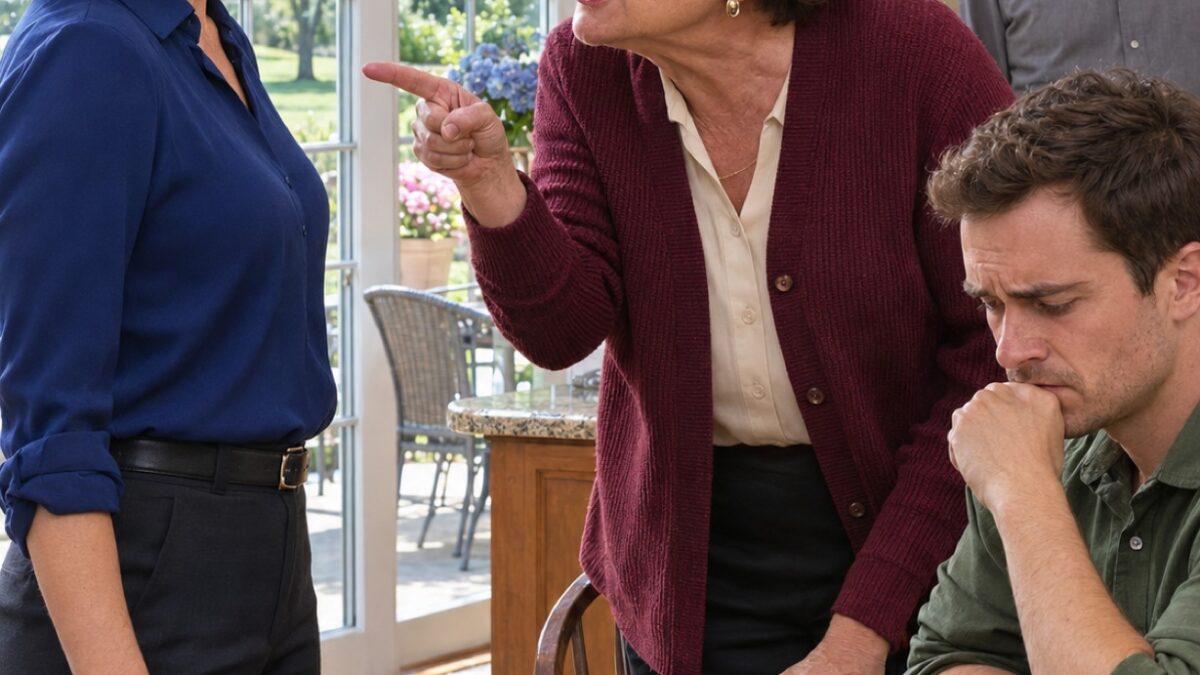
Part 4: The Place He Chose
“I bought a boat,” Drew said.
Mom turned in her chair, facing him instead of me.
“A used fishing boat,” he added. “That’s where the refund went.”
For a moment, nobody asked anything.
Then I did.
“Did something happen with the apartment, or did you decide you didn’t want it?”
“I canceled.”
“Why?”
He looked at Mom.
“You said I could stay at home while I figured things out. I hadn’t signed the lease yet. I thought I could wait.”
Mom opened her mouth, but I asked him to finish.
He had called the owner himself. There hadn’t been a rejected application, an argument over the apartment, or a charge he couldn’t manage. The owner had agreed to let him cancel and had willingly returned the full $2,200.
Then Drew bought the boat.
Not something he needed for work.
Not something that kept him housed.
A fishing boat.
I pulled out the chair beside me and sat down. I didn’t want to keep standing over a table while everybody explained what they had decided to do with help I had already given.
“I paid for you to get an apartment,” I said.
“I know.”
“And you chose not to take it.”
“Yes.”
Hearing him say it plainly made me furious.
I had spent months looking at places after work, checking whether he could afford them and asking questions he found irritating. Now he was telling me there hadn’t been a housing emergency at all.
There had been a choice.
Mom leaned toward him.
“When I said you could stay, I meant you didn’t need to rush into something unsuitable.”
“It wasn’t unsuitable,” Drew said.
She stopped.
He looked embarrassed, but he continued.
“I liked it. I just knew I could stay home a while longer.”
I asked whether the boat cost the whole refund.
“The whole $2,200.”
Dad remained beside the table. He hadn’t tried to leave, but he hadn’t answered Drew’s remark about their trip, either.
I wasn’t ready to let that disappear.
First, though, I wanted the apartment settled in my own mind.
“Did the owner tell you to cancel?”
“No.”
“Did you tell the owner I wanted the money back?”
“No. I asked for it to come to me.”
That matched what I had permitted when I paid. The owner had done what we agreed could happen. I wasn’t going to turn an honest refund into somebody else’s wrongdoing because I hated what Drew had done afterward.
“You were allowed to receive it,” I said. “That doesn’t explain buying the boat.”
Drew looked down at the table.
“No.”
Mom said he shouldn’t have spent it that way.
It was the first thing she had said that afternoon that didn’t require something from me.
Then she added, “But we can’t undo that by keeping him at home forever.”
I stood up.
“I need a minute.”
I went into the living room, leaving them in the kitchen. Nobody followed immediately. Through the doorway, I could hear Mom asking Drew why he hadn’t told her about the boat before bringing her into this.
His answer came without much volume.
“Because you were already talking about another apartment.”
That wasn’t an excuse. It did explain how each of them had found a reason not to mention the part that might stop me from paying.
I stood by my couch until I could hear the rest without interrupting.
My house was quiet except for their voices. I had come home from work to those rooms for years, put groceries away there, paid my own bills there. There wasn’t anything about my savings that made them available just because my brother had changed his mind.
When I returned, Mom was talking about timing.
She said she had offered temporary accommodation, not permission to spend the apartment money.
Drew nodded.
“I know what you meant.”
“Then why do it?”
“Because I wanted the boat.”
There it was.
No long explanation about stress. No claim that somebody had tricked him. He had wanted it, had the money, and knew he still had a bed at his parents’ house.
I asked whether he had expected me to replace the deposit when he bought it.
“Not then.”
“When?”
“When Mom started talking about getting me into another place. She said she’d talked to you.”
Mom’s face changed.
“I’ve already said I shouldn’t have assumed.”
“You didn’t just assume,” I said. “You told him.”
She looked toward Dad, but he stayed quiet.
I understood then why Drew had acted as if I was refusing something already settled. That didn’t excuse him watching Mom shove my door. It didn’t excuse his silence about the refund. But he had walked onto my porch expecting an agreement that never existed.
“You could have called me,” I told him.
“I should have.”
“You stood here yesterday with the receipt in front of you and still didn’t say boat.”
“I thought if I could explain it without everybody—”
“We’re everybody,” I said. “We’re the people you brought.”
He stopped trying to finish that sentence.
Later that afternoon, I opened the back door and stood on the step while they stayed inside. I needed air without anybody mistaking it for an invitation to leave the conversation unfinished.
Drew came as far as the kitchen doorway.
“Can I say something without Mom answering?”
“You can say it with her listening.”
He glanced behind him.
“I wasn’t trying to make the owner look bad. I knew the email would show the refund. That’s why I forwarded the original.”
“You forwarded it after you asked me for more.”
He nodded.
“I know.”
He said he had kept putting off the explanation because each delay made the next conversation worse. Then Mom said the replacement was handled, and he let himself believe he could tell me about the boat after he got another place.
“After I paid again,” I said.
He didn’t disagree.
I came back inside with him. Mom was still sitting at the table. Dad had moved nearer the kitchen doorway, exactly where he had stood when I first asked about the receipt.
I looked from Drew to him.
Drew had said Dad needed to explain where they went. The boat accounted for the money, but not for Dad’s part in it.
“Was he with you when you bought it?” I asked Drew.
Dad spoke before he could answer.
“Let me tell you that.”
I waited.
Mom looked at him sharply. Until then, she had been angry at Drew and impatient with me. Now she seemed to realize there was something her husband had kept from her, too.
Dad pulled out a chair.
Drew stayed standing.
I didn’t move the receipt or ask anybody to read it again. It had already done what it could. The rest needed to come from the people who had been there.
“Raymond,” Mom said, “where did you go with him?”
Part 5: The Trip Dad Took
“I went with him to get the boat,” Dad said.
Mom stared at him.
“You knew he bought it?”
“Yes.”
“With the apartment money?”
“Yes.”
Drew sat down before Dad did.
Dad explained that Drew had asked him to help collect it. He had gone along, helped him get it home, and known the money had come from the canceled apartment.
Nothing about it had been a surprise to him on my porch.
Not the refund.
Not the purchase.
Not the fact that Drew no longer had a deposit available.
I asked him when he learned the money was back.
“Before we went.”
“So you knew why he could buy it.”
“I did.”
Dad didn’t try to suggest he had found out afterward. That mattered, although it didn’t make the answer easier to hear.
Mom pushed her chair away from the table.
“You let me come here asking for money without telling me?”
Dad looked at her.
“You were saying Leah had agreed.”
“That isn’t what I asked.”
“No,” he said. “I didn’t tell you.”
For a while, they spoke to each other instead of me.
Mom wanted to know how he could watch her arrange another apartment discussion while knowing Drew had spent the first deposit. Dad said he thought Drew would tell her. Drew said Dad hadn’t asked him to.
I let that go on until they began arguing about which conversation should have happened first.
Then I interrupted.
“You all came to my house.”
They stopped.
“Whatever you didn’t say at home, you brought it here and asked me to pay.”
Dad nodded.
I wanted more than that.
“Why didn’t you tell me?”
He looked at the receipt.
“You already knew about the refund by then.”
“Not on my porch.”
“No.”
“And you didn’t know I would get that email.”
He admitted he hadn’t.
I asked him again.
He finally answered without looking at Drew.
“I wanted him in his own place. I thought if the deposit got handled, we could get past this.”
“Handled by me.”
“Yes.”
There wasn’t any confusion left about what he meant.
He wanted Drew’s housing problem solved, and my savings looked like the easiest way to solve it. He didn’t have to ask his son to sell something. He didn’t have to argue with his wife about what she had promised. He could stand there while she pressed me.
I felt ashamed that I had spent the night wondering what I could have said differently at the door.
Dad already knew enough to stop the demand.
He had just wanted the money paid.
I walked into the living room and asked Dad to come with me. Mom started to stand, and I told her I wanted him to answer something without anybody helping him.
He followed.
We stood near the hallway, where I had hit the wall when the door came back.
I didn’t point at it.
He looked there anyway.
“You called later and asked about my shoulder,” I said.
“I should have asked right then.”
“You could have said Drew had the money back.”
“I know.”
“You could have said he spent it.”
Dad sat on the edge of the couch.
“I kept thinking we could settle the apartment first.”
There was no anger in his voice. That almost made it worse. He was describing a practical decision, as if keeping quiet had been a reasonable step toward getting Drew moved out.
“You watched her do that because you didn’t want the discussion to end,” I said.
He took a while to answer.
“I didn’t want everybody leaving without anything solved.”
“And I was the thing you expected to change.”
He looked up.
“I expected you to help.”
“I already had.”
He couldn’t dispute that.
From the kitchen, we could hear Drew telling Mom he hadn’t asked Dad to keep it secret. Mom answered that he hadn’t needed to ask when he kept quiet himself.
For once, I didn’t go back to settle their argument.
Dad had something else to finish.
“Did you think I’d agree if nobody told me about the boat?”
“I hoped you would.”
He didn’t dress it up.
That was the admission I needed, even though I hated hearing it from him.
By the time we returned to the kitchen, Mom had stopped talking. Drew was looking toward the window.
Dad told them he had answered me.
Mom asked what that meant.
“It means I knew, and I let Leah be asked anyway.”
Drew said, “I did, too.”
I stayed beside the doorway. I wasn’t going to thank either of them for admitting what had already happened.
Mom began talking about what could be done now.
She said the boat could be dealt with separately. Drew still needed an apartment. Waiting would mean more searching, more evenings spent looking, more uncertainty in their house.
I knew those evenings. I had already given plenty of them.
“I’ve spent months helping him look,” I said.
“Nobody’s saying you haven’t.”
“You’ve been talking as if I haven’t helped yet.”
She didn’t answer that directly.
Instead, she said Dad could make sure Drew straightened things out after he moved. The boat didn’t have to stop him from getting settled. A place of his own might help him make better decisions.
Drew looked uncomfortable.
I asked him whether he thought moving would somehow return the money he had spent.
“No.”
Mom told me I was making her suggestion sound foolish.
“I’m asking what it means.”
She stood and walked toward the living room, then came back without going in. It was the first time she seemed unsure where to put herself in my house.
Dad remained at the table.
“Drew needs to deal with what he bought,” he said.
Mom turned on him.
“You helped him get it.”
“I know.”
“And now you want to leave everything stopped?”
I could see her changing the request. She wasn’t denying the refund or repeating the invented agreement. She was trying to separate the immediate payment from the eventual consequences.
I would pay now.
They would address Drew later.
Nothing she had learned had changed whose savings she wanted used first.
I asked Dad whether he had offered to replace the deposit himself.
He said no.
Mom answered before I could ask anything else.
“We don’t need another argument about who should pay.”
“That is the argument,” I said.
Drew looked toward me.
I couldn’t tell whether he expected me to give in. He had grown up watching these discussions end with somebody finding a way around his part in the problem.
This time, the receipt was still on my table, and Dad had said aloud what he knew.
There wasn’t anything left to investigate before I could decide.
Mom drew her chair closer to the table again.
“Pay the deposit now, Leah, and let your father handle getting it back from Drew later.”
Part 6: The Answer At My Table
“No,” I said.
Mom waited, as though I had only rejected the way she phrased it.
I made the rest clear.
“The first deposit was my contribution. There won’t be a replacement, and I’m not paying for any more apartments.”
Drew looked at me.
Dad stayed seated.
Mom said I didn’t have to decide everything while I was angry.
“I’m deciding what I’ll pay for.”
“You wanted him settled.”
“I still do.”
“Then help us finish getting him there.”
“I already paid $2,200 toward that.”
She glanced at Drew, probably expecting him to ask. He didn’t.
I sat down across from him. I wanted him to hear the answer from me, not from whatever Mom might say in the car afterward.
“I’m not paying another owner. I’m not giving you another deposit. I’m not covering a different apartment expense instead.”
He nodded slowly.
“Okay.”
Mom said he didn’t have to agree without thinking.
“He isn’t being asked to agree,” I told her. “I’m telling him what I will do.”
That stopped her for a moment.
I could hear my kitchen clock. It was an ordinary sound, and I was suddenly tired of having my own kitchen feel like a place where I had to defend being allowed to say no.
Mom asked whether I expected him to repay the first deposit before he could move anywhere.
“No.”
Drew looked up again.
I explained carefully, because I didn’t want a different false version taking the place of the first.
“The money was a gift. I didn’t lend it to you. I’m not pretending we made a repayment agreement.”
Mom seized on that.
“Then he didn’t take anything from you.”
“I didn’t say he stole it.”
“You’re talking as if he did.”
“I’m talking about why I won’t give him more.”
There was a difference, and I wasn’t going to let her make me argue the wrong question.
The owner had returned the money with my permission. Drew had received a gift. He had used it for something other than the help I intended. I could be hurt by that without claiming I could simply force him to return it.
I could also stop paying.
Later that afternoon, I went into the kitchen alone while they moved into the living room. I poured water and stayed by the counter long enough to hear Mom tell Drew that nobody should make permanent decisions during a family disagreement.
I went back in.
“This isn’t temporary.”
She looked toward me.
I remained standing near the doorway, far enough from the front hall that nobody could turn this into another conversation at the door.
“My answer won’t change after you go home.”
Dad said they understood.
I looked at Mom instead.
“Do you?”
She asked whether she was allowed to disagree.
“Yes. You’re not allowed to tell Drew I promised something else.”
Drew was sitting on the couch. He looked tired, but he was listening.
I asked him whether he had heard anything uncertain in what I said.
“No.”
“Then don’t make an apartment plan with my money in it.”
“I won’t.”
Mom pressed her lips together.
It was uncomfortable to speak that plainly to my brother in front of our parents. I had spent years making refusals sound softer so nobody would call me unkind.
But soft wording had left too much room for somebody else to explain what I meant.
I was tired of that.
Dad asked whether I was also stopping the apartment searches.
“I’m not arranging them anymore.”
Drew nodded again.
He knew how much time those searches took. He had sat beside me while I looked at listings after a full workday, watched me rule out places he couldn’t afford, and then asked me to look again when something better might be available.
I had wanted the first place to work.
That didn’t mean I was obligated to repeat the whole process after he voluntarily canceled it.
“I can look myself,” he said.
“Yes,” I answered.
Mom said finding housing wasn’t simple.
Nobody argued with her about that.
It wasn’t simple.
It also wasn’t something only I could do.
We returned to the kitchen because Mom wanted to know what Drew was supposed to do immediately. She stood by the table instead of sitting.
“He still has his job,” I said. “He still has somewhere to stay.”
“Temporarily.”
“That’s between you and Drew.”
Her expression tightened.
Darlene and Raymond owned their home. They could decide what living there required. They could talk to Drew about saving, looking, or leaving when he was ready.
None of that gave them a claim on my savings.
I didn’t list all those possibilities aloud. I had been making practical plans for them for months. They could have that conversation themselves.
Dad said he and Drew would need to talk at home.
Mom asked whether I realized what keeping him there meant for them.
I did.
I also knew that Dad had helped him bring home a boat instead of saying the apartment money needed to remain available.
“You both knew he was staying,” I said.
“I didn’t know why,” Mom answered.
“Now you do.”
She looked at the receipt again.
It couldn’t give her a different answer. It said the money came back. Drew had explained where it went. Dad had explained what he knew.
For the first time since they arrived, nobody had another fact to withhold.
Mom tried a quieter approach.
She said I had steady work. I owned my house. I wasn’t trying to get established the way Drew was.
“I’m a payroll clerk,” I said. “I work for the money I save.”
“Nobody said you didn’t.”
“Then stop talking about it as if I won’t need it.”
Drew said my name, but not to argue.
“I heard you.”
I looked at him.
“I need you to keep hearing it after you leave.”
He said he would.
Mom moved toward the hallway. I thought she was finally ready to go, but she stopped where she could see farther into the house.
Then she turned back.
Her face had changed again. She had accepted that I wasn’t paying another deposit, but she was already considering something that didn’t require me to send money.
I knew the look.
Still, I waited for her to say it.
“If you won’t help him get an apartment, why can’t Drew stay in your spare room?”
Part 7: The Room She Offered
“Because I’m not offering him my house,” I said.
Mom looked past me again.
“You have room.”
“I didn’t say I lacked room.”
Drew stood up from the kitchen chair.
“I didn’t ask to move in.”
Mom told him she was trying to find an answer.
I told her that offering my spare room without asking me wasn’t an answer. It was another promise she couldn’t make.
She said staying with a sister could be different from staying with parents. Drew might feel more independent. He could save while he was there.
“He can save where he is,” I said.
Dad nodded, but I wasn’t looking for him to approve my decision.
Drew said, “Mom, stop.”
She turned toward him.
“I’m trying to help you.”
“Not like that.”
For a moment, I thought she might listen to him.
Then she asked whether I would really rather let this damage our family than offer a room I wasn’t using.
I looked toward the front hall.
“My room is being used. It’s part of my home.”
There were things in there that belonged to me. There were mornings when I wanted the house quiet, evenings when I came home tired, and plans I didn’t need to submit for family approval.
I didn’t owe an explanation for every empty bed.
“I’m not taking a roommate,” I said. “And this visit is over.”
Mom asked if I was throwing them out.
“I’m ending an invited visit.”
Dad stood.
“Darlene, let’s go.”
She didn’t move immediately.
I waited beside the kitchen doorway, not at the front door. I wasn’t going to squeeze past her in the hall and then argue while she stood against the opening again.
Drew moved first.
He went toward the living room to collect himself, then returned and said he would talk to me later.
“Ask first,” I told him.
He looked confused.
“Before coming over. All of you.”
Mom gave a short laugh.
“We’re your family.”
“Yes. Call and ask whether I’m available.”
Dad said, “All right.”
I needed Mom to hear the rest.
“No more arriving here to hold a discussion I didn’t agree to have.”
She said it sounded as if she needed an appointment to see her daughter.
“You need an invitation to come inside my house.”
That was enough.
I didn’t explain it again.
At the front hall, I opened the door only after they were ready to leave. Drew went out. Dad followed. Mom paused on the threshold.
“I hope you think about how this feels from our side.”
“I have.”
She searched my face, perhaps waiting for me to add something that would soften my answer.
I didn’t.
She stepped onto the porch.
After they left, I locked the door and went back to the kitchen. The chairs were still scattered around the table. I moved them where they belonged, then sat in the place where Drew had told me about the boat.
I cried.
Not for long, but enough that I was glad nobody was there to tell me I was overreacting.
It wasn’t only the money.
I had offered help because I wanted my brother to have somewhere of his own. They had turned that help into a reason I should provide more, then treated my house as the next available solution.
I made something to eat before doing anything else.
The food had gone cold by the time I finished, but I ate it anyway. I didn’t call Dad to ask whether Mom was still upset. I didn’t call Drew to check whether he understood.
They had heard me.
That evening, I saved the owner’s original email somewhere I could find it easily. I kept the attachment with it.
I didn’t send the owner another question. There wasn’t anything more I needed from that person. The refund had been handled exactly as permitted.
Then I opened a message addressed to Mom, Dad, and Drew.
I wrote it, read it, and took out the sentences that explained how hurt I was. Those things were true, but the immediate problem was that my words had been changed.
This message needed to be clear enough that nobody could reasonably mistake it.
“I never agreed to a replacement deposit. I paid the original $2,200 as a gift to help Drew get the first apartment. I am not providing further apartment money, and Drew will not be moving into my house. Please ask before visiting and wait for me to agree.”
I read it again.
There was no threat in it.
No demand that they respond.
No suggestion that the original gift had secretly been a loan.
I sent it to all of them together.
Dad answered that he understood.
Drew said he understood, too.
Mom didn’t reply.
I left the phone in the kitchen while I washed the dishes. For once, I wasn’t standing there trying to compose the next explanation before somebody asked for it.
Later, I checked the message again.
Still nothing from Mom.
I let that remain her choice.
I had spent enough evenings trying to prevent her from being displeased. I didn’t want to spend another one refreshing a conversation until she decided I had been punished long enough.
Before bed, I walked through the house to turn off the lights. The spare room door was open. I left it that way.
There wasn’t any reason to close it, hide what was in there, or make it look less available.
I wasn’t offering it.
The next morning, I went to work.
Payroll needed the same attention it always did. People expected their pay to be right, and I liked work that had a question I could actually answer.
During my break, I saw a message from Drew.
It didn’t ask me to look at another apartment.
It didn’t mention what Mom thought I should do.
He asked whether he could come by alone when I was free. He said he had something specific to discuss and didn’t want to show up without asking.
I read that part more than once.
Then I asked what he wanted to discuss before agreeing to a visit.
His answer arrived while I was still looking at the screen.
“I want to talk about selling the boat and giving your money back.”
Part 8: The Boat He Offered
“You can come after work,” I wrote.
Drew answered that he would wait until I said I was home.
That evening, he knocked instead of trying the door.
I opened it and stepped aside. He came in alone, as he had asked, and stopped near the living room until I told him we could sit in the kitchen.
There was no receipt on the table this time.
He didn’t need to identify who received the refund.
“I’m going to sell the boat,” he said.
I waited.
“And I want to give you the $2,200 back.”
“Because you want to, or because somebody told you that you had to?”
“Because I want to.”
He said nobody had made him a repayment plan. He wasn’t asking me to call it a loan after the fact. He knew I had given him money to help him get housed and that he had chosen something else.
“I shouldn’t have let you find out like that.”
“No.”
“I shouldn’t have come asking for more.”
“No.”
He took the answers without arguing.
That was different from our apartment searches, when a practical question often turned into a discussion of whether I believed in him.
I asked what he expected after the money came back.
He looked directly at me.
“I don’t expect another deposit.”
“Or a room here?”
“No.”
“Or for me to promise an owner I’ll cover something if you can’t?”
“No.”
I believed he understood the questions. I wasn’t yet sure how he would feel after the boat was gone and he still needed an apartment.
So I said it once more.
“I’ll accept it if you return it. That won’t restart the help.”
“I know.”
He explained that he would sell the boat first. He wasn’t asking me to take it, help him sell it, or agree to an amount before he had the money.
That mattered.
I didn’t want a boat in place of savings. I didn’t want another project. And I wasn’t going to spend evenings answering questions from people interested in buying something I had never wanted.
“The sale is yours to handle,” I said.
“It will be.”
He looked around my kitchen.
Then he apologized for what he said at the door.
“I told you to let her talk.”
“I remember.”
“I should’ve told her to back up.”
“Yes.”
He didn’t ask me to say I knew he hadn’t meant it. He didn’t explain how upset Mom was.
He just sat there with what he had done.
I was still hurt, but I wasn’t as tense as I had been when he arrived.
We moved into the living room after a while. I didn’t make coffee or turn the visit into the comfortable kind we used to have. We weren’t there yet.
Drew asked whether I wanted updates about the sale.
“Only when there’s something definite.”
He said that was fair.
I asked whether he was still planning to get his own apartment.
“Yes. I’ll have to save.”
“You have your job.”
“I know.”
There was no reason for me to ask how he would arrange his paycheck or which listings he would check. He worked in a warehouse. He could decide what he needed to put aside and how long that would take.
I had done enough deciding beside him.
He said staying at his parents’ house would be awkward for a while.
I didn’t offer to fix that.
Mom and Dad knew what had happened now. Dad had helped him collect the boat. Mom had offered continued accommodation and then invented my agreement.
They had things to discuss at their own table.
“Are you mad that I’m paying you back instead of saving that first?” he asked.
“No. It’s your choice.”
He seemed to need a moment with that answer.
I wasn’t telling him that returning the gift was the only way to be a decent brother. I was telling him I would accept his offer without pretending it bought him something else.
Before he left, I repeated what I had agreed to.
“If you sell it and want to return the $2,200, I’ll accept it. That’s all we’re agreeing to.”
“That’s all.”
He left after asking whether he could call once he had a buyer.
I said yes.
At the front door, he waited while I opened it. Nobody stood with a foot against the threshold. Nobody tried to keep talking after I said goodbye.
I noticed that more than I wanted to.
The following day, I didn’t hear anything about the boat, and I didn’t ask.
After work, I put groceries away and checked my phone. Mom had called while I was driving home.
I called her back.
She began by saying Drew had told her he was selling the boat.
“Yes.”
“And returning your money.”
“That’s what he offered.”
She wanted to know whether I had asked for it.
“No.”
“Did you tell him he had to?”
“No.”
I explained that he had asked to visit, proposed the sale, and offered to return the gift voluntarily.
Mom said he was trying to make things right.
“He is.”
For a moment, I thought that might be the whole call.
Then she began talking about Dad.
She said he was already unhappy about how the discussions had gone. He felt blamed. If he learned Drew was returning the money to me, he might decide that settled everything and stop concentrating on the apartment.
I asked what she wanted me to do.
She said Drew could finish the sale quietly. There was no reason to involve everybody in every detail.
“Dad already knows about the boat,” I said.
“This is about what happens after.”
I stood beside the counter, looking at the groceries I hadn’t put away yet.
Her request sounded smaller than promising my savings. It sounded like keeping the peace while something sensible got done.
But it still required different people to receive different versions, with me helping manage who knew what.
I asked whether Drew had requested secrecy.
She said no.
“Then why would I hide his offer?”
“Because your father doesn’t need another reason to make this about himself.”
I didn’t know whether Dad would do that. I wasn’t going to promise secrecy based on Mom’s prediction.
She lowered her voice.
“Leah, just don’t tell your father Drew is giving you the money back.”
Part 9: What I Told Them Both
“No,” I said. “I’m not keeping that from Dad.”
Mom exhaled sharply.
“Not everything has to be announced.”
“I’m not announcing it. I’m refusing to hide it.”
She said she was trying to avoid another argument at home. Dad already knew he had made a mistake. Drew needed to finish selling the boat without more discussion.
“He can do that without me agreeing to a secret.”
“You’re making this harder than it needs to be.”
I had heard that before.
Usually it meant there was a simpler way for everybody else if I would stop asking for something clear.
This time, I told her exactly what I would say.
“Drew offered to sell the boat and return the gift. I agreed to accept it. I’m not providing more money or housing.”
She said Dad might misunderstand.
“Then he can ask me.”
Mom didn’t like that answer.
She ended the call without saying goodbye properly, and I stood in my kitchen long enough to notice I was still holding something that belonged in the refrigerator.
I put it away.
Then I sent the same explanation to both parents in the family conversation. Drew could see it, too.
I didn’t include Mom’s request for secrecy. There was no need to turn that into another accusation when refusing it was enough.
“Drew visited by agreement and offered to sell the boat and voluntarily return the original $2,200. I said I would accept it. This does not change my decision about future apartment money or anyone living here.”
That was all.
No speculation about what Dad might think.
No private note assuring Mom I was really on her side.
Drew replied that it was correct.
Dad said he understood.
Mom didn’t answer.
That evening, I put the phone away and finished what I had meant to do before she called. Dinner, laundry, work clothes for the morning. Ordinary things that had waited while my family tried to decide what I should provide.
I wasn’t cheerful.
I was tired, and I was still angry about my shoulder.
But nobody was coming over that night, and I didn’t have to leave the table ready for another discussion.
The following evening, Dad called.
“Is this a good time?”
It was a small question. He had called me plenty of times without asking.
I said I could talk.
He started by saying he had read the message about Drew’s offer.
“I’m glad he’s doing that.”
“It’s his decision.”
“I know.”
Then he said there was something he needed to apologize for properly.
I sat down.
Dad didn’t say he was sorry everyone got upset. He didn’t say he wished things had gone differently.
“I knew Drew got the refund, and I kept that from you while you were being asked to pay again.”
I let him continue.
“I helped him collect the boat. I knew exactly where the money went. I wanted him moved out, and I let you be the person who was supposed to make that happen.”
Hearing him describe it without excuses hurt more than I expected.
I had spent so much time asking him to say it that I hadn’t prepared for what it would feel like when he did.
He continued before I answered.
“And I watched your mother push the door into you. I looked away. I should have told her to stop and checked whether you were hurt.”
“Yes,” I said.
“I’m sorry, Leah.”
I looked toward the hall.
The front door was closed. There wasn’t anybody waiting on the other side, but I still remembered how quickly it had come back at me.
“I wanted you to help me then.”
“I know.”
“No. Not with an apartment. With getting them off my porch.”
His breathing changed.
“I understand.”
I hoped he did.
I told him I accepted that he was apologizing, but I wasn’t ready to act as if the visit had been an ordinary family disagreement.
He didn’t ask me to.
He said he wouldn’t tell Drew I was going to change my mind about money. He wouldn’t let Mom claim that, either.
“You can’t make her speak accurately,” I said. “You can tell me when she doesn’t.”
“I will.”
That was more useful than a promise that everything would be different.
Before we ended the call, Dad asked whether future visits still needed to be arranged.
“Yes.”
“All right.”
I believed him more because he didn’t ask for an exception.
Later, I told Drew that Dad had called to apologize. I didn’t repeat the whole conversation or ask Drew to take a side. I only wanted him to know I wasn’t keeping some private arrangement with our father while insisting everyone else be clear.
He said he understood.
The boat hadn’t sold yet.
I didn’t ask whether he had lowered the price, how many people had looked, or whether he needed help. Those were the kinds of questions that used to lead me back into doing the job myself.
He would tell me when there was something definite.
A little later, Mom sent a message asking whether I was still upset.
I answered that I was.
She said she didn’t want us to stay like this.
I told her we could talk, but not by pretending nothing happened.
There was no reply.
The next afternoon, I was home when I heard someone on the porch. I wasn’t expecting a delivery or a visit.
Then the knock came.
Through the closed door, Mom called my name.
I didn’t reach for the lock.
I asked what she needed.
“The boat,” she said. “I want to discuss what Drew is doing.”
“We can talk by phone.”
“I’m already here.”
I stayed where I was.
She knocked again, not hard, but impatiently enough that I knew she expected the next sound to be me opening up.
“Leah, open the door and let me come inside so we can discuss the sale.”
Part 10: Her Voice Outside
“I’m not opening the door,” I said.
Mom went quiet on the porch.
Then she said, “It’s me.”
“I know.”
“We’re not going to have another argument.”
“I didn’t agree to a visit.”
She said she only wanted to talk about the boat sale. Drew was handling something important, and she wanted to understand what I expected from him.
“He knows what I agreed to.”
“Then you can explain it to me inside.”
“No.”
I stayed back from the door. I didn’t need to put my shoulder near it to prove I wasn’t frightened.
The lock was fastened.
My mother was outside.
I could choose whether that changed.
She tried a different tone.
“Are you really going to leave me standing here?”
“You can call me after you go home.”
“This is ridiculous.”
“I asked you to arrange visits first.”
She said she hadn’t thought that applied to dropping by for a short conversation.
“It applies.”
There wasn’t any confusion in what I had written. She had read the message, even if she hadn’t answered it.
I didn’t recite it through the door.
I told her I wasn’t discussing Drew’s money on the porch.
For a while, I could hear her moving outside. I didn’t know whether she was looking toward the window or deciding what else to say.
Then she called my name again.
I answered so she would know I hadn’t walked away pretending not to hear.
“Can we please stop doing this?”
“I’m asking you to call before visiting.”
She said I knew what she meant.
I did.
She wanted the door opened so the conversation could begin in the usual way, with her already inside before I decided whether I had time or wanted to hear it.
I wasn’t doing that.
“I’m going to end this now,” I said. “Please go home.”
She stayed a little longer.
Then I heard her footsteps leave the porch.
I waited before looking out. When I did, she was leaving.
I hadn’t shouted. I hadn’t opened the door just enough for somebody to push against it. I hadn’t agreed to talk because it felt embarrassing to have my mother outside.
I went back to the kitchen and finished what I had been doing.
It took longer than it should have.
I was shaking after she left.
Not because she had threatened me that afternoon. Because standing behind the same door brought back the moment I had tried to close it and learned she was willing to shove it at me.
I sat down until that passed.
Then I checked my phone.
There was no message from her.
I didn’t send one asking whether she got home.
Dad was there. Drew was there. Mom could manage leaving a porch without me checking that she felt cared for afterward.
That evening, she called.
I let the phone ring while I decided whether I wanted to answer. Then I picked up.
“I shouldn’t have come without asking,” she said.
“That’s right.”
“I thought you’d open the door once I got there.”
“I know.”
She didn’t deny it.
For a moment, that was all either of us said.
Then she began explaining how worried she had been about Drew and how badly she wanted him settled.
“I understand that part,” I said.
She stopped.
It seemed to take her a while to realize I wasn’t inviting the explanation to continue.
“I don’t think you understand how frustrated I was.”
“You can be frustrated without pushing my door.”
Her breathing was loud enough for me to hear.
I waited.
“I pushed it,” she said finally.
“Yes.”
“I was trying to keep you from ending the conversation.”
I closed my eyes.
That was the part she had avoided saying before.
Not that the door happened to catch me.
Not that I should have opened it farther.
She had wanted to stop me from closing it, and she had used force to do that.
“It hit you because I pushed it back.”
“Yes.”
She didn’t call it an accident.
She said she shouldn’t have done it.
I told her that was the first time she had described what happened without making my attempt to close the door the problem.
She said, “I know.”
I wasn’t ready to comfort her.
I also wasn’t going to turn the call into another argument after she finally said the thing I had needed her to acknowledge.
“Thank you for saying it accurately,” I told her.
She asked whether we could see each other.
“Not tonight.”
“I meant sometime.”
“We can arrange that.”
She accepted that answer.
Before we ended the call, I told her a future visit would not be another discussion about where Drew should live or what I should pay.
She said she understood.
The next morning, I went to work and left my phone alone until my break.
Drew had sent a brief update that he was still handling the boat. There was nothing for me to do.
I answered that I understood.
Over the following days, our conversations stayed practical. He didn’t call to complain that selling was taking too long. He didn’t suggest I accept the boat instead.
I didn’t offer to rescue him from the sale.
Mom didn’t appear at my house again.
Dad asked before calling, and I told him he didn’t need to ask permission to dial the phone. I only needed him to accept it when I wasn’t available.
He said he could do that.
Those were small changes, but I could see them happening instead of being asked to imagine them.
One evening, Drew called while I was at home.
There was something different in his voice. He sounded relieved, but he didn’t start by asking whether I was proud of him.
“The boat sold for $2,200,” he said. “How do you want me to return the money?”
Part 11: The Visit I Agreed To
“You can send it to me,” I said.
Drew asked whether I wanted him to wait until we could meet.
“No. We don’t need another family discussion for you to do what you offered.”
“All right.”
Before we ended the call, I asked the question I had promised myself I would ask.
“You still want to return it?”
“Yes.”
“And you understand I’m not paying for the next place?”
“I understand.”
He sounded a little weary of that part.
I didn’t mind.
I would rather have a clear answer repeated than another agreement invented after the fact.
He returned the full $2,200 voluntarily.
When I saw it had arrived, I sent him a message confirming it. I didn’t call it repayment of a debt he had legally owed. I didn’t attach conditions or tell him it erased what had happened.
“Received. Thank you for following through.”
He answered, “You’re welcome.”
I put the money back with my savings.
For a while, I sat at the kitchen table where I had first opened the refund receipt. The same amount was back, but the conversations hadn’t disappeared.
I still remembered Dad looking away.
I still remembered Drew telling me to let Mom talk.
And I still wanted a different relationship with all of them than the one that had brought them to my porch.
Getting the money back didn’t require me to pretend otherwise.
Over the following weeks, Drew stayed at his parents’ home and saved from his warehouse pay for an apartment of his own.
He told me that without sending listings.
I didn’t search them for him.
Sometimes we talked about work or what we had cooked. Sometimes the conversation was short and awkward. I let that be better than forcing us back into an old routine just to make everybody comfortable.
He didn’t ask for another deposit.
I didn’t offer.
Mom and Dad had to discuss his housing with him in their own home. I wasn’t part of those conversations, and nobody forwarded them to me for a decision.
That took some getting used to.
For months, my phone had been where apartment questions went to become plans. Now it stayed quiet while I ate dinner.
I liked that.
One evening, Dad asked how I was doing.
“Better.”
He didn’t ask whether that meant everything was forgiven.
He said he was glad.
Mom was slower.
She sent messages that sounded ordinary, then sometimes stopped before asking what she really wanted to know. I could tell she was trying to work out how to visit without treating my house as an extension of hers.
Eventually, she asked plainly.
“Would you be willing to have me over to talk?”
I read the message after work.
I didn’t answer until I had decided.
“Yes. We can arrange a visit. I’m not discussing more funding or Drew moving here.”
“I understand.”
We agreed on when she would come.
Dad knew about it. Drew knew, too. There wasn’t a private version waiting to be explained differently later.
Before Mom arrived, I put the printed refund receipt away with the saved email. I didn’t leave it on the table for effect.
It had shown what happened to the deposit.
Drew had supplied the rest.
Dad had admitted what he knew.
There was no reason to make the kitchen look ready for another hearing.
Mom came when we had agreed.
She knocked.
I opened the door and let her in.
She waited while I moved aside, then followed me to the kitchen without starting a speech in the hallway.
We sat across from each other.
For a moment, she looked as if she wished we could discuss almost anything else.
Then she began.
“I told Drew you had agreed when you hadn’t.”
“Yes.”
“I thought I could get you to say yes once we were all here.”
I appreciated that she didn’t call it a misunderstanding.
She said she had wanted Drew in an apartment and had decided my savings were the way to make that happen.
“You had already helped him,” she said. “I didn’t treat it like you had.”
I looked at the table.
That was the part I hadn’t known whether she would ever say.
She continued, awkwardly.
“And when you tried to close the door, I pushed it. I hit you with it because I wouldn’t let you end the conversation. I’m sorry.”
I was sad hearing it, even though I had wanted the apology.
This was my mother. I hadn’t wanted to need an apology for being shoved inside my own home.
“I needed you to leave when I asked.”
“I know.”
“And I need it not to happen again.”
“It won’t.”
I told her I wanted to be able to see her without checking whether the visit was really a request for something.
She nodded.
“I can ask to see you just to see you.”
“Yes.”
There wasn’t a hug right then.
She didn’t demand one.
We talked a little longer, and when I said I needed to finish my evening, she stood up.
No argument about how briefly she had been there.
No last request on Drew’s behalf.
At the door, she thanked me for having her over.
After she left, I made dinner.
That mattered to me more than an emotional ending at the kitchen table. I could have a difficult conversation with my mother and still have the rest of my evening belong to me.
Drew continued saving.
Dad kept his apologies separate from requests for favors.
Mom sometimes needed reminding to ask instead of announce, but she asked. When I wasn’t available, she chose another time instead of coming anyway.
I didn’t resume funding.
I also didn’t spend every family conversation reminding them why.
The money was back. The boat was gone. Drew’s next apartment would have to be something he arranged and could afford.
Later, Mom asked to come by again.
We agreed on a time that worked for me.
When she arrived, she stayed on the porch after knocking. I finished what I was doing before I went to answer.
She waited.
I opened my front door for the visit I had agreed to, and nobody pushed past me.
You Might Also Enjoy




