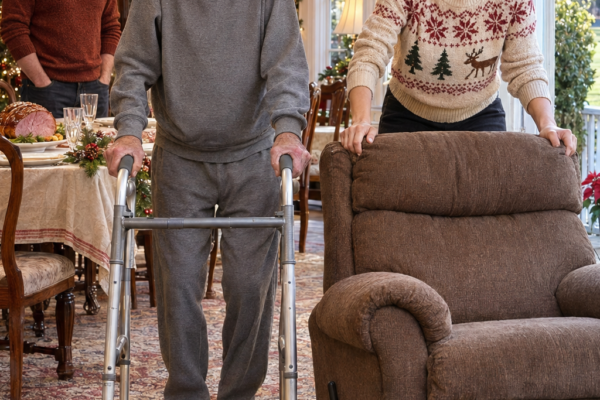
My Sister-in-Law Gave Gifts to 10 Grandkids and Told My Adopted 7-Year-Old Santa Only Visits Real Grandchildren—Then Grandma’s Phone Buzzed
Complete story · 10 chapters · about 52 minutes · ending included
Chapter 1 · Chapter 2 · Chapter 3 · Chapter 4 · Chapter 5 · Chapter 6 · Chapter 7 · Chapter 8 · Chapter 9 · Chapter 10
Chapter 1: The Gift Line That Stopped at Ten
At 6:02 p.m., Tabitha handed the tenth gift to a child and told my seven-year-old daughter, “Santa only visits real grandchildren, sweetie,” while Maya stood beside me with empty hands.
The last red package had gone to her cousin.
Maya had been waiting at the end of the line, her fingers folded over the front of her green sweater, watching Tabitha work her way along the row with the clipboard held at her side.
I looked at the gifts, then at my daughter.
“Come sit with me, bug.”
My voice came out even.
I reached for Maya’s hand and guided her away from the tree before she had to ask where hers was.
Tabitha kept smiling.
She had a bright, practiced way of speaking that made even an insult sound like something she expected people to thank her for.
She held the clipboard in one hand and passed the empty space at the end of the line as if it had always been meant to stay empty.
Derrick stood near the living room doorway.
My husband was forty-three and had spent years trying to keep family gatherings from turning into arguments.
When Tabitha said the word real, he looked down at the floor.
That hurt almost as much as the line itself.
There were twenty-three relatives in Tabitha’s house in Cedar Rapids that Christmas Eve.
The adults had gathered around the living room and dining room, while the eleven grandchildren had been called up for gifts.
Maya was the youngest of my worries and the clearest one in front of me.
She was seven, a second grader, adopted in Linn County in 2021.
She had been our daughter for three years.
She called Tabitha Aunt Tabitha and had never once asked whether she counted.
I had brought her to the tree expecting her to be counted with the ten cousins.
I had not asked Tabitha about the gifts beforehand.
It was Christmas.
I thought I knew what that meant.
Maya walked beside me without pulling away.
She did not cry or ask for an explanation.
Her eyes stayed on the packages in the other children’s arms.
I found a place for her beside my chair.
She sat with her knees together and rested her hands in her lap.
I wanted to take her coat and leave.
I also knew that if I stood up in front of the family, Tabitha would turn the whole thing into a disagreement about my attitude, and Maya would have to listen to people decide whether she belonged.
So I stayed.
Tabitha had hosted Christmas for fourteen years.
She knew where every serving spoon belonged, which cousin wanted the corner seat, and when to tell people to move so she could get a photograph.
She kept the family tree and the gift list.
People praised her for remembering birthdays and making room for everyone.
I had watched her work hard at it, and I had let a lot of small remarks pass because it seemed easier than challenging the woman who hosted every holiday.
I was forty-one.
I ran my own dog-grooming shop.
I could manage a nervous old retriever and a customer who wanted a miracle in twenty minutes.
At family gatherings, I had become good at swallowing a comment and moving on.
There had been four years of little slights, most of them easy to explain away one at a time.
This one was said where Maya could hear it.
Across the room, the children were comparing what they had been given.
One held a stuffed animal against her cheek.
Another was already trying to work the tape off a box.
Maya watched them, then looked at me.
“Did I miss mine?” she asked.
“No, bug.”
I did not know what else to say.
The answer was too small for what had happened, but I could not give her a reason I did not have.
At 6:04 p.m., Geraldine’s phone buzzed.
My mother-in-law stood beside the tree, her fingers curled around the top rail of a dining chair.
At seventy-six, Geraldine was not a woman who hurried to fill a quiet space.
She had been widowed for years and had kept the books at a grain co-op for thirty-one of them.
She trusted a written total more than a confident explanation, and she rarely accused anyone until she had something in front of her.
The phone vibrated against her palm.
She glanced down.
On October 9, after a $412 fraud charge appeared on her card, Geraldine had asked me to turn on the card alerts on her phone.
I had done it at her kitchen table, checking the settings while she watched.
The alerts came in a batch near six each business day.
She had asked because she wanted to see what was happening on the account without having to call anyone.
I knew the sound.
So did she.
Geraldine looked at the screen and stopped moving.
Around her, the room seemed to pause.
Maya sat beside me with her hands empty, and Geraldine stood under the tree, staring at something I could not yet see.
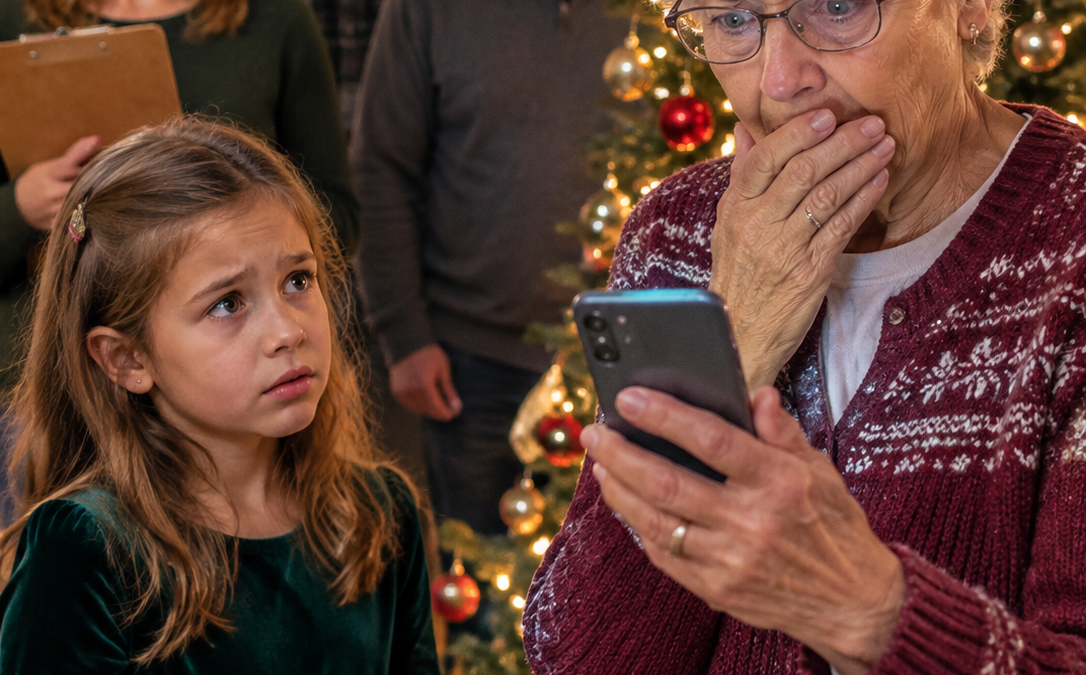
Then she turned the phone toward me.
REFUND $189.00, CEDAR VALLEY CYCLE.
The words were plain.
A refund.
A bicycle shop.
One hundred eighty-nine dollars.
I looked from the screen to Geraldine’s face.
She did not explain.
Her mouth had tightened, and the hand holding the phone had gone still.
Picking up where the Facebook post left off
I wanted to ask what she had bought, who had returned it, and why the alert had arrived two minutes after Tabitha had left Maya out of the gift line.
I did not ask.
Not there.
Tabitha noticed Geraldine looking at the phone.
She stepped closer, still holding her clipboard.
“Everything okay, Mom?”
Geraldine locked the screen and slipped the phone into her pocket.
“Serve your ham.”
Tabitha blinked once, then turned toward the dining room.
She gave the relatives near her a small smile and told them dinner was ready.
The bright voice came back as if nothing had interrupted it.
Geraldine did not follow right away.
She watched Tabitha move through the room, then looked at Maya.
My daughter had begun smoothing the seam of her sweater with one thumb.
She was trying to be patient.
That was what made my throat hurt.
I leaned toward her.
“You can stay right here with me.”
“Okay,” she said.
She rested her shoulder against my arm.
I kept my hand over hers, and the family began carrying plates toward the dining room.
Nobody asked why Maya had no present.
Nobody said Tabitha had made a mistake.
The children went on talking about their gifts.
I could have taken Maya home.
I could have told Derrick to get her coat and come with us.
Instead, I stayed in my chair while Geraldine put a hand on the back of it.
She passed close enough that her sleeve brushed mine.
Her face was composed again, but she did not look toward Tabitha.
“I paid for eleven,” she whispered.
Then she kept walking toward the dining room, leaving me with the refund notification and no answer about what had been returned.
Chapter 2: The Woman Who Wanted Paper
At 6:15 p.m., I stood among the coats with Maya’s pink winter jacket in my hands.
Geraldine had followed me into the hallway.
Behind us, the family was moving toward the dining room. I could hear chairs scraping and Tabitha calling for someone to bring the rolls.
Maya stood close to my side.
“Are we going home, Mom?”
I looked down at her.
She had already slipped one arm into her jacket. Her other hand held the zipper near her chin.
I wanted to tell her yes.
I wanted to take her out of that house, put her in the car, and let her forget the people who had just told her she wasn’t a real grandchild.
But Geraldine was watching me.
“I paid for eleven,” she had whispered beside the tree.
Now she reached into her cardigan and took out her phone.
“December eighth,” she said. “I lent Tabitha my card.”
I looked at her.
“Your card?”
“My credit union card. I stopped driving in the winter, and she offered to handle the Christmas shopping.”
Geraldine spoke quietly.
“She said she could buy the children’s gifts in one trip. I gave her permission to use the card for that.”
I glanced toward the dining room.
“So she bought all eleven presents with your money?”
“Yes.”
Geraldine’s expression barely changed.
“I expected eleven gifts. I didn’t expect to be standing here watching one child get nothing.”
She tapped her phone against her palm.
“The gift for Maya was a bicycle. Teal. One hundred eighty-nine dollars.”
I looked toward the living room.
Maya had wanted a bicycle for months. She had drawn one with a basket and colored it teal. I remembered her showing me the picture at our kitchen table.
She had even drawn a little bell on the handlebar.
I had told her we would talk about it closer to Christmas.
I hadn’t known anyone had bought it.
“Tabitha bought her that bike?” I asked.
“That’s what the charge was for.”
“And the refund?”
“Cedar Valley Cycle. One hundred eighty-nine dollars.”
Geraldine lowered her phone.
“I don’t know what happened between the purchase and that refund.”
I looked at Maya’s jacket.
“Then let’s go to the shop.”
“Not yet.”
“Mom, she just told my daughter Santa doesn’t visit real grandchildren.”
“I heard her.”
Geraldine didn’t raise her voice.
“I heard every word.”
I felt my jaw tighten.
“Then why are we still standing here?”
“Because a refund could be a swap. Give me two hours.”
She held my eyes.
“I want the paper before I say anything.”
I looked down at Maya.
She was waiting for me to finish deciding whether we were leaving. Her little fingers were still wrapped around the zipper.
“Two hours is a long time,” I said.
“I know.”
“And Maya has to stay here.”
“I know that too.”
Geraldine put her phone away.
“I won’t ask you to pretend tonight didn’t happen. I am asking you to let me find out exactly what happened.”
I could see the sense in that.
I could also see my daughter standing in a hallway full of relatives’ coats, waiting for her mother to take her somewhere safe.
I had spent years trying to avoid arguments with Tabitha. I knew how quickly she could turn a question into an accusation about someone else’s behavior.
If I left now, she would have the rest of the evening to tell the family whatever version suited her.
Still, staying meant Maya would hear the laughter, the conversations, and the children talking about their presents.
It meant asking her to remain in the house where she had just been excluded.
I hated that choice.
“Two hours,” I told Geraldine.
She nodded.
I helped Maya take her arm out of the jacket.
“We’re staying a little longer, bug.”
“Okay, Mom.”
She didn’t ask why.
That made it harder.
I hung her jacket back on the hook and took her hand.
As we walked toward the living room, I noticed the framed family tree poster in the hallway.
It hung between the coat closet and the entrance to the dining room.
Tabitha had made it herself several years earlier. She updated it whenever someone married, had a child, or joined the family.
The poster had thick branches and little paper leaves attached beneath each name.
I stopped.
There were ten leaves on the grandchildren’s branch.
I counted them without meaning to.
Ten.
Maya’s name wasn’t there.
I had seen that poster before. I had walked past it at birthdays, Thanksgiving dinners, and Christmas gatherings.
I’d always assumed Tabitha simply hadn’t gotten around to updating it.
Now I stood looking at the empty space beneath the branch.
Maya tugged gently at my hand.
“Mom?”
“I’m coming.”
I moved on.
Geraldine went toward the dining room, but I headed into the kitchen to find Maya something to drink.
Tabitha was standing beside the counter, arranging serving dishes.
Her clipboard lay near the fruit bowl.
She glanced at me when I entered.
“Having a nice Christmas?” she asked.
Her voice was lower now. The relatives were in the next room, and she no longer needed to perform for them.
I took a glass from the cabinet.
“It’s been a day.”
Tabitha gave a small laugh.
“Don’t start, Kathryn.”
I turned on the faucet.
“You made your point.”
“I made no point. I gave the children their gifts.”
“You left Maya standing there.”
Tabitha put down the serving spoon.
“You wash dogs and filled out paperwork. I gave this family three babies.”
I turned off the water.
For a second, I couldn’t find an answer.
She had said it so casually.
As if the years I had spent raising Maya, the nights she had climbed into our bed after a bad dream, and the school mornings when she searched for her missing shoes were all erased by a sentence about paperwork.
I dried my hands.
“Maya is my daughter.”
Tabitha looked toward the doorway.
“Keep your voice down.”
I stared at her.
She had said that after telling a child she wasn’t real enough for Santa.
I picked up Maya’s glass and walked out.
There was no point arguing with Tabitha in her kitchen. She would deny the cruelty before I finished describing it.
Back in the living room, Maya sat beside Derrick.
He had pulled his chair closer to hers. He was asking her about something on the television, but she wasn’t paying much attention.
When I handed her the drink, she thanked me.
Then she leaned against my arm.
I sat beside her and watched relatives carry food to the table.
Geraldine was near the dining room entrance, speaking quietly with one of her sisters. She didn’t appear upset, but I knew her well enough to recognize when she was concentrating on a problem.
She had kept thirty-one years of grain co-op accounts.
She knew how to follow a number from one column to another and how to find the paper behind a claim.
If she wanted two hours, she intended to use them.
I looked once more toward the hallway.
The framed poster was visible from where I sat.
Ten leaves.
I thought about the bike, the refund, and the card Geraldine had lent Tabitha.
Why would someone return a child’s Christmas gift and keep none of the money?
There was something I wasn’t understanding.
At 6:15, I knew the refund matched Maya’s bicycle. I knew Geraldine had paid for eleven gifts, and I knew Tabitha had chosen not to give one of them.
But I didn’t yet know why.
Geraldine came back and sat beside me.
She waited until Maya had gone to Derrick to show him something before speaking.
“There’s something else you need to know about that poster.”
I turned toward her.
She looked down the hallway, where the ten paper leaves hung inside their frame.
“On December eighteenth,” she said, “I asked Tabitha to add Maya to that family tree.”
Chapter 3: The Text From the Garage
At 6:50 p.m., Geraldine stood across the kitchen from Tabitha and asked where Maya’s Christmas present had gone.
I was drying a plate beside the sink.
Tabitha glanced up from the serving dishes.
“What present?”
“The bicycle,” Geraldine said. “The one you bought for Maya.”
Tabitha’s expression changed just enough for me to notice.
Then she smiled.
“Kathryn told me she already got Maya a bike.”
My hand stopped against the plate.
I looked at Geraldine, waiting for her to answer.
She didn’t raise her voice or accuse Tabitha of anything.
“You’re sure that’s what happened?”
“That’s what Kathryn told me.”
Tabitha picked up a serving spoon and moved it from one dish to another.
I kept drying the same plate.
The towel passed over the rim, then the bottom, then the rim again. I knew the plate was already dry, but I needed something to do with my hands.
I wanted to tell Tabitha she was lying.
I wanted to ask why she had told Geraldine that Maya already had a bicycle when the refund had appeared on Geraldine’s card.
Instead, I watched my mother-in-law.
Geraldine had spent thirty-one years keeping other people’s books. She knew the difference between asking a question and making an accusation.
She took out her phone.
“I’d like to check something.”
Tabitha gave a little shrug.
“Whatever you need, Mom.”
Geraldine opened her messages and scrolled backward.
I set the plate down.
“Did you find it?” I asked.
She nodded.
“December fourteenth.”
She turned the screen toward me.
The message was from Tabitha.
“All 11 done! Maya’s bike is hiding in my garage. Don’t tell Kathryn.”
I read the words without touching the phone.
The bicycle had existed.
Tabitha had bought it.
She had known exactly whose present it was, and she had planned to keep the surprise from me.
My stomach tightened.
Geraldine moved her thumb farther down the conversation.
The next message was dated December eighteenth.
She showed me that one too.
“The tree is for blood, Mom. Let’s leave it.”
I looked up at her.
The hallway poster came back to me. Ten leaves on the grandchildren’s branch, with no place for Maya.
Geraldine put the phone down on the counter.
“She knew what I was asking,” she said quietly.
Tabitha reached for a dish towel.
“Mom, I don’t think we need to go through old messages at Christmas.”
Geraldine slipped the phone into her pocket.
“You’re right. We don’t need to.”
She walked out of the kitchen.
Tabitha watched her go, then turned toward me.
“Are you going to help with dinner, Kathryn?”
I picked up another plate.
“I’m already helping.”
She didn’t answer.
I knew then that Geraldine’s question had warned Tabitha. She understood that the refund hadn’t gone unnoticed, and she knew we were looking for an explanation.
The messages gave us something she couldn’t talk her way around.
But they didn’t show what happened at Cedar Valley Cycle on December nineteenth.
I needed to know what the shop had recorded.
A few minutes later, Tabitha called from the kitchen for someone to bring the rolls.
I went toward the pantry.
The clipboard was hanging on its usual nail.
Tabitha kept it there because she liked having the Christmas list close at hand. She could check off presents, write down food assignments, and keep track of which relatives had arrived.
I had seen her carry it around the house earlier.
Now it hung beside the pantry door.
I reached for the rolls on the shelf, then noticed the list clipped to the board.
The children’s names were written in a neat column.
I moved closer.
Ten names had marks beside them.
Maya’s name was near the bottom.
A thick line had been drawn through it.
Underneath, in Tabitha’s handwriting, were the words:
“returned 12/19 — 10 only”
I stood there with the rolls in my hands.
The words were short enough to fit on one line.
They were also clear enough that I couldn’t mistake what they meant.
This wasn’t a forgotten present.
Someone had remembered Maya when the gift was purchased, remembered her when it was returned, and then crossed her off the list.
I glanced toward the kitchen doorway.
Nobody was looking in my direction.
I took my phone from my pocket and photographed the clipboard.
I made sure the crossed-out name and the note beneath it were visible.
Then I put my phone away, took the rolls, and left the clipboard hanging where I had found it.
I didn’t tear off the list.
I didn’t move the paper.
Tabitha would know someone had been looking if it disappeared.
I carried the rolls into the dining room.
Maya was sitting between Derrick and one of her cousins. She had a napkin folded beside her plate and was listening while the other children talked.
When I put the basket down, she looked up at me.
“Thank you, Mom.”
I brushed her shoulder with my fingers.
“You’re welcome, bug.”
She smiled and returned to her conversation.
I took the empty seat beside Geraldine.
My mother-in-law didn’t ask whether I had found anything, and I wasn’t ready to discuss the photograph with the whole family nearby.
Supper continued.
The adults passed dishes around the table, and Tabitha kept checking whether anyone needed more ham or potatoes.
She was especially attentive whenever someone looked in her direction.
At one point, she stood to refill a serving dish.
Geraldine’s sister Bernice glanced toward Maya.
“Sweetheart, what did you get for Christmas?”
Maya looked down at her plate.
“I didn’t get one yet.”
Bernice turned toward Tabitha.
“I thought there were eleven children this year. Did I miss something?”
Tabitha didn’t hesitate.
“It slipped my mind with eleven kids to do.”
She said it with a little laugh, as if the mistake were ordinary and harmless.
Bernice looked at Maya, then back at Tabitha.
“Oh.”
Geraldine kept her hands folded beside her plate.
I felt my fingers tighten around my fork.
Tabitha had just told her mother-in-law that I had already bought Maya a bicycle.
Now she was telling Bernice she had forgotten to buy her anything.
The clipboard said the bicycle had been returned.
The messages said Tabitha had bought it and knew Maya’s name belonged on the list.
Three different explanations, and none of them matched the paper or the messages.
I looked at Geraldine.
She was watching Tabitha, not angrily, but with the careful attention she used when checking a set of accounts.
Bernice didn’t ask another question.
Maya continued eating.
I wished she had been somewhere else, somewhere she didn’t have to hear adults explain why she had been left out.
But I had agreed to stay.
Now I had to make the time count.
After supper, I sat beside Derrick while relatives cleared the table. Maya joined the other children near the television.
I kept my phone resting across my knees.
The photograph of the clipboard was saved.
Geraldine had the messages.
We had the refund notification.
What we didn’t have was the shop’s record of the return.
Cedar Valley Cycle had been closed for Christmas Eve. I couldn’t walk in and ask someone to explain a transaction from the nineteenth, and I couldn’t assume they would discuss another person’s purchase with me.
I needed someone who could help us find the right person to ask.
I opened the contact list on my phone and scrolled through my clients.
I stopped at Merle.
He owned Cedar Valley Cycle, and I had groomed his Labradoodle for six years.
I knew his dog, his usual appointment schedule, and the way he preferred to be contacted about grooming appointments.
My thumb rested over his name.
For the first time that evening, I had a place to start.
I opened our message thread and looked at the last appointment reminder.
Then I began typing.
Chapter 4: The Slip With Her Signature
At 7:10 p.m., I had Tabitha’s messages and a photograph of her clipboard, but I still didn’t have the shop’s record of the return.
I stood in the garage with my phone against my ear.
The door leading into the kitchen was closed, and I could hear relatives talking on the other side.
Merle answered after several rings.
“Kathryn? Everything okay?”
“Sorry to call tonight. I need to ask you about a transaction at Cedar Valley Cycle.”
He knew me through my grooming shop. For six years, I had taken care of his Labradoodle, and we’d exchanged plenty of appointment reminders and ordinary messages.
He also knew I wasn’t someone who called on Christmas Eve without a reason.
“What’s going on?”
I glanced toward the house.
“There’s a bicycle return from December nineteenth. A teal bike. One hundred eighty-nine dollars.”
Merle didn’t answer immediately.
“I need to know what the return record says,” I continued. “The purchase was made on someone else’s card, and the cardholder is here.”
“Are you the cardholder?”
“No. My mother-in-law is.”
“Then I can’t read a customer’s record to you, Kathryn. Only the cardholder can ask me for that information.”
“I understand.”
I rubbed my forehead.
“Could you speak to her if I bring her out here?”
“Of course. She’ll need to identify the purchase.”
“Thank you.”
I ended the call and opened the door into the kitchen.
Geraldine was standing near the counter, listening while Bernice talked about the children.
I caught her eye and motioned toward the garage.
She excused herself and followed me.
“Merle answered,” I said.
Geraldine nodded.
“What does he need?”
“He needs to speak with the cardholder.”
“Then let’s ask.”
She didn’t hesitate.
I called Merle back and put the phone on speaker.
He greeted Geraldine politely.
“I’m Geraldine Larson,” she said. “I bought Christmas gifts with my credit union card.”
“Can you give me the last four digits and the purchase date?”
“Four four one seven. December fourteenth, 2024.”
I watched Geraldine while she spoke.
Her voice was steady.
She didn’t mention Tabitha or the family tree. She didn’t explain what had happened at Christmas dinner.
She simply gave him the information he needed.
Merle said he would check the transaction.
I heard him typing on his end.
A moment later, he spoke again.
“I found the return.”
Geraldine looked at me.
“Can you send me the record?” she asked.
“I can email the signed slip to you.”
“Please do.”
Merle confirmed the email address on her phone.
Then we waited.
Geraldine held her phone in both hands while I stood beside her.
A notification appeared.
She opened the email.
The attachment showed the return from December nineteenth.
The amount was $189.00.
The condition was listed as new.
The reason was written as “no longer needed.”
At the bottom was a signature.
T. Larson.
I leaned closer.
Tabitha’s name was on the slip.
I looked at Geraldine.
She didn’t say anything for a few seconds.
Then she enlarged the document and checked the details.
“New,” she said quietly.
I nodded.
The bicycle hadn’t been returned because it was damaged.
The shop had recorded its condition as new, and the reason given was that it was no longer needed.
Tabitha had signed the slip herself.
Geraldine saved the email.
I felt my hands go cold.
Since Geraldine showed me the refund at 6:04, I’d been wondering whether there was an explanation we hadn’t considered.
Maybe the bicycle had been exchanged. Maybe something had gone wrong with the order.
Now we had the shop’s record.
The bicycle had been bought for Maya on December 14. On December 18, Geraldine had asked Tabitha to add Maya to the family tree poster. The very next day, December 19, Tabitha returned the bicycle and marked it as no longer needed.
Geraldine lowered her phone.
“Thank you, Merle,” she said.
He wished us a Merry Christmas.
I thanked him too and ended the call.
When I turned toward the garage doorway, Nathaniel was standing there.
Tabitha’s husband had one hand near the doorframe.
His eyes moved from Geraldine’s phone to my face.
He had seen us together.
He didn’t ask what we were doing.
He didn’t ask what was on the screen.
He simply stepped back and walked into the house.
I watched him go.
Nathaniel was thirty-nine and worked installing HVAC systems. He usually avoided family disagreements with a quiet “let’s not” whenever voices started rising.
I couldn’t tell whether he had heard anything on the call.
I only knew he had seen Geraldine holding the document.
“Do you think he knows?” I asked.
Geraldine put her phone away.
“He saw us.”
That was all she said.
We went back inside.
The family was still gathered around the dining room, and the kitchen counter was crowded with dishes.
I didn’t want to discuss the slip where Tabitha could hear us.
Geraldine kept her phone close.
I went upstairs to check on Maya.
She was sitting near the edge of the guest bed, holding a small ribbon that had come off one of the packages.
Derrick stood beside the dresser.
When I entered, Maya looked up.
“Mom, can I ask you something?”
I sat beside her.
“Sure.”
She turned the ribbon between her fingers.
“If Santa doesn’t know me, is Grandma still my grandma?”
I felt my throat tighten.
She wasn’t asking about the bicycle anymore.
She was asking whether the woman who had stood beside the tree still belonged to her.
“Grandma Geraldine loves you,” I said. “That hasn’t changed.”
Maya looked down at the ribbon.
“But Aunt Tabitha said Santa only visits real grandchildren.”
I brushed a loose strand of hair away from her face.
“I heard her, sweetheart.”
“Does Grandma know I’m real?”
I took her hand.
“Grandma knows exactly who you are.”
Maya leaned against me.
Derrick shifted beside the dresser.
“Let’s not do this at Christmas, Kath.”
I looked at him.
“She’s seven, Derrick.”
“I know.”
“She heard what Tabitha said.”
He rubbed the back of his neck.
“I know that too. I just don’t want this turning into a family fight tonight.”
I looked at Maya.
She was still holding the ribbon.
I wanted Derrick to understand that this had already become a fight for her, even if he preferred not to call it one.
But I didn’t argue.
I stayed beside my daughter until she put the ribbon on the nightstand.
When I stood, Derrick followed me into the hallway.
“Can we talk later?” he asked.
I nodded without promising anything.
The stairs were just ahead.
I had taken only a few steps when Tabitha came around the corner.
She stopped directly in front of me.
She glanced toward the guest bedroom, then back at me.
“I saw you and Mom in the garage.”
I said nothing.
Tabitha lowered her voice.
“Half your clients came through my neighborhood page. Remember that.”
She stepped aside just enough to let me see the stairs behind her.
I understood what she was warning me about.
My shop paid my bills.
The dogs came through referrals, local recommendations, and people who trusted me with their pets.
Tabitha knew that.
She had just reminded me that she could make those connections harder to keep.
I looked at her, then at the phone in Geraldine’s hand downstairs.
We had the signed slip.
And Tabitha had decided my business was something she could threaten to take away.
Chapter 5: The Rumor Before the Reading
At 7:40 p.m., Bernice found me near the dining room and told me Tabitha was questioning Geraldine’s ability to manage her own affairs.
She waited until we were away from the others before speaking.
“I need to tell you something, Kathryn.”
I turned toward her.
“What happened?”
Bernice glanced toward the living room, where Tabitha was collecting empty glasses.
“She was talking to your aunts earlier. She said your mother-in-law hasn’t been herself lately.”
I felt my stomach tighten.
“What exactly did she say?”
Bernice lowered her voice.
“She said Geraldine is slipping. That she’s getting confused about money and probably shouldn’t be handling her accounts anymore.”
I looked toward Geraldine.
She was sitting near the dining room entrance, her phone tucked beside her.
Bernice continued.
“Tabitha said Nathaniel should take over those accounts. She made it sound like she’s worried about Geraldine.”
“Nathaniel?”
“That’s what she said. That he’s her son, he’s responsible, and he ought to be looking after things.”
I pressed my lips together.
Geraldine had just shown us the messages, and she had the shop’s signed return slip saved on her phone.
Tabitha knew we had been looking.
Now she was telling relatives that Geraldine couldn’t be trusted to understand her own money.
“Did the aunts believe her?” I asked.
Bernice hesitated.
“Some of them seemed concerned. Others didn’t say much.”
I looked at the table.
There were still serving dishes waiting to be cleared, and Maya was sitting with Derrick in the next room.
“Thank you for telling me.”
Bernice touched my arm.
“Be careful. Tabitha has been saying it like it’s already settled.”
I walked back toward Geraldine.
She saw my expression and moved her chair slightly so I could sit beside her.
“What did Bernice tell you?” she asked.
I leaned closer.
“Tabitha has been talking to the aunts. She’s saying you’re slipping and Nathaniel should take over your accounts.”
Geraldine looked down at her hands.
For a few seconds, she said nothing.
Then she asked, “Did Bernice tell you who else heard?”
“She said some of the aunts were concerned.”
Geraldine nodded.
I wanted to tell her that she didn’t have to prove anything to those people. She had worked for thirty-one years keeping books, and nobody who knew her could honestly believe she had forgotten how to read a number.
But the rumor had already traveled.
If Geraldine stood in front of the family at eight, opened her phone, and appeared confused, Tabitha would have exactly what she wanted.
The relatives might believe the woman who had been warning them all evening.
They might think the messages were misunderstood or that the refund meant something Geraldine couldn’t remember.
And Maya would hear every word.
I looked across the room.
My daughter was sitting with Derrick, swinging her feet beneath the chair.
She had already spent the evening wondering whether she was a real grandchild.
Now she might have to watch people decide whether her grandmother was a capable person.
“Mom, we don’t have to do this tonight,” I said.
Geraldine turned toward me.
“Do what?”
“Read anything in front of them. We have the messages and the slip. We can deal with it another day.”
She shook her head.
“Another day gives Tabitha another day to explain it for me.”
I understood.
Still, I worried about what would happen if the family didn’t listen.
Geraldine had a plan.
“For forty-one years, I’ve read Luke aloud at eight on Christmas Eve,” she said.
I looked toward the tree.
“Every year?”
“Every year.”
She had started the tradition long before I married Derrick. The family gathered around the tree, and Geraldine read the Christmas story while everyone listened.
It was one of the few things she never changed.
“Everyone knows where to sit,” she continued. “They’ll all be there.”
I glanced at her phone.
“Are you going to read the messages?”
“I’m going to read what needs reading.”
She didn’t explain further.
I knew she had the evidence. I knew she could show the family the refund, the messages, and the signed slip.
But I also knew that a phone could look like a confusing collection of numbers to someone who had already been told its owner was confused.
“Mom, if you get up there and they start questioning you, I don’t want Maya hearing it.”
Geraldine looked toward my daughter.
“Then keep her close.”
I nodded.
Across the room, Tabitha was speaking to one of her aunts. Her smile had returned, and she was gesturing toward the tree.
She looked completely comfortable.
That bothered me more than if she had been angry.
At 7:50, Tabitha began clearing the dining room.
She collected plates, asked people to move their chairs, and reminded the children that Grandma would be reading soon.
Nobody had asked her to organize the reading.
She did it herself.
“Come on, everyone,” she called. “Let’s get around the tree. Mom’s going to do her Christmas reading.”
Her voice carried through the house.
Relatives began leaving the dining room and gathering in the living room.
Bernice helped one of the older aunts find a comfortable chair.
Nathaniel stood near the doorway, his hands in his pockets.
He glanced toward Geraldine, then looked away.
Tabitha moved a chair closer to the tree.
She straightened the decorations and shifted a small table so there would be room for the family Bible.
I watched her arrange everything.
She had spent fourteen years hosting Christmas. She could position every chair and decoration until the room felt inviting, even when the people inside it were hurting one another.
I watched the relatives settle around the tree.
Twenty-three people had come to Tabitha’s house that evening.
Now they were gathered in the room where Maya had been told she wasn’t a real grandchild.
The same people who had watched her stand empty-handed were preparing to hear Geraldine read.
I wondered how many of them had already heard the rumor.
Bernice sat near her sister.
Nathaniel remained close to the doorway.
Derrick stood behind my chair, his hands resting on its back.
I looked at him.
He gave me a small shake of his head, as if asking me not to start anything.
I looked away.
At 7:58, Tabitha brought the family Bible to Geraldine.
“Here you go, Mom.”
She placed it on Geraldine’s lap, beside Maya.
Geraldine looked at the cover but didn’t open it.
I could hear the clock in the adjoining room.
Two minutes until eight.
The phone was still in Geraldine’s hand.
I knew the risk. If she stumbled over the dates or struggled to find the messages, Tabitha’s story could become the one everyone remembered.
Maya would be sitting right there to hear it.
I leaned toward Geraldine.
“Are you sure?”
She looked at me.
Then she lifted the Bible and placed it in my hands.
“Hold this. I won’t need it.”
I took the book and held it against my knees.
Geraldine kept Maya close and turned her phone screen toward herself.
Around the tree, the family waited for her to begin.
Chapter 6: The Grandmother Who Read the Refund
At 8:00 p.m., Geraldine held her phone in front of twenty-three relatives and began reading instead of opening the family Bible.
Nobody had expected that.
The Bible rested on my knees. Maya was curled against Geraldine, her legs tucked beneath her sweater. Around the tree, the family waited for the Christmas reading they had heard for forty-one years.
Tabitha stood near the fireplace.
“Mom?” she said.
Geraldine didn’t look up.
“I’d like everyone to hear something before we begin.”
She unlocked her phone and opened the bank alert.
“December twenty-fourth, 6:04 p.m. Refund. One hundred eighty-nine dollars. Cedar Valley Cycle.”
A few relatives glanced at one another.
Geraldine held the phone a little higher.
“I lent Tabitha my credit union card on December eighth so she could buy eleven Christmas gifts. The bicycle was purchased on December fourteenth.”
Tabitha folded her arms.
Geraldine continued.
“On October ninth, after someone charged four hundred twelve dollars to my card without permission, I asked Kathryn to turn on the alerts. They come through near six each business day.”
She looked around the room.
“I wanted to know what was happening with my money. That’s all.”
Bernice leaned forward in her chair.
“Then the refund came through tonight?”
“Yes.”
Geraldine lowered the phone.
“And Maya was standing under the tree without a present.”
Tabitha stepped away from the fireplace.
“Mom, Kathryn told me she already got Maya a bike.”
She spoke in the same bright voice she had used earlier, as if repeating the explanation would make it more convincing.
Geraldine looked at her.
“That’s what you told me in the kitchen.”
“Because that’s what happened.”
Geraldine touched the screen.
“I’d like to read you something you sent me on December fourteenth.”
She held the phone where she could see the message.
Then she read it aloud.
“All 11 done! Maya’s bike is hiding in my garage. Don’t tell Kathryn.”
Nobody moved.
I looked at Tabitha.
Her expression had changed. The smile she had worn while arranging the chairs was gone.
Geraldine didn’t hurry.
She let the words sit with the people who had just heard them.
Bernice looked toward Maya.
Maya was watching Geraldine’s face, not the phone.
Tabitha cleared her throat.
“That was before I discovered the problem with the bicycle.”
Geraldine waited.
“The frame was bent, so the shop took it back.”
Nathaniel shifted near the doorway.
I remembered him standing in the garage when Merle sent the email. He had seen Geraldine and me examining the record, but he hadn’t said anything.
Geraldine kept her eyes on Tabitha.
“Is that what happened?”
“Yes, Mom.”
Tabitha turned toward the relatives.
“I tried to handle Christmas for everyone. There were eleven children, and mistakes happen.”
Then she looked directly at Geraldine.
“Kathryn set up that phone. Mom gets confused. Who knows what it’s saying?”
I felt my fingers tighten around the family Bible.
That was the explanation Bernice had warned me about. Tabitha had spent the evening telling the aunts Geraldine was slipping.
Now she was using the phone itself as proof that Geraldine couldn’t be trusted.
Geraldine didn’t argue about her memory.
She adjusted Maya on her lap and looked around the room.
“I kept the books at the grain co-op for thirty-one years,” she said. “I know how to follow a charge, a refund, and a date.”
Her voice remained calm.
“I know what I paid. I know what I asked for. And I know what I received.”
She moved her thumb across the screen.
“There’s another message.”
Tabitha shook her head.
“Mom, please.”
Geraldine continued.
“This one is from December eighteenth.”
She read the words without changing her tone.
“The tree is for blood, Mom. Let’s leave it.”
The room went quiet.
I looked toward the hallway.
The framed family tree poster was still hanging there, with its ten leaves beneath the grandchildren’s branch.
Maya shifted against Geraldine.
My mother-in-law put an arm around her and held the phone in her other hand.
Nobody spoke.
I could hear someone moving a chair in the dining room, but even that stopped.
Tabitha stared at her mother-in-law.
For a woman who had spent fourteen years managing the family Christmas, she suddenly seemed unsure where to stand.
Bernice looked down at her hands.
One of the aunts turned toward Nathaniel, then back to Geraldine.
Derrick stood behind my chair.
He hadn’t moved since the reading began.
I wanted him to say something. I wanted someone besides Geraldine and me to acknowledge what those messages meant.
But the room offered no help.
Maya lifted her head.
“Grandma?”
Geraldine kissed the top of her hair.
“I’m here, sweetheart.”
Maya settled back against her.
I watched Tabitha’s face.
She had been willing to tell twenty-three relatives that my daughter wasn’t a real grandchild. She had been willing to let Geraldine believe I had bought the bicycle myself. Now the messages had put her own words in front of the people she had spent years trying to impress.
Still, she wasn’t admitting anything.
She looked around the room, searching for someone who might agree with her.
“I don’t think this is fair,” she said.
Geraldine waited.
Tabitha pointed toward the phone.
“Those are just messages. You can take anything out of context.”
Geraldine didn’t answer.
I looked at the phone.
The refund alert was there. The December fourteenth message was there. The December eighteenth message was there.
We had the signed return slip saved in Geraldine’s email too.
But the relatives hadn’t seen it.
They had heard an old woman read words from a screen, and Tabitha had already given them a reason to question her.
I wondered how many people were still thinking about Bernice’s report.
How many believed Geraldine was confused?
How many thought Tabitha was simply a daughter-in-law trying to protect her husband’s mother?
The question was no longer whether Geraldine could explain what happened.
It was whether anyone would believe her without something they could hold in their hands.
Was there paper, or only an old woman’s phone?
Tabitha stepped closer to the tree.
Her expression softened.
She gave Geraldine a small smile, the kind she used when speaking to relatives who disagreed with her about dinner arrangements.
“Show them a real receipt, Mom, or apologize to me.”
Geraldine looked at her.
I kept the Bible closed on my knees.
Tabitha was still smiling, but she kept watching Geraldine’s phone.
She knew there was something else we hadn’t shown them.
Chapter 7: The Clipboard on the Pantry Nail
Tabitha was still standing beside the tree when Geraldine opened the email Merle had sent.
“You wanted a real receipt,” Geraldine said. “Here it is.”
She enlarged the attachment on her phone and held it where the relatives could see.
“This is the return from Cedar Valley Cycle, dated December nineteenth. The bicycle was returned in new condition. The reason entered was ‘no longer needed.’”
She paused.
“The person who signed the slip was T. Larson.”
Nobody interrupted.
Geraldine continued.
“The refund was one hundred eighty-nine dollars. It went back to my card. The shop did not record a damaged bicycle.”
I watched Tabitha’s face.
She had told us the frame was bent. Now her own signature sat beneath a different explanation.
Geraldine lowered the phone.
I knew what she wanted next.
The shop slip proved the return, but the clipboard in the pantry showed what Tabitha had done with Maya’s name afterward.
I turned toward Bernice.
“Bernice, it’s on the pantry nail. Would you read line eleven?”
Bernice looked at me, then toward the kitchen.
“What’s on the pantry nail?”
“The Christmas clipboard. The list Tabitha has been using.”
Tabitha took a step forward.
“Why does that matter?”
Bernice stood.
She walked into the kitchen, and I could hear her opening the pantry door.
A moment later, she returned with the clipboard.
She held it close to the lamp beside the tree and followed the names with her finger.
“Line eleven,” I said.
Bernice read aloud.
“Maya Larson. Returned 12/19. Ten only.”
Her eyes moved toward Tabitha.
Then she repeated the explanation Tabitha had given at supper.
“It slipped your mind.”
She didn’t say it kindly.
Tabitha reached for the clipboard, but Bernice held it against her chest for another second before handing it over.
“You wrote this yourself,” Bernice said.
Tabitha took the board.
“It was a busy Christmas. I had eleven children to think about.”
“You remembered to buy the bicycle,” Geraldine replied.
Tabitha looked around the room.
Her eyes settled on the relatives sitting closest to the tree.
“I don’t think anyone understands how much work I do for this family.”
She lifted her chin.
“I gave this family three babies. Nobody handed me a seat here.”
The words came out louder than her earlier explanations.
I glanced toward Nathaniel.
He had been standing near the doorway throughout the reading. His hands were no longer in his pockets.
He turned toward his wife.
“I loaded it, Tab. You said bent. There wasn’t a scratch on it.”
Tabitha stared at him.
“Nathaniel.”
“I loaded the bike.”
He didn’t raise his voice.
“You told me to take it back. I checked the frame. There wasn’t anything wrong with it.”
The room changed in a way I could see on people’s faces.
Until then, Tabitha had been able to suggest that everyone misunderstood the messages, the refund, or the paperwork.
Nathaniel had been there.
He had handled the bicycle himself.
He wasn’t repeating something Geraldine had told him.
He was telling the family what he had seen.
Tabitha shook her head.
“You don’t need to get involved in this.”
Nathaniel didn’t answer.
Derrick moved away from the chair behind me.
He walked over to Maya, who was still sitting on Geraldine’s lap.
He stopped beside them and rested a hand on her shoulder.
My daughter looked up at him.
He bent slightly toward her, but he didn’t say anything.
I was grateful he had finally moved toward her, even if it had taken the whole evening to get him there.
Geraldine adjusted Maya’s sweater.
Then she looked directly at Tabitha.
“You didn’t steal a dime. You just returned my granddaughter.”
She held out her palm.
Tabitha stared at the open hand.
For several seconds, nobody moved.
Then Geraldine said, “My card, please.”
Tabitha looked toward the dining room.
“Mom, this is ridiculous.”
“It’s my card.”
“I was trying to help you.”
“You have finished helping.”
Geraldine kept her palm extended.
I could see the relatives watching Tabitha’s hands.
Finally, Tabitha reached into her pocket.
She pulled out Geraldine’s credit union card and placed it in Geraldine’s palm.
Geraldine closed her fingers around it.
She didn’t make another speech.
She simply put the card away.
Tabitha looked around the room as if expecting someone to tell everyone to sit back down.
“Dinner tomorrow is at my house.”
Nobody answered.
Bernice was the first to stand.
She picked up her plate and carried it toward the kitchen.
One of the aunts followed her, gathering the dishes she had left on the small table.
A cousin reached for a coat.
Another relative began collecting empty glasses.
The movement spread through the room.
People lifted their dishes off Tabitha’s table and started looking for their coats.
No one asked Tabitha what time to arrive tomorrow.
She stood beside the tree with the clipboard pressed against her side.
The family had come expecting the usual Christmas reading, followed by dinner and another evening of conversation.
Instead, they were leaving.
The decorations were still lit. The serving dishes were still on the table. The family tree poster remained in the hallway with its ten leaves.
But the gathering was over.
Geraldine stayed seated until Maya was ready to climb down.
I picked up the family Bible from my chair and held it against my side.
Derrick helped Maya find her sweater.
She looked at the relatives gathering their belongings, then at Geraldine.
“Are we going somewhere else?”
“Not tonight, sweetheart,” Geraldine said.
Maya nodded.
I wished I had an answer that would make up for the empty space under the tree.
A bicycle had been bought for her.
It had been returned.
The money had gone back to Geraldine, and the shop had recorded that the bicycle was new and no longer needed.
But none of that gave Maya a present to open.
I looked at the clock.
It was still Christmas Eve.
By morning, the other children would have their gifts, and Maya would remember standing at the end of the line.
I wondered what anyone could give her now that would make her feel included without pretending the evening hadn’t happened.
Geraldine slipped her phone into her cardigan pocket.
Bernice came over and touched her shoulder.
Nathaniel remained near the doorway, apart from Tabitha.
I took out my own phone.
Merle’s name was still in my messages.
He had sent the return record, and I knew he had been careful not to tell me anything he wasn’t allowed to share.
There was one thing I needed to know.
The teal bicycle had been returned to Cedar Valley Cycle on December nineteenth.
I didn’t know whether Merle had put it back on the sales floor or whether another family had bought it.
My thumb rested over the message field.
I typed four words.
Did you sell it?
Then I sent the message to Merle.
Chapter 8: The Bike Nobody Had Sold
On Christmas morning, Maya still didn’t have a bicycle, but Geraldine knew where the returned one had gone.
My phone had been beside my bed when Merle answered my message.
He had sent a short reply.
The bike was still at the shop.
I showed Geraldine when she came downstairs. She was already dressed, with her purse over one shoulder and her phone in her hand.
“Did he say he still has it?” she asked.
“Yes.”
“Then let’s go.”
It was December 25. I hadn’t expected anyone to open a bicycle shop on Christmas morning, but Merle had offered to meet us.
When we arrived, he was waiting at the entrance.
He unlocked the door and let us inside.
“Good morning, Geraldine.”
“Thank you for coming in.”
Merle nodded and walked toward the back of the shop.
I followed Geraldine past the display area. The sales floor was quiet, with the lights coming on one section at a time.
Then Merle stopped beside a workbench.
The teal bicycle stood behind it.
I recognized the color immediately.
It had a small basket and a bell on the handlebar, just as Maya had drawn in her picture.
Merle touched the handlebar.
“I never put it out for sale,” he said.
Geraldine looked at him.
“Why not?”
“I had the return slip, and everything was in new condition. I kept it in back until I could finish checking the paperwork.”
He glanced at the bicycle.
“It’s the same one.”
I looked at Geraldine.
She didn’t say anything for a moment.
The bike Tabitha had returned on December nineteenth was still sitting in the shop, waiting.
Maya had been waiting too.
Geraldine reached into her purse.
“I’ll take it.”
Merle told her the amount.
“One hundred eighty-nine dollars.”
She paid him.
I watched her put the receipt away and run her hand along the bicycle’s handlebar.
She had already paid $189 once.
Now she was paying the same amount again because someone had decided Maya didn’t deserve the gift.
“Thank you,” I said.
Geraldine looked at me.
“Let’s get it home.”
We brought the bicycle to her house.
By then, the family had begun arriving.
Christmas had moved to Geraldine’s because nobody wanted to return to Tabitha’s house after the previous evening.
There were twenty-two people gathered at Geraldine’s, sitting on folding chairs around the living room and dining area.
The chairs didn’t match.
Some were pulled close to the walls, while others stood around the dining table. There wasn’t enough room for everyone to sit comfortably, but nobody complained.
Bernice brought food.
One of the aunts helped Geraldine arrange the dishes.
The children moved between the rooms, comparing their presents and looking at the bicycle.
Maya stood beside it, running her fingers along the teal frame.
“Is it mine?” she asked.
Geraldine smiled.
“It’s yours, sweetheart.”
Maya looked at me.
“Really?”
I nodded.
“Really.”
She put both hands on the handlebars.
Her smile came slowly, as if she was still checking whether someone might tell her she had misunderstood.
Then she turned toward Geraldine.
“Thank you, Grandma.”
Geraldine bent and kissed her forehead.
“You’re welcome.”
I had been so focused on getting the bicycle back that I hadn’t thought about what Christmas dinner would look like without Tabitha.
The answer was simple.
There were folding chairs, food passed from hand to hand, and relatives making room wherever they could.
Nobody needed a clipboard.
Nobody stood beside the tree deciding which child counted.
My phone buzzed while I was helping clear a place on the table.
It was a message from Tabitha.
She had sent photographs of her dining room.
The table was set with matching plates, folded napkins, serving dishes, and the decorations she had arranged for Christmas.
Another photograph showed the chairs lined up neatly around it.
A message followed.
Dinner was supposed to be here. I went to all that trouble.
I looked at the screen.
Nobody had asked her to prepare another dinner.
Nobody had promised to come.
I put the phone facedown on the counter.
Across the room, Maya was asking Derrick whether he could help her take the bicycle outside.
He looked toward me.
I nodded.
They took it with them.
A little later, I found them at the church lot.
Maya wore her parka, and Derrick walked beside her as she pushed the bicycle across the pavement.
She climbed on and began riding in circles.
Her first turn was wide.
The second was smaller.
By the third, she was laughing.
I stayed off to one side, keeping her in view.
Derrick kept pace beside her, one hand ready if she needed help.
“Look, Mom!” Maya called.
“I see you, bug.”
She went around again.
The teal frame caught the winter light whenever she passed the open stretch of pavement.
For a few minutes, nobody asked her to explain who she was or why she belonged.
She was simply a little girl riding her Christmas bicycle.
When we returned to Geraldine’s, the house was still full.
The twenty-two people had found places for themselves, and the children were sharing pieces of dessert.
Tabitha sent another message.
This time, nobody answered that one either.
The next morning, Thursday, December 26, Geraldine sat at her kitchen table with her credit union card.
I was visiting when she made the call.
She gave the representative her information and explained that she had lent her card to Tabitha for Christmas shopping.
She wanted to make clear that the permission had ended.
“I no longer authorize her to use this card,” Geraldine said.
The representative asked a few questions.
Geraldine answered them carefully.
She explained that the card belonged to her, that she had allowed Tabitha to make the Christmas purchases, and that she was withdrawing that permission.
She didn’t accuse Tabitha of stealing.
She didn’t claim the bank should reverse the legitimate purchase or the refund.
She simply wanted the credit union to know that Tabitha was no longer authorized.
The representative explained that the card number would be replaced.
Geraldine agreed.
When the call ended, she placed the old card on the table.
A little later, she received confirmation of the replacement.
“That’s settled,” she said.
I looked at her.
“Are you okay?”
She put the phone beside her cup.
“I should have done it when the shopping was finished.”
“You trusted her.”
“I did.”
She picked up the card and moved it into her purse.
There wasn’t any satisfaction in her expression.
Tabitha was still her daughter-in-law, and Nathaniel was still her son.
But the card was Geraldine’s, and she had made her decision.
That afternoon, I checked my phone while Maya played with her new bicycle outside.
A notification appeared from Tabitha’s social media page.
She had posted a message publicly.
I opened it.
There were several lines about family loyalty, Christmas, and people who turned relatives against one another.
Then I reached the sentence that made me stop.
Tabitha had written about:
“a groomer who turned a family against itself.”
I read the post with my phone in my hand.
She hadn’t mentioned the returned bicycle.
She hadn’t mentioned the refund.
She hadn’t mentioned the clipboard or the signed slip.
She had chosen a different subject.
My business.
I looked through the window toward Maya.
Her teal bicycle was leaning beside the porch.
Geraldine had gotten her gift back, and the credit union had replaced the card.
But Tabitha had remembered the warning she gave me on Christmas Eve.
Half my clients had come through her neighborhood page.
Now she was telling the neighborhood what kind of person I was.
Chapter 9: The Poster That Came Down
By the first week of January, two clients had left my grooming shop because of Tabitha’s post.
The first sent me a message canceling her dog’s next appointment. She said she had heard things about what happened at Christmas and preferred to take her business elsewhere.
The second didn’t offer an explanation beyond saying she had found another groomer.
I read both messages at the counter between appointments.
I didn’t reply to either one.
I wanted to defend myself. I wanted to send the photographs of the clipboard, the messages from Tabitha, and the signed return slip from Cedar Valley Cycle.
But I knew what would happen if I started arguing on neighborhood pages. Tabitha would have another public disagreement to point at, and my business would become the subject of conversations that had nothing to do with grooming dogs.
So I slid my phone into my pocket and called the next dog onto the grooming table.
Two clients mattered. I wouldn’t pretend otherwise.
I had built my shop one appointment at a time. Every customer who stopped coming meant an empty space in a schedule I depended on.
Geraldine knew about the cancellations.
When I told her, she offered to help.
I thanked her but didn’t take the money she tried to press into my hand.
“I’ll manage, Mom.”
She studied my face, then put the money away.
The situation at Tabitha’s school was changing too.
Parents had heard about the signed bicycle return slip. Some knew about the family tree and the Christmas reading. Others had heard that Tabitha had told relatives Geraldine was confused while Geraldine was holding the bank records and the shop’s paperwork.
The story had reached the people who knew Tabitha through the PTO.
She had spent years presenting herself as someone who organized things properly and looked after other people’s children.
Now parents were asking questions about the way she had treated one child in her own family.
By the second week of January, Tabitha dropped her PTO run.
She didn’t call me to explain.
I heard about it from Bernice, who had spoken with one of the mothers at school.
“She isn’t going forward with it,” Bernice told me.
“Did she say why?”
“She said she didn’t need another thing taking up her time.”
I didn’t ask Bernice to investigate further.
I had enough to deal with.
Tabitha had threatened my business, and two people had already acted on what she posted. I wasn’t interested in celebrating her embarrassment while I was still trying to keep my own shop steady.
Saturday, January 11, 2025, the family gathered at Geraldine’s house.
It wasn’t Christmas dinner. There were no presents waiting beneath the tree and no clipboard in Tabitha’s hands.
We had come to decide what would happen to the family reunion and the family tree.
Geraldine had made coffee and set out food. Folding chairs filled the living room, and relatives found places wherever they could.
Nathaniel wasn’t there when I arrived.
Derrick told me he was in our basement.
He had moved into the basement after leaving Tabitha’s house. The arrangement was supposed to last three weeks while he figured out what he wanted to do next.
I didn’t ask Derrick for details.
He hadn’t said much about his brother’s marriage, and I wasn’t going to force him to explain something he was still trying to understand.
Bernice was already seated beside Geraldine.
One of the aunts brought up the annual family reunion.
“We can’t keep waiting for Tabitha to decide whether she’s hosting,” she said.
Another relative nodded.
“I’d rather have it here next year.”
Geraldine looked around the room.
“You don’t have to make that decision because of me.”
“We’re making it because we want to,” Bernice replied.
The discussion continued.
The family agreed that the next reunion would be held at Geraldine’s house. She would no longer have to attend Tabitha’s gatherings and wonder whether Maya would be counted.
Then someone mentioned the family tree poster.
It was still at Tabitha’s house, hanging in the hallway with its ten leaves on the grandchildren’s branch.
Geraldine didn’t ask anyone to take it.
Bernice did.
“That tree belongs with the family, not with whoever happens to be hosting.”
The others agreed.
The poster was brought over from Tabitha’s house and placed in Geraldine’s living room.
I stood beside it while the relatives examined the names.
Ten leaves.
Maya’s name still wasn’t there.
Geraldine didn’t take a pen and add it immediately.
She looked at the poster for a long moment, then turned toward me.
“We’ll put her name where it belongs.”
I nodded.
I didn’t want Maya’s name added as an afterthought or as a way to make the family feel better about what had happened.
I wanted it there because she belonged.
During the gathering, my phone buzzed.
Tabitha’s name appeared on the screen.
Her message said:
sorry if Maya’s feelings were hurt.
I read it while sitting beside Derrick.
There was no mention of the bicycle.
No mention of the words she had used in front of twenty-three relatives.
She hadn’t said she was sorry for returning the gift or for telling Maya that Santa only visited real grandchildren.
She had apologized for Maya’s feelings.
I showed Derrick the screen.
He looked at it, then handed my phone back.
“Are you going to answer?”
“Yes.”
I didn’t want another argument.
I also didn’t want Tabitha thinking that one vague message meant she could walk back into Maya’s life and pretend Christmas had been a misunderstanding.
I typed:
Only with me in the room, from now on.
Then I sent it.
Tabitha didn’t answer immediately.
I put the phone away.
Derrick rested his hand on my shoulder.
He hadn’t handled everything well that Christmas. He had looked at the floor when Tabitha insulted Maya, and he had asked me to stop when our daughter needed someone to speak up.
But he had walked to Maya during the reading.
He had helped her ride her bicycle.
I wasn’t ready to forget the earlier failures, but I could see him trying to do better.
Geraldine came over and sat beside us.
She had been watching the relatives examine the poster.
“It’s going to take some work to update this,” she said.
Bernice smiled.
“We have plenty of time.”
Geraldine looked toward Maya, who was sitting on the floor nearby.
My daughter had been listening to the adults without interrupting.
“Would you like to help me with something, Maya?”
Maya looked up.
“What?”
“Next Christmas, I’d like you to help run the gifts.”
Maya blinked.
“Me?”
“Yes. You can help me make the list and call the names when it’s time.”
She looked toward the family tree poster.
“Do I get to write the names?”
“If you’d like.”
Maya thought about that.
Then she asked, “Can I see the list?”
Geraldine smiled.
“Of course.”
She reached for her purse and took out the folder where she kept her Christmas notes.
Maya moved closer.
Geraldine opened it and placed the list on the coffee table between them.
My daughter leaned forward, put one finger beside the first name, and began looking down the page.
Chapter 10: The Girl Who Read the List
On Wednesday, December 24, 2025, Maya stood in Geraldine’s living room holding the Christmas gift list, while the family tree behind her showed eleven leaves instead of ten.
The newest leaf was Maya’s.
Geraldine had written her name by hand and attached it to the grandchildren’s branch. She had taken care to place it at the same height as the others.
I stood near the dining room, watching my daughter examine the poster.
She was eight now.
Her teal bicycle stood near the front door, where she had left it after riding earlier that afternoon. The little bell still worked, and the basket held a pair of gloves she’d forgotten to take inside.
Maya had asked to help with Christmas gifts months earlier.
Geraldine had kept her promise.
The list was ready, the presents were arranged, and the clipboard that had once been used to cross Maya off now rested in my daughter’s hands.
“Are you ready?” Geraldine asked.
Maya nodded.
There were relatives gathered around the room, waiting for her to begin. The children sat near the tree, looking at the packages. The adults had found chairs along the walls and near the dining table.
Tabitha was there too.
Geraldine had invited her.
She sat in a chair near the front door, away from the tree. She wasn’t arranging presents, checking names, directing relatives, or carrying her clipboard.
She had no job that evening.
She was simply another guest.
I noticed her watching Maya.
Tabitha had changed little in the year since the Christmas when she had returned the bicycle. Her hair was neatly arranged, and she wore the same pleasant expression she used when she wanted people to think everything was fine.
Nathaniel was there with her.
He sat a few chairs away, listening while one of the relatives talked.
I didn’t know what their private conversations had been like during the year. I knew only that the family had stopped letting Tabitha decide who belonged at its gatherings.
Geraldine gave Maya a small nod.
“Go ahead, sweetheart.”
Maya looked down at the list.
She cleared her throat.
Then she called the first name.
One of the children stood and came forward.
Maya checked the name with her finger and handed over the present.
“Thank you,” the child said.
Maya smiled and called the next name.
The process continued.
She didn’t rush, even when one child struggled with the ribbon on a package or another needed help finding the right present.
She checked the list after each gift.
The clipboard was steady in her hands.
I watched her move down the names.
Nine children had received their presents when Maya reached the tenth name.
“Emmett Larson.”
Tabitha’s youngest son looked toward her, then stood and walked to the tree.
Maya picked up his package and held it out.
“Here, Emmett.”
He reached for the gift.
“Thank you.”
Maya held on for a moment until he had a good grip on it.
Then she looked at him and smiled.
“Santa visits everybody.”
The words were quiet, but I heard them.
So did Tabitha.
Her hands rested in her lap.
I looked at my daughter.
She hadn’t turned toward me for approval. She hadn’t asked whether she should give Emmett his present or whether she should say anything.
She had made her own choice.
I kept my hands in my lap.
There had been a year when I would have wanted to step between Maya and Tabitha. I would have wanted to answer every cruel sentence before it reached my daughter.
But Maya was standing there with the gift list, and she knew what she wanted to say.
She didn’t need me to say it for her.
Emmett began pulling at the wrapping paper.
Maya returned to Geraldine and checked the list.
She had one name left.
Her own.
She looked up.
“Maya Larson.”
A few relatives smiled.
I felt my fingers curl against my palm.
My daughter reached for the final present, the one Geraldine had set aside for her.
She opened it and looked inside.
Then she hugged Geraldine.
“Thank you, Grandma.”
Geraldine kissed her cheek.
“You’re welcome.”
Maya returned the clipboard to Geraldine and sat beside her.
“Did I get everybody?”
Geraldine smiled.
“You got everybody.”
Maya looked toward the tree.
“Even me?”
“Especially you.”
Maya laughed and went to sit beside her grandmother.
Tabitha remained near the door.
Nobody asked her to help with the presents. Nobody handed her the list or asked her to check the names.
She had been invited to come, and she had come.
That was all.
I watched her glance toward the tree.
The eleven leaves were visible from where she sat. Maya’s name was written in Geraldine’s careful handwriting, with no line through it and no note beneath it.
The list had been read.
Every child had received a gift.
At eight, Geraldine reached for the family Bible.
The room settled as relatives found their places.
For forty-two years, she had read Luke aloud on Christmas Eve. Last year, she had put the Bible aside and read the bank alert instead.
Tonight, she opened it to the familiar passage.
Maya moved closer and rested her head against Geraldine’s arm.
Geraldine began reading.
Her voice carried through the living room, steady and unhurried. The children listened. The adults sat quietly.
I looked toward the front door.
The teal bicycle stood beside it, its handlebars turned slightly toward the wall.
Then I looked at the poster.
Eleven leaves.
Maya’s name in Geraldine’s handwriting.
My daughter listened with her cheek against her grandmother’s sleeve while Geraldine read the words she had read every Christmas for decades.
Geraldine’s phone had buzzed at six that evening.
I saw her glance toward it on the kitchen counter, then leave it there without opening the notification.
It was still there, unread.
I didn’t need to check it.
Geraldine finished the passage and closed the Bible.
Maya stayed tucked against her arm.
The teal bicycle stood by the door.
THE END