My brother scraped my name off the opening cake while my 9-year-old daughter watched.
Chapter 1 of 7
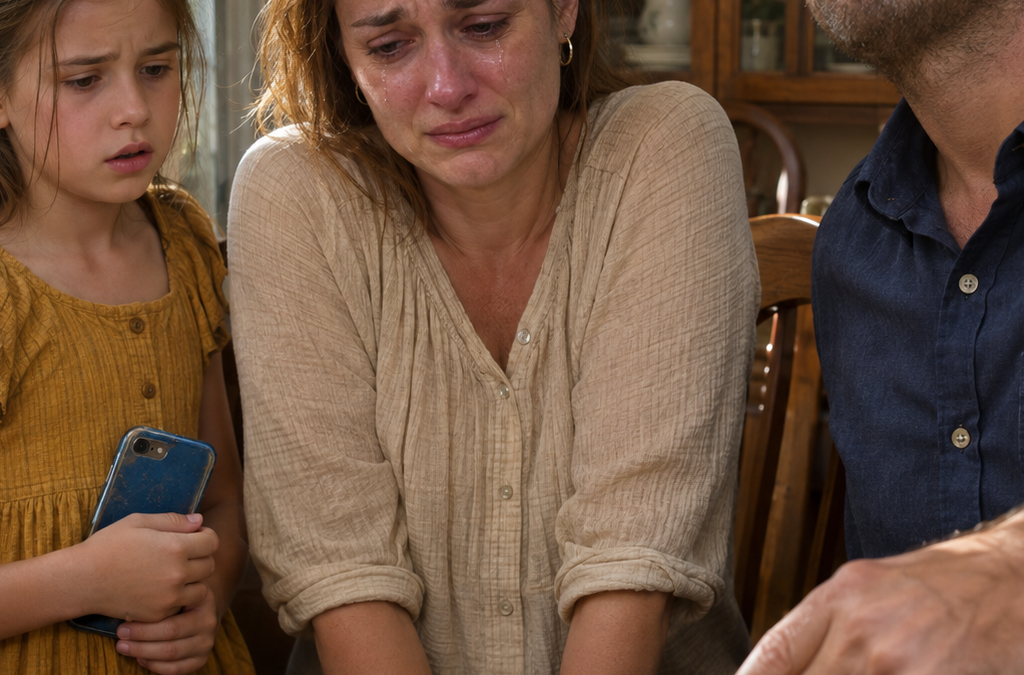
Brian held the serving knife sideways, dragging blue icing across the white border. Ella stood at my elbow with our old phone. The cake sat on Mom’s dining table in Plano, Texas, beneath a banner celebrating BasketBridge’s second pickup store.
“Why are you taking my name off?”
“You wrote code. I built this.”
“My name belongs there, Brian.”
He left the knife resting in the ruined icing. A small folder bearing the Brooks Household Supply logo lay beside the cake.
“Are you going to let him do this?” I asked Mom.
Linda looked toward the relatives gathered beyond the table instead of meeting my eyes.
“Let him have his moment, Amy.”
Ella pressed against my side. My face burned, but Brian seemed perfectly comfortable with everyone watching.
At thirty-six, I was still Amy Miller, the younger sister expected to make things easier. Miller was the name I’d kept after my divorce; Carter was the name Brian and Mom shared.
I owned the entire company behind the shopping app and both stores.
Six years of building it showed in places nobody photographed. My hand-lettered shelf labels were still in the first store. Ella had chosen the loading-screen animation, a little grocery bag that bounced while an order loaded.
And I’d ordered Brian’s favorite cake: yellow cake, chocolate filling, buttercream instead of whipped frosting. He’d complained about whipped frosting at every family birthday since childhood.
His separate wholesale business had helped supply the shops. His introductions mattered, and so did his deliveries. David Brooks, his largest supplier’s owner, was coming to discuss an expansion of Brian’s business.
Being useful had become my way of asking to belong.
Then Brian noticed me looking at the logo.
Brian slid the supplier’s folder beneath the cake box.
Ella handed me the old demo phone in its scuffed blue case. A week earlier, I’d used it to record Brian’s supplier-pitch rehearsal while we practiced together. It still held that recording along with the shorter customer demonstration.
“Keep that put away for the picture,” Brian said.
He moved my place card from beside the cake to the far end of the table. The space where I’d expected to stand was now empty.
“Stand over there with Ella. We need the welcome photograph.”
The relatives remained crowded around the dining room doorway. This was supposed to celebrate a store I’d built, and I was being arranged outside its picture.
Mom watched Brian straighten the card bearing his name.
“He’s been dealing with the people all week,” she said. “Don’t start an argument now.”
“I came here to celebrate the store.”
“Then quit correcting everything in front of everybody.”
His voice had sharpened. Ella stayed so close that her shoe rested against mine, and I hated that she was learning how this worked by watching me.
“STOP MAKING THIS ABOUT YOU!”
Nobody had asked me what the scraped icing had said. Nobody needed to. Amy had been written underneath Brian in letters the same size.
For years, I’d called this kind of thing keeping the peace. Usually it meant waiting until we were alone, explaining carefully, then accepting whatever smaller concession Brian offered.
But Ella was looking up at me now.
“You want me out of my own company’s picture?”
“Yes. Stay out and let us finish.”
“All right.”
I put the old phone in my bag and stepped onto the porch with Ella. Through the screen door, the banner still looked cheerful. Mom’s porch smelled of warm brick and the rosemary she watered too much.
For a few seconds, I couldn’t make my voice work.
Rachel Evans’s number was in my everyday phone from the second store’s supply discussions. She was Brooks Household Supply’s contracts director, and she answered before the call went to voicemail.
“This is Amy Miller. Is David still coming?”
“He is. He’s on his way.”
“There’s a folder here with your logo.”
“The territory proposal. Brian said you knew about the backing.”
I looked through the screen at the corner of the cake box.
“What backing?”
“He offered your company’s expansion reserve to support the additional territory.”
“No. I didn’t agree to that.”
Rachel paused. “Then David needs to hear that directly. I’ll reach him.”
The call ended with Ella beside me and the celebration still going on inside. Brian had talked about needing room to grow. He hadn’t told me he’d promised the money I’d saved for BasketBridge.
A car pulled up outside.
David stepped inside. “Amy, we need to discuss what your brother offered.”
He spoke from the dining room doorway, where the whole family could hear him. I’d followed him in with Ella, and Brian’s expression changed before he answered.
“David. Good to see you. We’re just getting everybody together.”
David Brooks was fifty-eight, with a plain gray shirt and the patient manner I remembered from our supply discussions. He didn’t move toward the cake.
“Rachel called me,” he said. “Amy, did you know your company’s reserve was offered as financial backing for Brian’s expansion?”
“No.”
Brian gave a small laugh, as though I’d missed the beginning of a conversation.
“We’ve got a family understanding. Amy handles the app. I handle growth.”
The word understanding made the offer sound settled. He’d used it before about holiday plans, deliveries, weekends I hadn’t agreed to work. Now David was standing in Mom’s dining room waiting for me to confirm it.
“We discussed more retail work,” I said.
“That’s what I’m talking about,” Brian replied. “You don’t have to make it complicated.”
Mom stayed beside him. Ella stood where she could see my face.
David asked for the folder.
“He offered all $210,000,” David said, turning the folder toward me.
For a moment, the number didn’t connect to anything. Then I pictured the reserve account I checked after closing, when the day’s orders were done and I could think about what came next.
That money wasn’t extra because it wasn’t being spent today. It was the company’s room to survive a bad stretch and grow when we were ready.
“I haven’t promised that money,” I said. “I won’t confirm something I didn’t say.”
Brian’s pleasant expression disappeared.
“Stop embarrassing me in front of David.”
David kept his attention on me. “Was there any permission to offer it?”
“No.”
And there it was, said plainly in front of Mom. I hadn’t softened it into a misunderstanding or offered to discuss it after dinner. My brother looked offended, which hurt almost as much as the knife through my name.
Linda finally looked at me.
“Amy, surely you can talk about this without—”
“We can talk,” I said. “That doesn’t mean I agreed.”
David drew the folder closer. “I’m not making the announcement today. Rachel and I need to check what we were given.”
Brian leaned toward him. “The expansion makes sense. You’ve seen the orders.”
“The orders aren’t what I’m asking about.”
His answer was quiet. Brian had to stop talking to hear it.
I knew David wasn’t there to protect me. He’d come expecting to announce a business arrangement, and now the backing described to him was in dispute. That was enough to keep him standing at the table instead of posing behind it.
So I stayed beside Ella while he opened the proposal Brian had tucked beneath the box. The first page carried the BasketBridge name above a description of the money being offered. David read farther down, then shifted the page so I could see the ownership field.
It named Brian Carter, not Amy Miller.
Chapter 2 of 7
“That’s Brian’s submission about BasketBridge,” I said. “It doesn’t make him the owner.”
David kept the page between us. “Whose company is offering the money?”
“Mine. And I’m not offering it.”
Brian started to answer, but David turned toward him.
“I’ll ask Rachel to review the company records. I can’t rely on this with Amy disputing it.”
Hearing that brought no satisfaction. Ella was still beside me, and my brother’s name was still printed where mine belonged.
David asked me to send Rachel the company records and information about the account Brian had described. Then he left without making his announcement. We left before the family photographs.
By the next morning, I had sent Rachel my operating agreement and membership ledger. I downloaded the bank records through my own access and sent those separately.
Company ownership and permission to move money were different questions. I owned BasketBridge, and I alone could authorize payments.
Brian had no login or signing authority. The reserve was still there, untouched. Seeing the balance helped, but it didn’t repair what he’d told our supplier.
I’d slept badly, angry with him and embarrassed by how long I’d let him speak for me.
Mom called while I was making toast.
“Come over without Ella,” she said. “We need to get this settled.”
“I’m not leaving her home alone.”
“Then come while she’s doing something. You know what I mean.”
Ella wanted to finish her homework at our kitchen table. So Mom and Brian came to us instead.
Mom brought the cinnamon bread she bought whenever she wanted a visit to seem casual. She always claimed the heel because nobody else would eat it. Then she cut herself a middle slice.
Usually I would have teased her. That morning, I barely tasted mine.
Brian stayed standing near the kitchen doorway. Ella was working in her bedroom, but I knew how easily voices traveled down our hall.
“Your technical paperwork doesn’t erase the work I put in,” he said.
“I haven’t said you didn’t work.”
“You let David think I walked in off the street.”
Mom leaned forward. “Just sign something saying you’re behind him. A little confirmation. Then everybody can stop fighting.”
“It would confirm something I didn’t agree to.”
“Oh, Amy. It doesn’t have to be a whole production.”
That hurt. She sounded tired of me, although Brian had made the promise.
I named the work he’d actually done: introducing me to Brooks Household Supply, arranging deliveries, helping me understand wholesale quantities. Those things had mattered. I hadn’t known that side of the business when I started.
“But I didn’t give you my company,” I said.
Brian looked toward Mom rather than answering me.
“She asks me for help, then acts like I’m grabbing.”
I had asked for help. I’d also finished his inventory counts when he left early, called about shipments he’d forgotten to confirm, and stayed late so his missed calls wouldn’t become missed orders.
Too often, I’d completed his obligations before anyone could see he hadn’t.
That part was mine to admit. It didn’t make his claim true.
“I’m not confirming that you own something I never gave you.”
Mom lowered her voice. “He’s already promised David he has your support.”
“A promise isn’t permission.”
Brian gave a sharp laugh. “You’re really going to hold me up over this.”
“I’m not confirming that you own something I never gave you.”
He left before Mom did. She stayed long enough to tell me he was under pressure, then followed him out.
After lunch, Rachel called. I moved into the hallway, where I could still see Ella working.
“We haven’t accepted the backing,” she said. “No BasketBridge money has moved.”
“What happens to our stock order?”
“The $18,400 order is still pending. We can’t approve expanded credit while the backing information is disputed.”
That was the order for the second store. I had built the opening week around it.
“So keeping the money safe doesn’t get the shelves stocked.”
“No,” Rachel said. “We still have to resolve the supply arrangements.”
She wasn’t unkind. I was grateful she didn’t pretend the account balance solved everything.
Rachel explained that Brian’s existing agreement was with Carter Distribution, not BasketBridge. It was a three-year exclusive arrangement covering Collin and Denton Counties.
“He has an established business with us,” she said. “That’s why we need to check what he submitted.”
Later, while I checked quantities against the pending order, I thought about his $73,500 annual guarantee. Brian had mentioned that amount often enough when explaining how much responsibility he carried.
His business was real. I couldn’t understand why mine had to become his, too.
Rachel’s follow-up email also noted $9,800 in ordinary unpaid wholesale invoices on Carter Distribution’s account. Those were Brian’s bills, separate from our proposed purchase. I read that distinction twice.
By evening, Ella had finished her homework and noticed I hadn’t finished much of anything.
“Why did Grandma call Uncle Brian the owner?”
I hated that she’d been carrying that question all day.
“Grandma wanted everyone to give him credit for helping,” I said. “But she called him something he isn’t.”
“I helped pick the grocery bag picture.”
“You did. And I tell people that was your idea. Helping doesn’t mean the whole app belongs to you.”
Ella considered that, then asked whether we could have dinner away from my laptop.
We ate at the kitchen table. For a little while, I listened to her describe a school project instead of counting stock.
Then Brian’s message arrived.
“Both BasketBridge stores—the first shop and the second shop—are off my next delivery route. I’m removing their deliveries from my schedule.”
Chapter 3 of 7
The space behind the second store’s pickup counter was empty except for the bins we’d expected to fill. On my laptop, paid orders waited beside quantities I couldn’t supply.
Brian’s delivery had disappeared from the schedule. By morning, the app still expected the goods.
I stopped accepting new orders for the missing items, then checked what I could move from the first shop. There wasn’t enough. Moving everything would only leave a different set of customers waiting.
When I called Brian, he answered as though he’d been expecting me.
“Now you see what my routes do for you.”
“I have paid orders waiting.”
“Then stop acting like you can run this without me.”
The empty bins made me angry, but the order list frightened me. Those customers hadn’t agreed to become part of our fight.
“I need to know whether this is temporary.”
“That depends on you, Amy.”
He ended the call without giving me a delivery date.
For a while, I kept checking the quantities, hoping I’d missed something. There was no combination that filled every order. So I made two lists: goods I could replace and orders I had to refund.
Substitutes cost more in smaller quantities. Some weren’t worth buying at all.
By afternoon, I’d spent $4,600 on replacement stock from other sources. I drove it back myself, with cartons filling the back seat and blocking the space where Ella usually dropped her school bag.
That expense came from operating cash, not the expansion reserve. Protecting one account hadn’t protected the rest of the business.
At the counter, I processed $3,200 in refunds. Each confirmation removed an order from the waiting list without putting anything into a customer’s hands.
It hurt to see how quickly six years of work could look unreliable.
Brian called while I was matching replacement goods to orders. This time, his voice was lower.
“I can put both shops back on.”
“What are you asking me to do?”
“Confirm the reserve is behind my expansion. We can get moving again.”
He made it sound like the stock was sitting behind a door I’d locked myself. All I had to do was say his promise was mine.
“You pulled the deliveries so I’d agree.”
“I pulled them because you won’t back the arrangement.”
“That money isn’t available to you.”
He exhaled hard enough for me to hear it.
“Sign it, and stop wasting everyone’s time.”
My face went hot. He knew exactly what the delays were costing me. He’d helped me plan the opening quantities.
“I’m not trading that confirmation for deliveries.”
“Then explain the empty shelves yourself.”
After he hung up, I sat in front of the app’s notice screen. Usually, I used it for holiday hours or new pickup instructions. I’d never had to tell everyone at once that I couldn’t do what I’d offered.
The first version said there had been an unexpected supply issue. It sounded temporary and harmless. I deleted it.
The notice I published said scheduled deliveries hadn’t arrived, some orders couldn’t be filled, and refunds were being processed. It listed the items still available and asked customers to wait for confirmation before coming in.
I left Brian’s name out. They needed an accurate order status, not our family history.
Then I sent the same information to everyone whose order was affected. I was embarrassed, but making them drive over for nothing would have been worse.
Ella came to the store with me after school. She finished her worksheet at the counter while I sorted what I’d brought back.
“Are we still making the map pancakes?”
We’d planned pancakes shaped like states, using a picture from her schoolbook. Ella had already warned me that Florida would probably break.
“Not tonight, honey. I’m sorry.”
“Because of the boxes?”
“Yes. I have to get these orders ready.”
She put the picture back inside her folder. There wasn’t a tantrum or a speech. That made me feel worse.
We ate sandwiches at the counter. Ella said hers looked like Colorado, so technically we’d done one state.
I laughed, then had to look away. She was making the evening easier for me, and I wished she didn’t have to.
Mom called while Ella was reading nearby.
“Brian says you’re buying everything somewhere else.”
“I’m buying what I can find.”
“He could fix this before it gets worse.”
“He offered. He wants me to confirm the backing first.”
“Because you always have. You get upset, then you work it out.”
Mom didn’t answer immediately. Through the phone, I could hear her television.
Finally, she said, “I told him you’d come around.”
“Why would you tell him that?”
“Because you always have. You get upset, then you work it out.”
For years, working it out had meant changing my plans until Brian’s could go ahead. Hearing her say it so casually hurt.
“Expecting me to give in doesn’t make it a promise, Mom.”
“I didn’t say it was a promise.”
“He’s treating it like one.”
She said she hadn’t meant for deliveries to stop. I believed her. She’d expected me to agree before there were consequences she had to see.
That evening, Rachel emailed the complete submission Brooks Household Supply had received from Brian. It was the full version of the proposal David had opened at the reception, not another account of what Brian meant.
His claimed ownership and unconditional financial backing both began at Mom’s birthday dinner.
I read that section again. He had chosen a family meal as the starting point for a business arrangement I hadn’t made.
Before I could finish my reply to Rachel, another email arrived from Brian.
Attached was his signed declaration naming Linda’s birthday dinner as the moment I’d supposedly given him the stores and control of the reserve.
Chapter 4 of 7
At Mom’s birthday dinner, I’d said Brian could handle more retail work. We were talking about stock counts and arranging deliveries so I could spend less time chasing orders.
I hadn’t offered him the stores. We hadn’t discussed giving him access to company money.
When I called Mom about his declaration, she remembered the conversation.
“You said you wanted him to take more of it,” she said.
“More work, Mom. Did you hear me give him the company?”
There was a pause long enough that I checked whether the call had dropped.
“No,” she said. “Not in those words.”
“Or the money?”
“No. But I thought you two had talked afterward.”
We hadn’t. Brian had left that dinner with leftover chicken and a promise that we’d discuss a larger role. Now he’d made it the beginning of his ownership.
It hurt that Mom had filled in everything he needed without asking me.
“I need you to separate what you heard from what you assumed,” I said.
“I’m trying to explain why I believed him.”
“I know. But that isn’t the same thing.”
By the middle of the week, I could walk past the second store’s empty stock spaces without checking my messages for a delivery update. Brian still hadn’t offered a date.
That afternoon, Rachel put us on a joint call. I sat behind the pickup counter with my laptop open. Brian joined from his own number.
Rachel had finished comparing the company records with my books and the bank information.
“BasketBridge owns the app, the retail brand, and the inventory,” she said. “It holds both store leases. The sales go through BasketBridge, and the reserve is in its account.”
“Right. Her app company handles the payments,” Brian said.
“The stores aren’t a separate business, Brian.”
He didn’t answer immediately. I could hear him moving somewhere, then the sound stopped.
Both stores were BasketBridge.
I’d known that every time I’d paid rent or stayed late fixing an order. Hearing Rachel explain it to him made me realize he’d kept a different arrangement in his head, one where the parts he valued already belonged to him.
“So you’re saying the leases never got separated out.”
“They were never held separately,” Rachel said. “Amy remains the sole owner and manager.”
For once, he didn’t have a quick correction. I felt exposed waiting for him to understand something I’d never hidden.
Then he addressed me.
“You gave me the retail side.”
“I offered you more responsibility.”
“You said you wanted me taking it over.”
“I meant running more of the daily work.”
“Well, that’s how you’re describing it now.”
His voice had changed. He was no longer dismissing the records as something belonging to my programming work. He was trying to explain why they hadn’t caught up with him.
Rachel brought him back to his submission.
“You signed that you already owned and controlled the business offering the reserve. You described the backing as unconditional. How did a transfer you expected become an arrangement you said was complete?”
“The family agreement was complete. Amy hadn’t finished the paperwork.”
“I hadn’t agreed to a transfer, Brian.”
“Quit pretending we never discussed the stores.”
We had discussed them for years. That was what made his account so hard to listen to. He used real conversations, then changed the part where I’d answered.
I was angry enough that I had to wait before speaking again.
“Discussing work with you wasn’t giving it away.”
Brian ignored that.
“David can ask Mom. She was there. The signature is cleanup.”
“Linda can tell us what she heard,” Rachel said. “That doesn’t resolve what you represented to us.”
Rachel explained why David was reviewing it. Brian’s existing distribution agreement had a negotiated provision covering materially false ownership or financial-backing claims connected to their supplier relationship.
“If everybody heard Amy accuse me, they should hear this get straightened out.”
“This concerns the agreement already in place,” she said. “Not just your request for another county. David needs a clear answer before deciding what comes next.”
She didn’t tell him what that decision would be. Neither did I.
Brian asked for an in-person meeting.
“If everybody heard Amy accuse me, they should hear this get straightened out.”
I hadn’t made an accusation at the reception. David had asked a question, and I’d answered it. Still, I could hear how useful Brian found that version.
They settled on Friday, September 25, at 5 p.m., inside the second store.
David and Rachel would come. Brian wanted Mom there to confirm his account. I said Ella would be with me; I wasn’t leaving her alone, and I wasn’t asking her to speak for anyone.
Afterward, I made a list of orders we could fill from the replacement stock. The work was ordinary enough to help. Quantities, pickup windows, things I could actually answer.
Ella had left a note beside my laptop asking me to stop calling every school folder “the blue one.” Three of hers were blue. Apparently my filing system needed work.
I laughed when I read it, then wished I could stay with that small problem.
Brian’s email arrived before I finished the order list. He’d attached a prefilled confirmation and written, “David should get this with your signature. Mom has a copy.”
I didn’t answer.
A little later, Mom arrived carrying Brian’s confirmation, a tab marking where I was supposed to sign.
Chapter 5 of 7
“I’m not signing this, Mom.”
The confirmation said Brian had owned the retail business since her birthday dinner. It also said I’d given him unconditional use of the reserve. There was nothing about discussing future work or deciding what I could afford.
“This says it already happened,” I told her. “It isn’t permission to talk about helping him.”
Linda looked at the tab marking my signature line.
“I promised him I’d bring you around.”
She said it quietly, as though that promise belonged among the things I ought to consider. I was hurt, but mostly tired. She’d come to my house with an answer for Brian, and I was supposed to supply it.
“You shouldn’t have promised him my signature.”
“He asked me for one thing I could do.”
“He asked you to get me to say this is true.”
Mom stayed near the kitchen table. Usually, she would have asked about dinner by then, finding some ordinary reason to remain until the argument wore down.
This time, I didn’t offer her one.
She left with the unsigned confirmation. From the window, I watched her carry it back to her car, still careful not to bend it.
By the next evening, Brian had sent a message to the family.
He said his relationship with Brooks Household Supply was being endangered by my personal resentment. Years of dependable work were at risk because I couldn’t separate a disagreement between siblings from business.
He described the meeting as his chance to clear his name.
My first reply filled most of the screen. I deleted it without sending anything. Another family argument wouldn’t fill the orders still waiting.
But his message hurt. He had chosen the one explanation that made every consequence my fault, including the ones he’d deliberately caused.
When Ella and I went to the second store for the meeting, I brought the company records Rachel had requested. The store smelled faintly of cardboard and floor cleaner.
Brian was already there with Mom.
He had pulled chairs near the customer pickup counter, facing the space where we’d expected to take the opening photograph. There were enough seats for everyone, but he remained standing at the front.
Ella stopped beside me.
“Do I have to sit by Grandma?”
“You can sit wherever you’re comfortable.”
She chose the end chair, close enough to me that she could see around the counter. Mom gave her a small wave. Ella waved back, then opened her school folder.
Her spelling list included “separate.” She’d drawn a tiny rat inside the middle letters because she said that was how you remembered it.
I wished my own work had an answer that simple.
Brian looked at the folder of records under my arm.
“David already knows I bring him business.”
“I brought what Rachel asked for.”
“Then let them hear me out without interrupting.”
I hadn’t interrupted him. Still, I felt the old urge to reassure him, to promise I wouldn’t make things uncomfortable. I hated how quickly that habit returned.
David and Rachel arrived together. David greeted us without the easy conversation I remembered from earlier visits. Rachel introduced herself to Mom and Ella, then asked whether we had everything she’d requested.
I gave her my copies. She kept them together, out of the way.
Brian welcomed David toward the chairs.
“I appreciate you coming back. We should’ve settled this before it got dragged through the family.”
“We’re here to resolve what your submission says,” David answered.
Rachel placed the relevant agreement pages and Brian’s submission on the counter. There wasn’t a stack to hide behind. From where Ella sat, she could see me and Brian without turning her head.
That made me painfully aware of my own face.
I didn’t want her watching me apologize just to get us home sooner.
Brian stayed beside Mom. He spoke to David, but loudly enough for all of us.
“At her birthday dinner, Amy gave me the retail business. We’d been talking about me taking it over. That was when she agreed.”
Mom looked down at the counter.
“And the financial backing?” Rachel asked.
“The money came with the stores.”
He said it without hesitation. My hands felt cold against my knees. That was my work and our security reduced to a sentence he expected me to accept.
Brian continued before I answered.
“We hadn’t finished everything on paper. I understand you need that. Give us time to finish it instead of throwing away a distributor who’s produced for you.”
David listened. He didn’t nod or look toward me for help.
Brian’s request sounded reasonable if you ignored the beginning: the part where I had supposedly given him everything.
“I’m not asking you to take a chance on a stranger,” Brian added. “You know my routes. You know what I sell.”
“I do,” David said. “I also need to know what you represented.”
“And you meant that you already controlled the funds offered as backing?”
Rachel indicated the submission.
“Is the starting date here the date you intended?”
“My mother’s birthday. Yes.”
“And you meant that you already controlled the funds offered as backing?”
Brian glanced at me. I couldn’t tell whether he expected an objection or a surrender. I was angry, but I let him answer.
“Yes. That was included.”
David waited a moment before asking him directly.
“Do you stand by that account and what you signed?”
“I stand by what I signed.”
Mom shifted beside him. Ella’s spelling folder lay closed on her lap now.
Brian brought out the confirmation Mom had carried to my house. The signature tab was still attached. He pushed it across the counter until it lay before me, then turned to David.
“She can confirm it right now.”
Chapter 6 of 7
“Read your promise,” I said. “I’m not signing that.”
Brian looked at the confirmation as though the problem were where he’d put it.
“You gave me the retail business at Mom’s August birthday dinner. The backing came with it. We’re finishing the paperwork.”
“The rehearsal came after that dinner,” I said. “You described a different arrangement then.”
“That was practice, Amy. We were trying out a pitch.”
He looked toward David, expecting him to understand. Linda stayed beside Brian. Ella sat with her spelling folder against her knees, watching me.
I was frightened of what this would cost us, even now. For years, I’d stopped short whenever telling the truth might cost Brian something.
“The private agreement came first,” Brian added. “A rehearsal doesn’t change that.”
I took the original demo phone from my bag. Its scuffed blue case had a pale patch where Ella’s sticker had peeled away.
“I recorded the complete rehearsal. I was there, talking with you throughout.”
Brian’s expression changed, but he didn’t speak.
The file information showed September 12. Rachel leaned close enough to read it. Then I started the original video and left it running.
At first, it was just our ordinary demonstration. My recorded voice explained how an order moved from the app to a pickup bin. Brian interrupted because he thought I’d gone through the screen too quickly.
The grocery bag animation bounced while the page loaded.
Ella had always called that little pause the bag catching its breath. Hearing myself explain it on the recording hurt. We’d been working together that afternoon, and I’d believed we were helping each other.
The video continued into the supplier pitch. Brian lost his place, started again, then asked what he should say about the expansion money.
My recorded voice answered, “Tell him what we’ve actually agreed to.”
Brian sounded impatient on the phone.
“Amy owns the stores and the app. That money is hers. She hasn’t agreed to put it behind my territory.”
The recording kept going. I was still there beside him, asking him to leave the reserve out of his proposal.
Across the counter, Brian stared at the screen.
“If she had already given it to you, why were you still asking?”
“You kept the whole thing?”
He’d expected the shorter customer demonstration to replace it. Instead, the uninterrupted original was playing in front of Mom and Ella.
I stopped playback after David said he’d heard enough.
“If she had already given it to you, why were you still asking?”
Brian rubbed his mouth. He looked at Mom first, then back at David.
“I expected her consent before any money moved. Obviously. Nobody was taking money out without telling her.”
I felt sick hearing that smaller version of his promise. He’d demanded my signature minutes earlier, with Ella sitting close enough to hear everything.
Rachel spoke before I did.
“I checked the submission we received and its signature trail. You signed for existing ownership, control, and unconditional backing. Not permission you expected later.”
“The stores need my deliveries,” Brian said. “You know that.”
David didn’t argue about the routes.
“You certified that you already had something Amy hadn’t given you. Your own account here confirms you knew that.”
Brian sat down. Until then, he’d treated the counter like a place from which to make his case. Now he looked at the agreement pages lying beyond it.
David brought out a written notice.
“I’m exercising the termination provision in our existing agreement,” he said. “Your exclusive territory and guaranteed draw end immediately. That means Collin and Denton Counties and the $73,500 annual guarantee.”
Brian stared at him.
“That’s my monthly income.”
“The future guarantee ends,” David said. “Compensation already earned remains payable. Your unpaid wholesale invoices remain due. Rachel will handle a written payment schedule separately.”
He delivered the notice to Brian.
For a few seconds, Brian didn’t touch it. Then he stood so abruptly that his chair caught against his leg. The unsigned confirmation slid back across the counter.
“Mom, tell him what happened at dinner.”
Linda’s face had gone blotchy. She looked older than she had when she’d brought that same confirmation to my house.
“I heard her offer you more work,” she said.
“You told me you understood the arrangement.”
“I thought she’d agree afterward.”
He stared at her as if she’d changed the words on him. I knew how that felt. Still, watching him search her face hurt; I hadn’t stopped loving my brother because I’d stopped signing for him.
Linda came around the counter to stand beside me.
“I praised you for building something that wasn’t yours.”
I’d wanted her to say something like that at the reception. Hearing it now didn’t give me back that afternoon. Ella had already seen it, and the stores had already lost orders.
Brian looked from Mom to me.
“We can settle this alone. Send Ella with Mom.”
“No. I’m not settling it privately.”
His eyes went toward Ella’s closed folder, as though she were the reason we couldn’t finish this his way.
“You don’t get to use my daughter to make me disappear.”
Ella waited until he looked away.
“Do you still have to sign?”
“No, honey.”
The confirmation remained on the counter. I left it with Brian. He could carry it home himself.
David waited while Ella came to stand beside me. Then he explained that BasketBridge could apply to buy directly, as an ordinary customer. It would require the usual checks and a smaller order. There was no promise that it would replace everything we’d lost.
I was relieved enough to feel how tired I was.
David placed a direct-customer application in my hand, with a $12,000 opening-order limit and no access to my expansion reserve.
Chapter 7 of 7
I accepted ordinary purchasing terms and negotiated a $12,000 opening order of goods we could actually sell. Rachel completed the usual checks before anything shipped.
Two weeks later, BasketBridge began buying directly from Brooks Household Supply.
I didn’t get Brian’s territory or his guarantee. I got a smaller order, bills with due dates, and another reason to keep careful track of what sold.
For the first few deliveries, I checked everything twice. A full shelf still made me nervous. I worried about promising something I couldn’t put into a pickup bin.
The new arrangement helped, but it didn’t erase the refunds or bring every customer back. Some orders stayed smaller. I stopped planning around quantities we might sell and bought what the recent orders supported.
That was disappointing work sometimes. It was also work I could make decisions about without asking Brian.
BasketBridge remained mine. Its expansion reserve stayed in its own account and was never transferred to him.
I kept the second store open, although the plans for filling it changed. There were fewer choices than I’d pictured at the reception. There were also fewer evenings spent wondering whether my brother would answer his phone.
By November 20, Brian had completed eight weekly payments of $1,225 on his $9,800 in unpaid supplier invoices. Rachel confirmed that the balance was paid.
None of that money came to me. It paid for goods his business had already bought.
Without the guaranteed income, he’d reduced his warehouse operation and cut back his routes. Mom told me he was using less space and doing more of the deliveries himself.
I was sad when she told me. I could picture how proud he’d been when he first showed us the warehouse.
But I didn’t offer to cover the next bill.
Mom asked to start visiting again during those eight weeks. At first, she called about Ella’s schoolwork, then stayed on the line after I’d answered.
Finally, she said, “Could I have her over sometime? Just for an afternoon.”
“We can start with a visit here.”
“I’m her grandmother, Amy.”
“I know. She misses you.”
That seemed to make it harder for her to answer. I missed having a mother I could call without first deciding what I needed to protect.
“I won’t talk about the company,” she said.
“And you won’t ask Ella to pass messages.”
“I wouldn’t put her in the middle.”
“Mom.”
She stopped. I waited instead of giving her a gentler version to agree with.
“All right,” she said. “No messages.”
“Brian doesn’t get a say in my accounts or company decisions. That can’t come up through you, either.”
“I understand.”
“I need you to keep understanding when he’s upset.”
She didn’t like that. I could hear it in the way she said goodbye. Still, she came to our house the following weekend and asked Ella about school.
The visit was awkward at first. I stayed nearby, answering emails while they talked. When Mom left, Ella asked whether Grandma could come again.
“Yes,” I said. “We’ll arrange another afternoon.”
I was relieved the visit had gone well. That wasn’t the same as trusting her the way I once had.
Brian’s request came in writing later. He wanted an introduction to another supplier and asked me to describe him as my business partner.
He said that title would save him from having to explain the whole family situation.
For a minute, I sat looking at the message. Even after everything, he still expected me to make the beginning easier by changing what was true.
My reply was brief.
“I’ll confirm that Carter Distribution supplied our shops and that you made introductions and arranged deliveries. You weren’t my business partner. I won’t introduce you as one.”
He didn’t answer.
I didn’t send another message to soften it. There was no introduction, no offer of money, and no recommendation under a title he hadn’t held.
That evening, I finished the orders due for pickup and checked the next day’s list. There was work I could have stayed to do. There always was.
Ella waited near the counter with drawings spread across her school folder.
“Are these coming home, or are you opening an art department?” I asked.
“They’re screens.”
“Of course. My mistake.”
She had drawn a rabbit in rain boots beside a crooked house. On the next page, the rabbit wore an enormous sunhat.
I wanted to hear about it somewhere other than under the store lights.
So I closed the laptop. The remaining work could wait until morning. We left the shop without calling Brian, checking his schedule, or fixing anything he’d promised somebody else.
At home, we had scrambled eggs on toast because neither of us wanted to wait for anything longer. Ella put ketchup beside hers, carefully avoiding the toast.
Then she explained the drawings.
Her app would let someone choose the weather and dress the rabbit for it. Rain meant boots. Snow meant a scarf so long it trailed off the page.
“What happens in a tornado?” I asked.
“He stays inside. Obviously.”
I laughed hard enough that she looked pleased with herself.
We brought out the old demo phone in its scuffed blue case. It still worked, though it needed a charge before we could film her moving from one paper screen to the next.
“If you help, do I have to say it’s both our idea?”
“Can you make the pictures actually change?” she asked.
“Probably. We can try a simple version.”
Ella looked down at the rabbit.
“If you help, do I have to say it’s both our idea?”
The question hurt a little. She was nine, and she’d already seen adults fight over an answer that should have been easy.
“It’s your idea,” I said. “You can say I helped you build it.”
“What about the sunhat? You said he needed one.”
“Then you can give me credit for his excellent sun protection.”
She grinned and arranged the pages across the table. Her name was written at the top of the first one, large and uneven.
I taught my daughter to share, not disappear.
I pressed record and handed her the phone.







