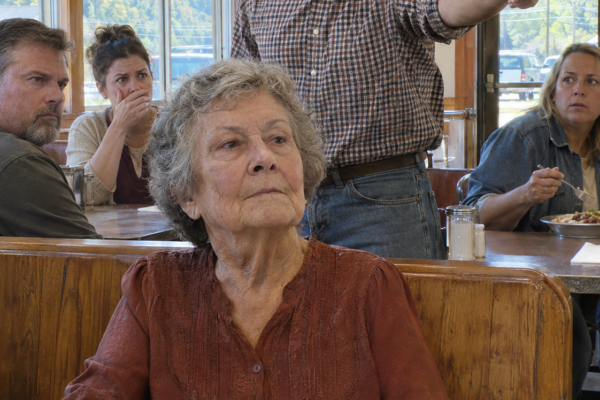
My Daughter-In-Law Demanded $46,000 From My Insurance Without Asking Me — Then My Agent Heard From Me
Chapter 1: The Table After Lunch
My daughter-in-law told my insurance agent to cash out part of my policy while we sat in an upscale restaurant after lunch.
My son said they would get the money eventually anyway.
Neither of them seemed to remember that the policy belonged to me, and I was about to give my agent instructions of my own.
Vanessa had her arm extended across the table.
“Cash it out. We need our inheritance.”
She was looking at Paula.
Not me.
Paula sat beside me, with her folder still closed. Her badge was pinned to her chest, where I could read the words “INSURANCE AGENT.”
I put my coffee cup down.
“Our inheritance?”
Vanessa pulled her arm back, but she didn’t take back what she had said.
The table had been cleared of our lunch plates. My folded napkin lay beside the cup, and Russell had pushed his chair closer to his wife.
There was room between our table and the next.
Not privacy.
I could hear a spoon touch a saucer behind me. Anyone sitting nearby could probably hear Vanessa discussing my money.
That didn’t seem to trouble her.
“The cards are at $46,000,” she said. “We’d like to clear them.”
I looked at the folder beside Paula’s hand.
I had arranged this review for myself.
Somehow, Vanessa had started talking as if Paula had come to arrange payment of her bills.
“That isn’t what I said I would do.”
“You said we could talk about it.”
“We are talking.”
“Then let’s not make this harder.”
Russell looked down at his place setting.
He hadn’t asked how much I could afford. Neither had Vanessa.
Before Paula arrived, Vanessa had been interested in how quickly money could become available. I had thought she was trying to understand her choices.
Now I understood the question differently.
She wasn’t asking whether I would help.
She was asking when.
Paula moved her closed folder slightly away from a water glass. She made no promise and reached for no form.
“Elaine arranged a review,” she said.
“Yes,” Vanessa answered. “And this is what we need to review.”
I turned toward her.
“What I need to review.”
She pressed her lips together.
I was 70, healthy, and living independently in Raleigh, North Carolina. I had come to lunch with my own purse, my own questions, and no request for anyone to take over.
Vanessa was 43.
She knew how to ask me something directly.
She simply hadn’t done it.
Earlier, while we were finishing lunch, she had leaned toward Russell and then turned to me.
“We should probably discuss the cards together.”
That was what I had agreed to.
Discuss.
I hadn’t agreed to take money from my insurance, and I hadn’t invited them to instruct my agent.
Paula’s arrival had changed Vanessa’s manner almost immediately.
She sat straighter.
She stopped explaining the debt to me and began explaining the proposed payment to Paula.
“We need to get money out of the policy,” she had said before I could open my own folder.
Paula looked at me then.
I remembered that clearly because Vanessa had kept talking through the look.
Now she was doing it again.
“There is enough available,” Vanessa said.
“How do you know what I want to keep available?”
“That isn’t what I said.”
“It’s what you’re asking me to use.”
She picked up her water glass without drinking.
Russell finally looked at me.
“Mom, can we just hear her out?”
“I am hearing her.”
“You’re getting upset before we’ve finished.”
“She has told Paula to withdraw my money.”
Vanessa set the glass down.
“I’m trying to explain the situation.”
“Then explain it to me.”
She glanced at Paula, as if she wanted help with my objection rather than help understanding the account.
Paula stayed quiet.
That mattered.
She wasn’t nodding along or treating Vanessa’s confidence as permission.
I kept my hands beside my cup.
Russell, who was 45, was still the person named to receive the policy payment when I died. I had wanted that protection for him.
But he didn’t own the policy.
Vanessa wasn’t named to receive anything.
Neither fact was complicated, though the way they were speaking made it sound as if I had wandered into a conversation about their account.
“There’s money sitting there,” Vanessa said.
“Yes. My money.”
“It isn’t money you’re using.”
“You don’t know what I’ll need.”
“We’re not asking you to sell your house.”
“I didn’t say you were.”
“We’re asking you to use something you already have.”
“For your cards.”
“For your family.”
Russell rubbed his thumb along the edge of his napkin.
I waited for him to tell her that being family didn’t settle the question.
He didn’t.
Instead, he asked whether I wanted them to keep struggling with balances when there was another way to handle them.
I looked directly at him.
“Another way for whom?”
“For us to get this handled.”
“By having me pay it.”
Vanessa drew a breath through her nose.
“We wouldn’t be discussing it if we didn’t need help.”
“You can need help and still ask.”
“We did ask.”
“No. You told Paula what to do.”
Her eyes moved toward the badge on Paula’s chest.
I could almost see her deciding whether to keep arguing with me or return to the person she thought could get the money released.
Paula didn’t move.
I hadn’t mistaken her silence for approval.
Apparently, Vanessa had.
“This is why I wanted everybody here,” Vanessa said. “So it wouldn’t become confusing.”
“I’m not confused.”
“Then you know Russell gets the money anyway.”
“Not while I’m sitting here paying for the policy.”
Russell shifted forward.
The polished table had a narrow seam running between his place and mine. I found myself looking at it while I waited for him to answer.
He reached toward his wife, then rested his hand beside hers.
“She isn’t trying to take something from you, Mom.”
“She wants $46,000 from my policy.”
“She’s only asking early.”
“Early for what?”
He glanced toward Paula, embarrassed now.
Not by the request.
By my refusal to treat it as settled.
“We would get it eventually, Mom. Why make us wait?”
Chapter 2: The Question Beside My Chair
“Wait for what, Russell?”
I moved my cup away from the edge of the table.
He looked uncomfortable with the question put that plainly.
“You know what I mean.”
“I want you to say it.”
“The money we’ll get eventually anyway.”
There it was.
I had paid for protection for my son, and he was talking about my available money as if I was holding up delivery.
“You understand I’m still here.”
“Of course I do.”
“Then why are you discussing what you’ll get eventually?”
“Because that’s what the policy is for.”
“That’s part of what it’s for.”
Paula looked at me, not Russell.
I was grateful for that small difference.
I had spent my working years as a payroll clerk, checking other people’s hours and deductions. I knew the difference between a future payment and money someone could spend now.
So did my son.
He just didn’t like the difference at that table.
For 28 years, I paid $200 a month into that policy myself, a total of $67,200, so Russell would have protection and I would still have money available if I needed it. Eight months before lunch, Vanessa offered practical help organizing my account information, and I allowed her to discuss it with Paula. I didn’t give her ownership, signing authority, withdrawal authority, or permission to decide what I could afford. At first she helped me sort things, and I had no reason to expect that help to become instructions.
I had been sitting at my kitchen table when we discussed that permission.
Vanessa had moved a loose page into the folder I used for insurance.
“This way I can ask questions if something doesn’t make sense,” she said.
“That would be useful.”
I had meant questions.
Not decisions.
Nothing about that arrangement required me to stop managing my own finances. I wasn’t ill. I hadn’t asked her to act in my place.
Over the following months, though, she began calling the eventual payment “our inheritance.”
I noticed.
When she said it while we were putting my account information away, I corrected her.
“It’s insurance I own, Vanessa.”
“I know. I mean later.”
Later gradually became a reason I shouldn’t object now.
Russell usually brushed the language aside.
“You know what she means, Mom.”
I did.
I also knew she was becoming more comfortable saying it.
At the restaurant, I could see that she had become comfortable enough to say it to Paula.
“We’re trying to solve something,” Vanessa said.
“Then ask me.”
“We have asked.”
“And you haven’t accepted that I haven’t agreed.”
She shifted in her chair.
Her napkin slid against the table edge, and she caught it without looking down.
I remembered agreeing that they could stay for my review. Vanessa had asked before lunch, explaining that the credit cards were something they needed to discuss.
I expected a difficult conversation.
I hadn’t expected her to treat my permission to attend as my permission to pay.
Paula had arrived after we finished eating, just as arranged.
Her presence wasn’t a surprise to either of them.
My refusal seemed to be.
Vanessa turned toward her again.
“Can we just move forward?”
Paula didn’t agree.
She waited.
I watched Russell give her the same expectant look his wife had.
Neither seemed interested in asking what taking that money out might do to my coverage or what I would have left available afterward.
The policy allowed partial withdrawals under its terms.
That didn’t make withdrawing harmless.
It would reduce money available to me and affect policy benefits. I hadn’t spent those years paying premiums so someone could dismiss both things over coffee.
“I can care about you without paying those balances.”
“Nobody said you didn’t care,” Russell said.
“You just asked me to prove it.”
He leaned back.
Vanessa stood beside her chair.
“Your son and I get that money anyway.”
She said it with a short, dismissive laugh, as though I was objecting to an obvious arrangement.
I looked up at her.
She was standing across from me, and Paula was still seated beside me.
“No,” I said.
Vanessa opened her mouth.
I stood before she could return to instructing my agent.
“No withdrawal. It’s my policy.”
Her face changed.
Not much.
Enough that I knew she had expected me to complain, perhaps, but eventually cooperate.
“Being named later doesn’t make my money yours.”
“You’re really refusing us?”
“Yes.”
Russell pushed his napkin aside.
“Mom, sit down. We can talk.”
“We’ve been talking.”
Vanessa put a hand on the back of her chair.
“She’s upset about the wording.”
“No.”
“Then what is the problem?”
“You’re giving instructions about money that isn’t yours.”
Her mouth tightened.
I had given Russell room to correct her. I had given Vanessa room to ask me directly.
I wasn’t going to keep offering openings until they found phrasing I would accept.
“There will be no withdrawal.”
I spoke to Paula.
Vanessa started to answer, but I kept my attention beside me.
“The policy belongs to me. From now on, please stop discussing my account with Vanessa.”
Paula rose beside the table.
Her badge was plainly visible against her blouse. “INSURANCE AGENT,” it said, just as it had when she arrived for my review.
Only now Vanessa wasn’t the person speaking to her.
I was.
Russell looked from Paula to me.
He seemed to be waiting for her to explain why I couldn’t stop a conversation that I had once allowed.
But permission to discuss my information had come from me.
I could end it.
Paula turned her attention away from Vanessa completely.
She didn’t ask Russell to settle the disagreement. She didn’t ask Vanessa whether there had been a misunderstanding.
She faced the person who owned the policy.
“Elaine, what would you like me to do?”
Chapter 3: The Folder I Carried In
“I want no withdrawal, and I want Vanessa’s permission to discuss my account ended.”
I said it directly to Paula.
Vanessa pulled her chair closer to the table.
“We can straighten this out without doing all that.”
“I’ve given my instructions.”
Paula kept her attention on me.
“We’ll complete the required steps privately.”
Russell looked toward his wife.
“Mom, nobody has taken anything.”
“And nobody will.”
I didn’t say it loudly.
I had no need to.
Paula had heard me, and both people who had been trying to speak for me were standing or sitting close enough to hear every word.
Vanessa gathered her napkin into her hand.
“So now I’m being punished for helping you.”
“You had permission to ask questions.”
“That is what I was doing.”
“You told her to cash it out.”
She stopped.
I picked up my purse and checked that my own folder was inside. I hadn’t opened it once during what was supposed to be my review.
Russell watched me fasten the purse.
“Can we at least finish talking?”
“Not about taking this money.”
Paula said she would speak with me privately about the account.
She didn’t offer the couple a timetable.
She didn’t ask them for card statements.
There was nothing for them to authorize.
That was how the restaurant conversation ended: with no withdrawal requested by me, no transaction underway, and my review left unfinished.
At home, I put the folder on my kitchen table.
Then I moved it.
I wanted room to lay everything out without a placemat underneath it or my mail mixed in.
My own handwriting was on a note tucked inside.
Questions for Paula.
I sat down and read what I had intended to discuss before Vanessa took over.
Available money.
Coverage.
What I needed to keep paying.
Ordinary questions about a policy I owned.
I took my phone from my purse and called Paula that afternoon.
“Are you somewhere you can speak privately?” she asked.
“Yes. I’m home.”
She was 56, and she had never treated my age as permission to speak around me.
I appreciated that more than usual.
“Nothing was processed at lunch,” she said.
“I know. I want to make sure it stays that way.”
“It will take your authorization for any withdrawal.”
“I also want Vanessa’s information permission formally removed.”
“We can begin that.”
I pulled a clean sheet toward me.
“What do you need from me?”
Paula explained the required instructions and how the company would record the change.
I wrote down what I needed to bring.
Then I asked the question I hadn’t wanted to discuss at the restaurant.
“Can I change who receives the payment?”
“Yes, subject to the policy and any restrictions.”
“There aren’t supposed to be any.”
“We’ll verify that before you complete anything.”
I rested the pen on the table.
Russell had been named because I wanted to protect him.
That had never required me to leave him named forever.
“Would he have to approve it?”
“Not if the designation is revocable and there isn’t another restriction.”
“Please check.”
She did not ask whether my son had upset me.
She didn’t tell me to wait until everyone was calmer.
She explained the process.
That was what I needed.
We arranged for me to come to the office the next morning.
After the call, I put the instructions with my policy information.
I didn’t telephone Russell to announce what I was considering.
I didn’t call Vanessa.
I wanted to make my decision without another discussion about what I owed them.
The next morning, I carried the folder into Paula’s office myself.
She showed me where to sit.
Her badge was on her blouse again, but this time there were no lunch dishes between us and nobody interrupting before I could ask a question.
“Let’s confirm what you want,” she said.
“No withdrawal.”
She wrote that down.
“End Vanessa’s permission to receive or discuss information.”
She went through the required instructions with me.
I read each section.
I had spent too many working days correcting forms for people who signed before reading. I wasn’t going to become one of them because I was angry.
Paula checked the policy ownership.
Mine.
The insured person.
Me.
The person named for the eventual payment.
Russell, under a designation I could change.
There was no ownership transfer, assignment, court restriction, or irrevocable arrangement preventing me from choosing someone else.
I asked her to explain what would stay the same.
“My policy stays in place?”
“Yes.”
“And this doesn’t take cash out?”
“No.”
I turned the page toward myself.
Paula waited.
“Who would you like named instead?”
“June.”
She looked up to confirm.
“My sister.”
June was 67.
I gave Paula the information required to identify her correctly and checked it against what had been entered.
This wasn’t a withdrawal for someone else’s bills.
It was my choice about who would receive the eventual payment.
I read June’s name again before signing.
Then I completed the instructions removing Vanessa’s permission to discuss the policy.
Paula checked for anything missing.
“These have to be accepted and recorded by the insurer,” she said.
“So I should wait for confirmation.”
“Yes.”
“Then that’s what I’ll do.”
I took copies of what I had completed.
Outside the office, I put them into my folder before starting home. I didn’t leave loose pages on the seat or tuck them into my purse where I would forget them.
At my kitchen table, I separated the new copies from the older information.
My phone lit up beside my elbow.
Russell.
I answered because I wasn’t hiding from him.
He didn’t ask whether I had finished my review.
“Why won’t Paula talk to Vanessa anymore?”
Chapter 4: The Permission I Took Back
“Because I told her not to.”
I moved the folder away from my phone.
Russell let out a breath.
“Vanessa was only trying to find out what was happening.”
“She no longer has permission to discuss my account.”
“You said that at lunch.”
“And I meant it.”
I could hear him shift the phone.
I didn’t know where he was, and I didn’t ask. My own kitchen was quiet, and that was enough privacy for my side of the conversation.
“She was helping you organize things,” he said.
“She was.”
“So how is she supposed to help if nobody will answer her?”
“I haven’t asked her to keep helping.”
There was a pause.
He had expected me to explain away what I’d said at the restaurant.
I wasn’t going to do that.
“She feels like you’re making her look dishonest.”
“I told Paula who may receive my information.”
“That isn’t how Vanessa sees it.”
“It’s still what I did.”
I put the cap on my pen.
The motion gave me something to do while he waited for a longer explanation.
I had already supplied one.
Vanessa had been allowed to discuss information for practical help. She hadn’t been allowed to request money, decide what to do with it, or speak as though the account belonged to her.
Russell knew that now.
Whether he liked it was a different matter.
“What did you tell Paula after we left?”
“My account instructions are private.”
“I’m your son.”
“Yes.”
He waited again.
I didn’t add anything.
He was used to my answering questions because he asked them. Most of the time, I had no reason not to.
This time, he was asking for information after helping his wife pressure me to spend money I hadn’t offered.
I wasn’t going to report my private appointment to him.
“I don’t understand why this has become such a big thing,” he said.
“Because you both treated my answer as something to get around.”
“We were trying to talk.”
“Then you heard my answer.”
I didn’t mention June.
The changes hadn’t been confirmed, and I wanted accurate information before telling anyone what had been accepted.
Russell didn’t need a list of my pending instructions.
He needed to know that Vanessa no longer had access.
I told him that again, plainly, and ended the call when he had nothing new to ask.
Then I opened the folder.
The copy of my instruction ending Vanessa’s permission was right where I had put it.
I ran my finger down the page and checked that my name and the policy information were correct.
This wasn’t something I had shouted at lunch and forgotten.
I had followed through.
Later, Vanessa called.
I looked at her name before answering.
“I hear you talked to Russell,” she said.
“I did.”
“He says you won’t explain what you’re doing.”
“I explained that your information permission has ended.”
“That makes it sound like I went behind your back.”
“You gave instructions at the restaurant.”
“After we all agreed to meet.”
“We agreed to discuss your debt.”
She went quiet briefly.
Then her approach changed.
“Paula already knew what we needed.”
“She knew you wanted money.”
“No, Elaine. We talked before lunch.”
I put the folder down.
“What did you discuss?”
“The available cash. What could be taken out.”
“When?”
“A week before lunch.”
I remembered Vanessa arriving at the restaurant with no notes and no questions about whether cash was available.
She had seemed certain about that.
Now she was telling me why.
I had authorized information discussions. Paula could answer questions within that permission.
That wasn’t the same as authorizing a withdrawal.
“Did Paula tell you I had to approve a transaction?”
Vanessa didn’t answer directly.
“She explained the money was available.”
“That wasn’t my question.”
“She knew why I was asking.”
“You still needed to ask me.”
“We did.”
“And I said no.”
Vanessa made a small impatient sound.
“She had already told me we could do it.”
“What does ‘do it’ mean?”
“Get the money.”
I sat back in my chair.
This was no longer an argument that Russell would receive money someday.
Now Vanessa was suggesting Paula had already committed to a payment.
That was a claim I could check.
“You’re saying Paula promised you a withdrawal?”
“She told me there was enough.”
“That isn’t the same thing.”
“You weren’t on the call.”
“No. I wasn’t.”
I wouldn’t pretend otherwise.
I also wouldn’t treat Vanessa’s account of the call as proof that my agent had given away authority I hadn’t granted.
I pulled my writing pad closer.
“A week before lunch,” I repeated.
“Yes.”
“And this was under the permission I gave you to discuss information.”
“Which is why I don’t understand why you’re acting like I did something wrong by calling.”
“The call isn’t what I objected to.”
“You’re making it impossible to explain.”
“I’m listening.”
She started describing how much the card balances were affecting them. I let her finish without giving her another account detail.
Then I returned to what she had actually claimed.
“Did Paula promise to withdraw my money without my permission?”
Vanessa’s answer was narrower this time.
“She said the policy allowed access to cash.”
“That’s information about my policy.”
“It was enough for us to plan around.”
“You planned without my agreement.”
Her voice grew sharper.
“You can’t blame us for believing your agent.”
I looked at the note I had written: a week before lunch.
Paula had never said anything at the restaurant suggesting a payment had been arranged.
She had waited for me.
Vanessa had been the one trying to hurry her.
“I’ll ask Paula what was said,” I told her.
“Good.”
“I won’t be restoring your permission to discuss the account.”
“This isn’t about access. It’s about what she told me.”
“Then we can clarify that.”
Vanessa answered before I could end the call.
“Ask Paula what she told me before lunch.”
Chapter 5: The Call Before Lunch
“Vanessa says you promised the money,” I told Paula.
I had my writing pad open beside the phone.
Paula didn’t rush to answer.
“What, exactly, did she say I promised?”
“A withdrawal. She says you told her there was enough available and that they could get it.”
“I answered an information inquiry. I did not approve or promise a withdrawal.”
I wrote that down.
“She called a week before lunch?”
“Yes.”
“While her information permission was still in place?”
“Yes.”
I let Paula finish.
Vanessa had asked about available cash under the permission I had previously granted. Paula had answered informational questions.
She had also told Vanessa that any transaction required my authorization.
“Did you make that clear?”
“Yes, Elaine.”
I looked at my notes.
There it was.
Vanessa had received the figure she wanted and a warning that she couldn’t act on it herself.
At lunch, she had presented the figure.
Not the warning.
“I don’t want her given any new information,” I said.
“She won’t be.”
“But I do want that claim corrected.”
“We can clarify the earlier conversation with your limited permission.”
I asked what that would involve.
Paula explained that correcting what she had already said didn’t require me to reopen Vanessa’s access to the account.
I could authorize that single clarification.
Nothing more.
That suited me.
I didn’t want an argument carried back and forth through Russell. I wanted everyone who had heard the accusation to hear the answer directly.
“Russell can hear the correction too,” I said.
“All right.”
“No balances. No updates. No discussion of my instructions.”
“Understood.”
I read my notes back before ending our private call.
An authorized information inquiry.
No promised payment.
My approval required for any transaction.
Paula confirmed each point.
I put the pad beside my phone and kept it there.
When the clarification call began, Vanessa spoke first.
“I’m glad we’re finally doing this together.”
“We’re clarifying your earlier conversation,” I said.
Russell was listening too.
Paula explained the limit before discussing anything.
“Elaine has authorized me to clarify what I told Vanessa before lunch. This does not restore permission to receive account information.”
Vanessa answered quickly.
“I understand. I just want everybody to know I didn’t invent the available money.”
“Nobody is saying you invented it,” Paula said.
I kept my pen still.
There was no need for me to interrupt.
“You called with questions about cash available under the policy,” Paula continued. “Your permission to discuss information was in place then, so I answered those questions.”
“Exactly,” Vanessa said.
“But I did not promise a withdrawal.”
A brief silence followed.
Paula didn’t fill it with an apology.
“I told you that any transaction would require Elaine’s authorization.”
“You said the cash was available.”
“I answered an informational question. Availability is not authorization.”
Russell spoke.
“So there was never an arrangement to release it?”
“No.”
That was the question I had wanted him to ask at the restaurant.
Better late than not at all.
Vanessa tried a different point.
“You knew what I wanted it for.”
“Knowing why you asked did not give me instructions from Elaine.”
“She had agreed we could discuss it.”
“And Elaine has now given her answer,” Paula said.
I looked at the folder on my kitchen table.
I had worried that I would need to defend my memory of lunch.
Instead, the disputed conversation had been clarified by the person who actually took part in it.
Russell heard her.
Vanessa heard her.
Neither could say I had misunderstood information from a call I hadn’t attended.
“So nothing had been started?” Russell asked.
“No withdrawal was authorized by Elaine.”
I didn’t need Paula to say more about the account.
“That answers the claim,” I said.
Vanessa wasn’t finished.
“I still think this was a reasonable thing to bring to the review.”
“You could ask me for help.”
“We did ask.”
“You told Paula to cash it out.”
She paused.
Then she returned to the financial pressure.
“We wouldn’t have needed to ask if the cards weren’t a problem.”
“I understand they’re a problem.”
“Then you understand why I called.”
“Yes. And Paula has explained what that call did and didn’t allow.”
I could hear Russell speaking quietly to her, though not clearly enough to make out the words.
I didn’t strain to listen.
Paula asked whether I wanted anything else clarified about that earlier conversation.
“No. Thank you.”
She repeated that no further account discussion with Vanessa was authorized.
Then the clarification ended.
I laid my pen across the pad.
For a moment, I left the phone on the table without calling anyone back.
The facts had been said in front of the people who needed to hear them. I didn’t have to telephone Russell afterward and ask whether he believed me.
He had heard Paula himself.
When he called again, I answered.
“Vanessa says she understood it differently,” he said.
“She heard the correction.”
“I know.”
“And so did you.”
“Yes.”
There was no point arguing over whether she had hoped for a different answer.
Paula hadn’t promised the money.
I hadn’t authorized it.
That settled the claim.
Russell seemed to understand that, because he stopped trying to defend the supposed promise.
Instead, he asked about the access.
“So Vanessa can’t call even to check something?”
“No.”
“What if I ask her to?”
“That doesn’t change my instructions.”
He was quiet.
I picked up the folder and put the notes from the clarification inside.
I wasn’t hiding the papers from him. He wasn’t there.
I simply wanted my records together.
“Mom.”
“Yes?”
“What did you mean when you told Paula not to discuss your instructions?”
“My private account instructions.”
“You’ve already told us about Vanessa.”
“Yes.”
He stopped asking about the call before lunch.
Now he wanted to know what else he didn’t know.
“Did you change anything else?”
Chapter 6: The Name On The Confirmation
“I’ll tell you about completed changes after I have confirmation.”
I kept the folder closed while Russell answered.
“So there is something else.”
“There are instructions being processed.”
“About the money?”
“I am not withdrawing money.”
“Then what?”
“I’ll tell you when I can tell you accurately.”
He didn’t like that.
I could hear it in the way he repeated my name instead of calling me Mom.
“Elaine.”
“Russell, I am waiting for confirmation.”
“I don’t understand why you can’t just say it.”
“Because I don’t want a discussion about something still being processed.”
He wanted more.
I ended the call without giving it.
Then I sat at the kitchen table for a while with my glasses still on.
I wasn’t pleased with how easy it had become for us to sound like strangers.
But I wasn’t going to give him information early just to make the conversation feel familiar again.
He had treated my available cash as his future property.
I needed to finish making my own decisions.
Three business days after I completed the instructions, I received confirmation that the insurer had accepted the changes.
I opened it at the same table.
My name appeared where it belonged.
The policy information matched.
June’s name was there as the person who would receive the eventual payment.
I read it again.
Not because I had forgotten what I asked for.
Because an instruction and a recorded change are different things, and I wanted to be certain the second matched the first.
I checked the confirmation concerning Vanessa’s access too.
Then I called Paula privately.
“I’ve received it.”
“Have you had a chance to read through it?”
“Yes. I want to verify everything against what we submitted.”
We did.
No withdrawal had been requested by me.
The changes had been accepted.
Vanessa’s permission to discuss the policy had been formally revoked.
Russell was no longer named to receive the payment.
June was.
I asked Paula to repeat the last part so I could compare it with what I was holding.
She did.
I marked my copy with a small check beside the information I had verified.
“Does Russell have to consent to this?” I asked.
“No. We confirmed that your choice was not restricted.”
“And this doesn’t transfer ownership to June.”
“No. You remain the owner.”
That mattered to me.
I wasn’t trading one person who could direct my account for another.
June was named for an eventual payment.
The money available now remained under my control.
I put the phone on speaker only because I needed both hands to turn the pages. I was alone, and I checked that the kitchen door was closed before continuing.
“What should I keep together?”
Paula explained which confirmation belonged with which copy.
I arranged them.
Old information behind the new.
The latest instructions on top.
No loose pages.
When the call ended, I didn’t put the folder away immediately.
Russell had asked whether I changed anything else.
Now I could answer.
I took my phone into the living room, then came back for the confirmation.
I wanted it in front of me.
Not as something to wave at him.
As a reminder to use the exact facts and not get pulled into another argument about what might happen.
He answered quickly.
“Did you hear from Paula?”
“I have confirmation.”
“What did you change?”
“Vanessa’s access is revoked.”
“We know that.”
“And June is now named to receive the eventual payment instead of you.”
He said nothing.
I looked at my sister’s name on the page.
I had expected questions.
The pause was longer than I expected.
“June?”
“Yes.”
“Your sister?”
“Yes, Russell.”
“Why would you do that?”
“I decided who I want named.”
“So I’m not on it anymore.”
“That’s correct.”
He drew a breath.
“Did Vanessa know you were going to do this?”
“No.”
“Did Paula tell you to?”
“No. I gave the instructions.”
That answer mattered.
He couldn’t reasonably blame Paula for a choice I had made myself, after she explained my options and verified my authority.
“What about everything you’ve always said?”
“What specifically?”
“That you kept the policy for me.”
“I kept protection for you while keeping money available for myself.”
“And now it’s for June.”
“The eventual payment is.”
He started to speak over me.
I waited, then finished.
“I still own the policy. I still control the cash value.”
I didn’t give him the available amount.
He already knew the figure Vanessa wanted.
He didn’t need an updated account discussion.
“Were you ever going to tell me?”
“I’m telling you now that the change is confirmed.”
He seemed caught between anger and the wish to ask for more details.
I could picture him holding the phone away to tell Vanessa what I’d said.
But I couldn’t see him, so I didn’t assume.
I waited for his answer.
“You should have talked to me before doing that.”
“I didn’t need your permission.”
“I’m not talking about permission.”
“At lunch, permission was the part you both tried to skip.”
His voice rose.
“I didn’t tell Paula to take it.”
“You told me I was making you wait for money you considered yours.”
“I was explaining why Vanessa asked.”
“And I heard you.”
I moved the confirmation away from the edge of the table.
Russell was still on the phone.
This was the moment when he stopped asking whether the change had happened.
He knew it had.
Now he wanted me to defend why I had done it.
“You took me off because I agreed with my wife?”
Chapter 7: What He Called Agreement
“I changed it because you treated my money as yours while I was sitting there.”
I kept my eyes on the confirmation.
Russell answered immediately.
“That isn’t fair.”
“It’s what happened.”
“I was trying to help my wife.”
“You could have helped her ask me.”
“We did ask.”
“You told me you would get it eventually and asked why I was making you wait.”
He went quiet.
I didn’t add a list of every disappointing thing he had ever done.
There wasn’t one on the table.
There was this.
He had watched his wife tell my agent to withdraw $46,000. When I objected, he had explained why I shouldn’t.
That was enough to discuss.
“I wasn’t waiting for you to die, Mom.”
“I didn’t say you were.”
“That’s what this sounds like.”
“I’m telling you what your words meant for my money now.”
He let out a long breath.
“I meant that helping us wouldn’t change where it was going.”
“It would change what I had available.”
“We weren’t asking for everything.”
“I didn’t offer any of it.”
The distinction kept bringing him back to the same place.
He wanted the size of the request to make my permission less important.
It didn’t.
I stood and carried the phone to the counter. My coffee had gone cold, and I poured it out while he spoke.
Not because I wasn’t listening.
Because I needed to do something ordinary.
“You’ve always wanted me protected,” he said.
“Yes.”
“Now suddenly that’s gone.”
“You are responsible for your own finances, Russell.”
“So this is because of the cards.”
“This is because of how you treated my decision about the cards.”
He wanted me to promise that the change was temporary.
I could hear the request before he said it.
“Maybe when everybody calms down—”
“I’m not making another decision today.”
“You’ve already made a big one.”
“Yes.”
I wasn’t going to apologize for having completed it carefully.
I had asked questions.
I had read the instructions.
I had waited for acceptance before telling him.
Nothing about that was an impulsive threat.
He asked whether I wanted him to apologize.
“I want you to stop treating my policy as a source of payments you can negotiate.”
“I haven’t asked again.”
“Then don’t.”
The conversation stopped there.
Afterward, I put the confirmation into its folder.
I didn’t leave it on the kitchen table for someone to see if they visited.
My private information didn’t need to become a display.
I put it where I kept my other financial records and closed the drawer.
When Vanessa called later, she already knew.
“Russell told me what you did.”
“I told him after it was confirmed.”
“He’s hurt.”
“I heard him.”
“I don’t think you did.”
“I did.”
She sounded more controlled than she had at lunch.
She wasn’t claiming a promised withdrawal now. Paula had corrected that in front of Russell.
She wasn’t claiming she had authority to sign.
The papers had been accepted without her.
Instead, she appealed to being family.
“We’re not strangers asking for access to your money.”
“I know who you are.”
“We’ve helped you.”
“You helped organize information.”
“Because we’re family.”
“And I appreciated the help.”
“Then why treat us like we shouldn’t have a say?”
I sat down before answering.
“You can tell me what you need. You cannot decide what I do with my policy.”
“That sounds nice, but it leaves us with no say at all.”
“About my withdrawal decisions, yes.”
She didn’t speak for a moment.
I heard something rustle on her end.
I didn’t ask what she was holding.
“We’re trying to deal with something serious,” she said.
“I understand.”
“You say that, but you’re not helping.”
“I’m not paying.”
I wanted that clear.
Not helping and not paying were different things, but I wasn’t going to let the conversation turn into a list of services I had to offer in place of money.
“Would you at least hear what we’re trying to do?”
“If you’re asking me to provide policy money, my answer hasn’t changed.”
“You don’t even know what I was going to say.”
“Then say it without making my policy part of the plan.”
She hesitated.
That answered enough.
I pulled the phone slightly away from my ear, then brought it back when she continued.
“You’ve made Russell feel like he isn’t your son.”
“He is my son.”
“You removed him.”
“From receiving a policy payment. Not from being my son.”
“You know those things don’t feel separate to him.”
“They need to be.”
I wasn’t going to undo a financial decision so he could feel reassured without changing how he spoke to me.
Vanessa tried another approach.
“If you’d let us stay involved, we could avoid misunderstandings like this.”
“No.”
“We could all know what’s going on.”
“My account isn’t going to be a family discussion.”
She objected to that word.
Family.
As if saying it often enough ought to open the folder I had put away.
I kept the folder where it was.
“I won’t discuss balances, cash available, or future changes with you.”
“So you expect us to just stop asking?”
“Yes.”
“And Russell?”
“He’s been told the same thing.”
I heard him speak in the background then, but Vanessa stayed on the phone.
I waited.
I had explained my decision once. I wasn’t going to repeat it until they found an opening to bargain.
Finally, Vanessa asked about the part my decision had left untouched.
“Then what are we supposed to do about the cards?”
Chapter 8: The Cards Still On Their Table
“You and Russell will have to decide that without my policy money.”
I didn’t offer a different account.
Vanessa waited as if another answer might follow.
“That isn’t a plan.”
“No. It’s my answer about paying.”
“We’re talking about $46,000.”
“I heard the amount at lunch.”
“And it’s still there.”
“Yes.”
That was the practical consequence.
Nothing had been paid off because nobody had been authorized to take my money. The balances hadn’t become smaller just because Vanessa had spoken confidently to Paula.
They were still the couple’s problem to address.
I wasn’t going to pretend that was easy.
I also wasn’t going to make it mine.
“Do you want us to just ignore it?” she asked.
“No.”
“Then what do you want us to do?”
“Talk about choices that don’t depend on a payment from me.”
She sounded annoyed by the answer.
I understood why.
She had wanted a solution with a known amount and someone else supplying it. Now she would have to make decisions without that.
“What if we all sit down and work it out?” she asked.
“If you mean a conversation about how much I pay, no.”
“That’s not what I said.”
“Then you won’t need my policy information.”
She didn’t argue with that directly.
Instead, she said Russell wanted to talk too.
He came on the phone.
“Mom, we’re not asking you to solve everything right now.”
“You asked me to solve the card balances.”
“We’re trying to figure out where to start.”
“You can start without counting my money.”
He was quiet.
I could hear Vanessa nearby.
For the first time since lunch, they seemed to be discussing what remained after my refusal rather than why I shouldn’t be allowed to refuse.
That was different.
It didn’t make the conversation pleasant.
“Would you look at the statements with us?” Russell asked.
“As what?”
“What do you mean?”
“As the person expected to pay?”
“No. Just to help.”
I rested my hand flat on the kitchen table.
I had looked at enough financial records in my working life to know that a number didn’t explain itself. There could be balances, rates, due dates, and choices.
But I also knew how Vanessa’s earlier offer to help with information had turned into an expectation of control.
I wasn’t ready to enter another loosely defined arrangement.
“I won’t join a debt-planning conversation where my money is part of the plan.”
“It wouldn’t have to be.”
“Then make the plan without it.”
He didn’t answer immediately.
I let the pause stay.
I was tired of being the person who made every uncomfortable silence easier.
Finally, he said they would talk.
“To each other?” I asked.
“Yes.”
“That’s where this needs to be.”
After the call, I washed the cup I had left in the sink.
Then I put it away.
My kitchen hadn’t changed because their debt remained unpaid. I still had things to do, and I didn’t need to sit beside the phone waiting to be persuaded.
I took my policy folder out only to add a note about what I had said.
No agreement to pay.
No new permission.
No account details shared.
Then I returned it to the drawer.
Later, Russell called about going over their options.
He didn’t ask for the folder.
He asked whether I would listen while they explained what they were trying to arrange.
I told him I would listen only if he understood the limit.
“No policy money.”
“I heard you.”
“And I’m not agreeing to a payment from somewhere else.”
“I heard that too.”
So I listened.
Not to a new emergency or a new bill.
To the same credit-card balances and their difficulty deciding what to do with them.
Vanessa wanted me to understand how unpleasant the choices were.
I did.
I didn’t interrupt while she explained that clearing the balances at once would be simpler than working through them.
Of course it would.
That was why she wanted my $46,000.
But simpler for them wasn’t the same as sensible for me.
When she paused, Russell asked what I thought.
“I think you need a plan you can carry out yourselves.”
“We know,” he said.
Vanessa didn’t say anything.
I didn’t ask for their statements or tell them I would review every option.
That would have given the next conversation a reason to become another request.
I had already heard the important part.
They wanted the debt gone.
They wanted my money to do it.
My answer was no.
Before ending the call, I made sure Russell understood that listening had not changed anything.
“I haven’t agreed to provide money.”
“I know, Mom.”
“And you shouldn’t make arrangements on the assumption that I will.”
He said he understood.
I hoped he did.
But I didn’t ask him to reassure me, and I didn’t soften the statement with a promise about later.
Over the following days, I stopped keeping my phone beside the policy drawer.
That had been an odd habit to catch myself developing.
Every call had made me reach for the folder.
Now, if Russell called, I answered where I was.
If he asked about the debt, I listened for whether he was giving information or asking me to pay.
There was no withdrawal.
There was no payment waiting for them.
The card balances remained theirs to handle.
A week after confirmation, Russell called while I was putting away my clean dishes.
He asked whether I had time to talk.
I closed the cupboard.
“Would you at least consider a smaller withdrawal?”
Chapter 9: The Smaller Request
“No, Russell.”
I left the phone on the counter and kept my hand beside it.
“You haven’t heard what I mean.”
“I heard ‘withdrawal.’”
“Not the whole amount.”
“My answer isn’t based on the amount.”
He paused.
I could tell he had expected the smaller request to be easier for me to accept.
It was a smarter approach than claiming the money was already theirs.
He wasn’t telling Paula what to do.
He was asking me.
But asking properly didn’t require me to agree.
“I thought maybe we could compromise,” he said.
“I’m not negotiating a withdrawal.”
“It would still leave money there.”
“That doesn’t make it your decision.”
“I know it’s your decision.”
“Then accept it.”
He spoke more carefully after that.
I noticed.
He didn’t repeat Vanessa’s claim about a promised payment. He didn’t say he would receive it eventually.
He knew that wasn’t true anymore.
Instead, he talked about reducing pressure, making progress, and finding something I might be comfortable doing.
I let him finish.
Then I answered the request he had dressed more politely.
“No money from my policy.”
“Would you think about it?”
“I have thought about it.”
“Maybe after you’ve had more time.”
“No.”
I picked up a dish towel and folded it while he stayed quiet.
My refusal wasn’t going to become a waiting period.
He needed to know that before he called again with another version.
“Future calls can’t be negotiations over this policy.”
“So we can’t talk about anything?”
“That’s not what I said.”
“It feels like I have to watch every word.”
“You have to stop asking for this money.”
He gave a frustrated breath.
“I was trying to find something we could both accept.”
“I don’t need a payment arrangement.”
That seemed to stop him more effectively than arguing about whether he meant well.
There was nothing for me to compromise with.
I had no debt to clear at that table.
No agreement to fulfill.
No money owed to either of them.
He said he would tell Vanessa.
“Please tell her exactly what I said.”
“I will.”
“And don’t tell her I’m considering it.”
“I won’t.”
I wanted to believe that answer.
I didn’t need to decide whether I did before acting on my own instructions.
After the call, I finished putting the dishes away.
Then I contacted Paula directly.
I wasn’t asking her to intervene with Russell.
I was checking my account.
“Nothing in my instructions has changed,” I told her.
“Understood.”
“My son asked about a smaller withdrawal. I declined.”
“I have no withdrawal instruction from you.”
“And Vanessa’s permission is still revoked?”
“Yes.”
I sat down with my confirmation while we spoke.
I checked the information against her answers again.
The changes remained in place.
No family authorization had been added.
I hadn’t granted Russell or Vanessa authority to take action.
Paula reminded me that information permission and transaction authority were separate.
“I understand that now more clearly than I ever expected to need to,” I said.
She didn’t make a speech.
She simply confirmed what the account showed.
That suited me.
I asked whether there was anything else I needed to bring to the final review.
“My confirmation and my questions?”
“That will be helpful.”
I wrote that on the front of a plain sheet.
Then I added the questions I still wanted answered about keeping the policy in place.
They were my original questions, adjusted to what had happened.
Coverage.
Cash available to me.
The effect of any future withdrawal if I ever chose one for myself.
Not whether Vanessa could clear her cards.
Not whether Russell felt the current balance was more than I needed.
I didn’t want those subjects crowding out my own review again.
When the call ended, I put the question sheet in the folder.
My appointment would be private.
I hadn’t invited them.
I wasn’t going to.
Russell called again before the final review.
I looked at the phone and answered without opening the drawer.
“Hi, Mom.”
“Hi.”
His voice was quieter.
For a little while, we managed to speak without him asking me to take money out.
I didn’t rush to reward that by offering information.
I also didn’t bring the policy up myself.
When the subject finally came, it wasn’t the credit cards.
“Have you talked to June?”
“I’m not discussing other people’s conversations.”
“I just wondered if she knew.”
“I’ve told you what you need to know about the change.”
He made a small sound of frustration.
“I don’t know how we’re supposed to be normal when this is hanging there.”
“Then stop making every call about it.”
“That isn’t easy.”
“I know.”
I didn’t tell him it was easy for me.
It wasn’t.
I had looked forward to ordinary calls from my son. Now I noticed how long it took before he mentioned money.
That was something I missed.
I didn’t need to pay him to get it back.
“You sound like you’ve decided forever,” he said.
“I’ve decided what’s in place now.”
“So there could be a change.”
“I’m not making a promise.”
He tried to turn that into another discussion.
I stopped him.
“I won’t be giving updates about whether you might be named again.”
“I’m not asking for updates.”
I waited.
He knew he was about to ask for exactly that reassurance.
The next question came slowly.
“Are you ever going to put me back?”
Chapter 10: The Badge Across The Desk
“I am not promising to put you back, Russell.”
I kept the folder closed beside me.
“Not ever?”
“I’m not discussing future changes with you.”
He was quiet.
I could hear him breathing near the phone, and for a moment I thought he would return to the smaller withdrawal.
He didn’t.
“So that’s it.”
“The money discussion is finished.”
“What about us?”
“You can call me without asking about my policy.”
“That isn’t what I meant.”
“I know. It’s what I’m asking you to do.”
I didn’t give him a deadline for becoming easier to talk to.
I didn’t demand an apology before he could call.
But I wasn’t going to offer a financial promise to smooth over what had happened.
He had lost his place as the person named for the eventual payment.
Vanessa had lost her permission to discuss the account.
Their credit-card balances were still theirs.
Those facts weren’t waiting for another family conversation to reverse them.
“I have to go,” he said.
“All right.”
“Bye, Mom.”
“Bye.”
I set the phone down.
Then I put it in my purse instead of beside the folder.
My review was with Paula.
There was no reason to carry Russell’s question into it as something she needed to solve.
Two weeks after confirmation, I went to her office.
I brought my papers and the sheet of questions.
No credit-card statements.
No request from Vanessa.
No proposed amount from Russell.
Paula greeted me and showed me into the office.
I sat down across from her desk and took my glasses from their case.
She waited while I opened the folder.
“What would you like to check first?”
“That no money was withdrawn.”
She reviewed the account with me.
No withdrawal had occurred.
Nothing had been paid to Vanessa or Russell from my policy.
The cash value remained subject to the policy’s terms and under my control.
I looked at the confirmation in front of me.
“Thank you. Now the permissions.”
Vanessa had no permission to receive or discuss information.
No further family authorization existed.
I hadn’t granted my son authority to request a transaction.
There wasn’t a family contact arrangement continuing simply because they had attended lunch.
I asked Paula to explain how any new request from me would be handled.
She did.
My instructions would be required.
My identity and authority would be checked under the company’s procedures.
I wouldn’t be relying on someone remembering a conversation in a restaurant.
That was reassuring in a practical way.
I wrote a note beside the answer.
Paula didn’t hurry me.
I moved to the next question.
“And June is correctly recorded?”
“Yes.”
We checked the name and identifying information against the accepted change.
Then I put that confirmation behind the page about access.
I didn’t ask Paula whether I had been too harsh.
She was my insurance agent, not someone I had hired to decide what I should forgive.
I had come to understand my policy.
We went through the coverage.
Then we discussed the money available if I needed it myself.
Paula explained that any future partial withdrawal would have consequences under the policy, including reducing available value and affecting benefits.
I asked her to slow down at the part I wanted to write.
She did.
At lunch, Vanessa had talked about money “sitting there.”
Now I was getting the explanation I had intended to hear before anyone decided what should happen to it.
I could leave it where it was.
I could ask questions without starting a transaction.
I could make a future choice after understanding what it would do.
Nobody else needed to be given the answers afterward.
“Are you considering taking anything out now?” Paula asked.
“No.”
She made a note.
There was no persuasion in either direction.
I wasn’t there to be talked into a withdrawal or congratulated for refusing one.
I was there to review something I owned.
I took the question sheet and checked what we had covered.
Nothing remained about the restaurant.
Nothing remained about a supposed promise.
That had been corrected directly, with Russell listening.
Vanessa couldn’t call Paula afterward to continue the discussion, because I had authorized only that clarification.
She didn’t have her old access back.
I checked that once more before putting the papers away.
“Correct,” Paula said.
I closed the folder.
For the first time since lunch, closing it didn’t mean I was waiting for someone else’s next question.
My instructions were accepted.
My records matched them.
The debt negotiations were over.
I would still have to decide how to answer future calls from my son, but I had already decided how to answer requests for my policy money.
There would be no smaller amount.
No review with Vanessa attending.
No report to Russell after every appointment.
I put my glasses into their case and tucked the confirmation into the folder’s inside pocket.
Then I took the glasses back out.
“There is something else I want to understand,” I said.
Paula waited.
I opened my question sheet again and asked about keeping my own records current.
An ordinary question.
Mine.
She pulled the information toward us and began explaining.
I didn’t glance at my phone.
I didn’t wonder whether Vanessa would approve of the answer or whether Russell would think there was money he ought to have.
I listened, made a note, and asked Paula to repeat a detail.
Across the desk, plainly visible while we discussed my policy privately, was Paula’s badge.
You Might Also Enjoy

My Daughter-In-Law Told Me To Stay Elsewhere While Strangers Took My Condo — Then I Pushed Back





My Son Locked Me Out at Christmas to Take Over My Entire Duplex—But I Owned Both Apartments