My Son Locked Me Out at Christmas to Take Over My Entire Duplex—But I Owned Both Apartments
Chapter 1: The Christmas Bolt
My son locked the shared entry during Christmas dinner and said I could return after agreeing to his wife’s new room arrangement.
They had decided my apartment would become part of theirs, with one bedroom left for me.
My lawyer arrived carrying a large envelope, and I owned both sides of that duplex.
The bolt scraped while I was still on the step.
I turned around.
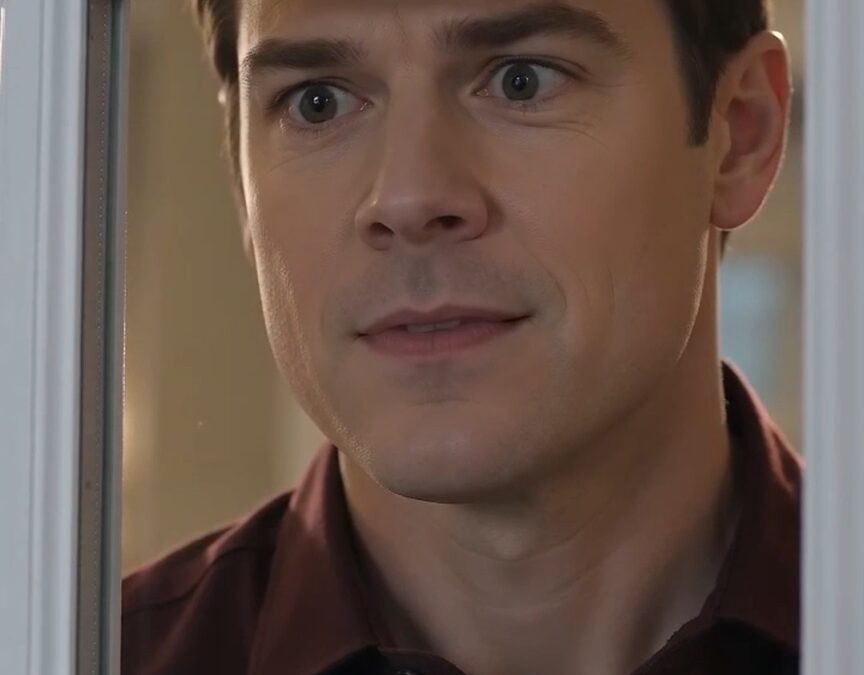
Through the glass, I could see the Christmas lights reflected across Brent’s shirt. Behind him was the shared entrance hall, then the open space where my apartment door should have been.
“Brent?”
He stayed there.
Snow lay along the walk. My red wooden star hung inside my front window, a little crooked because I had adjusted the curtain around it that morning.
Dinner was still on the table.
I tried the door.
Locked.
“Let me back in.”
“Are you ready to be reasonable?”
I looked down at the handle, then back at him. I had stepped outside to meet someone. That was all.
My phone was inside.
So was my home.
“Open it.”
“Agree to the arrangement first.”
Dana spoke from behind him before Scott reached us. I couldn’t see all of her, but I knew exactly where she was standing.
“You can come back in if you agree to use the smallest bedroom.”
She sounded almost patient.
That bothered me more than shouting would have.
“Dana, this is my home.”
“And we’re making room for you.”
I waited.
I thought she might hear herself. She had been eating at my table a little while before, passing a serving dish toward me without any sign she intended to help keep me outside.
She didn’t correct herself.
“No,” I said.
Brent shifted closer to the glass.
“You’re making this harder than it needs to be.”
I was 69. I had retired from handling payroll, and I had spent enough working days answering questions about money someone thought they were owed.
But I had never expected to stand outside my own Minneapolis duplex explaining that I was allowed inside.
Brent was 43.
He knew whose building it was.
I had never hidden that from him, and I had never transferred either apartment to him. He rented his side. I lived in mine.
That distinction had seemed simple until he wanted it changed.
I put my empty hands against my coat.
“Move the bolt.”
“Not until we settle this.”
We had already discussed it over dinner.
Dana had set her fork down and said, “We’ve worked out the room arrangement.”
I had looked at Brent.
He kept eating.
“What room arrangement?”
“The rooms, once everything is opened up.”
My plate was still warm. I remember moving it away because I wanted clear space in front of me while she explained.
She spoke about using my living room and deciding which kitchen made more sense. There would be a single household, she said, instead of everyone acting as though we lived in separate homes.
“We do live in separate homes.”
“Right beside each other,” she said.
“Yes.”
“That’s what we’re trying to fix.”
I looked toward the hall.
Without the apartment doors, I could see farther than I wanted to see. I had already told Brent those doors needed to go back.
Now Dana was treating their absence as the beginning of an arrangement I had accepted.
“I’m not combining the apartments.”
Brent put his fork down then.
“We need a real family home.”
“You have a home.”
“We could have four bedrooms without moving.”
“And where am I supposed to live?”
Dana named the smallest bedroom in my apartment.
Not the room where I slept.
The room with my sewing table and the boxes I used for Christmas decorations.
She explained it as though she had measured what I deserved and found that room sufficient.
“You don’t need all that space.”
“I use my space.”
“You’d still have a bedroom.”
“My apartment isn’t an extra room you can assign.”
Dana pressed her napkin flat beside her plate. She was 41, old enough to know that suggesting something and receiving permission were different things.
“We’re trying to include you.”
“I haven’t asked you to manage anything.”
Brent glanced toward the open doorway.
“Don’t make Christmas about this.”
“I didn’t.”
That was when Scott called.
I told him I would meet him out front. He lived nearby and was bringing something we had already arranged for him to drop off.
I left my phone inside.
“I’m stepping out,” I told Brent.
“We’re not done talking.”
“I’ll be right back.”
I had walked through the shared hall, past the damaged edges where our separate apartment doors belonged, and out through the common front door.
Then Brent had followed me.
Not outside.
Just far enough to reach the bolt.
Standing on the step, I could still see the table through my apartment opening. Nobody had cleared the dishes.
My chair was pulled back.
There was nothing about that ordinary sight that matched what he was doing.
“You cannot make me agree by keeping me out,” I said.
“I’m asking you to think about what works for everybody.”
“You’re keeping me outside.”
“Because you won’t listen.”
I looked past him again.
Dana had moved farther back. She wasn’t beside him in the glass anymore, but she hadn’t told him to let me in.
That was her answer.
Brent leaned toward me.
“You get a bedroom, not another apartment.”
I lifted my chin.
“Another apartment?”
“We need four bedrooms, not your extra space.”
“It isn’t extra.”
“We’re not moving and paying more when the space is right here.”
“You rent your apartment, Brent.”
“I’ve paid you for eleven years.”
“Yes.”
“That ought to give me some control.”
“Not over my home.”
He looked beyond my shoulder.
Scott was coming up the walk with a large sealed envelope. I could make out the words printed across its front.
“PROPERTY COPY.”
He slowed when he saw where I was standing.
At 62, Scott had known me long enough to recognize that I wasn’t waiting outside to exchange Christmas greetings.
“What’s happening, Carol?”
Brent answered before I could.
“She’s upset about sharing the house.”
I turned toward Scott.
“He locked me out until I agree to give up my apartment.”
Scott looked through the glass at Brent, who squared himself in the doorway and said, “This is between me and my mother.”
Chapter 2: The Envelope at the Glass
“She asked me to bring these,” Scott said.
He kept the envelope down beside his coat while Brent looked from him to me.
“I didn’t ask for a lawyer.”
“I did,” I said.
That made Brent pause.
Not because he thought the building belonged to him. He knew better.
He had simply expected me to keep answering him alone.
Scott didn’t pull at the door or tell Brent to come outside. He stood where my son could see him and waited for me to speak.
“Tell him why you’re here,” I said.
“To deliver the copies we discussed.”
Brent’s eyes went to the envelope.
“What copies?”
“The ownership information and your rental agreement.”
He pressed his mouth together.
I knew that look. He was deciding which part to challenge without backing away from what he wanted.
“This is a family discussion.”
“It concerns her home,” Scott said.
“And mine.”
“Your rented apartment.”
Brent moved his hand away from the bolt without opening it.
The motion drew my eyes to his fingers. He had the ability to end this ugly scene immediately, but he still wanted something from me first.
I had bought the whole duplex eleven years ago because I could live beside my son without sharing a kitchen or asking permission to have company. I rented him his apartment for $700 a month for eleven years, even as comparable places became much more expensive. Brent knew I owned the whole building, but he had begun saying his rent should give him a say over all of it. When I disagreed, he treated my answer as something we would settle later.
I remembered sitting with him in his kitchen when the arrangement began.
He wanted to know whether the rent would be manageable.
I wanted to know whether we could live next door without treating each other’s rooms as shared space.
“We’ll have our own places,” I had told him.
“That’s the point.”
He had agreed.
For years, that was how we lived.
I could visit, then go home. He could close his door. If I wanted my sewing spread across a room, I left it there.
Nobody needed to vote on it.
His recent suggestions had started with messages about wasted space.
Wouldn’t a single kitchen be easier?
Why heat separate living rooms?
I had answered the actual questions at first.
I liked my kitchen.
I used my living room.
Then I wrote what I thought would settle it.
“I’m not combining the apartments.”
He called his messages ideas, nothing more.
But a week before Christmas, I asked Scott to look at them.
We sat at my kitchen table while I showed him what Brent had sent. Scott read without interrupting, then asked for my existing agreement with Brent.
I took it from the place where I kept my house records.
Old payroll habits.
I didn’t like relying on what someone remembered a document saying.
Scott checked the ownership and read the agreement. He told me that renting his apartment had not given Brent ownership of mine or permission to alter the building.
“Tell him clearly,” he said.
“I already have.”
“Keep those messages.”
He offered to bring copies when he passed my home on Christmas.
I expected a quiet conversation after dinner.
Then I came home from errands the day before Christmas and found the apartment doors gone.
I stopped in the shared hall.
The outer door was still there, with its large glass panel and familiar handle. Inside, both apartment entrances stood open.
There were fresh marks along the frames.
“What happened here?”
Brent came out of his apartment.
“They’re getting refinished.”
“The frames, too?”
“Mom, let the guy work.”
I stepped closer to my doorway.
The wood around it had been damaged. This wasn’t simply somebody taking a door away to clean it up.
“Where are they?”
“He’s handling it.”
“They need to go back.”
“After Christmas.”
“No other work, Brent.”
He turned away, and I followed him far enough to make sure he heard the rest.
“I have not agreed to combine anything.”
“I know what you said.”
“Then stop making plans as though I haven’t said it.”
He hadn’t answered that.
Now those same open apartment entrances were visible behind him while he kept the exterior door shut against me.
Scott glanced past Brent at the exposed frames.
“Carol, is that the removal you described?”
“Yes.”
“They were being refinished,” Brent said.
“I told you they needed to go back.”
“We can talk about doors inside.”
“Then open this one.”
He didn’t.
Instead, he explained that I was reacting to the idea of change. He said a combined home made sense when people looked at the rooms together instead of defending their own little areas.
Scott let him finish.
Then I straightened.
“Scott, tell him who decides.”
Scott stepped beside me and lifted the envelope to chest height, facing Brent through the glass.
“Brent, she owns both apartments. She decides.”
My son’s smug expression disappeared.
He looked at Scott, then at me.
He remained in the doorway.
“My rent doesn’t give me control?”
“It gives you the right to occupy the apartment you rented under your agreement,” Scott said. “It doesn’t give you her apartment.”
“I’ve been paying for eleven years.”
“And she has provided your apartment for that rent.”
Scott did not soften that distinction.
Neither did I.
Brent looked down the hall, as though the missing doors might make his position more reasonable.
“Open the door,” Scott said. “Carol does not have to accept a room arrangement to return to her home.”
I waited with my hands against my coat.
“Nothing about letting her inside settles a renovation,” Scott added. “It ends you keeping her outside.”
Brent finally drew the bolt back.
I went in without promising anything.
Scott followed at my invitation, still carrying the sealed envelope, and Brent watched it as he asked, “What does that agreement actually let you do?”
Chapter 3: The Pages on My Table
“It lets her require written approval before alterations,” Scott said.
Brent stayed in the shared hall while I walked into my apartment and pulled my chair away from the dinner table.
My plate was where I had left it.
I moved it aside.
“Put them here.”
Scott opened the envelope only after I asked him to. He placed the ownership copies beside the agreement, keeping the pages separate from the serving dishes.
Dana stood near the opening where my door belonged.
Nobody offered more food.
Brent came closer when Scott turned the agreement toward him.
“This is the apartment you rented,” Scott said, indicating the description. “Not the whole building.”
“I know which side I rented.”
“Then we’re clear on that.”
Brent leaned over the page.
“I’m talking about what we can do as a family.”
“You asked what the agreement allows,” Scott said. “It requires the owner’s written approval for alterations.”
“I wasn’t trying to sell anything.”
“That isn’t the issue.”
I sat down.
My knees had started bothering me from standing on the cold step, and I didn’t want to spend the rest of the conversation pretending they hadn’t.
Scott pointed to another provision.
Damage caused by unauthorized alterations had to be reimbursed.
Brent read it.
Then he looked toward the hall.
“You don’t even know what needs doing.”
“That’s true,” I said. “A professional will assess it.”
Scott nodded.
There was no repair estimate in the envelope. There couldn’t have been.
The door damage needed to be examined, and the proper restoration priced, before I could tell Brent what it would cost.
But the agreement didn’t require me to accept the damage because I didn’t yet know the bill.
Dana stepped closer.
“They weren’t damaged on purpose.”
“They were removed without my permission,” I said.
“Brent thought you’d see how open it felt.”
“I told him no before they were removed.”
She looked at him.
He didn’t deny receiving the messages.
Instead, he said, “I thought we were still discussing the layout.”
“We weren’t.”
Scott gathered the ownership copies and slid them toward me.
I owned both apartments.
Including the one my son rented.
Seeing the description on the page didn’t surprise Brent. What changed was that he couldn’t dismiss my answer as a mother being difficult without Scott hearing him do it.
“Does this mean you’re throwing us out?” Dana asked.
“No,” I said.
Scott explained that Brent’s current rental term continued until spring. No one was changing his rent that evening or demanding that he leave during Christmas dinner.
That took away his next argument before he could use it.
“You remain responsible for your apartment,” Scott said. “And Carol remains entitled to hers.”
I put the copies back into the envelope myself.
The Christmas meal was cold by then.
I cleared my own plate.
After Christmas, I stood in the shared hall with a professional who examined the damaged frames and the missing apartment entrances.
I showed where each door had been.
I explained that I wanted appropriate apartment-entry doors and frames restored, with the entry-lock work necessary to make the arrangement secure.
Not a new layout.
The separate apartments we already had.
The professional checked the openings and took notes. I stayed nearby without offering guesses about what could be reused.
I knew payroll.
I didn’t know enough about damaged door frames to price that work myself.
When the estimate arrived, I spread it on my kitchen table where the agreement had been.
$4,800.
I read the scope before I looked at the total again.
Doors.
Frames.
Entry-lock work.
Nothing about opening a wall.
Nothing about improving Brent’s apartment for my personal taste.
I asked Scott to review it with me.
He checked that the proposed work related to restoring what had been removed and damaged. Then he reminded me to keep the estimate with the photographs and messages.
“Separate the repair issue from renewal,” he said.
“I intend to.”
The current agreement still applied.
Any possible renewal would be a different decision.
I had looked at comparable rentals, something I had avoided for years because I knew how far below them Brent’s rent had remained.
I wrote the amount on a sheet beside the estimate.
$1,450 a month.
I looked at it for a while before I said it aloud.
Then I asked Scott to help me make sure any notice was given properly and in advance, without changing the current term.
When Brent and Dana came to discuss the estimate, I left the Christmas dishes out of it. Everything on the table concerned the duplex.
Brent picked up the estimate.
“This is what you want us to pay?”
“It restores what you had removed.”
“All of it?”
“The restoration bill.”
Dana stood behind his chair.
“And then everything goes back to normal?”
I looked at her.
I had been paying the difference between his rent and what I could reasonably charge for years. That was not something I owed him indefinitely.
“I’ll consider renewing after the restoration is repaid,” I said. “The renewal rent would be $1,450 a month.”
Brent lowered the estimate.
“You’re raising it because we had an argument.”
“Your current rent stays the same through this term.”
“That isn’t what I asked.”
“The repair is for damage. The renewal is a separate decision.”
He pushed his chair back.
“We couldn’t afford to do all this for nothing.”
“I never approved a conversion.”
He looked toward Dana, and she stopped watching the estimate.
“There’s something else,” she said.
I kept my hand on the papers.
“What?”
Dana looked from Brent to me and said, “We already have someone coming to open that wall.”
Chapter 4: The Wall Beside My Kitchen
“No one is opening it,” I said.
Dana looked toward the wall as though the work could start while we were talking.
Brent stood up.
“It’s planned. That doesn’t mean anything has happened.”
“Then we’re going to keep it that way.”
I asked for the contractor’s contact information.
Brent didn’t immediately give it to me.
He said he could handle the conversation, that there was no reason for me to get involved in arrangements he had made.
“You made arrangements involving my building.”
“I’m telling you I’ll handle them.”
“I need to hear what has been authorized.”
He took out his phone.
I waited until I had the contact information in front of me. Then I wrote down what Dana had said about the wall.
I wasn’t going to remember it later as a vague mention of some future project.
The words mattered.
Someone was expected to come and make an opening between apartments I had refused to combine.
After they went back to their side, I called Scott.
I read him the sentence I had written.
“Contact the contractor,” he said. “Identify yourself as the owner and put your refusal in writing as well.”
“Should I tell him Brent had no authority?”
“Tell him what you know. You own the building. You did not approve the conversion. No further alteration is authorized.”
I set the phone beside the envelope.
The red star was still in my window. I could see its back from the table.
I had meant to spend the days after Christmas packing decorations slowly, not checking whether someone intended to cut through my wall.
But I made the call.
The contractor answered, and I gave my name and the address.
“I’m Carol. I own the duplex where Brent arranged the work.”
He knew which property I meant.
“I understand you’ve been discussing an opening between the apartments.”
“That’s part of the proposed work.”
“I have not authorized that work.”
He stopped giving me details.
“Brent arranged it.”
“He rents an apartment from me. He doesn’t own the building.”
I heard papers being moved.
Then he asked whether I was saying the project was canceled.
“I’m saying I authorize no conversion. I need to know what has already been done.”
The answer was specific.
The apartment-entry doors had been removed.
There was damage around the frames.
No connecting opening had been started.
No structural demolition had occurred.
I wrote each part down as he said it.
“Nothing has been opened between the apartments?”
“No.”
I put my pen down.
For the first time since Dana mentioned the wall, I could look at it without imagining that the next conversation would concern damage I hadn’t yet seen.
The larger work could still be stopped.
I asked him to confirm the status in writing and told him I would send my refusal in writing too.
He said he needed to speak with Brent.
“That’s fine. But my answer isn’t waiting on his.”
I called Scott back.
“No opening,” I told him.
“Good. Preserve the confirmation.”
“He was working from Brent’s authorization.”
“Then make sure your position is clear to everyone.”
I wrote a short message.
I owned the duplex.
I had not authorized combining the apartments.
I authorized no connecting opening or other conversion work.
I read it before sending it.
Then I saved a copy with Brent’s earlier messages.
There was a knock at the shared opening later.
Brent stood on his side of the hall.
“You called him.”
“Yes.”
“You could have let me talk to him.”
“I needed to know what was happening to my building.”
“He thinks there’s a problem now.”
“There is a problem.”
Brent rubbed his forehead.
The anger in his voice had changed. At Christmas, he had been telling me what would happen.
Now he wanted to manage what the contractor believed.
“I haven’t told him to start the wall.”
“You arranged for it.”
“It was a plan.”
“One I refused.”
“He knows how to do the work.”
“That doesn’t give you permission to order it.”
He looked into my apartment, toward the kitchen and the room Dana wanted me to keep.
“You’re acting like we were trying to ruin the place.”
“I’m stopping work I didn’t approve.”
I didn’t have to describe him as careless.
I didn’t have to prove he meant to hurt me.
The fact that he wanted the combined home didn’t make it his decision.
He asked whether I would join a call with the contractor so everyone could hear the same thing.
I agreed.
I asked Scott to be present too.
We sat at my table with the written refusal beside the phone. Brent stood rather than take the chair I offered.
The contractor confirmed again that the connecting opening had not begun.
Scott asked whether the contractor had received authorization from anyone besides Brent.
“No.”
Brent leaned toward the phone.
“I told you this was a family property.”
“I own it,” I said. “Brent rents an apartment.”
The contractor didn’t argue with me.
He asked whether I wanted the planned conversion to proceed.
“No.”
Brent looked at Scott.
“There has to be a way to settle this without making me look like I ordered work behind her back.”
Scott stayed with the facts.
“Did Carol give written approval?”
Brent said I knew he wanted more space.
“That isn’t approval,” I said.
The contractor asked whether any owner authorization had been supplied when Brent arranged the work.
Scott moved the rental agreement closer to the phone, and the contractor asked Brent, “Do you have anything signed by the owner?”
Chapter 5: The Empty Door Frames
“No,” Brent said.
The contractor waited while my son looked down at the table.
“I thought we’d get it worked out.”
“You told me they were being refinished,” I said.
“The doors were part of getting ready.”
It was the clearest answer he had given me.
I left my hands flat on the table.
The missing doors hadn’t been an unrelated holiday inconvenience. He had started preparing for the layout he wanted while telling me to stop worrying about it.
Scott asked the contractor to confirm that no remaining conversion work would proceed without my written authorization.
The contractor agreed.
Brent drew out the conversation by asking what could be postponed, what could be left scheduled, and whether the plans themselves had to be abandoned.
Each question served the same purpose.
He wanted to keep some part of the combined home available.
I answered only when my answer was needed.
“No conversion.”
“No connecting opening.”
“No permission to continue.”
Finally, Brent told the contractor to cancel the remaining conversion work.
He didn’t say he was happy about it.
He didn’t need to.
Scott asked for written confirmation, and I kept my copy when it came.
After the call, Brent stayed at the table.
“You could have told me this privately.”
“I did.”
“Not like that.”
“I told you before Christmas.”
He looked at the envelope.
Then he went back across the shared hall.
I stayed seated until I heard him moving around his kitchen. Without the apartment doors, even ordinary sounds came straight through.
That was one of the things he had dismissed.
He liked the idea of openness because he expected it to give him more home.
For me, it had removed a door I used every day.
Scott asked whether I had photographs from when I discovered the damage.
“Not enough.”
“Take clear ones before the restoration.”
I got my phone.
We started in the shared hall.
I photographed my opening straight on, then the marks around the frame. I took pictures close enough to show the pulled wood and wider ones showing where the damaged area sat.
Then I photographed Brent’s opening.
He came out while I was doing it.
“What are those for?”
“The repair records.”
“You can see it from here.”
“I need a record before it’s repaired.”
Scott didn’t take the phone from me.
He simply reminded me to keep the original images and not rely only on a message thread where I might lose track of them.
I went back inside and made a folder for the messages, photographs, and contractor confirmation.
It was ordinary work.
Save.
Check.
Put the right document in the right place.
I had done that kind of thing for years without anybody calling it unkind.
Now it involved my son, and every small step seemed to require defending.
I saved the message where I refused the combined apartment.
I saved his earlier renovation suggestions.
Then I put the professional restoration estimate with them.
I didn’t add notes about his attitude.
I didn’t need them.
The damage and the agreement were enough to explain what I was asking him to pay.
The next conversation concerned restoration rather than conversion.
The professional went through the proposed work with me in the hall. I asked about the apartment-entry doors, the frames, and the entry-lock work listed in the estimate.
I wanted the units separate and secure.
I didn’t ask for fancy trim.
I didn’t ask to charge Brent for something I had meant to replace anyway.
When the professional explained what was needed at the damaged openings, I asked him to include that explanation with the work description.
Brent came to the hall while we were talking.
“Are you replacing everything?”
“The estimate says what’s being restored,” I told him.
“I could get somebody to hang doors.”
“These are apartment entrances.”
“They were doors before.”
“And they need to be proper apartment entrances again.”
Scott had warned me not to let the repair become another argument about my decorating preferences.
So I stayed with the scope.
The removed doors.
The damaged frames.
The locks.
Brent looked at the openings and asked whether I would consider leaving them until spring.
“No.”
“It would make moving things easier if we decide not to stay.”
“You haven’t decided to move.”
“I said if.”
“My apartment still needs a door.”
The professional returned to checking the measurements.
Brent went quiet.
That evening, I reviewed the written work arrangements with Scott. I asked whether paying to get the home secure would mean giving up my right to reimbursement.
He explained that I should keep the paid invoice and the records tying the work to the unauthorized removal.
I didn’t have to leave my home unsecured while waiting for Brent to agree.
That was what I needed to hear.
I approved the professional restoration.
Not the conversion.
I sent Brent the scope and explained that the work would restore the separate entrances, with the cost tied to the damage he had authorized.
He came over carrying his phone, the estimate open on its screen.
I stayed near my table.
He held the phone toward me, tapped the line describing the apartment-entry doors, and said, “You expect me to pay for doors you want?”
Chapter 6: The Bill I Paid
“I expect you to pay for restoring what you had removed,” I said.
Brent lowered his phone but remained beside my table.
“You’re choosing these.”
“They’re appropriate apartment-entry doors.”
“I didn’t choose that price.”
“You chose to have the doors removed without approval.”
He looked toward Scott, who had come over to review the restoration arrangements with me.
Scott took out the agreement.
Not the ownership copies this time.
Nobody was claiming Brent owned the place anymore.
The argument had moved to whether he should pay for damage caused by the work he arranged.
Scott put the relevant provision beside the estimate.
“Carol isn’t billing you for disliking the layout,” he said. “This concerns unauthorized alteration and restoration.”
Brent read the provision again.
“I thought the carpenter would put something back.”
“Did you arrange proper restoration?”
Brent said there had been plans.
“Plans for what?” I asked.
He didn’t answer immediately.
Scott placed the contractor’s confirmation beside the photographs.
The door removal was documented.
The absence of my permission was documented.
The larger conversion had been canceled before the wall work began.
The restoration estimate addressed what had already happened.
Brent could disagree with me, but he couldn’t turn those into unrelated events.
Dana came into the hall while Scott explained the records.
“This is becoming a lot of paperwork for family.”
I looked up.
“It’s work on my house.”
“We were trying to make it work for all of us.”
“I didn’t agree to it.”
She stood behind Brent’s shoulder, reading the estimate over him.
Then she asked whether I intended to charge them for every inconvenience.
“No.”
I pointed at the amount.
“The restoration.”
No penalty for the Christmas lockout.
No extra charge for the hours I had spent dealing with the mess.
I wanted the damage repaired and the actual cost reimbursed.
Nothing added.
That didn’t satisfy them, but it kept the conversation clear.
When the restoration work began, I moved the things nearest my apartment entrance and covered what needed protecting.
I kept my sewing things in their room.
My room.
No one had received permission to assign it to me as my entire home.
The professional worked through the damaged entrance areas, fitting the proper frames and doors and completing the entry-lock work.
I stayed available for questions.
Brent and Dana still had access to their apartment.
I did not cut anything off or use the work to keep them out.
Scott had been clear about maintaining their rights during the term, and I had no interest in copying what Brent had done to me.
The first time my apartment door closed properly again, I stood inside and tested it.
Open.
Close.
Latch.
I checked that it worked without forcing it.
Then I left it shut while I made tea.
That small ordinary choice had been missing since the day before Christmas.
I could hear less of Brent’s kitchen.
More importantly, someone entering the shared hall could no longer look straight into my living room.
When the work was finished, I walked through it with the professional.
I asked about the lock operation and checked both restored entrances.
The completed work matched the scope.
The final restoration bill was $4,800.
I paid it.
I kept the payment record with the invoice instead of dropping it into the pile of ordinary household receipts.
Then I called Scott.
“It’s done.”
“Any difference from the estimate?”
“No.”
“Then use the actual paid amount.”
We prepared a reimbursement request for that same $4,800.
No increase.
No invented fees.
I attached the description of the completed work and made sure Brent had what he needed to understand the charge.
When he came over, I opened my own apartment door to him.
That should not have felt worth noticing.
It did.
He stopped just inside and looked back at the frame.
“They look fine.”
“They work.”
I handed him the invoice and proof I had paid it.
“You paid already?”
“Yes.”
“Why didn’t you wait?”
“I needed my apartment secure.”
He studied the page.
I let him.
There was nothing hidden in it.
He asked whether I expected the entire amount immediately. I told him we could discuss a reasonable written payment arrangement through Scott, but reimbursement would not disappear.
His current rent still remained $700 through the existing term.
The possible renewal was separate.
That was the distinction he kept trying to combine, just as he had tried to combine the apartments.
He sat down.
For a while he looked at the invoice without speaking.
Then he asked whether I understood how much everything was costing them now.
“I know what the restoration cost me.”
“I mean all of it.”
“The conversion stopped before the wall was opened.”
“I know.”
“That was important.”
He nodded without looking up.
I thought he might finally say he should not have removed the doors.
Instead, he reached for the other piece of the discussion.
He smoothed the invoice on his knee, looked toward the repaired entrance, and asked, “If I pay it, can the rent stay the same?”
Chapter 7: The Renewal Beside the Receipt
“No,” I said.
Brent looked up from the invoice as though I had changed an answer he had already earned.
“I’m offering to pay.”
“You’re reimbursing damage. That doesn’t purchase another discounted term.”
He put the paper on my table.
“I’ve been here eleven years.”
“I know.”
“That should count for something.”
“It has.”
He leaned back.
I didn’t list every repair I had covered or try to make him grateful for each month he had lived next door.
The amount was enough.
$700 a month for eleven years.
I had continued it while comparable apartments became much more expensive. I had done that because he was my son and I could choose to help.
I was making a different choice about renewal.
“You said $1,450.”
“Yes.”
“That’s a big change.”
“It would begin only under a renewed agreement after this term.”
He picked the invoice back up.
“So the repair doesn’t matter.”
“It matters because you owe it.”
That was the end of that conversation.
He went home with the restoration papers, and I asked Scott to help prepare the possible renewal terms correctly.
We sat with the current agreement open.
Scott checked when the existing term ended in the spring and what advance notice was required. He made sure I wasn’t treating a future offer as a change I could impose during the current term.
I wanted no confusion.
The rent due now remained $700.
The proposed renewal rent would be $1,450 a month.
I would consider renewal only after the restoration had been reimbursed.
Scott read the wording aloud.
I stopped him at anything that sounded more complicated than it needed to be.
“Can we say plainly that they may decline?”
“Yes.”
“And that the current agreement is unchanged?”
“Yes.”
Those statements belonged in it.
I didn’t want him later saying that he had to agree because I had threatened his access or his utilities.
I wanted a choice he could understand.
Stay under new terms if we reached a renewal.
Or leave when the existing agreement ended.
The written terms went to Brent with lawful advance notice.
I kept the delivery record with my copy.
Then I put the folder away and washed the cups Scott and I had used.
I had caught myself leaving papers spread across my table as though the whole apartment had become an office for this dispute.
It was still my kitchen.
I wanted to eat there.
Dana came over after they read the offer.
She knocked on my restored door, and I invited her in.
Brent followed.
Dana held the written terms folded in her hand.
“Family shouldn’t have to pay market rent.”
I pulled out a chair for myself.
“I’m not requiring you to renew.”
“That’s not what I mean.”
“I know.”
She remained standing.
“You know what people are paying now.”
“Yes.”
“Then you know how hard it is.”
“I do.”
She looked frustrated that I wasn’t denying the difficulty.
Neither she nor Brent needed me to explain that moving and higher rent could be expensive.
They needed me to agree that their difficulty entitled them to keep the arrangement they preferred.
I didn’t.
“You’ve got the whole building,” she said.
“I paid for the whole building.”
“And we’ve helped pay for it.”
“You paid rent for the apartment you occupied.”
Brent touched the back of the chair beside her.
“We’re not saying we own it.”
That was new.
At Christmas, he had believed his rent gave him control. Now he was trying to negotiate without that claim.
I appreciated the change.
It didn’t change my offer.
He asked whether I would lower the new rent if they agreed to handle more around the property.
I declined to trade vague future help for clear rental terms.
Then he asked whether the amount could stay lower until they recovered from reimbursing the repair.
“No.”
Dana unfolded the offer again.
“You’re making us choose between paying you more and leaving.”
“The existing agreement ends in the spring. Those are the renewal terms I’m willing to consider.”
“You used to want us next door.”
I looked at her, then at Brent.
That one hurt.
I folded my dish towel and put it beside the sink before I answered.
“I wanted separate homes next door to each other.”
“We could still have that.”
“Yes. Under the new terms.”
Brent asked for time to decide.
They had time under the notice and the remaining term. I told him to use it, and to let Scott know if he had questions about the written terms.
I didn’t call them each evening.
I didn’t knock to ask what they had decided.
When we passed in the shared hall, I said hello.
Their lights stayed on.
Their water stayed on.
Their keys continued to work.
After they had reviewed the offer and discussed it together, Brent came to my door carrying the same folded pages.
Dana stood beside him.
I invited them to sit, but he said they didn’t need to stay long.
I rested my hand on the back of my chair and asked Brent, “Are you staying under those terms or leaving when this agreement ends?”
Chapter 8: The Paper They Could Decline
“We’re leaving,” Brent said.
Dana held her coat closed while he put the renewal offer on my table.
“At the end of the agreement?” I asked.
“Yes.”
I nodded.
I didn’t ask where they would go. If they wanted to tell me, they could.
The immediate question was making sure everyone understood the same end point and the remaining obligations.
“I’ll ask Scott to put it in writing.”
Brent’s shoulders tightened.
“We just told you.”
“I heard you.”
“Then why does everything need a document?”
“Because we need to agree on the move-out and the repair balance.”
Dana looked at him.
“Let him write it.”
He picked up the offer again, then left it behind.
Their choice was not the ending I would have imagined when I bought the duplex.
But it was their choice.
They had not accepted the renewal.
I had not ordered them out in the middle of their term.
When Scott came over, I told him exactly what they had said.
“Voluntary departure when the existing term ends,” he repeated.
“Yes.”
“And the reimbursement?”
“Still due.”
We went through what needed to be clear.
Their possession would continue through the agreed term.
They would pay the current rent under the current agreement.
The restoration reimbursement would be handled on a written schedule and completed before they moved.
The move-out arrangement would not pretend they were accepting a new tenancy.
Scott asked whether I had promised to forgive anything.
“No.”
“Then we’ll avoid wording that suggests otherwise.”
I watched him set the restoration invoice beside the draft.
It was strange how much of the work involved keeping separate things separate.
Ownership and rent.
Repairs and renewal.
A family relationship and permission to cut into a building.
Brent had done better when he could blur them together.
I could answer more clearly when the pages didn’t.
Scott prepared the proposed arrangement and gave Brent and Dana an opportunity to review it.
He wasn’t their lawyer.
He made that clear.
They could ask questions and obtain their own advice before signing.
I wanted that said in front of me too.
Not because I expected another trick.
Because I wanted a document Brent could not honestly describe as something he had been rushed into at my kitchen table.
When they came to discuss it, we used the restored door like ordinary visitors.
Dana knocked.
I opened it.
Scott sat at the table with copies arranged in front of the chairs.
Brent noticed them immediately.
“This isn’t an eviction?”
“No,” Scott said. “It records the departure you chose at the end of the existing term.”
“What happens if we don’t sign?”
Scott explained that the current agreement and applicable law would still govern. The draft recorded their voluntary plan and the repair reimbursement schedule; it wasn’t a device to strip away their existing rights.
Brent read more carefully after that.
Dana followed along on her copy.
I sat across from them without reaching for the pen.
There were parts they wanted clarified.
What counted as completed reimbursement.
How we would document payment.
What would happen at the final handover.
Scott answered and made the wording clear without changing the amount owed or the end of the existing term.
Brent asked whether I would expect access whenever I wanted during their remaining time.
“No,” I said.
Any necessary access would be arranged properly.
Their apartment was still their rented home until they left.
They would not be treated as though saying no to renewal meant they had lost every ordinary protection.
Dana lowered her copy.
“And you’re not shutting anything off?”
“No.”
Brent looked at me.
I knew what he was thinking about.
The bolt at Christmas.
I let him think about it without supplying a speech.
Scott went back over the payment schedule. The restoration total remained $4,800, less any payment received and recorded.
No penalties had been added.
No extra claim had appeared because they chose to leave.
Brent asked whether the schedule could be adjusted within the remaining term.
We discussed what he could manage.
Scott made sure it still required the repair to be fully reimbursed before the move.
I agreed to a workable schedule, not a reduction.
That was enough progress for the meeting to continue.
Dana began gathering the pages into a neat pile.
Brent didn’t.
He rested his fingertips on the line where the repair reimbursement was described and stared at it.
“There’s something I want to ask before we do this.”
I waited.
Scott set his pen down.
Brent said leaving would already cost them money. He said they wouldn’t be benefiting from the new doors much longer, and I would still have them after they moved.
I kept my eyes on him.
The doors existed because apartments needed entrances, not because I had found a way to improve my house at his expense.
He didn’t say that part.
He looked at the page, then at me, and asked me to forgive the remaining repair balance before he signed.
Chapter 9: The Balance Beside His Signature
“No,” I said.
Brent pushed the unsigned paper away, but not far enough to leave the table.
Dana put her hand over her folded copy.
“You’ll have the doors.”
“I had apartment doors before he removed them.”
“They’re new now.”
“They restore what was there.”
Scott let me answer.
I was glad he did.
I didn’t want Brent to believe that everything I said had been supplied by a lawyer.
The decision was mine.
“You authorized the removal,” I told him. “I paid the professional restoration bill. You need to reimburse it.”
Brent looked toward my repaired entrance.
“I thought you might meet us halfway.”
“I agreed to a payment schedule.”
“That isn’t what I mean.”
“I know.”
He went quiet.
I didn’t fill the space by offering another concession.
Dana read the reimbursement wording again. Then she slid the paper back toward Brent.
“We need to settle it.”
He asked Scott to confirm that paying the recorded amount completed that restoration obligation and that I wasn’t adding another charge later under the same bill.
Scott showed him the language.
The amount was fixed to the actual professional restoration.
Payments would be credited.
There were no penalties hidden in it.
Brent read the full page before he picked up the pen.
Then he signed.
Dana signed where her agreement to the voluntary arrangement was required.
Scott made sure everyone received a copy.
I put mine with the invoice.
Afterward, the payments came according to the written arrangement.
When a payment arrived, I recorded it and gave Brent an updated balance.
I did it the same way each time.
Amount received.
Amount remaining.
No note about whether he had been friendly in the hall.
No charge for the dinner he had ruined.
I kept the repair accounting separate from the current rent, which continued under the existing agreement.
That mattered when he asked what remained.
I could show him without making him reconstruct a conversation.
Near the end of the term, he came to my door with the final reimbursement.
I checked it against the balance.
The restoration had been repaid in full.
$4,800.
I marked the obligation satisfied and gave him written confirmation.
He read it before folding it.
“So that’s done.”
“Yes.”
He waited as though there might be something else.
There wasn’t another bill.
I closed the folder.
As spring arrived, boxes appeared in their apartment.
I saw them when Brent opened his door, not because I walked in to check.
Dana carried things through the shared hall. I moved aside when she needed room.
The restored apartment doors meant their packing stayed on their side.
For all the tension, that was how living next door should have worked from the beginning.
Separate homes.
Shared practical space.
No one deciding another person needed less room.
On the agreed move-out day at the end of the spring term, Brent and Dana carried the rest of their belongings out voluntarily.
I did not stand in the hall directing them.
I stayed in my apartment until Brent knocked to say they were ready for the final handover.
Scott had explained how to document the condition and the return of possession.
He was there to guide me through it, not to turn a family departure into a courtroom scene.
Brent opened their apartment door.
It looked different without the furniture.
The rooms were still the rooms I had bought.
The restored entrance was secure, and the connecting wall had never been opened.
I checked the apartment carefully.
Not angrily.
We looked at the doors and frames, the locks, the rooms, and the areas connected to the work that had caused the dispute.
I took the photographs Scott advised keeping.
The restoration was complete.
The larger conversion had not happened.
The reimbursement was paid.
There was no reason to invent a new argument.
Dana waited near the shared hall while Brent walked through with us.
He pointed out that they had cleared the cupboards.
I checked.
They had.
He showed me the empty smallest bedroom in their apartment, then stepped back so I could look.
I thought of the room Dana had assigned to me across the hall.
My sewing table was still in it.
My Christmas boxes were still there.
Nobody had moved my bed into it.
At the final handover, Brent returned the apartment keys and confirmed they had finished leaving.
Scott helped make a clear record that possession had been returned at the agreed end of the term.
I gave Brent his copy.
Dana went outside.
Brent remained in the shared entrance a little longer.
He looked at his former apartment door, then at mine.
Without their furniture behind him, his voice carried differently.
“I know the wall never got done.”
“Yes.”
“And you got paid.”
“Yes.”
He rubbed the edge of the paper between his fingers.
“I don’t want every conversation after this to be about the building.”
“Neither do I.”
He glanced toward Scott, who was gathering the inspection notes.
Then Brent looked back at me.
I thought he might ask about coming over another time, or say something about Christmas.
Instead, he nodded toward the apartment behind my own door and asked, “Can we at least stop calling it your apartment?”
Chapter 10: My Own Front Door
“It is my apartment,” I said.
Brent looked down at the keys he had already placed on the table by the entrance.
“I know what you mean.”
“I never transferred ownership of either one.”
“I’m not asking for ownership now.”
“Then we don’t need different words for it.”
He glanced through my doorway.
The sewing room was out of sight from where he stood, but the living room wasn’t. My chair sat where I liked it.
My kitchen was behind it.
Rooms he had discussed using as part of his larger home.
I didn’t need him to approve of how I used them.
He folded his move-out copy and put it away.
“Okay.”
It wasn’t an apology.
I didn’t call it one.
Dana was waiting outside, and he went to join her.
They left voluntarily at the end of the spring term, just as the written arrangement said they would.
No lockout.
No utility shutoff.
No forced move in the middle of their agreement.
Scott stayed long enough to help me check the final records.
We sat at my kitchen table, where the first envelope had been opened beside cold Christmas dishes.
This time, there was room for everything.
We matched the restoration invoice to my payment.
Then we matched Brent’s reimbursement payments to the same amount.
$4,800 paid by me.
$4,800 reimbursed by him.
Nothing left owing on that repair bill.
Scott checked the record of the voluntary departure and the returned possession. I put it beside the final inspection notes and photographs.
The rental term had ended.
The proposed renewal had never begun.
There was no $1,450 charge for a tenancy Brent had chosen not to enter.
His rent had remained $700 through the existing term.
I wanted the file to say exactly what happened, not something larger because I was still upset.
Scott watched me place the pages back in order.
“You’ve got it all?”
“I do.”
I put the old ownership copies and agreement in the large envelope marked “PROPERTY COPY.”
It had been carried up my snowy walk sealed.
Now its corners were softened from being handled at my table.
I stored it with the other house records.
Then Scott left through the shared front entrance, and I closed my apartment door behind me.
I stood there for a moment with my hand on the knob.
I could go into any room.
Not because someone had finally agreed that I could.
Because no agreement had ever taken those rooms away from me.
The first quiet afternoon after the move, I took my sewing out and left it on the table in the little bedroom.
I didn’t pack it away to prove the room could serve another purpose.
I wanted to finish what I was working on.
Later, I carried my cup into the living room and sat near the front window.
The star had been put away with the Christmas decorations by then.
Its hook was still there.
Outside, the shared entrance looked ordinary again.
Inside, each apartment opened separately from the hall.
The restored doors made that clear without anyone needing to stand there explaining it.
I used my kitchen in the evenings.
If a dish needed soaking, I left it in my sink.
If I wanted to sew after supper, I went into the little room.
I slept in my bedroom, with my things where I had put them.
Those were not dramatic changes.
They were the parts of my day Brent and Dana had spoken about as though they were available for reassignment.
For a while, I caught myself closing my apartment door more carefully than necessary.
I would turn the knob after it latched, checking it again.
Eventually, I stopped doing that.
One ordinary close was enough.
I kept the shared hall clear and the restored locks working. I handled the duplex as its owner without treating every household task as another piece of the argument.
The repair folder stayed put.
I did not take it out whenever I thought of Brent.
It was there if I needed it.
That was enough.
When the following Christmas came, I brought the decorations out of the little bedroom myself.
The boxes were where I had stored them.
I carried what I wanted into the living room and left the rest until I was ready.
Nobody told me the room was too much for me to manage.
I set the red wooden star on my table while I worked on the window.
The paint had a small worn spot along an edge from years of handling.
I rubbed dust away with a soft cloth, then checked the hanging cord.
It was still sound.
Before I put it up, I went through my apartment collecting the empty decoration wrappings.
Kitchen.
Living room.
My bedroom.
The little bedroom with the sewing table.
Every room was still part of my home.
I returned the wrappings to their box and left my sewing where I could pick it up later.
Then I opened my apartment door and checked that the hall was clear.
The separate entrance across from mine was shut.
Mine closed behind me when I tested it, fitting properly in the restored frame.
I went back to the front window.
I adjusted the curtain, lifted the cord onto its hook, and hung my red wooden star inside my own window.
You Might Also Enjoy

My Daughter-In-Law Told Me To Stay Elsewhere While Strangers Took My Condo — Then I Pushed Back