After twelve years as a stay-at-home dad, I faced my husband’s demand for half the inherited business funding our son’s accessible home.
Chapter 1 of 7
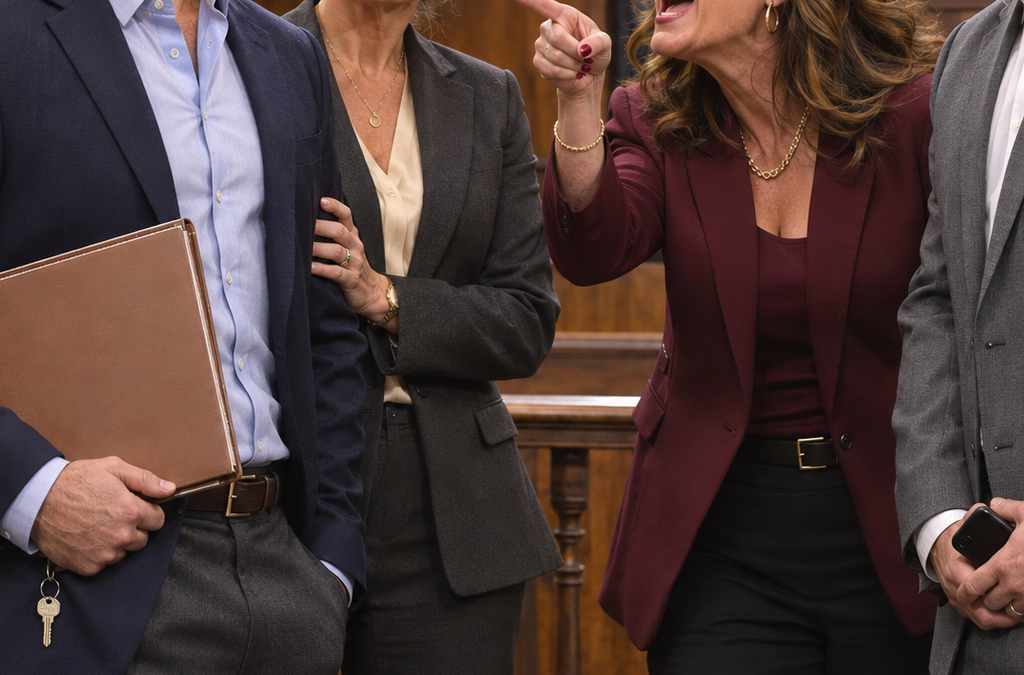
At 8:40 a.m. on Friday, May 1, I stood outside the courtroom rail in Sacramento’s family courthouse.
Kelly Ellis looked at the folder beneath my arm.
“You folded laundry; my brother built this family.”
She gave one brief laugh. Mark stood beside her, holding his phone. He said nothing.
I pressed the blue-capped house key against my palm inside my pocket. Behind me, someone shifted on a wooden bench.
“Daniel.” My attorney, Rachel Brooks, touched my sleeve. “Come sit with me.”
I followed her past Mark. His jacket was one I had collected from the cleaners before we separated. I still knew which pocket held his reading glasses.
The courthouse at 3341 Power Inn Road smelled of paper and floor cleaner. I checked my phone before putting it away. Owen’s school had no messages for me.
He had turned twelve in February. That morning, he had reminded me to pack his permission slip, then asked whether court would make me late for pickup.
“I have it covered,” I had told him.
That was usually what he needed: who was coming, which vehicle, whether his wheelchair would fit. His walker waited inside our front door for days when he wanted it.
Mark sat at the other table with Eric Cole. Kelly settled behind them.
I remembered leaving my medical-office scheduling job in February 2014, when Owen joined our family through adoption. Mark and I had agreed I would stay home. We had discussed daycare costs, appointments, and his demanding project schedule.
Neither of us had called it doing nothing.
Rachel set her legal pad beside my folder.
“Did you bring the originals?”
“Yes.”
“Keep them with you today. This is a status conference.”
I opened the inherited business folder across my knees. My Cedar Lane Rentals LLC membership certificate lay beneath its protective sleeve. Behind it sat our signed premarital agreement, the operating agreement, and copies of the sole-member ledger Susan Reed had supplied.
A blue anniversary envelope rested against the back cover.
Its flap had softened from handling. I eased out the anniversary letter to check that it was there. The single sheet opened along an old fold, showing writing on both faces. The figures $48,000 and $24,000 appeared as I turned it.
I put it away before Kelly could look over.
Once, that envelope had sat beside an anniversary cake. Carrying it into court made me feel foolish in a way the financial statements did not.
Judge Linda Morales took the bench. We stood, then sat.
Eric identified the unresolved business claim.
“My client seeks recognition of a one-half interest in Cedar Lane Rentals LLC, valued at $250,000.”
Rachel wrote down his words. I kept my hand around the key.
The house had a low threshold and a bathroom Owen could use comfortably. Cedar Lane’s distributions helped me pay its expenses, but the company did not own it. Mark and I did.
The judge asked the attorneys about disclosures and the scope of the remaining dispute. Nobody testified. Nobody decided who owned the company.
I had imagined needing to defend twelve years that morning. Instead, the attorneys discussed what still needed to be addressed, and the judge moved to the next matter.
At 10:15, Rachel and I found seats away from the courtroom doors.
“Before you decide anything,” she said, “tell me what you’re afraid happens next.”
“That I give him what he wants because I can’t stand coming back.”
She rested her pen on her pad.
“Then let’s separate that feeling from what the records support.”
She tapped the certificate visible through my folder.
“You inherited this on June 4, 2012, before your November 2013 marriage. The estate records and premarital agreement support separate LLC ownership, and the ledger and tax records consistently track it.”
“Those records don’t end this?”
“California requires an express written declaration to change separate property into marital property. Any claimed later written gift still needs examination; a ledger or tax return alone can’t answer that.”
I glanced at the blue envelope.
“I kept the whole letter.”
“Good. We’ll examine the whole thing.”
She asked whether either of us had worked in the rental business.
“No. It was professionally managed when my aunt left it to me. It stayed that way.”
“Any marital money invested in company operations?”
“No.”
Rachel made a short note.
“And Mark knew about it before the wedding?”
“It was in the financial schedules. The disclosed value then was $310,000.”
“He had his own lawyer?”
“Yes. So did I.”
She closed her pad.
“You disclosed the business again in February, along with the distributions and accounts. We’ll work from that record.”
I had not hidden Cedar Lane. Mark knew when distributions arrived. Some paid household expenses; some stayed in my separate account until the next bill came.
The current distributions ran around $9,000 quarterly. They were useful, but they did not cover everything. Mark’s salary had paid for groceries, insurance, mortgage payments, and shoes Owen outgrew.
“I’m not asking you to make his work disappear,” I said.
“I know.”
“I won’t sign over part of the company just to avoid another morning like this. Use what I gave you.”
Rachel nodded. “All right.”
Mark approached while I was fastening the folder. Kelly waited near the elevators, watching us.
“Can we talk without making every sentence a billable event?” he asked.
Rachel looked at me. I stayed seated.
“For a minute.”
Mark rubbed the bridge of his nose.
“My salary gave you the freedom to leave that inheritance alone.”
“You paid for a lot,” I said. “I haven’t denied that.”
“I worked full-time. You got to stay home with Owen.”
“I stayed home because we agreed someone needed to.”
“And that let you preserve something that’s now worth more.”
“Caregiving wasn’t freedom from work, Mark.”
He looked toward the elevator.
I remembered appointments rearranged around his job sites. I remembered learning transfers beside him, then doing most weekday mornings alone. There had also been evenings when Mark came home exhausted and took over so I could leave the house.
I wanted him to remember both.
“We both worked,” I said. “Please stop talking as if I was waiting around.”
“I’m asking for recognition.”
“Then don’t let your sister say I only folded laundry.”
His mouth moved, but he offered no answer to that.
I stood and put the folder under my arm.
“The property discussions can stay with the lawyers.”
That afternoon, Owen rolled through our front door ahead of me. His wheelchair bag caught briefly against the jamb. He backed up, adjusted his angle, and cleared it before I could offer help.
“Did you get bored?” he asked.
“At court?”
“Yeah.”
“Some of it.”
He grinned. “You should’ve brought a book.”
I hung my keys on their hook. Owen stayed near the entry instead of heading down the hall.
“What is it?”
He looked at his phone.
“Dad said I could ask you something.”
I stopped reaching for his school bag.
Owen turned the screen toward me. Beneath Mark’s name, the message read: “Could you help Papa understand that selling the house now would be fair to both dads?”
Our March 20 agreement already protected our use of the house. Mark had asked our twelve-year-old to help undo it.
Chapter 2 of 7
On Monday, May 4, Owen asked whether I had answered Dad’s house message.
“Let’s look at it together,” I said.
He handed me his phone before we left for school. I read Mark’s words aloud, including “fair to both dads.”
“Deciding about the house is an adult responsibility,” I told him. “You don’t have to persuade either of us.”
“Dad said I could help.”
“You help by telling us what you need. You don’t have to settle anything.”
Owen ran his thumb along his wheelchair’s armrest.
“Are we moving?”
“Our agreement hasn’t changed. We’re staying here under that plan.”
“Until I finish school?”
“The sale is deferred until June 30, 2032, unless we agree differently or the court changes it.”
He studied me.
“So things could change.”
“Yes. I’ll tell you when something affects you. You won’t have to find out by carrying messages.”
He held out his hand for the phone.
“Can you tell Dad that part?”
“I will.”
At the agreed handoff later that day, Mark arrived while Owen was checking his bag. Owen had packed a charging cord, homework, and a sweatshirt despite the warm afternoon.
Mark crouched beside him.
“Got everything?”
“I think so.”
“Check your charger.”
Owen gave him the patient look he gave both of us.
“It’s in the front.”
When Owen went down the hall for his water bottle, I stepped onto the porch with Mark.
“Don’t ask him to persuade me about selling.”
“I asked what he thought.”
“You asked him to help change my mind.”
Mark lowered his voice.
“An early sale could give both households a fresh start. Owen needs two secure fathers, not one father sitting on a company.”
“The house already has an agreement.”
“An agreement we can change.”
“Then have Eric speak to Rachel. Owen isn’t the way to do that.”
Mark glanced through the open door.
“You make it sound like I’m hurting him by wanting a decent place.”
“I’m asking you to keep the argument between adults.”
Owen returned with the bottle tucked beside his leg.
“Ready?” Mark asked him.
I handed over the bag. I didn’t ask Owen to stay or make him answer anything else.
“Have a good visit,” I said.
He reminded me about a school form due Wednesday. I promised to sign it.
During school hours later that week, I met Rachel at her office. Susan Reed joined us by phone. I kept the meeting short enough to make pickup.
Rachel had our agreement open beside her pad.
“Both of you had independent counsel,” she said. “The final version and financial schedules arrived September 30, 2013. You signed October 18, eighteen days later.”
“Yes.”
“No parenting terms or child-support provisions,” she added, turning a page. “And no support waiver.”
Mark and I had once sat across a different desk discussing those pages. Afterward, we had gone out for sandwiches and argued about wedding music.
Susan’s voice came through the speaker.
“I checked the estate distribution against the membership certificate and operating agreement. Your aunt’s estate transferred the membership to you, and the member ledger carries that ownership forward.”
“Anything missing?” I asked.
“Nothing in that chain. I’ll authenticate the company copies and the records I’ve maintained since 2012.”
Rachel looked up.
“That supports original ownership. We still have to answer any claimed later gift, and the agreement doesn’t excuse incomplete income disclosure or support obligations.”
“I’m not trying to avoid either.”
“I know. I want us answering the actual claim.”
Susan had begun tracing household transfers through the bank records. She gave us one preliminary total.
“From 2020 through 2025, $216,000 went from Daniel’s distributions into family use. That includes the anniversary cash gift.”
I wrote the number on the back of my appointment reminder.
“That doesn’t tell us who paid every household expense,” Susan said.
“No,” I said. “It doesn’t.”
I folded the reminder into my pocket. Outside, I checked the time and hurried toward the parking lot.
At the next handoff, Mark caught sight of Rachel’s envelope on the passenger seat.
“More proof you paid for everything?”
“I’ve never said that.”
“That’s how it comes across.”
Owen had already gone inside to find his homework folder. I stayed beside the van.
“Your salary mattered,” I said. “You earned $118,000 a year. I knew what you paid.”
“And while I did that, your inheritance stayed yours.”
“Some stayed invested. Some paid family bills.”
He looked past me toward the house.
“You could at least admit I made staying home possible.”
“We made a plan together. I needed your paycheck. You needed me available.”
He shifted his keys between his hands.
“I still need somewhere Owen can be comfortable.”
“I want that too. Send the financial questions to Rachel.”
He nodded once, without agreeing.
By Friday, May 8, I had signed the school form and booked Owen’s next appointment. I was outside school when my phone lit up at 4:18 p.m.
Mark’s name appeared above a new message.
“I’ll continue paying the ordered $820 monthly support. Starting June 1, I won’t be paying the additional $600 for accessible transport. I need to put that toward my own household.”
I read it again beside the van. The voluntary payment had been part of every month’s transport plan.
Beginning June 1, that plan would have $600 less.
Chapter 3 of 7
On Monday, May 11, I opened June’s transport calendar and replaced two weekly rides with my name. I would cover the $600 shortfall from my distributions, with fewer paid rides making room elsewhere in the budget.
Mark hadn’t violated the support order. That didn’t make the missing money easier to find.
Those two pickups took the afternoons I usually kept free. Sometimes I saw a friend. Sometimes I sat somewhere nobody needed me.
I printed Owen’s copy before we left for school.
“You’re getting me on these days?” he asked, pointing.
“Yes. Starting in June.”
“What about when your car needs fixing?”
“The van’s fine. If that changes, I’ll arrange another ride.”
He checked the calendar again.
“Wednesday is library day.”
“I left that on there.”
He folded the page into his school bag.
That afternoon, Kelly brought Owen home after an arranged pickup. I met them beside the van and took his bag while she checked beneath the seat for his water bottle.
“You left this,” she told him.
“I knew where it was.”
“Then you were leaving it for me to carry.”
He grinned. For a moment, she sounded like the aunt who bought him books without checking whether they were educational.
Then she looked at me.
“Mark said you’re taking over more rides.”
“I’ve changed the June schedule.”
“He’s trying to make his place work for Owen too.”
“I know.”
She held the bottle against her coat.
“I hope you’re considering that. Cedar Lane was the company you two built around the family.”
Owen stopped adjusting his bag.
“What company?”
“The rentals,” Kelly said. “Your dads have been talking about them.”
“Dad said Papa got those from his aunt.”
“He did,” I said.
Kelly looked down at Owen, then lowered her voice.
“I just meant everybody contributed.”
Owen looked between us.
“Have you been keeping something from Dad?”
“No. He knew about Cedar Lane before we married.”
“Then why does Aunt Kelly think—”
“You don’t have to work out the money disagreement,” I said. “Your dad and I have people helping us.”
“I could look at what you’re talking about.”
“I’m not giving you our financial papers. You can ask me questions about your life.”
Kelly handed him the bottle.
“I shouldn’t have brought it up here,” she said.
She didn’t look at me when she said it. I thanked her for the pickup and moved aside so Owen could reach the door.
Later, I called Mark while Owen worked on homework in his room. I stepped outside, keeping the front window in view.
“Kelly talked about the company in front of him.”
“I didn’t ask her to.”
“He asked if I’d been hiding things from you.”
“I’ll talk to her.”
“Please do.”
Mark stayed on the line.
“Daniel, you keep describing this as though I invented it in January.”
“I’m describing what Owen heard.”
“And I’m trying to explain why I believe I have a share.”
A truck passed his end of the call. I waited until the noise cleared.
“For years, those distributions went into our life,” he said. “You called them ours. Then you wrote what you wrote for our anniversary.”
“I gave you a gift.”
“Yes. That’s what I’m saying.”
His voice sounded tired rather than angry.
“I paid the regular bills. I took the overtime when projects ran late. When you said half, I believed you meant I was finally an owner too.”
“You were my husband. I wasn’t keeping score of who mattered.”
“But now all that language apparently meant something smaller.”
I watched Owen reach for a pencil through the window.
“I want my contribution recognized,” Mark said. “I’m not asking you to admit I stole anything.”
“I haven’t accused you of stealing.”
“Then consider an agreement before we spend more proving things to each other.”
After we hung up, I stayed on the porch until Owen waved me inside.
On Wednesday, May 13, Rachel called while I waited near school.
“Eric has supplied Mark’s records voluntarily,” she said. “We didn’t need a bank subpoena. I’m reviewing the production now.”
“Is there anything I need to do today?”
“Decide nothing until you’ve seen what he’s relying on.”
I watched a parent cross the parking lot carrying a cardboard school project.
“What would settling mean?” I asked.
“That depends on the terms. Are you asking because you want an agreement, or because you want this to stop?”
“Both.”
“All right. We can talk about both.”
I imagined another payment leaving my account. I imagined telling Mark yes and having him speak normally to me again.
Then I pictured the next disagreement, and whether I would pay again.
“I can negotiate,” I said. “I don’t want embarrassment deciding the amount.”
“Then we’ll start there.”
At 6:42 p.m., Rachel’s email arrived. She called as I opened the attachment.
It was a front-only photograph of the anniversary letter from my blue envelope. My handwriting crossed the page, with my signature beneath it.
“Half my Cedar Lane interest, for our anniversary.”
“The photograph doesn’t show the reverse,” I said.
“We’ll produce the complete original,” Rachel said. “A photograph of one side doesn’t establish forgery or concealment. We’ll answer it with the whole sheet.”
I enlarged the image. I recognized the crease, the slant of my signature, the paper I had once placed beside a cake.
Mark’s new exhibit was my anniversary letter, photographed from the front—the signed words he said had given him half the company.
Chapter 4 of 7
I unfolded the original anniversary letter on Rachel’s desk. She examined the front, then turned the sheet over, keeping her fingers along its edges.
“This side concerns the cash distribution,” she said.
“Yes. The money I gave him.”
“The photograph doesn’t show it. Eric needs a clear copy of both faces.”
The fold crossed the writing on the reverse. Rachel flattened it gently, then slid the sheet back toward me.
“Keep this safe. We’ll bring the original.”
I tucked it into the blue envelope. I had meant the letter to make Mark feel included. Now I watched Rachel clear a space for it among bank statements.
“Does the front make you nervous?” I asked.
“We have to take it seriously. We also have to read the whole page.”
Before Owen’s next scheduled weekend with Mark, I carried his bag to the van. Owen waited inside the house, choosing a book for the drive.
Mark checked the bag’s outside pocket.
“Charger?”
“He packed it.”
Mark zipped the pocket without looking inside.
“I’ve been thinking about those transfers,” he said. “You moved money into our account for years.”
“Yes.”
“You didn’t ask me to account for every dollar. We shared everything that came out of that company.”
“We used the money together.”
“Then why is that sharing supposed to stop at the company itself?”
I rested the bag on the seat.
“Because giving money to our household wasn’t giving you ownership.”
“That sounds convenient now.”
“It was how we arranged it then.”
He looked toward the open front door.
“I believe the anniversary writing changed that arrangement. You can’t expect me to forget what you signed.”
“I don’t. I expect us to deal with the whole letter.”
Owen appeared with a paperback balanced on his lap.
“Can we stop for something to eat?” he asked.
Mark turned toward him. “Sure. What sounds good?”
I stepped back so they could leave. We hadn’t settled anything, but Owen didn’t have to wait beside our argument.
On Friday, May 22, at 2:00 p.m., we met at Rachel’s office for a counsel conference. Eric sat beside Mark across the table. I kept my folder closed until Rachel asked for it.
“The agreed net value is $500,000,” Eric said. “Neither party is requesting another valuation.”
“Correct,” Rachel said. “The dispute is what interest, if any, Daniel transferred.”
Mark leaned forward.
“I’m glad we can agree on one thing.”
I looked at his hands. He had always tapped his thumb against his wedding ring when waiting. His thumb still made the movement.
Rachel opened the folder.
“The inheritance and premarital agreement establish the starting ownership; the ledger and tax returns remain consistent with it,” she said. “Susan’s bank tracing distinguishes the interest itself from distributions Daniel voluntarily put into family use.”
Eric nodded.
“We’re not arguing that a household transfer alone changes title.”
Mark turned toward him, then back to Rachel.
“I’m saying those transfers explain what we understood. This wasn’t a business Daniel kept outside our life.”
“No,” I said. “It helped pay for our life.”
Rachel placed a copy of the membership certificate beside the tracing schedule.
“Susan can authenticate the records and explain the transfers. Daniel also retains the signed original of the anniversary letter, which is two-sided.”
Mark’s eyes moved to my folder.
“You still have it?”
“Yes.”
“The actual paper?”
I took out the blue envelope. I didn’t pass it across the table yet.
Eric asked Rachel for copies of the complete sheet and the supporting records.
“They’ll all be included in the exhibit exchange,” she said. “You’ll have them before the hearing.”
Mark sat back.
“The front was an ownership gift,” he said. “The reverse was later bookkeeping.”
Rachel stopped writing.
“That’s your position about the reverse?”
“It recorded the cash. That doesn’t mean the cash was everything Daniel had already given me.”
Eric put a hand beside his pad.
“We’ll address the complete writing. An unchanged company ledger doesn’t resolve our argument by itself.”
Rachel agreed. I appreciated that she didn’t promise me an easy answer.
Mark looked directly at me.
“You know why I understood it that way. I kept working because we had Owen and the house. You had something growing in the background.”
“I know what your job required,” I said.
“Then acknowledge what that made possible.”
“I can acknowledge your work without agreeing that I gave you half the company.”
He pushed his chair back a few inches.
“I thought you wanted us to be equal.”
I pressed the envelope flat beneath my palm. There were answers I could have given about mornings, appointments, and the years neither of us could get back. None would settle what the letter meant.
“Read both sides with Eric,” I said.
Rachel checked the notice in front of her.
“June 12, 9:00 a.m., at Sacramento’s family courthouse. Judge Morales will hear testimony from the parties, Susan, and Kelly, with both counsel present.”
“Complete exhibits by June 5 at noon,” Eric said.
“Yes.”
I put the envelope away. Mark was already looking at his phone.
After the conference, I waited in Rachel’s reception area while she copied a page for me. Through the glass, I saw Mark stop near the parking lot and make a call.
At 3:26 p.m., my phone lit up. Kelly had sent a private message.
“Mark just called me. Do you still have the side we all signed?”
Chapter 5 of 7
“What do you remember?” I texted Kelly.
Her reply came while I waited for Rachel to return.
“You turned the paper over. There was a receipt. I remember that, not a membership document.”
I typed a question about what Mark had told her, then deleted it. Instead, I sent the exchange to Rachel.
“Should I answer her?”
“Tell her you’ve kept the original. Leave questions about her testimony to counsel.”
I sent that much. Kelly didn’t reply.
By noon on June 5, both attorneys had clear scans of both sides of the letter, Susan’s tracing schedule, and the ownership records. Eric had the complete exhibit. I would bring the original.
On Thursday, June 11, I returned to Rachel’s office while Owen remained at school. My phone calendar showed his pickup beneath the settlement conference.
Kelly sat beside Mark in the conference room. She moved her purse off the empty chair when I entered, but I took the seat beside Rachel.
Eric placed a written offer between us.
“Mark will resolve the $250,000 demand for $75,000. The offer remains open until four today.”
I looked at Mark.
“That’s what you want?”
“That’s a compromise,” he said. “It’s much less than the interest I believe you gave me.”
Eric kept his voice even.
“Tomorrow carries costs and uncertainty for both parties. This would resolve the business dispute without testimony.”
Rachel slid the page closer to me.
“You don’t have to answer immediately.”
“I’d like him to hear why,” Mark said.
She nodded toward him.
He rested his forearms on the table.
“The anniversary made me an equal owner. The cash was the first payment. I didn’t invent that because we’re getting divorced.”
Kelly studied the offer without touching it.
“You signed something that finally recognized what my work made possible,” Mark continued. “I thought we agreed that what we’d built belonged to both of us.”
“I recognized your work before that anniversary,” I said.
“Then why fight this hard?”
“Because I didn’t give you half the company.”
“You wrote that you did.”
“We both know there’s another side.”
“And we disagree about what that side did.”
Eric raised his hand slightly.
“That disagreement is why we’re here. The offer prices in the risk rather than requiring either of you to concede.”
I read the amount again.
Seventy-five thousand dollars could end the argument that afternoon. I could stop checking messages for words I needed to save. I could pick Owen up without wondering whether another demand would arrive before dinner.
Mark watched me reading.
“We could leave this here,” he said.
I wanted to ask whether he would stop describing our marriage as twelve years of him working and me being fortunate. The offer didn’t promise that.
“May I speak with Rachel?” I asked.
Eric gathered his pad. Mark and Kelly followed him into the reception area.
Rachel waited until the door closed.
“What are you weighing?”
“The money. Tomorrow. Having to say private things in front of Kelly.”
“We can take time.”
“There isn’t much left.”
“There’s enough to make your own decision.”
I pushed the offer a few inches away.
“I keep imagining paying it and getting the person I knew back.”
Rachel didn’t reach for her pen.
“Would you accept these terms if nothing changed between you afterward?”
I looked at the empty chair across from me.
“No.”
When they returned, Mark remained standing until Kelly sat.
“I’m not accepting the offer,” I said.
His fingers closed around the back of his chair.
“You’re willing to spend more rather than meet me partway?”
“I’m willing to have the judge decide what I gave you.”
“We can discuss other terms,” Eric said.
“I’m not buying peace with an ownership share I never transferred.”
Mark sat down.
“I need a workable household too. We could revisit the house arrangement and the weekly schedule as part of a broader agreement.”
“Owen’s time isn’t something I’ll exchange for a property concession.”
“I’m talking about making two homes work.”
“If his schedule needs changing for him, we can discuss that separately.”
Rachel drew the offer back toward her.
“Daniel has answered the financial proposal. Any parenting proposal needs its own discussion.”
Kelly rubbed a mark on the table with her thumb.
“What am I expected to say tomorrow?”
Eric turned toward her.
“What you remember witnessing.”
“Am I expected to say I saw ownership transferred?”
Mark looked at his sister.
“I expect you to describe what the anniversary meant. You were there. You knew how much it mattered to me.”
“I knew you were pleased.”
“It was more than being pleased, Kelly.”
She took her purse from the floor and set it on her lap.
“I’m asking about the paper.”
“We’ll ask about what you personally saw and heard,” Eric said.
Mark glanced at me, then down at the offer.
At four, the proposal expired. Eric collected his copy. Mark left without asking to speak privately.
After school pickup, Owen asked whether tomorrow’s court visit would change his ride home. I checked the transport calendar with him and confirmed the arrangement.
Then he went to finish a school assignment, and I called Rachel.
Before I had left her office, she had placed the original letter in my exhibit sleeve. I opened my folder now and checked its edges.
“Still there?” she asked.
“Yes.”
“Then put it away for tonight.”
At 5:12 p.m., another message appeared from Kelly.
“Mark has described me as a witness to an ownership gift. I remember witnessing a cash gift.”
Chapter 6 of 7
The ownership hearing began at 9:00 a.m. on Friday, June 12, before Judge Linda Morales.
Kelly sat behind Mark at the Sacramento family courthouse. When the judge asked about her anticipated testimony, she gripped her purse.
“I witnessed the signing,” she said. “I can describe that event. I can’t give an opinion about ownership.”
Mark turned toward her before Eric touched his sleeve.
Once sworn, Mark faced the judge.
“Daniel’s signed anniversary gift made me a half owner,” he said. “That was what I understood him to be giving me.”
“What was the cash transfer?” Eric asked.
“The first installment. We used it for family expenses.”
I held my folder against my knees. The blue envelope protruded from its back pocket.
Eric addressed the judge.
“A written transmutation can be effective without an updated member ledger. The company records alone don’t dispose of this.”
“We agree with that limited point,” Rachel said. “The complete writing is what matters.”
Susan testified briefly. She identified the estate transfer, the ownership records, and the tax records she had maintained since 2012.
“Did either spouse operate the rental business?” Rachel asked.
“No. It remained professionally managed.”
“And the household transfers?”
“I traced $216,000 from Daniel’s distributions into family use from 2020 through 2025. That includes the anniversary gift, not an additional amount.”
On cross-examination, Eric asked whether sharing distributions could establish what we intended.
“The records show where the money went,” Susan said. “I can’t testify to their private intentions.”
When I took the witness stand, Rachel had the complete anniversary exhibit admitted. I identified the original, then held the single sheet where the judge could see it.
“Mark described the $24,000 as a first installment,” I said. “But he signed that the anniversary gift was satisfied in full.”
“Please point us to that language,” Judge Morales said.
“May I read his acknowledgment?”
“Yes.”
I looked down at Mark’s handwriting beneath mine.
“Received $24,000 in full satisfaction of this anniversary gift.”
Mark leaned toward Eric.
Rachel asked me to read the clarification immediately above it.
“This anniversary gift is $24,000 from the $48,000 distribution. The LLC interest itself remains Daniel Foster’s separate property.”
“Did you sign that clarification?”
“Yes.”
Eric rose for his questions.
“You also signed the front: ‘Half my Cedar Lane interest, for our anniversary.’ Correct?”
“Yes.”
“You understand why those words matter?”
“I do. That’s why I explained the other side.”
Later, recalled to the stand, Mark acknowledged his signature without hesitation.
“But that receipt was later bookkeeping,” he said. “Acknowledging cash doesn’t undo an ownership declaration I’d already accepted.”
Judge Morales looked down at the original.
“You’re distinguishing the timing of the two sides?”
“Yes. We were married. We didn’t treat every piece of paper like a contract negotiation.”
His voice caught on “married.” I lowered my hands into my lap.
When Kelly was sworn, she kept her eyes on the judge.
“Was the reverse already written when Mark signed?” Judge Morales asked.
“Yes.”
“How do you remember?”
“Daniel turned the same sheet over. Mark had been looking at the front. Daniel explained that he was dividing that distribution, not the company.”
Mark shifted in his chair.
Kelly continued. “Then Mark signed below the clarification. I watched him do it.”
Eric stood.
“Could you be remembering a later occasion when the payment was discussed?”
“No. It was their anniversary. There was cake on the table. Daniel turned the paper because Mark hadn’t read the back.”
“Did you advise either of them about its legal effect?”
“No.”
Rachel asked one question.
“Have you described Cedar Lane to others as a company they built together?”
Kelly looked toward me.
“Yes. I repeated that. But I witnessed a cash gift, not a transfer of the company.”
Mark set his pen down hard enough that it rolled off his pad.
At approximately 10:20, Judge Morales placed the original beside the other exhibits.
“The limitation was part of the gift when you accepted it,” she told Mark. “It was not a later receipt altering an earlier completed transfer.”
She glanced at both attorneys.
“Considering the complete writing and the corroborating record, the LLC interest remains Daniel Foster’s separate property. I reject the claimed $250,000 interest.”
Mark’s chair scraped backward as he stood. Eric caught his arm and spoke quietly. Mark sat again until the court concluded.
Then he turned to Kelly.
“Why didn’t you speak to me first?”
“I asked you yesterday what you expected me to say.”
“You knew what this meant to me.”
“I can’t change what I saw.”
He reached for his folder. Papers slipped against the table edge, and he pressed them flat with both palms.
Kelly moved away from his side. As I gathered my things, the blue envelope fell from my folder. She picked it up and held it out.
I accepted it.
“Daniel,” Mark said. “Five minutes. Without the lawyers. Maybe we can still settle this between us.”
“You may discuss Owen with me. Property goes through counsel.”
“I’m asking for a conversation.”
“Not a private financial one.”
Rachel waited beside the rail while I closed my folder. Kelly stayed near the benches, her purse held against her coat. I walked past them into the hallway.
Outside the courtroom at 10:44 a.m., my phone rang. Owen’s school appeared on the screen.
“The accessible bus lift has failed,” the caller said. “Can you collect Owen at 11:30?”
Chapter 7 of 7
At 11:30 on June 12, I pulled up outside Owen’s school. He waited with his backpack across his lap, watching as I lowered the van’s ramp.
“Is ours going to break too?” he asked.
“Everything needs repairs sometimes. This one’s working today.”
Once he was inside, I checked his wheelchair securement and fastened his seat belt. He moved his backpack so I could reach.
“Are we still going home?”
“Yes.”
“How was court?”
“The grown-ups settled the business question. Our home plan stays the same.”
He considered that while I checked the last attachment.
“Can we stop for lunch?”
“Yes. You can pick.”
He chose a place with parking I liked and fries he liked. I put my court folder behind the seat before we left.
Over the following weeks, Mark kept the parenting schedule. The $820 support payments arrived as ordered. I covered the revised transport costs and kept doing the extra pickups.
Our shared calendar held school dates, appointments, visits, and transportation changes. I kept its messages limited to those things.
Once, at a handoff, Mark lingered beside the van.
“I’ve been looking at what this has cost us.”
“Send the financial questions to Rachel.”
“We used to be able to talk.”
Owen was inside, finding the sweatshirt he wanted to take.
“We can talk about his visit,” I said. “Does he need his walker this weekend?”
“Yes. We’re staying in mostly.”
I brought it out. Mark folded it into the van without another question about money.
On Monday, July 6, Mark received his lawyer’s final contested-property bill. I learned the amount later that week, when he called after Owen had gone to bed.
“Eighteen thousand seven hundred fifty dollars,” he said. “That’s what I owe Eric’s firm.”
I sat at the edge of my desk.
“That’s a lot.”
“Then can we drop the fee discussions? We each pay our own and finish this.”
“Have Eric take that to Rachel.”
“Another discussion between lawyers costs money too.”
“I’m not negotiating it on the phone.”
He paused long enough that I checked the screen.
“I didn’t expect it to turn out this way,” he said.
“I know.”
I didn’t offer to cover his bill. After we hung up, I put the phone down and stayed at my desk until I heard Owen call for help finding his charger.
On Friday, July 24, our divorce judgment was entered. The minimum waiting period had passed, but the date still felt abrupt when Rachel called.
“The judgment incorporates the business ruling and the remaining settlement,” she said. “I’ll send your copy today.”
I thanked her, then stayed beside the window with the phone in my hand. For years, I had called Mark first when anything important happened.
Mark and I each received $50,000 from the $100,000 community cash-and-brokerage pool. The house remained jointly owned, with the deferred sale still set for June 30, 2032, unless we agreed otherwise or the court ordered a change.
I continued paying the carrying expenses while Owen and I lived there. Both names remained on the mortgage; the judgment hadn’t released either borrower.
When my copy arrived, I read it at my desk. Then I put it beside the March agreement.
That evening, Owen asked whether he should still put both dads’ names on a school contact sheet.
“Yes,” I said. “Both of us.”
He bent over the form again.
On Friday, August 14, Mark paid the negotiated $6,500 contribution toward my legal fees. Rachel’s office sent confirmation, and I saved it with the settlement.
We had agreed to that payment in the final settlement. It wasn’t a sanction for losing.
I hadn’t recovered $250,000 from Mark. The court had rejected his ownership claim, and Cedar Lane remained mine.
After the payment posted, I checked what I still owed Rachel’s office. I scheduled the remaining payment and closed the account screen.
Kelly sent her apology near the end of summer.
“I’m sorry I said you only folded laundry. It was cruel, and it wasn’t true.”
I read it twice before answering.
“Thank you for apologizing for that.”
A few days later, she asked if she could stop by.
“Please arrange visits ahead of time,” I wrote. “I’ll check Owen’s calendar.”
We settled on an afternoon visit. She arrived when we had agreed, and Owen showed her a book he wanted for his birthday.
I didn’t ask what Mark had said about court. She didn’t offer.
When she left, she waited on the porch while Owen found something else to show her. She no longer opened the door and called into the house.
By fall, Owen had started seventh grade. His backpack seemed heavier, though he insisted he needed everything in it.
Mark and I adjusted pickups around school events through the calendar. Sometimes his messages were short enough to seem unfriendly. Mine probably were too.
We answered the questions that needed answers.
One afternoon, Owen forgot a book at Mark’s place. Mark brought it over and handed it to me at the door.
“He’s marked the page with a receipt,” he said. “Don’t throw it out.”
“I won’t.”
He left before Owen came down the hall. I put the book where Owen could reach it.
On Saturday, December 12, we stayed at the library longer than planned. Owen had found the next book in a series and wanted to compare it with another he had already chosen.
“You can take both,” I said.
“I know. I’m deciding which goes first.”
At 4:10 p.m., we reached home. The afternoon light caught the edges of the ramp, and Owen rolled ahead of me toward the door.
His wheelchair bag held most of the books. He had kept two on his lap, one balanced across the other.
“The new one before dinner,” he decided.
“How far are we reading?”
“One chapter.”
“You said that last time.”
“Last time ended in the wrong place.”
I reached for the books, but he shifted his elbow around them.
“Can you get the door? I’ve got these.”
The blue-capped key had caught in the corner of my pocket. I worked it free while Owen squared the books against his armrest.
I turned the blue key and let us in.







