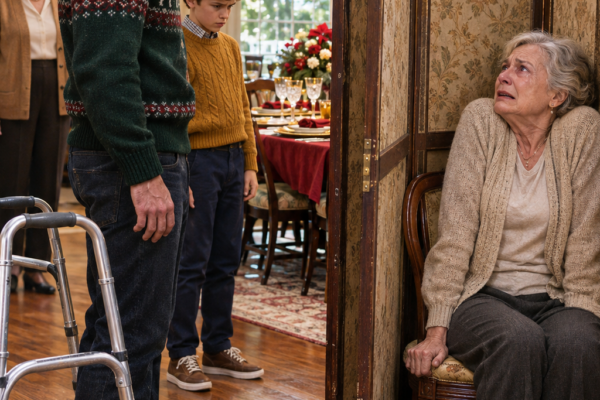
For 13 years I washed sheets at Dad’s motel for no pay, after cleaning rooms across the highway. At his retirement dinner, before 34 guests, he gave my sister the motel he had promised me. “A maid can’t run a business.” I said, “This maid knows who signs the work.” 6 years later…
“A maid can’t run a business.”
My father, Frank, said that at his retirement dinner.
He aimed the words toward thirty-four guests in Abilene, Kansas.
Two men near the window studied their coffee.
My sister kept her eyes on her plate.
I was Carla, his daughter, and I was thirty-eight.
My good blouse covered my housekeeping uniform pants.
Under the table, my socks were still damp.
I had $186 left to my name.
Six years later, I was forty-four.
On Thursday, they came needing my signature.
“We just need whoever signs these,” Dad said.
Paper scraped across the conference table behind me.
I stood at the cabinet, facing its open shelf.
Elaine’s heels clicked against a chair leg.
“The bank gave us until Friday,” she said.
“We’ve already paid for the work.”
Ruth pulled out two chairs for them.
My hand rested against the inspection folder.
I had prepared it before they arrived.
Dad kept talking toward the back of my head.
I left the folder closed for another moment.
I would come back to what I had prepared.
First came the years behind their chairs.
At home, Dad always took the kitchen chair nearest the window.
He liked to see the motel parking lot.
Even breakfast gave him somewhere to point.
A crooked car meant somebody needed watching.
An empty space meant somebody might have left.
He could count occupied rooms without leaving his eggs.
By his retirement, he had operated that motel thirty years.
He knew which doors stuck after a hard rain.
He remembered guests by their trucks and complaints.
He forgot when I had worked late.
His thumbnail traveled the seam of his watchband.
It made a little rasp against the stitching.
That sound often came before a request.
“Coffee, Carla.”
The pot usually sat closer to his hand.
I carried it around the table anyway.
Elaine took the chair beside the kitchen outlet.
Her phone lay next to her plate.
She checked it between bites, screen tilted away.
At forty-six, she had eighteen years in office administration.
Dad called that knowing how things worked.
She kept appointment cards inside her purse.
When she wanted to leave, she gripped its strap.
She could make a visit look interrupted by work.
I could make work look like a visit.
That was the difference between our mornings.
“You’re already up,” Elaine would say.
It covered coffee, toast, and answering the office bell.
It covered finding Dad’s glasses beside his plate.
I had no chair while breakfast needed serving.
Mine stayed tucked beneath the table’s narrow end.
A basket could fit between it and the wall.
I learned to pass through sideways.
On one of those mornings, Linda and Paul came.
My aunt brought eggs in a covered dish.
She had cooked in a cafeteria for twenty-six years.
Even retired, she arrived with enough for everyone.
She wiped the serving spoon before putting it down.
Paul carried the dish while she removed her coat.
He had spent forty years working as a mechanic.
His hands stayed rough around the knuckles.
He folded her coat over an empty chair.
That left mine for the bread and extra plates.
“Sit somewhere, honey,” Linda told me.
“I will.”
Dad held his cup toward the kitchen.
I took it before coffee reached the saucer.
Linda raised her glasses with one finger.
“You worked already?”
“Across the highway.”
My paid housekeeping shifts started before family breakfasts ended.
I cleaned bathrooms while other people found their shoes.
I counted fresh towels against occupied rooms.
A finished bed had straight corners and nothing hidden.
A finished shift needed my name on its record.
Ruth checked those records when she supervised our cleaning.
She had twenty years as a cleaning supervisor.
She straightened chairs without seeming to notice.
A crooked chair caught her eye across a room.
So did an hour missing from a time sheet.
“Put down what you worked,” she told me.
“Not what somebody thinks it ought to take.”
At Dad’s table, nobody handed me a time sheet.
He pointed his fork toward the motel office.
“There’s somebody at the counter.”
Elaine looked at her phone.
Paul started moving his chair back.
“I’ve got it,” I said.
The office bell was still trembling when I entered.
A guest wanted towels before his family left.
I took clean ones from the linen shelf.
He thanked me and held the door open.
Through the office window, I could see breakfast continuing.
Dad reached for the eggs.
Elaine turned her screen toward Linda.
Nobody looked toward my empty place.
I checked the shelf before returning to the kitchen.
The towels needed folding with their edges tucked inside.
Dad liked the shelves to look full.
I turned a thin stack sideways to fill the gap.
Then I collected the cups from breakfast.
“Don’t throw that out,” Dad said.
He pointed to toast on the serving plate.
I put it beside my cold eggs.
Linda watched me carry everything to the counter.
“Leave those a minute.”
“They’ll dry on.”
“I know how dishes work, Carla.”
She made room for my plate at the table.
Paul moved the bread onto his knees.
For a moment, there was space to sit.
Then the office phone rang through the doorway.
Dad lifted his chin toward the sound.
I put my fork down without using it.
When I returned, Elaine had her purse on.
Linda stood holding her covered dish.
Paul touched her wrist and took it from her.
“We should let you get on,” Elaine said.
She meant Dad, though he was still seated.
I stood behind his chair with my plate.
He leaned back, blocking the passage to the sink.
I waited until he finished his coffee.
Then I washed the plates and wrapped the toast.
Dad went out through the kitchen door.
I pulled my chair away from the table.
Before I could sit, he came back inside.
He left another laundry basket beside my empty chair.
The sheet on top had a damp corner.
I lifted it away from the basket handle.
Dad had folded the stained side inward.
That was how the laundry usually reached me.
I had been twenty-five when those baskets started coming home.
My shift across the highway ended in late afternoon.
I would change shoes, then cross to Dad’s office.
He kept the first basket behind the counter.
“Just until we’re caught up,” Dad had said.
His thumbnail rubbed the seam of his watchband.
“How far behind?”
“Couple things to straighten out.”
He lifted the basket onto the counter.
I put both hands beneath it before he let go.
At home, I separated sheets from towels.
My washer could take two sheets without struggling.
Three made it knock against the wall.
I learned that while eating supper beside it.
The spin cycle rattled my fork against my plate.
I stopped eating and pulled one sheet out.
Water ran down my wrists onto the floor.
The motel sheets went first because guests needed them.
My own clothes waited in a heap.
I went to work wearing yesterday’s uniform.
Nobody across the highway paid me for looking rested.
They paid when the rooms were done.
After those shifts, I collected another basket.
Dad stopped saying it would be temporary.
He started asking when things would be ready.
“Need those back before checkout.”
“I work in the morning.”
“Then do them tonight.”
Some nights, the dryer was still turning after midnight.
I folded towels on the bed before lying down.
Lint caught in the seams of my uniform pants.
I shook them out over the trash.
Then I set the alarm for work.
One night the washer stopped with water inside.
I turned the knob and tried it again.
The motor answered, but the drum stayed still.
I wrung the sheets out over the tub.
By morning, my hands hurt around the knuckles.
Dad answered his office phone while I was dressing.
“The washer broke,” I told him.
“Well, get somebody.”
“It’s full of your sheets.”
“I still need them.”
The repair cost $412.
I paid it because my clothes needed washing too.
That was what I told myself at the counter.
At Dad’s kitchen table, I unfolded the receipt.
He looked at the total without picking it up.
“That’s the repair,” I said.
“The motel can’t spare anything this month.”
“Can you pay part?”
He pushed his chair back to reach the refrigerator.
I moved aside so he could pass.
“Keep track,” he told me.
“It’ll all count when the place is yours.”
I folded the receipt along its original crease.
At home, I tucked it inside the owner’s manual.
The manual stayed behind the washer.
Detergent sometimes dripped down the bottle onto its cover.
I wiped the cover before putting it back.
For a while, that receipt felt like a deed.
Not a real one, with names and county stamps.
Just something I could hold when Dad made promises.
Three years later, he asked about my tax refund.
I had mentioned it while sorting towels.
It was $900.
I had planned to leave it in my account.
My car seat had split along the driver’s side.
The vinyl caught the back of my leg.
A towel covered the worst of it.
Dad stood in the laundry doorway that afternoon.
He held the inspection notice between two fingers.
“Water heaters,” he said.
“They have to be replaced before inspection.”
“All of my refund?”
“I wouldn’t ask if it could wait.”
He set the notice on the dryer.
I read the heading while the machine shook underneath.
“When would you put it back?”
“When things settle.”
I wrote the check at his kitchen table.
He watched my pen until I finished.
Then he folded the check into his shirt pocket.
Elaine drove up in a used car that weekend.
I was carrying clean towels through the office.
She held the keys up for Dad.
He went outside before I reached the shelf.
I set the towels down and followed.
Elaine was adjusting the driver’s seat.
“Feels different,” she said.
Dad leaned against the open window.
“You’ll get used to it.”
I waited until Elaine shut the door.
“Where did the money come from?”
Dad looked toward the motel office.
“Don’t start figuring other people’s business.”
“My $900 was for water heaters.”
“And there are water heaters to deal with.”
“Did you buy them?”
He pressed his lips together and checked his watch.
“She needs necessary transportation.”
I looked across the lot at my car.
The towel had slipped off the split seat again.
I tucked it back before driving home.
That evening, I wrote the check number down.
I put it with the washer receipt.
At Thanksgiving, Linda brought a covered dish.
She raised her glasses when Dad mentioned retirement.
We were clearing plates around his kitchen table.
Elaine was checking her phone beside the leftover rolls.
Dad pointed toward me with his fork.
“Carla gets the motel,” he said.
“She’s earned it.”
Linda set down the plates she was holding.
“That’s settled, then?”
Dad reached for another slice of bread.
“I said it, didn’t I?”
I stayed behind his chair until he moved.
Then I carried the roasting pan to the sink.
Grease cooled around its edges while everyone had pie.
I filled it with hot water and waited.
Linda came back for her dish before leaving.
“He said it plainly,” she told me.
I nodded with both hands under the water.
Afterward, I dried my hands and opened my purse.
I had brought the washer receipt to ask again.
Dad glanced at it beside the clean plates.
“We just talked about what you’re getting.”
I folded it before he could wave it away.
From then on, I kept records instead of promises.
I put the receipt back inside my purse.
I carried it home rather than leaving it in his kitchen.
The records from my paid work stayed somewhere cleaner.
I kept them in a drawer beside my bed.
The oldest was a stub for $96.
That was my first housekeeping paycheck.
I had carried it home without folding it.
Ruth had checked my shift record before payroll.
She stood beside the supply cart, holding my sheet.
“You forgot the last room.”
“I went back for a pillowcase.”
“That was work.”
She handed me the pencil.
I added the minutes and signed my name.
Then she checked the total against her room list.
Nobody asked whether I deserved the money.
Nobody told me it counted toward something later.
I bought groceries and kept the stub.
Years later, Elaine asked me to clean extra rooms.
It was the week before Dad’s retirement dinner.
Two guests had stayed longer than expected.
The regular cleaner couldn’t come back that afternoon.
Elaine called while I was putting away my vacuum.
“Just the two rooms,” she said.
“I’m finished over here.”
“That’s why I’m asking.”
“Are you paying me?”
Her answer came by text after we hung up.
She promised $144 for both rooms.
I left the message on my phone.
Then I crossed the highway with my cleaning shoes.
One bathroom had soap hardened along the tub.
I worked it loose without scratching the finish.
In the other room, I pulled the bed out.
There were crumbs behind the frame.
Dad came through while I was replacing the towels.
“Elaine said you were helping.”
“She said she’d pay.”
He checked the empty wastebasket with his shoe.
“It’s all the same family.”
I finished both rooms before asking Elaine again.
She stood behind the office counter, phone in hand.
“Dad said put it toward what you’re getting.”
“You sent me an amount.”
“I didn’t know he’d already worked it out.”
“He didn’t work anything out with me.”
She locked her phone and reached for her purse.
“Talk to him.”
I went through the doorway to his kitchen.
Dad was sorting envelopes at the table.
“Elaine owes me $144.”
He kept an envelope beneath his palm.
“Don’t turn every favor into a bill.”
“She hired me.”
“You’re getting the place, Carla.”
His pen lay beside the envelopes.
I left it there.
That night, I copied Elaine’s message into my records.
I didn’t erase the one on my phone.
At work, my signature meant the rooms were finished.
It didn’t mean I hoped they were finished.
I checked under beds before putting my name down.
I went back when a drain still smelled.
I made another rule for myself.
I wouldn’t sign for work I couldn’t stand behind.
That rule outlasted the promise about the motel.
It followed me into work I hadn’t imagined yet.
That work came after the retirement dinner.
There was no plumbing license tucked inside my purse.
I still cleaned rooms for wages then.
After the dinner, I rented a room near Salina.
My laundry baskets stayed in the car.
I couldn’t find anywhere else to put them.
Ruth found me paid hours cleaning vacant rentals.
She met me outside one with a broom.
Inside, she straightened two chairs against the wall.
“Walt needs an apprentice,” she said.
“I don’t know plumbing.”
“He knows that.”
Her husband had been a licensed plumber for thirty-five years.
Walt arrived carrying lunch in a paper sack.
He folded his sandwich wrapper before speaking.
“Can you show up when you say?”
“Yes.”
“Can you ask before guessing?”
I looked at the broom in my hand.
“I can ask.”
“You’ll start carrying things,” Ruth said.
“Then you’ll learn why we carry them.”
At first, I carried pipe and buckets.
I dug trenches and shoveled the dirt back.
Walt checked the trench before anything went into it.
I enrolled in an apprenticeship and attended night classes.
He supervised my work and checked my logged hours.
I kept every pay stub beside those records.
The first winter, mud dried along my bootlaces.
I studied flashcards while my supper went cold.
Sometimes we ate sandwiches inside Walt’s truck.
He held up a fitting between two fingers.
“What happens if you leave that edge?”
“It can damage what goes through.”
“Show me.”
I used the deburring tool inside the cut pipe.
Then I checked the edge with my thumb.
He made me do the outside too.
A clean cut wasn’t always a finished cut.
He taught me where pipe needed support.
He showed me restrained connections before we covered them.
“Pulling it straight isn’t the same as securing it.”
I checked the joint against his drawing.
Then I checked the restraint again.
For pressure tests, we followed the applicable requirements.
Walt made me read the gauge and record it.
We waited the required time.
Then we checked every joint against the reading.
A steady needle didn’t excuse a wet connection.
Once, he pointed beneath a fitting with his pencil.
I dried it and watched it bead again.
We corrected it before starting the test over.
He crossed out nothing in the log.
We recorded the failed test and the successful one.
After the apprenticeship came the required examinations.
I earned my local journeyman license.
Later, I qualified for my master license.
Ruth and I opened Prairie Bend Plumbing.
We obtained the contractor licenses and registrations our work required.
I became our qualifying plumber and authorized contract signer.
Ruth handled scheduling, payroll, and the office.
She still straightened every chair before opening.
I made twelve unpaid visits to elderly tenants.
Each visit was for labeling water shutoffs.
I showed each tenant the valve before leaving.
Nobody owed me a future building for those visits.
I chose them, and counted them honestly.
But none of that had happened that week.
I was still cleaning across the highway.
Dad’s retirement dinner was still ahead.
That Friday, I hung my good blouse beside my uniform.
I checked the cuff under the bedroom light.
The bleach mark wouldn’t wash out.
I turned the cuff inward and left it hanging.
The next day, a shower ran past my sleeve.
I had been rinsing cleaner from a tub.
Water spilled over the edge into my shoes.
There wasn’t time to go home and change.
I finished the room and signed my shift record.
Then I washed my hands in the supply sink.
The blouse went over my uniform pants.
I pulled the marked cuff below my cardigan.
At the restaurant, I parked near the delivery entrance.
Dad had rented the back room in Abilene.
Paper streamers hung above thirty-four guests.
I recognized coats before faces along the wall.
Linda had brought the cardigan she’d worn at Thanksgiving.
Paul stood beside her, finding its empty hanger.
“There’s our girl,” Linda said.
She held my elbow while I slipped past.
“Did you come straight from work?”
“I had one more room.”
She looked down at my uniform pants.
Then she moved a chair out for me.
Elaine sat beside Dad near the middle.
Her purse hung from the back of her chair.
She checked her phone beneath the tablecloth.
Dad had a blue folder beside his plate.
I thought it held something from the motel.
Maybe he’d brought papers for me to sign.
I set my purse beneath my chair.
There were envelopes in it, folded around my records.
I had brought them without deciding what to ask.
A sugar bowl crowded the space beside Dad’s glass.
He moved it away from the blue folder.
Then he moved it back again.
I watched that little motion while dinner was served.
My socks cooled against my ankles.
Under the table, I eased one heel loose.
Across from me, Paul cut his meat carefully.
Linda passed me the bread before taking any.
“Eat while it’s hot,” she said.
For once, nobody had handed me a basket.
Nobody needed me to answer the office bell.
I put butter on the bread.
Dad talked about winters when the pipes had frozen.
Elaine corrected the year without looking up.
He accepted her correction and continued.
I waited for him to mention the laundry.
Linda did it for him.
She lifted her glass toward my place.
“Thirteen years she’s kept those motel sheets white,” my aunt said.
I still had bread between my fingers.
Dad stood before anyone could answer her.
He tapped a spoon against his glass.
The ringing carried beneath the paper streamers.
I put the bread on my plate.
“Well, there’s some business settled,” he said.
His thumbnail ran once along his watchband.
Elaine placed her phone facedown beside her fork.
Dad lifted the blue folder from his plate.
He pushed the sugar bowl farther down the table.
“Elaine’s taking over the motel,” he said.
“The transfer’s done.”
“She’s got the head for it.”
He laid the folder beside her cake.
The building keys rested on top.
Someone had tied them together with red ribbon.
I knew each key by its shape.
The laundry room key had a crooked tooth.
I had turned it with wet hands for years.
Elaine touched the ribbon, then withdrew her fingers.
I set down my fork.
“You told me it would be mine,” I said.
“We talked about it in your kitchen.”
Dad kept his hand on the folder.
“It’s settled now.”
“You told me before Linda, too.”
Linda’s glass stayed raised above the table.
Elaine studied the edge of her plate.
Dad turned slightly toward the other guests.
“A maid can’t run a business.”
Two men beside the window lowered their eyes.
Their coffee cups hadn’t moved for several minutes.
Paul touched Linda’s wrist.
She lowered her glass until its base met the cloth.
My fingers stayed closed around my napkin.
I could feel its stitched edge against my nail.
“This maid knows who signs the work.”
My voice reached Dad without rising.
He glanced at the folder beneath his palm.
I wasn’t talking about plumbing or contractor forms.
I hadn’t learned those things yet.
I meant the record I’d signed that afternoon.
Across the highway, my name made payroll count.
It said I had finished what they paid for.
Thirteen years of his laundry had no such line.
Dad pulled his chair closer to the table.
“Don’t do this here.”
I looked at the red ribbon again.
There were things I could have emptied out.
The washer repair had cost me $412.
The refund check had been $900.
Elaine still owed me $144.
Together, the documented losses came to $1,456.
That left out detergent, electricity, and thirteen years.
It left out nights spent waiting beside the washer.
I wanted to ask which part hadn’t been business.
I wanted Elaine to look at me.
Instead, I flattened the napkin across my knee.
Elaine reached for her water, then stopped.
“Carla, this wasn’t meant to—”
“When did you know?”
She looked toward Dad.
He adjusted the folder so its edges lined up.
“We’re having dinner,” he said.
My slice of cake sat beyond my plate.
There was a little curl of icing on top.
I hadn’t touched it.
I put the napkin beside the fork.
Then I reached beneath the chair for my purse.
Its strap caught around the chair leg.
I knelt to free it without asking anyone.
Linda started moving her chair back.
Paul’s hand rested beside hers on the table.
I took my cardigan from the chair.
Dad watched me put one arm through it.
“You’re making a scene.”
I worked the other sleeve over my damp cuff.
Elaine’s keys clicked against the blue folder.
Nobody moved them out of sight.
I walked between the chairs toward the door.
Outside, a delivery truck idled beside the dumpster.
Its exhaust drifted across the loading entrance.
I opened my purse beneath the outside light.
Loose change shifted under my searching fingers.
My car key had slipped beneath the folded receipts.
I found it and held its teeth between two fingers.
Nobody followed me outside.
I had $186.
The car seat towel bunched beneath my leg.
I pulled it flat before starting the engine.
At the rented room near Salina, I ate crackers.
My cardigan hung from the back of a chair.
I left the baskets locked inside my car.
For weeks, I checked my phone before sleeping.
Dad didn’t ask whether I had arrived safely.
He asked when I could bring the baskets back.
I emptied them outside his office before work.
I didn’t go into the kitchen.
Thanksgiving came during my first year of training.
Linda called while I was scraping my boots.
“I could save you a plate.”
“Thank you, but don’t.”
“You still have to eat.”
“I’ve got food.”
There was a sandwich beside my class notes.
I ate it without moving the notes.
At Christmas, Elaine sent a photograph of Dad.
His chair stood in its usual place.
Someone had put bread where I used to sit.
I turned the phone over.
The missed days weren’t all holidays.
Linda had a birthday I should have attended.
Paul called afterward instead of sending a message.
“She asked about you.”
“I called her.”
“I know.”
His voice scraped a little on those words.
I went to see them the following Sunday.
We ate at their smaller kitchen table.
Linda left the serving spoon beside my plate.
She got her own coffee.
During apprenticeship, I sometimes reached class with muddy cuffs.
I kept clean socks rolled inside my bag.
Walt waited while I changed beside the truck.
He folded his sandwich wrapper into a square.
“Can’t study with wet feet,” he said.
Daniel started bringing supper after my night classes.
He worked as a warehouse dispatcher.
By forty-five, he’d done that for nineteen years.
He ate from a container beside my open textbook.
“Which page tonight?”
“The one I keep getting wrong.”
He moved his supper away from the diagram.
“Then we’ll leave that one clear.”
He never called studying a night off.
Sometimes he asked questions from my cards.
Sometimes he just stayed until I closed the book.
After we married, we rented a little house.
Its heat worked without a towel beneath the door.
I checked the furnace filter before unpacking dishes.
Daniel put usable screws into a jar.
“We’ll need these,” he said.
He said that about almost every straight screw.
We asked permission before changing anything in the house.
Then we improved one room at a time.
We scraped loose paint from the kitchen trim.
We tightened handles and repaired a sticking drawer.
The table came last.
Daniel sanded its legs while I cleaned the top.
We ate standing at the counter until it dried.
That was standing I had chosen.
By forty-four, my boots dried beside our back door.
The floor beneath them stayed warm.
Dad’s requests still reached that house.
A message arrived about cleaning after a long-stay guest.
Another asked whether a dripping faucet needed replacing.
Then came a photograph of pipe beneath a sink.
He sent no greeting with that one.
I answered during office hours.
“Call Ruth to get on the schedule.”
He called my personal phone instead.
I let it finish ringing.
Elaine tried a different route.
“Can you just tell him what to buy?”
“He needs someone to look at it.”
“He’s trying not to spend unnecessarily.”
I put my phone beside Daniel’s jar of screws.
Then I went back to tightening our drawer handle.
The shutoff visits continued between paid calls.
I didn’t expand them into promises of free repairs.
I labeled valves and showed tenants where they were.
Ruth kept those visits marked separately on our calendar.
She straightened the waiting chairs before discussing the schedule.
“You’ve got room for one more Thursday.”
“Put it down.”
I knew what I was giving.
Linda came to the house one afternoon.
She brought food in a covered dish.
Daniel found space for it in the refrigerator.
Then he left us at the restored table.
Linda raised her glasses before speaking.
“I need to tell you about that dinner.”
I stopped turning my cup.
“The transfer wasn’t decided there,” she said.
“I know the papers were ready.”
“Earlier than that.”
She picked at a folded corner of her napkin.
“Your father told Paul before the invitations went out.”
“Did Paul know what Dad had promised me?”
“He thought he’d talked to you.”
“And you?”
“I knew enough to ask.”
Her glasses slipped, and she pushed them up again.
“I didn’t.”
Outside, Daniel sorted screws beside the open back door.
One dropped into the jar with a sharp click.
Linda looked toward the sound.
“The motel’s behind on bills.”
“Did Dad send you?”
“No.”
“Did Elaine?”
“No, Carla.”
I moved the dish cover away from her elbow.
She stayed until her tea cooled.
I didn’t offer to call Dad.
The motel contract reached us through Ben.
He was thirty-five, with nine years estimating jobs.
He penciled measurements twice before entering a price.
That morning, he stood beside Ruth’s desk.
“Owner needs repair work documented for a renovation loan,” he said.
“The lender has its own completion form.”
The contract amount was $12,400.
I recognized the address before he finished explaining.
Ben hadn’t known it belonged to my sister.
Elaine handled Frank’s emails under our trade name.
Neither had asked who owned Prairie Bend Plumbing.
I told Ben about the connection.
He set his pencil beside the contract.
“Do you want someone else handling it?”
“Keep doing the work the same way.”
Our contract covered our listed plumbing work.
The lender wanted a truthful contractor completion statement.
That wasn’t city inspection approval.
Any required city inspections remained separate.
Ben pointed to the signature box.
“He keeps rubbing that watchband,” Ben told me.
“Says he wants the person authorized to sign.”
Ruth looked over at my desk.
I checked the lender request against our records.
Then I checked them again.
“Thursday,” I said.
“Two o’clock.”
Ruth agreed to sit in.
I scheduled the meeting and closed my calendar.
Then I placed the inspection folder on the cabinet shelf.
At two, Ruth opened the conference room door.
Dad came through carrying papers against his jacket.
Elaine followed, checking her phone as she walked.
I faced the cabinet with one hand raised.
The inspection folder stood where I had left it.
“We just need whoever signs these,” Dad said.
Paper scraped across the conference table behind me.
I heard him straighten the stack against the edge.
Elaine’s heels clicked against a chair leg.
“The bank gave us until Friday,” she said.
“We’ve already paid for the work.”
Ruth pulled out two chairs.
Dad sat before she finished moving his.
Elaine stayed standing long enough to check another message.
Then her purse buckle struck the table.
I slid the folder away from the cabinet wall.
Behind me, Dad cleared his throat.
“We’ve been through the office already,” Dad said.
“Could you get your owner?”
I closed the cabinet door.
“One of our owners is right here,” Ruth said.
Her hand rested on the chair beside mine.
She offered them water from the conference room pitcher.
Dad waved it away without turning.
Elaine shifted her purse onto her lap.
Through the glass wall, Ben stepped away.
He held his phone against one ear.
His pencil remained tucked behind the other.
I carried the folder toward the table.
Dad studied the lender request beside his elbow.
He had brought his own pen.
He laid it across the signature box.
“It’s just completion paperwork,” he said.
“Nobody needs to make this complicated.”
The form extended beyond the edge of his stack.
I could see the blank beside the completion date.
Below it waited another blank for my name.
Ruth moved the pitcher away from those papers.
Dad tapped the signature box with his pen.
“Whoever usually handles it.”
I stopped behind my chair.
For years, that had been where I waited.
Someone else finished eating or reached for coffee.
Someone else decided when I could pass.
This chair had room on both sides.
My hand settled across its wooden back.
Elaine looked up first.
Her fingers stopped around her purse strap.
“Carla?” she said.
Dad lifted his face.
His thumbnail caught the seam of his watchband.
It stayed there while he looked at me.
I pulled out my chair and sat.
Across our conference table, Dad recognized me as I began opening the inspection folder beside his unsigned completion request.
The first photograph showed the service closet wall open.
Ben’s measuring tape crossed the bottom of the frame.
The date appeared beneath the printed image.
Dad reached toward it.
“That’s before.”
“Before our contracted repairs were finished,” I said.
“Not before everything shown here was corrected.”
I placed the scope beside the photograph.
Our $12,400 contract covered the listed replacements.
It excluded existing lines behind the service closet wall.
We hadn’t priced rebuilding those concealed connections.
Once exposed, two connections moved under test pressure.
One joint showed moisture against a dry paper strip.
The test log recorded the drop.
The next page showed our repaired section passing separately.
“Your people finished,” Elaine said.
“The work you bought was finished.”
“Then sign.”
“Not that statement.”
I turned her copy so she could read it.
The lender’s request covered the broader plumbing condition.
Our contract and test records supported something narrower.
I set an accurately limited form beside it.
“This says what we completed.”
Dad pushed the photograph back toward me.
“That wall was supposed to be closed.”
I took out the printed email.
His instruction sat beneath Ben’s notice of the defects.
He had asked us to cover the wall.
He wanted the remaining work handled after the draw.
Elaine leaned forward until her purse slipped.
“You told them to leave it?”
“I told them we’d deal with it.”
“You told me everything was ready.”
Dad looked through the glass toward Ben.
“He made it sound worse than it was.”
Ruth opened the door and called Ben in.
He brought his field notes, corners softened from use.
He checked the photograph against the dated entries.
Then he put his pencil beside the failed reading.
“I took that one,” he said.
“Walt witnessed the test.”
“Could’ve been your gauge,” Dad said.
“We checked it before repeating the test.”
Ben turned to the second recorded failure.
“We didn’t cover those connections.”
Ruth’s phone lit with our arranged lender call.
Megan joined while Elaine gathered her slipping purse.
She introduced herself as the renovation loan officer.
She was forty-one, with sixteen years handling those loans.
She asked for the request and contract pages.
Ruth sent the copies while we waited.
Megan compared each document against the disbursement conditions.
Her cursor moved between the two columns onscreen.
“The $48,000 draw can’t be released on this.”
Elaine gripped her phone.
“We have until Friday.”
“Friday doesn’t change the completion requirement.”
“Dad said this was a signature problem.”
“It’s a completion problem,” Megan said.
She asked Ben which conditions remained unverified.
He answered from the log, not from memory.
He didn’t claim to know every motel condition.
Neither did our photographs.
They documented these defects and these tests.
I kept my hands beside the limited form.
I wouldn’t sign for work I couldn’t stand behind.
Then I slid over the corrective proposal.
“The additional work is $8,600.”
Dad looked at Ruth instead of me.
She left the proposal where I had placed it.
“We can schedule it,” I said.
“Required city inspections stay separate.”
“Then another form?” Elaine asked.
“After verified completion, an accurate statement.”
Megan confirmed she could review that documentation.
She promised no release before the conditions were met.
I left the proposal within Elaine’s reach.
Dad’s pen remained unused beside the accurately limited completion form.
Elaine pulled the corrective proposal closer to her.
She read past the price this time.
Megan waited on the screen without filling the pause.
“Is the loan gone?” Elaine asked.
“The draw is unavailable until the conditions are met.”
“But not forfeited?”
“Not because of this delay.”
Elaine wrote that down on the proposal’s edge.
Dad reached for his pen, then stopped.
She took her own pen from her purse.
“I’ll need the schedule,” she said.
Ruth opened the calendar beside her.
We discussed access, materials, and the required inspections.
Ben marked the affected rooms on his drawing.
He penciled each measurement twice before putting it away.
Dad didn’t interrupt until Ruth mentioned the deposit.
“We already paid you $12,400.”
“For the work listed in that contract,” Ruth said.
Elaine put her hand over the proposal.
“I’ve got it, Dad.”
He rubbed the seam of his watchband.
She didn’t move her hand.
They left with both forms still unsigned.
The following morning, Elaine accepted the $8,600 correction.
She paid from her own funds.
She didn’t ask me to carry the balance.
By Friday, she had postponed reopening six weeks.
She refunded $900 in reservations she couldn’t honor.
That money didn’t come back when the rooms reopened.
Neither did the empty weeks.
She told me those numbers without asking for sympathy.
I wrote down the revised access dates.
Dad called once during the work.
He wanted Ben to shift a visit.
“Tell him I said early.”
“Elaine needs to approve schedule changes.”
“I’ve managed repairs there for thirty years.”
“She’s the owner.”
He breathed against the receiver.
Then he hung up without giving another instruction.
Elaine had hired an independent manager that week.
His name was Aaron, and he wore reading glasses on a cord.
She gave him repair scheduling and purchasing authority.
Dad no longer approved contracts or signed work orders.
He still owned his watch and his opinions.
He didn’t own the motel.
Nothing in our folder had changed that.
It had belonged to Elaine before the dinner ended.
It remained hers when the repair bills arrived.
Ben supervised the corrective work against the written scope.
He photographed the connections before anything was concealed.
The new test entries stayed beside the failed ones.
Nobody tore out the earlier pages.
Walt checked the work before the wall was closed.
He folded his lunch wrapper and pocketed it afterward.
City personnel completed the required inspections separately.
Their records joined ours without replacing them.
I checked the completed work against the lender’s request.
Then I signed what I could truthfully certify.
Megan matched the documents to the disbursement conditions.
After her review, the eligible $48,000 draw was released.
It hadn’t been a gift from me.
It wasn’t money I had taken away.
Elaine had met the conditions for receiving it.
I took no pleasure in those losses.
I remembered carrying $186 into that rented room.
There was nothing satisfying about somebody counting what remained.
But I didn’t discount the $8,600.
Our employees had worked those hours.
Materials had left our shelves.
Ruth paid the wages when they were due.
The family rules went into writing afterward.
Every job needed a written scope and deposit.
Family requests went through the office during ordinary hours.
We offered the same openings other customers received.
No evening photographs sent to my personal phone.
No signature borrowed against an old kitchen promise.
Elaine accepted those terms by email.
Dad didn’t answer the copy she sent him.
I stopped checking whether he had.
Linda came over after the motel reopened.
Paul carried her covered dish into our kitchen.
She raised her glasses before looking at me.
“I should have put my glass down sooner.”
I pulled out a chair for her.
“That wasn’t the part that hurt.”
“I know.”
Paul touched her wrist beneath the table.
“I heard him promise you,” she said.
“I let him pretend he hadn’t.”
She didn’t offer overdue bills as an excuse.
She didn’t ask me to come to Sunday dinner.
We ate what she’d brought while it was hot.
Before leaving, she washed her own serving dish.
Elaine called the office later that week.
Ruth asked whether I wanted the call.
I put down the estimate I was checking.
“I believed him because it suited me,” Elaine said.
I held the receiver away from my paperwork.
“The motel,” she added.
“And the money.”
“Yes.”
I waited while she adjusted the phone.
“I still owe you $144.”
She sent it that afternoon.
I marked the old cleaning entry paid.
The $412 and $900 remained in my records.
I made no plan around getting them back.
“I’m not asking you to forget,” Elaine said.
“Good.”
“Or come over.”
“Good.”
Her breath caught, but she stayed on the call.
“I thought being family meant you’d sign.”
“Being family never entitled anyone to my signature.”
She said she knew that now.
I let those words stand without adding mine.
That afternoon, I finished our scheduled calls.
I labeled one more tenant’s shutoff before heading home.
My boots went beside the back door.
Daniel was tightening a loose chair screw.
He dropped the old one into his jar.
“Still usable,” he said.
I set two plates on our restored table.
He carried supper over and sat across from me.
Nobody needed me to wait behind a chair.
I sat while the food was warm.
Afterward, I wiped a ring from the wood.
Daniel lifted his glass so I could reach.
Six years earlier, Dad had told thirty-four guests, “A maid can’t run a business.”
Not while working for nothing.
I built one instead.
THE END.
If a Facebook post brought you here and you read to the last line, please go back to that post, tap Like, and comment “Read it all”. It takes a few seconds, and it is how other readers find this story.