My Brother Filmed Me While Admitting He Spent My Sons’ $25,200 College Fund—But When Mom Saw His Own Paperwork, She Refused to Risk Her Paid-Off House
Complete story · 9 parts · about 38 minutes · ending included
Part 1 · Part 2 · Part 3 · Part 4 · Part 5 · Part 6 · Part 7 · Part 8 · Part 9
Part 1 of 9
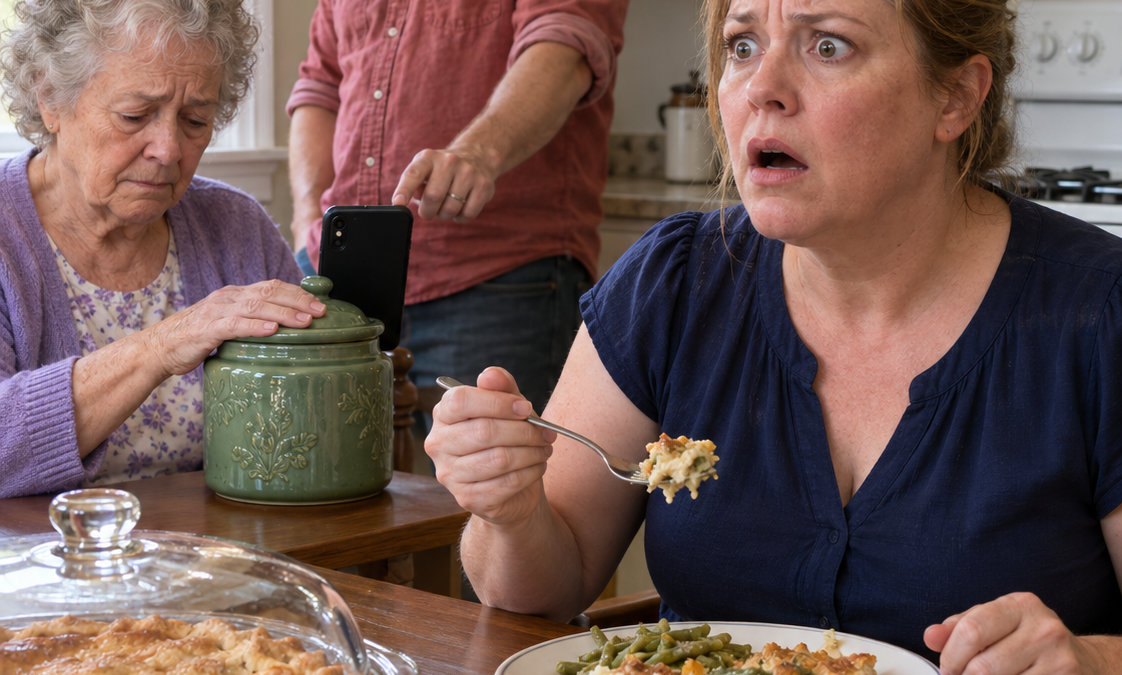
My brother leaned his phone against Mom’s sugar jar, pressed record, and told me the boys’ college money was gone.
It was about one. My untouched apple pie sat covered on the table.
Dustin smiled at the little screen.
“You in frame, Steph? Good. I want you to hear this straight from me.”
I stopped chewing.
Mom sat nearest the stove, her green jar within reach. Her palm rested flat on its lid. She wouldn’t look at me.
Dustin leaned back against the counter like he’d stopped by to discuss the weather.
“Mom gave me the boys’ money in March. All of it. It’s in the truck. It’s done.”
I looked at Mom.
“Is that right?”
Mom studied the edge of our round kitchen table.
“Honey, your brother needed help getting started.”
Dustin nodded toward his phone.
“See? Everybody understood what was happening.”
“I didn’t,” I said.
“Well, that’s why we’re having this conversation.”
For almost six years, I’d brought Mom a check at our first-Sunday lunch. One every month, dated the first. The money was supposed to sit in her savings account until Caleb and Luke needed it.
Dustin had watched me bring those envelopes. He knew what they were for.
“You know what that truck means to me, Steph,” he said. “Dad ran the grill at every neighborhood picnic. You remember those afternoons.”
I remembered Dad standing over the coals while we carried food to the tables.
Dustin had painted RAYMOND in white on his old wheeled smoker.
“Mom said it would be a shame to leave the money sitting there,” Dustin continued.
Mom lifted her eyes.
“I didn’t say it quite that way.”
“Close enough.”
Dustin checked the camera angle, then straightened. He had placed it so my face filled the screen while his stayed mostly out of view.
“Come on, Steph. You’ve got a good job. The kids are doing fine.”
I managed the cafeteria at an elementary school. Fourteen years of counting milk cartons, checking deliveries, and making sure every child who came through my line received lunch.
Mom shifted in her chair.
“Dustin, maybe turn that off.”
“It’s fine, Mom. I’m keeping a record so nobody twists what happened.”
He looked directly at me.
“I used that money to build something. People spend on things that never amount to anything. At least this has my name on it.”
I glanced toward the living room, where the football game was still playing. Luke was watching it.
Dustin gave a small, encouraging nod, as though he were helping me accept a difficult piece of news.
“Those boys can take out loans like everybody else. Go ahead and scream.”
Caleb stood in the kitchen doorway.
He had heard the part about loans.
Picking up where the Facebook post left off
I set my fork down.
“I see.”
Dustin’s smile held for another second.
Then he glanced at his screen.
“That’s it?”
I pushed back my chair and lifted the covered pie.
“We’re going home.”
“Steph, don’t make this into some big family fight.”
“Caleb, get Luke, please.”
Caleb stayed where he was.
“Mom?” he said to me.
“Get your brother.”
Dustin moved to stop the recording, then changed his mind.
“You’re walking out over a business decision?”
I picked up my purse, which held my checkbook with November’s check filled out for Mom.
Mom always tucked each one under the green jar till bank day.
“Banks are for people who forget. I kept yours, didn’t I?”
She always said it with a little smile, sliding my envelope out of sight.
By March, the checks Mom had banked came to $25,200.
Before that week was out, I would count every one of them myself.
Mom finally looked toward me.
“Steph, honey, can’t we finish lunch?”
“The boys need to get home.”
“But you haven’t even cut your pie.”
“I’ll take it.”
Caleb fetched Luke. The television went quiet.
Dustin moved away from the counter.
“You know what I think? You came in here looking for a reason to be upset with me.”
I put the dish against my hip so I could open the kitchen door.
“Don’t forget your check,” Dustin said pleasantly.
I stopped.
Mom’s eyes went to my purse.
Dustin glanced at it, too.
“Sunday lunch, right? You always bring Mom something.”
“I have everything I came with.”
For once, Dustin had no quick answer.
At about twenty after one, Caleb sat beside me in the car. Luke was in the back seat with the pie balanced carefully on his lap.
I pulled away from Mom’s house on Calloway Street.
Caleb watched the passing houses.
“Is it true? About the loans?”
“Seatbelt.”
His buckle clicked.
Luke leaned forward as far as his own belt allowed.
“Why didn’t we eat the pie?”
“It’s for tomorrow. I can bring it to the teachers’ lounge at school.”
“But you made it for Grandma.”
“I know.”
Luke gripped the dish.
Caleb looked straight ahead.
He wanted to study engineering. He could spend an entire afternoon figuring out how something worked, then ask one question that showed he’d understood more than I’d explained.
Caleb asked nothing more.
I kept both hands on the wheel.
At nine that night, after the boys had gone upstairs, I sat at my kitchen table with my checkbook open.
Luke had drawn a turkey on its cover. One wing was larger than the other, and the bird wore an expression Luke insisted was surprise.
The November check was still attached.
I held the page flat.
Then I took my pen and wrote VOID across the face in large block letters.
I tore the check out along the perforation.
The carbon copy stayed behind.
On its memo line, in my own handwriting, were the words “Caleb & Luke college.”
I set the pen down beside the checkbook.
All through lunch, Mom had kept her palm flat on that lid.
Like something under it might blow away.
Part 2 of 9
“Forty-one chocolate, sixty-two white,” I said to nobody, and wrote it on the clipboard before Caleb’s text from midnight could make me lose count.
It was 6:40 Monday morning. I stood inside the school cafeteria’s walk-in cooler with the door propped open.
Most mornings, I could finish the count without thinking about anything else.
This morning, I kept seeing my son’s question.
“Do I still apply for the engineering camp?”
I’d answered, “Yes.”
Then I’d lain awake wondering how much he had heard before he appeared in Mom’s kitchen doorway.
I looked at the clipboard.
The chocolate count was right. I wasn’t sure about the white.
I crossed out both numbers and started over from the top.
At the school, nobody knew about Sunday lunch.
I checked the deliveries, signed the receiving sheet, and helped get breakfast ready. When a student asked whether there would be extra milk, I told him there would be enough.
At my desk afterward, I put the credit union on my phone’s calendar for Thursday at 3:30.
Every month since 2020, an automatic transfer had moved exactly $420 into a small checking account I used for the boys’ college money.
From it I wrote Mom one check, dated the first, and handed it over at our first-Sunday lunch.
The account wasn’t for groceries or bills. I never used its debit card.
Statements went straight into a drawer, unopened. The account ran itself. Mom deposited the money into her savings, where it was supposed to stay.
Now I needed to see the actual checks.
Thursday, November 6, at 3:30, I stood at the teller counter at Sangamon Bend Credit Union.
I slid my driver’s license and account number through the opening in the glass.
“I need the complete check history,” I said. “Every check that’s cleared.”
“Your own account?”
“Yes.”
The teller worked at the computer.
“How far back?”
“To when I opened it.”
The printer behind the counter began feeding out pages.
I watched the stack grow.
The teller slid the printout toward me.
There were sixty paid checks.
Each bore the same endorsement.
For deposit only — Janet M. Ostrowski.
I followed the dates with my finger.
One each month.
No gaps in that part of the record.
The last paid check was dated February 1.
After that, nothing.
My checkbook carbons showed eight more, March through October.
All written to Mom, and not one had come back.
Mom had always said she kept the envelopes under the sugar jar until she went to the bank.
I pictured that green container beside her stove.
“Are these still good?” I asked, and turned my checkbook so she could see the carbons.
She touched the first three.
“The oldest three are past six months. We don’t have to pay those — we’d call you first.”
“What about the others?”
“Those haven’t cleared. Would you like to stop payment?”
I looked at the payee on each carbon.
“They’re made out to Mom.”
The teller waited.
“No stop payments,” I said.
I folded the history and put it in my purse.
Outside, I sat behind the steering wheel without starting the car.
I thought about calling the police.
But the cleared checks had gone exactly where I’d directed them. Mom had endorsed and deposited them herself.
How it got from her savings into Dustin’s truck, I didn’t know yet.
I took the paperwork out again.
Sixty payments had left my account. Eight had not.
I could prove both.
Those eight were still out there somewhere.
Mom’s voice came back to me.
“Till bank day.”
I returned the pages to my purse and drove home.
Saturday, November 8, at 10:30, Caleb rode beside me as we passed the county fairgrounds.
The Saturday Barn Market was busy. Cars moved slowly near the lot beside the exhibition hall.
I eased along the road.
Dusty’s Low & Slow stood among the vendors, its service window open.
The old steel smoker was parked a few feet away.
RAYMOND was painted across its side in white letters.
Caleb leaned forward.
“That’s Grandpa’s name.”
“Yes.”
He watched as we rolled past.
At Christmas in 2023, Dustin had bragged about buying that smoker with his tax refund.
He’d said Dad would have liked it.
Now the equipment sat beside a business paid for partly with my sons’ college money.
Dustin was near the service window, talking to someone outside the truck.
He never looked toward our car.
Caleb turned in his seat.
“Did Grandma know Uncle Dustin was going to use our money?”
“She said she gave it to him.”
“Did you agree?”
“No.”
He looked back at the smoker.
I kept driving.
We didn’t stop.
On Sunday, November 9, at 9:12 that night, I was sitting in my living room when Dustin sent me a video.
I opened it.
There was Mom’s kitchen.
My chair faced the camera. Dustin had framed my expression while he talked.
I watched myself set down my fork.
My voice came through the speaker.
“I see.”
Then I stood, gathered the pie, and walked out of the frame.
The picture stayed on the empty chair.
He hadn’t cut a word of his own.
“Mom gave me the boys’ money in March.”
“Those boys can take out loans like everybody else.”
A message appeared beneath the video.
“Mom’s signing for Truck Two at our Thanksgiving menu launch on Saturday the 22nd. Bring the boys. Don’t make it weird.”
Part 3 of 9
“I co-signed for that truck,” Crystal said before I could say hello, “and I think I signed a lie.”
I had a leaf rake in my hand and my phone pinned between my ear and shoulder.
It was Wednesday, November 12, at 4:05. I’d just gotten home from my shift at the school cafeteria.
Luke ran across the front yard and jumped into the pile I’d made.
Leaves scattered around his shoes.
“What lie?” I asked.
“Something Dustin put in the paperwork. I need you to see it.”
I lowered the rake.
Crystal had been married to my younger brother since 2014. She worked as a billing coordinator at a dental office. When a bill came in, Crystal checked the numbers before she discussed anything else.
Her voice sounded the same now.
Careful. Quiet.
“Monday night, Dustin asked me to print the truck’s books for your mom’s credit union. A loan against her house. It goes to the loan officer Monday the twenty-fourth at nine.”
I looked toward Luke. He was scooping the leaves back together with both arms.
“Mom’s house?”
“It’s on the form.”
“How much?”
“I didn’t see a number. That’s what scares me. The email only had the first page and the appointment slip. Dustin keeps the page with the amount at your mother’s house.”
“Did you ask him for it?”
“Yes. He said, ‘Relax, it’s handled.'”
That sounded like Dustin.
“I saw a lawyer yesterday. About my marriage and the truck loan.”
The rake handle rested against my leg.
“I was told not to sign anything else. I need to get the history of my own loan and send the lender a written correction.”
“What did Dustin tell the lender?”
“I’ll show you tomorrow. I want you to see it on paper.”
Luke shouted from the yard.
“Mom, look!”
He landed among the leaves.
I raised my free hand so he could see I was watching.
Crystal waited until he was done.
“I called you first because it’s your boys’ money.”
I pressed the phone closer.
“Does Dustin know you’re calling?”
“No.”
“Are you going to call them?”
“I’m not telling the lender anything until I know what I signed.”
I watched Luke pull leaves off his sleeves.
“Where tomorrow?”
“I get a break at three-fifteen. My car will be outside the dental office.”
“I’ll be there.”
Crystal lowered her voice.
“Steph, don’t tell Dustin we’re meeting.”
“I won’t.”
On Thursday, November 13, at 3:15, I opened the passenger door of Crystal’s sedan.
She was parked outside work, still in her scrubs.
A folder rested on her lap.
I sat with my hands empty.
Crystal didn’t say hello.
“March seventeenth,” she said. “Dustin entered this himself.”
She held up a page from the truck’s books.
“Owner contribution — personal savings — $25,200.”
Below it was a scan of a cashier’s check, the kind a bank issues against your own savings.
Crystal read the name printed on it.
“Remitter: Janet M. Ostrowski.”
Mom.
I looked from the entry to the scan.
“Did Dustin show you this in March?”
“No.”
She turned the sheet back toward herself.
“He told me it was overtime from the plant.”
Dustin had been a shift lead at the grain-processing plant until the start of the year.
I’d heard him complain about that job for years. Never once about overtime pay.
I looked at the date again.
“Did you enter that contribution?”
“No. March was Dustin’s work.”
The page went back into the folder.
“July first. I didn’t touch these books before then.”
She adjusted the papers on her knees.
“I enter the sales from the card reader and whatever supply receipts Dustin hands me. Nothing else.”
“What about the business account?”
“He keeps that himself.”
She slid out another sheet.
“June sixteenth. Dustin changed the loan’s mailing address to his own post office box.”
“Without telling you?”
“I found the post office’s confirmation in his truck folder Monday night.”
Crystal tapped the line.
“Any letters from the lender go there.”
I looked at Crystal’s hands. Her fingers held the corners of the sheet square.
“Who makes the truck payment?” I asked.
“Dustin. It comes out of his separate account.”
“You’ve never checked it?”
“He said it was autopay.”
Crystal stopped and looked at me.
“I wasn’t supposed to worry about payments. My job was the paperwork and the sales.”
“Did you believe him?”
“I signed.”
She put that sheet behind the others.
“Sixty thousand dollars,” Crystal said. “The truck loan. Dustin and me, jointly.”
I watched her turn another page.
“If he doesn’t pay, they come to me. That’s what co-signing means.”
Dustin held the account, the payments, and the mail.
Crystal had been handed the receipts.
“Did Mom know you signed?” I asked.
“I don’t know what Dustin told her.”
Crystal looked down at the folder.
“And now he’s asking her to sign something else.”
I thought about the text under Dustin’s video Sunday night.
Mom’s signing for Truck Two.
He’d put that in writing before Crystal ever called.
“Did he tell you why Mom needed to be involved?”
“He said they were expanding.”
She pressed the papers together.
“But the page in that email didn’t say what the money was for.”
I kept my hands in my lap.
Crystal took out her copy of the loan application.
Her signature was beside Dustin’s.
The date at the top was March 19.
She ran her finger up from their signatures to a printed line and read it aloud.
“Source of down payment: Borrower’s personal savings.”
Crystal looked up at me.
“That’s your mother’s money, Steph. She bragged about the boys’ fund at every Sunday lunch. It’s your boys’ money, and my name’s under it.”
Part 4 of 9
“He showed me the video, Stephanie,” Mom said. “You didn’t even look at me.”
It was Friday, November 14, at 7:30 in the evening. My phone sat on the kitchen table with the speaker on.
I’d called Mom with one sentence ready.
“Mom, I need to talk to you about where that money went. Not on the phone.”
Now I listened to something banging in the background.
Metal against metal.
“Is Dustin there?” I asked.
“He’s fixing the furnace.”
Another bang came through the speaker. I could picture my brother on his knees in Mom’s utility closet, taking his time with a wrench while we talked.
“He said you’d come with numbers,” Mom said.
“I want to sit down with you.”
“Dustin showed me what happened at lunch.”
“I was there, Mom.”
“He sent it this morning. He wrote, ‘This is how much she cares.'”
I moved the phone closer.
“Did you watch the whole thing?”
“Enough.”
“He said something about Caleb and Luke. You heard that part?”
Mom didn’t answer immediately.
A pipe clanged.
“Your brother’s trying to keep his business going, Steph.”
“I know it’s in the truck, Mom. He told me.”
“He works hard.”
I looked at the empty chair across from me. That was where Caleb usually sat when he had schoolwork to finish.
“Can I come over tomorrow?”
“I don’t want another argument.”
“I’m asking to see you.”
Mom cleared her throat.
“Well, come in the morning.”
Before I could answer, Dustin called something from the background.
Mom covered the phone. I could still hear his voice, just not the words.
“I have to go, honey.”
The call ended.
At ten Saturday morning, I stood on Mom’s front step holding a picture Luke had drawn for her.
It was a turkey with a wide tail and crooked feet. He’d colored the feathers carefully, leaving a white space for his name at the bottom.
The screen door was locked.
Mom stood inside wearing the sweater she usually put on for company.
“Luke made this,” I said.
She glanced at the drawing.
“That’s sweet.”
I held it toward the screen.
Mom didn’t reach for the latch.
“Can I come in?”
“I think we can talk right here.”
I lowered the paper.
Behind Mom, I could see part of the kitchen through the doorway.
For as long as I could remember, the green sugar jar had stood on the counter beside the stove.
Now that spot was empty.
I looked higher.
The jar sat on top of the refrigerator.
Mom followed my eyes, then moved slightly to block my view.
“Steph, your brother says you’ll show up with papers.”
“I brought Luke’s picture.”
“That’s not what I mean.”
“I know.”
Mom pressed her fingers against the screen-door frame.
“If you’re bringing papers to Thanksgiving, maybe stay home this year.”
I stared at the locked latch.
Every Thanksgiving of my life, Mom had pulled out a chair for me before the meal. When I was small, she’d set a phone book on it so I could reach my plate.
Later there were chairs for Caleb and Luke beside mine.
“Are the boys invited?” I asked.
“Of course they are.”
“Without me?”
“Don’t make it sound ugly.”
I lifted the turkey picture between us again.
Mom looked down at it again.
“Just give everybody a chance to settle down.”
“Will you take this?”
Mom hesitated, then shook her head.
“You can bring it another time.”
I stayed on the step.
Through the screen, I could still see the jar up there.
“Mom?”
“I need to get back to the kitchen.”
Mom reached past the doorframe for the heavy curtain she hung across the entry every winter.
I hadn’t moved when she drew it shut.
Sunday, November 16, at six in the evening, Caleb stood beside our kitchen recycling bin.
He held the engineering camp flyer he’d been studying since school started.
“I’ll do two years at the community college and work. It’s fine, Mom.”
He dropped the paper into the bin.
Luke was seated at the table, coloring the turkey on the cover of my checkbook. He was darkening one wing with a pencil.
I picked up the dish towel and folded it into a square, then folded it again.
Caleb sat down across from his brother.
“Engineering doesn’t have to start at a big school.”
I looked at the flyer sticking up from the recycling.
He had circled the application deadline in red. I could see the circle from where I stood.
Luke stopped coloring.
“Does that mean Caleb isn’t going to camp?”
“I didn’t say that,” Caleb told him.
“But you threw the paper away.”
“It’s just a flyer.”
Luke looked at me.
“Mom?”
I went to the bin and lifted the flyer out.
The sheet had bent in half across the application instructions.
I laid it on the table and smoothed the crease with my palm.
Caleb watched me.
“You don’t have to do that.”
I opened the checkbook and slipped the flyer between its pages.
Luke moved his pencil aside to make room.
At 8:40 that night, someone knocked at my front door.
Crystal stood on the porch with a canvas tote bag over her shoulder. She still had her coat zipped to the chin, and her fingers were gripping the strap.
“My lawyer says I can’t sit on this. Wednesday I’m calling the lender from your kitchen, as a co-borrower. Get your own lawyer before then.”
Part 5 of 9
“The fact that your mother deposited those checks into her own account doesn’t settle who was meant to benefit from the money,” Joanne said.
“Then I could get it back?” I asked. It was Monday, November 17, at 4:30, in Joanne Hruby’s second-floor office above a hardware store in downtown Decatur.
I’d brought my checkbook carbons.
Joanne had her computer screen turned toward me.
“Maybe. The purpose of the money and what was agreed matter. The checks alone don’t decide it.”
“The memo says Caleb and Luke college.”
“That can be useful evidence. But filing a lawsuit doesn’t automatically stop your mother from signing, and I can’t promise an order before Saturday.”
Joanne let each answer settle before she gave the next.
“What about Mom signing something Saturday?”
“Your mother can refuse.”
“And if Dustin brings the application Monday?”
“If she hasn’t signed, there’s nothing to file.”
I looked at the calendar beside Joanne’s computer.
Mom had already told me to stay home for Thanksgiving.
I wasn’t counting on another invitation.
Joanne opened a government search page.
“Illinois Secretary of State. UCC records.”
She typed Dustin R. Ostrowski.
The results came back empty.
“Nothing filed under his name here,” Joanne said.
“What does that mean?”
“No claim on his other equipment shows up in this search.”
“The truck?”
“The lender has a lien on its title. That’s separate.”
Joanne clicked away from the results and picked up a bill of sale lying on her desk.
Crystal had sent me the copy.
It was for the old smoker Dustin kept beside his food truck, the one with RAYMOND painted across it.
“Does this belong to the business?” I asked.
“The bill says Dustin bought it in his own name.”
“Can the lender take it?”
“Not under the truck’s title lien.”
Joanne pointed to the buyer’s name.
“There’s no registration for this smoker, and nothing here showing it was pledged to anybody.”
“So it still belongs to Dustin.”
“That’s what the paperwork shows.”
I watched Joanne place it back on the desk.
Dad’s name was painted on something Dustin owned outright.
The boys’ money was parked in that truck, and Caleb’s camp flyer was still folded in my checkbook.
Joanne pulled a legal pad toward her and wrote three lines.
“If your mother wants this in writing, it takes three papers. A note saying Dustin owes her, a security agreement on that smoker, and a consent form for his wife.”
“Can you have them ready by Saturday?”
“Drafts, for the flat fee we discussed on the phone. But your mother is the one lending Dustin the money and asking him to repay it, so she has to hire me herself before anyone signs.”
Joanne capped her pen.
“Nobody signs anything they don’t want to. The drafts sit in my drawer until your mother asks for them.”
She tore off the page and clipped it to my carbons.
I picked up my checkbook.
“Then Saturday comes first.”
“Your mother makes that decision, Stephanie.”
On Tuesday, November 18, Crystal sent me a text.
“Tomorrow, 7. I’ll call them from your kitchen. I want a witness.”
I set a pen and a pad beside my small printer.
Wednesday, November 19, at 6:45 in the evening, Crystal sat at the head of my kitchen table.
Her phone lay in the middle.
I took the chair across from her.
Caleb was on the stairs, close enough to hear us. He had stopped there when Crystal arrived and hadn’t moved.
“Before I call,” Crystal said, “we need to settle Saturday.”
I looked at the screen of her phone.
“Mom still thinks Dustin is getting another truck.”
“That’s what he told everybody. ‘Relax, it’s handled.'”
“Should we show her what you found?”
“Not before the launch.”
Crystal rested her hands on the table.
“Dustin’s at your mother’s house every night. If he hears we’ve got papers, he’ll put the application in front of her tonight.”
“Without the crowd?”
“He’ll get her signature at home and file early. Nobody will be there to show her the other side.”
I thought about Mom standing behind the locked screen door.
“She might sign for him anyway.”
“Yes.”
Crystal glanced toward the stairs, then back at me.
“Saturday, I’ll stand at the service window. Same as every week. Dustin expects me there.”
“I’ll bring my check carbons.”
“All of them?”
“Every one she cashed.”
Crystal nodded.
“If she signs in front of all those people, that application goes in Monday.”
I shifted the pad closer.
“And Dustin?”
“He’ll have his camera running. You’ll be the sister who ruined his launch.”
On the stairs, Caleb pulled his knees up.
Crystal checked the time.
“Seven.”
She dialed Prairie Fleet and switched on the speaker.
A recorded voice answered, followed by a menu.
Crystal selected the option for an existing account.
When a real person came on, Crystal gave her name and the information requested.
“I’m a co-borrower on this loan,” she said. “I need the payment history for my own account.”
The woman checked the file and confirmed Crystal’s name was on the loan.
Crystal leaned forward.
“Can you tell me if we’re behind?”
There was a pause.
Then she began reading from her screen.
“Three payments past due. The amount needed to bring the account current is $3,868.89.”
Crystal wrote the figure on my pad.
The voice went on.
“The default letter gives a cure date of December 15. If the past-due amount isn’t paid by then, we repossess the truck.”
Crystal’s pen quit moving. Across the table, I’d pressed my thumbnail into the table’s edge hard enough to leave a half-moon in the wood.
“Can you send me that notice?”
“Yes. And a record of every payment.”
“Please send both while we’re on the phone.”
Crystal gave her email address.
I watched the printer on the counter.
Crystal’s phone chimed with an email.
Then another.
Crystal forwarded both emails to me, and I hit print on the attachments.
The machine pulled in a sheet. Out came the record of past payments, then the notice of default.
Crystal took the pages and looked at the dates. Her finger stopped on the amount the employee had just read.
“That’s enough,” Crystal said into the phone. “Thank you.”
She ended the call.
From the stairs, Caleb watched the printed letter in her hands.
Crystal laid it on the table between us.
“There’s no Truck Two, Steph. He needs your mom’s house to save Truck One.”
Part 6 of 9
Dustin’s flyer had Mom’s face on it, cropped from our Easter photo, under the words OUR BACKER FOR TRUCK TWO.
I saw it Thursday, November 20, on my break in the school cafeteria, and it took me a second to see that Dustin had cut the boys out.
He’d posted it on his food truck’s page and in the family group chat.
“Thanksgiving Menu Launch — Sat 11 AM — first 50 get free sample tickets — special guest Grandma Janet, our backer for Truck Two!”
Mom was smiling in the picture. At Easter, she’d been sitting between Caleb and Luke when I took it.
My phone buzzed again.
A private message from my brother.
“Front row. Smile for once.”
I enlarged the photograph until I could see where Caleb’s shoulder had been cropped away.
Then I put my phone down and went back to work.
Friday, November 21, at seven that evening, I had my old checkbooks spread across the kitchen table when Mom called.
“Steph?”
“Hi, Mom.”
“Please come Saturday. It’s only sixty-five thousand against the house. Dustin makes the payments.”
I looked at the turkey Luke had drawn on my current checkbook.
Mom owned that house free and clear. Dustin wanted her to borrow against it in front of a crowd.
“Does Dustin know you’re calling?”
“He’s expecting you.”
“Are you asking me to come?”
“Yes, honey.”
Twice I’d tried to speak with Mom alone. The first time, on the phone, I could hear Dustin banging on her furnace. The second time, at her front door, Mom kept the screen locked between us.
Now she’d called and asked for me.
“I’ll be there, Mom.”
“Bring the boys.”
“All right.”
Mom hung up before I could ask anything else.
I returned to the checkbooks.
Starting with the oldest, I separated the carbon copies of the sixty checks Mom had deposited.
The paper was thin enough that I could see my handwriting through each sheet.
Caleb & Luke college.
I counted the stack, squared its edges, and took one of Luke’s rubber bands from the table.
It had been stretched around his school papers so many times that it barely held its shape.
I wound it twice over the sixty copies.
The eight later carbons remained in the turkey checkbook.
I placed the bundled records in my canvas bag.
At eleven the next morning, we reached the Saturday Barn Market beside the county fairgrounds exhibition hall.
Dustin’s truck stood facing three rows of picnic tables.
Dusty’s Low & Slow was painted across its side.
To the left, smoke rose from the old steel smoker with RAYMOND written in white.
A man wearing a work jacket stood near it, watching the smoke curl past the lettering.
The service window was open.
Crystal worked inside. I saw her reach for a tray, then disappear from view.
In front of the truck, Dustin had set up a folding table.
A tray of turkey samples sat on one end. On the other lay a loan application and a pen.
Mom sat in a camp chair beside it, wearing her red coat.
Her hands were folded in her lap.
Dustin stood between the table and a phone mounted on a tripod.
He spotted us.
“Steph! You made it!”
He waved us toward the second row.
“Front row filled up early. Saved you the next best spot.”
Caleb sat beside me. Luke climbed onto the bench across from us.
I kept the bag on my lap.
Dustin walked over with his usual smile.
“See? This is what I wanted. Everybody together.”
“Morning, Dustin.”
He glanced at the strap across my knees.
“Bring something for me?”
“Just what I need.”
“Well, relax. It’s handled.”
He turned before I could answer.
At the next table, a grandmother straightened a little girl’s coat collar while the child examined her sample ticket.
Near the truck, a man called out a number. Someone answered from the line.
Luke watched the tray.
“Are we getting turkey?”
“That’s what the tickets are for,” I said.
He checked his ticket.
Forty-seven.
By 11:40, all fifty were gone.
Dustin moved behind the tripod, adjusted his phone, and pressed record.
Then he picked up a wireless microphone.
A small speaker rested on a cooler nearby.
“Welcome, everybody!”
Feedback squealed.
A few people laughed.
Dustin grinned.
“That’s how you know we’re live.”
He spoke about the Thanksgiving menu while Crystal worked behind the service opening.
Then he turned toward Mom.
“And today I’ve got a special guest. The woman who believes in this family — my mom.”
People clapped.
Mom lifted one hand, then lowered it.
Dustin stepped beside her.
“We’re growing, folks. Truck Two is coming, and it starts with her.”
He placed the loan application directly in front of Mom and laid the pen across it.
“Sign here and we take it in Monday at nine.”
Mom looked down.
Dustin spoke into the microphone again.
“Mom invested her own savings in me.”
Beside me, Caleb was watching his grandmother. I put my hand flat on the bag.
Dustin bent toward her and let the mic drop to his side.
“It’s just paperwork, Mom. I make the payments.”
The speaker gave out nothing but crowd noise.
Mom touched the pen.
Dustin straightened and faced the crowd again.
“Now, somebody else showed up today.”
He pointed the microphone toward our table.
“My big sister’s here — the one who thinks teenagers can’t take out loans. Steph, you gonna scream for us today?”
A man near the front laughed. Another person chuckled behind me.
Caleb turned toward me.
I stood, put my canvas bag over my shoulder, and walked straight to the folding table.
Mom was taking the cap off the pen.
Part 7 of 9
I set the bundle on the folding table between the turkey tray and the loan form, and Mom’s pen stopped an inch above the line.
“Sixty checks, Mom. Every one says Caleb and Luke college.”
Mom looked at the rubber band around the papers.
Dustin stood to her right, holding the microphone. Behind him, the phone on its tripod was still recording.
I pushed the bundle closer.
Mom put down the uncapped pen and picked up the stack. She turned over the top carbon, holding it near enough to read my handwriting.
Dustin raised the microphone.
“Here we go. You gonna scream?”
“No. I brought sixty carbons instead.”
A woman at the nearest picnic table leaned forward. Her little girl stopped examining her sample ticket.
Dustin smiled toward the camera.
“That’s Mom’s money. She cashed those checks — it’s hers, and she can back whoever she wants.”
“Mom deposited them,” I said. “I wrote them for Caleb and Luke.”
“Same thing, Steph. You gave her money. She helped her son.”
Mom kept reading.
I stood with my hands at my sides. The canvas bag hung from my shoulder, empty now except for my checkbook.
“Look, folks,” Dustin said. “My sister’s been mad at me since the start of the month. Every family’s got one.”
Nobody laughed this time.
Caleb and Luke stood behind the bench where we’d been sitting. Caleb had one hand resting on the tabletop.
Dustin turned back toward Mom.
“You’re fine, aren’t you? We talked about this.”
Mom didn’t answer.
Crystal was stepping down from the truck, holding the loan file against her chest.
Dustin lowered the microphone.
“What are you doing?”
Crystal walked to Mom’s left side.
“I need to correct something.”
“Crystal, we’re in the middle of an event.”
“I know.”
She opened the folder. Inside were the truck’s loan application, the March page from the truck’s books, and a printed payment history.
Dustin took a step toward her.
“Don’t interrupt me.”
Her voice wasn’t loud. The people nearest us could hear it without the speaker.
She held the application where Dustin could see his own signature.
“Source of down payment: Borrower’s personal savings.”
Dustin read it.
“That’s the original financing.”
“Yes.”
“Then why are you bringing it out here?”
Crystal laid the March page beside it.
“March seventeenth. You typed this in yourself. Owner contribution, personal savings, $25,200. And the cashier’s check you scanned under it says ‘Remitter: Janet M. Ostrowski.'”
She kept her finger on Mom’s name.
“You told me it was overtime. You told the lender it was yours. It was her grandsons’.”
Dustin’s microphone dropped against his thigh.
I looked at Mom.
She was still holding my checks, the top carbon folded back over her thumb.
“That’s the money you gave Dustin,” I said.
Dustin recovered enough to lift the microphone again.
“You’re making a big deal out of bookkeeping.”
I faced him.
“You told me, ‘Those boys can take out loans like everybody else.’ You already took one out, Dustin — with Crystal’s name on it.”
He turned toward the tripod.
“Can you believe this? We’re launching a Thanksgiving menu, and my sister brings paperwork.”
Crystal held up the application.
“Both our names are on the loan.”
“Everybody knows that.”
“Then they know I’m on the hook with you.”
Dustin pressed his lips together.
Mom turned another carbon over.
The papers made a soft scraping noise against her coat.
She raised her head.
“My own savings? You said ‘the boys’ money’ on your own video, Dustin. You sent it to me.”
He glanced at her, then at the camera.
“Mom, that’s how people talk. I was explaining it to Steph.”
“You said it was theirs.”
“And I said you gave it to me.”
Mom kept both hands on the stack.
Dustin brought the mic close to his mouth.
“Everybody rounds things on a loan form. Truck One’s killing it, that’s why we need Truck Two.”
Crystal took out the payment history.
“August. September. October. Nothing. They take the truck if it’s not fixed by December fifteenth.”
Dustin reached toward the paper.
Crystal moved it beyond his fingers.
“Those are private records.”
“My name is on them.”
“You’re embarrassing us,” he said.
Crystal looked at Mom.
“There’s no Truck Two, Janet. There’s a truck going under, and he wants your house underneath it.”
At the back of the sample line, a man who’d been holding his plate stopped chewing.
Dustin faced the tables.
“That’s not what this is. We’re expanding. Every business has expenses.”
Crystal lowered the records.
“Then why haven’t those payments been made?”
“Because I handle the money, Crystal. You enter receipts.”
“You asked me to sign for the debt.”
Dustin pointed toward the service window.
“Go back inside. We have customers waiting.”
Crystal stayed beside Mom.
I could see the red recording light on the tripod phone.
Mom’s eyes went to the house loan form lying in front of her.
Dustin bent down.
“Mom, you know I take care of things.”
His microphone was still on. The speaker carried his words across the tables.
Mom looked down at the stack of carbons, then turned toward Caleb and Luke.
Luke was standing close to his brother. The sample ticket was still in his hand.
Dustin followed her gaze.
“Don’t bring the kids into this.”
I looked at him.
“You brought them into it when you took their college money.”
“Steph, I’ve already told you that money belonged to Mom.”
“And Crystal just showed everyone what you told the lender.”
Dustin looked at the application in his wife’s hand.
He had no answer ready.
Mom drew her knees together beneath the folding table.
The sample line went quiet.
A man near the front set his turkey plate on a picnic table. The paper edge caught against the wood.
The phone kept recording.
Mom placed the bundle of carbons on her lap.
She picked up the pen, fitted the cap onto it, and laid it across the house loan form.
Then Mom slid the document back toward Dustin.
“Mom?”
She sat straight in her red coat and raised her voice enough to reach the last row of picnic tables.
“I’m not signing, Dustin. Not today, not Monday, not ever.”
Part 8 of 9
Mom held out her hand for her house key, and Dustin had to put the microphone down to get it off his ring.
Dustin worked the key loose with his thumbnail and closed his fist around it.
“You won’t be needing this anymore,” Mom said.
Dustin glanced toward the tripod.
“Mom, we don’t have to do this here.”
“Give me my key.”
“It’s yours.”
He dropped it into her palm. She didn’t thank him.
At the picnic tables, ticket holders were zipping their coats and leaving numbered sample tickets on the empty plates.
Two booths down, a vendor started folding his canopy.
Dustin switched off the recording on his phone.
Crystal went back toward the truck.
I stood beside Mom, who was still holding my bundle of check carbons.
“I’ll go to the credit union myself on Monday and cancel,” Mom said.
“Mom, the appointment’s already booked,” Dustin answered. “Don’t give up on Truck Two because Steph threw a fit.”
Mom put the key in her coat pocket.
“I’m going Monday.”
Dustin rubbed his forehead.
“Fine. Everybody’s made their point.”
By 12:30, most of the ticket holders had left.
I took Joanne Hruby’s card from my canvas bag and handed it to Mom.
“She has papers ready if you want them.”
Mom read the name.
“Is this your lawyer?”
“Yes.”
Mom tucked the card under the rubber band with the carbons.
Then she turned toward Dustin.
“Monday at nine, Joanne Hruby’s office. You’ll be there, or I’ll talk to her without you.”
Dustin folded his arms.
“You’re seriously bringing a lawyer into this?”
Mom picked up her purse.
“I’ll see you Monday.”
At eight Monday morning, November 24, I sat at the new-accounts desk at Sangamon Bend Credit Union.
“I want to open a savings account,” I said. “In my name only.”
The member-services rep typed in my information.
“What would you like to call it?”
“Caleb & Luke college.”
The words appeared on the screen.
I checked the spelling before she hit print.
At 8:30, Mom arrived in the lobby wearing her red coat.
The loan officer came out to meet her.
“I have an appointment at nine,” Mom said. “I’m canceling it.”
The woman asked whether Mom wanted another date.
“No, thank you.”
Mom turned toward me.
“Let’s go, Steph.”
At nine, the exact time Mom had been scheduled to discuss borrowing against her house, we sat at Joanne’s conference table.
Joanne occupied the head chair with her folder.
Mom and I sat on one side. Dustin and Crystal were across from us.
Dustin had left his phone in his pocket.
Joanne addressed Mom first.
“The house on Calloway Street is yours alone?”
“Yes.”
“And the application was never submitted?”
“That’s right,” Mom said. “I didn’t sign it.”
Joanne made a mark on her paper.
“What do you want to do about the money Dustin received?”
Mom faced Dustin.
“It was a loan.”
Dustin shifted in his chair.
“Mom, we never wrote anything down.”
“We talked about paying it back.”
“I said I’d take care of everybody.”
Mom kept her eyes on him.
“You said, ‘I’ll pay the boys back before Caleb graduates.'”
Dustin pressed his thumb against the table’s edge.
Joanne took three documents from her folder.
“Your mother can sue you for it, or you can sign this.”
Dustin leaned forward.
“What exactly am I signing?”
Joanne placed the first page in front of him.
“A promissory note. You owe your mother $25,200.”
She indicated the payment line.
“You’ll pay $420 a month for sixty months, into the account Janet names.”
Mom passed Joanne the slip I’d handed her in the lobby.
“It’s in Stephanie’s name,” Mom said.
Joanne wrote the account number into the blank.
Dustin turned to the next sheet.
“And this?”
“The smoker with RAYMOND painted on it, plus the cooking gear listed here, backs what you owe.”
“So Mom gets my smoker?”
“Only if you don’t keep the agreement. Your mother is the one protected by it.”
Joanne showed him the equipment description.
Dustin read it without speaking.
“And Crystal?”
“Her consent is the third paper.”
Crystal drew it closer.
Joanne turned to Dustin.
“You have the right to take these to your own lawyer before signing.”
He shook his head.
Crystal held her pen above the table.
“My letter to Prairie Fleet goes out tomorrow either way, Dustin.”
He looked from the note to his wife. Crystal was sending a correction about the down payment, Mom could sue on his promise to repay, and Joanne had already told him he could take the papers to his own lawyer.
Dustin took the pen.
For once, nobody was filming him.
He put his signature on each required page.
Crystal signed her consent.
Joanne gathered the completed documents and checked the signatures.
On Tuesday, Crystal mailed the correction to the truck lender.
That night she moved into her sister’s spare room. Dustin still had until December 15 to catch up on the payments or lose the truck.
At 6:30 Wednesday evening, November 26, I was back in Mom’s kitchen.
Mom had called and asked me to come make pies for Thursday.
Pie dough rested on the table.
The green sugar jar was still on top of the refrigerator.
“Steph, hold this stool for me.”
I put both hands against the low step stool while Mom climbed onto it.
She reached up, brought down the jar, then stepped onto the floor and set it on the table next to the dough.
Then she turned it upside down.
Eight original checks were taped flat to the bottom, folded into one neat stack.
Mom peeled them free.
“I couldn’t put your money into an account I’d emptied. Every first Sunday I meant to tell you.”
I counted them the way I count milk cartons on delivery mornings, one thumb at a time.
Eight checks. $3,360, still sitting in my account.
Part 9 of 9
Mom tore the first check in half before I could tell her the March one was past six months anyway, and the bank might not take it.
It was seven o’clock on Thanksgiving morning, Thursday, November 27.
The turkey was in the oven. Mom and I sat at her kitchen table with the eight checks spread between us.
She picked up April’s.
The paper made a sharp little sound as Mom pulled it apart.
“That one’s old, too,” I said.
“I know.”
May went next.
Those three were more than six months old. The credit union could refuse them even if somebody tried to deposit them now.
Mom moved on to June.
I watched my own handwriting on the payee line split down the middle.
Janet M. Ostrowski.
Every first of the month, from March through October, I’d written one check for $420.
Mom had taken every envelope at Sunday lunch and put it under her green sugar jar.
After she promised Dustin the boys’ savings, she’d stopped taking my money to the bank.
Now July was torn.
Then August.
Mom’s fingers slowed at September. She held it a moment longer than the others before she tore it.
October was last.
She gathered the pieces and dropped them in the trash.
“That’s all of them?” Mom asked.
“Eight.”
I touched the checkbook I’d brought.
“The money never left my checking account. On Friday, when the credit union opens, I’ll move the $3,360 into Caleb and Luke’s college savings.”
Mom nodded.
“The one you opened yourself.”
“Yes.”
I could hear the oven running.
“Mom, there’s something I need you to hear.”
Mom folded her hands on the table.
“Go ahead, Steph.”
“Paying quietly for almost six years doesn’t mean I don’t get to ask where it went.”
Mom pressed her lips together.
“No. It means I should have told you.”
I closed the checkbook.
Mom reached toward it, then drew her hand back.
“Can I ask you something else?”
“Sure.”
“When I go to Sangamon Bend, can I have them put you down as my trusted contact?”
“What do you mean?”
“Someone they can phone if my money starts moving in a way that doesn’t look right.”
I nodded.
Mom smoothed the edge of the table with her palm.
“So somebody calls you before I do something foolish.”
“Yes, Mom. I’ll do that.”
She got up to baste the turkey.
I went to the oven with her. Mom opened the door, and I held it while she spooned the juices over the bird.
“That needs a little longer,” Mom said.
“All right.”
She shut the oven and reached for the kitchen towel.
For years, Mom and I had worked around each other in that room without asking who would do what. She rolled the dough. I washed what she’d finished using. When the boys were small, she let them crimp the pie edges with a fork.
That morning, she handed me the towel.
I dried the space where the checks had been.
At two that afternoon, five of us sat down for Thanksgiving.
Mom took the head of the dining table.
I sat on her right, with Caleb and Luke across from me.
Crystal had come in quietly and helped bring things from the kitchen.
Mom pointed to the chair at the far end.
“Crystal, honey, would you sit there?”
Crystal looked at the empty chair.
“Are you sure?”
“Of course.”
Crystal pulled out the chair.
Dustin wasn’t at the table. He was selling smoked turkeys from his truck that day.
Mom had set a plate covered in foil on the front porch chair.
I’d seen it at noon, when I came back with the boys.
The table held five places, not six.
Caleb finished arranging his napkin, then reached across the table and opened my checkbook.
The engineering camp flyer was folded between the pages.
He drew it out and smoothed it flat against the table.
I watched his thumb work along the crease.
Then he set the paper next to his plate.
“I’m applying.”
“Good,” I said.
He turned to Mom.
“Grandma, it’s the camp I told you about.”
“I remember, honey.”
Caleb gave one small nod.
Luke leaned over to inspect the flyer.
“Does that mean you get to build stuff?”
“That’s part of it.”
“Can I come?”
“It’s an engineering camp, Luke.”
“I know what engineering is.”
Caleb reached over and straightened the corner of his brother’s place setting.
“You can see what I make afterward.”
Luke accepted that.
He’d already found the deposit envelope I’d filled out for Friday, the first one for the new college fund, and was drawing a turkey across its front.
The bird had long legs and an enormous tail.
“That’s better than the one on my checkbook,” I told him.
“No, it isn’t. This one’s too skinny.”
He added another feather.
From her seat at the end of the table, Crystal watched him work.
“You always draw turkeys like that?”
“Only when it’s Thanksgiving.”
Crystal smiled when Luke slid the envelope down the table to show her.
Mom got up to bring the last serving dish from the kitchen.
I went to help.
At the doorway, I could see the foil-covered plate through the front window.
Mom followed my glance.
“He knows where it is.”
I took the dish from her hands.
“All right, Mom.”
We carried it to the table.
Caleb shifted the flyer away from his plate so there was room. Crystal handed the envelope back to Luke, and he laid his pencil across it.
Crystal reached for the serving spoon.
Mom sat down and passed the food.
After we ate, I carried the plates into the kitchen behind Mom.
Mom set the sugar jar back by the stove, lifted it to wipe the counter, and this time there was nothing under it.
THE END
More stories
My Office Manager Called My House a Thanksgiving Venue for 34 Coworkers While I Cared for My Husband, until Her Own Records Forced a Public Correction.
At Thanksgiving, My Son Told 27 Relatives His Wife Stole My House Key—Then He Asked Me to Support a Story I Knew Was False
My Fiancé Promised to File a Police Report After My Husband's Guitar Vanished, but Never Gave Me a Number—Until His Own Paperwork Exposed Him at a Public Performance.
My Boss's Daughter Fired Me by Text After 26 Years and Changed the Locks—Then 10 Tax Envelopes Proved I Owned Part of the Diner She Tried to Sell
My Daughter Told Me to Say I Was Visiting My Sister and Leave a Camera Running, Then Four Days Later It Showed My Husband Putting My Mother's Rings on His Ex-Wife.
My Ex-Husband Took Over My House With 2 Bowling Friends and Mocked My Librarian Job—Then the Door Log Helped Get Him Removed in Front of His Guests








