My Stepbrother Told 45 Mourners I Got Only Dad’s Rusty 1998 Pickup—But His Auction Microphone Announced My Name as the Mineral Owner and His Draft Wouldn’t Be Paid.
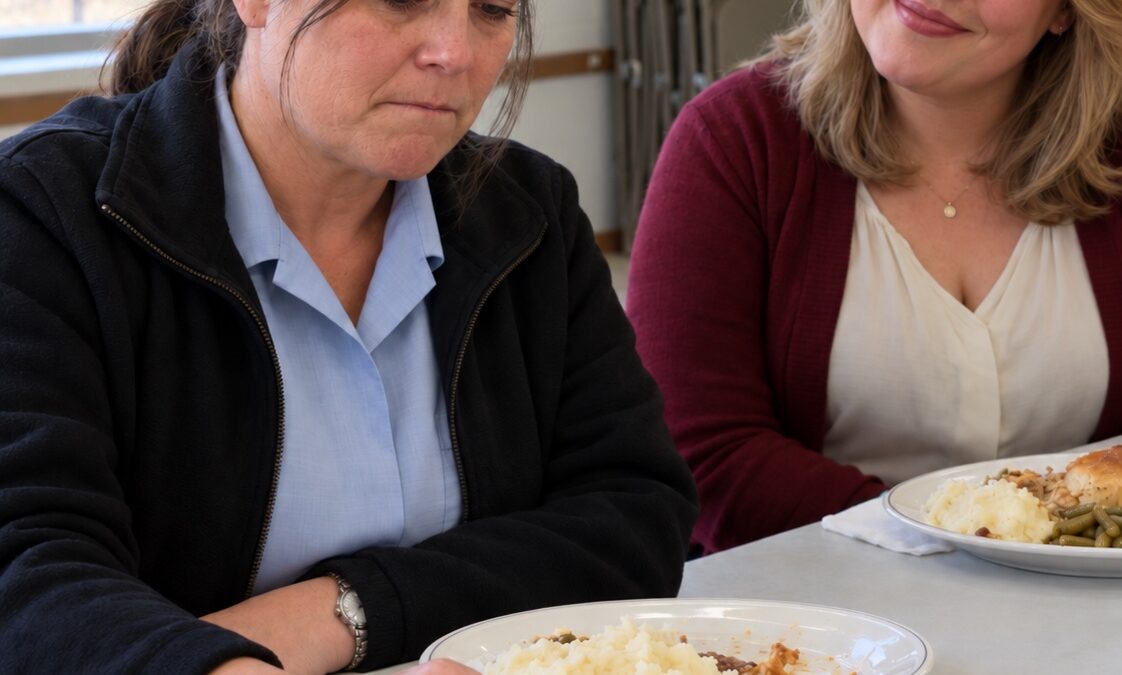
Complete story · 13 parts · about 51 minutes · ending included
Part 1 · Part 2 · Part 3 · Part 4 · Part 5 · Part 6 · Part 7 · Part 8 · Part 9 · Part 10 · Part 11 · Part 12 · Part 13
Part 1 of 13
Brianna Purcell laughed as Troy read the part of Dad’s will that left me his twenty-eight-year-old pickup.
“A stepkid gets a stepkid’s share. Rust and all.”
Her voice reached the church kitchen, where clean casserole dishes were stacked beside a plastic pitcher of sweet tea.
About forty-five people sat along folding tables joined end to end in the Grace Valley Baptist Church fellowship hall in Hennessey. An aluminum pan of macaroni and cheese rested on a stained dish towel.
Troy stood at the center, holding a photocopy chest-high. He wore a navy suit that pulled tight across his shoulders whenever he lifted an arm.
“To Shannon Dyer, I leave my pickup,” he had read, a beat before Brianna’s laugh.
He looked straight at me after my name, as though checking whether I’d understood.
I was sitting between an empty chair and a bowl of green beans, my napkin spread across one knee. The black jacket I’d worn to the service covered my mail-carrier uniform shirt. My substitute had run the morning half of Route 3; the afternoon trays waited at the Kingfisher post office.
Troy had chosen the funeral lunch to make his announcement.
The key ring appeared between his fingers.
He slid it across the white tablecloth until it stopped against my plate of mashed potatoes.
There was a tiny metal tractor attached to it, the green paint worn off at one wheel. Dad had kept it even after the hook bent crooked. I recognized the shape without touching it.
Brianna covered her smile with two fingers. Her nails were painted the pale pink of the iced sheet cake waiting on the sideboard.
“Well, somebody had to take the old thing,” she said.
A fork clicked against china at the far end of the table. The sound was small enough that people could pretend nothing had happened.
“That’s one way to see it,” I said.
I lifted the key ring by its metal loop and put it in my jacket pocket. My thumb rested against the chipped paint for a moment before I withdrew my hand.
Across from me, Wanda Gentry had cut a piece of ham in half. Dad’s younger sister kept the fork poised above her plate, then lowered her eyes. She said nothing.
A paper sign at the kitchen doorway thanked the funeral-lunch committee. Brianna’s name was written at the top in larger letters than the rest.
She smoothed Troy’s lapel and watched the faces along the table.
I moved my untouched bread roll onto the edge of my plate. At the farm, wheat stubble would be standing beyond the back fence, yellow against the red dirt. Route 3 followed the section-line road past Dad’s mailbox.
The program beneath my glass was dated Saturday, August 8.
Troy folded the photocopy once but stayed on his feet.
The chair behind him scraped as he stepped clear of it. His tie matched the dark blue cover of that program.
“Dad was sharp as a tack to the very end. He did his own taxes every March.”
Troy paused to see whether anyone would nod.
He tucked the folded photocopy under one arm.
“The house and the 160 acres came to me by the deed Dad filed,” he said.
Brianna’s hand closed around his elbow. She looked past me toward Wanda, who kept her eyes on the ham.
I picked up my glass. The tea had gone lukewarm, and a lemon seed clung to the inside near the rim. I set it down without drinking.
Nobody asked a question. Chairs shifted, and a few people folded their used napkins. They had come to eat after a burial, not sit through an inventory.
A faucet ran behind the serving counter. The familiar work of cleaning up gave everybody somewhere else to look.
I rose, carried my plate to the dish return, and put the fork beside it. Brianna moved a stack of cups to make room, then straightened the committee sign with one fingertip.
Outside, the gravel parking lot shimmered in the afternoon heat. The rusty pickup stood near the grass, apart from newer vehicles. Troy had sent someone to drive it from the farm that morning so he could give me the key ring at lunch.
Red dirt had settled into the grooves of its running boards. One rear fender carried a patch of primer that Dad never painted over. When I opened the driver’s door, the hinge gave the same dry squeak it had in the farmyard.
I climbed behind the wheel, pulled off my black jacket, and laid it across my lap. My uniform collar had rubbed a sore spot on my neck. I had mail to deliver.
The cab smelled of dust and warm vinyl. A square of clean glass showed where an old parking sticker had been peeled from the windshield. I found myself lining up its corners with the edge of the dashboard.
As I settled back into the seat, the sun visor dropped against my forehead.
Behind it sat a bundle of papers held with a red rubber band. The top page had curled in the heat. I left everything in place and pushed the sun visor back up.
“Not today, Dad,” I said.
At eighteen, I’d carried plates at the Sooner Cafe, balancing three dinners along one forearm while calling orders past the swinging door. Some evenings back then, my wrist ached all the way home.
The pickup’s window was cracked, but the air inside hardly moved. I rested both hands on the steering wheel and studied a shallow dent near the hood’s front edge.
Troy stood beside his own truck, talking on his phone. I could hear every word from the driver’s seat.
“All hundred and sixty, yes sir. Friday works.”
Part 2 of 13
“Get your things out of the farmhouse before Saturday. Estate’s got a timeline, sis.”
Troy’s text arrived Monday, August 10, while I was separating Route 3 mail into trays at the Kingfisher post office.
I set my phone beside the address labels and finished sorting. A letter for the wrong route went back to the center rack.
That afternoon, I eased the right-hand-drive carrier vehicle alongside the farm mailbox, arranged two envelopes and a grocery circular in delivery order, and closed the little door. The next stop was half a mile east.
I didn’t answer Troy until my shift ended.
“I’ll come Saturday after work.”
His reply was a single thumbs-up.
Saturday, August 15, I finished my route, signed out in Kingfisher, and drove the pickup toward Hennessey. The farm driveway had two worn tracks, with a strip of grass down the middle. Dad’s old disc harrow lay in the weeds along the fence.
Troy’s truck was parked beside the porch. He and Brianna had driven over from Enid for the day, and her purse hung from the back of a dining chair.
I stood in the doorway with my hand on the frame.
A yellow sticky note reading SELL was attached to the china cabinet. Another, lettered in Brianna’s tall handwriting, was on Mom’s 1956 sewing machine in its walnut cabinet. Beyond the dining room, the church’s funeral-lunch roasters were stacked unwashed in the kitchen sink.
Against the baseboard, a box fan rattled on the linoleum. Wheat dust lined the windowsill. Somebody had propped the hallway door open with an old boot.
Brianna emerged from the back bedroom carrying an empty cardboard box.
“You’re here,” Brianna said.
“I said I’d come.”
“Well, good.” Brianna glanced at my work shoes. “You could’ve changed first.”
I stepped onto the worn rug, wiped my soles, and walked back to Mom’s room.
The quilt lay folded at the foot of the bed. Her Bible rested on the dresser beside a ceramic button dish. I reached for the Bible first, keeping one finger in place where the cover had begun to split.
Brianna leaned against the doorway.
“Your mom’s things went to Clifford, so it’s estate,” Brianna said. “You can take those two.”
I picked up the quilt and brought its uneven edges together. A row of crooked blue stitches covered one corner where the binding had come loose. I tucked that end inside before laying the Bible on top.
“All right,” I said.
Brianna stayed where she was while I carried both things down the hall.
Outside, I put them on the passenger seat of the pickup, with the Bible away from the open window. I shut that door without slamming it.
I went back inside. Troy stood at the counter with his phone in one hand.
On the kitchen table lay a lease copy beside a roll of masking tape. Its heading said Oil and Gas Lease. Below that I caught the name Prairie Section Energy.
I didn’t get any farther.
Troy noticed my glance and swept the lease copy into a drawer.
“Grown-up paperwork,” he said. “Signed it yesterday.”
“I was looking for Mom’s sewing machine,” I said.
“It’s still there, sis. Hard to miss a thing that big.”
He turned toward the front room without waiting for an answer.
I followed far enough to see the auctioneer carrying a marker and a stack of blank cardboard tags.
The man moved through the rooms, checking furniture against his list. At the china cabinet, he bent down and wrote a lot number on one. The ink bled into the edge.
“Tags are tentative till the judge signs, Troy,” he said.
Troy waved one hand, as if the court could be hurried along with the fan’s warm air.
“Fine. I want a price on every last thing.”
The auctioneer made another entry without answering. A box of chipped cups stood beneath the window, and he stepped around it rather than move it.
For a man invited into a house full of somebody else’s belongings, he was careful where he put his shoes.
I stayed by the dining room wall.
Mom had kept sewing thread in the shallow compartment under the walnut lid, arranged by color in a tin. I remembered reaching for the yellow spool once and having her turn it so the loose end wouldn’t snag.
My fingers curled against my palm.
The sewing machine had stood there since we moved to the farm the summer I was eleven. That first year, I sat on the floor nearby and cut fabric scraps into lopsided squares. Mom let me have the pieces too small for her patterns.
Late at night, the pedal made a dull thump under her foot.
Brianna had gone onto the porch with her phone. The screen door didn’t close all the way; its spring had stretched years ago.
I could hear her speaking to a friend.
“Once the oil money clears, we’re done with this dirt.”
Brianna laughed at the reply. A floorboard creaked as she shifted her weight.
The auctioneer was farther down the hallway now, and Troy had followed him.
I went to Mom’s sewing machine and put one finger under the edge of the sticky note.
It lifted cleanly from the walnut finish.
The other side carried a longer instruction in that same tall handwriting:
“LOT 47 — reserve none. Let the stepkid bid if she wants it.”
Part 3 of 13
The morning after Brianna’s note, I took the coffee can from my Dover kitchen cupboard. Mom’s sewing machine had a lot number; what of Dad’s remained in my name?
The lid fit so tightly that I had to work a thumbnail under the rim. I set both pieces on the small table beside the window.
It was Sunday, August 16. The dish towel on the sink rail was dry, and the refrigerator clicked off halfway through its usual hum. In that kitchen, I could hear a car pass two streets away.
Inside were the check stubs from Dover Creek Oil, the company that had sent me small payments from the old well on Section 14. They bore my name, Shannon Dyer, in a neat block above the dollar figures.
The earliest were seven years old. The last was dated February 15, two years ago.
My lowest month came to $38.17. Another had brought $211.80. I kept each stub even after the money was spent, with the newest one on top and the older ones arranged underneath.
That was how I handled records. A date belonged with its amount. If somebody asked a question, I wanted to be able to put my finger on the answer.
I laid the stack on the table, straightened the edges, and found the yellow envelope beneath it.
Dad had handed it to me seven years ago. On the front, in pencil, he had written:
Shannon — keep
I remembered the way Dad held it until I had a firm grip.
“That’s yours. Don’t let it get lost.”
He never added anything else.
I eased the sheet out. The first line said, “Know all men by these presents.”
That was as far as I went, the same as the other times I’d looked. I folded it along the old crease and returned it to the yellow envelope.
I’d always figured that sheet was why the checks came in my name. The well had shut down that April, two months beyond the February stub, and the payments had ended with it.
One corner had softened from handling. I smoothed the flap with my thumb and laid the envelope beneath the stack.
A check stub listed ten digits beside Dover Creek Oil’s address. I took it to the counter and placed the call.
A recorded voice answered.
“The number you have dialed is no longer in service.”
After the automated announcement finished, I opened my small notebook.
On a fresh line I wrote, Sunday, August 16. Under it I copied Dover Creek Oil and the digits, followed by: Recorded message. Disconnected.
The pen left a blot after the final period. I rubbed it once with the side of my finger and closed the notebook.
I put the stub with the rest and returned everything to the coffee can. It went back into the kitchen cupboard, between a flour tin and a glass measuring cup. I pressed the lid once to make sure it held.
Then I washed the breakfast plate and set it in the rack.
For the rest of that week, Route 3 gave me its ordinary work. I passed gravel driveways and cattle guards, and leaned low to reach mailboxes below the window of my right-hand-drive vehicle. I matched every piece to its proper stop and drove only the misaddressed ones back to Kingfisher.
Every box got its mail.
When the farm came up along the route, I stopped where I always had. I had been carrying those roads for twenty-two years. The little door needed a firm push before its latch caught.
Sunday, August 23, I drove the pickup to Grace Valley Baptist Church in Hennessey.
The parking lot was filling as people arrived for the service. Men in pressed shirts stood along the church wall, waiting for the first hymn. A few cars turned in from the road.
Troy’s truck stood in the open, a trailer hitched behind it with a brand-new fishing boat aboard.
The hull was white with a narrow silver stripe. Its seats had that stiff, untouched look of things fresh from a showroom. A strap secured the motor. The dealer’s paper tag from Enid still hung from the bow.
I parked the pickup a few spaces away. When I shut the driver’s door, the sun visor rattled above the windshield. The bundle behind it had shifted, but I left it alone.
Troy was standing with several of the deacon board men. One had a hand in his pocket; another leaned forward to see the controls. Their Sunday shoes made small half-moons in the loose gravel.
I stayed beside the pickup long enough to button the cuff of my blouse. One buttonhole had begun to fray, and the thread snagged my nail.
Troy put his palm on the boat as though it needed an introduction.
“Bonus money. Fifty-two thousand and I’ll have her paid off by Christmas. I’m having the oil man out to my auction to say a few words.”
One of the men gave a low whistle. Another looked toward Troy and said nothing.
I remembered the lease copy on Dad’s kitchen table, the heading I’d seen before Troy swept it away. What he’d signed hadn’t made sense to me then. It still didn’t.
The men shifted to give me room when I walked over. I stopped within speaking distance and let my hands hang at my sides.
“What exactly did you lease, Troy?”
He leaned against the boat trailer and looked past me at the deacon board men.
“Those little checks died with the well, sis. Don’t get ideas, or my lawyer will give you some.”
Part 4 of 13
Last stop on Monday’s route belonged to the woman whose office kept every paper Dad had ever filed with the county.
I eased two envelopes into Rhonda Kemp’s mailbox, holding the grocery circular flat so its corners wouldn’t catch. Leaning from the driver’s seat, I pushed the little door shut and checked the latch with one finger.
It was August 24, and the clock on the dash showed 5:10 p.m.
Rhonda had just come home from the county courthouse in Kingfisher. Her car was parked under a cottonwood, and she was crossing the yard in dark slacks and a cream blouse, with her work badge clipped to her waistband.
I kept my foot on the brake while she approached.
“Long day?”
“Just finished.”
She collected the delivery, separating a utility bill from the grocery circular without looking at the pictures. Rhonda was deputy county clerk, and she’d lived on my route long enough to know which days I carried a heavier tray.
I had meant to pull away. Instead, I shifted into park.
“How would a person find out what a dead man signed?”
Rhonda stopped sorting. She never asked whose name I meant, and I offered none.
“Land records are public. The online index won’t tell you what a paper means — come on a weekday, I’ll walk you through it. Records don’t care who’s loud.”
She tucked the envelopes under her arm and waited, giving me room to decide whether I had anything more to say.
“Thank you.”
“You’re welcome.”
A dry leaf skidded across the road behind the vehicle. Rhonda stepped back from the wheels, and I turned toward the next section line.
My route started at 7:00 a.m. and ran past 5:00 p.m.; the clerk’s office closed at 4:30 on weekdays. This week I was covering for a carrier on vacation, which meant working my usual Wednesday off, August 26. My next free day would be Wednesday, September 2.
A weekday visit would have to fit there unless I put in a leave slip. The post office had already made its schedule, and I wasn’t going to leave somebody else’s route sitting on a rack.
For the drive into Kingfisher, I kept both hands on the wheel. A combine had left tire tracks at the edge of a field, deep enough to hold the small puddles from a recent shower. The road curved past a cattle gate whose chain had been repaired with a length of baling wire.
Wednesday, August 26, ran longer than Monday. The vacation carrier’s stops were unfamiliar, and I checked the address cards before every turn rather than trust a driveway that looked right from the road.
When I finally signed out, the hallway smelled of floor cleaner. A rubber mat near the rear entrance had curled at one end. I pressed it flat with the toe of my shoe and went outside.
Wanda called as I reached my pickup.
“Girl, could you come by?”
I held the phone against my ear and looked at the empty stretch of parking spaces.
“Sure. Are you all right?”
“I’m here. I’ve got something for you.”
The line went quiet long enough that I checked the screen to see whether the call had dropped. Then I drove toward Wanda’s place outside Hennessey.
Wanda’s porch light was on when I arrived. She was waiting near the chicken coop in rubber boots, holding a carton of eggs with both palms underneath it. A few hens scratched beside a tipped feed pan. Her apron pocket sagged with clothespins.
I came through the gate and stopped an arm’s length away.
“These are for you,” Wanda said.
The carton of eggs was still warm from her hands. I took the weight carefully, keeping my thumbs clear of the lid. Wanda swept away the last bit of straw and kept smoothing the cardboard.
“You didn’t need to save me any.”
“The hens don’t know when to quit.”
Wanda gave a small nod toward the yard but made no move to return to the house. She had been alone here since her husband died. The coop door needed a fresh hinge; Dad used to say he’d get around to fixing it, and Wanda always told him the old one still worked.
Now she pinched the edge of her apron and rolled the hem between her fingers.
“I’m sorry I sat there quiet at the funeral lunch, girl,” Wanda said. “I should’ve spoken up.”
I settled the carton of eggs in the crook of my left arm.
“You came for Dad. That counted.”
Wanda looked toward the fence. One hen had found a shallow hollow near the post and was settling herself into it, sending a little dirt over her own back.
A truck passed on the county road. Neither of us tried to talk above the engine. When it had gone, Wanda took out her phone.
“You’re not in the family chat. Troy made it in 2020 and left you out.”
Wanda steadied the phone with both hands. Her thumb hovered over the screen; then she turned it toward me. I bent closer, keeping my arm level against my side.
The message was from Troy, sent Wednesday, August 5, three days before the funeral.
“Oil company’s coming out Thursday. Nobody sign anything or talk to anybody. Dad’s minerals are handled.”
Part 5 of 13
An envelope from the estate lawyer’s office caught against my damp thumb as I opened it beside my mailbox in Dover. Something stiff pressed against the back of the letter.
It was Thursday, August 27, and I’d just come home from Route 3. My old car ticked in the driveway a few feet away. I stood in the narrow strip of shade along the sidewalk and unfolded the letter.
The court had issued letters to Troy on Wednesday. The pickup would be put in my name when the estate closed, after the creditors had their two months, “not before next spring.” Until then, I could keep the keys and drive it as Troy had allowed.
I held one corner so the breeze wouldn’t flip it over.
Folded inside was a draft auction catalog. I brought it to the kitchen table, away from the open window, and found Lot 47.
“Sewing machine, 1956, walnut cabinet, as is”
The words left out the chipped wooden knob Mom had repaired with glue. They mentioned nothing about the brass bobbin case Mom oiled every spring. I put my finger under the printed line and called Troy.
“Could I keep Mom’s sewing machine?”
“It’s estate property. Bid like everybody else.”
He hung up.
I set the phone beside the catalog. The call hadn’t lasted long enough for the kitchen light to stop flickering. Its switch had been loose since I’d moved into the rented house.
The lots had no prices listed. I could see where somebody had penciled a question mark next to a dining chair, then rubbed most of it away.
I closed the catalog and made supper. A single potato baked in the oven while I washed my uniform shirt by hand. I hung it over the bathtub rail, smoothing the collar between my fingers.
Thursday night, I lifted the coffee can from the kitchen cupboard. The letter went inside, folded to fit above the check stubs.
Troy’s words on Wanda’s phone came back to me.
Dad’s minerals are handled.
I took out the yellow envelope. Dad’s pencil had faded on the front, but I could still make out “Shannon — keep.”
This time I went beyond the familiar opening sentence. Farther down, my eyes stopped at “oil, gas and other minerals” and “Section 14.”
I couldn’t tell whether those words meant the whole farm or only the old well.
Without reading another line, I slid the sheet back into the yellow envelope. The flap had lost its glue years ago, so I tucked it in.
From the drawer under the stove, I got my notebook and a red pen. On the next clean line I wrote:
Clerk — Wed 9/2
The catalog lay nearby. I circled Lot 47, then printed $1,100 alongside it. That was everything in my savings account, apart from the change in my purse.
I put the lid back on the coffee can and set it on its shelf in the kitchen cupboard. The notebook went next to my alarm clock, away from the bills.
Friday, August 28, I meant to return after work with the paper for Rhonda to look at, but a note was taped to her mailbox: “Away till Sunday — hold mail. Taking Mama to Enid.” I took Rhonda’s letters back to the post office to wait as requested, and the yellow envelope stayed in the coffee can at home.
Saturday brought a picture of the sewing machine to my phone.
Brianna had posted it in the county buy-and-sell group, with the caption: “Vintage, comes with a sad story.”
I saw it during a break along Route 3, outside a feed store with a sagging awning. In the photo, the sewing machine’s walnut lid was raised. Mom’s pincushion wasn’t there.
A customer who had come down to collect a package stopped by my window.
“Are you all right, Shannon?”
“I’m doing okay, thank you.”
Later, near a gravel turnaround, another woman stepped out of her yard while I was closing the mailbox.
“You holding up, hon?”
“Yes, ma’am. I appreciate you asking.”
I continued down the route. At the next safe pullout, I flattened a bent magazine in the sorting tray. There were still addresses to finish before I could go home.
That afternoon, the old car would not start in my driveway; the starter gave a sharp click and quit. A mechanic from down the street checked under the hood and told me the engine had seized.
I thanked him and closed the driver’s door. The pickup, still in Dad’s name, was the only vehicle I had now.
After dark, I sat at the kitchen table with the catalog spread flat. I’d already circled the sewing machine, but I turned the pages slowly, keeping one hand against the binding. The print got smaller toward the back.
I reached the last page.
“Lot 112 — box of family photographs, wedding album (1991)”
Part 6 of 13
“Troy Purcell called this morning.”
I sat across from Debra Novak in her small room at the Kingfisher post office, still holding my route sheet.
Debra had moved a chair away from the filing cabinet so I could sit down. It was Monday, August 31, and the carrier vehicles were being loaded outside.
“He’s the executor of Clifford’s estate,” Debra said. “He claims you stop too long at the farm mailbox and go through the estate’s mail.”
My thumbnail left a half-moon in the pad of my index finger. Troy knew when I delivered there. He had seen me make that stop for years.
Debra set her pencil across a blank pad.
“While I review this, you’ll carry Route 5. Its carrier is on vacation, and the substitute assigned there can handle Route 3.”
“Will my hours change?”
“Same hours. Same pay.”
A cart squeaked past the closed door. Debra waited until the sound faded.
“Don’t go near anything with that estate’s name on it till I close this. It’ll look like he’s right.”
“All right.”
I laid the route sheet on Debra’s desk so she could mark the change. A crease ran through the printed number three. She flattened the fold with the side of her pencil.
Outside, I crossed the parking lot and climbed into the pickup. The sun had already warmed the steering wheel, and I kept both hands on it instead of reaching for the ignition.
Twenty-two years on Route 3, without a single complaint.
I knew which families needed a knock for a package and where the county road narrowed to one lane. I worked a loose thread out of my uniform cuff and rolled the strand into a knot. Then I got out, walked back to the loading area, and moved the new route’s trays into the carrier vehicle.
Route 5 had unfamiliar mailboxes along gravel lanes behind stands of cedar. I kept a finger on each label until the address matched the house, pulling over at a farm with three gates to verify the road name. Two pieces belonged elsewhere, so I brought them back.
Tuesday went much the same. A pasture lane could pass for a driveway until I found the faded house number nailed to a post. I kept the sequence in order and didn’t take shortcuts.
Wednesday, September 2, was my day off. I had left the notebook open to the line I’d written the week before:
Clerk — Wed 9/2
The yellow envelope had been in my purse since Sunday night, when I’d still meant to take it to the county clerk’s office in Kingfisher. Outside my rented house in Dover that morning, the pickup cranked but wouldn’t catch. The garage by the grain elevator towed it in and replaced the fuel pump for $940. Once the work was finished, I walked over and drove home.
At the kitchen table I unfolded the catalog to Lot 47. The red circle was still bright around Mom’s sewing machine. I drew a line through $1,100 and printed $160 below it.
The tip of the pen cut a faint groove in the page. I held the catalog flat with my palm until the ink dried.
My notebook lay within reach. I pressed my hand over the clerk reminder, then shut the cover. Records with the estate’s name would have to wait until the complaint was closed.
I took the yellow envelope out of my purse, flap still tucked, and slid it back into the coffee can beneath the check stubs. The cupboard door snagged on its hinge until I lifted the edge to make the latch meet.
A message appeared on my phone that afternoon.
“Heard you lost your route. Bless your heart.”
Brianna’s name showed above it. My thumb moved away from the reply box without touching a letter.
I opened Dad’s contact and erased the name until the field was blank. Then I typed Dad back in.
Friday, September 4, Debra called while I was rinsing a fork after work.
“I’ve finished reviewing Troy’s complaint,” Debra said. “The handheld logs a location for each scan.”
I shut off the faucet.
“Your scans before and after that box are four minutes apart. That’s a delivery, not a search.”
“Thank you.”
“It’s closed. You’re back on Route 3 Tuesday, after Labor Day.”
All week I’d wondered if Troy could take my route just by telling a lie.
“I’ll be there.”
Debra said she would have my trays ready.
Friday night, my phone rang.
It was the young mother renting my old house on Route 3.
“Shannon? Your sub left a letter in our box with your name on it. From an oil company. I didn’t open it.”
Part 7 of 13
2019-001842 — Transfer on Death Deed — Clifford Purcell to Troy Purcell 2019-001843 — Mineral Deed — Clifford Purcell to Shannon Dyer
Rhonda Kemp had turned the public terminal toward me at opening time. My name stood directly beneath Troy’s. His instrument number ended in 842. Mine ended in 843.
I placed my hand flat against the counter.
On March 12, 2019, Dad had pressed the yellow envelope into my palm and said, “Don’t let it get lost.”
Wednesday, September 9, was my day off. That morning, I’d moved the envelope from the coffee can to my purse.
Four days earlier, on Saturday, September 5, the young mother renting my old house on Route 3 had handed me a letter from Prairie Section Energy, signed by Wade Tillman, a landman.
It said he was “examining title to Section 14,” that “you may hold the mineral interest,” and “please call.”
From the pickup, I’d reached the company’s weekend recording and left my name, my number, and “for Mr. Tillman.”
Now Rhonda was watching me.
“You asked me what a dead man signed,” she said. “Did you bring your copy?”
I unfolded my own copy of the deed and laid it on the counter.
Rhonda brought up the recorded image and pointed to the notary stamp near the bottom. It matched the one on my paper.
“Start here,” she said.
I followed the first paragraph with my fingernail. The words ran on without a period, the way bank papers do.
Rhonda leaned closer.
“Read that part aloud.”
“All of Grantor’s right, title and interest in and to the oil, gas and other minerals in and under.”
“Keep going. Find the land description.”
I skipped past “Kingfisher County, State of Oklahoma.”
Then I found it.
“The NE/4 of Section 14.”
Rhonda took a pencil from beside the terminal and wrote NE/4 on a scrap of paper.
“Northeast quarter,” she said. “One hundred sixty acres.”
She drew a square and divided it into four equal parts.
“Here’s the whole section. The upper right piece is the one on your paper.”
Rhonda shaded that corner with quick strokes.
“That’s the home place and the creek pasture. Every acre Clifford farmed.”
I kept my eyes on the description.
“What about the well that quit producing?”
“That well was one thing. Read what Clifford signed. It doesn’t say one well, and it never gives an ending date.”
Rhonda laid the pencil eraser on the first paragraph.
“That’s not a check, honey. That’s everything under the dirt. Forever.”
For seven years, that paper had sat beneath the check stubs from a dead well, filed in the kitchen like an old receipt.
The fold ran straight through NE/4. The well had quit, but what Dad left me hadn’t.
“Let’s get you something from the county records.”
Rhonda checked 2019-001843 against the public index, printed the recorded deed, and embossed the county seal into its lower corner.
She laid the certified copy before me.
“Now what are you going to do?”
“I won’t say a word at church.”
“Good. Church is loud. Paper isn’t.”
“When the court put Troy in charge, his lawyer sent me a letter. I’ve got the lawyer’s address in the coffee can at home.”
Rhonda put down her pencil.
“Monday, I’ll take this to the post office window. Certified mail. Return receipt. The lawyer gets it.”
“You’ll want proof of what you sent.”
“I’ll keep a photocopy of every page. The green card comes back signed and dated by someone at the law firm.”
“Troy could still sue and say Clifford was talked into signing.”
“Then he can sue. It still goes out Monday.”
“That would be his choice,” Rhonda said. “There’s another record I want to check.”
She rolled her chair closer to the keyboard.
“When somebody uses a transfer-on-death deed, an affidavit usually follows it into the records. I file those every week. Let’s see what your stepbrother submitted.”
Rhonda entered 2019-001842 into the search field.
A second document appeared, filed Monday, August 17. It referred to Clifford’s transfer of the house and land.
Troy’s name was printed near the top.
His lawyer’s name and office address sat beneath it.
“Here’s the affidavit,” Rhonda said.
She scrolled down through the form, field by field.
The boxes for the property description and recording reference contained typed entries.
One section was different.
“Other claimants,” Rhonda said.
A sentence had been written by hand across the space provided.
“I want you to hear exactly what this says.”
Rhonda read aloud.
“No other person claims any interest in the minerals. Decedent’s stepdaughter received personal property only.”
I knew Troy’s handwriting from the notes he’d left on Dad’s kitchen calendar.
Below those words was Troy’s signature.
The notary had signed underneath, confirming his sworn statement.
I folded my arms across my chest and tucked my hands beneath my elbows.
Rhonda leaned toward the bottom of the form.
“He put that in writing himself,” she said.
I watched her take the affidavit from the printer and emboss the second document.
I paid for them with a few singles from my purse. Most of the $160 remained folded for Lot 47.
Rhonda passed me the two sheets, and I arranged them inside my folder. I checked each recording number before closing it.
She clicked back to the index and tapped 2019-001842.
Then her finger slid down one line.
“And the very next number is you.”
Part 8 of 13
Across the retail counter at the Kingfisher post office, the clerk stamped the certified envelope that carried my deed to Troy’s estate lawyer.
It was Monday, September 14. For once, I stood in the lobby line in uniform, my letters already cased for the day.
The green card was clipped to the envelope for return receipt. I’d made a photocopy of the deed before sealing it and kept that in my folder with Troy’s affidavit.
The clerk slid my stub back across the counter. I checked the lawyer’s address on it, tucked it into my bag, and went back through the employee door to load Route 3.
Troy’s message came Wednesday, September 16, my day off, while I was home in Dover.
“Dad’s papers aren’t your business. See you never.”
I held the phone steady against the table and took a screenshot. My finger stayed away from the reply box.
Friday, September 18, I came home from Route 3 and found two pieces of mail in my own mailbox.
The green card had returned, signed by someone at the law firm and dated Tuesday, September 15. I slipped it into the folder with my county records.
The other was an auction notice addressed to me as a person named in Dad’s will. By order of the court, the estate’s machinery and household goods would be sold Saturday, October 3, at 10 a.m. in the farm yard.
Lot 47 was still listed. What was left of the $160 stayed in the coffee can for it.
After the service on Sunday, September 20, I stood with a paper cup at the refreshment table in the Grace Valley Baptist Church fellowship hall.
Someone had left the county paper by the sugar bowls, folded open to Thursday’s legal notices.
Troy stood beside the table, holding his cup high enough to draw attention.
“Her little royalty paper is worth the stamp it came on. After the auction, drinks on me. Oil money.”
Several people turned toward him.
“I’ve got the oil man coming to say a few words.”
Across the hall, Brianna laughed.
Wanda stood near the wall. Our eyes met, but Wanda said nothing.
I set my cup down without taking another drink and left through the side door beside the kitchen. Troy was still speaking when I reached the parking lot.
Tuesday, September 29, I drove the pickup home after finishing Route 3.
I had just shut off the engine in my Dover driveway when my phone rang. A man gave his name as Wade Tillman, Prairie Section Energy.
“Ms. Dyer? I got your message.”
“Yes, sir.”
“I couldn’t call sooner. Our lawyer finished checking who owns the minerals under Section 14 only yesterday.”
I reached into my work bag, opened my notebook, and wrote Wade’s name beneath the date.
“There’s something you need to know about the payment Troy signed for in August,” Wade continued. “It only pays if our company approves his title. We won’t approve it.”
My pen stopped moving.
At church, Troy had spoken about that money as though he could already spend it.
“Did you speak with Troy?” I asked.
“I tried him first this afternoon. He saw my name and didn’t pick up.”
Wade had received a message instead.
“Save it for Saturday. You’re on after the toast.”
“He texted back inside a minute — so he had the phone in his hand.”
I copied the words into my notebook, pressing hard enough to dent the next page.
“Troy invited me to the auction,” Wade said. “I’m going. I have a company letter to put directly in his hands.”
He spoke as carefully as Rhonda did over a county record, one fact at a time.
“I need to meet you there, too.”
“What do you need from me?”
“Bring your ID and your copy of the deed. I want to match the name and the description with what our lawyer examined.”
Under Wade’s name, I wrote ID and deed.
“I walked that fence line with Troy on August sixth — it’s in my book. I’d rather hand it to him than have him read it alone.”
“All right,” I said.
“There’s another thing I need to tell you.”
I held the pen above my notebook.
“If anybody files suit, everything goes into suspense until a judge sorts it. Could be years.”
A short mark went under the date. The word years stayed in my ear.
“I’ll stand there anyway.”
Wade didn’t try to change my mind.
“I can’t promise what Troy does once he reads that letter. My part is getting it to him and finding the right owner.”
Half that church would be standing in the farm yard Saturday.
“How will I recognize you?” Wade asked.
“I’ll be the one with the mail bag.”
“Paper first, handshake second.”
Wade said goodbye, and I put my phone down.
On my day off, Wednesday, September 30, I stopped by the Kingfisher post office.
Debra Novak was sorting leave requests when I approached her desk. I handed her a leave slip for Saturday, October 3.
Debra checked the date and signed without asking why.
“I’ll arrange coverage,” she said.
I put the leave slip in my bag and drove back to Dover.
Thursday, October 1, I called Wanda from my kitchen table.
“How are your hens doing?” I asked.
“Getting into places they shouldn’t, girl. Been dry out here, too.”
“We could use some rain.”
Wanda told me the hens had finally settled down for the evening.
I pulled the catalog closer and opened it to Lot 47.
“Save me a spot by the hay wagon Saturday. I’m bidding on Mom’s machine.”
Part 9 of 13
Gravel crunched beneath the pickup as I rolled to a stop at the edge of the farm yard at 9:30.
Cars and trucks lined the fence on both sides of the driveway, and Troy’s laugh rang over the whole yard, loud as if the oil money were already in the bank. I parked where I could leave without blocking anyone, then reached across the seat for my mail bag.
Inside were the yellow envelope Dad had given me and the folder holding the certified copy of Troy’s affidavit and the photocopy I’d made of my deed before mailing it.
I pulled the strap across my shoulder.
Before shutting the driver’s door, I glanced at the bundle of papers held with a red rubber band behind the sun visor. Everything remained where Dad had left it.
About sixty people had gathered for the auction. Many had eaten at the funeral lunch in August.
Two neighbors nodded as I walked past. A woman from church recognized me, then turned toward the equipment lined up along the barn.
Rhonda Kemp stood near a small tractor, studying its rear tires.
“Came to see what this one brings,” Rhonda said.
I nodded and continued toward the hay wagon.
Wanda had saved a place on a wooden bench nearby. Her coat lay across one end, keeping the seat clear.
“Morning, girl,” Wanda said.
“Morning, Wanda.”
She moved the coat onto her lap.
I sat down and took my bidder card from the front pocket of my jeans.
By ten, the sale had started.
The auctioneer worked through the early items, calling offers in a practiced rhythm. Bidders raised numbered cards, and a clerk at a folding table wrote down each sale.
A stack of galvanized buckets went first. Next came a workbench Dad had built for the barn, its legs stained from years of standing on bare ground.
Troy moved among the buyers, shaking hands and greeting men from church.
Brianna stood near the farmhouse with a clipboard. She pointed out items as the auctioneer reached them, occasionally stepping forward to straighten a tag.
I kept my seat on the bench.
Each lot got its number, a few words of description, and about a minute of chant.
At eleven-twenty, they reached Lot 47.
Mom’s 1956 sewing machine stood in its walnut cabinet near the porch. The chipped wooden knob Mom had repaired was still attached to the drawer.
I slid to the edge of the bench.
The auctioneer lifted his hand toward the sewing machine.
“Who’ll open it for me?”
I raised my bidder card at $60.
He pointed at me without breaking rhythm.
Before he could call for the next increase, Brianna stepped away from the farmhouse.
“You might make sure she can pay for that, hon. Bless her heart, all she got was Clifford’s rusty pickup.”
Brianna addressed the auctioneer as pleasantly as if asking someone to pass the rolls, her voice carrying across the entire row.
A few people laughed.
One man near the fence gave a short chuckle around the toothpick in his mouth. Another lowered his eyes to the ground.
Troy stopped shaking a neighbor’s hand long enough to watch.
I kept my card in the air until the auctioneer nodded and went on.
The next offer came from somewhere behind me.
The bids climbed by tens between me and a man across the aisle.
Each time, the chant slowed long enough for anyone to jump in.
I could see the shallow scratches along the walnut cabinet’s front edge. Mom had used that sewing machine to shorten my school dresses when I was growing up. Sometimes she made me stand on a kitchen chair while she pinned the hem.
The man across the aisle answered with a nod.
I raised my card for $120.
That was my limit. The rest was gas money for driving my pickup from Dover to Kingfisher that week.
The chant came around to me again.
I lowered my arm.
For a moment, nobody moved.
Mrs. Ida Mae Stokes stepped forward from the next row.
Wanda’s neighbor was seventy-eight, a retired seamstress. Her white hair was pinned neatly beneath a straw hat.
She raised her number at $140.
The auctioneer looked across the buyers.
No other offer came.
“Sold!”
The clerk recorded Ida Mae’s number.
I knew exactly who had Mom’s sewing machine now.
Ida Mae approached the walnut cabinet and examined the repaired knob. She touched the drawer gently, then stepped aside so the auction workers could mark the sale.
My bidder card lay across my knees. I pressed one corner between my fingers until the cardboard began to bend.
Wanda kept her eyes on the next item.
Neither of us spoke.
The sale continued through a feed grinder and several pieces of smaller equipment. Nobody near our bench bid on any of it.
Near noon, a neighbor came down the row with a jug and filled a paper cup for me.
At twelve, the auctioneer stopped calling offers.
Troy climbed onto the hay wagon.
He had a cooler beside him and began pouring beer into plastic cups. Several men passed the drinks along the rows until people near the barn were holding them, too.
Brianna moved closer to the front, still carrying her clipboard.
Troy waited until the conversation around the farm yard died down.
He raised his cup.
“To Dad’s oil — and to the man who made it real.”
Troy pointed toward the gate.
A white pickup had just parked beyond the fence, near the entrance to the driveway.
A man in a light-colored shirt stepped out holding a long envelope.
I had only heard Wade Tillman’s voice on the phone, but I knew what the letter inside it said.
Brianna hurried toward him, waving above her head.
“There he is — the oil man!”
I set my cup of water down on a hay bale, stood up from the bench beside Wanda, and pulled the strap of the mail bag higher on my shoulder.
Part 10 of 13
From the hay wagon, Troy swung the auctioneer’s microphone toward Wade Tillman, who was still working his way through the buyers.
“Say a few words, Wade!”
I stood beside the bench with the mail bag against my hip. Troy was smiling the way he did when someone at church complimented his new truck.
Wade stopped below Troy and handed the long envelope up to him.
“From the company, Troy. Read that one to yourself first.”
Troy grinned at the little oil-derrick logo in the corner. Wade shook his head and kept both hands at his sides, but Troy seemed to take the refusal for modesty.
Ignoring the advice, Troy set his beer cup hard on the hay bale, tucked the microphone under his arm, and tore open the long envelope.
He shook the letter open.
The nearest buyers stopped talking. Brianna stepped into Wade’s path, hand out, smiling. Wade walked past her without slowing, straight toward the mail bag on my hip.
Troy brought the mic back up to his mouth.
“…the Section 14 mineral interest is vested in Shannon Dyer… the draft will not be honored…”
He stopped halfway down the page.
The microphone went quiet. A man near the gate lowered his plastic cup without drinking.
Wade stood in front of me now, waiting.
“Ms. Shannon Dyer? I’ve been looking for you since August.”
“Yes, sir.”
Wade showed me his company identification. I handed him my driver’s license.
He checked the name, then gave a brief nod.
Above us, Troy’s voice cracked over the speaker.
“Those minerals came with the land. That’s what Dad’s deed says.”
I walked to an empty feed crate a few steps away, close enough for the front rows to hear me without shouting.
The yellow envelope came out of the mail bag first. Dad’s pencil still said “Shannon — keep.”
I opened the folder and laid the photocopy of the deed beside the yellow envelope.
Wade stood where he could see both documents. I lifted the certified copy of Troy’s affidavit.
“2019-001842,” I said, pointing to where the affidavit cited Troy’s deed.
“2019-001843.” I moved my finger to the photocopy.
Dad had filed both deeds at the county, one number right after the other, the same morning.
I turned the certified copy of Troy’s affidavit toward the people nearest me.
Troy had signed it under oath on August 17. In the box marked “Other claimants,” I read out the line in his own handwriting.
“Decedent’s stepdaughter received personal property only.”
Wade looked toward Troy.
“That’s the affidavit you handed me for the lease file.”
Troy tightened his grip around the microphone. He glanced at the long envelope, then at the documents spread before me.
The auctioneer stood below the hay wagon, no longer watching the next numbered tag.
Troy leaned forward. His first sentence came fast, the second louder.
“Dad wasn’t in his right mind in 2019. She worked him.”
I straightened the photocopy against the edge of the feed crate.
“You told forty-five people he was sharp as a tack and did his own taxes every March. He signed your deed the same morning.”
A neighbor who’d attended the funeral lunch lowered his head.
Troy bent over the rail, searching the faces of the men he’d been shaking hands with earlier.
“She never said a word to me. She hid it to make a fool of me.”
I took out my phone and brought up the screenshot from September 16.
The words were still beneath Troy’s name. I held the screen high enough for the closest buyers to see and read it to them.
“Dad’s papers aren’t your business. See you never.”
Troy’s mouth worked before any sound came.
Then he turned toward the whole farm yard and raised the microphone higher.
“I never talked to any oil company till Dad was in the ground.”
Wade took a small notebook from his pocket.
Without speaking, he opened it to a marked page and turned the entry toward the front row.
“8/6 site visit”
A man leaned closer, then stepped aside so the woman behind him could see.
Wade closed the notebook and returned it to his pocket.
Wanda rose from the bench.
She walked out into the open yard, holding her phone in both hands.
“Troy sent this August fifth,” Wanda said. “Three days before Clifford’s funeral.”
People edged closer as Wanda lifted the screen.
She read aloud.
“Oil company’s coming out Thursday. Nobody sign anything or talk to anybody. Dad’s minerals are handled.”
Troy lowered the microphone to his chest.
Wanda kept her place in front of the buyers.
“Clifford told me in ’98 that girl saved this farm with her tip money. Nine thousand dollars. I kept quiet at that lunch, and I’ve been sorry since.”
Wanda put her phone away.
I laid my palm flat on the flap of the mail bag and kept it there.
Brianna stood near the front row, her clipboard under one arm and a plastic cup in her hand.
I turned toward her.
“A stepkid gets a stepkid’s share. Rust and all.”
Brianna set her beer cup down.
Nobody laughed.
A loose chain somewhere along the rail gave one small clink.
The auctioneer climbed onto the hay wagon, took the microphone from Troy, and switched it off.
The rest of the lots stayed unsold that day.
I faced Troy.
“Rust and all, Troy. Dad left me what’s underneath.”
Part 11 of 13
“Your stepbrother got our letter Monday, Ms. Dyer,” Wade Tillman said. “The lease he signed in August is no good on Section 14, and the draft won’t be paid.”
I sat at my kitchen table in Dover on Wednesday, October 7, my day off. The phone was beside my open notebook.
On a clean page, I printed Oct. 5.
“Something else came in yesterday. Troy signed a letter on his lawyer’s advice, individually and as personal representative.”
I heard a page turn at his end.
“I make no claim, personally or for the estate, to the Section 14 minerals.”
My coffee had gone cold in the mug, and I drank it anyway.
“The lawyer’s office sent it with a cover note,” Wade said. “Listen to this part.”
“This office will not represent Mr. Purcell in any dispute concerning the Section 14 minerals.”
I drew a small circle around the date.
“Would you sit down with me about a new lease? Wednesday the fourteenth, at the county office. Rhonda can be there to notarize.”
“Yes, I will.”
“Paper first, handshake second,” Wade said before he hung up.
I marked the appointment beneath my route schedule and closed the notebook.
That Wednesday evening, I drove to Grace Valley Baptist Church in Hennessey for the women’s meeting.
Wanda had saved me a seat in the fellowship hall. A plate of oatmeal cookies sat near the front, and someone had brought a covered pan of baked beans for everyone to sample.
Brianna was alone in the back row, her purse holding the spot beside her.
The woman running the meeting finished the routine announcements, then turned to the funeral dinner committee.
“We need to choose a new chair,” the woman said. “All in favor of Wanda Gentry?”
Hands went up across the fellowship hall.
I raised mine.
The woman counted the votes, then announced, “The motion carries. Wanda will chair the funeral dinner committee.”
Wanda straightened the program on her knees.
“We’ll need somebody to handle the casseroles,” she said.
Someone near the aisle volunteered.
I glanced toward the back once. Brianna was turning her wedding ring around and around.
Nobody said a word to her.
On Friday, October 9, I ran Route 3 as usual.
The farm mailbox came up along the section-line road.
I pulled the mail vehicle alongside the post.
From the farm driveway, Troy’s truck appeared with the fishing boat behind it.
The trailer bounced over the shallow rut near the entrance, and Troy made the turn toward Enid without slowing.
I waited until the road was clear.
Then I squared the envelopes the way I would at any stop, set them inside, and closed the door.
I drove on to the next box.
Saturday afternoon, October 10, I returned to Dover after finishing my route.
I had just parked beside the house when Wanda called.
“Girl, you home?”
“Just got here.”
“I cooked the men’s breakfast at church this morning. Troy was there.”
I pulled the phone closer to my ear.
“The bank sent his draft back Friday,” Wanda said. “He told the deacons what happened with that fishing boat.”
She gave me Troy’s words exactly.
“I put fifty-two hundred down and financed the rest. Dealer bought her back for forty-four thousand. I still wrote a check for twenty-eight hundred to clear the note. Lawyer told me back in September to sit on the bonus money.”
Wanda stopped long enough to clear her throat.
“Eight thousand dollars, girl. Gone on a boat he owned seven weeks.”
I remembered that the lawyer’s office had signed for my certified letter on September 15.
The afternoon sun was warm on my arm through the open window.
“Thank you for calling, Wanda.”
“Take care of yourself, girl.”
I took the phone inside, changed out of my uniform, and came back out.
It was the first time I’d washed Dad’s old pickup since the funeral.
I connected the hose and let the water run until it came through clear. Dust had collected along the bottom edges of the doors and inside the wheel openings.
Soap gathered around the faded hood as I worked a sponge across the metal.
I rinsed the windshield carefully, then wiped the side mirrors with a clean cloth.
When the outside was done, I opened the driver’s door and climbed in to finish the cab.
I reached up and pulled the sun visor down to wipe the vinyl.
The bundle of papers held with a red rubber band slipped loose and fell into my lap.
I had always thought it was Dad’s registration and insurance cards.
This time, I slid the band off.
The registration lay on top. Beneath it was a bank receipt from Red Cedar State Bank in Hennessey.
I recognized my name in the printed line.
“Received of Shannon Dyer $9,000.00 — applied to loan 4471-F — 6/26/98”
I didn’t move my hand.
For a second I was eighteen, counting ones and quarters on the Sooner Cafe counter after closing.
I turned the bank receipt over.
Stapled behind it was the fee receipt from the Kingfisher County clerk, dated March 12, 2019: recording charges for two deeds.
Troy’s deed and mine.
I pressed my thumb over the corner where the two slips were joined.
One staple held them together. Twenty-one years apart.
Part 12 of 13
“He put the staple through both,” Wanda said, lifting the bank receipt and the fee receipt toward her kitchen window.
It was Monday, October 12, Columbus Day, and the post office was closed. I’d brought the bundle to Wanda’s and fanned the two stapled receipts open on the kitchen table before she said a word.
“Clifford told me about the money that summer,” Wanda said. “I never knew he’d fastened these together.”
She tipped the slips toward the daylight, then lowered them carefully. The staple had gone through both sheets without tearing the printed dates.
“June twenty-sixth,” Wanda said. “He drove to the Sooner Cafe when your shift ended.”
I remembered Dad waiting outside while I finished clearing the tables. He hadn’t mentioned the bank on the ride home.
“Later that night, Clifford came right here,” Wanda continued. “Sat in that chair you’re using. Didn’t even take the coffee I offered.”
Wanda put the receipts down and touched the back of my chair.
“He said, ‘I’ll pay that girl back in dirt, not dollars, and she won’t take it if I hand it to her.'”
I ran my forefinger along a worn patch in the kitchen table’s finish. The yellow envelope had sat in my cupboard for years. Nobody had told me to look farther down the page.
“I asked where he’d put the proof,” Wanda said. “He told me he kept the bank receipt in the pickup, ‘so it’d ride with him.'”
Wanda sat across from me and drew the papers closer. “All this time, girl, and he never showed a soul.”
“He kept them together,” I said.
“He surely did.”
I returned the bank receipt and the fee receipt to the bundle and tucked it into my bag. Wanda stepped out to the porch, where Ida Mae Stokes was watering the mums along the fence next door, and the two of them talked a while.
Soon Ida Mae came over, pushing her late husband’s hand truck with a plank laid across it. She stopped at the rail beside us. “Wanda just told me what Clifford did.”
“I bought your mom’s sewing machine at the auction,” Ida Mae said. “I paid $140. I’ll sell it back for the same. Not a dollar more.”
Before I left Dover, I’d taken that much from my savings at the bank’s drive-up ATM, hoping she might sell. I offered it to Ida Mae, who counted it into her apron pocket.
“Come over and get it, honey.” Ida Mae turned the hand truck toward the path. “I’ll help you move it.”
Wanda stayed on the porch while we crossed to Ida Mae’s house. The sewing machine stood just inside, its walnut cabinet closed and the repaired knob facing the room. I held the top steady as Ida Mae tipped the hand truck underneath.
Together we rolled it back to the pickup parked at Wanda’s. Ida Mae set the plank against the lowered tailgate. I climbed into the bed and pulled while she guided the wheels up, and the sewing machine made it in without a scratch.
We strapped down the sewing machine, the hand truck and the plank for the drive to Dover. I thanked Ida Mae and took the road home. Everything rode under a tarp in the bed until Wednesday; I wasn’t going to unload it alone.
Wednesday, October 14, was my next day off. I drove to the county office with the folder on the passenger seat and met Wade Tillman at Rhonda Kemp’s counter.
Rhonda checked my ID against the name on the lease. Wade moved the pages toward me, keeping the signature line clear.
“This describes the northeast quarter of Section 14,” Wade said. “Take your time.”
I checked the description against the certified county record I’d brought, then signed the lease. Rhonda added her own name beneath mine and stamped her seal.
Wade handed me the draft for $48,000.
“The title work is already done,” Wade said. “Troy’s signed letter is in our file. This draft will be paid.”
I put the draft in my folder to deposit after my route Thursday.
Not one cent of it would get spent until my bank said the money was there.
That afternoon, I drove back to Dover. The photo box from Lot 112 sat on my front step, with Mom’s wedding album inside. Nobody but Troy had that box to give, and he hadn’t written a note.
I carried the photo box into the pickup and called Wanda from the driver’s seat.
“Could I bring Mom’s sewing machine over tonight? Her wedding album just came back too.”
“Bring them, girl,” Wanda said. “I want to see your mother’s pictures. And I still sew.”
That evening, I drove to Wanda’s with both things. Ida Mae was waiting on the porch when I parked, and we lowered the plank from the bed. She steadied the hand truck while I kept the sewing machine from tipping as we rolled it down.
Wanda opened her front door wide. The sewing machine went inside near her work chair, and I set the photo box on a shelf within reach. I left both there, along with the hand truck and the plank for Ida Mae to collect.
Back home that night, I took the stapled receipts from the bundle and a small frame from my own shelf. I slid them behind the glass with the bank receipt facing out and the staple left alone, then fastened the backing. Two narrow strips of mounting tape fixed the frame low on the dashboard of the pickup, clear of my view of the road.
The mail vehicle was in the shop until Friday. I called Debra Novak and asked whether I could run Route 3 Thursday morning in my own vehicle, Dad’s pickup.
“I’ll clear you for tomorrow,” Debra said.
In the morning, Route 3 would pass the farm mailbox with Troy’s name on it.
Part 13 of 13
Dad’s bank receipt trembled inside the frame on the dashboard as I steered the pickup out of the Kingfisher post office lot.
It was Thursday, October 15, and the clock read 6:45 a.m. The Route 3 trays rode on the passenger seat, in the order I’d cased them. Deliveries began at seven, and the first box was only minutes away.
The defroster cleared the windshield on the drive out. Unlike the mail vehicle, Dad’s pickup had its steering wheel on the left, so each stop meant a long reach to my right.
Outside town, dew clung to the seed heads along the section-line road. A flock of blackbirds rose from a fence as I passed. I eased onto the shoulder, shifted into park, and leaned toward the mailbox.
My arm reached the opening without brushing the tray. I slid the mail inside and sat back upright behind the wheel. At the next house I brought the nearest envelopes forward. The addresses stayed in order.
Where the ditch came close to the road, I parked and carried a parcel to a roadside post. Back in the cab, I checked the sequence and kept going.
Each time I selected the next address, my own name showed through the frame’s glass, low on the dashboard.
Farther along, the farm mailbox came into view with Troy Purcell’s name on the front. A letter from a bank addressed to him lay near the top of the tray.
I parked within reach and eased the envelope past the metal lip. After closing the little door, I paused for three seconds.
Then I put the pickup in gear and rolled on.
Every box gets its mail.
By noon, the morning half of Route 3 was finished. I drove to Wanda’s house for my lunch break, with the black jacket I’d worn to the funeral folded on top of the empty morning trays. The hem had come loose near one side seam, and I’d brought it for Wanda to repair.
Wanda met me at the door. I held up the black jacket to show the hanging edge.
“Come in, girl,” Wanda said. “I can fix that while you eat.”
The sewing machine stood by the window near Wanda’s work chair. I handed over the black jacket, and Wanda spread the hem across her knees to find where the stitches had pulled free.
I carried my lunch to the kitchen table. The photo box had come down from the shelf and stood open. One wedding picture of Mom lay on top. A little white flower was pinned beside her ear, with one petal bent backward.
“Carol looked lovely that day,” Wanda said from her chair. “I brought it out to show you.”
I set my lunch aside and moved close enough to help.
Wanda drew cotton through the needle and guided the black jacket beneath the presser foot. I stood behind the chair to keep the hanging fabric off the floor.
One section had torn along the older stitch holes. Wanda placed the new line a little higher so the repair would hold. I kept the lower edge from pulling as the feed dogs carried the hem forward. She finished the last few inches and cut the thread.
“Clifford kept that receipt all those years,” Wanda said. “He could have put it away anywhere.”
I took hold of the collar as Wanda lifted the hem off the sewing machine.
“Nobody owes a stepkid a thank-you. It’s still nice when somebody keeps the receipt.”
Wanda dropped the cut end into the little wastebasket by her chair.
“Well, girl, he kept yours,” Wanda said.
I put the black jacket on and buttoned the front. The hem hung straight. Wanda gave the repair one last look, closed the photo box, and walked me to the door.
Back on Route 3 that afternoon, I passed Section 14, where the ground sloped toward the creek pasture. Thin green rows of new winter wheat had begun to show between strips of dark soil.
The oil company’s survey stakes stood among the rows, each carrying an orange flag. Wind turned the flags toward the road. I slowed enough to see the line running across the field.
As the pickup passed, I reached above my head and tapped the sun visor twice. The hinge held at its crooked angle. I finished the afternoon’s addresses.
After my route, I arrived at my bank before the lobby closed at six and went inside. I handed the draft over the counter. The teller stamped the deposit slip. I checked the account number and slid the slip into the folder, behind the county documents.
I drove home in the black jacket. At my driveway I turned off the engine and carried the folder inside.
The old truck still starts on the first try, and I still haven’t fixed the visor.
THE END
More stories
My brother-in-law said our 60-year-old hardware store belonged to him at my husband’s funeral—But the papers under the register would expose him before the whole town.My HOA president sent two men with shovels into my late husband’s memorial garden and fined me $2,400—Then her own financial records cost her the presidency.








