In the ER, my son demanded I sell my only home for his $48,000 sacrifice; he didn’t know what I had kept.
Chapter 1 of 7
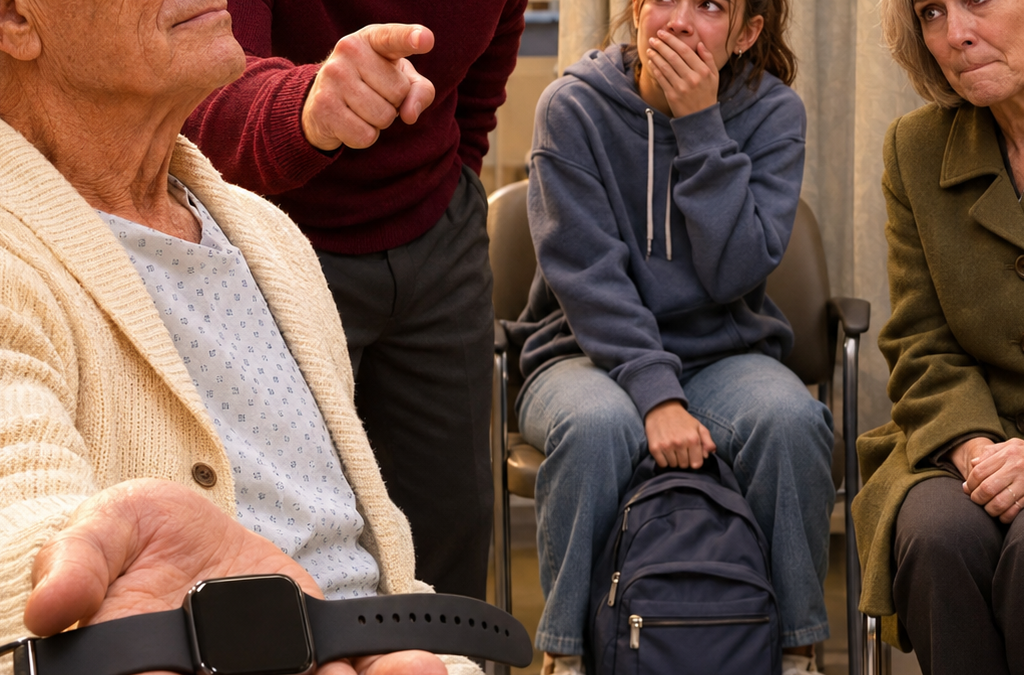
My loosened smartwatch lay in my palm. Lily sat beside the curtain, her backpack trapped between her sneakers.
“Tell her,” Brian said. “Tell her why we’re still struggling.”
“She doesn’t belong in this.”
He turned toward his daughter.
“Grandpa would rather keep his house than help us.”
Lily stared at the floor. Across from her, my sister Ruth lowered her eyes.
“Look at me, honey,” I said. “This isn’t yours to fix.”
“She knows we’ve had a hard time,” Brian said.
“Then let her hear you talking to me.”
The monitor kept beeping behind my shoulder. It was Monday, February 16, in a Dayton, Ohio, emergency department, and my son was discussing my house like I had already left it.
“You have options, Dad. That’s what I’m saying.”
“You mean sell.”
“A smaller place would be easier anyway.”
“I’ve got a bedroom downstairs.”
“And steps outside. Laundry. Maintenance. Who’s doing all that?”
He had driven me here when the palpitations started. I still needed help after heart surgery, and he knew exactly which tasks I couldn’t handle.
My phone lay beside my thigh. I reached for it before I had even decided what to say.
That was our old arrangement whenever his voice took that tired edge. I asked how much would get him through Friday, sent it, and everybody could finish dinner.
My fingers stopped against the phone’s rubber case.
Brian watched.
“I’m not asking you to empty your checking account,” he said.
“No. You’re asking for the house.”
“I lost $6,400 taking unpaid leave. That happened, Dad. I can’t tell work I’m family and expect them to pay me.”
“I know you lost pay.”
“And I’ve been running two households. This gives us a cushion. Lets me keep things functioning instead of scrambling every week.”
“I’m grateful you helped.”
“Grateful doesn’t cover what’s missing.”
Lily’s sneaker squeaked against the floor. She pulled her feet back beneath the chair.
“Can I get water?” she asked.
“There’s some right there,” Brian said.
“It’s warm.”
“I’ll ask,” Ruth said, but she stayed seated.
Brian looked at her. “You’ve seen what this has taken.”
Ruth’s coat remained buttoned to her throat. She looked at the paper cup beside Lily, then at me.
“He has been there a lot,” she said.
“I haven’t said otherwise.”
“Then why are we making this ugly?” Brian asked.
I could hear somebody laughing at the nurses’ station. A cart rattled past our curtain.
“Being family didn’t make my home a debt.”
His eyes moved toward Lily.
“Please don’t make speeches in front of her.”
“You brought her into it.”
“I brought her because she was worried about you.”
“Dad,” Lily said.
He kept looking at me.
“I’m not promising a sale,” I said.
“Then what’s the plan?”
“For today?”
“For when you get home. Who takes you to follow-ups? Who checks the discharge sheet when you forget which thing changed?”
“I haven’t forgotten.”
“You asked me twice yesterday.”
“Because you answered while the television was on.”
At home, Brian always watched weather forecasts with the volume high enough for a runway. I had complained for years; now he counted my asking him to repeat himself as a symptom.
He spoke more softly.
“You’re tired. I’m not blaming you for that.”
“I can’t carry groceries upstairs. I need rides. I’m telling you what I need.”
“And I’m telling you I can’t keep being the entire plan.”
The charge nurse came through the curtain.
Brian immediately turned toward her. “We’re trying to work out whether home is still safe.”
“I’d like to hear from your father.”
“He’ll say he’s fine.”
“I didn’t say that,” I told her.
She looked between us, then down at the screen outside the bay. Brian began explaining how much medication organization he handled, how little sleep I’d had.
“Please,” I said. “Before he tells you anything else.”
The charge nurse read the intake note again and turned toward Brian.
“You told us he couldn’t say where he lived?”
“He was upset when we arrived.”
“I live in my own house here in Dayton,” I said. I gave her the address. “I came because of palpitations. Could I speak with you privately?”
Brian’s face flushed above his collar.
“I meant he was worn out. He’s postoperative. Sometimes he needs a minute.”
“Then we’ll give him a minute,” she said.
Her badge read Angela Price. She asked the others to wait outside.
Brian stayed beside the curtain.
“What about next week? Same as Sunday, unless somebody tells me different.”
“We’ll discuss help after I speak with him,” Angela said.
Once he left, I settled the watch against my blanket. Before leaving home that morning, I had manually started and stopped its recording app while Brian and I talked. The saved voice memo held his actual voice.
I had kept one thing from that morning, but I hadn’t tested it yet.
Angela asked whether I wanted anyone brought back.
“My sister. Later.”
“Are you afraid to go home?”
“I’m afraid I’ll pay him so he’ll stop.”
She waited.
“I paid for every emergency until he expected payment for peace.”
“Has he accessed your money?”
“No. He wants me to send it.”
She asked what help I would need that evening. I named the rides, groceries, and medicine schedule. My throat felt scraped by the time I finished.
“I don’t want to pretend I can do everything.”
“You don’t have to,” she said. “Would you speak with our social worker?”
“Yes.”
She stepped out. Ruth returned first, followed by Brian and Lily. Brian remained near the curtain when another woman appeared carrying a phone.
“I’m with hospital social work,” she said. “The county can discuss support with you.”
Brian rose halfway from his chair.
“You called Montgomery County?”
“With your father’s agreement,” Angela said.
The woman introduced herself as Carla Foster. She asked whether I wanted an Adult Protective Services referral.
“For help at home?” I asked.
“To talk privately about what’s happening and what support you want.”
“Yes. Make the referral.”
Brian sat back down.
“I drove him here,” he said. “I’m not leaving him without anything.”
Carla nodded. “What help have you been providing?”
He listed it. Appointments, shopping, sorting medication packages against the discharge list. I let him finish.
“He did those things,” I said. “I need another arrangement now.”
Angela asked for the current medication list and labeled packages. Brian had brought them in a grocery bag. She said staff would review them with me before I left.
On her screen, she recorded my answers about why I was there, where I lived, and what help I wanted. She read the plan back and asked me to explain it in my own words.
“I’m waiting for the medical reassessment,” I said. “Then, if I can go home, Ruth can drive. We’ll check the medicine instructions before we leave.”
Ruth answered before Brian could.
“I can do that.”
He looked at her for a moment.
Later, after reassessment and arrangements for a safe discharge, Ruth drove me home at 2:30. I carried my medication list myself.
Brian was my biological son, though a childhood adoption had given him his stepfather’s surname, Mercer. I was still Bennett. For years, I had thought staying his father required saying yes quickly.
At home, my phone lit up with his name. I opened our complete message thread.
“My rides and medication help end Wednesday at 7:00 a.m.”
Chapter 2 of 7
At 9:00 a.m. Tuesday, February 17, Denise Walker called from county Adult Protective Services.
“Do you have food for today?”
“Yes. My sister brought some.”
“A ride to your next appointment? Access to your medicines?”
“Brian’s stopping the rides and medicine organization tomorrow at seven. I have the packages and the hospital’s current list.”
“What would you like help with, Mr. Bennett?”
“Finding somebody I can pay without owing them everything.”
She arranged a private interview with me that morning. Before she arrived, I called Ruth.
“Can you cover one ride until I get something set up?”
“Which ride?”
“The follow-up. I’ll give you the time.”
“Yes, David.”
I had wanted to tell Denise I could handle the rest. Instead, I left the medication list beside the phone.
I still needed help.
Denise came alone. She asked whether I wanted anyone present.
“No. Just me.”
She waited while I caught my breath after answering the door. Then she asked about the house.
“Whose name is it in?”
“Mine. David Bennett. Nobody else.”
“And your bank accounts? Can your son withdraw money or sign for you?”
“No. He’s never had that.”
“Then someone helping with groceries doesn’t need access to your accounts. The agency can bill you directly.”
That was the first practical thing all morning that didn’t require Brian’s cooperation.
Denise asked what I could manage, rather than only what I couldn’t. I could wash, dress, use my phone, and take medicines from a clear schedule. Shopping bags and long stretches standing were still problems.
“You can say no to our services.”
“I don’t want to say no. I want independent help.”
She offered an agency assessment and help arranging pharmacy packaging. I chose both. She left the decisions with me, including whom I wanted inside my house.
Ruth came afterward with lunch. Her tuna salad always contained enough celery to qualify as yard work.
“I can stay tomorrow morning,” she said. “And do groceries.”
“Until the agency gets here?”
“Yes. We’ll make it work.”
We ate without discussing Brian. For half a sandwich, I was grateful.
Later, I spoke privately by phone with Angela Price. I had asked how to obtain the ER note, and she returned my call.
“Does what you wrote settle the part about me being confused?” I asked.
“It records what I observed yesterday. You explained where you were, why you came, and what help you wanted.”
“So he can’t keep saying—”
“I can’t settle every argument about your health, Mr. Bennett. It’s a note about that visit.”
“All right. That’s what I needed to know.”
She told me how to request a copy. I wrote down the number.
The family message thread started again before lunch was cleared.
Brian wrote that I was choosing strangers over people who loved me.
Then came another message.
“Ruth, maybe you can explain family stability to him. Lily sees where she ranks.”
Ruth was still across the table. Neither of us looked up right away.
I typed, “Lily isn’t part of the money discussion.”
“She lives with the consequences,” he answered. “I have $29,000 on cards already. I took leave because you needed me. There isn’t some other cushion here.”
I read the figure twice. I hadn’t known the balance.
Some of those charges had existed before my surgery. He said so in his next message, explaining that losing pay had made an existing problem harder.
His unpaid leave was real. So were the rides and the meals he had brought. I could remember each without agreeing to fix his credit cards.
Ruth’s phone stayed dark beside her plate.
“Are you going to answer him?” I asked.
“I don’t know what to say.”
“Then don’t tell him I’ll come around.”
She looked at me.
“I won’t say that.”
After school, I called Lily directly.
“Are you home, honey?”
“Yeah.”
“Your backpack survive yesterday?”
“One zipper’s broken. It was already broken.”
We both let that take longer than it needed.
Then she asked, “Are you still sick?”
“I’m recovering. I’m getting help here.”
“Dad said you didn’t want us helping.”
“I don’t want you worrying about grown-up bills. None of this is your fault.”
“Can I come over?”
“I’d like that. We’ll find a time.”
I didn’t ask what Brian had told her at breakfast. I didn’t ask her to carry a message.
His voice came from farther away, then close to the phone.
“Dad, visits need to wait until the adults agree.”
“Agree about what?”
“Let’s not do this with her listening.”
“I was talking to my granddaughter.”
“And I’m trying to keep things steady for her. We’ll talk later.”
The call ended before Lily said goodbye.
I stayed by the phone a while. Then I checked the receipts Brian had left with me.
Groceries. Fuel. Pharmacy purchases. The paper from one grocery trip had faded along its fold, but I could still read the total.
I matched each documented purchase to my transfers. Altogether, they came to $1,840. I had finished paying that amount on Sunday, February 15.
That accounted for those purchases. It didn’t answer what he was now asking for his time.
Ruth checked her calendar before leaving. She could cover my follow-up and stay through the agency’s first visit. She couldn’t make the early pharmacy run; she had already committed to taking someone to an appointment.
“Brian said he’d still do that pickup,” I said.
At 6:15 p.m., his message arrived.
“I canceled tomorrow’s pharmacy pickup too. February 18 is yours to arrange. I won’t be going before the agency gets there.”
Chapter 3 of 7
At 6:45 Wednesday morning, February 18, I called the pharmacy instead of Brian.
“Can you deliver the prescription that was supposed to be picked up?”
The employee checked my address. They had a delivery route through my part of Dayton that afternoon.
“I have what I need until then,” I said. “Please put me on it.”
Next, I confirmed the agency visit. Ruth would stay until the worker arrived. I wrote both arrival windows on the calendar beside my next appointment.
At seven, nothing happened. No car pulled away. No door closed.
I still checked the clock.
The agency worker arrived later that morning and asked what I wanted done first.
“The groceries need putting away. Then I need someone to look at the medicine schedule with me.”
She checked the agency plan before we began. Twelve hours a week, six weeks, thirty dollars an hour. I had agreed to the $2,160 total myself.
There were limits. She couldn’t stay past her scheduled time. Rides needed arranging ahead. If I remembered something after she left, remembering it didn’t bring her back.
On Thursday, I missed a used-record sale I had wanted to browse. It was a small thing, and I felt foolish mentioning it to Ruth.
“Could’ve asked me,” she said.
“You were already taking me to the appointment.”
“I could’ve done both.”
“Maybe. I didn’t think of it until afterward.”
I had spent years making sure other people could hear a show. Now I couldn’t get across town to look through a box of old records.
On Friday, February 20, Brian called.
“The agency working out?”
“They came when they said they would.”
“That’s good. I’m glad.”
I waited.
“I can still help, Dad. I haven’t stopped being your son.”
“What are you offering?”
“Rides. Shopping. The things I was doing. But we need something in writing first.”
“What something?”
“An acknowledgment that compensation is due. We can work out the details without everyone getting involved.”
“Would it separate the purchases from the rest?”
“It would recognize there’s more than receipts here.”
“I already paid the purchases you documented.”
“I know. This protects both households. I can’t keep taking time away from work while we pretend there’s no cost.”
“Then don’t take more time off.”
“That’s not what I’m asking.”
“I’m not signing that.”
His voice stayed level.
“Have somebody look at it, then. Somebody who’ll explain it without making me the bad guy.”
That afternoon, I hired Megan Cole.
Her office was in Dayton. I spoke to her by phone first, with the agency worker’s next visit already on my calendar.
“He asked for money,” I told her. “Now he wants me to sign that I owe it.”
“Don’t sign something you dispute.”
“Can he make me sell my house?”
“He can make a claim. A demand isn’t a judgment. Neither is a lawsuit.”
“So I tell him no.”
“You’ve done that. If you’re served, we answer it. Don’t leave papers unanswered because you think they’re wrong.”
I told her about the recording and the complete message thread. She asked me to keep the original material and send nothing to Brian about it.
She also asked for the receipts and transfers.
“All of them?”
“All of them. Including anything that helps his account.”
Over the following days, Brian sent his account through his attorney, Eric Shaw. There were copies of unpaid-leave records and a care log.
The leave records showed 160 unpaid hours. At forty dollars an hour, he had lost $6,400.
I recognized the appointments beside some dates. He had waited through those visits. He had driven home in traffic while I slept against the passenger window.
“He really did this,” I told Megan.
“Then we won’t say he didn’t.”
Other entries were harder to follow. An afternoon included shopping, driving, waiting, and being available at home. I remembered him watching a game while my laundry ran. I also remembered needing him there.
Megan asked me to mark what I remembered, what I disputed, and what I couldn’t say.
The last category filled more space than I liked.
On Thursday, March 5, at 10:30 a.m., I received the complaint. Brian had filed it Monday, March 2.
I read the amount before anything else.
Forty-eight thousand dollars.
The care portion came to $42,000: 280 hours at $150 an hour. There it was, a price selected afterward and attached to weeks I had spent trying to get well.
Another $6,000 appeared under expenses.
I called Megan.
“He’s charging more per hour than he earns.”
“We’ll question the rate. His wage isn’t the only issue.”
“And some of these expenses are the ones I paid.”
“Send the whole attachment. We’ll match them.”
“He’s not asking for the house in here.”
“No. He’s asking for money.”
I read further while she stayed on the line. My home wasn’t named as something he owned. That helped less than I had expected. I still had to defend the demand.
Megan let me finish.
“We have two questions,” she said. “What did he actually provide? And was payment promised, or reasonably expected?”
“He’s put a price on all of it.”
“That doesn’t answer either question.”
Near the end, I found Ruth’s name.
Brian described her as familiar with our discussions. She supposedly knew he expected compensation. I remembered her coat buttoned in the ER, her eyes lowered while he talked.
I went back to his attached account and read the sentence again.
“Ruth knew what we agreed.”
Chapter 4 of 7
On Monday, March 9, Ruth came over expecting coffee.
“What did you actually hear on January 4?” I asked.
She stopped inside the kitchen doorway.
“Enough that I won’t say what Brian put in those papers.”
“Then why does he think you will?”
“I don’t know what he thinks, David.”
“Have you been talking to him about me?”
“Yes. Your appointments. What you were worried about. I thought if he knew you were frightened, he might come around.”
“Which frightened things?”
She looked toward the empty chair across from me.
“The nights you weren’t sleeping. When you said you hated needing somebody.”
Those had been kitchen conversations, after she drove me home. I had still been wearing my coat.
“He called afterward and sounded concerned,” she said. “I thought we were getting somewhere.”
“He used those same things to tell people I couldn’t manage.”
“I didn’t tell him you couldn’t manage.”
“You gave him the parts he needed.”
She sat without asking about coffee.
“What do you want me to do?”
“Stop reporting to him. Until you can do that, no appointments. No recovery updates.”
“You’d shut me out?”
“I’m asking whether I can talk to my sister.”
She looked older that morning. She was sixty-eight, but I kept expecting the girl who used to blame me for every broken screen door.
“I can stop,” she said.
“And if someone asks you what happened?”
“I’ll tell the truth. In court, too, if they ask.”
She didn’t recount that Sunday conversation. I didn’t press her further that morning.
“Tell Megan that yourself,” I said.
“I will.”
On Thursday, March 12, Megan sent Eric the complete audio file and the preserved message thread.
Before that, she had asked me to authorize the $650 preservation charge.
“Do they need to clean it up?” I asked.
“No. Preserve it and document the copy.”
“Good. Leave the original alone.”
In live sound, I had kept original recordings even when everybody wanted only the finished mix. Somebody always remembered an instruction differently afterward.
This time, keeping the source cost money I hadn’t planned to spend.
I approved it.
Megan confirmed delivery later that day. The file had been disclosed.
Brian called that evening.
“You recorded us at your house?”
“Yes.”
“You could have told me.”
“You could have asked me before putting a price on those weeks.”
“I’m not calling to fight.”
I said nothing at all.
“I’ve heard it,” he continued. “The question is still what’s fair after you accepted all that help.”
“Talk to Megan.”
“I’m talking to my father.”
“About the lawsuit you filed against me.”
He paused.
“You needed me there. That doesn’t disappear because you kept a recording.”
“I haven’t said you weren’t there.”
“Then please stop letting this turn into that.”
He ended the call without demanding that I admit a wage promise. I stayed in the kitchen until the refrigerator motor shut off.
Ruth began calling before visits instead of arriving with news from Brian. Sometimes we talked about the weather for ten minutes. I missed telling her things without first deciding where they might travel.
At an ordinary follow-up later that month, I asked about reducing help.
The clinician reviewed my progress and asked what I could do without getting worn out. I described meals, bathing, the medicine schedule, and the grocery trips I still wasn’t ready to carry upstairs.
We discussed shorter tasks and keeping support available.
“So I don’t need somebody here as much?”
“Less help may be reasonable now. Keep the follow-up plan. Call if that changes.”
My six-week aide arrangement ended March 23. I kept lower-intensity support where I needed it.
That afternoon, I reheated soup myself. The microwave still had my handwritten warning above it: SOUP IS NOT COFFEE. Years earlier, I had learned that distinction while barely awake.
I ate standing for a few minutes, then sat because I wanted to finish comfortably.
By Thursday, May 7, Eric’s position had become clear.
Megan explained it over the phone.
“He’s arguing reimbursement for accepted benefits.”
“Meaning I let Brian help.”
“Meaning you received work he says it would be unfair not to pay for.”
“What about what we actually agreed?”
“That’s what we have to show.”
She explained Eric’s distinction between a request for an extra gift and compensation for work already provided. He wasn’t denying that the recording existed.
“So hearing it doesn’t end this,” I said.
“No. We answer his argument with the arrangement and the records.”
“I’m paying you to explain why help was help.”
“You’re paying me to defend a claim. I wish those were always different things.”
I laughed once. She didn’t try to make it better.
On Monday, August 24, Megan confirmed our agreed bench trial. Judge Helen Grant would decide the case without a jury.
“Thursday, September 3. Nine a.m. Courtroom 4, Montgomery County Common Pleas Court.”
“Downtown Dayton?”
“Yes. You, Brian, Eric, and me. Ruth is expected as a witness.”
I repeated the time back. I had begun arranging rides before anyone had to ask.
A week later, on Monday, August 31, Megan called at 4:31 p.m.
“Eric forwarded an offer from Brian. Twenty-four thousand to settle.”
I looked across my kitchen. The legal bills were already taking money I had saved for repairs, travel, ordinary trouble.
“That buys peace?”
“It would end this claim if you accepted the settlement terms.”
“And if I don’t?”
“We go Thursday.”
She gave me time to read it. I hadn’t answered Brian’s offer yet.
The $24,000 offer expired at 8:00 p.m. that evening.
Chapter 5 of 7
Before eight on Monday, August 31, I called Megan back.
“I’m refusing the offer.”
“You’ve considered what continuing will cost?”
“I have. Your bills don’t stop Thursday just because I show up.”
“No, they don’t.”
Twenty-four thousand dollars would have ended the claim. I could have paid it, then watched Brian walk into my kitchen again.
I couldn’t picture what we would say over breakfast.
“Tell Eric no,” I said.
“I will. The private negotiation won’t be presented as an admission that you owe anything.”
“Even though I considered it?”
“Considering an offer isn’t admitting a debt.”
By Thursday, September 3, I had paid the defense invoices due so far. There would be more. I checked my balance before leaving home anyway.
At 8:40 a.m., I stood outside Courtroom 4 in downtown Dayton. Montgomery County Common Pleas Court smelled of floor cleaner and somebody’s strong coffee.
My shirt collar rubbed my neck. It had fit better before surgery.
Ruth stood beside the wall, reading a notice she couldn’t possibly still need to read.
“Are you here to defend Brian,” I asked, “or tell what happened?”
She turned toward me.
“I’m tired of deciding which one of you I have to keep calm.”
“That wasn’t the question.”
“I know, David.” Her voice stayed low. “I’ll tell what happened.”
She looked toward the elevators.
“I wish you hadn’t needed to ask.”
Megan joined us before I answered.
“Same witness order we discussed,” she said. “The recording, messages, receipts, transfers, and leave records are listed. Nothing new.”
“And Ruth?”
“She knows where to wait when witnesses are called.”
“I’ve been listening,” Ruth said.
Brian came down the corridor with Eric Shaw. His tie was familiar from one of Lily’s school pictures.
He looked tired. He also looked relieved to see Ruth.
“Aunt Ruth. Thanks for coming.”
“I said I would.”
“I know. Still.”
Eric introduced himself to her, then joined Megan near the courtroom door.
Brian stayed with us.
“I don’t want today turning into whether I love my dad.”
“Then answer what they ask you,” Ruth said.
“That’s what I intend to do.”
He looked at me. I waited for him to ask something.
“Lily’s got things coming,” he told Ruth. “School. After that. I have to protect some kind of future for her.”
“She’s sixteen,” Ruth said. “She’s already worried enough.”
“That’s why I’m trying to get this settled.”
He kept his voice low. People were passing us toward another courtroom.
“Those weeks affected our whole household. They can’t just disappear because Dad’s doing better.”
“Nobody said you weren’t there,” Ruth answered.
“Sometimes it sounds that way.”
“You did help him.”
“Thank you.”
She didn’t continue. He waited a moment, then looked toward the courtroom door.
“He repaid the purchases. I’ve acknowledged that. This isn’t about getting paid twice for groceries.”
Ruth glanced at me.
“It’s the time,” Brian continued. “Being available. Leaving work when something changed. You remember those calls.”
“I remember.”
“You can’t put that back by matching grocery slips.”
My legs had begun to ache. There was a bench nearby, but I stayed where I was.
Brian looked directly at me.
“I expected to be compensated.”
He said it plainly, before both of us.
“Dad knew that. He kept accepting the help.”
Ruth’s mouth opened. For a second, I watched her instead of him.
“Let them hear all of it.”
That was all I said.
Brian studied me.
“I’ve heard the file, Dad. I’m not trying to keep it out.”
Megan returned before he could continue.
“We’ll be going inside shortly.”
Brian moved toward Eric. Ruth stayed beside me.
“You need a seat?” she asked.
“Yes.”
I sat on the corridor bench. She remained standing.
For years, Ruth had called every family departure a production. Somebody needed the bathroom. Somebody couldn’t find a shoe.
That morning, everybody was early and dressed. Nobody knew what to say.
Megan stood where I could see her without craning my neck.
“Let Eric finish his questions.”
“I worked with singers. I can wait out a sentence.”
“Do that.”
Across from us, Eric spoke at an ordinary conversational volume.
“We’re not disputing that it’s Brian’s voice. We do need the foundation for admission.”
“You’ll have it,” Megan said.
“And the full exchange.”
“The complete file was provided.”
“Yes. We disagree about what it establishes.”
Brian stood beside him without interrupting.
“We may ask about Mr. Bennett’s condition during the discussions,” Eric continued.
“You can ask,” Megan said. “He’ll answer.”
Neither lawyer sounded surprised. I pressed my heels against the floor until the ache eased.
When the door opened, Megan walked inside with me.
The courtroom was smaller than I had pictured. The benches had worn edges. A clock hung where I couldn’t avoid seeing it.
Brian paused beside a row behind his table.
“Aunt Ruth, sit here. There’s room.”
She stopped between the rows.
“I may have to move.”
“Until then. You don’t have to stand.”
She looked toward me, then toward the chair he offered.
She stayed where she was.
At 8:58 a.m., a shoe scraped against the doorway.
Lily stood there, slightly out of breath. She looked first at Brian, then found me.
“I asked Mom. She said I could come.”
Brian turned. “Honey, we talked about waiting—”
“I want to hear what actually happened.”
She came farther inside, watching my face.
“Dad said you barred me.”
Chapter 6 of 7
At 9:00 a.m., the reimbursement hearing began.
“I didn’t bar you,” I whispered to Lily. “You can stay or leave whenever you want.”
She chose a seat behind me as Judge Helen Grant called the case.
Brian testified that I had accepted weeks of help knowing he expected compensation.
Judge Grant reviewed his leave record.
“You lost $6,400. Are you seeking payment for work, a gift, or both?”
“Payment for what I provided,” Brian said. “I also asked Dad for help.”
Eric rose.
“A request for a gift doesn’t erase the separate reimbursement claim. Mr. Bennett knowingly accepted substantial services.”
The judge nodded and made a note. My recording might establish the request and still leave me owing money.
When Megan called me, I identified our voices and the original file.
“I recorded it at home in Dayton, February 16. I started the app myself. Stopped it myself. We were both there throughout.”
“Was anything removed?” Megan asked.
“No. The original is on my smartwatch. The preservation service made the complete copy.”
Eric confirmed receipt but reserved his argument about meaning.
Judge Grant admitted the recording as Brian’s statements, made during a conversation I participated in.
“May we hear all two minutes and six seconds?” I asked.
“Yes.”
My voice came through the courtroom speaker, thinner than I expected. We heard the pauses, the discussion of appointments, Brian describing the strain.
Then his voice sharpened.
“I’m asking you for a gift, Dad. Forty-eight thousand. Something that actually gets us ahead.”
“Has our arrangement changed? What we agreed before you started?”
“Same as Sunday.”
The file continued through our discussion of the next ride. Nobody stopped it early.
When Brian testified again, Eric asked about Sunday.
“The schedule,” Brian said. “Who’d be there and when. I wasn’t saying weeks of care had no value.”
Ruth was called next.
With the judge’s permission, I asked one question.
“Ruth, what did you hear us agree to on January 4?”
She looked at Brian.
“You said your time was family time. No wages. David would cover groceries, fuel, pharmacy purchases. The things you bought.”
“You were in the other room,” Brian said.
Judge Grant stopped him. Eric could question her.
“I was in the adjoining doorway,” Ruth answered him. “I heard those words. I stayed because I wanted to know whether David needed anything from me.”
Cross-examination didn’t change her account. She acknowledged that she hadn’t heard every later conversation.
Judge Grant turned to Brian.
“What later agreement changed those terms?”
“There was more work than we expected. More missed pay.”
“Did your father accept revised payment terms?”
“We didn’t set a rate.”
The judge reviewed the receipts and matching transfers.
“These establish $1,840 in purchases, already repaid. The remainder consists of estimates, not demonstrated unpaid advances.”
She looked up.
“Your lost wages were real. But accepting help under this voluntary arrangement didn’t make it paid service because your burden increased. You haven’t established entitlement to the amount demanded. Judgment for Mr. Bennett.”
Brian had lost his entire $48,000 claim.
He stayed seated while Eric leaned toward him. Lily looked from her father to the judge, waiting as though somebody might add another sentence.
Judge Grant said the written judgment would follow. Then she excused us.
Brian stood and gathered his care log. The pages had curled at the corners. I recognized the yellow mark beside one of my appointments.
Ruth was still near the witness chair.
“Why didn’t you tell me you heard that?” he asked.
“I should have told you sooner.”
“You let me think—”
“I let you think I’d keep smoothing things over.”
Eric spoke quietly to him. Brian nodded, but kept looking at Ruth.
“You knew how much I was losing.”
“Yes.”
“You knew about the cards.”
“Yes, Brian. I knew.”
Her voice caught. She waited before continuing.
“I gave you his updates. When he was scared, when he needed rides. I thought you’d hear that and come back without all this.”
“I did come back. I offered.”
“With something for him to sign.”
Brian looked toward me, then away.
Ruth crossed the aisle and sat beside my empty chair. I had to pass her knees to get into it. She didn’t apologize for taking up room.
For a moment, none of us moved toward the door.
From somewhere in the corridor came a vending-machine thump. Ruth had once accused those machines of stealing more lunch money than any student she’d known. I nearly said it. The old joke stayed behind my teeth.
Brian approached our row.
“What happens if you need help again?”
“I’ll ask for it.”
“From an agency.”
“Sometimes. From Ruth, if she can. Other people.”
“I still know your medicines better than somebody coming in cold. I could take that part back.”
“The schedule is working. I’m keeping it.”
“I’m not asking for money right now.”
“I heard you.”
He waited, and I felt the old urge to offer a little. Enough to make the ride home easier for everyone.
“I can love you without buying your version of what happened.”
His face changed at the word love. He glanced toward Lily.
“Can we leave her out of this?”
“Yes,” I said. “We should have done that in February.”
Lily stood before he answered.
“Can I visit Grandpa?”
Brian rubbed his jaw. “We’ll work something out.”
“Ask your mother about a separate visit,” I told her. “She can contact me. You don’t need to carry messages.”
“I don’t want a meeting.”
“Neither do I.”
She looked at the courtroom clock, then back at me.
“Monday at three-thirty, just us?”
Chapter 7 of 7
“Monday at three-thirty,” I said. “If your mother says yes.”
“She already said visits were okay. I’ll ask about Monday.”
“Have her call me. We’ll make the arrangements ourselves.”
Lily glanced toward Brian, then back at me.
“You’re not going to ask me stuff?”
“About your dad? No.”
“Because I don’t know about the bills.”
“You don’t need to.”
Her mother confirmed the visit later. We agreed on drop-off and pickup, nothing more. When Lily came that Monday, we spent most of the afternoon disagreeing about which records deserved keeping.
On Friday, September 4, Megan sent the written judgment. Brian would recover nothing on his claim.
I read the result once.
Her final invoice arrived separately. My total defense bill came to $7,800, money that would not return because the judge had believed me.
“Anything else I need to do?” I asked Megan.
“Keep the judgment with your records. Call if you receive anything further about the claim.”
“And your balance?”
“That’s the remaining amount.”
I paid it from my savings. Then I checked what remained and postponed replacing the back windows.
The house was still mine. Two windows still whistled when the wind came from the west.
Brian’s letter arrived Friday, September 18.
He wrote that he had paid his attorney’s $2,700 bill. He was arranging repayment of his credit-card balances, but wanted me to reconsider helping.
“I’m not asking you to revisit court,” he wrote. “I’m asking whether there’s any room left for helping your son.”
I read that sentence more than once. I could hear how he would say it, quietly, after asking how I felt.
My reply was shorter.
“You can write or call about family matters. I won’t pay for the lawsuit or take over your debts. Please don’t send another request for that money.”
I left it overnight before mailing it. In the morning, I removed a paragraph explaining what the legal bills had cost me.
He already knew I had paid a lawyer.
On Friday, October 2, another letter came. Brian reported making his first $310 payment under an arrangement with his creditor.
He described what he had cut from his monthly spending. There was no request at the bottom.
I hadn’t seen his accounts. I had only his letter, and that was enough for me to leave the payment where it belonged.
The judge hadn’t ordered him onto a payment plan. Those were bills he had to work out with the people he owed.
I wrote back that I hoped the arrangement helped. I didn’t offer to cover the next month.
At a follow-up appointment, I brought my current medication list and the labeled packages.
“Who’s organizing these now?” the clinician asked.
“I follow the pharmacy packaging and the list. If something changes, I ask before taking it.”
“And help at home?”
“The six-week aide arrangement ended in March. I kept some help for heavier errands. Rides when I need them.”
“Who do you call if a ride falls through?”
I named Ruth, the agency, and the other support contacts saved in my phone. Brian wasn’t my backup plan.
We checked the list against the packages. One instruction needed repeating, so I asked again.
Nobody turned that into an argument.
When Denise called afterward, I told her the arrangement was holding.
“Do you want any additional services?” she asked.
“Not now.”
“You can contact us if that changes.”
Her regular check-ins wound down. I kept the number.
Ruth came by one afternoon after calling first. She stood in the kitchen doorway until I told her to sit.
“I owe you something specific,” she said.
I waited.
“I told Brian when you weren’t sleeping. When appointments worried you. You told me those things because I was your sister.”
“Yes.”
“And in the emergency room, I let him talk. Lily was right there. I could have said something.”
“You could have.”
“I kept thinking I’d calm him down later. I’ve done that with him for years.”
“So have I.”
She looked toward the hallway.
“I’m sorry, David.”
I wanted the apology. I also wanted to hear it without immediately making her feel better.
She stayed for coffee.
Before she left, I told her she was welcome to visit. My finances and medical arrangements weren’t subjects for conversations with Brian.
“What if he asks whether you’re doing okay?”
“Tell him to ask me.”
She nodded. The next few times she came, I still caught myself measuring what I said.
On Monday, November 16, Lily arrived at 3:30 p.m., nine months after the ER.
Her mother had confirmed the visit the day before. There was no discussion about whether I had rested enough to deserve company.
We chose music in the living room first. Lily wanted something with a bass line she could feel through the floor.
“Low volume,” I told her. “The porch doesn’t need its own sound system.”
“You used to do concerts.”
“I also used to get paid for complaints.”
She laughed and chose an old soul record from the stack. We took the little speaker outside and sat on the porch.
The November air was cool enough for jackets. Down the block, a leaf blower started, quit, then started again.
Lily told me about a school assignment she had put off. I told her that sounded exhausting.
“Doing it?”
“Keeping track of not doing it.”
She leaned back and watched the sidewalk.
“Dad says I get that from him.”
“Could be.”
“You don’t mind when I talk about him?”
“No, honey.”
She studied me for a moment.
“He’s still my dad.”
“I know.”
She went back to telling me about school. I let her.
My smartwatch lit up beneath my cuff. Lily noticed me looking at it.
“Want help with that?”
“What makes you think I need help?”
“You’re squinting at it.”
“I’m seventy-two. I squint at the newspaper.”
She moved her chair closer anyway.
We had finished our popcorn. The next batch was mine to make, though she had requested less salt this time.
“Just the timer,” I said. “Five minutes. Then we’ll go in and make more.”
“You can ask it out loud.”
“I’d rather press it.”
“Okay. Press that.”
The record ended while we sat there. Neither of us hurried to choose another.
When the porch began to lose its sun, Lily asked if it was time for popcorn.
I set the watch timer and opened my own front door.







